What I Learned this Week, January 24, 2025

The Window at Molly’s, the street (Decatur) unusually quiet, with notebook, vintage Esterbrook pen, and Molly’s frozen Irish Coffee

How to Take Notes While Reading

by Scott H Young

A skill I learned in school – unfortunately, that was a half-century ago and it’s a skill I’ve lost. Should I work and regain it? I’m kicking up my reading and most of the books I read (fiction and non) would benefit from some marginalia.


Sleep
Sleep

How to Take a Better Nap

from GQ

Daytime snoozing offers the same life-improving benefits of nighttime sleep—if you do it right.


The Psychopathic Path to Success

from Knowable Magazine

There could be a psychopath sitting next to you right now.


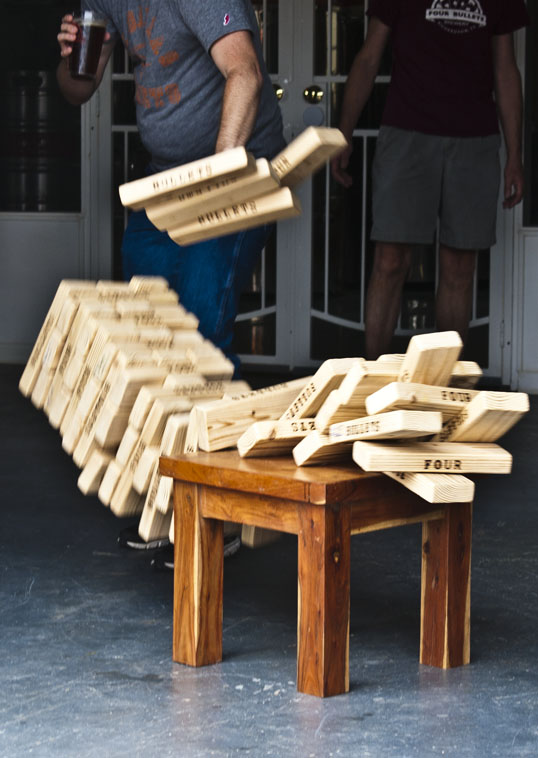
But it fell later as they tried to move another piece. Note the rare “suspended section” of blocks. I’m not sure of the physics of leaving a few behind for a handful of microseconds.

A concept from physics called negentropy could help your life run smoother

from The Conversation


Bicycle, French Quarter, New Orleans

The Restorative Joy of Cycling

Bike rider in front of the Winspear Opera House. If you are wondering, the photo is cropped and upside down.

Short Story of the Day, Exhalation, by Ted Chiang

“My message to you is this: pretend that you have free will. It’s essential that you behave as if your decisions matter, even though you know they don’t. The reality isn’t important: what’s important is your belief, and believing the lie is the only way to avoid a waking coma. Civilization now depends on self-deception. Perhaps it always has.”
― Ted Chiang, Stories of Your Life and Others

Galatyn Fountain, Richardson, Texas

Exhalation, by Ted Chiang

From Lightspeed Magazine

Abandoned Boba

“You can never get a cup of tea large enough or a book long enough to suit me.”
― C.S. Lewis

It was very cold this morning, but the sun was making it through the clouds a tiny bit, so I decided to go for a walk. I didn’t dress too warmly as I wanted to feel the cold in addition to seeing the sun.

I decided to walk to Starbucks. I haven’t been to Starbucks in a long time – since I upped my coffee game their coffee simply isn’t that good. Especially since I don’t drink fancy sugary milky concoctions – I only order a cup of black brewed coffee (I like coffee, why put other shit in it?). With fresh beans, my grinder, and my Aeropress I can make far, far, better coffee at home for much, much less cost.

However, I have never considered Starbucks to be a place to buy coffee. It’s an office rental place – you simply pay by buying overpriced drink items. I never understand people that drive through Starbucks, or pick up an order… make it yourself!

Viewed as an office or meeting place I realize I have a lot of really fond memories of various Starbucks. There was the one in Mesquite where I would stretch out a coffee for two hours listening to the various Saturday Morning Confessions while I would write and wait for my son Lee’s double art lessons. Some significant and meaningful aspects of my life were born in that Starbucks a long, long time ago. I wrote something about it during the previous century – I’ll have to look through my stuff, find where I put it.

Then there is the Plano Starbucks that I met with my writing group, every Wednesday for over a decade. I could calculate how much coffee I drank there, in hundreds of gallons, but I won’t.

So today, nothing dramatic. I walked there with my library book, The City and Its Uncertain Walls, by Murakami. It’s a popular book so I won’t be able to renew it – that means I only have three weeks to get through its prodigious pages, but thirty pages a day will be more than fast enough. I’m loving the book, so this won’t be hard.

After one large brew and thirty four pages I decided to hike home. Crossing Beltline I went by Gong Cha, one of the many Asian Boba Tea spots in my ‘hood – and considered if this might be another possible future destination. Unfortunately, most of their offerings have way, way too much sugar in them for my health… so I need to stick to American style black coffee.

In an empty parking spot was an abandoned mostly-drank Boba Tea. Its festive bright pink lid and specked black tapioca balls peeking through the clouds of milk tea looked festive on the cold morning, so I snapped a picture of it.


Oh, I found what I wrote… I think it was the first time I had ever been to Starbucks – I actually bought an iced tea with a gift certificate that Candy gave me. I bought the tea because I was intimidated with the coffee menu (this was a long, long time ago).

Here’s what I wrote – it’s silly- but it brings back good memories.

Saturday, August 29, 1998

Coffee foams

….. Coffee foams
comes in a foam cup
seashells hidden in the foam, spirals
like an ear
like time
time flies
Tea
cold, iced, cubed
the tea of the day is reddish, fruity
cold and refreshing.
Fresh tea is hot from the pot
and steams hissing onto the cubes.
The tea is iced, but the day is not
the day is hot
and sweaty

Round Green Tables

time flies
blue eyes
“I seldom talk to anyone anymore
other than children and rednecks”

South American Beans
Roasted, toasted, ground and boiled
and percolate
the suspension
of disbelief

Once, I quit drinking coffee
It made my stomach hurt

I feel something, sometimes
as a burning worm
in my stomach, my gut
a monster of strain

but not today

Houellebecq

“Youth was the time for happiness, its only season; young people, leading a lazy, carefree life, partially occupied by scarcely absorbing studies, were able to devote themselves unlimitedly to the liberated exultation of their bodies. They could play, dance, love, and multiply their pleasures. They could leave a party, in the early hours of the morning, in the company of sexual partners they had chosen, and contemplate the dreary line of employees going to work. They were the salt of the earth, and everything was given to them, everything was permitted for them, everything was possible. Later on, having started a family, having entered the adult world, they would be introduced to worry, work, responsibility, and the difficulties of existence; they would have to pay taxes, submit themselves to administrative formalities while ceaselessly bearing witness–powerless and shame-filled–to the irreversible degradation of their own bodies, which would be slow at first, then increasingly rapid; above all, they would have to look after children, mortal enemies, in their own homes, they would have to pamper them, feed them, worry about their illnesses, provide the means for their education and their pleasure, and unlike in the world of animals, this would last not just for a season, they would remain slaves of their offspring always, the time of joy was well and truly over for them, they would have to continue to suffer until the end, in pain and with increasing health problems, until they were no longer good for anything and were definitively thrown into the rubbish heap, cumbersome and useless.

—-Michel Houellebecq, The Possibility of an Island

Long quote there…. I clipped this out of the book I finished last night (my clip actually goes on longer). It struck a nerve . Unfortunately, this is exactly how I feel right now.

Sydney and Walda Besthoff Sculpture Garden, New Orleans

In 2002 (reblogged in 2011) I wrote about a question that always bugs me – “Is reading a waste of time?”. I still don’t know… I think it is, there is so much actual stuff to do, but everybody tells me that reading is important, maybe more important that actually accomplishing something.

Those who love life do not read. Nor do they go to the movies, actually. No matter what might be said, access to the artistic universe is more or less entirely the preserve of those who are a little fed up with the world.

Michel Houellebecq

At any rate, waste or not, I am trying to increase my reading – both in terms of quantity and quality. As a part of that, I stayed up too late last night and finished The Possibility of an Island by Michel Houellebecq.

It was an interesting read – sort of a Science Fiction/Dystopian/Erotic/Very French tale, told in first person from the point of view of a nihilistic artist that falls in with a doomsday cult and also from the point of view of a clone of himself, thousands of years in the future.

I now have read a handful of Houellebecq and have enjoyed them enough to continue on to a few more. They are bleak and sexy, intelligent and violent, and resonate with me more than they should… more than I’d like to admit.

Absalom, Absalom!

It’s because she wants it told, he thought, so that people whom she will never see and whose names she will never hear and who have never heard her name nor seen her face will read it and know at last why God let us lose the war: that only through the blood of our men and the tears of our women could He slay this demon and efface his name and lineage from the earth.

—-William Faulkner, Absalom, Absalom!

Mural outside of Sandwich Hag, The Cedars, Dallas, Texas

So, about a month ago my Difficult Reading Book Club started in on Faulkner’s The Sound and the Fury. We finished it up last week – it certainly makes the cut as a difficult book – but I made it through relatively unscathed.

And this week we started in on the second tome in our Faulkner journey – Absalom, Absalom!. I am now three chapters in. I had heard a lot of talk about how difficult a book it is – but after The Sound and the Fury I’m finding the second book quite a bit easier to read and understand. Now, there are sentences that run on for pages (although Ulysses by James Joyce has a 4,491 word sentence in a soliloquy, The Guinness Book of Records lists the longest proper sentence as one from Absalom, Absalom! at 1,287 words – I haven’t reached it yet), the story is frames within frames within frames, and the language (is wonderful) is difficult… For example I made a note of one phrase on page 53:

presbyterian effluvium of lugubrious and vindictive anticipation,

Ok… I know all those words… but I never thought of seeing them strung together in one place like that.

Oh. Seeing that phrase that I had highlighted reminded me of something. I bought a paperback copy of the book, plus a Kindle copy. I then discovered something I never knew about reading on a Kindle. I have been reading books on my Kindle for well over a decade – hundreds of books. During all this time I have been highlighting passages that I wanted to remember. Only this week did I discover that there is a web page:

https://read.amazon.com/notebook

That contains all the highlights (and notes) that I have made in all those books over all those years on all my devices. It’s pretty damn amazing. Looking through it is like going back in time. There are books in there I didn’t remember reading until I perused the feedback I input at the time – then it came rushing back.

I am now going through these highlights and hand copying the ones that still mean something to me into my commonplace book. Cool! Also a huge waste of time… but it is what it is.

Well… better go read. I’ve heard that chapter Four is a doozy.

The Benjy Section

Through the fence, between the curling flower spaces, I could see them hitting. They were coming toward where the flag was and I went along the fence. Luster was hunting in the grass by the flower bed. They took the flag out, and they were hitting. Then they put the flag back and they went to the table, and he hit and the other hit. Then they went on, and I went along the fence. Luster came away from the flower tree and we went along the fence and they stopped and we stopped and I looked through the fence while Luster was hunting in the grass.

—- William Faulkner, The Sound and the Fury, opening paragraph (Benjy Section)

The Difficult Reading Book Club – a group I belong to (we have read Gravity’s Rainbow, 1Q84, The Brother’s Karamazov, and Foucault’s Pendulum) – is now one week into Faulkner’s The Sound and the Fury. This week I read the infamous Benjy Section – the first part of the novel. Tonight we had a Zoom meeting to discuss (we will be meeting in person starting next week).

This is one of the most difficult hunks of text to read and understand. It is written in raw stream-of-consciousness from the mind of a severely mentally disabled man on his thirty third birthday. Benjy – is completely unable to understand the passage of time and his disjointed thoughts jump back and forth over a thirty-year span. It is amazingly difficult to figure out what is going one – Benjy knows what he sees – but he doesn’t know why. The text gives no context – you have to figure it out.

For example, read the opening paragraph above. How long did it take for you to realize Benjy is watching a group play golf through a fence?

I had an advantage, I have read the book before. It was almost fifty years ago – I was a mere teen – and had no idea of what was going on. However, I did understand what the structure of The Benjy Section was and, with that leg up, I was able to take notes and figure out most, or some, or a lot of what was actually happening.

The rest of the book is not as confusing and I look forward to reading it to understand more of what was presented. When I finish, I’m going to go back and re-read The Benjy Section with the knowledge gained in the others – it should make more sense then.

Oh, and The Sound and the Fury isn’t difficult enough for The Difficult Reading Book Club on its own – we will immediately jump into Absalom, Absalom!.

Berg

“A man called Berg, who changed his name to Greb, came to a seaside town intending to kill his father.”

—-Berg, by Ann Quin, opening line

Clarence Street Art Collective, The Cedars, Dallas, Texas

Ok, a while back I put together a reading plan. Next up on the list, decided by the roll of the die, was Berg, by Ann Quin (I’m skipping the next Zola novel for a while). I started it a few days ago and stalled a bit – it’s a short novel, but dense and difficult.

But then I received notice that the Difficult Reading Book Club is starting back up and tomorrow, Wednesday will be our first get-together of the current round. In the past I have read with this group Gravity’s Rainbow, 1Q84, The Brother’s Karamazov, and Foucault’s Pendulum – difficult, but rewarding books all – I don’t know if I could have dug through all these alone. This time we are reading two books, both by William Faulkner – The Sound and the Fury and Absalom, Absalom! I read The Sound and the Fury in college – about all I remember is how hard is was to get through and/because its unique structure and language. So I’m excited to read it again – with my accumulated decades and the help of the other readers.

However, that put pressure on my reading of Berg. I thought about abandoning it, but I had a few hours this afternoon, so I shut myself up with my Kindle and knocked it off.

Berg is an interesting book – very well written – with a very unique and difficult voice. Is it a good book? It’s right on the edge. With a book as idiosyncratic as this one – to me the ultimate test if if you care, if you give a damn about the characters. Otherwise all the literary gymnastics are just showing off.

In this case, I guess I ended up caring. Nobody is likeable. Everybody is crazy. The author struggled with mental health – she had a breakdown when she finished the novel and needed extensive treatment before she published it – and, sadly, she eventually committed suicide by drowning herself in a setting terribly similar to the novel.

The novel is not very long – I should re-read it and probably will after we finish with Faulkner. It’s worth it if you are looking for an idiosyncratic voice in literature. It is the kind of thing you will like if you like that sort of thing.

One side note I found. There actually is a film version of Berg, called Killing Dad – starring Richard E Grant as the son, Denholm Elliott as the father, and Julie Walters as the mistress, Judith. I have no idea how they would make a movie out of the words on the page. I’m not sure if I want to see it – it may spoil the images I have in my noggin from the text. It is available for free on Tubi if I change my mind.

Fever Dream

“Strange can be quite normal. Strange can just be the phrase ‘That is not important’ as an answer for everything. But if your son never answered you that way before, then the fourth time you ask him why he’s not eating, or if he’s cold, or you send him to bed, and he answers, almost biting off the words as if he were still learning to talk, ‘That is not important’, I swear to you Amanda, your legs start to tremble.”
― Samanta Schweblin, Fever Dream

Mural (detail), Deep Ellum, Dallas, Texas

So, the next novel in line on my reading plan was Fever Dream by Samanta Schweblin. A very short novel, with few characters (though a unique take on point of view) I was able to read it in a day and a half.

It’s a horror story, with elements of the supernatural and environmental disaster in the forefront. It’s told as a conversation between a young boy (who is half someone else) and a dying woman – his summer-renting neighbor. The two of them, the woman’s young daughter, plus many other people, and most of the animals, in the area have been exposed to a toxin of unknown nature. The wealthy men of the neighborhood seem to be doing something that releases the toxin, but nobody knows for sure.

It’s a horrible illness – killing most in a few days and leaving the survivors disfigured and changed… somehow. A story told in an effective and interesting way about a mother’s worst nightmare.

But, I’m sorry, in the end the novel didn’t do much for me. I did read an English translation – and I could almost feel the subtlety of the original Spanish washed away off the edges of the paper. Spanish has words that English lacks, words for emotions and relationships that I may have been missing. The book held plenty of horror, dread, and mystery… is that enough? Does it need a payoff? A point? Even if it is short and only takes up a few precious hours of your life?

Probably not. Still, I wanted at least a bit more.

I see than Netflix has made a film out of this movie. I’m tempted… but I can’t see how this harrowing, yet thin, story would look in pixels and sound. I’ll probably watch it eventually, just not now.

OK, looking at the order I chose for my reading plan (chosen by the roll of the dice) – Is another Zola novel – The Debacle (the next-to-last Rougon Macquart novel)… but I’m not in the mood for another long novel… just yet. So it’s Berg, by Ann Quin next. Then on to Elect Mr. Robinson for a Better World by Donald Antrim. A couple more shorter novels.

That’s the ticket.

My Reading Plan – Fiction (and dice)

“It is what you read when you don’t have to that determines what you will be when you can’t help it.”
― Oscar Wilde

(click to enlarge) Book With Wings, Anselm Kiefer, Modern Art Museum of Fort Worth

As I said the other day after I finished La Terre I wanted to evaluate my reading – set up a reading plan. I watched some YouTube videos on setting up a Reading Journal and on reading plans – and did some general web searches on the subject.

What I decided to do was to make some lists of books to read in several categories (I decided to stick, for now, to what’s on my Kindle – there are more books there than I could read in the few years still allocated to me) and then go from there. I chose six fiction novels that looked like the next six I wanted to read. I also started on lists for Self-Help (don’t judge) and for Writing categories. Next, I want to do lists of short story collections and general non-fiction. That should be a good start – I plan on having at least one current book from each category and I can pick and choose depending on my mood.

There is a reason I picked six fiction novels. I have been experimenting with dice... and I wanted to choose the order by roll of the die (six is better than eleven, the numbers from two die, because the odds of each number are the same and I didn’t want to mess around with ranking the books… maybe next time). So I went through my Kindle, listed out six that jumped out at me, and started to roll.

And, here we go:

1st book – Desperate Characters – Paula Fox – 152 pages

2nd book – Mobius Dick – Andrew Crummy – 320 pages

3rd book – Fever Dream – Samanta Schweblin – 183 pages

4th book – The Debacle (Nineteenth Rogon-Macquart novel) – Emile Zola – 592 pages

5th book – Berg – Ann Quin 168 pages

6th book – Elect Mr. Robinson for a Better World – Donald Antrim – 192 pages

You will notice a plethora of short, modern books on this list. I wanted a change from Zola… though The Debacle is on the list (almost done with the series).

And yesterday, I started in on Desperate Characters – reading a third of it in one day. It is a jump from the grand scope (in space and time) of Zola’s naturalistic social prose to the focused crystalline details of the more modern novel. It is so compressed, so focused on seemingly random details and thoughts of the characters. Very modern, very New York.

Fun.

“If you only read the books that everyone else is reading, you can only think what everyone else is thinking.”
― Haruki Murakami, Norwegian Wood

La Terre

“And then there was pain and blood and tears, all those things that cause suffering and revolt, the killing of Françoise, the killing of Fouan, vice triumphing, and the stinking, bloodthirsty peasants, vermin who disgrace and exploit the earth. But can you really know? Just as the frost that burns the crops, the hail that chops them down, the thunderstorms which batter them are all perhaps necessary, maybe blood and tears are needed to keep the world going. And how important is human misery when weighed against the mighty mechanism of the stars and the sun? What does God care for us? We earn our bread only by dint of a cruel struggle, day in, day out. And only the earth is immortal, the Great Mother from whom we spring and to whom we return, love of whom can drive us to crime and through whom life is perpetually preserved for her own inscrutable ends, in which even our wretched degraded nature has its part to play.”
― Émile Zola, The Earth (La Terre)

Book Cover, Zola’s La Terre (The Earth)

It was September, 2018 when I started reading the twenty novel Rogon-Macquart cycle by Emile Zola. Last night, I finished La Terre (The Earth), the eighteenth in the recommended reading order (the fifteenth published).

Here’s what I’ve read so far:

La Terre was a long (500 plus pages) book, but not too difficult – there were fewer characters and their relationships were a lot less complicated than in, say, Nana or Au Bonheur des Dames.

The connection to the rest of the Rougon-Macquart novels is Jean Macquart. He is the  brother of Gervaise from L’Assommoir and Nana’s uncle. Jean is a drifter, an army veteran, who gives up being a carpenter to work as a field laborer in a vast wheat-growing area known as La Beauce. He stays for a decade and becomes part of the territory, although the people there never view him as one of their own. It reminded me of Germinal where a Macquart (Etienne Lantier, Jean’s nephew) show up and in desperation finds work and tries, unsuccessfully to become part of the community.  

Most of the plot revolves around the family of the elderly farmer Fouan who is forced by age to divide his meager lands among his three children. There is a fourth, young daughter, Françoise, who becomes involved with Jean Macquart. The plot is obviously inspired by King Lear where jealousy, greed, and treachery among siblings leads to madness, disaster, and death.

Things do not end well.

And hanging over everyone in the book is the fear of vast quantities of cheap American Wheat starting to flow across the Atlantic and reduce the price of agricultural products so much the French farmers are facing doom. My family comes from wheat farmers in Kansas – to me that was an interesting fear and description of the vast Midwest plains of endless grain and mechanized agriculture.

The book is not as well known as some of Zola’s other work – but it is unquestionably a masterpiece. It took me too long to start and too long to get through, but it was very good, although depressing and not very kind to the idea of man’s ultimate goodness. There are no heroes in the book, not really even Jean himself – though he may be the only character that the reader won’t decry as evil.

So on to the next… only two to go. I do think I’ll take a break from Zola for a bit…. My Kindle is filling up, I need to sit down with pen and paper and work through a reading plan – organize my fiction and non-fiction… I’m be back to you with what I decide.

Wish me luck.