It looks like they are going to make a semi permanent thing out of it. Interesting read about the death of a Mall, the economics and timing of urban renewal, and food trucks.
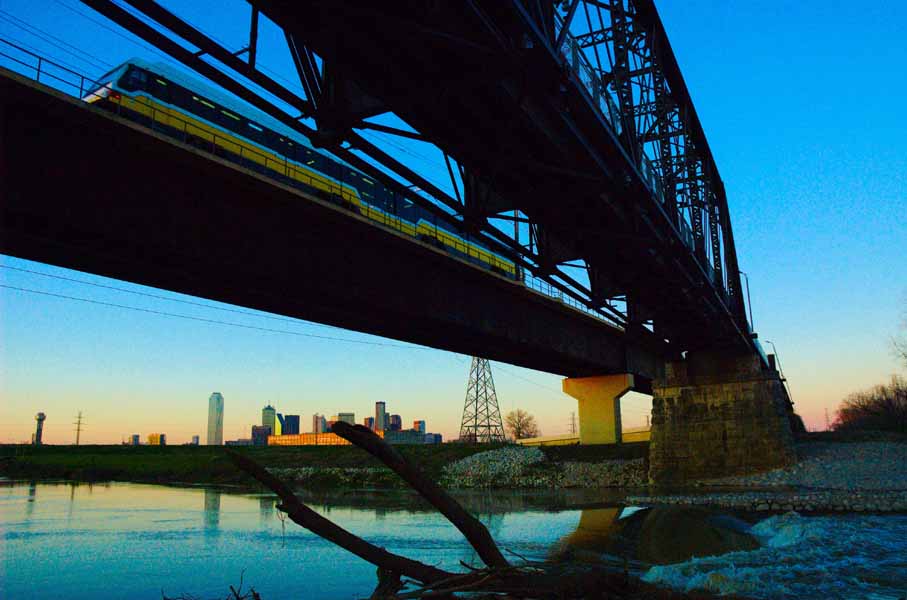
Another update. A while back I visited and wrote about the Dallas Wave and the Santa Fe Trestle Trail. These have not worked out as advertised or hoped.
This year Kickstarter has provided more money to the arts than the National Endowment for the Arts (NEA).
I like the song… may not be anything special – but any music video with Kelsey Gunn in it is worth an Embed. It’s odd seeing her in something serious after all those 5 Second films.
Great News! One of my favorite independant Coffee Houses – The Pearl Cup – is opening a new branch in Richardson – the city where I live. It is planned on opening in late September or August. It won’t be particularly close to my house (It’s in a very nice neighborhood – not the kind of place where people like me live) but it will be a lot easier to get to than the one down on Henderson in the City. Nobody goes there anyway, it’s way too crowded.
Why would a Nigerian scammer admit that he’s from Nigeria? After all, Nigeria is notorious for fraudulent emails. Shouldn’t the fraudsters claim instead to be from Turkey or South Africa or, really, anywhere but Nigeria? That’s a question asked by Microsoft researcher, Cormac Herley, and seconded by security guru Bruce Schneier. Herley’s insightful answer looks at the economics of scam emails:
Attacking the maximum number of people does not maximize profit. … Since the scam is entirely one of manipulation he would like to attack (i.e., enter into correspondence with) only those who are most gullible. … Since gullibility is unobservable, the best strategy is to get those who possess this quality to self-identify. An email with tales of fabulous amounts of money and West African corruption will strike all but the most gullible as bizarre.
Nigerian scams are labor intensive for the scammer, but only after the first bite. Actually landing even the most gullible correspondents takes time, effort, and skill that the scammers don’t want to waste.
When I walked around the Chihuly glass exhibit at the Arboretum… here, here, here, here, here, here, and here – I heard one questions several times. People asked, “What happens when it hails.”
This is Texas, and they don’t say “if” it hails, they say, “when.” Even the Arboretum literature addresses that. It said that the glass is tougher than you think, and that Chihuly has capacity standing by to replace anything that breaks. When it hails.
Well, it hailed. It looks like the only damange is to the white blossoms in the Persian garden pool, the ones I saw the second time I visited the exhibition. They said the works will be replaced and the rest of the glass is unscathed.
The Chihuly glass in the Persian Garden Pool that was damaged by hail at the Dallas Arboretum. This photo was taken before the storm.
For those of you from places where the weather isn’t quite so… Texas-like, here’s some homespun video of what we live with here. All from Thursday afternoon.
Piano says that because the Nasher is a privately held collection, it is free to leave its Flora Street museum and go elsewhere — although he noted that this is not something the Nasher family wants to do, that it was the dream of founder Raymond Nasher to put his collection in the Dallas Arts District at that location. Were Nasher alive today, Piano says, he would “mad, mad, mad, mad, mad.”
I agree, I think the Nasher is playing way too nice with this. If it were my collection I would be in talks with, say New York City and see if the colection could be relocated to… maybe a nice site in Central Park. They would leap at the chance. I know the city of Dallas would be hurt by the move, but to make it up they could use the Nasher site for low income housing and maybe a homeless shelter. I’m sure the Museum Tower next door would enjoy that.
The Museum Tower Condominiums tower over Tony Cragg’s “Lost in Thought”
For generations, government policies have been geared toward creating endless landscapes of strip malls like the one Bentivolio looks at with such fondness. In the process we have gutted our traditional downtowns. We have eaten up farmland and forest. We have, …, endangered the lives of our senior citizens. We have engineered a world where children cannot walk or bike to school without risking their lives. We have created countless places devoid of any real social value.
An interesting article, but one that, for me at least, is ultimately useless. You might as well send a heroin addict an piece of paper listing the inconvieniences of shooting up.
Well, on Friday, there’s the Arts District Summer Block Party. These are always a lot of fun. I might do Late Night at the DMA. The Nasher has been showing kid’s movies on an inflatable screen in the garden, but this week it’s 500 Days of Summer. I’m getting a little tired of Zooey Deshanel’s Goofy Quirky Zany Adorkable Hipster Doofus persona… but still…
A set of Flickr images use the Geotagging Database to show the locations of photographs in major cities… separated by locals vrs. tourists. Make sure you aren’t missing out.
We all hate wasting the ketchup that sticks in the bottle. Finally, at MIT, scientists have designed an FDA-approved, nonstick coating called InstaGlide that solves the problem. This is truly the best of all possible worlds.
It seems like there is nothing on to watch… so all you have to do is check another one off of this list:
There are a lot of people working on this… and the suburbs are better than Dallas itself… (I live in Richardson and it was chosen locally the best Dallas neighborhood for bicycling) but there is still the heat and all those giant pickup trucks. The problem isn’t that, though – it’s the beauracracy.
Conversely, Dallas was cited as one of America’s worst cycling cities for the second time since 2008 for creating almost no new cycling infrastructure even after its adoption of a bicycle master plan. Cycling advocates in Dallas, who were vocal in their frustration with the city’s progression, expressed hope that the “worst” designation will serve as a catalyst for a faster, more concentrated bike-friendly movement.
It’s hard to know what the mediation will accomplish, since the developers of the condo tower and their Los Angeles architect, Scott Johnson, have so far done little to accept responsibility. In an exhaustive report on the issue in D, Dallas’s city magazine, Tim Rogers quoted the developers as asking the Nasher what it was prepared to do to help, as if this were a negotiation in which both sides were expected to give an equal amount to reach an amicable compromise. Johnson, for his part, told The New York Times, “I can’t say sitting here now that the Nasher may not need to do something on their end.”
Why, in heaven’s name, should they have to? The Nasher was there first, it didn’t create the problem, and it is suffering from it.
There’s a photo of the glare inside the Nasher’s beautiful, Renzo Piano designed pavillion.
I don’t want to sound like the old fart that I am, but look at this list of the best 70 albums from the 1970’s (not considered the best decade for music by any shot). There is nothing that comes close to any of these being done today.
The ’70s sometimes get a bad rap: Often these years are remembered as the musical era that brought us disco at its absolute gaudiest. But there was far more going on in the decade than polyester, sequins and cocaine; the 1970s saw the rise of the singer/songwriter, the birth of punk rock, reggae’s infiltration of the mainstream and the long, strange trip led by some of psychedelia’s finest.
In fact, it’s a decade so musically diverse, we had quite a time whittling it down to our top albums. When we polled our staff, interns and writers, over 250 albums received votes, but ultimately these 70 emerged as clear favorites.



 Bill Chance