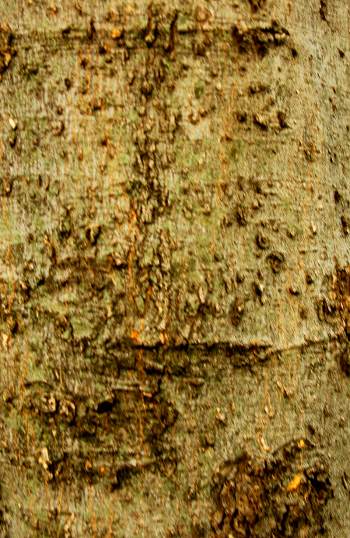
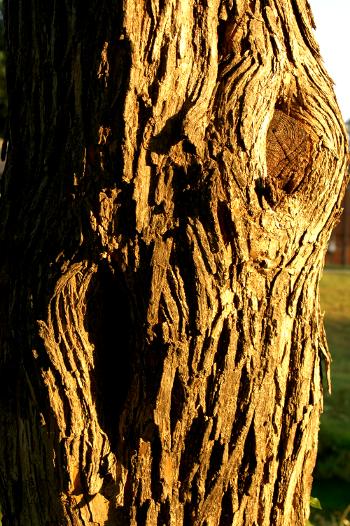
Bark in the Creek Bottoms in Back of my House

Does anybody really look at anything?

I was waiting outside for the day to get going and noticed the tree next to me had been drilled by a woodpecker in a long series of horizontal rows of holes – hundreds of them, all over the tree. The woodpecker must work the same hours as I do, because I had not heard him out there, pecking away.

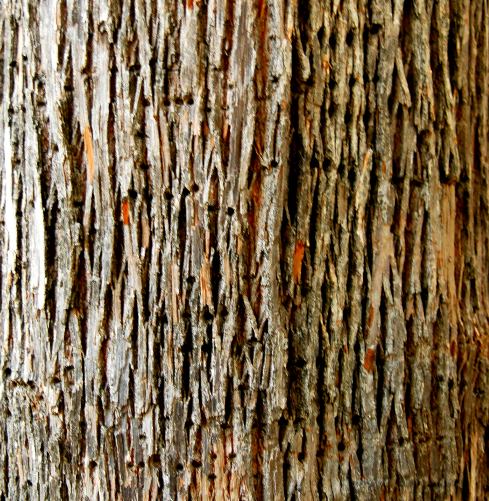
All the trees tell stories in their bark. I didn’t have to move more than ten feet to get these pictures, but look at the variety of the tree skin, from tough and rugged, to torn and wounded, to almost soft and curvaceous.

But nobody ever looks at them… not closely, not like that.

The woodpecker has left a line of holes in this tree like Al Capone’s gunners on Saint Valentine’s day.

The torn-up looking trees are all Bois d’ Arc – which I have written about before.

The School of Rock

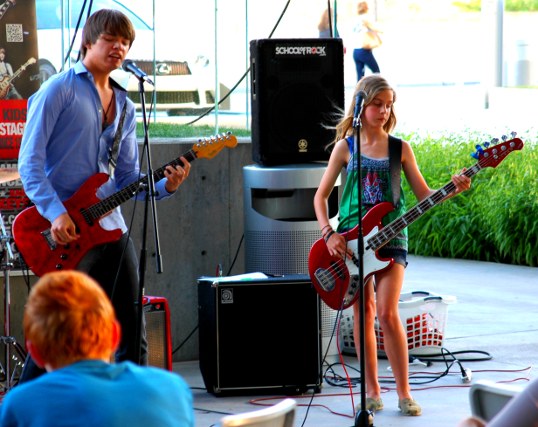
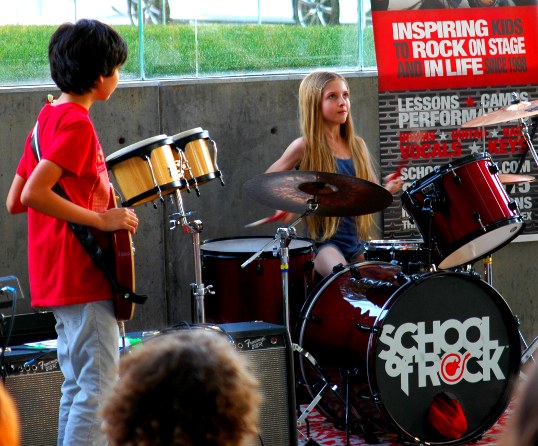
The other day I was down on Flora Street in the Dallas Arts District wandering around, looking at the crowds by the food trucks when I noticed music coming from the direction of the Winspear Opera House. It sounded like some AC/DC – so I meandered in that general direction to find out what was going on.

It was a concert by the kids from the School of Rock and, sure enough they were hammering out some AC/DC. It wasn’t too bad. Of course, if you spend enough time working on one song you can get to play it pretty well, but it is what it is.

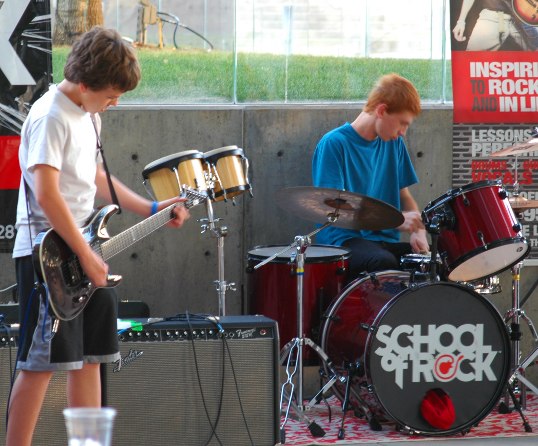
I stayed for a while as different groups climbed up on stage and played different classic rock songs. They were all pretty good at what they were doing. The vocals were the weakest part of the performance, but at that age wailing like Robert Plant isn’t the easiest thing to pull off.

It was pretty odd watching the thing. There were so many elements of a middle school band concert – the eager kids taking their turn at a moment in the sun, the smiling parents sitting around, focused on their spawn, their work, and the results of their cash. But it was different too – the hard rock, the skinny little girl playing a bass bigger than she is, the powerful amplifiers. And the enthusiasm was not as nerdy.

The kids were all pretty good – you could hear all of their hard work. But then this one guy gets up there and plays Misirlou – you know the old Dick Dale surf guitar riff that you probably remember from the opening of Pulp Fiction. He tore that thing up. He knew what he was doing around that guitar string.

I didn’t stay around too long – but I did get a kick out of it. The band launched into a Led Zeppelin instrumental… I think it was Moby Dick. The guitars took a rest and a tiny girl perched on the kit took over grinning, waved her sticks in the air, and launched into a long drum solo. The parents went nuts.

Oh, God, not that. I was born in 1957, so I was around for the whole thing. Music is important to me, all the music, a wide diversity. But, if I had my druthers, there is one thing… only one thing that I would have taken away from the decades of rock music… and that is the interminable drum solo. A good portion of my life has been wasted waiting for the things to end and the real music to start up again. I understand that the drum solo has an important purpose – for the rest of the band to go backstage, do a couple of lines and maybe a groupie or three – but that doesn’t mean the payin’ folks out in the crowd have to be subjected to that endless noise.

So, long live rock, teach your children well, but please, lets end the drum solos.

You rocked me all night long.

A rockin’ Misirlou.

A Zeppelin drum solo.

Sunday Snippet – Punch Card (How I Met Your Grandmother)

I had a writing teacher once that said that ideas were swimming through the air all around us and if you didn’t catch one as it went by, someone else would.

This morning, I caught an idea for a short story and wrote down an outline before I went out for a bicycle ride. There are four scenes, spread out over, say, forty years. The working title for the story is Punch Card (How I Met Your Grandmother).

Here’s the second scene, which takes place in the past (maybe 1975 or so). I’ll write the other three scenes over the next few days – hopefully to take to my writing group. If you want a copy of the first draft when I finish it, send me an email at bill*chance99@gmail.com – except put a period where the asterisk is and the number 57 where the 99 is (take that spammers).

I hated the punch card machine more than anything I had ever hated before. I was a junior, majoring in comparative literature and since I wasn’t in the computer science department I could only use the computer lab after ten in the evening. The giant computer itself took up half of the bottom floor of the building – but nobody was ever allowed to go or even see in there. The other half was filled with a filthy snack bar, lined with rusty autobots that spat out moldy candy bars and bags of stale off-brand potato chips – and a series of dingy rooms filled with hundreds of punch card machines.

I had taken an elective class in Fortran programming because I thought that computers were the future and I was worried about paying rent after graduation. Writing the assigned programs was easy – find the sides and angles of a right triangle, the day of a date, or draw a series of boxes. I could write the code, but I couldn’t punch the cards.

My homework problems had to be punched onto these beige cards – rectangular with one corner cut off. I had to buy a case of the damn things at the beginning of the semester. I couldn’t imagine using all those cards. I didn’t know. Three months later, I had to buy another half-box from some kid in my dorm. I was always a terrible typist and would get nervous, freeze up and hit the wrong letter.

This was worse than a typewriter. You would load a stack of cards into the machine and then it would warm up and start to hum. The heat would rise and the ozone would burn your nose. The keys were big and yellow and had to be shoved hard before the machine would roar and then… “Blam!” it would whack a little tiny rectangle out of the card. A paper flake would fly through the air to join the thick layer of cardstock confetti coating the floor and, magic, a corresponding hole would appear in the card itself.

With the punchcard machine a mistake was a disaster. I never could see that I’d missed a key. Sure, the code printed out along the top of the card but they never put new ribbons in the machines and it was always too faint for me to read. When I had my stack of cards all finished I’d take them into the computer room, wrap them with a rubber band, and shove them through this little wooden door in the wall where they would fall down a chute. You never could even see what was on the other side.

Then it was time to wait. Wait for hours. I’d spend all night there, waiting for my program to run. Then, my output would drop down another, bigger, chute into a pile. Every time an output would drop, all the kids waiting would run in and see if it was theirs. It was horrible.

You see, if your program ran correctly you’d get a few sheets of paper with the code and the answer printed on it but I never did. I’d find my cards still rubberbanded together and clipped to a huge stack of pinfeed folded green and white striped paper. On the top would be a handwritten note that would say something like, “Core Dump, you loser!”

Whenever you made a mistake, even a tiny one, the core would dump and the computer would print out hundreds of pages of gibberish. You were supposed to carefully peruse the printouts and find your error in there somewhere but nobody had time for that. You’d throw the printout in this huge wooden bin, scratch your head, and start looking for your mistake. I have no idea why they wasted all that paper.

Sometimes it would be a mistake in my work, but usually it was a typo in my card punching. I figured out that the little holes corresponded to letters, numbers, or symbols and I punched out a card with everything on it, in order, and I would have to slide the thing slowly over every card I had punched to try and find the mistake.

It was horrible. I would be so tired, my eyes swimming, sitting at that huge punch machine, trying to type. I’d make a mistake and throw the card onto the overflowing trash bins and start again. Even when I made it through a card, I’d be terrified I had made an unknown error and would generate another core dump. It was killing me… but I had nowhere else to go.

Our instructor was always harping on us to put in comment cards. These were punch cards marked in a certain way that they didn’t make the computer do anything, but simply left comments. You were supposed to leave comments about what your code was supposed to be doing or what your variable represented or why you decided to do something the way you did. It was a pain in the ass and I never did it until the teacher started marking my grade down because I had insufficient comments in my code.

So I started putting the comments in, though I never commented on the code. I figured he didn’t really look through everybody’s work for these things and only took the computer’s count of how many comments were in here. Sometimes I’d just gripe… like, “Fortran really sucks,” or “This is too hard,” or “It’s way too late at night to be doing this.”

This got to be pretty boring pretty fast so I switched to some of my favorite Shakespeare Quotes, “As flies to wanton boys, are we to the gods; they kill us for their sport” or “There’s not a note of mine that’s worth the noting,” or “I am not bound to please thee with my answer.” I might make some mistakes punching the comments… but who cared? They would still go through as comments and you could still read them.

Like it was yesterday, I remember the day when I picked up my output and, sure enough, there was the big thick stack of folded paper, another core dump, but instead of a handwritten note, there was a punched card on top of my stack. It was different in that it had been done on a machine that had a fresh ribbon in it and across the top, in crisp, clear, printing, it said, “Funny Comments Ronald. You’re getting close. Ck crd 7 error in do loop – Christine.”

And sure enough, in my seventh card I had hit a capital letter “Z” instead of a number “2.” I never would have seen that.

So I redoubled my efforts at witty, humorous, and obscure quotations for my comment cards. I was reading this huge crazy new book called Gravity’s Rainbow and one day I quoted from it. Stuff like, “You may never get to touch the Master, but you can tickle his creatures.” or “If they can get you asking the wrong questions, they don’t have to worry about the answers,” or “Danger’s over, Banana Breakfast is saved.”

My program ran that time and the card on top said, “A screaming comes across the sky – Christine,” which made me so happy I didn’t stop smiling for a day.

The next program, I added a comment card that said, “Christine, I can’t see you – Ronald.”

And it came back with, “I know, but I can see you. I think you’re cute – Christine.”

So I thought about it and worked up my courage. At the end of a program that I larded with my best quotes from the composition book I carried with me and scribbled in all the time… my commonplace book, I finished with a card that said “Christine, I want to meet you – Ronald.”

All that night I was the first to fight their way in to grab any program that slid down the chute, only to be disappointed again and again as other student’s projects ran before mine. Finally, as the sky was beginning to turn a light pink in the west, my program dropped. On top was a card. I ran back to my dorm room to read it, not daring to look at it anywhere in public.

It said, “Love to Ronald. Snarky’s at six, on Thursday. Don’t be late – Christine.”

Snarky’s was a little chain restaurant off campus not far from the computer building. My heart almost beat out of my chest. Thursday was going to take a long time to get there.
Fiddleheads

Sometime, somewhere, somehow, while perusing the ‘net on a day when, though I don’t remember the details, I most certainly should have been doing something more worthwhile, I came across some sort of magazine article or web page that was extolling the delicious risk of eating fiddlehead ferns. I’m not sure exactly where it came from, but there’s a lot out there… here’s a quick sample for reference purposes:

It is always tempting to put out a link to the Wikipedia entry on Fiddlehead Ferns. Except… how useless – everyone knows how to look something up on Wikipedia. To me, that reminds me of my childhood, when everyone would start their school essays with the phrase, “Webster defines (insert subject here) as (insert dictionary definition here). How lazy can you get? It was especially common with oral reports. If you had five minutes to kill, you could get a good forty seven seconds out of the way with ol’ Webster. I always wanted to start a report with, “Webster defines cunnilingus as (insert definition here) – which has nothing to do with my report on the petroleum industry in Venezuela. Ooops, I’m getting off-subject here. The Wikipedia Definition of Fiddlehead Fern.

The unwritten ethic among fiddlehead foragers is to take three violin tops. A fern produces five to nine fronds per growing season, so harvesting more than three can jeopardize the plant’s survival. Found Food | Fiddlehead Ferns

Think of fiddlehead ferns, those tightly coiled, emerald-green symbols of spring, as ferns interrupted. Fiddlehead-Fern Bruschetta

The ostrich fern is the safest fern to eat, even though it, too, can contain toxins. The fiddleheads of cinnamon fern (Osmunda cinnamomea), lady fern (Athyrium filix-femina), and bracken fern (Pteridium aquilinum) can also be eaten, but all are at least mildly toxic and can cause nausea, dizziness, and headache, so it’s probably best to avoid them. Fiddlehead facts 

When the Spiceman is in, you can buy a fistful of exotic Tokyo longs to dazzle the pants off your in-laws (or maybe just your spouse). Best Fiddlehead Fern Finder: Tom “Spiceman” Spicer of F.M. 1410

Fiddleheads have a bright, earthy flavor that calls to mind asparagus, artichokes, and green beans. Fiddlehead Ferns

It fascinated me for a good three minutes. The idea of eating foraged food is cool – the idea of eating foraged food that is toxic if not gathered or prepared properly is even more cool. I could almost taste the slight bitterness and feel the crunchy texture of the boiled coils.

After these slight impressions collected somewhere in my useless mess of gray matter I was on to other tasks, probably working on remembering things like where did I leave my car keys and what is my bank account pin number.

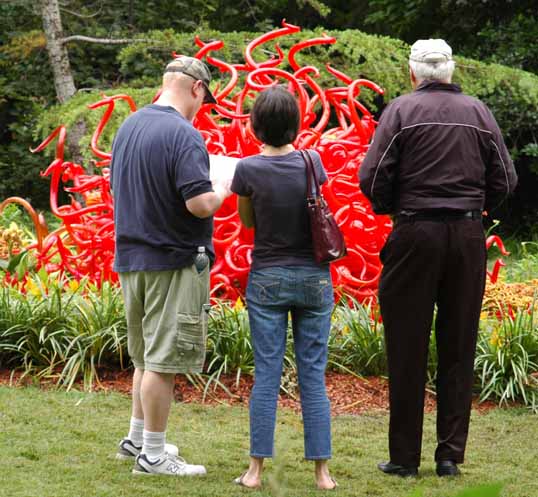
My thoughts on fiddlehead ferndom lay dormant somewhere in there until I was walking around the Dallas Arboretum with my writing group taking photographs of the Chihuly exhibition when I overheard a woman talking. She was staring intently at a guide to the exhibit which I had neglected to obtain at the entrance. She was rattling off the names and locations of the colorful glass sculptures and I heard her say, “It says here he did some sculptures called Fiddleheads but I haven’t seen them yet.”

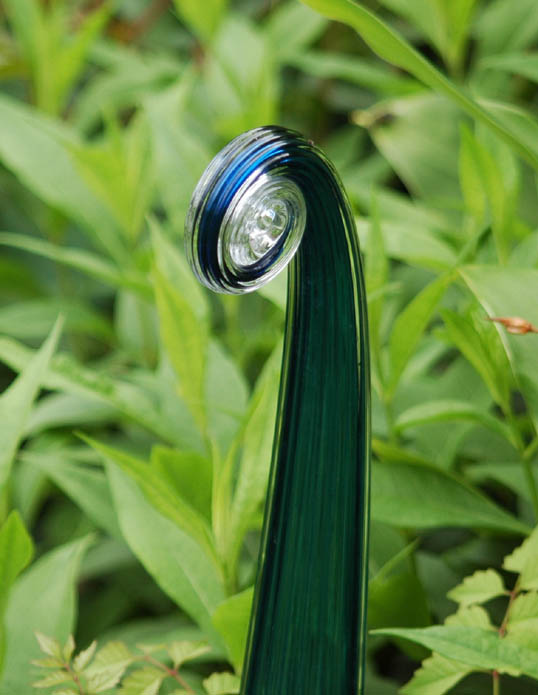
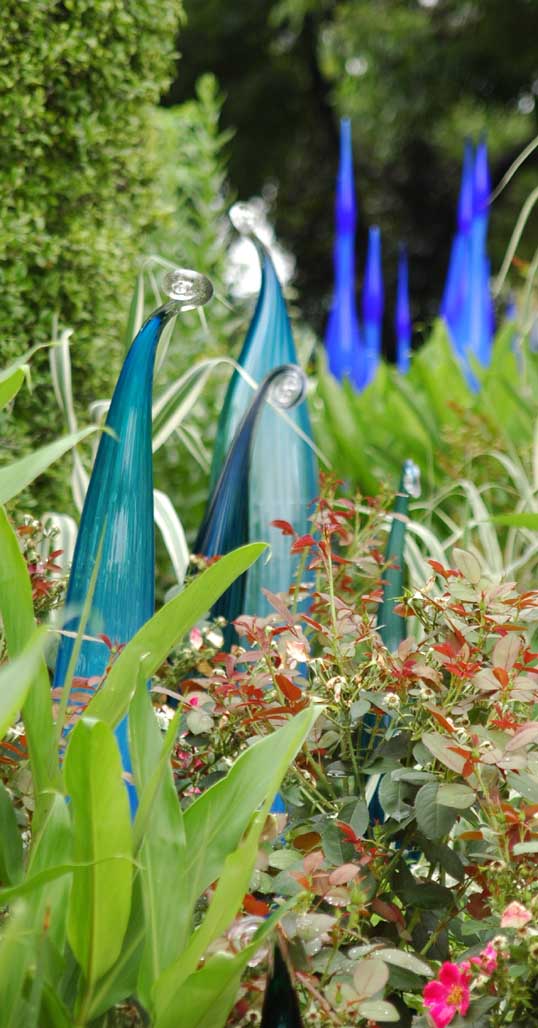
And that set off the memories. The rest of the day I couldn’t help but keep my eye out for some glass fiddlehead ferns. Finally, in the last garden at the end of all things, there were the fiddleheads sticking up amongst the greenery.

Now I can die in peace.

Fiddlehead fern fiddleheads

In case you think I’m full of shit when I write this stuff, here’s the woman I overheard asking about the fiddleheads. This was taken an hour later, and you can see, she is still looking at her guide book. She is now so tired of looking at it that she has her husband holding it for her. Or maybe that’s her husband on the other side and that’s her pool boy holding the guidebook. Or maybe the three aren’t related at all – maybe they are three technical writers that get together on the weekends to go various place and critique the guidebooks.

a Chihuly Fiddlehead

The glass ferns were growing in a bed of greenery.

A fly enjoying the Chihuly Sculpture. I bet he didn’t have to pay to get in.

What I learned this week, May 25, 2012

We all hate wasting the ketchup that sticks in the bottle. Finally, at MIT, scientists have designed an FDA-approved, nonstick coating called InstaGlide that solves the problem. This is truly the best of all possible worlds.


It seems like there is nothing on to watch… so all you have to do is check another one off of this list:

The 50 Best Movies on Netflix Instant Streaming


Bicycling Magazine ranked Dallas as

The Worst Cycling City in America

There are a lot of people working on this… and the suburbs are better than Dallas itself… (I live in Richardson and it was chosen locally the best Dallas neighborhood for bicycling) but there is still the heat and all those giant pickup trucks. The problem isn’t that, though – it’s the beauracracy.

It’s official: Dallas is still the (one and only) worst city for bicycling in the entire country

Conversely, Dallas was cited as one of America’s worst cycling cities for the second time since 2008 for creating almost no new cycling infrastructure even after its adoption of a bicycle master plan. Cycling advocates in Dallas, who were vocal in their frustration with the city’s progression, expressed hope that the “worst” designation will serve as a catalyst for a faster, more concentrated bike-friendly movement.


Art is the big door, but real life is a lot of small doors that you must pass through to create something new


“Baby,” I said. “I’m a genius but nobody knows it but me.”

An English Photographer Goes to California for Milk and Ping-Pong Balls


Looking for something worthwhile to read?

Nearly 100 Fantastic Pieces of Journalism


Film Photography by

Willy Ronis,

Henri Cartier Bresson,

Robert Doisneau

Elliot Erwitt

I Need a Victory

This is the one year anniversary of me starting up my blog again. I’ve gone one year, posting every day. Actually, according to WordPress, I’ve published 369 posts. It was leap year… I know I published two in one day on one occasion… I wonder what the other extras are?

My first post was on the Monk Parakeets that live in a power yard near my house.

My goal was to go a year publishing every day and now I’ve done it. I think, going forward, I’m going to relax a little and be willing to skip a day if I don’t have anything. I want to go for quality, rather than quantity I want to write more and photograph less. I want to try different things, write out a few more ideas and push it more.

Any comments, opinions, or suggestions would be appreciated.

Pack Straps

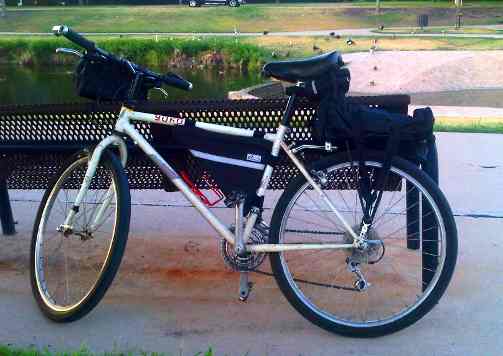
My bike with an experimental bag I tried out. The panniers work a lot better.

I carry a notebook (at least one) around with me always, along with a quiver of fountain pens, ready to record any fleeting thoughts that creep into my thick skull, on the off chance one might prove useful someday. Things… things have been tough lately and last Friday I wrote down, “I need a victory.” Then I followed this observation with a short list of attainable goals I’ve been working toward. I perused the list, crossed a few off, then circled the item “Ride my Bike to/from work.”

First, I scribbled through the “to.” I have come across a possibly insurmountable obstacle to riding my bike to work – there is no place to take a shower. I’m working on that, but it will take time, politics, and a budget from somewhere. However, there is no reason I can’t ride home after work.

I have been working on a route to/from my work for a long time now, and have it figured out. The route is important because my goal does not include me being killed and ground beneath the wheels of unstoppable traffic. However, I have found a route made up of paved bicycle trails, wide sidewalks, empty residential streets, quiet alleys (I have to be careful there – cars can back out unexpectedly) and parking lots.

One weekend a while back I did some extra work and was rewarded with a gift card. Looking around, I found a surprisingly inexpensive set of panniers from Wal-Mart and bought the things. They are cheaply made, but well designed and they fit on the rack on my old crappy bombing-around-town bike. I can haul any work I need, plus stuff extra clothes in them.

On Saturday, I decided to test my route. Loading up the panniers with a dummy cargo, I rode from home all the way to my workplace, about 5.2 miles, along my chosen low-danger route. I looped around the parking lot and rode back home. No problema. So I knew I could make the distance.

Candy agreed to drive me to work on Monday morning, with my bike in the back of the car. I set it in the rack (there are about a dozen other folks riding bikes – a pitifully small number) and carried the panniers to my desk. At the end of the day I changed clothes, clipped the panniers back on the bike, and headed out.

My bike needs some adjusting and lubrication, I need to work on the pannier mounting (my heels clip the bags every now and then), and I look like a complete ridiculous idiot… but otherwise I really enjoyed the ride. The bicycling itself is the easiest part – the difficult thing is the logistics of it – what to take, what to pack, getting this here, making sure that is there…. Everything is too complicated.

Once I was on the bike and moving, it felt like freedom.

My goal now is to ride home at least twice a week. On the days I can’t do that I might get up a little early and ride for forty five minutes around the neighborhood at dawn – that would be nice. I can go to the store too, those panniers will work well for groceries.

Sounds like a plan. Sounds like a little victory.

Chihuly – ice in the creek

More photographs from my writing group’s trip to see Dale Chihuly’s work in the Dallas Arboretum.

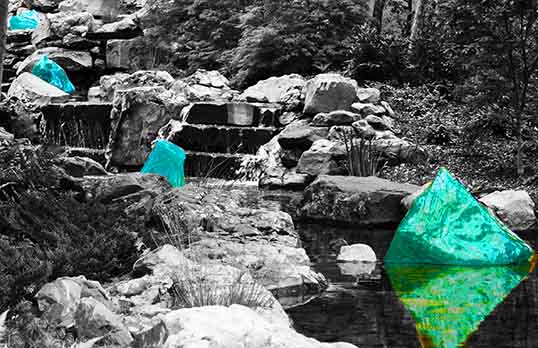
One of the many cool things about the installation is that you never knew when you would turn a corner and run into something unexpected. The artist placed large turquoise colored irregular blocks of glass in a rock creek that ran through the gardens. Water ran past the glass and tumbled down the artificial watercourse towards the lake. The glass looked like huge blocks of translucent ice – unexpected and beautiful.

The most powerful and ethereal beauty is that which is a surprise.

Quinceañera

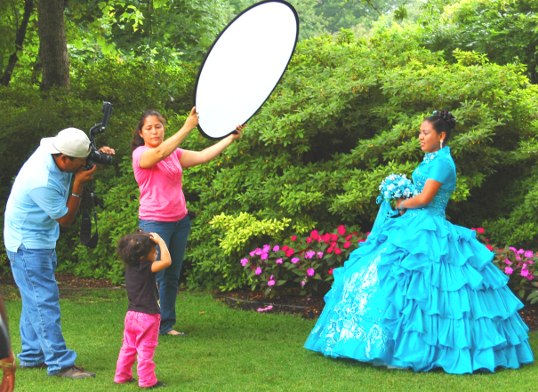
Everywhere I go there are crowds of people with cameras pointed at grinning subjects. From Canyon Creek to The Nasher, from the Arts District to New Orleans to the Farmer’s Market to the reflecting pool people are out posing while the photographer contorts with a huge hunk of semiconductors, injection molded plastic, and optical glass plastered to his eye.

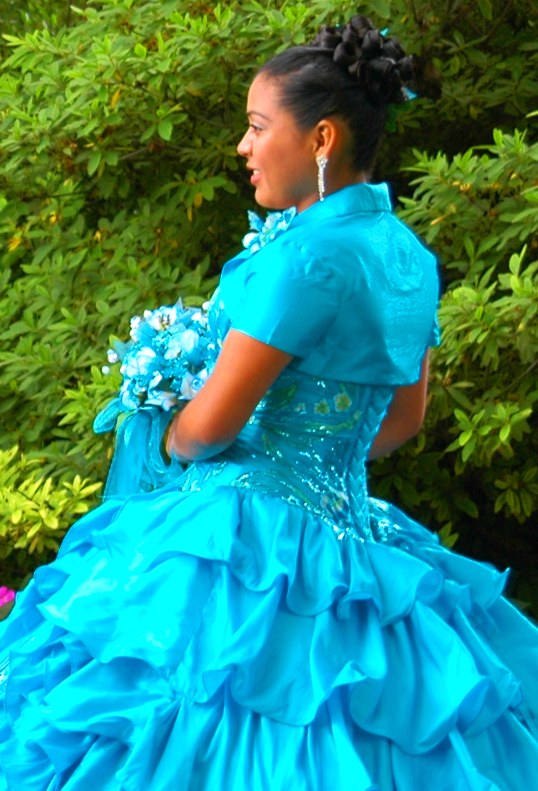
Fashion, weddings, or engagements, there they are preserving the moment for posterity and relatives’ mantel pieces. The most common, in Texas, right now, is the Quinceañera.

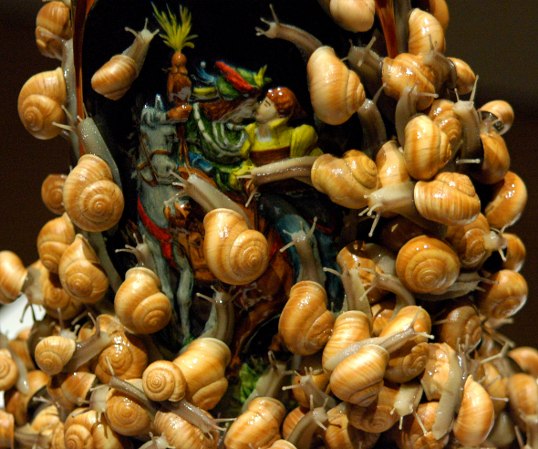
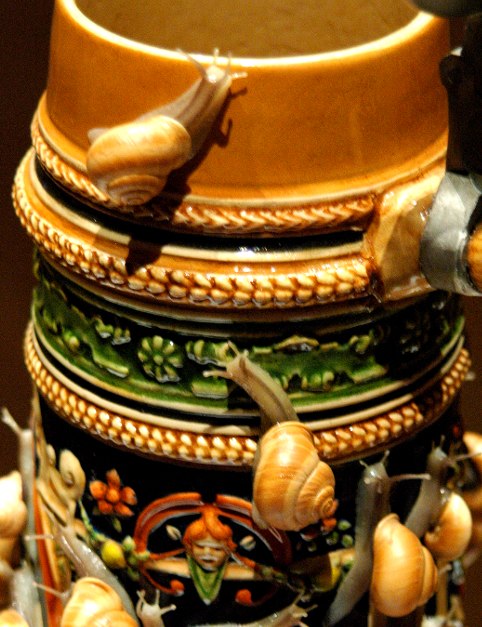
Eight Hundred Snails on a Beer Stein

“Look at that S Car Go!”

Snails on a Beer Stein.

Schwarmerei

On the way to the restrooms, down in the cool, dim Basement (where the deadly burning rays of the Museum Tower cannot reach) of the Nasher Sculpture Center is a room with three oddly disturbing sculptures. This is the first installation at the Nasher by a local artist. His name is Erick Swenson, and he makes strange meticulous tableaux out of resin, most involving animals in some stage of death or decomposition. They are arrestingly realistic and strangely surreal at the same time.

You can trap and kill snails and slugs in your garden with beer. This sculpture is called Schwärmerei – a German import to English that means something like fanatical enthusiasm, or the deadly insanity of the crowd (a word that could be fine-tuned and well-understood in Germany).

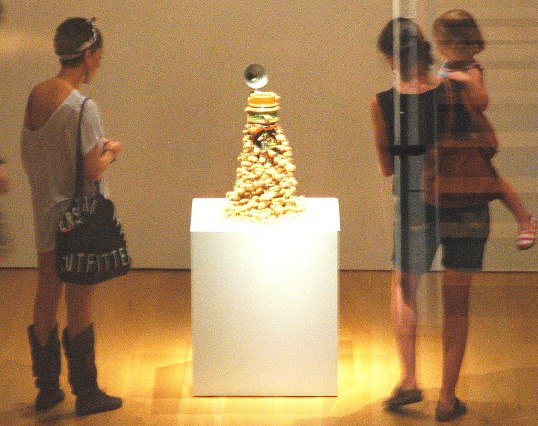
He says, “This is a static object. I’m asking you to look at this for more than three seconds. That’s hard to do sometimes. People just blow through stuff, you know. So it’s leaving things sort of enigmatic and open-ended.

I granted his wish, staying and staring, then photographing the Stein ‘N Snails. Other than the obvious metaphorical underpinning, it was a gorgeous and highly skilled work of craftsmanship. I can see it as an advertising piece for a new chain of eateries called the Brewpub Escargot.

Unfortunately, I don’t posses a macro lens or decent flash lighting so the photos do not do due justice. For a good picture of a snail go here. So I suppose y’all will have to go down to the Nasher and see for yourself. By the way, the third sculpture, the one hidden from the squeamish public behind the little wall, is a doozy… you are forewarned.

Most folks were spending more than three seconds at the sculpture.

Sunday Snippet – Character Sketches

When my writing group was wandering around the Dallas Arboretum doing our photography thing, I took a step to the side while we were in the Women’s Garden and looked down some steps into a large, rectangular formal garden setting. There, in the center of the garden, sitting on a wooden crate, was an attractive young couple, messing around with something that was wrapped in a complex packaging.

It was obviously a staged engagement. The couple was surrounded by smiling people, friends and relatives, all pointing cameras in their direction. I took a couple shots of the scene and moved on.

Now I have a picture of all these people I don’t know at all. That’s a good way to practice doing character sketches. I take a look at each one and try to make up their story.

I know that’s a nasty thing to do… make up a bunch of stupid lies about a group of complete strangers and then put the thing out on the web. But there is something about expectation of privacy at work here… and if you are going to get yourself engaged in the middle of a formal garden in the Dallas Arboretum on a Saturday Morning… well you can kiss any expectation of privacy goodbye.

So, here, without any further ado… I give you:

The Happy Couple

Roberta Bustamante
Franklin Sellars

They met when stuck next to each other for two hours on the Texas Twister ride at the second-rate amusement park Frontier Daze. The ride was upside down for the entire time with the riders hanging from their safety harnesses and Roberta liked that Franklin had smuggled in a sizable flask in his pant leg. Franklin had chugged a good part of the flask to empty it so Roberta would have a place to pee. She thought that was a chivalrous thing to do; he was impressed by the gymnastics.

The park had been rented out by Franklin’s boss, Tyrone Woodchipper and his company Acrasia Investments as a cheap morale booster. Franklin hated the place but felt he had to attend.

Franklin has never been given a straight answer as to why Roberta was there.

They dated for some time and then moved in with each other a year ago. Roberta had a much larger and more luxurious apartment but she insisted on moving into Franklin’s. He has always wondered how she could have afforded such a nice place and was disappointed they couldn’t move there. Franklin loved the window treatments.

Their long-range plans pretty much peter out at the end of their European honeymoon.

The Parents and entourage

Front to back:

Svetlana Bustamante (Roberta’s young half-sister)
Smithsonian (Smitty) Bustamante (Father)
Georgia Bustamante (Stepmother)
Metal Hurlant (Mrs. Sellars’ personal secretary – barely visible)
Claudia Sellars (Mother)
Freemont Sellars (Father)

Smitty is a widower – his first wife, Roberta’s mother, was killed in a mall parking lot – run down by a shoplifting suspect speeding in a pickup truck, fleeing mall security. Georgia was a mail order bride from the Ukraine. Smitty had never lived on his own and didn’t want to mess around with the dating scene. The little girl, Svetlana, is Georgia’s daughter. She left her behind with relatives and didn’t tell Smitty about her until they had been married a year – he immediately sent for her and loves her like his own.

In the back are Franklin’s parents Freemont and Claudia. He made a fortune off of the chain of furniture rental shops he inherited from his father. He always expected Franklin to follow in his footsteps but was secretly relieved when he went off on his own. Even though he undoubtedly loves his son – the kid always made him uneasy when he was around him too much.

The two, Freemont and Claudia, were high school sweethearts. They watch a lot of television. He collects antique watches, she likes to crochet.

Next to Claudia, barely visible in the photograph, is Claudia’s personal secretary who was originally hired from France as an au pair to help raise their daughter, Penelope. Her name is Metal Hurlant – and is from Marseilles – although Claudia tells everybody she is from Paris. Metal organized and set up the whole engagement extravaganza.

Jimmy Bustamante

Roberta’s little brother. He was an infant when his mother was killed and doesn’t remember her at all.

He has been in a very good mood lately after finding a motherlode of illegal drugs hidden in what used to be Roberta’s underwear drawer. He made the discovery when he finally moved into her bedroom after she became engaged and made it clear she would not be moving home.

The drugs were stashed there in a panic by Joaquin Smirnov – a handsome yet terribly addled fling of Roberta’s. Joaquin panicked and threw the bundle of baggies into the drawer when he heard Franklin, Roberta’s fiancé, coming up the stairs. Joaquin hid under the bed, naked, while Franklin paced around, waiting for Roberta, upset (he suspected something) for over an hour and a half. Roberta, unknown to anyone, had gone downstairs for a glass of ice water and bailed out the back door when Franklin drove up and was hiding, also naked, in a large clump of ornamental grass waiting for him to leave.

Joaquin forgot about the stash due to the strain of hiding under the bed for ninety minutes. The drugs stayed there for Jimmy to find because Roberta never looked in the drawer – she hasn’t worn underwear for a year and a half.

Jimmy is now the most popular kid in General George S. Patton Junior High School. He is taking photos with the new hi-tech Nikon compact camera he bought with sale proceeds.

Wendal Fruitbat

He is Metal Hurlant’s boyfriend, though nobody in the family knows this. She is madly in love with him. Their only discussion of the future has been her telling him that if they ever marry, she will not take his last name. He understands perfectly that she does not want to go by the name Metal Fruitbat.

She hired him for the engagement when he told her he had been his high school yearbook photographer. Metal rented him his equipment. Unfortunately, though Wendal is a good person generally, he is a helpless inveterate liar. He knows nothing about photography and is currently using a terrifically expensive camera without a data card.

Reginald Von Sample.

He is Franklin’s oldest and closest friend. They met by random their freshman year at university when they were put in a room together due to an experimental and controversial software program that analyzed students’ admission essays and placed freshmen that the algorithms deemed compatible. They lived the entire six years of both their undergraduate studies together in the same dormitory room.

Reginald left after graduation for a stint in the Merchant Marine. He said he wanted to see the world. He returned two years early and said there didn’t seem to be much out there worth seeing. He moved back in with Franklin until there was a nasty drunken argument late one night. Reginald suffered a serious cut under one arm that seemed to be inflicted by a Cuisinart Chef’s knife. He declined to press charges but moved out.

There was a distance between Reginald and Franklin after this, but the engagement seems to have brought them close together again.

Deasel Widdershins

Deasel is a private investigator hired by an unknown person (even to herself). She receives her instructions by anonymous email and payment through a mysterious Paypal account. She has been instructed to get to know the family and report on anything untoward.

Her cover story is that she is a scout for an obscure cable channel that is considering a newlywed reality show.

It was made clear that she was selected due to a reputation of absolute trustworthiness. Her honesty is not accompanied by competency, however, and she has not found out anything interesting yet.

Penelope Sellars

Franklin’s little sister. She is at that confusing age… made even more confusing by the sudden appearance of deep feelings for her brother’s fiancé. She has made the decision to simply go with it and see what happens. She doesn’t really have any choice.

Tyrone Woodchipper

He has been the Sugardaddy to the soon-to-be blushing bride for the last three years. He made his fortune through his company, Acrasia Investments, which advertises itself as offering speculation in arbitrage futures, but is in reality a front used by Mexican drug cartels to launder their United States profits.

He met Roberta through his son, Luther, who saw her briefly but passionately after their meeting at a speed-dating event. Roberta had an acrimonious breakup with Luther a month after she started sleeping with his father.

Tyrone has very mixed feelings about his mistress’ upcoming nuptials. He is glad that her husband works for him, which will enable him to keep her around easily, but he feels his manhood threatened in general. He is not getting any younger.

Luther Woodchipper (hiding in bushes)

Luther has never recovered from his breakup with Roberta and desperately manages to keep tabs despite the various court issued restraining orders. He doesn’t know what he will do but knows that whatever it is, it has to be soon.