“…and then, I have nature and art and poetry, and if that is not enough, what is enough?”
― Vincent van Gogh

Vortex
Richard Serra
Modern Art Museum of Fort Worth
“…and then, I have nature and art and poetry, and if that is not enough, what is enough?”
― Vincent van Gogh
Vortex
Richard Serra
Modern Art Museum of Fort Worth
“To photograph people is to violate them, by seeing them as they never see themselves, by having knowledge of them that they can never have; it turns people into objects that can be symbolically possessed. Just as a camera is a sublimation of the gun, to photograph someone is a subliminal murder – a soft murder, appropriate to a sad, frightened time.”
― Susan Sontag, On Photography

Modern Art Museum of Fort Worth
Fort Worth, Texas
“I mean, they say you die twice. One time when you stop breathing and a second time, a bit later on, when somebody says your name for the last time.”
― Banksy

Roll Up Door
Tony Bones, 2008
Deep Ellum
Dallas, Texas
2008 Artwork by Tony Bones
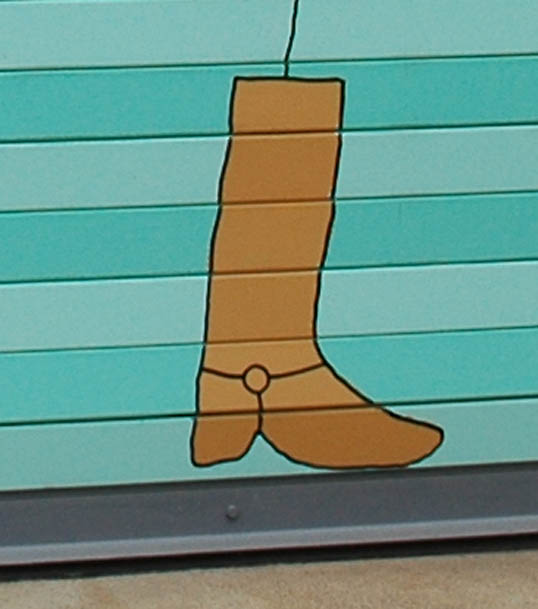
Tony Bones
detail
“Once upon a time, there was a king who ruled a great and glorious nation. Favourite amongst his subjects was the court painter of whom he was very proud. Everybody agreed this wizzened old man pianted the greatest pictures in the whole kingdom and the king would spend hours each day gazing at them in wonder. However, one day a dirty and dishevelled stranger presented himself at the court claiming that in fact he was the greatest painter in the land. The indignant king decreed a competition would be held between the two artists, confident it would teach the vagabond an embarrassing lesson. Within a month they were both to produce a masterpiece that would out do the other. After thirty days of working feverishly day and night, both artists were ready. They placed their paintings, each hidden by a cloth, on easels in the great hall of the castle. As a large crowd gathered, the king ordered the cloth be pulled first from the court artist’s easel. Everyone gasped as before them was revealed a wonderful oil painting of a table set with a feast. At its centre was an ornate bowl full of exotic fruits glistening moistly in the dawn light. As the crowd gazed admiringly, a sparrow perched high up on the rafters of the hall swooped down and hungrily tried to snatch one of the grapes from the painted bowl only to hit the canvas and fall down dead with shock at the feet of the king. ’Aha!’ exclaimed the king. ’My artist has produced a painting so wonderful it has fooled nature herself, surely you must agree that he is the greatest painter who ever lived!’ But the vagabond said nothing and stared solemnly at his feet. ’Now, pull the blanket from your painting and let us see what you have for us,’ cried the king. But the tramp remained motionless and said nothing. Growing impatient, the king stepped forward and reached out to grab the blanket only to freeze in horror at the last moment. ’You see,’ said the tramp quietly, ’there is no blanket covering the painting. This is actually just a painting of a cloth covering a painting. And whereas your famous artist is content to fool nature, I’ve made the king of the whole country look like a clueless little twat.”
― Banksy, Wall and Piece
I think the key image of the 20th century is the man in the motor car. It sums up everything: the elements of speed, drama, aggression, the junction of advertising and consumer goods with the technological landscape. The sense of violence and desire, power and energy; the shared experience of moving together through an elaborately signalled landscape.
We spend a substantial part of our lives in the motor car, and the experience of driving condenses many of the experiences of being a human being…, the marriage of the physical aspects of ourselves with the imaginative and technological aspects of our lives. I think the 20th century reaches its highest expression on the highway. Everything is there: the speed and violence of our age; the strange love affair with the machine, with its own death.
—-J.G. Ballard, Narration for Crash! (1971), a short film by Harley Cokeliss

(click to enlarge)
“In a sense life in the high-rise had begun to resemble the world outside – there were the same ruthlessness and agression concealed within a set of polite conventions.”
― J.G. Ballard, High-Rise
“The industries were there because of the river. They had come for its navigational convenience and its fresh water. They would not, and could not, linger beside a tidal creek. For nature to take its course was simply unthinkable. The Sixth World War would do less damage to southern Louisiana. Nature, in this place, had become an enemy of the state.”
—- John McPhee, The Control of Nature, Atchafalaya

(click to enlarge)
The structure was obviously undermined, but how much so, and where? What was solid, what was not? What was directly below the gates and the roadway? With a diamond drill, in a central position, they bored the first of many holes in the structure. When they had penetrated to basal levels, they lowered a television camera into the hole. They saw fish.
—-John McPhee, The Control of Nature
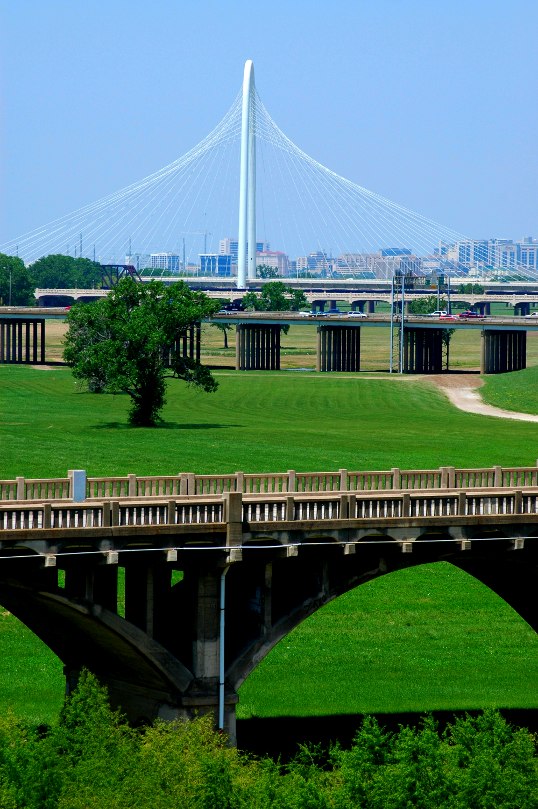
View from the high point of the Jefferson Viaduct Cycletrack, Trinity River, Dallas, Texas
I have been struggling with a nasty something – maybe nothing more than a stubborn cold – since Christmas or so. I took a look at my notes (the good thing about obscessive journaling – I have notes going back decades) and realized I always get sick on the days between Christmas and New Year. Maybe it’s an allergy to not going to work.
At any rate, since I have been unable to breathe (that oxygen addiction – a nasty habit) and the weather outside has been frightful I haven’t been riding my bike. I really miss it. Yesterday, I was able to get out and ride around the neighborhood. Though I was obviously out of shape and unused to the saddle, it was fun. So today I decided to take a longer ride.
A while back, I went to the Nasher for a lecture on Nasher Xchange – an ambitious art installation that involves ten varied works all across the city. During the lecture, the artists and organizers repeatedly emphasized the size of Dallas, how it is all spread out, and how much driving is involved in getting to all of the sites of the exhibition. One inspiration for the Nasher Xchange is the Skulptur Projekte Münster – which is held every ten years. Munster is so much more compact that Dallas, however, and they talked about how much different it is to have a similar exhibition in a car-based city like Dallas.
This is all true, of course – but I take exception to the whole car thing. By combining a bicycle with the DART train, you can move all over the city – a little slower, of course, but in a more interesting way – without a car.
So I decided to visit the Nasher Xchange sites without use of a car. Some of them are not really permanent, so it may not work out, but eight at least are doable. The thing will end February 16 – so it’s time to get crackin’.
I’ve been to three so far. I’ll write blogs about them when I’m done. I’ve been thinking about dear sunset by Ugo Rondinone and how best to visit it by bicycle. It’s a multicolored wooden pier jutting out into Fishtrap Lake, in West Dallas. There is no train station nearby, so a substantial bike ride will be needed.
Another thing in my “Things to do” list for 2014 is to organize a bicycle ride. An idea turned over in my head – organize a bike ride from the 8th and Corinth DART station, down the Santa Fe Trestle Trail and then north along the gravel roads in the Trinity River Bottoms to Hampton Road, on to Fishtrap Lake, and then back. It’s a six and a half mile route, one way, thirteen miles total. Not too far for a recreational ride.

Trinity River, Dallas, Texas
(click to enlarge)
The only thing was, I was not familiar with the route at all. There’s a lot of construction down there, and I wasn’t sure of the condition of those roads – would they be muddy? Too rough?
So I decided to do the ride today. And it was a blast. The roads are bumpy in some places (they are actually paved in a few) but nothing a fat tire bike couldn’t get through. The route is, of course, flat, and the scenery is pretty impressive. If you’ve never been in the Trinity River Bottoms, it’s a surreal mixture of vast open floodplain with giant city skyscrapers looming up on the horizon.

Trinity River Bottoms
(click to enlarge)
The only negative was that it was very, very windy down there. Thirty mile per hour southerly winds made it a struggle going one way (though I barely had to pedal going the other). I was pretty worn out by the end. But that’s… well, if not rare… not an everyday condition.
So I think I’ll go ahead and set a date, start the thing in motion. Next weekend is already spoken for, but I’ll see if I can find a Saturday in there sometime.
Hope the weather is good.

My commuter bike along the gravel road in the Trinity River Bottoms
(click to enlarge)
“A well-known scientist (some say it was Bertrand Russell) once gave a public lecture on astronomy. He described how the earth orbits around the sun and how the sun, in turn, orbits around the center of a vast collection of stars called our galaxy. At the end of the lecture, a little old lady at the back of the room got up and said: “What you have told us is rubbish. The world is really a flat plate supported on the back of a giant tortoise.” The scientist gave a superior smile before replying, “What is the tortoise standing on?” “You’re very clever, young man, very clever, ” said the old lady. “But it’s turtles all the way down!”
― Stephen Hawking, A Brief History of Time

Audubon Park, New Orleans
(click to enlarge)

Audubon Park, New Orleans
(click to enlarge)
Audubon Park, New Orleans
“i see you drinking at a fountain with tiny
blue hands, no, your hands are not tiny
they are small, and the fountain is in France
where you write me that last letter and
I answered and never heard from you again.
ANGELS AND GOD, all in uppercase, and you
knew famous artists and most of them
were your lovers, and I wrote back, it’s all right,
go ahead, enter their lives, I’m not jealous
because we’ve never met. we got close once in
New Orleans, one half block, but never met, never
touched. so you went with the famous and wrote
about the famous, and, of course, what you found out
is that the famous are worried about
their fame- not the beautiful young girl in bed
with them, who gives them that, and then awakens
in the morning to write upper case poems about
ANGELS AND GOD.”
—-An Almost Made Up Poem, Charles Bukowski
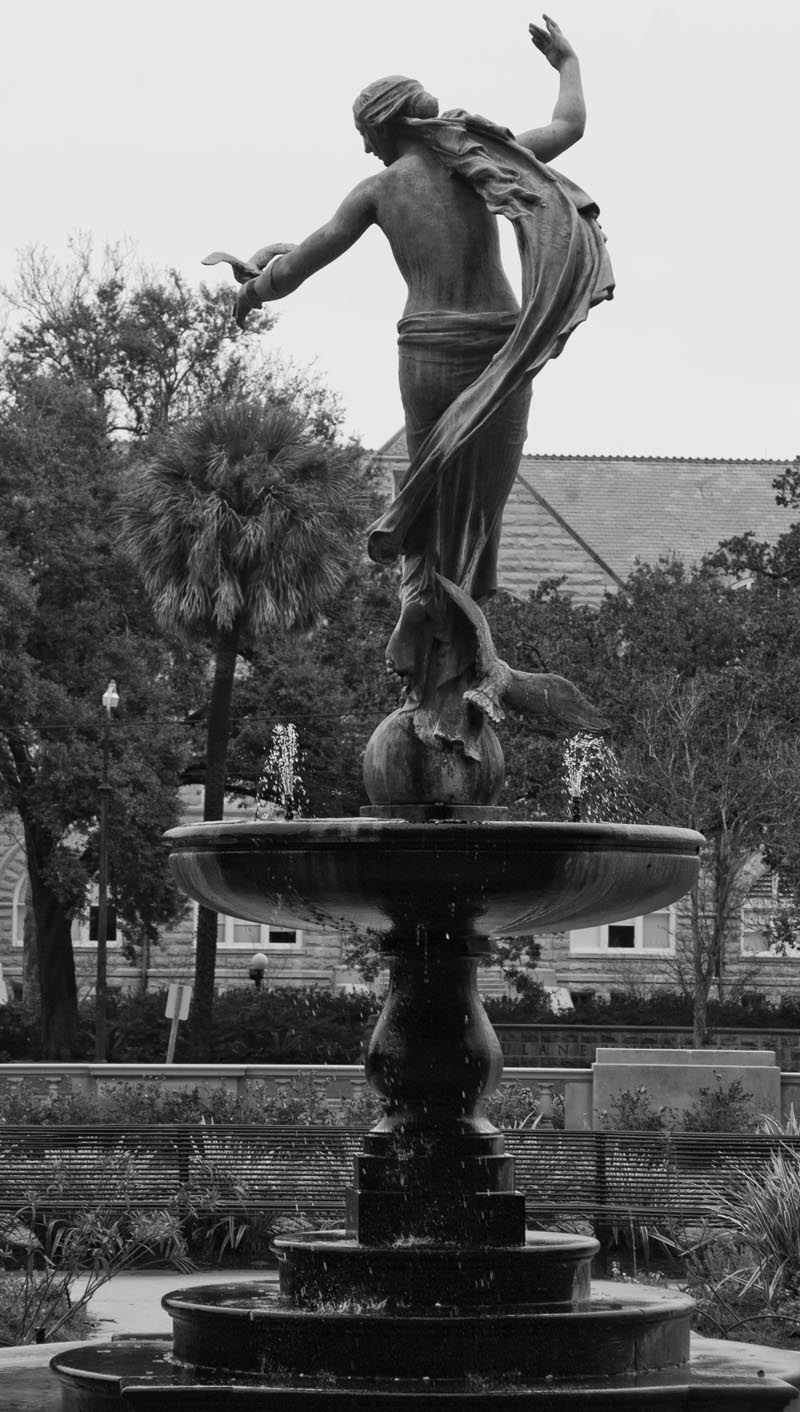
Audubon Park, New Orleans
(click to enlarge)

Audubon Park, New Orleans
(click to enlarge)
If you have the open mind, patience, and spirit of exploration there are few things as fun as watching a city bloom. It doesn’t happen everywhere, all at once, but springs from many tiny seeds – all over the place – especially where you least expect it.
All these cool places spring up. I’ve been watching it here in Dallas for years. Sometimes it’s in a spot where I remember fast times from long ago and sadly watched fade until a miraculous Renaissance appears – places like Deep Ellum or Lower Greenville. Or maybe its an area that has never been hip – or at least has been forgotten for generations – like Bishop Arts, or The Cedars. It may be an area conceived in high places and supported by big money like the Dallas Arts District or Uptown. Or it may be someplace bootstraping itself up out of a blasted industrial wasteland like Trinity Groves or the Design District.
Use your internet connection and your feet and your bicycle and get to know these places… before they are too hip and unaffordable. It’s a roller coaster ride and you need to get off before the crash… but in the meantime – it can be a fun ride.
All cities go through ups and downs – but nowhere has higher ups or lower downs than New Orleans. It, more than anywhere else is a city of unique neighborhoods – every one worth exploring, learning, and immersing.
One little new stretch of entertaining street is near where my son lives – it’s a district called Freret.
From an article on Gadling.com:
Freret began as a commercial area for people who were left out of New Orleans’ most powerful social groups: the French Creoles, who governed old society, and the wealthy “English” traders and business owners, who dominated the CBD and built their homes in the Garden District. Instead, the neighborhood, named for brothers William and James Freret, became a refuge for Italian and Jewish residents, who shared the commercial district.
But population shifts took place in the 1950s, driving middle class residents to the suburbs, and by the 1980s, when bakery owner Bill Long was shot and killed in the doorway of his store, Freret was disintegrating.
Help came in 2001 when the National Trust for Historic Preservation adopted Freret Street under its Main Street program. Yet, the neighborhood took a body blow from Katrina, whose damage can still be seen, and its comeback never seemed farther away.
But seven years after the storm, Freret is a symbol of the New New Orleans, where a handful of business pioneers and long time stall warts provided the nucleus for its growth to take place. Bars, restaurants, businesses, and a monthly fair have popped up in a few short years, and the sounds of construction resonate as cars and pedestrians ply the bumpy street between Tulane and Loyola Universities.
Lee was working and I needed to find some place to eat… and I had seen on Thrillist that a hot dog place called Dat Dog was listed as one of the “Coolest Restaurants in Town.” So I rode my bike down there.
It is a special, cool little stretch of street – it stands out in variety and quality even in a city as full of options like New Orleans. Restaurants, bars, specialty shops – even a couple of small theater spaces… Every night there was a young, hip crowd spilling out onto the sidewalks… and even filling overhead balconies with mirth and conversation.
Unfortunately, I had to settle for an excellent hot dog (local spicy dog, with bacon and sauerkraut – next time I need to be more adventurous on the toppings) before it was time to head back. But if you are looking to get out of the French Quarter (and you should be) Freret might be a place to look for.
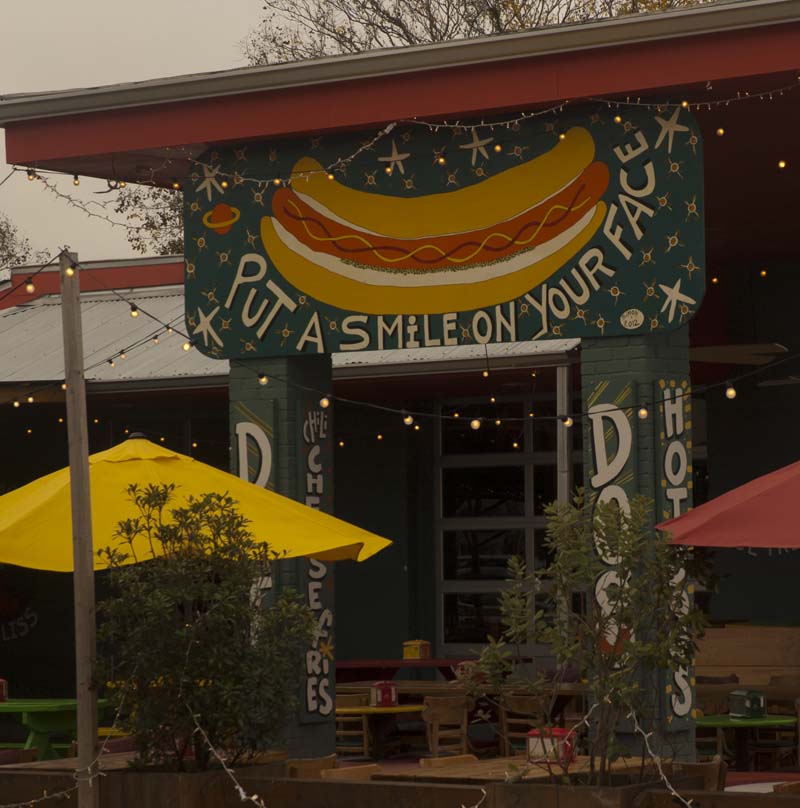
Dat Dog, Freret Street, New Orleans
(click to enlarge)
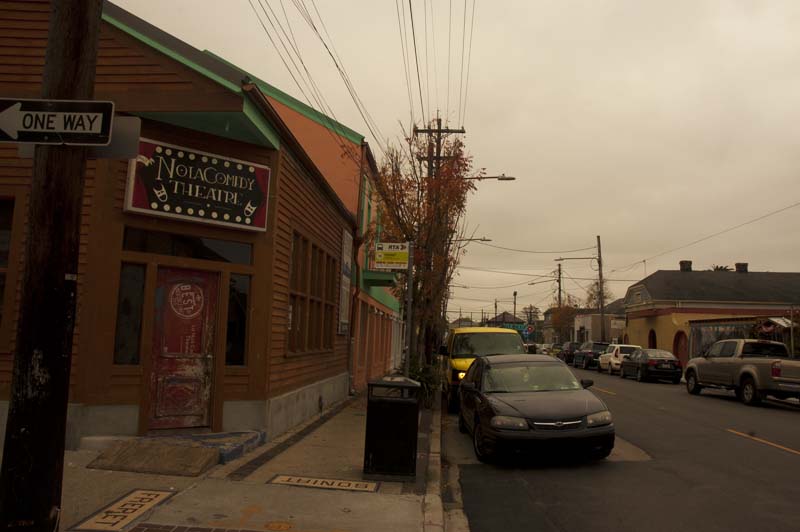
Freret Street, New Orleans
(click to enlarge)
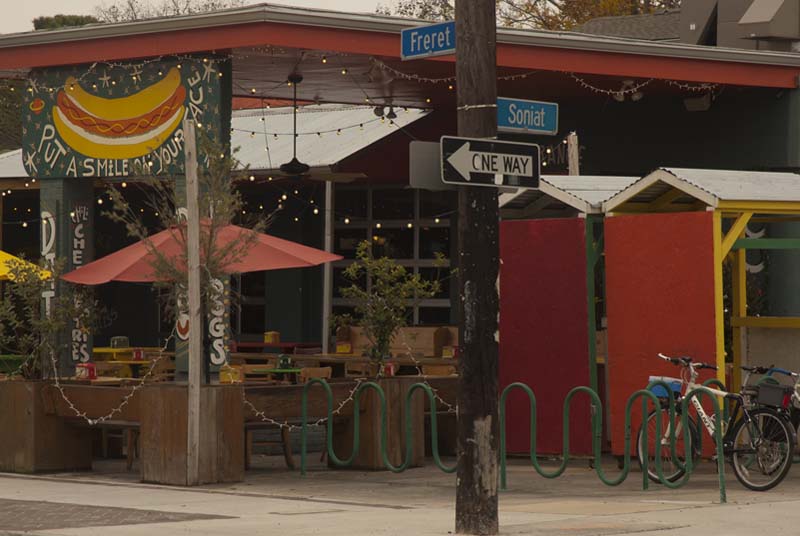
Freret Street, New Orleans
(click to enlarge)
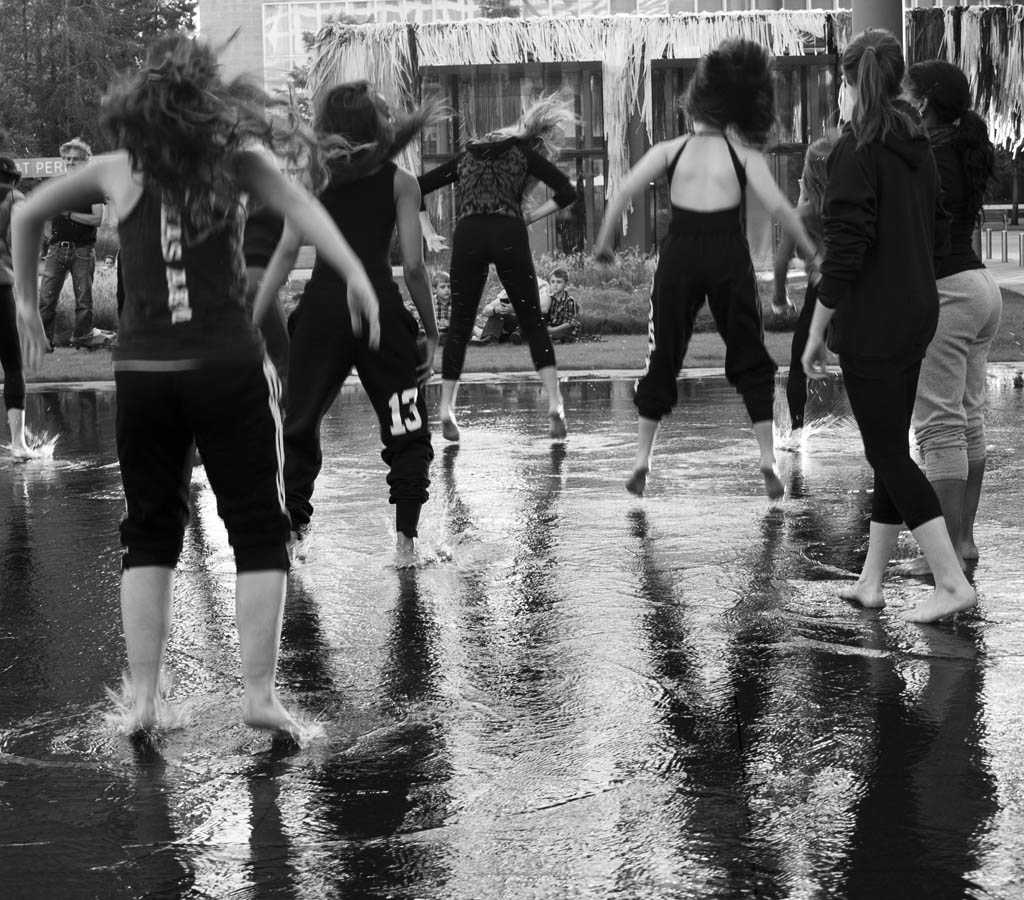
 Bill Chance