“For fucksake became a regular word in her vocabulary.”
―Andi Boyd, The Inconvenient Dead

Your friends and relatives can be a pain – but you miss them when they are gone
Inconvenient Dead by Andi Boyd
From Drunkenboat
“For fucksake became a regular word in her vocabulary.”
―Andi Boyd, The Inconvenient Dead
Your friends and relatives can be a pain – but you miss them when they are gone
From Drunkenboat

A writing group I used to attend in the pre-sickness and Pre-Covid days is now meeting on ZOOM. I re-joined this week and I’m glad I did. This meeting was “Fun With Writing Prompts” and here’s a couple silly little things I wrote.
The first prompt was three things:
We wrote for a half hour. This is what I came up with:
The sign on the door said “Wilbur’s Taxidermy” and the man walked up clutching a ragged piece of paper.
He entered the shop and rang a bell on the counter. A rear door opened to a wave of foul, chemical soiled air. A man wearing a thick plastic apron, long rubber gloves and heavy protective goggles emerged and took up a spot behind the counter.
“Well,” he said.
“You must be Wilbur,” the customer said.
“Nope, Wilbur was the moron that I bought the shop from. Total failure. I never felt like changing the sign, though. Name’s Sam.” He thrust out a rubber-gloved hand.
“Uhh,” the customer said, “I’m not sure if I should…”
“Of course,” Sam replied, “Sorry, I forget sometimes,” and removed the glove.
The customer still didn’t shake his hand. “My name’s Glover, Richmond Glover, but everyone calls me Glover. I was wondering if you can stuff something for me.”
“We prefer to call it ‘preserving’ if you don’t mind. And yes, I can preserve something for you, Mr. Glover.”
Glover didn’t reply right away. He looked increasingly nervous, fidgeting and shifting his weight from one foot to the other. He took the scrap of paper and smoothed it out on the counter and looked at it. Sam the taxidermist could see that it was a hand-written note, torn in half.
“Well, Mr. Glover, I’m afraid I’m going to need some more information.”
“Ahh, yes, you see… this isn’t the usual job that you see every day.”
“I think you would be surprised at how… unusual… some of the jobs that I have done.”
“Not like this. I would like to preserve… I like that word… something that is very near and dear to me.”
“Yes.”
“Very. Very. Very near and dear.” Glover looked again at the paper held against the counter.”
“Excuse me Mr. Glover. What is that paper? Why is it torn?”
“Oh this… it’s a lover letter. One I received a year ago. From someone… very near and dear to me.”
“Again, Why is it torn like that”
“They tore it trying to snatch it from my hand.”
“So this person had a change of heart regarding your affections?”
“That would be an understatement. But back to business.. how large of a specimen are you able to preserve?”
“Oh, I’ve done moose heads.. a bison head or two. How large are you needing.”
“About ten stone… that’s one hundred forty pounds.”
“That’s big, but doable. About how long?”
Glover moved his hand down from his forehead to just above his chin. “This long. What, about five foot three inches.”
“Is that length or height?”
“Both, really, I suppose. You haven’t asked what species it is.”
“Doesn’t matter, really. As long as it’s a mammal. Reptile skin, or fish, that’s another thing altogether.”
“Oh good.”
“And what condition is this thing that is very near and dear to you? Is it frozen? Fresh?
“Oh,” said Glover, “It’s fresh, very fresh. As a matter of fact, right now it’s still alive. And I might be able to use some help with that aspect of the job, too.”
“Mr. Glover… I think you are outlining a very, very expensive preservation job.”
“I promise, money is no object. No object at all.”
That’s as far as I got.
The second exercise was to write a hundred words. It had to start with the phrase, “There I was, just standing there, when what I wanted to do was forbidden.” It also had to contain the phrase, “A dark and stormy night.”
When I stopped writing I had about a hundred and thirteen words. Some quick editing and it was exactly one hundred.
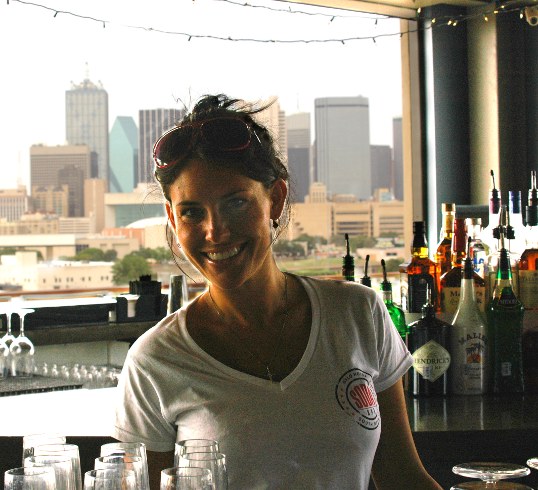
There I was, just standing there, when what I wanted to do was forbidden. The bar was stretched out before me and I had a new drink I wanted to mix. Curacao and rum and other good stuff. It had a name. A Dark and Stormy. Night had fallen and the bar was crowded. When the barkeep was busy at the other end, I reached across, grabbed the bottles and started to mix.
“Hey! The bartender yelled, “You again!”
“This time it’ll be good, I promise!”
I stirred and shook like crazy while the bartender reached for her baseball bat.

After all these years, the bicycle/pedestrian bridge over the Trinity River here in Dallas is being fixed and will open at the end of the year. I’m happy about this – but what an incompetent shitshow it has been. For 125 million dollars you should be able to put in a hell of a bike bridge.

Bicycle Drag Races
Margaret Hunt Hill Bridge
Dallas, Texas
As I’ve mentioned before, now that I’ve switched to Strava to track my bike rides, I am fascinated with the Strava Heatmap. If you don’t know – the Heatmap is where Strava collects information from everyone using its service and presents the runners, bikers, watersports, and/or skiers aggregate routes on a map. Here’s the heatmap (running and biking) of the area around my house. The bright yellow horizontal line is the bike trail behind my house. Across the street is the oval where people run the track next to Apollo middle school (this disappears if you click on Biking alone). To the Northwest, along Plano Street up to Arapaho, then diagonally along the creek to Collins, is a new bike trail the city just finished. There are only a few folks using it now – and there is only a thin purple line on the heat map. I intend to ride it with my Strava as much as I can and want to see how the line becomes brighter over time.
The Heatmap is international and I like looking for odd or surprising things.
For example, can you guess what This Odd Shape represents. I was able to, even though I’ve never been there.
I love discovering new words. Here is one, Acedia – that, unfortunately, is very useful right now.
One of my goals for the year is to up my decluttering game. I need all the help I can get.
I found this collection of writing prompts from Poets & Writers Magazine. They are more sophisticated than the usual ones. There are three weekly (fiction, nonfiction, and poetry) but their archive goes way back. Cool.
Writing in my Moleskine Journal outside the Mojo Lounge, Decatur Street, French Quarter, New Orleans
If you like visual writing prompts, take a look at this collection of links to museum art collections. Be careful, though – this can be a rabbit hole waste of time.
Here’s a collection (from archive.org) of Pulp magazine, books, all sorts of stuff. Again, beware, it can be a rabbit hole. Also, rather spectacularly politically incorrect (which can be a good thing, IMHO).

Gratuitous Pulp Paperback Cover
I have found that watching these YouTube videos of dance mashups – uptempo songs with bits of dance from movies or filmed folks – makes the time on my exercise bike go by quickly (that and POV videos of people riding in beautiful places). I have a big TV right in front of my spin bike. It’s embarrassing when someone catches me watching these – but what the hell.
Here’s some examples:
Safety Dance? I actually liked this song back in the 80’s. Yeesh! Still, the remix has a good beat.
“Why didn’t I learn to treat everything like it was the last time. My greatest regret was how much I believed in the future.”
― Jonathan Safran Foer, Extremely Loud & Incredibly Close

““Words can be like X-rays if you use them properly — they’ll go through anything. You read and you’re pierced.”
― Aldous Huxley, Brave New World

““I am all in a sea of wonders. I doubt; I fear; I think strange things, which I dare not confess to my own soul.”
― Bram Stoker, Dracula

There is terror in the woods and terror in the well, but the worst of all is time – the irresistible, inevitable, and, omnipotent ignominy.
“I was born on a storm-swept rock and hate the soft growth of sun-baked lands where there is no frost in men’s bones. ”
― Liam O’Flaherty

Though I am partially of Irish heritage (and Scottish and German and Native American and ???) I know nothing of Irish history. This short story is set in the Battle of Dublin in June of 1922 and it an arresting testament to the horrors of war and the particular horrors of civil war. I think it might get me to do some research and reading. Another rabbit hole.
“You see, in this world, there is one awful thing, and that is that everyone has his reasons.”
― Jean Renoir

So yesterday, I finished La Bête humaine by Emile Zola.
I have written before about my love for the streaming wonderfulness of The Criterion Channel. So tonight I sat down and watched the 1938 film by Jean Renoir, his version of Zola’s La Bête humaine.
It was very good – though very different than the book. The plot was significantly trimmed down – most of the murders were gone (only the two key homicides were left). The big set pieces were cut too, for time and also, probably for budget – the special effects cost for train wrecks and blizzards has to be enormous.
What is left is a more personal story, one of the first examples of film noir – with a femme fatale (Simone Simon – who I recognized from Cat People, filmed a few years later). A love triangle, murder, and Zola’s inherited madness make for a lively time.
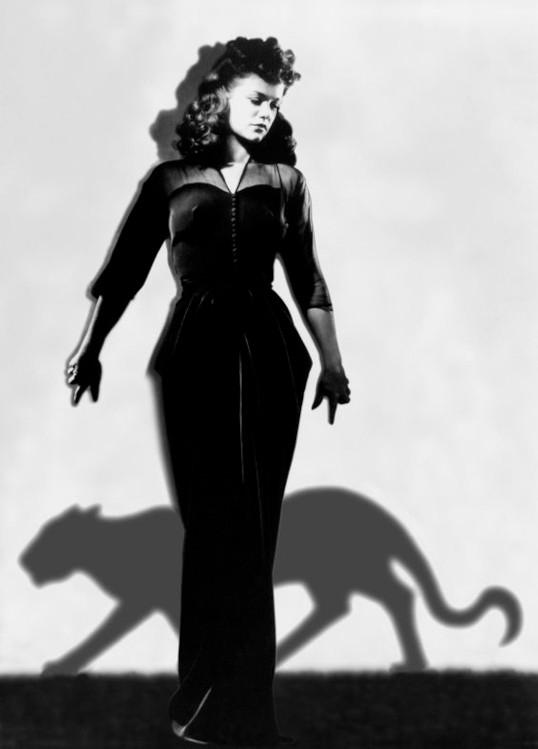
Renoir’s genius is in his ability to make his characters come alive on screen. He also shows a wonderful respect for the working class folks that populate the story. Even at their worst – his characters have their reasons, they are driven by the sins of the past.
It did still have the trains, though. The plot moves along like a hot steam engine on a track. A lot of the film was done on location instead of in studio – which added a gritty realism to the story. The Criterion Channel had an interview with Peter Bogdanovich who said that the original impetus for the film was that the star, Jean Gabin, wanted to make a movie where he got to drive a train.
“Don’t go looking at me like that because you’ll wear your eyes out.”
― Emile Zola, La Bête humaine

It’s been awhile… since September, 2018, to be exact. For two and a half years I have been working my way through the 20 novels of Émile Zola’s Les Rougon-Macquart series. So far:
Looking at this list, I realize I read L’Œuvre (1886) (The Masterpiece) this summer and never wrote a blog entry about it. Sorry. It was good, not the best of the series, but an interesting take on the artistic life and the madness behind it. I’ll write it up in the next few days, once I think about it and take a look at the text again.
I have been neglecting Zola lately, mostly because I’ve been participating in a Zoom group that is reading Dostoevsky’s The Brother’s Karamazov (which I have been enjoying immensely). We took a bit of a break over the holidays and I used the time to devour La Bête humaine.
I had read a paperback copy of La Bête humaine years and years ago – but I remembered very little about it other than it had trains and murders.
WOW. This is one hell of a book. One surprising thing about the 20 books in the Rougon-Marquart universe is how wildly diverse they are. They range from frilly romance to gritty poverty to hopeless alcoholism to rampant greed. And now, we have this.
La Bête humaine is a book of murder(s). By the end of the story pretty much every major character is a killer, a victim, or both. All these murders sans one stem from the same cause – jealous rage. The one other example is a chilling description of a compulsive killer, consumed by powerful, mysterious violent urges of madness, insanity, and desire. The wheels of justice don’t help much – they turn slowly, then grind to a stop. The only innocent character is eventually blamed and convicted.
It is a novel of the railroad. Specifically, the nineteenth century steam engines that ran between Paris and the coast at Le Havre. Zola’s prodigious powers of description are used to paint portraits of the stations, the line, and especially the powerful engine “La Lison” which becomes practically a living character imbued with almost sexual powers.
Finally, it is a novel of arresting and amazing set pieces. The entire chapter where a wagon containing two huge hunks of rock is pushed into the path of “La Lison” is one of the most sensational and electrifying chunks of text I have ever read. There are horrifying killings, terrifying betrayals, and moments of sexual tension surprising for a classic novel. The final scene, especially, is chilling and horrific, even though it ends before the inevitable apocalypse.
There are free public domain versions of the novel available (from Project Gutenberg and other places) but I am glad I bought the excellent Roger Pearson translation from Oxford World Classics. It is written in a modern style, which fits this story very well.
So this was an enjoyable, if horrific, read. And now, on to Germinal, arguably the best in the series. I’ve already bought a good translation and am ready to go. However, I will wait until the end of January, have to finish The Brothers Karamazov first.
So little time, so many books.
“I love deadlines. I like the whooshing sound they make as they fly by.”
― Douglas Adams

Like I said Yesterday – It’s that time of the year again. Most nowadays eschew New Year’s Resolutions. And this year, after the horrible shitshow that was 2020 a lot of people will be happy to survive. However, since I had a few days off work over the holidays and there is nothing to do because of the virus I decided to wax philosophical and make some plans for the upcoming year.
OK, first… my actual goals, more or less:
Weight loss – won’t bore you with this – everybody has this as their #1 goal… pretty much. So there it is.
Cycle equivalent – 3,000 days. Ten miles a day, with a few days off. This is either a real mile on a real bike or an equivalent on my spin bike. I put an odometer on the thing so I can measure it. The spin bike is a little easier than the streets, a little quicker… so be it.
Submit 100 short stories for publication (2 per week). I have well over 100 short stories written. But writing isn’t writing, editing is writing. I will edit… and submit. Any ideas or suggestions would be appreciated.
Publish 2 ebooks of short stories. One tentatively would be 100 Days of Flash… the other 30 Bad Ways to Die.
Write cumulative 300 words of fiction a day. This is about one hour a day of writing. I intend for the cycling goal above to be pretty much every day, while the fiction writing goal to be mostly a weekly thing. 2100 words a week.
…And those are the major goals. I went ahead and jotted some minor goals down, more as ideas.
I have to be careful about daily habits/goals. I can really pile them on and there are only so many hours in the day.
I also made a list of tools that I intend to add to/edit as the year goes on:
 Bill Chance