Short Story Day 6 – Gooseberries

6. – Gooseberries
Anton Chekhov
http://www.eldritchpress.org/ac/gooseb.html

This is day six of my Month of Short Stories – a story a day for June.

After a string of modern and post-modern works, we swing back to a classic master – Anton Chekhov. He wrote a prodigious number of stories on a wide variety of subjects, but all of them were uniquely his own unmistakable style. Often known more as a playwright, his masterly short stories may be his greatest achievement.

I have always been a fan of his famous story, The Lady with the Dog -(audio version). A few days ago, I wrote about Joyce Carol Oates. She produced a story, The Lady with the Pet Dog, which was a modern adaptation of the same tale, told from the point of view of the woman (with the dog). Together, the Oates and Chekhov versions make for some good reading and an interesting comparison.

Today’s story, “Gooseberries” is one of Chekhov’s later works, and is full of his characteristic ambiguity, moral questioning, and general good cheer. It is very attentive to the minutiae of daily life and the author manipulates these details to define and enrich the message and morals that he wants to convey.

Three men spend the day talking, and one tells a long “story within a story” which, on closer inspection has a very close relationship to the outer, framing story. The inner tale fails to interest the listeners, which makes the outer story that much more subtle and effective.

In the end, nothing much happens and nothing is decided… the rain continues to fall and the odor of spent tobacco keeps a character awake late into the night. The moral ambiguities are not resolved – the brother, eating his gooseberries that he thinks are delicious while the narrator confides are bitter – acts like a pig, but is undeniably happy in the way that a person can when his dreams come true.

I think that Checkov is ultimately telling us that this in how life is – there are no guarantees and victory is simply a slight shade away from defeat – happiness is elusive, but so are good works. Selfishness is evil, but charity is an illusion. All you can hope for is to muddle through – but maybe this is a miracle in itself.

“If I were young.”

He suddenly walked up to Aliokhin and shook him first by one hand and then by the other.

“Pavel Koustantinich,” he said in a voice of entreaty, “don’t be satisfied, don’t let yourself be lulled to sleep! While you are young, strong, wealthy, do not cease to do good! Happiness does not exist, nor should it, and if there is any meaning or purpose in life, they are not in our peddling little happiness, but in something reasonable and grand. Do good!”

Ivan Ivanich said this with a piteous supplicating smile, as though he were asking a personal favour.

Then they all three sat in different corners of the drawing-room and were silent. Ivan Ivanich’s story had satisfied neither Bourkin nor Aliokhin. With the generals and ladies looking down from their gilt frames, seeming alive in the firelight, it was tedious to hear the story of a miserable official who ate gooseberries. . . . Somehow they had a longing to hear and to speak of charming people, and of women. And the mere fact of sitting in the drawing-room where everything — the lamp with its coloured shade, the chairs, and the carpet under their feet — told how the very people who now looked down at them from their frames once walked, and sat and had tea there, and the fact that pretty Pelagueya was near — was much better than any story.

—-Gooseberries, by Anton Chekhov

Short Story Day 4 – The School

4. – The School
Donald Barthelme
http://www.npr.org/programs/death/readings/stories/bart.html

I came upon the writings of Donald Barthelme in an odd, backward way. I stumbled across an article in the New Yorker (Good Losers, March 8, 1999) written by two of his brothers, Stephen and Frederick. It was an eloquent piece about an extremely successful family, the father a famous and influential architect and three sons that were noteworthy writers. The article was about two of them, Frederick and Stephen, who had become terribly addicted to gambling. It was fascinating and horrifying to read how these enormously talented and intelligent men were destroying their lives by driving down to the cheap casinos along the Mississippi coast and blowing all their livelihood on blackjack binges.

During the course of the article the brothers wrote about their older brother, Donald, and his revolutionary genius as an author. That interested me enough to do some research and to start to read his stuff.

Most of what Donald Barthelme writes are very short stories, flash fiction. They are unique and unusual bits of text – not what you are expecting or used to reading. They give up on a regular plot arc and make the reader figure out the meaning from a series of seemingly unrelated, often ridiculous statements, occurrences, or facts.

It’s a bit of an acquired taste. At first it was attractive to me because of its short nature – I figured I could read these little morsels of tales in some spare seconds here or there. But their simplicity turned out to be an illusion. The stories were more complex and deeper than they appeared on the surface. It took longer than I expected and were more work than I was prepared for – the tiny things had to be re-read and thought about.

Eventually, I came around. I haven’t read everything Donald Barthelme (or his brothers) have written – but it’s in the repertoire. I’ll get to it eventually.

Today’s selection, The School, is a good representative. We all have had the experience of being in a class of children keeping animals or plants in the classroom for educational purposes. Most have had the experience of having something die under these conditions – the shared sadness, responsibility, and disappointment. This very short work takes that experience and amplifies it to the point of ridiculous terror and then takes a very unexpected turn.

Read it, see if you like it.

At any rate, it’s the rare piece of serious fiction that reminds me of a Monty Python sketch (a reminder only – the tone and theme are very different) in the way this one does.

Of course we expected the tropical fish to die, that was no surprise. Those numbers, you look at them crooked and they’re belly-up on the surface. But the lesson plan called for a tropical fish input at that point, there was nothing we could do, it happens every year, you just have to hurry past it.
—-The School, from Sixty Stories, by Donald Barthelme

What I learned this week,April 12, 2013

Travelling Man - sculpture east of Downtown Dallas

Travelling Man – sculpture east of Downtown Dallas

Houston Rising

Why the Next Great American Cities Aren’t What You Think

America’s urban landscape is changing, but in ways not always predicted or much admired by our media, planners, and pundits. The real trend-setters of the future—judged by both population and job growth—are not in the oft-praised great “legacy” cities like New York, Chicago, or San Francisco, but a crop of newer, more sprawling urban regions primarily located in the Sun Belt and, surprisingly, the resurgent Great Plains.

While Gotham and the Windy City have experienced modest growth and significant net domestic out-migration, burgeoning if often disdained urban regions such as Houston, Dallas-Ft. Worth, Charlotte, and Oklahoma City have expanded rapidly. These low-density, car-dominated, heavily suburbanized areas with small central cores likely represent the next wave of great American cities.

Dallas Skyline from the Soda Bar on the roof of the NYLO Southside hotel.

Dallas Skyline from the Soda Bar on the roof of the NYLO Southside hotel.


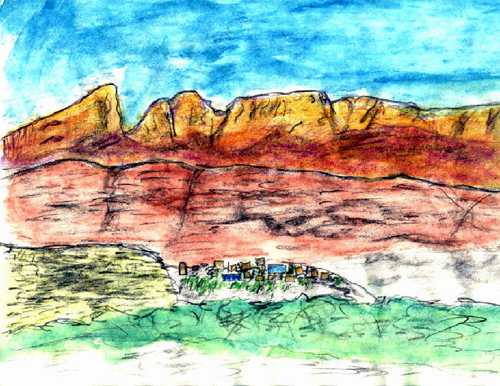
A sketch I made of Boquillas, Mexico, in 2001

A sketch I made of Boquillas, Mexico, in 2001

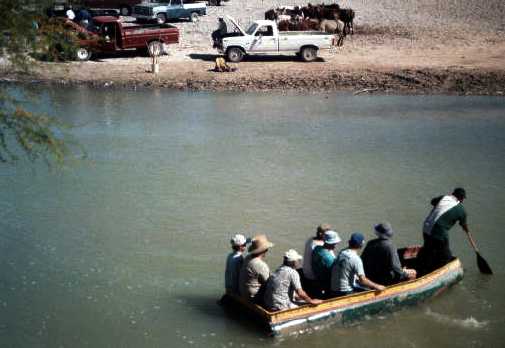
Well over a decade ago, I went to Big Bend, my favorite place on earth, and crossed over to Boquillas, Mexico, to have some tacos and enjoy the international flavor. At that time, you paid a dollar to a guy with a rowboat (with the name “Frijoles” hand-painted on the transom) to get you across the Rio Grande. No passport, customs, or anything like that. It seemed silly, given that the river can be walked when it is low, and there is no real civilization for hundreds of miles in any direction.

After 9/11, of course, this all came to a screeching halt. No more unauthorized border crossing. The village of Boquillas was crippled by the disappearing tourist traffic. What a shame. It was gone forever.

Well, as it turns out, not forever. Now I have to get my passport in order and get ready to make that long drive to West Texas.

South County Bureau report: It’s open! Boquillas welcomes U.S. visitors, officials, media folks.

Boquillas is open! Go — and have a great time — and help our neighbors who’ve waited 11 long years for this day!

Remember to tip your boatman.

Crossing the Rio Grande in 2001

Crossing the Rio Grande in 2001


The 38 Essential Dallas Restaurants, April 2013

13 down, 25 to go.

Three on this list I’ve written about here:

Smoke
Jimmy’s Food Store
Chicken Scratch


Early Adopter Beware: 7 Huge First Gen Products


Has a Seattle Building Discovered the Secret to Making Stairs Irresistible?

Seattle’s $30 million carbon neutral Bullitt Center, billed as the world’s greenest commercial building, will feature what its owner, the Bullitt Foundation, calls an “irresistible stairway” when it opens at the end of the month. The elegant, light-filled escalier offers panoramic views of downtown and Puget Sound. It’s intended to conserve energy and provide physical exercise for occupants. Will it be a lesson to companies trying to get employees to make healthier choices?

We all know climbing stairs is good for us: It’s a good workout and can even save time. In 2011, researchers at a Canadian hospital found that when they had doctors take the stairs rather than the elevator, the doctors saved an average of 15 minutes per workday—and they were required to walk, not run.

But despite the benefits, few office buildings do anything meaningful to encourage stair climbing. Many workplaces have grim, fluorescent-lit, concrete passages hidden away behind fire doors. Some all but prohibit stair use, in part due to post-9/11 security concerns.

The building where I work has very inviting, entertaining, stairs with nice views. However, it was built a while back and does not meet current fire codes. That’s why stairways are so grim – because of the codes that forbid clear openings between floors (because they encourage the spread of fire). I wonder how the Seattle building gets around that problem.

—–

OK… Well, The internet provides the answer. They had to change the codes to build the building.

Bullitt Foundation says Living Building Challenge can only be met after code change

“We were shocked to learn that it is flat-out illegal to build this sort of ultra-green building in any city in America,” says Bullitt Foundation President Denis Hayes. “But Seattle changed its building code to allow super-green buildings to meet performance standards as an alternative to prescriptive standards. We wanted the design flexibility to construct a building that used less than one-fourth the energy of a (standard) code building.”


As Seen on TV: 21 Books From Mad Men


Why You Should Be A Writer


RIP Thomas Kinkade

Nothing but Net: The Citizen Kane of Bad Art

Although lost to us through a regretful combination of valium, alcohol, and Disney dreams, Kinkade’s abrupt end does not, however, signify the end to his ™. A digital immortal, his empire continues to expand post-mortem. Despite failing gallery schemes, his virtual gallery is growing. The “Kinkadian Master Style”, or official imitators, will continue to create new works through his website. Similarly, his impact remains ever present on visual blogs like tumblr. It is on these sites that iterations of his work are always being created. One current meme is to “Kinkade” an image, by adding his copyrighted cottages, or by filling any background with swaths of his paintings. It is unlikely Kinkade would be flattered by these depictions, but imagining the man, he would prefer being ironicized rather than irrelevant.

Free Rothko

I am very happy now that the Dallas Museum of Art has instituted free general admission to its public galleries. There is a qualitative difference when paying ten bucks to get into a museum as there is when it is gratis. It you shell out the bucks, you feel you have an obligation to get your money’s worth – to see and do and cram as much as possible into the experience. You are under pressure to enjoy yourself. With free admission you can wander in and out and have a relaxed and interested time.

When the museum first opened in downtown (moving from Fair Park) in 1983 I was working in the old (now long blown up to make room for the First Baptist Church’s Parking Garage) Cotton Exchange building, only a couple blocks from the museum. What I loved to do was to carve out an hour or so, maybe over lunch, maybe before I went home, and simply go to the museum and look at one single work of art. I’d plan it out ahead of time, choose a painting or sculpture, and then go stare at the crazy thing, and nothing else, for an hour. It was an amazing way to get to know a work – a lot different than a casual stroll through a gallery.

That’s not something you can do with a ten buck admission price.

So we were down there and I was interested in looking at the Rothko piece, Orange, Red and Red. I really enjoyed the play Red at the Wyly in February and wanted to see one of his paintings in the flesh, so to speak. During the play, the actors playing Rothko and his assistant actually splashed paint, the undercolor, covering a huge canvas. The people producing the play worked hard on getting the details right and partnered with the DMA – which made me thirst to lay my eyes on the real deal.

The problem was, I didn’t know where the Rothko was. It might have been up on the third level with the American paintings, but I didn’t see it there – it was too modern and abstract for that gallery anyway.

Later, we walked into a modern gallery off the Ross Avenue side of the museum and I thought for sure it would be in there – it fit in. But I couldn’t spot the thing so I walked up to a guard.

“Excuse me,” I asked, “Do you know where the Rothko is?”

“The Ronco?” he said.

“No, the Rothko… It’s a painting by Mark Rothko, they did a play… it’s an important… He was a painter in New York in like the fifties and sixties.”

The guard looked at me with a blank, confused look. “Maybe it’s in the American section.”

“I looked there and didn’t see it, but maybe I missed it.”

“Oh, and these paintings down here, in this gallery, they are all by female artists.”

He gave me a big, proud smile… he had found something he knew that I didn’t. I thanked him for his help and as I turned I looked over his shoulder and there, right there, behind and past him and out the entrance to the gallery, hanging on the wall of the big main spine corridor, was the Rothko. I couldn’t miss it.

So I took some time and stood there, not an hour… but at least a few minutes and looked at it. I could imagine the artist throwing down those rectangular fields of color and then staring at the work as it progressed… just like the guy in the play did.

It was pretty cool. And it was free.

Mark Rothko, Orange, Red and Red, Dallas Museum of Art

Mark Rothko, Orange, Red and Red, Dallas Museum of Art

What I learned this week, March 15, 2013


The Strangest Beers in America


25 Ways to Use Sriracha

25 New Ways to Use Sriracha


train_animate

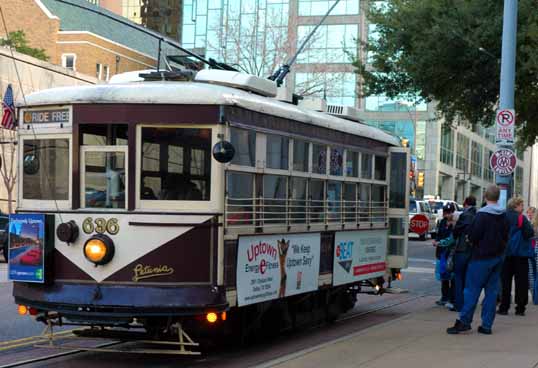
Brookville Awarded Contract to Manufacture First American Designed and Produced Off-Wire Capable Modern Streetcars for City of Dallas

petunia3


A List of Dreadful Phrases


What Are Some Strategies for Winning “Rock Paper Scissors”?


Bogus Grammar Errors You Don’t Have To Worry About


belmont9

The 24 Best David Bowie Songs


Perhaps security at DFW airport gets a little lax in the the middle of the night.


9 Ways to Upgrade Your Instant Ramen


12 Great Performances by Non-Professional Actors


From Esquire – a beautiful woman has a funny joke for you.


The Fifteen Worst Make Out Records Ever


Artist Re-Imagines Great Albums as Book Covers


Una Battaglia – Friday Snippet

Una Battaglia (A Battle) – Arnaldo Pomodoro

The Sydney and Walda Besthoff Sculpture Garden – New Orleans Museum of Art

.

city

R’leigh and Sansom started their climb in the pitch black pre-dawn darkness. The lights mounted on their helmets cast yellow ovals that would dim after every few minutes. Then they had to pull them off and crank the little handles in the dark for a new charge. R’leigh would shiver as she felt the cool air off the vastness beyond the cliff blowing her hair and the tension in the unseen ropes holding her to the metal pins Sansom hammered into cracks in the rock while she worked at the generator built into her helmet light.

It seemed like forever, but they had moved about a third of the way on their way to the top when the sky began to glow salmon through the thick clouds. The rising sun itself was hidden but the faint glow of dawn was replaced by the slate-gray light of every day under the globe-girdling smoke cloud that had choked the earth from times before R’leigh was born. At least they could climb without the headlights and R’leigh rested against the rough granite while Sansom pulled their heavy equipment up from the base of the cliff far below. He then reeled in all the extra rope – now that they could be seen, they could not be reached.

The day settled in to a long, exhausting routine of Sansom pounding in pins above, then the two of them moving up in turns, each belaying the other in case one fell, then Sansom pulling up the equipment over the height they had gained.

While R’leigh braced herself safe and still and watched Sansom work she thought of a time three years ago, not long after they had started planning and training for this day. The two of them were on a school outing to a rare grove of trees preserved in a museum on the 598 level. The museum had done its best to duplicate at least a piece of a real forest, distributing the trees in a thick, random pattern over a rolling hill – artificial light streamed down from a ceiling painted an unreal blue.

The teachers had let the students wander around in the trees and told them to try and imagine a time when forests like this covered a large part of the earth – they went on for thousands of miles. R’leigh found that hard to believe and didn’t really understand what the big deal was – but Sansom pulled her into the center of the cluster of trees and then down a little gully away from the crest of the hill. There the grove was at its thickest.

He spent some time looking carefully up and around, until he had satisfied himself that they were hidden from the handful of cameras set up to keep an eye on the precious trees. He had already begun his secret training and was quickly becoming an expert on avoiding the surveillance. Looking straight at R’leigh, he slipped a hand into his jacket and pulled out a small, silver object which unfolded in the center.

“A pocketknife,” he said quietly. “The cell, we all made these out of scraps of cooling duct.”

He turned and moved the knife quickly and surely across the surface of the tree, slicing the bark in confident, sharp lines. R’leigh saw liquid welling up in the cut lines. She didn’t know that trees would bleed. Instead of red blood, though, the sap oozed out in a series of little clear globs, strings of sparkling jewels like a living necklace along the lines that Sansom was carving. The air quickly filled with a sharp smell – the life of the tree leaking into the air. She was so intrigued by the crystal-like sap she didn’t even notice what he was cutting out.

Before she realized what he was doing, he stopped, then stood back and, with a self-satisfied smirk, gestured as his work. He had carved the simple outline of a heart with the initials, SS + RL inscribed within.

“Look quick, hard and close, I want you to remember this. But we need to go before they find us and see what I’ve done.”

R’leigh felt her pulse quicken and she let out a gasp. The risk he was taking; they would scrub the both of them if they were caught damaging anything as precious at that tree. She allowed herself five seconds to memorize the heart, the letters, and the gleaming jewels of sap until it was burned in her mind forever. In the three years since, she had been tempted to return to the museum and the grove of trees and see if the design was still there but neither of them dared – they might be watching to see who comes back.

Her reverie ended when Sansom jerked on the rope and it was time to continue moving upwards. She allowed herself a second to look out over the landscape that was opening up beneath and around them. They were high enough now, almost to the top of the spire, that they could see a vast panorama of dead twisted gray rock reaching up from endless beds of sterile gravel. This was the world that they lived in.

Within another hour they reached the flat top of the rock spire. It had taken half a day of climbing. Their years of training in every spare hour had paid off – her arms were tired but she had enough energy to feel excitement at their accomplishment. Sansom disappeared over the edge above her, and then his head reappeared as he reached down to help her up and over. Then the two of them worked together to pull and wrestle the equipment bags over the edge and spread them out away from the sheer cliff edge that they had just climbed.

Only when the equipment was safe did they walk the few steps to the opposite side of the rock cap and look out at the city. It had been hidden from them by the bulk of the spire while they climbed the opposite side, as the rock had hidden them from the watchers on the high walls. R’leigh had, of course, never seen the city from this vantage point and she gasped at its size and beauty.

The city was made up of two parts. Down below, was the huge and squat old city – burned, torn, and rendered from the war. Enormous hunks had been blasted away from the sloped sides of the square bunker shaped edifice. Great cracks wandered over what was left behind, though they could see the ugly patches that had been applied to keep the remains from crumbling apart.

Above this wreck rose the high shining rectangular tower of the new city. Built after the war on the remains of the old, this gleaming monolith reached upwards beyond the height of even the tallest rock spire which they had climbed, still being built as floors were added to the unseen top.

R’leigh and Sansom set to work quickly, unloading the equipment bags and assembling the heavy tripod first. They had practiced this many times and R’leigh found herself stealing looks at the immense and distant city as they worked; her arms and hands moving with familiarity over the tubing and fasteners almost without her conscious knowledge.

She realized she loved the city. It had been her home her entire life and she could count on one hand how many times she had been outside that gleaming tower before today. Inside, a person could not understand or comprehend its size and simple beauty. It took her breath away to see it like this – she found herself staring at it every second, even taking her eyes off Sansom as he worked alongside her, something she rarely ever did.

Soon, the tripod was complete and using the ropes they had climbed with and a pair of long, strong poles assembled from sections in the equipment bags the two of them lifted and levered the heavy tube onto the tripod and fastened it firmly in place.

R’leigh stepped back while Sansom tightened up all the bolts and began final adjustments of the apparatus. There, in front of her were both Sansom, sweating with effort and concentration while he worked, and in the distance beyond, the lustrous metallic surface of the city. R’leaih’s heart began to race, both at the excitement of what they were about to do and with the sheer beauty of the scene.

She loved what she was looking at, but she thirsted for destruction, and after years of careful planning and preparation, she was about to drink. Sansom had finished and he came back to where she was standing, holding a small metal box trailing a fine wire that spooled out of the apparatus.

He placed his arm around R’leigh’s shoulders and looked like he was trying to think of what to say.

“There’s nothing to say,” said R’leigh, “we’re ready now, it’s time for the completion of all our work.”

“My love, here, push the button,” Sansom said as he handed her the box. It had only a small red circle on one face.

“Are you sure?” she asked.

“Absolutely.”

And with that she pressed the red circle. Immediately the rocket ignited and with a flash and a roar loud enough to make them jump it moved out, surprisingly slowly at first, but gathering speed at a frightening pace. The small rocket soon disappeared in the distance but the mane of black smoke showed its progress as it arced up into the gray sky and unerringly flew into the city.

Within a few minutes it had jumped the long gap between their rock spire and the gleaming city and struck right where it was intended, about a third of the way up along the huge structure. Its initial strike was not much more than a pinprick but the missile was designed to penetrate the skin of the structure and explode within.

The small but efficiently powerful fusion device in the rockets nose cone exploded inside the city and the entire edifice began to shake. Huge cracks appeared in its carefully polished surface, glowing with orange fire as the reaction began wreaking its destruction. The city was now tearing itself apart from the inside, mortally injured by the power of the tiny missile which had started a chain reaction which doomed the gigantic edifice. It took several minutes for the sound to reach them, but the massive explosions would shake the very stone that they were standing on.

R’leigh and Sansom stood together, their arms wrapped around each other as they swayed slightly back and forth, watching the beauty of what they had done.

Faulkner House Books

When I’m lucky enough to visit New Orleans I try to avoid the more obvious tourist traps. I see nothing special about the bitter Joe and greasy dough at Cafe Du Monde, rarely set foot on Bourbon Street, and try to walk out of the Quarter (or at least skirt the edges) whenever possible. Still, there is cool stuff even in the heart of touristland.

One special little spot is Pirate’s Alley. It’s a narrow passage that runs alongside the St. Louis Cathedral, connecting Jackson Square with Royal Street. History drips onto the cobblestones like Spanish Moss from an iron balcony.

Usually I like to aimlessly drift through and see what there is to see. There is usually something interesting. Once, I stumbled across a fashion shoot in the alley.

Fashion Shoot in Pirate's Alley (click to enlarge)

Fashion Shoot in Pirate’s Alley (click to enlarge)

On our last trip – I walked down Decatur from Canal, headed for Pirate’s Alley. This time I was going somewhere in particular – an unusual state for me in the Big Easy. I had realized that I had never visited Faulkner House Books – a tiny bookstore located in the alley.

What makes this store so famous is that it occupies an apartment on the lower floor where William Faulkner once lived. There, in that very space, he hammered out his first novel Soldier’s Pay, begining the transition from unknown poet to Nobel prize winning novelist.

So I crossed Jackson Square – ignoring the thick crowd of artists, musicians, tourists, and fortunetellers – strolled down the alley past the Absinthe House and pushed the doors open to the bookstore.

It’s a small place – not hard to imagine it as a tiny apartment for a young, struggling writer. It’s packed with bookcases, every inch of wall covered, plus a collection of free-standing cases.

“Can I help you?” a woman asked.

“Umm, I’m just looking.”

“Well, the rare and first editions are around the corner, and ask me if you need anything.”

I glanced and saw a well-dressed elderly gentleman delicately thumbing through the case. The woman walked over to him and began to talk about the history of each volume he was examining. I heard him talking about which editions he already had in his collection and what holes he was trying to fill.

Those books were obviously not in my price range so I moved back toward the entrance and began to peruse the ordinary mass market offerings – after all, I had to buy something. I considered picking up a Faulkner novel but decided instead on Same Place, Same Things, a book of short stories by Tim Gautreaux. A South Louisiana writer, I had read another collection of his, Welding With Children, and really liked it.

We had talked about Tim Gautreaux while walking around on our New Orleans Writing Marathon the day before. I had discovered that he had written a story, Waiting for the Evening News, (contained in the book I chose) based on a train derailment in Livingston, Louisiana in 1982. I wanted to read that story because I had worked that train derailment when I was a consultant to the Emergency Response Division of the EPA.

Paperback in hand, I waited while the other man paid for his purchases – two beautiful, large books. His bill came to just under a thousand dollars. After he left, I handed my little trade sale paperback to the woman.

“Sorry, my purchase isn’t quite as big as his,” I said.

She ignored this. “This is very good work, have you read him before?”

I said I had and told her a quick version of the story of the derailment. She smiled and rang me up.

The entrance to Faulkner House Books

The entrance to Faulkner House Books

faulkner2

Right after I took a photo of the plaque, this guy did the same thing.

Right after I took a photo of the plaque, this guy did the same thing.

He and his wife never went in the store - he just moved along, not even taking his eye out of the viewfinder.

He and his wife never went in the store – he just moved along, not even taking his eye out of the viewfinder.

An old video of the train derailment at Livingston. I worked there for a couple weeks – providing technical assistance and taking samples to help determine when the residents could return home. I’m in the video, though unrecognizable, at about the nine minute mark.

What I learned this week, December 21, 2012

Read a harrowing short story in a collection by Joyce Carol Oates the other night. It was literary in structure and style, but a crime thriller in effect. If I could, this is what I would write.

Spider Boy – from the New Yorker

High Lonesome, a great collection of short stories by Joyce Carol Oates

High Lonesome, a great collection of short stories by Joyce Carol Oates


This is from the Deep Ellum Brewing Company’s first anniversary party. Candy and I are in there, but you have to look quick.

Deep Ellum Brewing Company's Lineup

Deep Ellum Brewing Company’s Lineup


I feel like such a nerd, commuting to work on a bicycle. At least I’m not the only one.

LeBron James says he bikes to most Heat home games to stay in shape


Ever since seeing the wonderful movie Tampopo, I’ve been bummed that Dallas has a lack of places to get decent Ramen. Finally, that seems to be coming to an end.
Dallas to Finally Get a Dedicated Ramen Spot

Even better, the place seems to be a product of the couple that did the cool Wicked Po’ Boys place here in Richardson.


Lucky Dogs

From the wonderful book, A Confederacy of Dunces, by John Kennedy Toole. In the story, Ignatius J. Reilly discovers and ends up working for a famous New Orleans Hot Dog Vendor. In the book, it’s Seven Paradise Vendors… in real life, Lucky Dogs.

Seven Paradise Vendors, Incorporated, was housed in what had formerly been an automobile repair shop, the dark ground floor of an otherwise unoccupied commercial building on Poydras Street. The garage doors were usually open, giving the passerby an acrid nos-trilful of boiling hot dogs and mustard and also of cement soaked over many years by automobile lubricants and motor oils that had dripped and drained from Harmons and Hupmobiles. The powerful stench of Paradise Vendors, Incorporated, sometimes led the overwhelmed and perplexed stroller to glance through the open door into the darkness of the garage. There his eye fell upon a fleet of large tin hot dogs mounted on bicycle tires. It was hardly an imposing vehicular collection. Several of the mobile hot dogs were badly dented. One crumpled frankfurter lay on its side, its one wheel horizontally above it, a traffic fatality. Among the afternoon pedestrians who hurried past Paradise Vendors, Incorporated, one formidable figure waddled slowly along. It was Ignatius. Stopping before the narrow garage, he sniffed the fumes from Paradise with great sensory pleasure, the protruding hairs in his nostrils analyzing, cataloging, categorizing, and classifying the distinct odors of hot dog, mustard, and lubricant. Breathing deeply, he wondered whether he also detected the more delicate odor, the fragile scent of hot dog buns. He looked at the white-gloved hands of his Mickey Mouse wristwatch and noticed that he had eaten lunch only an hour before. Still the intriguing aromas were making him salivate actively. He stepped into the garage and looked around. In a corner an old man was boiling hot dogs in a large institutional pot whose size dwarfed the gas range upon which it rested. “Pardon me, sir,” Ignatius called. “Do you retail here?” The man’s watering eyes turned toward the large visitor. “What do you want?”

“I would like to buy one of your hot dogs. They smell rather tasty. I was wondering if I could buy just one.”

Lucky Dogs cart - Bourbon Street, French Quarter, New Orleans

Lucky Dogs cart – Bourbon Street, French Quarter, New Orleans

“May I select my own?” Ignatius asked, peering down over the top of the pot. In the boiling water the frankfurters swished and lashed like artificially colored and magnified paramecia. Ignatius filled his lungs with the pungent, sour aroma. “I shall pretend that I am in a smart restaurant and that this is the lobster pond.”

“Here, take this fork,” the man said, handing Ignatius a bent and corroded semblance of a spear. “Try to keep your hands out of the water. It’s like acid. Look what it’s done to the fork.”

“My,” Ignatius said to the old man after having taken his first bite. “These are rather strong. What are the ingredients in these.”

“Rubber, cereal, tripe. Who knows? I wouldn’t touch one of them myself.”

“They’re curiously appealing,” Ignatius said, clearing his throat. “I thought that the vibrissae about my nostrils detected something unique while I was outside.”

Ignatius J. Reilly

Ignatius J. Reilly, sculpture on Canal Street.

Ignatius is such a fan of the Paradise Hot Dog, he is able to get a job as a vendor, setting out on the streets of his beloved New Orleans, pushing a heavy cart.

This does not turn out well.

George, who was wandering up Carondelet with an armload of packages wrapped in plain brown paper, heard.the cry and went up to the gargantuan vendor. “Hey, stop. Gimme one of these.”

Ignatius looked sternly at the young boy who had placed himself in the wagon’s path. His valve protested against the pimples, the surly face that seemed to hang from the long well-lubricated hair, the cigarette behind the ear, the aquamarine jacket, the delicate boots, the tight trousers that bulged offensively in the crotch in violation of all rules of theology and geometry.

“I am sorry,” Ignatius snorted. “I have only a few frankfurters left, and I must save them. Please get out of my way.”

“Save them? Who for?”

“That is none of your business, you waif. Why aren’t you in school? Kindly stop molesting me. Anyway, I have no change.”

“I got a quarter,” the thin white lips sneered. “I cannot sell you a frank, sir. Is that clear?” “Whatsa matter with you, friend?”

“What’s the matter with me? What’s the matter with you? Are you unnatural enough to want a hot dog this early in the afternoon? My conscience will not let me sell you one. Just look at your loathsome complexion. You are a growing boy whose system needs to be surfeited with vegetables and orange juice and whole wheat bread and spinach and such. I, for one, will not contribute to the debauchery of a minor.”

“Whadda you talking about? Sell me one of them hot dogs. I’m hungry. I ain’t had no lunch.”

“No!” Ignatius screamed so furiously that the pas-sersby stared. “Now get away from me before I run over you with this cart.”

George pulled open the lid of the bun compartment and said, “Hey, you got plenty stuff in here. Fix me a weenie.”

“Help!” Ignatius screamed, suddenly remembering the old man’s warnings about robberies. “Someone is stealing my buns! Police!”

My son, Lee in front of a cart.

My son, Lee in front of a cart.

What I learned this week, November 30, 2012


D Magazine: Why Does Dallas Hate Cyclists?

Bicycling in Dallas is too difficult and too dangerous. Bicycling magazine called Dallas the worst city for cyclists—twice (in 2008 and 2012). As a result, only heroes do it. And the solution is simple. We need only change the way we think.

When the story you are reading is published online, there will appear, without question, comments from people who will assail Mike McNair and hurl insults at cyclists of every stripe for getting in the way of their cars. A number of years ago, golf commentator David Feherty wrote a story for D Magazine about getting run over on his bike by a car in Dallas. He did a turn with Krys Boyd on 90.1 KERA to talk about the experience and his long rehabilitation. Online and on air, a sizable number of people said: “Screw the cyclists! They are a hazard and should get off the road!” Words to that effect.

That attitude is the first thing that must change if Dallas is ever to achieve its world-class ambitions. Bicyclists are like children. They are slow. They are sometimes unpredictable. They weave and wander and clearly think the world revolves around them. They infuriate. But they are our future. So we should not only tolerate them, we should encourage and coddle them.


Great News. The Dallas Museum of Art had free admission when it was first opened, and I was working downtown. While it is worth the paid admission, making it free enables a person to enjoy the place on a more informal basis. I used to go there and look at one piece of art only – really think about it. Hard to do that when you pay ten bucks to get in.


Museum Tower is an “attack” on the Nasher Sculpture Center’s garden, building and art

As Nasher Sculpture Center landscape architect Peter Walker sees it, the intense light reflecting off Museum Tower, the 42-story, $200 million condominium complex across from the center, is an “attack on the garden and on the building and on the art.” According to Walker, “What the reflection does is very much like putting light through a magnifying glass, it essentially burns everything that it sees.”


Writing in my Moleskine Journal outside the Mojo Lounge, Decatur Street, French Quarter, New Orleans

Anyone with free time in North Texas tomorrow, Saturday, December 1st, think about coming down to Deep Ellum for the first

Dallas Writing Marathon


Taps for growler filling behind the bar.

Craft and Growler, down on Exposition near fair park, is open and it’s a cool place. A long way for me to drive for a growler full of beer…. but it’s worth it (my car gets great mileage).


An Idea Pomodoro – timer, pen, composition book.

A freelance writer shares his thoughts and experiences using the Pomodoro Technique to cut down on distractions and squeeze more productivity out of his day.

How a tomato helps me get stuff done