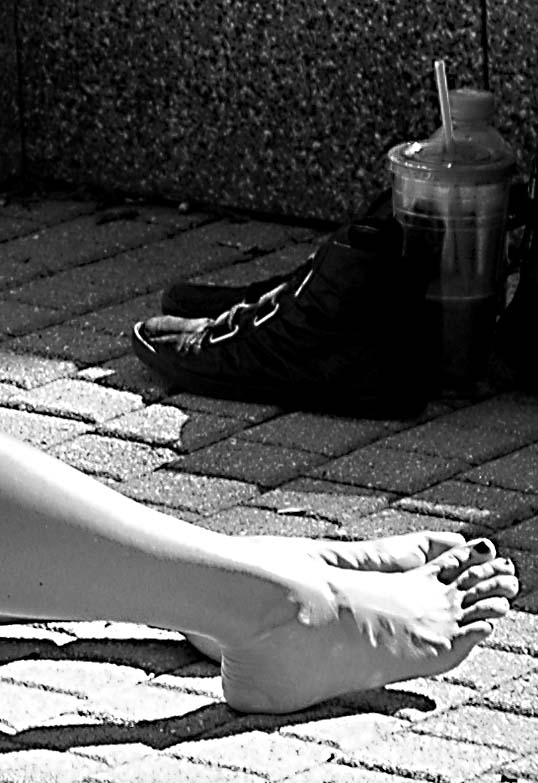
Feet

“I will not let anyone walk through my mind with their dirty feet.”

― Mahatma Gandhi

New Orleans Museum of Art, New Orleans, Louisiana

New Orleans Museum of Art, New Orleans, Louisiana

“I spent an hour yesterday watching the ladies bathe. What a sight! What a hideous sight! The two sexes used to bathe together here. But now they are kept separate by means of signposts, preventive nets, and a uniformed inspector – nothing more depressingly grotesque can be imagined. However, yesterday, from the place where I was standing in the sun, with my spectacles on my nose, I could contemplate the bathing beauties at my leisure. The human race must indeed have become absolutely moronic to have lost its sense of elegance to this degree. Nothing is more pitiful than these bags in which women encase their bodies, and these oilcloth caps! What faces! What figures! And what feet! Red, scrawny, covered with corns and bunions, deformed by shoes, long as shuttles or wide as washerwomen’s paddles. And in the midst of everything, scrofulous brats screaming and crying. Further off, grandmas knitting and respectable old gentlemen with gold-rimmed spectacles reading newspapers, looking up from time to time between lines to savor the vastness of the horizon with an air of approval. The whole thing made me long all afternoon to escape from Europe and go live in the Sandwich Islands or the forests of Brazil. There, at least, the beaches are not polluted by such ugly feet, by such foul-looking specimens of humanity.”

― Gustave Flaubert, Selected Letters

Trimmed Palm from New Orleans

Audubon Park,
New Orleans, Louisiana

nola_palm

I have always been fascinated by the ragged cross-hatch patterns of trimmed fronds on the trunk of palm trees. Here’s one from New Orleans.

A few months ago, I posted this one, from Fair Park, here in Dallas.

(click to enlarge)

(click to enlarge)

Travelers

“Don’t be amazed if you see my eyes always wandering. In fact, this is my way of reading, and it is only in this way that reading proves fruitful to me. If a book truly interests me, I cannot follow it for more than a few lines before my mind, having seized on a thought that the text suggests to it, or a feeling, or a question, or an image, goes off on a tangent and springs from thought to thought, from image to image, in an itinerary of reasonings and fantasies that I feel the need to pursue to the end, moving away from the book until I have lost sight of it. The stimulus of reading is indispensable to me, and of meaty reading, even if, of every book, I manage to read no more than a few pages. But those few pages already enclose for me whole universes, which I can never exhaust.”
― Italo Calvino, If on a Winter’s Night a Traveler

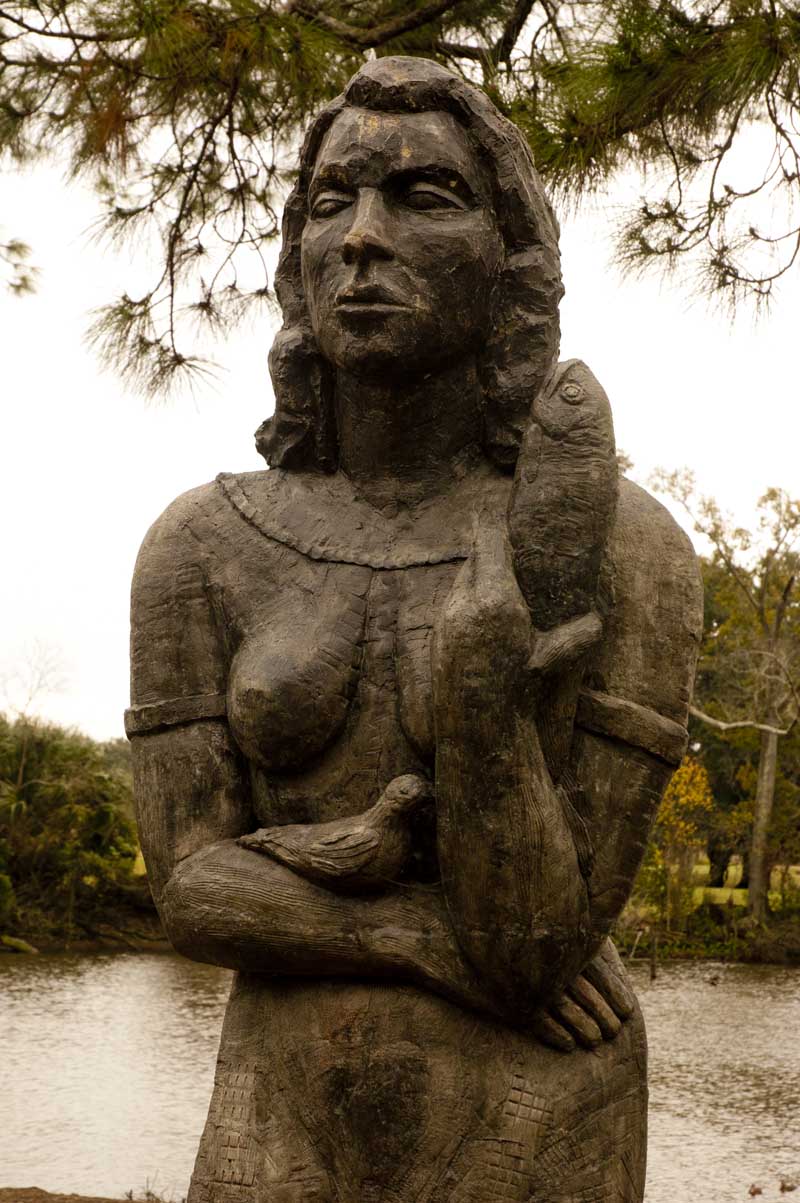
Travelers
Deborah Masters
Sculpture for New Orleans
Audubon Park
New Orleans, Louisiana

Travelers  Deborah Masters Audubon Park, New Orleans (click to enlarge)

Travelers
Deborah Masters
Audubon Park, New Orleans
(click to enlarge)

If we find poetry in the service station and motel, if we are drawn to the airport or train carriage, it is perhaps because, in spite of their architectural compromises and discomforts, in spite of their garish colours and harsh lighting, we implicitly feel that these isolated places offer us a material setting for an alternative to the selfish ease, the habits and confinement of the ordinary, rooted world.”
― Alain de Botton, The Art of Travel

Travelers  Deborah Masters Audubon Park, New Orleans (click to enlarge)

Travelers
Deborah Masters
Audubon Park, New Orleans
(click to enlarge)

“What is that feeling when you’re driving away from people and they recede on the plain till you see their specks dispersing? – it’s the too-huge world vaulting us, and it’s good-bye. But we lean forward to the next crazy venture beneath the skies.”
― Jack Kerouac, On the Road

Baritone

Used to tell Ma sometimes
When I see them riding blinds
Gonna make me a home out in the wind
In the wind, Lord in the wind
Make me a home out in the wind

I don’t like it in the wind
Wanna go back home again
But I can’t go home thisaway
Thisaway, Lord Lord Lord
And I can’t go home thisaway

I was young when I left home
And I been out rambling ‘round
And I never wrote a letter to my home
To my home, Lord Lord Lord
And I never wrote a letter to my home
—-Bob Dylan, I Was Young When I Left Home

My little bike ride through the Tulane campus was bittersweet. It was fun but I was filled with a melancholy nostalgia. Lee has graduated – this might be my last visit… or at least it will be the last visit with any connection or significance. I remembered visiting five years ago for parent’s weekend, walking the sidewalks on the guided tour, imagining what it would be like to study at such a beautiful place in such an amazing city.

This last visit – I almost felt more connection than with my own campus… that was long ago and I was just a kid, anyway. Nobody knows the terrible lucidity of nostalgia at a young age – it only comes with the onslaught of incipient dotage.

Baritone
Mia Westerlund Roosen
Tulane Campus
New Orleans, Louisiana

Baritone Mia Westerlund Roosen Tulane Campus, New Orleans (click to enlarge)

Baritone
Mia Westerlund Roosen
Tulane Campus, New Orleans
(click to enlarge)

“The Greek word for “return” is nostos. Algos means “suffering.” So nostalgia is the suffering caused by an unappeased yearning to return.”
― Milan Kundera, Ignorance

Turtles all the Way Down

“A well-known scientist (some say it was Bertrand Russell) once gave a public lecture on astronomy. He described how the earth orbits around the sun and how the sun, in turn, orbits around the center of a vast collection of stars called our galaxy. At the end of the lecture, a little old lady at the back of the room got up and said: “What you have told us is rubbish. The world is really a flat plate supported on the back of a giant tortoise.” The scientist gave a superior smile before replying, “What is the tortoise standing on?” “You’re very clever, young man, very clever, ” said the old lady. “But it’s turtles all the way down!”
― Stephen Hawking, A Brief History of Time

Audubon Park, New Orleans (click to enlarge)

Audubon Park, New Orleans
(click to enlarge)

Audubon Park, New Orleans (click to enlarge)

Audubon Park, New Orleans
(click to enlarge)

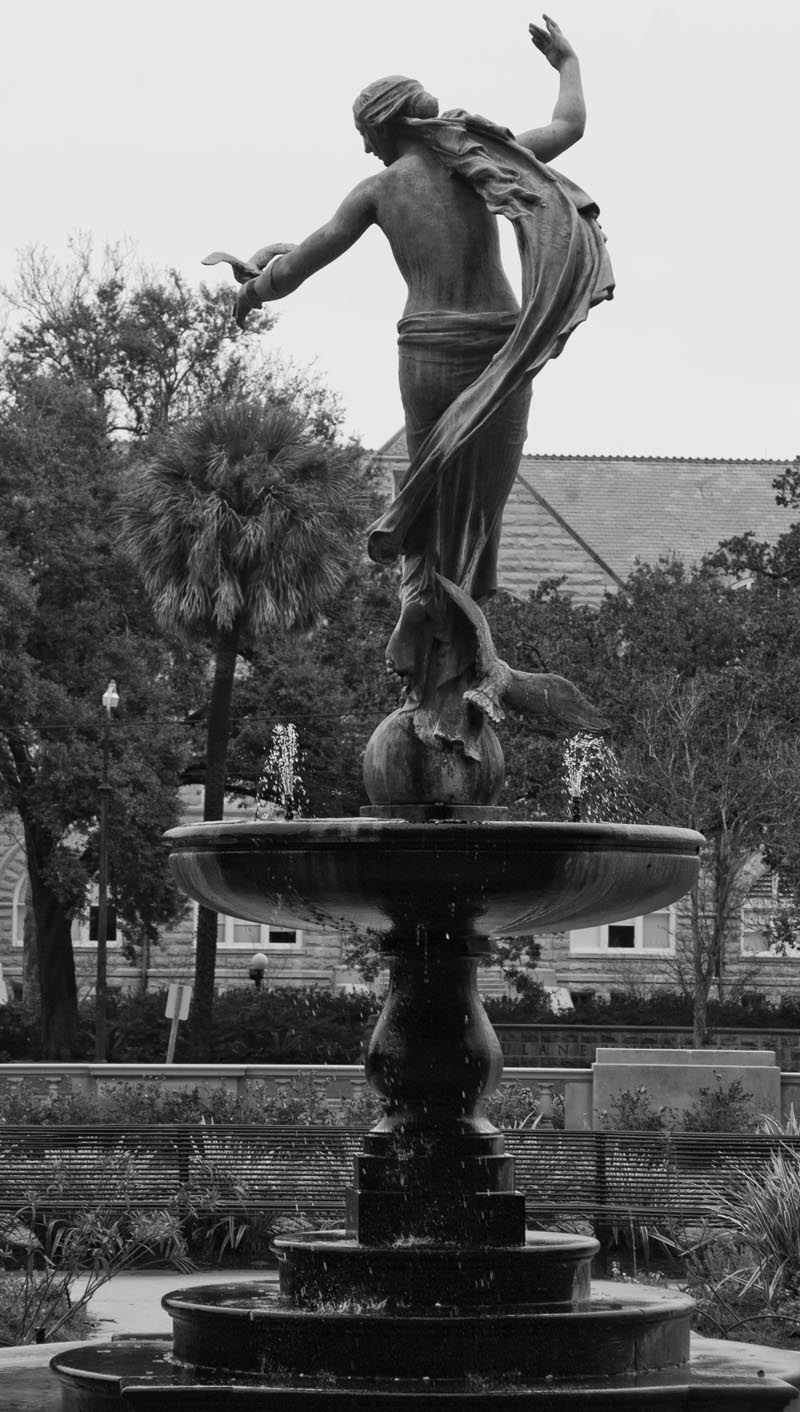
Audubon Fountain

Audubon Park, New Orleans

“i see you drinking at a fountain with tiny
blue hands, no, your hands are not tiny
they are small, and the fountain is in France
where you write me that last letter and
I answered and never heard from you again.
ANGELS AND GOD, all in uppercase, and you
knew famous artists and most of them
were your lovers, and I wrote back, it’s all right,
go ahead, enter their lives, I’m not jealous
because we’ve never met. we got close once in
New Orleans, one half block, but never met, never
touched. so you went with the famous and wrote
about the famous, and, of course, what you found out
is that the famous are worried about
their fame- not the beautiful young girl in bed
with them, who gives them that, and then awakens
in the morning to write upper case poems about
ANGELS AND GOD.”
—-An Almost Made Up Poem, Charles Bukowski

Audubon Park, New Orleans (click to enlarge)

Audubon Park, New Orleans
(click to enlarge)

Audubon Park, New Orleans (click to enlarge)

Audubon Park, New Orleans
(click to enlarge)

Timber

There are a handful of modern sculptures scattered across the various quads on the Tulane campus in New Orleans. One I noticed the first time, more than four years ago, that we took Lee there for a visit was a construction of wood and a stack of handmade multi-colored glass blocks that stands in front of the Architecture building.

I always like to take a look at it when I visit.

Timber
Glass, Steel, and Wood, 1982
by
Gene Koss, American

Timber, by Gene Koss, Tulane University, New Orleans, Louisiana (click to enlarge)

Timber, by Gene Koss, Tulane University, New Orleans, Louisiana
(click to enlarge)

Timber, by Gene Koss, Tulane University, New Orleans, Louisiana (click to enlarge)

Timber, by Gene Koss, Tulane University, New Orleans, Louisiana
(click to enlarge)

Timber, by Gene Koss, Tulane University, New Orleans, Louisiana (click to enlarge)

Timber, by Gene Koss, Tulane University, New Orleans, Louisiana
(click to enlarge)

FEMA Trailers

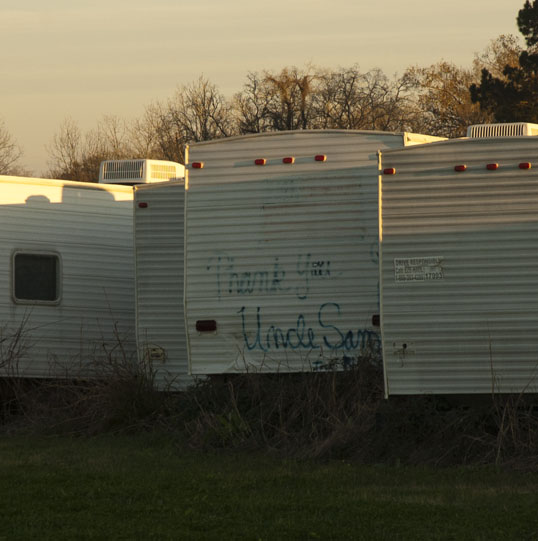
Thank You Uncle Sam

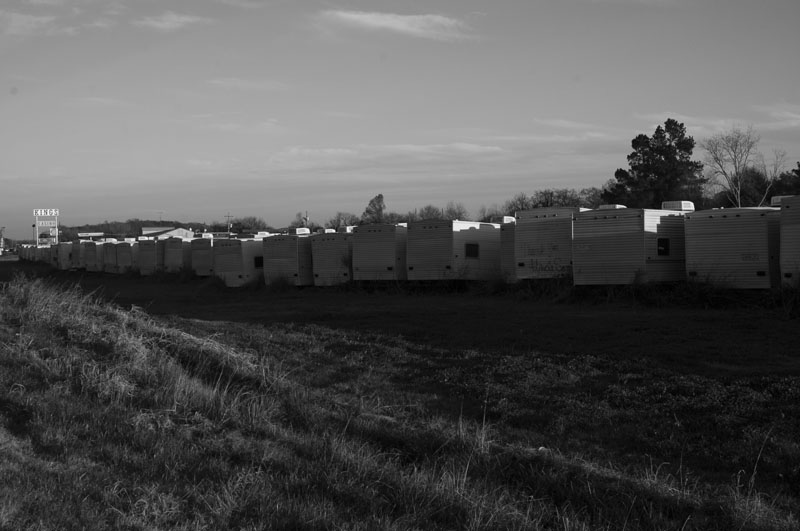
Thank You Uncle Sam, FEMA trailers, Opelousas, Louisiana

Thank You Uncle Sam, FEMA trailers, Opelousas, Louisiana

I was driving to New Orleans, moving down Interstate 49, south of Alexandria. My plan was to get on Interstate 10 in Lafayette and then go east over the Atchafalaya to Baton Rouge and on into New Orleans.

But I decided to take a look at my GPS and saw the I10 highway marked in a solid bright red line all the way from Lafayette to Baton Rouge.

If you have never driven that stretch – and you will remember it if you did – that’s an almost twenty mile long bridge high up in the air over the most desolate scary swamp, the Atchafalaya River Basin, that you will ever see. It is not the place you want to spend a few hours stuck in bumper to bumper traffic as the sun sets.

My GPS showed an alternate, older route – US190 splitting off east at Opelousas and going through a more northern section of swamp to Baton Rouge. The GPS showed that route as yellow and green. As I approached the turnoff a sign promised “Alternate Route.” That was all the encouragement I needed and I drove that way.

It was a good choice. Under normal conditions it would have been slower than the uninterrupted expanse of fast concrete belonging to the I10 bridge – but today it wasn’t jammed with stopped vehicles. I only had to wait through the shorter delays caused by stoplights, fish camps, sugarcane factories, bait shops, fireworks stands, fried fish restaurants, local casinos… and the other flotsam and jetsam of the Louisiana backlands.

One thing that did catch my eye was a huge field, just east of Opalousas filled with thousands of mouldering empty portable housing units. FEMA trailers.

There were once hundreds of thousands of these left over after Katrina. Cheaply made, even by government standards, spewing formaldehyde vapors, leaking and harboring black mold – they were a controversial response to the disaster – sometimes welcomed, often maligned.

But here they still are, eight years later. Come on down and buy one, they are for sale, pennies on the dollar. What a bargain.

FEMA Trailers (click to enlarge)

FEMA Trailers
(click to enlarge)

Bike Ride in New Orleans

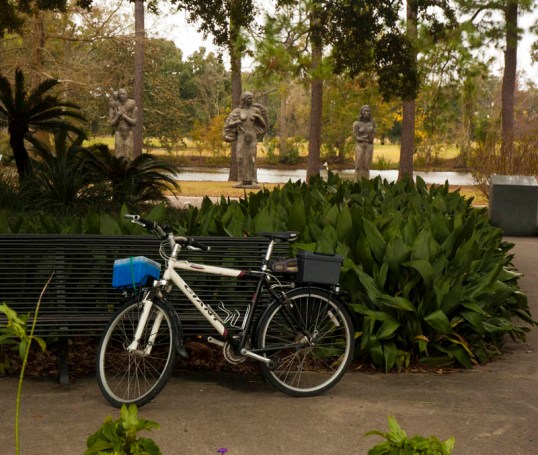
My Commuter Bike in Audubon Park, New Orleans (click to enlarge)

My Commuter Bike in Audubon Park, New Orleans
(click to enlarge)

I drove to the Big Easy over the weekend to pick up my son Lee (who just graduated from Tulane) and bring him back to Dallas for the holidays. Since I had plenty of room in the car I removed the wheels from my commuter bike and packed it in.

I have always wanted to ride a bicycle in New Orleans and never have. The French Quarter especially is full of folks on bikes (both natives for transportation and tourist rentals for entertainment) and I have always enjoyed hanging outside and watching folks ride by.

Photos I’ve taken of bikes in the city:
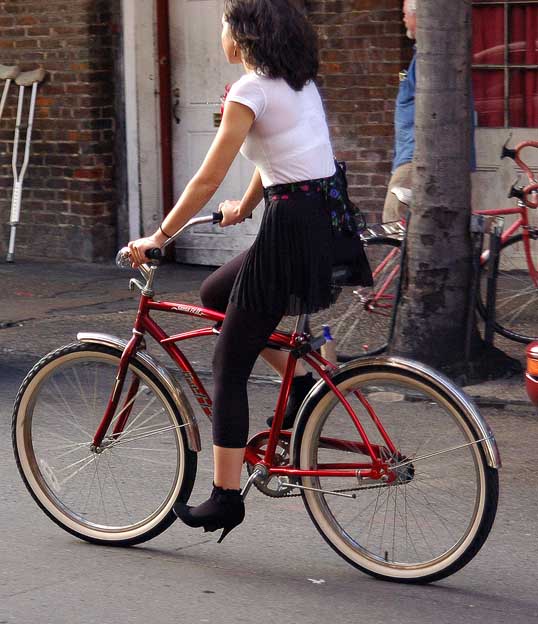
Stylish bike rider, French Quarter, New Orleans

Stylish bike rider, French Quarter, New Orleans

Magazine Street, New Orleans

Magazine Street, New Orleans

French Quarter, New Orleans
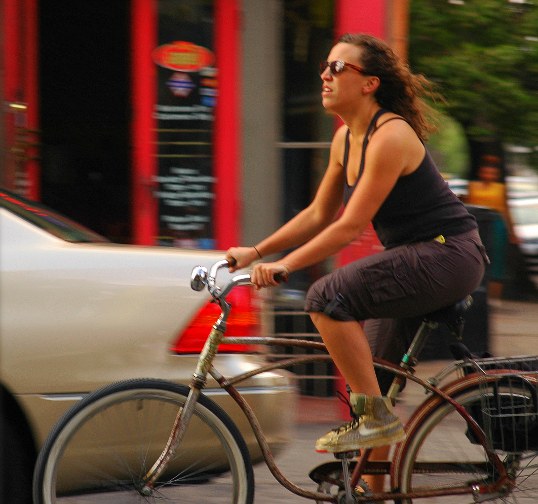
French Quarter, New Orleans

Bicycle, French Quarter, New Orleans

Bicycle, French Quarter, New Orleans

My son lives out by the university and I thought I might ride through the Garden District down to the quarter and back – it would make for a nice long day with plenty of cool places to stop along the way. He was working Sunday and I would have time to myself.

Unfortunately, the weather did not cooperate. When I arrived the city was unbearably hot and humid and on the day I had planned on riding a cold front blew in and brought a powerful set of thunderstorms with it.

My commuter bike is set up with fenders and I have rain gear – but this was too much. A good rule of thumb is that when the lightning is so violent the thunder is setting off all the car alarms in the neighborhood every few seconds – it’s storming too much to go out.

This went on all day. When it would lighten up a bit I would think about venturing out – but another band would blow onshore and the skies would open up with a drenching downpour and howling winds. I ended up staying inside all day.

We were going to drive back to Dallas the next day, but he had some things he had to do in the morning so we couldn’t leave early. That gave me time to get in a quick little ride before we left. It was still very cold (for New Orleans), wet, and windy – but bearable, so I headed out.

I rode through the Tulane campus, now empty for the holidays, and up St. Charles for a bit (they have a bike lane along some of the street). St. Charles in New Orleans is the most beautiful street in the world (in my opinion) though the traffic is pretty nasty for a bicycle.

The city has sharrows painted on Nashville so I chose that route down to Magazine Street and rode there for a bit looking at the shops and restaurants before heading over to Audubon Park and circled the zoo down to the Mississippi.
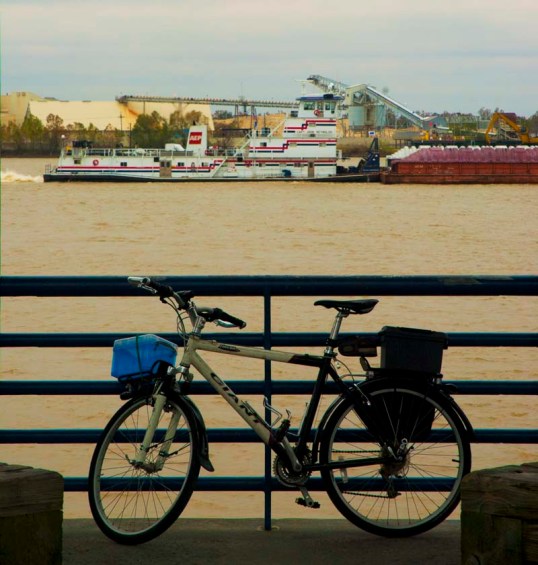
My Bike along the Mississippi, New Orleans (click to enlarge)

My Bike along the Mississippi, New Orleans
(click to enlarge)

I rode back through the park and the Tulane campus then took a side trip down Freret to cruise through a nice up-and-coming area of shops and restaurants.

That’s about it. It was fun, glad to get it in. Lee warned me the streets were rough and he was right. I’m glad I have a front shock on my commuter bike – the ride was through a constant series of cracks and potholes. As I rode toward the river I thought to myself that it would be uphill coming back – in Dallas the streets slope surprisingly steeply down to the Trinity River – but in New Orleans it isn’t true, of course. That city is about as flat a cycling route you will ever see.

The traffic there is nasty, of course. I’m sure you could get used to it – but it’s pretty tough, even compared to Dallas, which is well known as the least cycle-friendly city. The key is to learn your town, your neighborhood, and your routes – which can’t be done in one cold and blustery morning.

Now I need to go back when the weather is better and do a bit more exploring.