Heavy Lifting

He stands erect by bending over the fallen. He rises by lifting others.
—-Douglas Horton

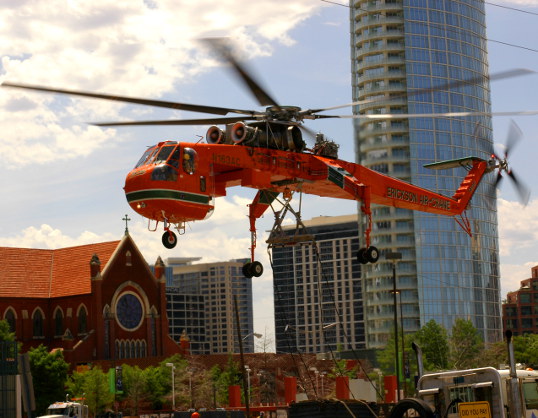
I rode the DART train into Downtown Dallas for the last Dallas Writing Marathon and as the short line of yellow electric cars climbed out of the tunnel under Central Expressway I could hear a distinct WUP-WUP-WUP sound. Looking out the window, I saw a gigantic lifting helicopter delivering a load to the top of the Chase Tower (the skyscraper with a big hole in it). By the time the train pulled into the station, it had already settled into a parking lot behind the Plaza of the Americas.

A few hours later, after we had finished writing, I returned to the station and discovered the skycrane was taking off again. I ran around, up to the police lines, and watched it carry a load (it looked like electrical equipment) up to the notch in the top of the vaulted cap of the skyscraper.

The helicopter was a Sikorsky S-64, modified by Erickson Air-Crane. It had a plastic bubble facing backward into the cargo area where a crewman could sit and direct a precision lift. The whole operation was extensive – from police security to a line of trucks delivering cargo to be lifted to a tanker truck of jetfuel to keep the copter going.

It was all pretty cool. I took some pictures.

Sikorsky S-64 delivering a load to the top of the Chase Tower, Dallas, Texas

Sikorsky S-64 delivering a load to the top of the Chase Tower, Dallas, Texas

Music has generally involved a lot of awkward contraptions, a certain amount of heavy lifting.
—-Tom Waits

Erickson Air-Crane and the Dallas Skyline

Erickson Air-Crane and the Dallas Skyline

As I get older, the present and the past shift and become the past and the future… A lot of it is a new awareness of time and life and the wheel of fortune crushing you and lifting you and crushing you and lifting you.
—-Feist

Erickson Air-Crane

Erickson Air-Crane

Another mode of accumulating power arises from lifting a weight and then allowing it to fall.
—-Charles Babbage

Short Story Day Eleven – The Piece of String

11. The Piece of String
Guy de Maupassant
http://www.classicshorts.com/stories/string.html

This is day Eleven of my Month of Short Stories – a story a day for June.

This weekend I went on a long bike ride, from North Dallas, down through White Rock and downtown, across the Jefferson Viaduct bike lanes into Oak Cliff and then down to Bishop Arts… then back.

Along the route, I stopped off at Klyde Warren Park for a rest (and a beer) and, as is my new habit, I read a bit in the Dallas Morning News reading area. I picked up a book I’ve picked up before, Volume I of Somerset Maugham’s collected stories.

This time I read the preface, which was as interesting as the stories themselves. He talked about how he writes – including the notes he took on a South Seas voyage about some fellow travelers that ended up as the story Rain.

Then he wrote eloquently and at length about the differences between two classic short story writers, Chekov and Guy de Maupassant.

I do not know that anyone but Chekov has so poignantly been able to represent spirit communing with spirit. It is this that makes one feel that Maupassant in comparison is obvious and vulgar. The strange, the terrible thing is that, looking at man in their different ways, these two great writers, Maupassant and Chekov, saw eye to eye. One was content to look upon the flesh, while the other, more nobly and subtly, surveyed the spirit; but they agreed that life was tedious and insignificant and that men were base, unintelligent and pitiful.

Maupassant’s stories are good stories. The anecdote is interesting apart from the narration so that it would gain attention if it were told over the dinner table; and that seems to me a very great merit indeed…. These stories have a beginning, a middle and an end. They do not wander along an uncertain line so that you cannot see whither they are leading, but follow without hesitation, from exposition to climax, a bold and vigorous curve.

On the face of it, it is easier to write stories like Chekhov’s than stories like Maupassant’s. To invent a story interesting in itself apart from the telling is a difficult thing, the power to do it is a gift of nature, it cannot be acquired by taking thought, and it is a gift that few people have. Chekhov had many gifts but not this one. If you try to tell one of his stories you will find that there is nothing to tell. The anecdote, stripped of its trimmings, is insignificant and often inane. It was grand for people who wanted to write a story and couldn’t think of a plot to discover that you could very well manage without one. If you could take two or three persons, describe their mutual relations and leave it at that, why then it wasn’t hard to write a story: and if you could flatter yourself that this really was art, what could be more charming?

We have already read Chekhov this month. Looking at that story – we see Maugham’s point. Nothing really happen’s in Gooseberries – there are simply three men, caught by a rainstorm, telling each other some stories. They aren’t even very good stories. And it keeps raining.

Yet it is still genius.

So what about Maupassant? His stories have a plot – you could tell them around a dinner table in your own voice and they would be interesting. His style is considered vulgar and cheap in some circles… but as Maugham says above – it’s really hard to do well.

And it is still genius.

In the public square of Goderville there was a crowd, a throng of human beings and animals mixed together. The horns of the cattle, the tall hats, with long nap, of the rich peasant and the headgear of the peasant women rose above the surface of the assembly. And the clamorous, shrill, screaming voices made a continuous and savage din which sometimes was dominated by the robust lungs of some countryman’s laugh or the long lowing of a cow tied to the wall of a house.

All that smacked of the stable, the dairy and the dirt heap, hay and sweat, giving forth that unpleasant odor, human and animal, peculiar to the people of the field.
—-The Piece of String, by Guy de Maupassant

Short Story Day 1 – The Fall of Edward Barnard

1. – The Fall of Edward Barnard by W. Somerset Maugham
http://www.online-literature.com/maugham/the-trembling/3/

Over the years, I had not read very much… not anything, really, by W. Somerset Maugham. I did sit down with The Razor’s Edge once, a few decades ago, but couldn’t get very far into it. Although he wrote right at the edge of the modern era, his prose was too stifled and stuffy for my tastes. I set it aside after a few pages and didn’t revisit Maugham, though I knew this was a mistake – there had to be worth there, he is too well known and lauded for me to ignore.

This last weekend, I rode my bike into the crystal towers of downtown Dallas… intending to hang out there a bit before riding back up north. I went over to Klyde Warren Park, bought some lunch from a food truck, and settled in to rest a bit before pedalling home. I realized that I had forgotten my Kindle and discovered I wanted something to read. After a bit of frustration I remembered that the park had a reading area, complete with shelves full of books.

I walked over and perused the selection, eventually picking up a copy of W. Somerset Maugham’s Complete Short Stories – in a couple of volumes. I sat down and read a couple. There was a deliciously evil little tale set in two times and locations – A Woman of Fifty… and a very short work set in Guatemala about a Nicaraguan revolutionary on the run called The Man With the Scar.

I really enjoyed both of these stories. I realized that the stylized writing is employed by Maugham as a device to emphasize the wild irony of the stories beneath. He is not writing about proper society, but about the turbulent chaos that lies beneath and beyond… and that is a subject that fascinates me.

Those two little tales gave me enough rest to ride home and then I procured a selection of Maugham’s stories to read… more in depth. I started with Rain – a juicy story about the conflict between a strict missionary and a woman of ill repute while both are stranded in a cheap hotel in Pago Pago. It is arguably the best known of his short stories and has been made into a handful of films.

It was crackerjack. It impressed me enough for me to elevate the next story in the collection, The Fall of Edward Barnard to the first of my June Month of the Short Story daily selections.

The Fall of Edward Barnard is very similar to Rain – it is sort of the flip side of the same story, though with less horrific consequences (it even has an almost happy ending – though terrible in its own happy way). If you have the time read both… and then compare and contrast.

They concern the conflict between the European/American style – the ambitious, religious, strict, repressed, overbearing way of looking at life and the world with the relaxed, sensual, permissive way of the primitive South Sea Islands. Again, the archaic prose is used to good effect – be sure and don’t let that stop your reading or enjoyment; fight through the language (Word of the day: quixotry) until you get to the point where the author relents and lets loose a little.

So now I have added another classic author to my personal pantheon. It is interesting in that he is not overly careful about maintaining a strict point of view or even consistent tone – he lets his prose go where it needs to to tell the story. When I write, I sweat blood trying to make sure I don’t reveal facts or ideas that are not available to my point of view character at the time the story is unfolding…. Perhaps I need to relax a bit and let the story tell itself.

Something to think about.

“I think of Chicago now and I see a dark, grey city, all stone–it is like a prison–and a ceaseless turmoil. And what does all that activity amount to? Does one get there the best out of life? Is that what we come into the world for, to hurry to an office, and work hour after hour till night, then hurry home and dine and go to a theatre? Is that how I must spend my youth? Youth lasts so short a time, Bateman. And when I am old, what have I to look forward to? To hurry from my home in the morning to my office and work hour after hour till night, and then hurry home again, and dine and go to a theatre? That may be worth while if you make a fortune; I don’t know, it depends on your nature; but if you don’t, is it worth while then? I want to make more out of my life than that, Bateman.”
—-W. Somerset Maugham, The Fall of Edward Barnard

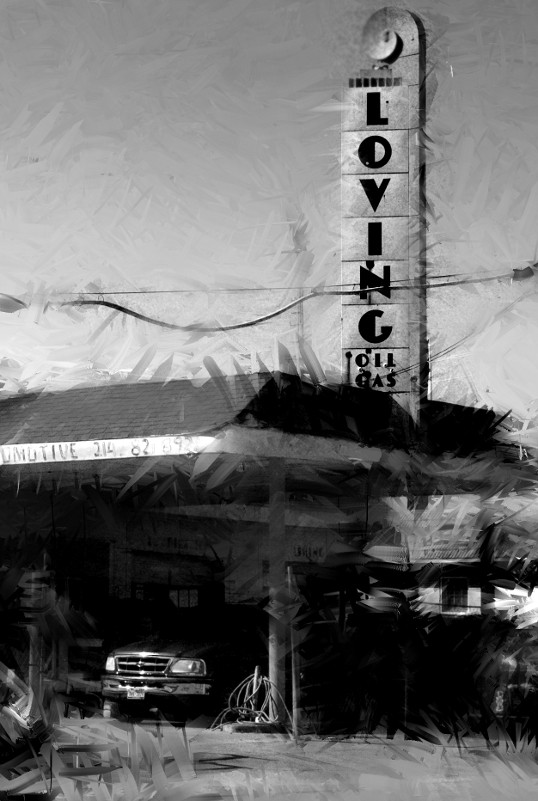
Loving Oil and Gas

Somewhere near Fair Park… Dallas, Texas

“The American Dream has run out of gas. The car has stopped. It no longer supplies the world with its images, its dreams, its fantasies. No more. It’s over. It supplies the world with its nightmares now: the Kennedy assassination, Watergate, Vietnam…”
― J.G. Ballard

Loving Oil and Gas, Dallas, Texas

Loving Oil and Gas, Dallas, Texas

Just wrap your legs round these velvet rims
And strap your hands across my engines
—-Bruce Springsteen, Born To Run

We sat in the car
& the night dropped
down until the
only sounds were
the crickets &
the dance of our voices

& for a moment
the world became
small enough to
roll back & forth
between us.”
― Brian Andreas, Hearing Voices – Collected Stories & Drawings

“I come to a red light, tempted to go through it, then stop once I see a billboard sign that I don’t remember seeing and I look up at it. All it says is ‘Disappear Here’ and even though it’s probably an ad for some resort, it still freaks me out a little and I step on the gas really hard and the car screeches as I leave the light.”
― Bret Easton Ellis, Less Than Zero

“[And there was the matter of Dick Turpin. It looked like the same car, except that forever afterwards it seemed able to do 250 miles on a gallon of petrol, ran so quietly that you practically had to put your mouth over the exhaust pipe to see if the engine was firing , and issued its voice-synthesized warnings in a series of exquisite and perfectly-phrased haikus, each one original and apt…
Late frost burns the bloom
Would a fool not let the belt
Restrain the body?
…it would say. And,
The cherry blossom
Tumbles from the highest tree
One needs more petrol]”
― Terry Pratchett, Good Omens: The Nice and Accurate Prophecies of Agnes Nutter, Witch

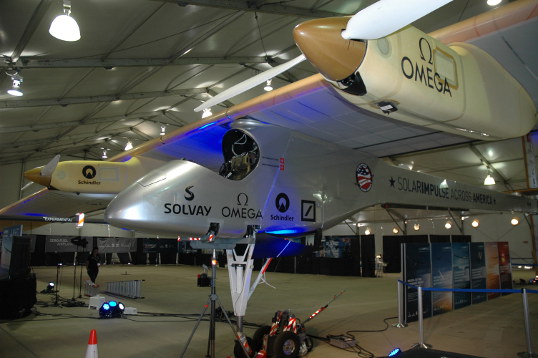
Solar Impulse

I had a very busy day planned for today – work in the morning, appointments in Richardson at two, Frisco at three, and Plano at six. Still, there was a gap in there and I found out that there was a chance to go see the Solar Impulse out at DFW Airport before it flies to St. Louis.

Solar Impulse is a Swiss solar-powered aircraft, now on a tour of the US. I had eagerly watched it on the news as it flew from San Francisco to Phoenix and then on to Dallas/Forth Worth. I really wanted to see it in the air, but that requires timing and time I don’t possess, so I had to settle for a visit to the hanger.

I carefully plotted my driving around the city and arrived at the airport early. We took a shuttle bus from the designated parking area to a large temporary hanger where the aircraft was displayed.

Even grounded inside a tent-like hanger it was an amazing sight. It is a huge monster of an aircraft, especially when you consider it only holds one person. With its incredible wingspan and delicate construction it has a look of gentle grace and efficiency that is obvious even when it isn’t moving. I wandered among the onlookers, snapping photos, talking to the crew that was hanging around, and then simply looking, trying to soak up as much of the uniqueness and innovative spirit that I could.

It is something that, under idea conditions, can fly forever – charging its batteries by day. It’s only limits are the weather conditions and how long the pilot can go without sleep. There is no beauty more sublime and powerful than that of something that works so well and so perfectly.

I’m wondering when it will be able to leave. Obviously, it requires still air conditions to take off and the southern gale force winds that have been rocking the area show no signs of abating. It was a strange contrast – the delicate plane, resting peacefully, while a constant howling and snapping din slammed around it – caused by the terrific wind whipping the fabric of the temporary hanger into a frenzy. The sound was so loud that it almost drowned out the thundering roar of the jets taking off from the runway next to the hanger.

Solar Impulse

Solar Impulse

Solar Impulse

Solar Impulse

Little guy hanging out in the cockpit of the Solar Impulse

Little guy hanging out in the cockpit of the Solar Impulse

Demonstrating the construction techniques of the Solar Impulse

Demonstrating the construction techniques of the Solar Impulse

It's impossible to photograph and difficult to describe how long and slender that wing is.

It’s impossible to photograph and difficult to describe how long and slender that wing is.

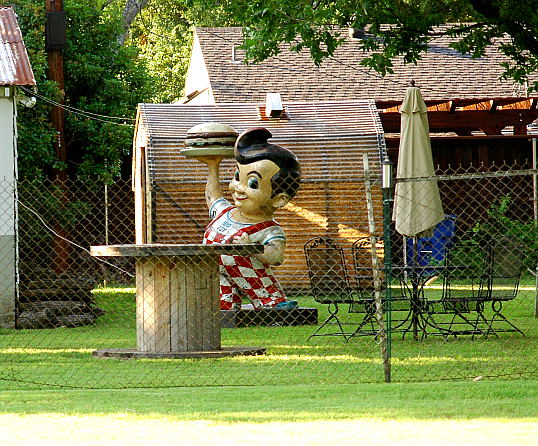
The Best Backyard

Trammel and Abrams, East Dallas

Big Boy in a Dallas Backyard

Big Boy in a Dallas Backyard

The statue was in the front yard, until the man made him move
Kip’s Big Boy Statue Gone From Abrams Road Lawn, Thanks to City Code Enforcers
…now he’s in the back yard, but sort of visible from the road.

Still, what a great backyard – imagine the picnics you could have with the Big Boy looking over your spread. You would be the coolest dude in the ‘hood.

I have such great memories of sitting around a table in a Kip’s Big Boy (or Shoney’s Big Boy, or Bob’s Big Boy – depending on the state I was living in) late at night… or early in the morning. Sitting around eating some greasy food, tired, talking – especially with people I knew really well, or people I had just met… or best of all, a mixture of both.

Where did the waitresses working in Big Boys at three in the morning come from? They were all the same – middle aged, rode hard and put up wet, brutally efficient. They were their own breed. Imagine the stories they could tell.

Late Night breakfast after three at a Big Boy, or any cheap diner in any town – that is an existence in an entirely separate dimension from the real world. As long as everyone at the table can cough up enough to cover the check – it’s impossible to imagine any troubles from the other hours of the day or the other places in your life being bad enough to intrude on that calm tired orgy of comfort food.

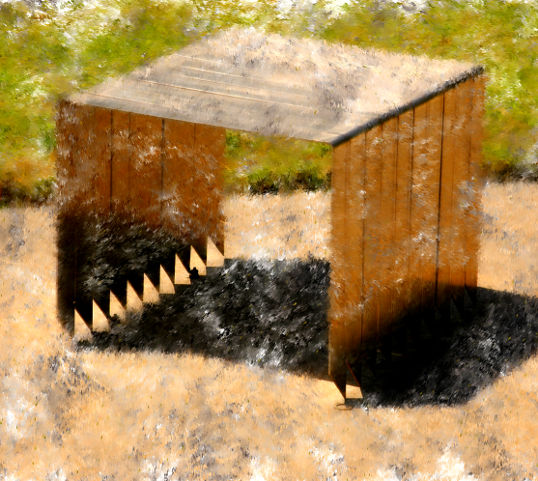
Creation of Chalk

“You will die. You will not live forever. Nor will any man nor any thing. Nothing is immortal. But only to us is it given to know that we must die. And that is a great gift: the gift of selfhood. For we have only what we know we must lose, what we are willing to lose… That selfhood which is our torment, and our treasure, and our humanity, does not endure. It changes; it is gone, a wave on the sea. Would you have the sea grow still and the tides cease, to save one wave, to save yourself?”
― Ursula K. Le Guin, The Farthest Shore

chalk

“He who is in harmony with the Tao
is like a newborn child.
Its bones are soft, its muscles are weak,
but its grip is powerful.
It doesn’t know about the union
of male and female,
yet its penis can stand erect,
so intense is its vital power.
It can scream its head off all day,
yet it never becomes hoarse,
so complete is its harmony.

The Master’s power is like this.
He lets all things come and go
effortlessly, without desire.
He never expects results;
thus he is never disappointed.
He is never disappointed;
thus his spirit never grows old.”
― Lao Tzu, Tao Te Ching

Staples

Texas Sculpture Garden
Frisco, Texas

And I said, I don’t care if they lay me off either, because I told, I told Bill that if they move my desk one more time, then, then I’m, I’m quitting, I’m going to quit. And, and I told Don too, because they’ve moved my desk four times already this year, and I used to be over by the window, and I could see the squirrels, and they were married, but then, they switched from the Swingline to the Boston stapler, but I kept my Swingline stapler because it didn’t bind up as much, and I kept the staples for the Swingline stapler and it’s not okay because if they take my stapler then I’ll set the building on fire…
—- Milton, Office Space

Staples
Paul Kittelson, Houston
2001 Stainless Steel

Staples, Paul Kittelson

Staples, Paul Kittelson

“Why do people have to be this lonely? What’s the point of it all? Millions of people in this world, all of them yearning, looking to others to satisfy them, yet isolating themselves. Why? Was the earth put here just to nourish human loneliness?”
― Haruki Murakami, Sputnik Sweetheart

Staples, Paul Kittelson

Staples, Paul Kittelson

“The gods are strange. It is not our vices only they make instruments to scourge us. They bring us to ruin through what in us is good, gentle, humane, loving.”
― Oscar Wilde, De Profundis

Staples, Paul Kittelson, photograph manipulated in Corel Painter

Staples, Paul Kittelson, photograph manipulated in Corel Painter

“Sometimes you climb out of bed in the morning and you think, I’m not going to make it, but you laugh inside — remembering all the times you’ve felt that way.”
― Charles Bukowski

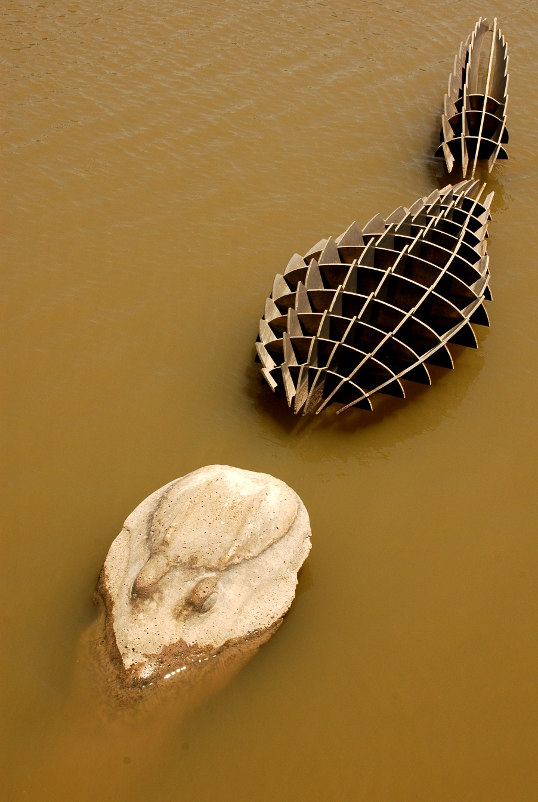
Alligator

Texas Sculpture Garden
Frisco, Texas

Alligator
Robert Tabak
American (Texas)
2003

“While he sat there he decided he would buy a waterbed. He had always imagined owning a waterbed when he was successful, but now it struck him that getting the bed might invoke the man he wanted to become. You bought a waterbed and so became the sort of man who owned a waterbed.”
― Lisa Moore, Alligator

Alligator, Robert Tabak

Alligator, Robert Tabak

“maybe humans are just the pet alligators that Gd flushed down the toilet”
—- Chuck Palahniuk

Balance

“There is no such thing as work-life balance. Everything worth fighting for unbalances your life.”
― Alain de Botton

Texas Sculpture Garden,
Frisco, Texas

Andrew Rogers
Australian
Balance
1997

“Something is always born of excess: great art was born of great terror, great loneliness, great inhibitions, instabilities, and it always balances them.”
― Anaïs Nin

Balance, Andrew Rogers

Balance, Andrew Rogers

“You are a beautiful person, Doctor. Clearheaded. Strong. But you seem always to be dragging your heart along the ground. From now on, little by little, you must prepare yourself to face death. If you devote all of your future energy to living, you will not be able to die well. You must begin to shift gears, a little at a time. Living and dying are, in a sense, of equal value.”–Nimit in “Thailand”
― Haruki Murakami, after the quake

“The fact is that nothing is more difficult to believe than the truth; conversely, nothing seduces like the power of lies, the greater the better. It’s only natural, and you will have to find the right balance. Having said that, let me add that this particular old woman hasn’t been collecting only years; she has also collected stories, and none sadder or more terrible than the one she’s about to tell you. You have been at the heart of this story without knowing it until today …”
― Carlos Ruiz Zafón, The Midnight Palace

“It seems to me what is called for is an exquisite balance between two conflicting needs: the most skeptical scrutiny of all hypotheses that are served up to us and at the same time a great openness to new ideas. Obviously those two modes of thought are in some tension. But if you are able to exercise only one of these modes, whichever one it is, you’re in deep trouble.

If you are only skeptical, then no new ideas make it through to you. You never learn anything new. You become a crotchety old person convinced that nonsense is ruling the world. (There is, of course, much data to support you.) But every now and then, maybe once in a hundred cases, a new idea turns out to be on the mark, valid and wonderful. If you are too much in the habit of being skeptical about everything, you are going to miss or resent it, and either way you will be standing in the way of understanding and progress.

On the other hand, if you are open to the point of gullibility and have not an ounce of skeptical sense in you, then you cannot distinguish the useful as from the worthless ones.”
― Carl Sagan

“The great systems that inform the world about the truth and life invariably claim to be absolutely truthful and well-balanced. In reality they are quaking bridges built out of yearning.”
― Peter Høeg, Tales of the Night