City of Cables

It’s a giant factory-state here, a City of the Future full of extrapolated 1930’s swoop-facaded and balconied skyscrapers, lean chrome caryatids with bobbed hairdos, classy airships of all descriptions drifting in the boom and hush of the city abysses, golden lovelies sunning in roof gardens and turning to wave as you pass.
—-Thomas Pynchon, Gravity’s Rainbow

(click to enlarge)

(click to enlarge)

Watchmen of the World’s Edge

What have the watchmen of the world’s edge come tonight to look for? Deepening on now, monumental beings stoical, on toward slag, toward ash the colour the night will stabilize at, tonight… what is there grandiose enough to witness?
—-Thomas Pynchon, Gravity’s Rainbow

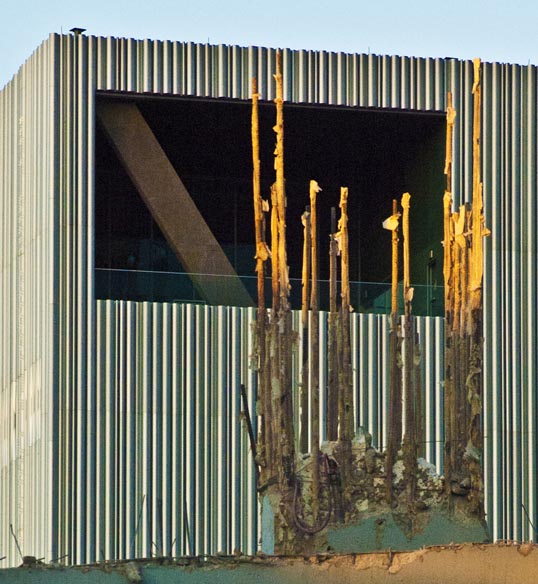
Wyly Theater and rebar from the demolition of a parking garage
Dallas Arts District
Dallas, Texas

Construction and Destruction

Construction and Destruction

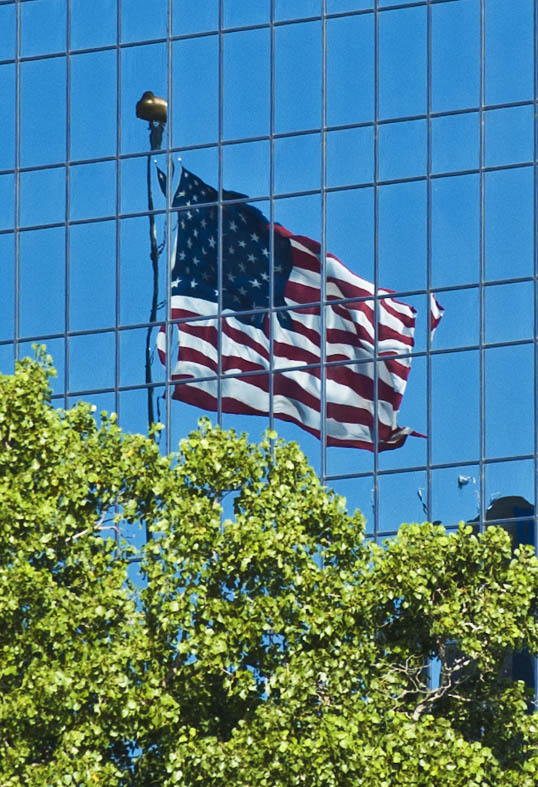
Reflections of Old Glory

Photograph taken from the Galatyn Park DART Station
Richardson, Texas

old_glory

“There must be some kind of internal time distortion effect in here, because when I look at myself in the little mirror above my sink, what I see is my father’s face, my face turning into his. I am beginning to feel how the man looked, especially how he looked on those nights he came home so tired he couldn’t even make it through dinner without nodding off, sitting there with his bowl of soup cooling in front of him, a rich pork-and-winter-melon-saturated broth that, moment by moment, was losing – or giving up – its tiny quantum of heat into the vast average temperature of the universe.”
― Charles Yu, How to Live Safely in a Science Fictional Universe

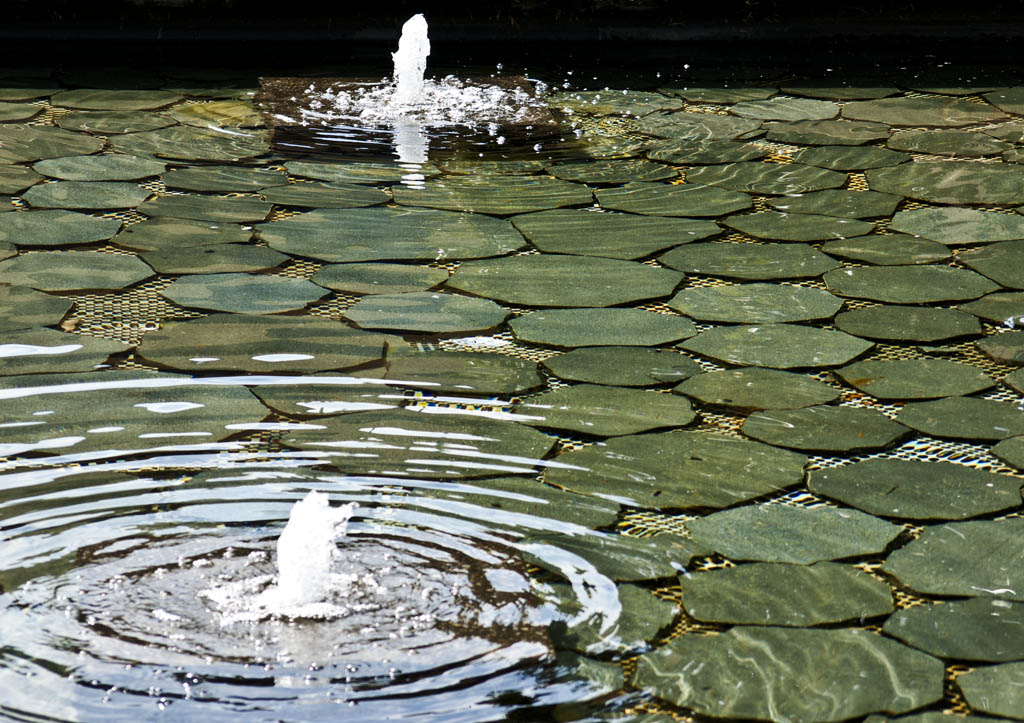
Pebbles in the Stream

“Sam was the only member of the party who had not been over the river before. He had a strange feeling as the slow gurgling stream slipped by: his old life lay behind in the mists, dark adventure lay in front.”
― J.R.R. Tolkien, The Lord of the Rings

University of Texas at Dallas
Richardson, Texas

(click to enlarge)

(click to enlarge)

“All men dream: but not equally. Those who dream by night in the dusty recesses of their minds wake up in the day to find it was vanity, but the dreamers of the day are dangerous men, for they may act their dreams with open eyes, to make it possible.”
― T.E. Lawrence, Seven Pillars of Wisdom: A Triumph

Folding Bike and Dallas Skyline

Trinity River Bottoms
Dallas, Texas

My Xootr Swift folding bicycle leaning against a railroad trestle in the Trinity River Bottoms, Dallas, Texas

(click to enlarge)
My Xootr Swift folding bicycle leaning against a railroad trestle in the Trinity River Bottoms, Dallas, Texas

There is a contrast between the forlorn forgotten floodplain muddy muddle given a little shade in the brutal Texas heat by a rusty rundown railroad trestle bereft of train, ties laddering the sky… and beyond the levee the glass crystal spires of giant office buildings bustling with city office workers invisibly moving in automated cubicles of air conditioned atmosphere.

Under the Bridge

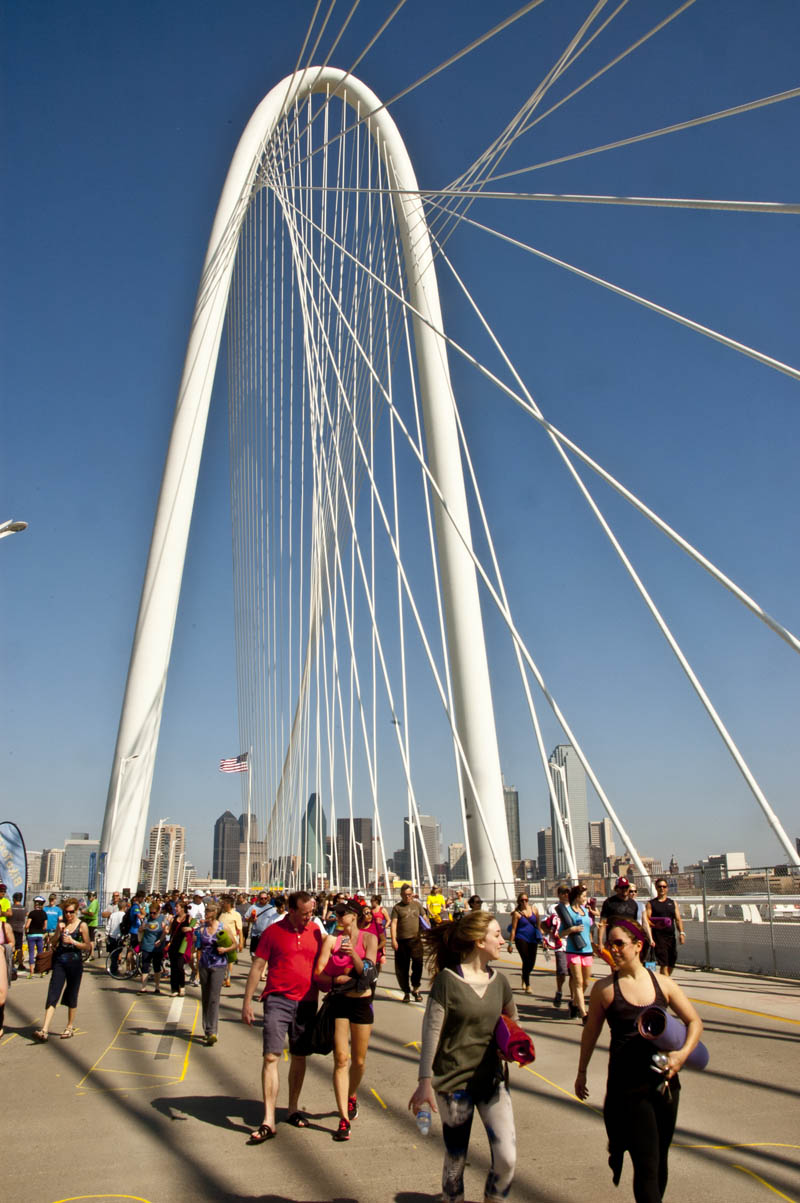
People walking from the yoga event with their mats under their arms. All Out Trinity Festival - Margaret Hunt Hill Bridge, Dallas, Texas (click to enlarge)

People walking from the yoga event with their mats under their arms.
All Out Trinity Festival – Margaret Hunt Hill Bridge, Dallas, Texas
(click to enlarge)

From above, the Margaret Hunt Hill Bridge – the Dallas Calatrava-designed cable-stay signature bridge finally reaching across the Trinity River from Downtown to long-neglected, oft-reviled West Dallas – is an architectural marvel of geometry, steel, and curves.

Margaret Hunt Hill Bridge, Dallas, Texas

Margaret Hunt Hill Bridge, Dallas, Texas

It has a dirty little secret, though. It isn’t really a bridge over much of anything. It’s more of a causeway with a huge, expensive, and dramatic sculpture tacked on overhead.

This is obvious when you venture into the vast stretches of the river bottoms. You can see the forest of columns holding up the span.

But still, even there, it is a thing of beauty. A different beauty – a more muscular, less soaring beauty – but beauty nonetheless.

I like it. If nothing else it offers up a vast strip of welcome cool shade.

Underneath the Margaret Hunt Hill Bridge.  (click to enlarge)

Underneath the Margaret Hunt Hill Bridge.
(click to enlarge)

Underneath the Margaret Hunt Hill Bridge.  (click to enlarge)

Underneath the Margaret Hunt Hill Bridge.
(click to enlarge)

Natural and Artificial

The Santiago Calatrava designed Margaret Hunt Hill Bridge rising over the trees of the Trinity River Bottoms, Dallas, Texas.

Margaret Hunt Hill Bridge, Dallas, Texas

Margaret Hunt Hill Bridge, Dallas, Texas

“A human being is a part of the whole called by us universe, a part limited in time and space. He experiences himself, his thoughts and feeling as something separated from the rest, a kind of optical delusion of his consciousness. This delusion is a kind of prison for us, restricting us to our personal desires and to affection for a few persons nearest to us. Our task must be to free ourselves from this prison by widening our circle of compassion to embrace all living creatures and the whole of nature in its beauty.”
― Albert Einstein

What I learned this week, May 23, 2014

Uptown Cyclovia

The crowd at Ciclovia Dallas on the Houston Street Viaduct with the Dallas downtown skyline

The crowd at Ciclovia Dallas on the Houston Street Viaduct with the Dallas downtown skyline

Uptown Ciclovia: An International Perspective

Have you ever dreamed of leisurely peddling on your bike without having to subconsciously worry about traffic? Ever wanted to walk down the middle lane of a typically busy street to get to Klyde Warren Park? Well, your dream will become a reality this Memorial Day!

Uptown Ciclovia (if you don’t know about it yet, Ciclo-what should catch you up to speed) is a car-free experience that will connect the Katy Trail to Klyde Warren Park via Cedar Springs Road on May 26th. By closing the street to automobiles, people may enjoy the street however they so choose- run, walk, bike, skip, hop, dance, roller-skate, etc. The best part? There will be no cars to get in your way. I repeat- there will be NO cars! Have you ever been on a Dallas street and without seeing cars? Exactly.

I am really looking forward to this.

The last Dallas Cyclovia was a couple of years ago on the causeway over the Trinity River. It was a lot of fun and this one looks even better. A Cyclovia in Uptown will be cool.

Music at Ciclovia Dallas

Music at Ciclovia Dallas


I’ve been to the Wyly theater more than a few times. I’ve written about it:
Sherlock Holmes, The Final Adventure
The Fortress of Solitude
Black Swallows the Red
As Flies to Wanton Boys
The Elaborate Entrance of Chad Deity
We Are Such Stuff As Dreams Are Made On

It is an amazing place.


Follow the rules, bikers

We need to rethink our urban areas. They need to be redesigned around a new set of values, one that doesn’t seek to accommodate bikers and pedestrians within an auto-dominated environment but instead does the opposite: accommodates automobiles in an environment dominated by people. It is people that create value. It is people that build wealth. It is in prioritizing their needs – whether on foot, on a bike or in a wheelchair – that we will begin to change the financial health of our cities and truly make them strong towns.


Rich college presidents linked to poorer teachers, students

A new report from the Institute for Policy Studies looks at the salaries of top administrators at many of the public universities around the country and draws some very interesting conclusions that any graduates of these schools with high debt loads will not be surprised to know. The most fundamental of these is that high pay of university presidents goes hand in hand with lower pay for faculty members and higher student debt on average.


Bike lane merging with right turn lane at Beltline road.

Bike lane merging with right turn lane at Beltline road.

Did Cooper Stock really have to die?

It is possible, even probable, experts say, because of the way Americans have designed their streets for hundreds of years — essentially viewing pedestrian fatalities as the cost of doing business, as the collateral damage of speed and progress.

“Traditionally we build assuming that drivers and pedestrians will do the right thing even though we know that humans are flawed,” says Claes Tingvall, the director of Traffic Safety for the Swedish Transport Administration, in an interview with Yahoo News. “You don’t design an elevator or an airplane or a nuclear power station on the assumption that everyone will do the right thing. You design it assuming they will make mistakes, and build in ways that withstand and minimize error.”

For nearly 20 years, Sweden has been building on that latter assumption, rethinking and revamping its transportation system, both the philosophy and the nuts and bolts. They call this 1997 legislation Vision Zero — meaning the goal is to reach zero pedestrian deaths in all of Sweden — and under the program people are valued over cars, safety over efficiency. Streets have been narrowed; speed limits have been lowered. Above all, the Swedes have declared an end to the argument over whether safety violations should be punished or prevented. Voting for problem solving over finger pointing, they view collisions as warnings that some fix — a differently timed light, a better lit intersection — is needed.

Reading about this terrible tragedy made me think of the near misses I’ve had lately. They all were in the same situation that killed that poor boy. Crossing in a crosswalk with a green light and the little walk light is a death trap for a pedestrian or a cyclist. The problem is that the left-turning cars are not looking in the crosswalk – they are looking at the oncoming traffic. They say to themselves, “I can make this turn if I hurry up!” – step on the accelerator and turn into people in the crosswalk.

One cause is the poor design of intersections. The root cause is people driving too fast. Both can be solved with better road design, but it takes a paridigm shift – one that I think can only occur in someone that is walking and/or biking a lot in the city.

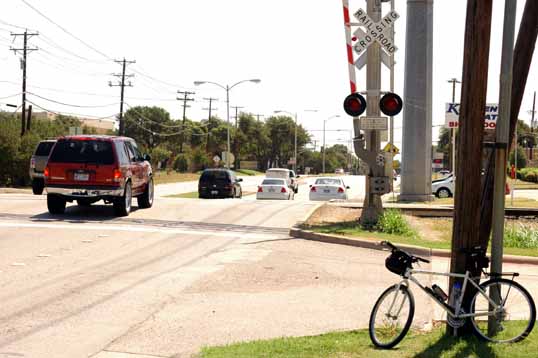
Rail crossing on Arapaho road.

Rail crossing on Arapaho road.


New Report: Every Bicyclist Counts

A terrible string of fatal bike crashes in the Tampa area in late 2011 and early 2012 left the local bike community reeling.

As they shared each awful tragedy with us, we too felt frustrated and powerless. We also realized how little we really knew about the circumstances of serious crashes between bikes and cars, and how woefully inadequate (and late) the available data was at the national level.

For a 12-month period, we set about the grim task of tracking and documenting every fatal traffic crash involving a bicyclist captured by relevant internet search terms. We also wanted to offer a place to remember the victims and raise the hope that their deaths would at least inform efforts to prevent such tragedies in the future.

The result was the Every Bicyclist Counts initiative: everybicyclistcounts.org


Magazine Street, New Orleans

Magazine Street, New Orleans

Slow Ride: Biking Doesn’t Have to Be a Race

Believe it or not biking does not have to be a full-fledged cardio workout every time you go for a ride. In fact, a lot of countries seem to be on to something that many of us in the States have yet to fully embrace, the idea of a “slow ride.”

My whole idea of cycling is to ride as slowly as possible (and still get to where I need/want to be). Unfortunately, a lot of this is the fact that the engine on my bicycle is old and worn out. I like riding slowly, but I do miss having the options.


The rise of
 cycle cafes

The march of British cycle cafes seems irrepressible.

Unfortunately, for me, a bike ride from Texas to England for a cup of joe or a bite is a bit much.

Forty Thousand Years of Art in Fifty Eight Minutes

Plaza of the Americas
Dallas, Texas

glass_steel

During the week, after work, I am so tired. All I can think of is getting home and falling into bed. The whole world feels dim and tilted – sloping toward the land of nod.

This is not a good thing – I don’t want to sleep my life away. I try and figure out something to do after work every day. I’m not always successful – but that doesn’t mean I can’t keep trying.

So I saw that tonight was an Art History lecture at Kettle Art in Deep Ellum (this is the gallery where I bought my bargain painting a month ago). Painter and educator Justin Clumpner was giving a talk in BYOB Art History:

Justin Clumpner’s titillating presentation on this-thing-we-call-art kicks off the final weekend of “Love, Death, + The Desert”. Join us tomorrow night at 7 for the first installment of Justin’s behind-the-scenes glimpse into the strange and mysterious world of art through the ages.

That sounded like fun – so I decided to go.

I’ve always had a soft spot for Art History. I took a year of it in college, as a break from my chemistry classes (and in a vain attempt to meet women). It turned out to be a revelation.

My instructor was an interesting person. On the first day of class he said, “We are supposed to go from ancient art to the present, but we are going to stop at 1860, because there hasn’t been anything worthwhile done since.” He lived in a world of his own – a world filled exclusively with the art of yesteryear. He talked about the Roman Colosseum and how it had canvas shades that would extend out over the audience. He asked, “Those astro-dome things nowadays have that too, don’t they?” The man had no idea what a modern sports stadium was.

But he was able to teach. I was fascinated by how, with a little instruction and after looking at thousands of projected 35mm slides from a rotating carousel in a darkened room (these were the days before powerpoint – and possibly better for it) – I could look at a totally unknown painting and tell who had painted it and in what year, give or take a few.

My biggest problem is that I would have four hours of chemistry lab before the art history class. I had to make a difficult left brain-right brain switch in only a few minutes of walking across campus. I remember looking at a slide of a beautiful Byzantine Mosaic and all I could think of was, “What pigment did they use to get that blue?”

One day I left my lab, walked to art history, ate lunch, studied on campus for a few hours, then walked the two miles to my apartment. I started cooking dinner when my roommates came home. They stared at me and said, “Bill, what the hell is that on your face?” I realized I still had my big heavy laboratory goggles on. I was so used to them I forgot to take them off and still felt normal. I can’t believe nobody had said anything to me yet that day – I must have looked like an idiot.

Today, after work, I caught the Red DART line downtown and then transferred to the Green to get to Deep Ellum. The Transit Gods smiled on me and I didn’t have a wait – so I arrived early. The talk was billed as BYOB and I wish I had gone to pick up a growler of local beer – but I settled for a little metal flask loaded with a few draughts of precious Ron Flor de Cana.

The Altamira Bison

The Altamira Bison

The talk was really interesting. Of course, it could only be a quick overview, from cave paintings of forty thousand years ago to post-modernism in one hour is a tough and fast voyage – but Justin Clumpner is a high school art teacher and knows how to bring an audience along with him.

He said he wanted to make the BYOB Art History Talks a regular thing, maybe once a month. I hope so – it will be cool to hear him talk about some themes and topics in a more detailed, comprehensive way. If you want to give it a shot, like Kettle Art and watch their feed – I’ll see ya there.

Maybe I’ll be able to get a growler of beer to bring. Some fresh local beer and an art history lecture… that’s a good way to spend a work night. Better than collapsing at home.