King Rat

The Window at Molly’s, the street (Decatur) unusually quiet, with notebook, vintage Esterbrook fountain pen, and Molly’s frozen Irish Coffee

“There is only one place to write and that is alone at a typewriter. The writer who has to go into the streets is a writer who does not know the streets. . . when you leave your typewriter you leave your machine gun and the rats come pouring through.”
― Charles Bukowski, Notes of a Dirty Old Man

This summer, at the New Orleans Writing Marathon I found myself at the window at Molly’s at the Market trying to think of something to write about. I decided to put down on paper the struggle I had against a rat infestation and the King Rat behind it all. It didn’t seem very interesting (and a little embarrassing) to me, but when we read everyone seemed to like it.

So, I’ve typed it up from my notebook. Without further ado……

Molly’s At the Market
July 10

I live in Texas so every now and then there is a rat in the house. The most common are the tree rats – smaller grey slick-looking – they resemble large mice with longer tails. They are arboreal and often enter a house by dropping onto the roof from an overhanging tree. Like all rats and mice they can squeeze through any tiny, impossible space. Less often seen are the big ugly sewer rats, black and spiky. I’ve never seen one of those at home – but I live alongside a wooded creek – with my garage facing the trees so I’ve always had tree rat invaders.

Usually one or two – and handled with a trap or a bit of poison – which would leave a dead critter putrefying in the wall – stinking things up until the really warm weather arrived.

One summer, however, I had an infestation. I don’t really know how it happened – maybe I ignored the early warning signs – maybe I was lazy – but eventually I realized that there were rats everywhere.

I was feeling emotional so I read up on the most humane way to exterminate rats – even looking on Buddhist websites for ways to deal with vermin without destroying your Karma. Poison was out – too cruel. Some people like live traps but if you don’t release the trapped rat more than a mile away – they will come back. Rats are very territorial – if you take them beyond their territory they won’t last a day.

So the Internet recommended the old-fashioned snap trap – it kills, but it kills quickly. The big problem is that we have two dogs and any traps had to be kept away from them. Our dogs were old, blind, and lethargic – useless as ratters, but we didn’t want them to get hurt by a trap.

I bought a big jar of peanut butter and a collection of snap traps – a few old school wooden ones – though I had better luck with the modern plastic traps that have a platform for the rat to step on. I arranged these throughout the garage and in some spots (behind the refrigerator, inside drawers, and in the hot water heater cabinet) where the dogs couldn’t set them off.

And the slaughter began. My morning routine would be to carry traps with rats across the alley and let the limp body drop into the thick weeds under the trees. One morning there were two rats in the same trap. The bodies were always gone the next day – I guess the coyotes were coming up at night for a quick snack – a rat buffet.

I killed… maybe thirty rats. Over this time, they were getting smaller and smaller – until they looked more like mice to me.

We have hired a frighteningly effective exterminator at my work. He rid our million-square foot building of rats in a couple months. We call him, “The Rat Whisperer.” I asked him the difference between tree rats and mice.

“How long are their tails? Are they longer than the rest of their body?”

“Yes.”

“They are rats.”

I explained how the rats were getting smaller and smaller – and how I thought that soon they would all be gone.

“What you don’t understand,” the rat whisperer said, “Is that there is one big smart King Rat. He is sending those other rats out to bring food back to him. You will kill all the others until he is the only one left. He will be almost impossible to kill because he is so cautious and smart. That is how he became the King.”

The Rat Whisperer was exactly right. The traps were empty every morning but there was still an aggressive rat in the house. I would put, say, a strawberry down with four snap traps surrounding it and in the morning the fruit would be chewed or gone and the traps un-fired.

I decided that I had no choice but to bring out the big guns.

I spread talcum powder on the kitchen floor and looked for tiny footprints in the morning. There was a tiny gap in the molding by the dishwasher and the prints always lead to or from there. I put up baby gates to keep the dogs out of the kitchen and a big sheet of a sticky trap in front of the tiny hole. I woke up in the middle of the night to a tremendous racket. It took me a minute to get the nerve to go look – and that was too long. The sticky trap was in the living room, beyond the barrier of the baby gate, and covered in rat hair.

No King Rat.

And for weeks there was no sign. I figured he had been injured or frightened enough to go elsewhere. I was wrong… he was waiting me out.

So after a long time, he was back. Again, no food was safe – he nibbled everything that was not sealed up tight. So, again with the baby gates… again with the sticky trap – I went out and bought an ultra-strong professional premium version this time. Again, three in the morning, a huge racket from the kitchen. I ran to the sound, snapped on the light, and there was the biggest rat I had ever seen with the sticky trap on his back, trying to get back into his little hole.

And I realized I had not thought about this enough beforehand. I didn’t know what to do. I didn’t want to touch the rat – he was way too big and mad and scared and would surely bite me if I got too close. If I did nothing he would soon yank himself off the sticky trap (like he must have before) and escape… and I didn’t want to go through this any more.

My mother in law had this grabber thing she used to pick stuff up without bending over – I fetched it from the closet and used it to grab the rat. Of course the sticky trap stuck to the grabber. I threw the trap, the grabber, and the giant rat into a bucket we keep to mop the floors. The sticky trap now, in addition to the rat and the grabber, stuck to the inside of the bucket. The whole mess shook with the struggle of the rat… every now and then a rat head would stick out the top and snap its rat teeth.

I gingerly hauled the whole mess out to the creek and threw it into the water and watched it move downstream and slowly sink in the moonlight.

It’s been a year and a half now and I haven’t seen sign of a single rat. We have new dogs now, they are more aggressive and larger and probably scare any new vermin off.

I am still haunted by nightmares of a giant skeletal ghost rat, the specter of the King, with a rusty bucket and a broken grabber stuck to his bones, shambling up from the creek, returning for his revenge.

Devil Dog

“War must be, while we defend our lives against a destroyer who would devour all; but I do not love the bright sword for its sharpness, nor the arrow for its swiftness, nor the warrior for his glory. I love only that which they defend.”
― J.R.R. Tolkien, The Two Towers

B-25 PBJ, Commemorative Air Force

Devil Dog Squadron

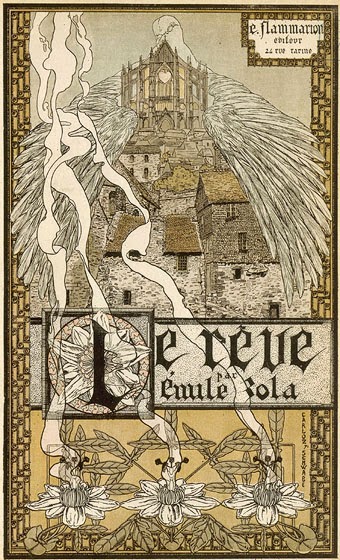
The Dream (Le Reve) by Zola

Le Reve, by Emile Zola

“The vision that had emerged from the invisible was returning to the invisible. It was no more an appearance that was fading away, having created an illusion. All is but a dream. And, at the peak of happiness, Angélique had vanished, in the faint breath of a kiss.”
― Émile Zola, The Dream

Ok, for awhile now I’ve been working my way through Zola’s Rougon-Marquat 20 novel series of French life in the Second Empire – Reading them not in the order that they were written, but in the recommended reading order.

Next is Le Rêve (The Dream). It is a complete departure from the other books in the Rougon-Marquat series. Instead of complex, realistic stories – it is the simple, yet fantastic, romantic tale of an orphan girl Angélique, that falls in love with a wealthy nobleman. She is a descendant of the Rougon family – providing the tenuous connection with the rest of the books. Angélique does suffer from the mental instability of her kin, which provides a window into her obsession with the saints and the idea of a perfect romance.

I have to admit, though, I didn’t like the book very much. It starts out with a lot of promise, the young girl abandoned in the snow near a great cathedral in rural France – it’s a powerful image. But the story spends too many words in cataloging a parade of saints and the stories of The Golden Legend. It become tedious and not very interesting to a modern reader.

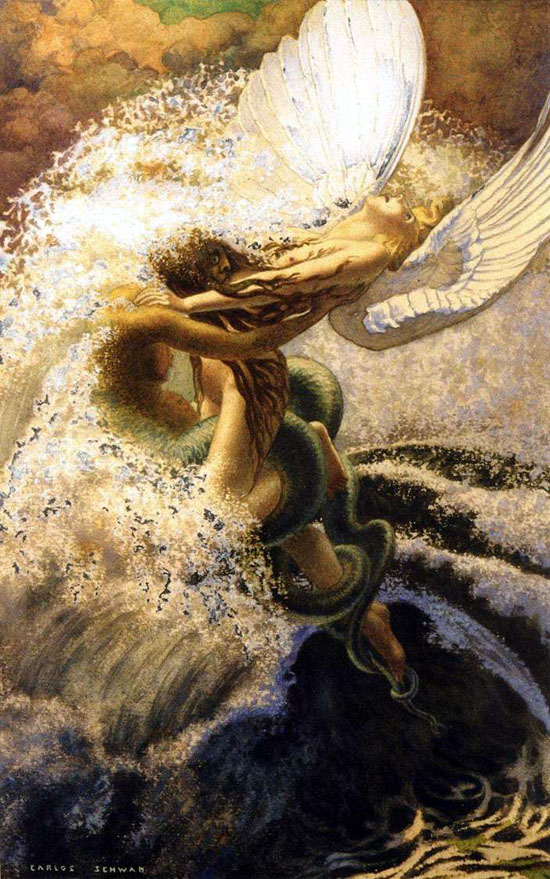
In doing research about the book, I did find something I really liked. There are a series of amazing illustrations for the novel by Carlos Schwabe. I was not familiar with the artist and looking around the web there are some really interesting stuff he’s done. I especially like the drawings he did for Baudelaire’s book of poetry, Les Fleurs du mal. Have to look into these some more.

Illustration for Zola’s Le Reve, by Carlos Schwabe


Carlos Schwabe, Spleen et Idéal (1896)
from Charles Baudelaire, Les Fleurs du Mal

Carlos Schwabe, from Baudelaire’s Les Fleurs du Mal


Carbine On My Handlebar

“When shoes and clothes and food, when hope is gone we’ll all have the rifle.”
― John Steinbeck, The Grapes of Wrath


Vintage WWII bicycle.

I have worked a lot over the years, worked on ways to carry things on my bicycle. I have never, however, worked on how to carry a carbine on my handlebar.

I Build a Writing Machine

“You must stay drunk on writing so reality cannot destroy you.”
― Ray Bradbury, Zen in the Art of Writing

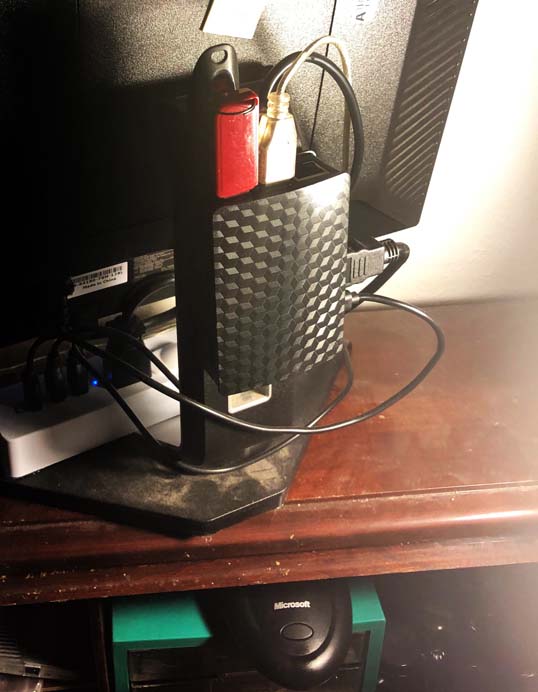
My Raspberry Pi writing machine sitting on top of my secretary. The top folds shut holding the wireless keyboard and mouse inside. I still can use the secretary for handwriting, note vintage Sheaffer Triumph nib fountain desk pen, ink bottles, and stack of filled Moleskines on the left.


I am always involved in a quest for writing machines. I have a couple of laptops (one Linux, one Windows) that I use all the time. But they have web browsers, graphic programs and all other sorts of diversions and I wanted something that would work perfectly for writing first drafts – a distraction-free environment that gives me what I need and nothing more.

A little over seven years ago I bought a secretary and have been using it for handwriting ever since. I used to have a laptop concealed within – but that gave out years ago and modern laptops tend to be too big to fit. I was trying to think of the best way to add digital writing to my secretary, always plotting. I’m poor too, so the solution had to be cost-effective.

And then along came the Raspberry Pi – more specifically the Pi 3. For a small price you can buy a functional computer about the size of a pack of cigarettes – now with builtin WIFI and Bluetooth. It won’t play the newest games or display complex websites, but it is more than adequate for, say a word processor.

Exactly what I needed.

So I set to work. First the Raspberry Pi itself in a cheap ready-made case – attached to the back of a cheap, used monitor that I bought at Goodwill for ten bucks. The key is an USB powered HDMI to VGA converter to make the Raspberry Pi work with the old monitor. Then I bought a small plug strip with USB outlets and glued that to the bottom of the monitor stand. That runs the Pi, the converter, and the monitor itself (I bought a very short cord for the monitor) – so I can move it  all as one unit with only one power outlet.

The Raspberry Pi has four USB ports – two are used for USB thumb drives – one for data storage (I don’t trust MicroUSB cards – so I store all my data on the thumb drive and swap it out periodically) and the other to move files off when I’m done writing. Another USB port is used for a wireless keyboard/mouse combo.

And that’s it for the hardware. The native Pi software, Raspbian, is more than adequate for this task. The Pi has an ethernet port, but since I rarely connect to the internet, the WIFI is fast enough. So far, I don’t even use the Bluetooth, but might set up a wireless file transfer eventually.

The Raspberry Pi 3 B+ attached to the back of the monitor. You can see the HDMI adapter cord,the two USB thumb drives and how it is powered by the small white plug strip. Underneath the shelf is the Microsoft transmitter for the wireless keyboard and mouse.

The machine is fast enough to use any one of several Word Processors. I use Emacs Org Mode for todo lists, outlines, and planning – it’s great (will have to write about that sometime).

For first draft writing, however, I’ve settled on FocusWriter. It provides an efficient, full-screen, distraction-free writing environment which I’ve customized into white text on blue (like WordPerfect 5.1 in the old days – the best writing environment I’ve ever used). Best of all, in the status bar it displays time, word count, and percentage of the daily writing goal completed – which is more than cool. It really makes it easy to crank out the daily number of words.

I do also run a thesaurus and can check Wikipedia if I need to, though the idea is to stay off the web. It really works well – a creative space optimized for cranking out first drafts.

Editing? That’s the tough thing… and a topic for another day.

Money (L’Argent) by Zola

Money (L’Argent) by Emile Zola

“In love as as in speculation there is much filth; in love also, people think only of their own gratification; yet without love there would be no life, and the world would come to an end.”
― Émile Zola, L’Argent


Ok, for awhile now I’ve been working my way through Zola’s Rougon-Marquat 20 novel series of French life in the Second Empire – Reading them not in the order that they were written, but in the recommended reading order.

Money (L’Argent) is the eighteenth book written, but it is a sequel to La Curée, the 3rd book in the recommended order, so I read Money as the fourth. It has the same cast of characters – a little older but definitely no wiser.

I really enjoyed the book. It is a tale of rivers of money, oceans of gold, all stolen, gambled, speculated on. It is, of course, more relevant today than it was when it was written. I couldn’t help but do some re-research into the latest financial crisis and how similar the disaster was to the greed and insanity described in the novel.

In La Curée Aristide Saccard (he changed his last name from Rougon to avoid embarrassment to his powerful politician brother) rose and fell on naked ambition and audacious financial manipulations. In the sequel he finds himself broke, but with the same greed, reckless daring, and collection of equally devious connections. He sets out to turn the world on its head. The story of speculation and deceit is fascinating and engrossing and worth the careful reading it takes.

The whole adventure comes down to a final cataclysmic battle between Saccard’s bulls and the bears that oppose him. I still don’t completely understand how the bears make money – other than the destruction of Saccard and his allies – I didn’t read much about how they went about short selling for example – but I’m sure it’s in there somewhere.

So now it’s on the the next, The Dream (Le Rêve). I have already taken a look, started it, and it seems to be completely different in style and theme from the rest of the series. We’ll see.