Glass in the mist

Taking a quick look through the directory full of photos I took the other week at the Chihuly Exhibit at the Dallas Arboretum I found a few (well, a lot, actually) that I liked that I hadn’t put up yet.

One group was some gorgeous blue glass that was set in the waters of the Palmer Fern Dell near the entrance to the Arboretum. This is a cool, shady spot that is a great escape from the killer Texas summer sun. The ferns are misted periodically from an automated system set on a timer and the rising fog gives the dell an otherworldly aura.

-Especially with that amazing glass sticking up through the mist.

Arroz con Pollo!

One of the best things about a big food truck fair is that the huge crowds will attract food trucks from other cities. Not surprisingly, some of the best ones drive up from Austin.

At the last big fair I went to I was walking around looking for trucks I hadn’t tried before, with a special eye out for trucks from other towns, I spotted a food truck that offered Colombian food. It was called Sabor Colombiano on Wheels and is based in San Antonio. It looked different from the other trucks which are mostly based on large, boxy, UPS-style bodies. This one was a converted RV.

There wasn’t much of a line waiting to order, but more like a large clot standing off to the side. Their menu was simple: Chicken and Rice, Fried Plantains, and Beef Empanadas. I ordered the arroz con pollo with the platanos fritos on the side. They explained that the food came out in big batches and that was why everybody was standing in a group.

So I pushed into the crowd and waited. After a while, the orders started coming out. There was a little table with some sort of relish and a pinkish sauce. I have no idea what these were, but I knew I wanted some. When my order came up I pushed the crowd back so I could get to the little table and ladle on plenty of the two mystery sauces.

The food was really good. It wasn’t too pimped up or fancy… simply good hearty Colombian peasant fare. I really like the arroz con pollo – it was just right. I’ve eaten a lot of platanos fritos in my day, and everybody makes them differently. These were slices of plantain smashed flat and fried crisp, which was very good.

So, if you are in San Antonio and looking for a bite, look up Sabor Colombiano on Wheels on facebook and see where they are at.

Oh, and the sauces… I still have no idea.

The Colombian Food truck was a converted recreational vehicle.

A simple menu.

Arroz con pollo, platanos fritos, and some mystery sauces

Sunday Snippet – The Revenge of the “Blank Claveringi”

Yesterday, I wrote about my quest to find a short story that I remembered from my childhood about a scientist eaten by a giant snail. It turned out to be a story called The Quest for the “Blank Claveringi” by Patricia Highsmith. I found two versions of the story, one, in a 1967 edition of The Saturday Evening Post and another in a plethora of horror short story anthologies.

I could not get the tale out of my noggin’ so I realized that I had no choice for my Sunday Snippet entry other than to write a sequel. So, I give you the first rough draft of the first scene in my homage to Patricia Highsmith and her tale of ravenous snails the size of Volkswagens.

Since I read two versions of the story, I tried to craft my sequel so that it would fit either one – though I had the Saturday Evening Post version in my head. I put in enough backstory that you can read mine without knowing the Highsmith version – though of course, mine will contain many spoilers if you read it first. Sorry. If you want, go to your library and read the Highsmith story first. It’s worth it. You can find it anthologized in a number of books.

I left the story so I can continue on with more if I get the druthers. My idea for the next scene would take place a few years later on the I10 bridge over the Atchafalaya Swamp in Louisiana.

I’ll leave the action there to your imagination.


The Revenge of the “Blank Claveringi”

Doctor William Stead braced himself as he thrust his hands into the thick rubber gauntlets of the glove box. He did not have any dexterity to spare as he used forceps to pull the yielding bodies of six Zebra Snails out of their shells and snip off samples with a tiny pair of scissors. He was seventy five years old, felt even older, and the gloves made his work that much more difficult. Still, his license to work with invasive species carefully stipulated that he work under strict procedures to keep any of his subjects from escaping into the wild.

After collecting enough sample material he transferred the bits of brownish gray tissue into a small mortar, added a few drops of solvent from a pipette and began to grind the sample into a paste. Almost immediately his hands began to cramp and he set his work down and pulled out of the glove box to massage his fingers. He wished he had an assistant to help but he didn’t trust anyone with some of the work he was doing.

Stead was the most celebrated expert in malacology, with his expertise in snails. He had spent a third of his life looking for the giant snails of Kuva Island in the isolated Matusas group west of Hawaii. The natives there told of legends of enormous man-eating mollusks that once lived on Kuva until brave warriors had fought to exterminate them. Decades of futility had made him the laughing stock of the small community of scientists that shared his field of expertise.

Then, suddenly, and unexpectedly, Stead had been vindicated with the discovery of the species Carnivorous Steadi, the giant snail of Kuva. He was filled with pride when the snails were named after him. Two full-grown specimens had been discovered, one alive and one dead, along with a large group of smaller, immature specimens. The snails were monsters, with shells fifteen feet across and bodies twice as long.

The snails were omnivorous. At that size, the natives’ claims that they were man-eaters certainly could be right, although they could not move more than twenty feet in a minute. Doctor Stead was starting to put the plans that he had dreamed of for a quarter century into motion, building a massive, stout crate to bring the giant specimen back to the mainland for study, when the military stepped in and halted his work.

The public story was that the Matusas had been contaminated by a secret, early atomic bomb experiment and that had caused the strange mutations in the snail population. The natives were forcibly relocated and the entire area quarantined.

Stead, of course, knew this to be poppycock, and was quiet only under severe threats from some very powerful people. His research was taken from him and he was dragged back to the mainland. To further insure his silence, he was reimbursed to a generous degree, enough to establish his present laboratory in his original hometown of Kittanning, perched directly on the Allegheny river. He was even given a sizable grant to continue his research into mutations in the snail population. The government was sure he would be quiet and cooperative, laboring away in obscurity during the last few years of his life.

What the military and the government did not know is that Stead had managed in the short time that he was able to study the Carnivorous Steadi, the giant man-eating snails of Kuva, to learn the secrets of the mollusks’ complex and unique reproductive cycle. In addition, he had managed to secret a small vial containing several dozen fertilized eggs, each no bigger than a grain of rice, onto his person and brought them to this very laboratory on the banks of the Allegheny.

Stead had hatched these eggs and was studying the small larval form of the giant snails. These were voracious shell-less tiny forms of the species, able to thrive on land and in fresh water, eat both plant matter and animal flesh, and seemed to be able to reproduce on their own. Stead had always wondered why he had never been able to find any of the giant snails on the small almost featureless Kuva island for decades – then, after he had given up looking for two years, the massive mollusks suddenly made an appearance. There seemed to be a trigger that would cause these small leech-like larvae to suddenly metamorphose into the giant form, growing quickly to a gigantic size in a surprisingly short time.

He wasn’t sure exactly what circumstances would cause this dramatic change, but he was beginning to suspect it was a combination of brackish water and warm temperatures. It was this ability to hide as a tiny form for long periods of time, even decades, and then reappear as the monstrous form that had made survival of the species possible. The natives of the islands had many legends about heroic expeditions to exterminate the snails. That was also how they had managed to elude him for so long.

The doctor turned back to his work, using the thick gloves to apply small patches of the material he had prepared to long strips of electrophoresis gel and then clamp electrodes to the end of each strip. He had begun to suspect that the Carnivorous Steadi were able to interbreed with other local species of snails. Would these hybrids be able to grow under the proper conditions? If so, to what size? Stead knew it was vitally important to find out.

As this stage of his work neared completion, he heard the insistent buzzer at the door. “Just a minute,” he said as he withdrew from the glove box, assuming it was another routine delivery of equipment. He was surprised when he opened the door to see a strong-looking young woman enter the laboratory with long, firm strides.

“Doctor William Stead?” she asked with the attitude of someone that already knew the answer.

“Yes,” said Stead. He was sure he had never met her although something about the structure of her face looked familiar.

“Doctor, my name is Wanda Clavering. I believe you were the last person to see my father, Avery, alive.”

Stead stood in front of the woman stunned, until with a great effort he regained his composure and said simply, “I am so sorry for your loss.”

“You know that he left me and my mother waiting in Hawaii while he went off to visit you and to look for those horrible giant snails don’t you. We were stranded there for months before we were able to find out what had happened. My mother has never recovered from the shock and it has fallen on my shoulders to find out the truth about what happened out there.”

“Well, again I am so sorry. Your father came to see me in the Matusas Islands and I warned him of the expedition to Kuva. I did my best to discourage him from making the trip. He was an inexperienced sailor and must have fallen overboard as his boat was found drifting and abandoned. It was the height of irony when I traveled to Kuva to insure he wasn’t there that I finally discovered the creatures that I had so long sought after.”

“He was looking for them too.”

“Yes, but he was only a neophyte. Again, I feel terrible for your loss, but he was new to the quest, while I had been working for decades.”

The young woman turned away, opened her purse, and seemed to clutch a tiny object in her palm. Her jaw was set and she seemed to be trembling slightly, with rage or sadness… Stead couldn’t tell.

“Doctor Stead, do you know a Lieutenant Barnes?”

Now it was Stead’s turn to seethe. “Yes, I know him. He’s that upstart that the military sent out into the Pacific to take over my studies. He is an usurper.”

“I was able to meet with him and he was able to impart some information to me about my father,” Wanda Clavering said.

“He must have been infatuated with you to give up any information,” Stead replied. “I found him to be very stingy with the facts.”

“I assure you his only motivation was to set the record straight, no matter what you may think.”

“The record?”

“Yes, your story, Doctor Stead, is well known, but Lieutenant Barnes had educated me to the existence of some serious inconsistencies in that tale,” said Wanda.

“That’s ridiculous.”

“First of all, I’m sure you are aware that one of the two giant snails on Kuva was already dead when you and the natives arrived in the catamaran canoe. The natives have testified that it had been done in with a crude wooden spear.”

“What does that have to do with me?”

“It means that my father was alive on Kuva when you reached it and you fed him to the snail to take the glory of discovery for yourself. You have said that you had been searching for decades while he was only a mere neophyte. That must have driven you mad.”

“A mollusk with a stick in it does not convict me of that crime, my dear.”

Wanda continued on as if Stead had not spoken. “You know that after a terrible accident that cost the life of three soldiers, eaten in their sleep, that the second snail was put to death.”

“No, I did not know that. It doesn’t surprise me, though, those military buffoons would be ones to be surprised by something as slothful as a snail.”

“After the specimen was dispatched,” Wanda said, “A complete autopsy was done. Inside the snail’s digestive tract… this was found.”

Wanda Clavering extended her palm and exposed the item she had picked out of her purse. It was a simple gold band.

“My father’s wedding ring.”

Doctor William Stead exploded. “Your father was an imbecile. He did not even understand that the snails would eat through the mooring ropes of his sailboat. The minute I saw the boat adrift and examined the ends of the anchor lines I knew they had been chewed through by mollusk teeth – enormous ones. He told me he thought of the snails as Blank Claveringi with his name as the species and an unknown genus. Snail food was too good an end for him, believe me. It was an undeserved honor to be devoured by the glorious  Carnivorous Steadi.”

Wanda Clavering let out a horrendous scream and moved forward as if to strike the frail old man. Stead knew he could not stand up to her youth and fury and turned to flee out the door of the laboratory. As he moved through the opening, he turned and saw Wanda looking about for a weapon. Her eyes fell on a heavy glass cylinder containing a mass of green plant matter with a thick lid clamped shut. Stead recognized this as a container with maybe twenty of the precious immature giant snail larvae within.

He paused in his flight right outside the door, standing on the little strip of concrete that ran along the bank of the river.

“No! Not that!” he shouted to no avail as Wanda Clavering threw the container with all her might and it struck Stead on the head with a sickening thunk. Dazed, he turned and fell to the ground amongst the shattered glass shards of the container, which had fallen and broke open on the concrete after cracking his skull.

Stead could not move, paralyzed by the head wound, but could see the steady stream of blood pouring out onto the ground. Greedily lapping at the blood were the larvae, freed of their glass prison and eager to eat something other than the sprigs and leaves that Stead would drop into the jar.

He realized that his left arm was still moving under his control. In the periphery of his vision he saw that Wanda Clavering had found a heavy shovel leaning against the wall of the laboratory and was quickly walking over with the obvious intent of avenging her father. Stead used his last ounce of strength to sweep as many of the larvae as he could off the grass. Some bit his arm and held on but he saw a few slide down the bank and squirm, flipping into the quickly moving stream of the Allegheny river.

“Swim, swim, my children, swim fast and far, swim to the sea,” Doctor William Stead mumbled as Wanda Clavering brought the blade of the shovel down on the back of his neck.


The Quest for the “Blank Claveringi”

Illustration by Jean L. Huens for the Saturday Evening Post. Done for the short story “The Snails,” by Patricia Highsmith.


A while back, viewing a hyper-realistic sculpture of hundreds of snails climbing a beer stein to their doom jarred loose an ancient flake of memory from the cobwebby and calcified ruins inside my skull. It was a memory of a short story from my childhood. It’s funny how strangely strong, yet distorted, these moth-eaten impressions can be. I remembered a story about a man on an island looking for giant man-eating snails and coming to a bad end.

Little bits, which may or may not be accurate… I remembered reading it in a magazine; I remembered an illustration showing the snail; I remembered a long, slow battle to the death between the man and the snail. Oh, I did remember being shocked at the ending. I think the story was written in the first person and I was confused at the death of the protagonist… who was telling the tale?

Now that the memory was jarred loose, it had to be teased out or it would drive me nuts. So, off to the Internet. It didn’t take too many crude search queries to quickly realize that many people had been looking for this same story. It didn’t take much more work to find the name of the story, “The Quest for the ‘Blank Claveringi.’”

I was surprised to read that the story was by Patricia Highsmith, the Forth-Worth born (though she fled quite effectively to Europe) author of “The Talented Mr. Ripley” and “Strangers on a Train.” The author had a particular affection for snails – from the book Snail, by Peter Williams:

So attached was the author Patricia Highsmith to snails that they became her constant travelling companions. Secreted in a large handbag or, in the case of travel abroad, carefully positioned under each breast, they provided her with comfort and companionship in what she perceived to be a hostile world.

The story was included in an Alfred Hitchcock collection of tales for youngsters, “Alfred Hitchock’s Supernatural Tales of Terror and Suspense.” That must have been where I read it, not in a magazine. The only problem is that the book seems to have first come out in 1973 and I felt like I was younger than that when I read it. But again, memories are funny, I must have got it wrong.

A quick check of the Richardson Library’s website and I found the book. So I went down there, grabbed it off of the shelves (It was odd looking for the book in the children’s section – it was such a horrific story) and I sat down and read it.

That was the story from my childhood. Of course, a lot of it I didn’t remember, but there can’t be too many tales set on an island with a scientist fleeing from a man-eating snail. If you wonder about the title – “The Quest for the ‘Blank Claveringi,’” the protagonist, Avery Clavering, is fantasizing about getting the new species of giant snail, about the size of a Volkswagen, named after him… though he can’t decide on the genus (thus the “Blank”).

I was wrong about the story being in first person. It is told from the protagonist’s point of view and does go inside his head – that must have been what threw me. The horror of the story is real – the snail is slow, of course, but relentless. The hero can walk faster than the snail, but the island is small and the thing will eventually catch up. He has to sleep sometime.

I enjoyed the story and made a note of reading some more Highsmith. Looking in the front of the book, I discovered that the story was part of a collection called, “The Snail-Watcher and other stories.” The library had that one too, and I checked it out. That collection has at least two horrific snail-related tales… I guess the woman did have a thing for slimy mollusks.

In the front of that collection I found another clue – it said, ““The Quest for the ‘Blank Claveringi’” originally appeared in slightly altered form in The Saturday Evening Post, as “The Snails.”

Back to the Internet. A little searching found that the story was in the June 17, 1967 issue of The Saturday Evening Post. I would have been ten years old then… and that felt about right. I checked the library archive, and they had the 1967 ‘Post in bound form in the archives. The woman at the information desk didn’t seem to understand what I wanted (“Yes, we have magazines… 1967?”) but eventually I was able to get her to go back and retrieve the volume for me. I had to sign a form and give up something (my library card) as collateral to get the tome, and I did.

It was really cool to sit down at a library study station and look through a set of forty-five year old magazines. The ads, the photographs, the illustrations…. pretty damn cool.

I found the story, with an excellent illustration by Jean-Louis Huens. In the white space above the title, someone had written in pencil, “This is what I wanted you to read.” So, I am not the only person on a quest for this story, not even the only one to end up in the archives of the Richardson Public Library.

I took a photo of the illustration with my phone and then sat there and read the story again. Since I had cruised through the Alfred Hitchcock version only a few minutes before, I immediately began to notice differences in the text. At first they seemed minor, only polishings, or rearrangements of phrases. But as I neared the end, the story veered and suddenly it was a completely different tale altogether.

This was probably the version I had read as a ten-year-old child. I seemed to remember another person on the island, and that was only true on the Saturday Evening Post Version. Though the only real significant difference between the two is in the last handful of paragraphs, the thrust of the two plots diverged completely. While the Hitchcock version was an existential tale of the futility of man against the inexorable power of nature, the second was a revenge tale of murder and madness.

I really don’t know why the story was rewritten so savagely, though I think I did like the Hitchcock version (which I assume is the revised tale) a tiny bit better.

At any rate, I checked out two of her books of short stories – The Snail-Watcher and other stories, and Little Tales of Misogyny (a slim volume of very short works about very bad people). I really should not read this kind of stuff. What I am reading is a very strong influence on what I am writing and these stories play into my natural tenancies toward repulsive scribbling.

But it is what it is. As a matter of fact… I have to write something tomorrow for my Sunday Snippets…. Maybe something about giant Volkswagen-sized man-eating snails…. maybe a sequel. What would happen if someone brought a snail back to the mainland?

Snails can reproduce frighteningly fast under the right conditions, you know.

Sunday Snippet – The Revenge of the “Blank Claveringi”

What I learned this week, June 1, 2012


I have been wandering around this Wiki site looking for plot ideas. It isn’t just TV.  There is some interesting and useful stuffins here:

TV Tropes


This looks like fun:

Announcing Food Tours in Dallas!


Dallas was voted the worst city for Bicycling in the country. Still, this ride looks like fun:

Group Ride: On the Trail of Lee Harvey Oswald, June 16th History Tour


10 Reasons You Should Skip Traditional Publishers and Self-Publish Ebooks Instead


This cartoon wrote a sweary word on your toilet wall.


Sushi from a Truck!

The food truck extravaganza was packed. I knew from experience that the trucks would be running out of food soon. Desperate for something new, I scanned for the closest truck that I had never tried before and spotted one called Crazy Fish – sushi, baby. That’s the ticket.

I scurried to the back of the long line and found it moving quicker than it looked. While I was waiting I scanned the board. Most trucks, when faced with giant crowds like this, simplify their menu in order to get the food out quicker. They had four rolls advertised – Sweet n Spicy, Crunchy Philli, Eye of the Tiger, and TNT. I settled on the last two.

As I crept closer to the front of the line the woman kept yelling out at the crowd, apologizing. “We’re making these rolls fresh, by hand, on order, so it takes a while,” she said. She looked harried and exhausted.

Finally I placed my order. While I was chatting with the woman making my rolls the next guy stood up to order. “I’m sorry,” the woman said, “We have to close for a few hours, we just ran out of rice.”

I was lucky enough to get the last two rolls. I guess I should have shared them with the folks in line behind me.

But they were too good to share.

The Crazy Fish food truck.

The menu, four different rolls.

It really is all about the sauce. How can you not love anything that has both Sriracha and Wasabi in squirt bottles? In my opinion, food is best when used as a method of transporting spicy sauces to the taste buds.

The line, waiting for Sushi.

My two rolls. The Crazy Fish truck makes it clear that they are not about tradition – they are about deliciousness. I find that philosophy hard to argue with. And yes, I put a lot of Wasabi and Sriracha on my food. So sue me.

Toad Corners

At the Dallas Arboretum, down at the end of the Crepe Myrtle Alee, sits a little square called Toad Corners. Four huge bronze toads spit water towards a metal sphere and a bubbling fountain in the center. This spot is popular with kids, especially on hot Texas summer days. They direct the water at each other and run through the spray, trying to cool off.

It’s a blast.

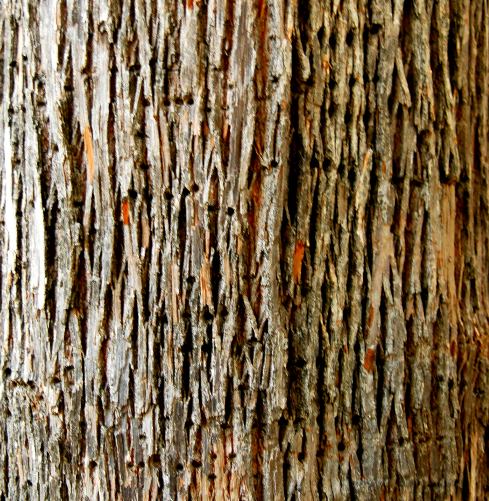
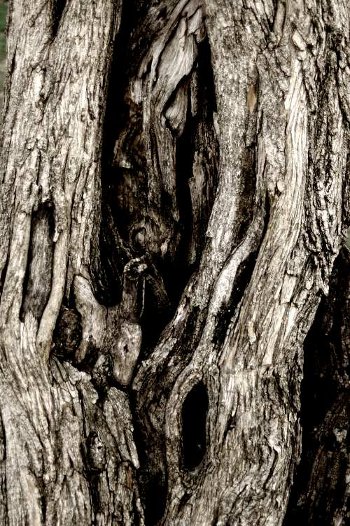
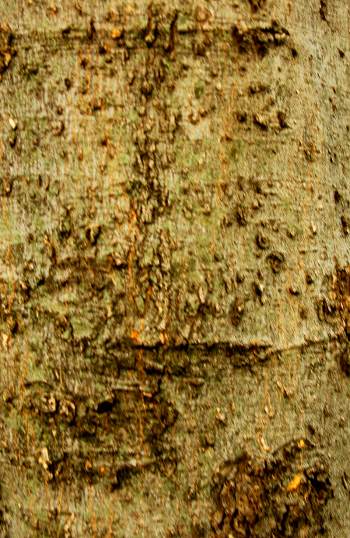
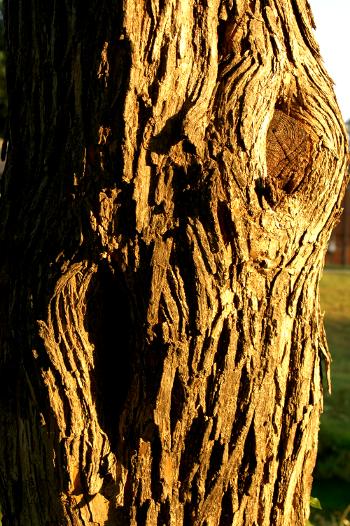
Bark in the Creek Bottoms in Back of my House

Does anybody really look at anything?

I was waiting outside for the day to get going and noticed the tree next to me had been drilled by a woodpecker in a long series of horizontal rows of holes – hundreds of them, all over the tree. The woodpecker must work the same hours as I do, because I had not heard him out there, pecking away.

All the trees tell stories in their bark. I didn’t have to move more than ten feet to get these pictures, but look at the variety of the tree skin, from tough and rugged, to torn and wounded, to almost soft and curvaceous.

But nobody ever looks at them… not closely, not like that.

The woodpecker has left a line of holes in this tree like Al Capone’s gunners on Saint Valentine’s day.

The torn-up looking trees are all Bois d’ Arc – which I have written about before.

The School of Rock

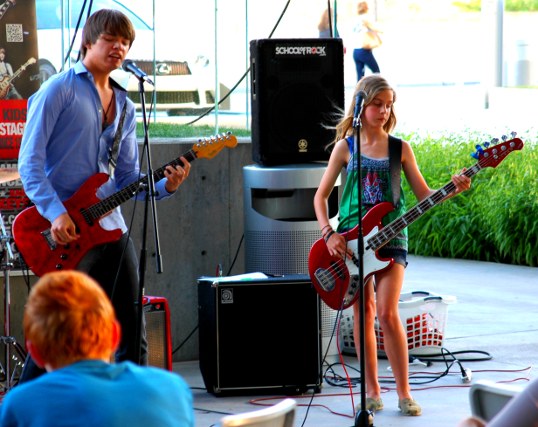
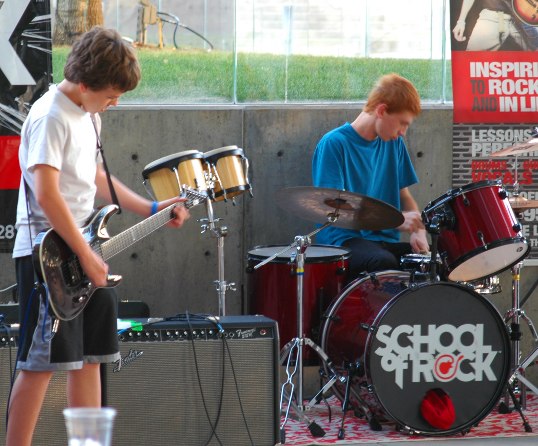
The other day I was down on Flora Street in the Dallas Arts District wandering around, looking at the crowds by the food trucks when I noticed music coming from the direction of the Winspear Opera House. It sounded like some AC/DC – so I meandered in that general direction to find out what was going on.

It was a concert by the kids from the School of Rock and, sure enough they were hammering out some AC/DC. It wasn’t too bad. Of course, if you spend enough time working on one song you can get to play it pretty well, but it is what it is.

I stayed for a while as different groups climbed up on stage and played different classic rock songs. They were all pretty good at what they were doing. The vocals were the weakest part of the performance, but at that age wailing like Robert Plant isn’t the easiest thing to pull off.

It was pretty odd watching the thing. There were so many elements of a middle school band concert – the eager kids taking their turn at a moment in the sun, the smiling parents sitting around, focused on their spawn, their work, and the results of their cash. But it was different too – the hard rock, the skinny little girl playing a bass bigger than she is, the powerful amplifiers. And the enthusiasm was not as nerdy.

The kids were all pretty good – you could hear all of their hard work. But then this one guy gets up there and plays Misirlou – you know the old Dick Dale surf guitar riff that you probably remember from the opening of Pulp Fiction. He tore that thing up. He knew what he was doing around that guitar string.

I didn’t stay around too long – but I did get a kick out of it. The band launched into a Led Zeppelin instrumental… I think it was Moby Dick. The guitars took a rest and a tiny girl perched on the kit took over grinning, waved her sticks in the air, and launched into a long drum solo. The parents went nuts.

Oh, God, not that. I was born in 1957, so I was around for the whole thing. Music is important to me, all the music, a wide diversity. But, if I had my druthers, there is one thing… only one thing that I would have taken away from the decades of rock music… and that is the interminable drum solo. A good portion of my life has been wasted waiting for the things to end and the real music to start up again. I understand that the drum solo has an important purpose – for the rest of the band to go backstage, do a couple of lines and maybe a groupie or three – but that doesn’t mean the payin’ folks out in the crowd have to be subjected to that endless noise.

So, long live rock, teach your children well, but please, lets end the drum solos.

You rocked me all night long.

A rockin’ Misirlou.

A Zeppelin drum solo.

Sunday Snippet – Punch Card (How I Met Your Grandmother)

I had a writing teacher once that said that ideas were swimming through the air all around us and if you didn’t catch one as it went by, someone else would.

This morning, I caught an idea for a short story and wrote down an outline before I went out for a bicycle ride. There are four scenes, spread out over, say, forty years. The working title for the story is Punch Card (How I Met Your Grandmother).

Here’s the second scene, which takes place in the past (maybe 1975 or so). I’ll write the other three scenes over the next few days – hopefully to take to my writing group. If you want a copy of the first draft when I finish it, send me an email at bill*chance99@gmail.com – except put a period where the asterisk is and the number 57 where the 99 is (take that spammers).

I hated the punch card machine more than anything I had ever hated before. I was a junior, majoring in comparative literature and since I wasn’t in the computer science department I could only use the computer lab after ten in the evening. The giant computer itself took up half of the bottom floor of the building – but nobody was ever allowed to go or even see in there. The other half was filled with a filthy snack bar, lined with rusty autobots that spat out moldy candy bars and bags of stale off-brand potato chips – and a series of dingy rooms filled with hundreds of punch card machines.

I had taken an elective class in Fortran programming because I thought that computers were the future and I was worried about paying rent after graduation. Writing the assigned programs was easy – find the sides and angles of a right triangle, the day of a date, or draw a series of boxes. I could write the code, but I couldn’t punch the cards.

My homework problems had to be punched onto these beige cards – rectangular with one corner cut off. I had to buy a case of the damn things at the beginning of the semester. I couldn’t imagine using all those cards. I didn’t know. Three months later, I had to buy another half-box from some kid in my dorm. I was always a terrible typist and would get nervous, freeze up and hit the wrong letter.

This was worse than a typewriter. You would load a stack of cards into the machine and then it would warm up and start to hum. The heat would rise and the ozone would burn your nose. The keys were big and yellow and had to be shoved hard before the machine would roar and then… “Blam!” it would whack a little tiny rectangle out of the card. A paper flake would fly through the air to join the thick layer of cardstock confetti coating the floor and, magic, a corresponding hole would appear in the card itself.

With the punchcard machine a mistake was a disaster. I never could see that I’d missed a key. Sure, the code printed out along the top of the card but they never put new ribbons in the machines and it was always too faint for me to read. When I had my stack of cards all finished I’d take them into the computer room, wrap them with a rubber band, and shove them through this little wooden door in the wall where they would fall down a chute. You never could even see what was on the other side.

Then it was time to wait. Wait for hours. I’d spend all night there, waiting for my program to run. Then, my output would drop down another, bigger, chute into a pile. Every time an output would drop, all the kids waiting would run in and see if it was theirs. It was horrible.

You see, if your program ran correctly you’d get a few sheets of paper with the code and the answer printed on it but I never did. I’d find my cards still rubberbanded together and clipped to a huge stack of pinfeed folded green and white striped paper. On the top would be a handwritten note that would say something like, “Core Dump, you loser!”

Whenever you made a mistake, even a tiny one, the core would dump and the computer would print out hundreds of pages of gibberish. You were supposed to carefully peruse the printouts and find your error in there somewhere but nobody had time for that. You’d throw the printout in this huge wooden bin, scratch your head, and start looking for your mistake. I have no idea why they wasted all that paper.

Sometimes it would be a mistake in my work, but usually it was a typo in my card punching. I figured out that the little holes corresponded to letters, numbers, or symbols and I punched out a card with everything on it, in order, and I would have to slide the thing slowly over every card I had punched to try and find the mistake.

It was horrible. I would be so tired, my eyes swimming, sitting at that huge punch machine, trying to type. I’d make a mistake and throw the card onto the overflowing trash bins and start again. Even when I made it through a card, I’d be terrified I had made an unknown error and would generate another core dump. It was killing me… but I had nowhere else to go.

Our instructor was always harping on us to put in comment cards. These were punch cards marked in a certain way that they didn’t make the computer do anything, but simply left comments. You were supposed to leave comments about what your code was supposed to be doing or what your variable represented or why you decided to do something the way you did. It was a pain in the ass and I never did it until the teacher started marking my grade down because I had insufficient comments in my code.

So I started putting the comments in, though I never commented on the code. I figured he didn’t really look through everybody’s work for these things and only took the computer’s count of how many comments were in here. Sometimes I’d just gripe… like, “Fortran really sucks,” or “This is too hard,” or “It’s way too late at night to be doing this.”

This got to be pretty boring pretty fast so I switched to some of my favorite Shakespeare Quotes, “As flies to wanton boys, are we to the gods; they kill us for their sport” or “There’s not a note of mine that’s worth the noting,” or “I am not bound to please thee with my answer.” I might make some mistakes punching the comments… but who cared? They would still go through as comments and you could still read them.

Like it was yesterday, I remember the day when I picked up my output and, sure enough, there was the big thick stack of folded paper, another core dump, but instead of a handwritten note, there was a punched card on top of my stack. It was different in that it had been done on a machine that had a fresh ribbon in it and across the top, in crisp, clear, printing, it said, “Funny Comments Ronald. You’re getting close. Ck crd 7 error in do loop – Christine.”

And sure enough, in my seventh card I had hit a capital letter “Z” instead of a number “2.” I never would have seen that.

So I redoubled my efforts at witty, humorous, and obscure quotations for my comment cards. I was reading this huge crazy new book called Gravity’s Rainbow and one day I quoted from it. Stuff like, “You may never get to touch the Master, but you can tickle his creatures.” or “If they can get you asking the wrong questions, they don’t have to worry about the answers,” or “Danger’s over, Banana Breakfast is saved.”

My program ran that time and the card on top said, “A screaming comes across the sky – Christine,” which made me so happy I didn’t stop smiling for a day.

The next program, I added a comment card that said, “Christine, I can’t see you – Ronald.”

And it came back with, “I know, but I can see you. I think you’re cute – Christine.”

So I thought about it and worked up my courage. At the end of a program that I larded with my best quotes from the composition book I carried with me and scribbled in all the time… my commonplace book, I finished with a card that said “Christine, I want to meet you – Ronald.”

All that night I was the first to fight their way in to grab any program that slid down the chute, only to be disappointed again and again as other student’s projects ran before mine. Finally, as the sky was beginning to turn a light pink in the west, my program dropped. On top was a card. I ran back to my dorm room to read it, not daring to look at it anywhere in public.

It said, “Love to Ronald. Snarky’s at six, on Thursday. Don’t be late – Christine.”

Snarky’s was a little chain restaurant off campus not far from the computer building. My heart almost beat out of my chest. Thursday was going to take a long time to get there.