A Month of Short Stories 2017, Day 24 – Sweethearts by Richard Ford

The cover of Richard Ford’s novel – The Sportswriter.

Over several years, for the month of June, I wrote about a short story that was available online each day of the month…. It seemed like a good idea at the time. My blog readership fell precipitously and nobody seemed to give a damn about what I was doing – which was a surprising amount of work.

Because of this result, I’m going to do it again this year – In September this time… because it is September.

Today’s story, for day 24 – Sweethearts by Richard Ford
Read it online here:

Sweethearts by Richard Ford

This was not going to be a good day in Bobby’s life, that was clear, because he was headed to jail. He had written several bad checks, and before he could be sentenced for that he had robbed a convenience store with a pistol—completely gone off his mind. And everything had gone to hell, as you might expect. Arlene had put up the money for his bail, and there was some expensive talk about an appeal. But there wasn’t any use to that. He was guilty. It would cost money and then he would go to jail anyway.

—-Richard Ford, Sweethearts

I am more than a little ashamed of the fact that I came to read Richard Ford’s work because of a perverse fascination with the cover of his novel, The Sportswriter. The odd thing is that I never found The Sportswriter to be my cup of tea. I simply couldn’t make a connection with the novel’s protagonist, Frank Bascombe. The second novel in the Bascombe series, Independence Day, won the Pulitzer Prize and PEN/Faulkner Award for Fiction.

Though those well-written and highly acclaimed novels never were my favorites, I absolutely loved Richard Ford’s short fiction. It was rougher and tougher and had people in them that I cared about.

Today’s story, Sweethearts, is about a man tasked with helping his girlfriend take her ex-husband down to the penitentiary to start his one-year term of imprisonment. The criminal is a real piece of work – though everyone else in the story has made enough mistakes that they can’t be too unforgiving. It’s the kind of impossible situation we all find ourselves in now and again… and if you don’t, you’re not trying hard enough.

Richard Ford:

Do you think stories are created or discovered?

That’s easy. Stories are created. It isn’t as if they’re ‘out there’ waiting in some Platonic hyper-space like unread emails. They aren’t. Writers make stories up. It might be that when stories turn out to be good they then achieve a quality of inevitability, of there seeming to have been a previously existing and important space that they perfectly fill. But that isn’t what’s true. I’m sure of it. A story makes its own space and then fills it. Writers don’t ‘find’ stories—although some writers might say so. This to me just means they have a vocabulary that’s inadequate at depicting what they actually do. They’re like Hemingway—always fleeing complexity as if it were a barn fire.
—-from Granta

i

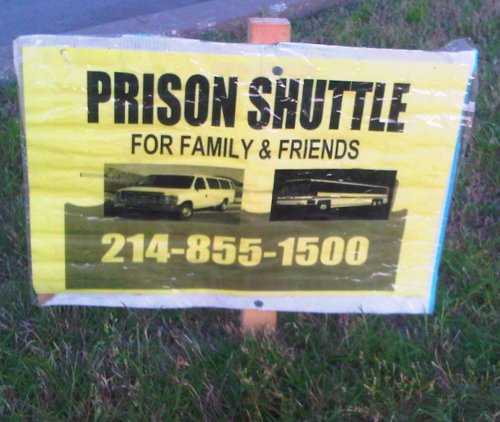
For Family & Friends

An advertising sign I saw outside a transit station in a rough part of town.

A Month of Short Stories 2017, Day 23 – The Call of Cthulhu By H. P. Lovecraft

Tales of the Cthulhu Mythos

Over several years, for the month of June, I wrote about a short story that was available online each day of the month…. It seemed like a good idea at the time. My blog readership fell precipitously and nobody seemed to give a damn about what I was doing – which was a surprising amount of work.

Because of this result, I’m going to do it again this year – In September this time… because it is September.

Today’s story, for day 23 – The Call of Cthulhu by H. P. Lovecraft
Read it online here:
The Call of Cthulhu by H. P. Lovecraft

The most merciful thing in the world, I think, is the inability of the human mind to correlate all its contents. We live on a placid island of ignorance in the midst of black seas of infinity, and it was not meant that we should voyage far. The sciences, each straining in its own direction, have hitherto harmed us little; but some day the piecing together of dissociated knowledge will open up such terrifying vistas of reality, and of our frightful position therein, that we shall either go mad from the revelation or flee from the deadly light into the peace and safety of a new dark age.

—-H. P. Lovecraft, The Call of Cthulhu

I have written about H. P. Lovecraft before – I wrote about how I first read him here… and I wrote about a great really bad movie I saw decades ago based on the Cthulhu Mythos.

Today I guess I’ll mention a sort of silly story. I was in the Garland, Texas library a few years ago, perusing the fiction aisles. The fiction, as is the usual convention was arranged by author. At the end of each case was the start and end of the author’s names… such as Smith-Thompson, or Adams-Baker. In the C section it had Clark-Cthulhu. That caught me off guard. I didn’t know that Cthulhu had written any popular fiction. I checked the stacks and there was a collection of short stories set in the Cthulhu Mythos written by a variety of authors and the person that cataloged the book mistakenly thought that Cthulhu himself, the great evil one, born on the planet Vhoorl in the 23rd nebula from Nug and Yeb had actually penned the tome himself.

I really wanted that little plastic sign and considered prying it off myself when nobody was looking. Unfortunately, I am too honest for that. When I moved to Richardson I stopped going to the Garland library on a regular basis and the last time I visited the fiction section had been reorganized and the sign was gone.

You have to take my word for it. Ph’nglui mglw’nafh Cthulhu R’lyeh wgah’nagl fhtagn.

H. P. Lovecraft:

The oldest and strongest emotion of mankind is fear, and the oldest and strongest kind of fear is fear of the unknown.
—-from Supernatural Horror in Literature

H.P. Lovecraft

A Month of Short Stories 2017, Day 22 – before the storm By Alex Sheal

Have a drink.

Over several years, for the month of June, I wrote about a short story that was available online each day of the month…. It seemed like a good idea at the time. My blog readership fell precipitously and nobody seemed to give a damn about what I was doing – which was a surprising amount of work.

Because of this result, I’m going to do it again this year – In September this time… because it is September.

Today’s story, for day 22 – before the storm by Alex Sheal
Read it online here:
before the storm by Alex Sheal

Then we slept, our storm-scattered raft adrift in the afternoon sun, mouths parched, detritus trailing us across the lifeless ocean. Or did fish school beneath us, flashing like bonfire sparks in a bottomless night?

—-Alex Sheal, before the storm

There is this comedian, Larry Miller (he’s the obsequious clothing salesman in Pretty Woman) that does this comedy routine about drinking in bars – it’s called “5 Levels of Drinking.”

He says:

You crawl outside for air, and then you hit the worst part of level five ~~ the sun. You weren’t expecting that were you? You never do. You walk out of a bar in daylight, and you see people on their way to work, or jogging. And they look at you, and they know. And they say, “Who’s Ruby?”

Let’s be honest, if you’re 19 and you stay up all night, it’s like a victory like you’ve beat the night, but if you’re over 30, then that sun is like God’s flashlight. We all say the same prayer then, “I swear, I will never do this again (how long?) as long as I live!” And some of us have that little addition, “……and this time, I mean it!

Truer words have never been spoken.

Today’s story reminds me of that bit, somehow.

This woman, a bartender at the NYLO Southside, asked Candy, “Is your husband a professional photographer?”
Candy answered, “He thinks he is.”

A Month of Short Stories 2017, Day 21 – Only Sunshine by Becky Mandelbaum

Belle Plaine Service Area, Kansas Turnpike

Over several years, for the month of June, I wrote about a short story that was available online each day of the month…. It seemed like a good idea at the time. My blog readership fell precipitously and nobody seemed to give a damn about what I was doing – which was a surprising amount of work.

Because of this result, I’m going to do it again this year – In September this time… because it is September.

Today’s story, for day 21 – Only Sunshine by Becky Mandelbaum

Read it online here:
Only Sunshine by Becky Mandelbaum

Baby Julia was a baby, but even she understood that she was nothing much in the grand scheme of things. She would never be one of the greats: the rain or the wind or the dirt or the sky. But maybe, just maybe, she could participate in some peripheral way—by touching or tasting or, even better, by eating the celestial thing that she admired most. Why not? All around her, things were consuming other things: caterpillars were munching leaves, the mailbox was ingesting letters, the soil was drinking rain. Not to mention that every night, some invisible glutton took another bite of the moon. Eventually there’d be a new one—full and silver and miraculously intact—but without fail, that anonymous mouth would slowly eat it back down to a measly grain of rice. And then there was her mother who, every day, without fail, put the same plastic spoon in her mouth: pudding, applesauce, mashed peas. So why not this? Why not her and why not today and why not the sun?

—-Becky Mandelbaum, Only Sunshine

The most difficult question I get asked, and I get asked it a lot, is, “Where are you from?”

For most people that’s pretty easy, but I have no idea what to say. The most accurate answer is “nowhere,” but that seems pretty insolent as does “everywhere” which means exactly the same thing. Usually I say, “I’ve lived in Dallas for a long, long time,” which is accurate and probably the best answer. I am from where I live and I live where I’m from.

One place that does hold a claim on me is Kansas. My family is from there. I lived there as a youth whenever my father was on combat tours and couldn’t take his family along. We were stationed in the Northeast corner of the state for a while (on a base and in a town known for its prisons). In high school, for a few months I was a refugee there after being evacuated from a terrible earthquake. I went to college there (since my family was from Kansas, I was granted in-state tuition, which made the decision easy. My nickname for at least the first year or so was “banana boat,” as in “Bill, you are an American, but you act like you fell off the banana boat.”) My first job, for three years, after school was in Kansas.

So the state does have its hooks in me to some extent. But is it home? Nah.

There is no home. I hear stories like, “So and so went to school in Shreveport but after a month she was homesick and came back.” I have no idea what that means. Homesick is an emotion that I have never felt. When I travel I feel as much at home in some bland business hotel as I do in my bed in the house I make payments on. Which is, not at all. Or completely. Which means the same thing.

Today’s author, Becky Mandelbaum, is from Kansas and writes about Kansas (though she no longer lives there). Her book of short stories is called Bad Kansas – which is a pretty compelling title.

I read several of her works online and chose one that doesn’t have any obvious connection to that state. It’s called Only Sunshine and is a bit of magical realism (light on the realism) about an infant that eats the sun. It’s an effective piece – you really feel for the parents of the doomed baby and their futile attempts to stop the thermonuclear fusion.

I enjoyed the delicate tone and the simple story. I’ve been around enough babies to be pretty sure this is how they look at things and they would gobble old sol if they had the chance.

While I was in school, even though I was a chemistry major I tried to slip into as many advanced literature classes as I could, wedging them in between Differential Equations and Physical Chemistry. One that I took was “Literature of the Great Plains.” On the first day the professor apologized, “there isn’t really any great literature written on or about the Great Plains – we will have to make do with what we have.”

One concept is still with me. In the classic Giants in the Earth by O. E. Rölvaag, a women is essentially driven crazy by the sky and the fact that out on the plain, you can lie down, look up, and see nothing except the sky.

Beret had now formed the habit of constantly watching the prairie; out in the open, she would fix her eyes on one point of the sky line–and then, before she knew it, her gaze would have swung around the whole compass; but it was ever, ever the same. . . . Life it held not; a magic ring lay on the horizon, extending upward into the sky; within this circle no living form could enter; it was like the chain inclosing the king’s garden, that prevented it from bearing fruit. . . . How could human beings continue to live here while that magic ring encompassed them? And those who were strong enough to break through were only being enticed still farther to their destruction! . . .

They had been here four months now; to her it seemed like so many generations; in all this time they had seen no strangers except the Indians–nor would they be likely to see any others. . . . Almost imperceptibly, her terror because of the stakes which her husband had burned had faded away and disappeared. . . . They had probably belonged to the Indians, so it did not matter; he had become fast friends with them. . . .

People had never dwelt here, people would never come; never could they find home in this vast, wind-swept void. . . . Yes, they were the only ones who had been bewitched into straying out here! . . . Thus it was with the erring sons of men; they were lost before they knew it; they went astray without being aware; only others could see them as they were. Some were saved, and returned from their wanderings, changed into different people; others never came back. . . . God pity them: others never came back! . . .

At these times, a hopeless depression would take hold of her; she would look around at the circle of the sky line; although it lay so far distant, it seemed threatening to draw in and choke her. . . .

. . . So she grew more taciturn, given to brooding thoughts.

But then the unthinkable took place: some one from outside broke through the magic circle. . . .

Today’s story made me think about Giants in the Earth… I’m not sure why. Maybe the opening line of Rölvaag’s book.

Bright, clear sky over a plain so wide that the rim of the heavens cut down on it around the entire horizon. . . . Bright, clear sky, to-day, to-morrow, and for all time to come.

. . . And sun! And still more sun! It set the heavens afire every morning; it grew with the day to quivering golden light–then softened into all the shades of red and purple as evening fell. . . . Pure colour everywhere. A gust of wind, sweeping across the plain, threw into life waves of yellow and blue and green. Now and then a dead black wave would race over the scene . . . a cloud’s gliding shadow . . . now and then. . . .

Interview with Becky Mandelbaum:

How do you feel about social media to promote your writing, and do you use it?

I usually don’t like using social media to promote my writing. I like to write because writing feels, in many ways, like a rejection of all the technology we’ve come to rely on. A story on paper is so simple. You have the text, the reader, and the exchange. I think bringing other mediums into the picture can ruin that interaction. Of course, it can also enhance it in other, peripheral ways. I’ve liked several of my favorite journals on Facebook, and it’s nice to see what’s going on with those publications.
—-From Midwestern Gothic

Keeper of the Plains,
Wichita, Kansas

A Month of Short Stories 2017, Day 20 – Samsa in Love by Haruki Murakami

Untitled (Sprawling Octopus Man), by Thomas Houseago
Nasher Sculpture Center
Dallas, Texas

Over several years, for the month of June, I wrote about a short story that was available online each day of the month…. It seemed like a good idea at the time. My blog readership fell precipitously and nobody seemed to give a damn about what I was doing – which was a surprising amount of work.

Because of this result, I’m going to do it again this year – In September this time… because it is September.

Today’s story, for day 20 – Samsa in Love by Haruki Murakami

Read it online here:
Samsa in Love by Haruki Murakami

In any case, he had to learn how to move his body. He couldn’t lie there staring up at the ceiling forever. The posture left him much too vulnerable. He had no chance of surviving an attack—by predatory birds, for example. As a first step, he tried to move his fingers. There were ten of them, long things affixed to his two hands. Each was equipped with a number of joints, which made synchronizing their movements very complicated. To make matters worse, his body felt numb, as though it were immersed in a sticky, heavy liquid, so that it was difficult to send strength to his extremities.

Nevertheless, after repeated attempts and failures, by closing his eyes and focusing his mind he was able to bring his fingers more under control. Little by little, he was learning how to make them work together. As his fingers became operational, the numbness that had enveloped his body withdrew. In its place—like a dark and sinister reef revealed by a retreating tide—came an excruciating pain.

It took Samsa some time to realize that the pain was hunger. This ravenous desire for food was new to him, or at least he had no memory of experiencing anything like it. It was as if he had not had a bite to eat for a week. As if the center of his body were now a cavernous void. His bones creaked; his muscles clenched; his organs twitched.

—-Haruki Murakami, Samsa in Love

I always think about believability in fiction. You don’t have to worry about this in non-fiction… it’s by definition true and believable, even when it is wildly unlikely. But fiction has to be believable.

One important idea is “making a deal with the reader.” This has to be done right away, preferably in the very first sentence. You have to alert the reader, make a deal with the reader, and then keep up your end of the bargain.

The best example is Metamorphosis by Franz Kafka. Turning into a giant cockroach in the middle of the night for no apparent reason isn’t believable, is it?

But Kafka writes his genius opening line:

When Gregor Samsa woke up one morning from unsettling dreams, he found himself changed in his bed into a monstrous vermin.

You see, Kafka has made a deal with the reader. If you continue with the story, you have agreed that people can be changed into a giant cockroach (vermin) for no reason. He offers the deal, you accept it, and he keeps it.

Today, I planned on stopping for lunch, by myself. I looked forward to the quiet and the break. Unfortunately, I had forgotten to carry my Kindle or even a book. No problem, the library was right next door and, looking in at the New Fiction display, I saw a copy of Men Without Women, Stories by Haruki Murakami. Bingo.

While I ate, I looked through the table of contents for a brief selection, something I could read during the short sliver of time I was allotted. I found Samsa in Love, and was able to finish before I had to head back to work.

Samsa in Love is Metamorphosis in reverse. It starts out with Gregor Samsa waking up in his bare room, now transformed back into a human. He remembers little of being Gregor Samsa, but even less of the time he spent as a cockroach (except for a strong fear of birds). The story tells of his first few steps in becoming human again, including falling fast in love with a hunchbacked locksmith sporting an ill-fitting brassiere.

The story makes a deal, and sticks with it.

Interview with Haruki Murakami:

Is each book you write fully formed in your mind before you start to write or is it a journey for you as the writer as it is for us as readers?

I don’t have any idea at all, when I start writing, of what is to come. For instance, for The Wind-Up Bird Chronicle, the first thing I had was the call of the bird, because I heard a bird in my back yard (it was the first time I heard that kind of sound and I never have since then. I felt like it was predicting something. So I wanted to write about it). The next thing was cooking spaghetti – these are things that happen to me! I was cooking spaghetti, and somebody call. So I had just these two things at the start. Two years I kept on writing. It’s fun! I don’t know what’s going to happen next, every day. I get up, go to the desk, switch on the computer, etc. and say to myself: “so what’s going to happen today?” It’s fun!

—-from The Guardian

(click to enlarge)
Adam, by Emile-Antoine Bourdelle, plus admirer
Cullen Sculpture Garden
Houston, Texas

A Month of Short Stories 2017, Day 9 – The Hurricane, by Lord Dunsany

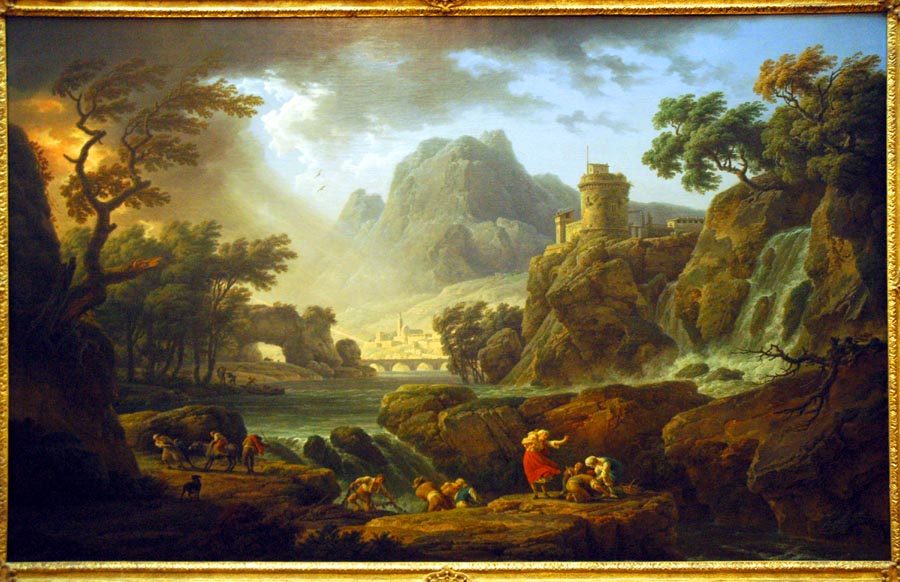
(click to enlarge) “Approaching Storm” by Claude-Joseph Vernet, Dallas Museum of Art

Over several years, for the month of June, I wrote about a short story that was available online each day of the month…. It seemed like a good idea at the time. My blog readership fell precipitously and nobody seemed to give a damn about what I was doing – which was a surprising amount of work.

Because of this result, I’m going to do it again this year – In September this time… because it is September.

Today’s story, for day 9 – The Hurricane, by Lord Dunsany

Read it online here:
The Hurricane, by Lord Dunsany

‘Old friend,’ said the Hurricane, ‘there are cities everywhere. Over thy head while thou didst sleep they have built them constantly. My four children the Winds suffocate with the fumes of them, the valleys are desolate of flowers, and the lovely forests are cut down since last we went abroad together.’

—-Lord Dusany, The Hurricane

Today, with Houston starting its long recovery from Harvey and Irma bearing down on Florida with its horrors to come, I thought I’d link to a short little bit of fantasy called The Hurricane.

Article on Lord Dunsany

It’s hard to underestimate the impact that Dunsany had in the fantasy genre, and he remains one of the literary movement’s most notable figures, influencing many authors who would become major figures in and of themselves. Authors such as H.P. Lovecraft and Robert E. Howard noted their appreciation and influence of the man, with Lovecraft saying of The King of Elfland’s Daughter: “Inventor of a new mythology and weaver of surprising folklore, Lord Dunsany stands dedicated to a strange world of fantastic beauty.”

Dallas, Texas

A Month of Short Stories 2017, Day 8 – Haunting Olivia, by Karen Russell

Dallas Arts District
Dallas, Texas

Over several years, for the month of June, I wrote about a short story that was available online each day of the month…. It seemed like a good idea at the time. My blog readership fell precipitously and nobody seemed to give a damn about what I was doing – which was a surprising amount of work.

Because of this result, I’m going to do it again this year – In September this time… because it is September.

Today’s story, for day 8 – Haunting Olivia, by Karen Russell

Read it online here:
Haunting Olivia, by Karen Russell

The goggles are starting to feel less like a superpower and more like a divine punishment, one of those particularly inventive cruelties that you read about in Greek mythology.
—-Karen Russell, Haunting Olivia

Magical realism is a tricky thing. It is much easier to pull off in Spanish than in English. If not done correctly it simply feels strange and twee.

But if done right it is entertaining and can carry an emotional wallop.

I like what Karen Russell has done in today’s story. It is mostly realism tinged with just the right amount of magic. At first you aren’t sure – the story of two young boys looking for the ghost of their beloved baby sister – their imaginations are expected to run wild. But there are just enough clues to tell you that the world of Haunting Olivia isn’t quite the same dreary one that we get up and go to work in every day.

She pulls it off. In English.

Interview with Karen Russell from Guernica:

Guernica: The term “magical realism” refers to a specific movement in Latin American literature, though it’s now used to encompass a range of writers, from Rushdie to Díaz, Kafka to Aimee Bender. To what extent have magical realist writers influenced you? Do you see yourself in that tradition?

Karen Russell: It’s funny, for a long time I would go watermelon-red and deny that I was a magical realist. It felt imprecise to me, a misrepresentation. Because, as you say, that term refers to a very specific historical moment and movement in Latin American literature. Now, of course, you see the term “magical realist” applied to basically any story told with a little shimmer on the lens.

I still get shy about applying the term “magical realism” to my own work. But I would not be writing the way I do today had I not fallen in love with Borges, Rulfo, Márquez. I was hugely excited to read One Hundred Years of Solitude, and Rulfo, and Julio Cortázar’s Blow-Up: And Other Stories and Hopscotch. European fabulists like Calvino and Kafka and American dark romantic weirdos like Poe also expanded my ideas of what fiction could be, and could do.

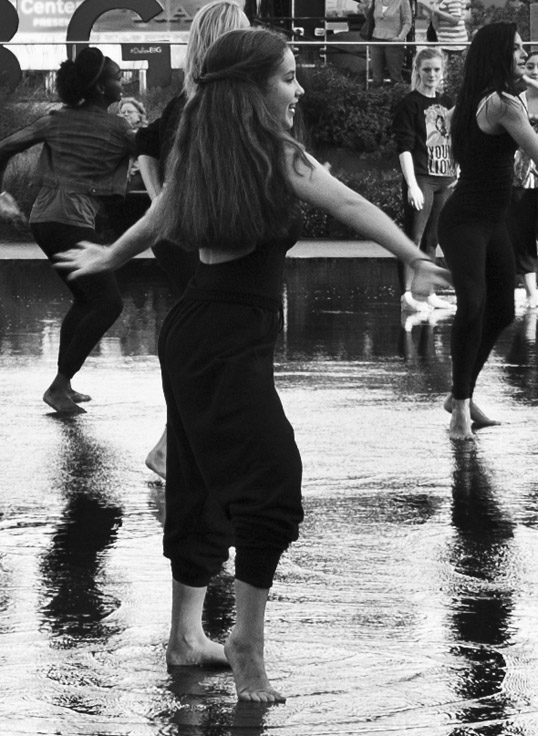
Dancers, Arts District, Dallas

A Month of Short Stories 2017, Day 7 – Why Don’t You Dance?, by Raymond Carver

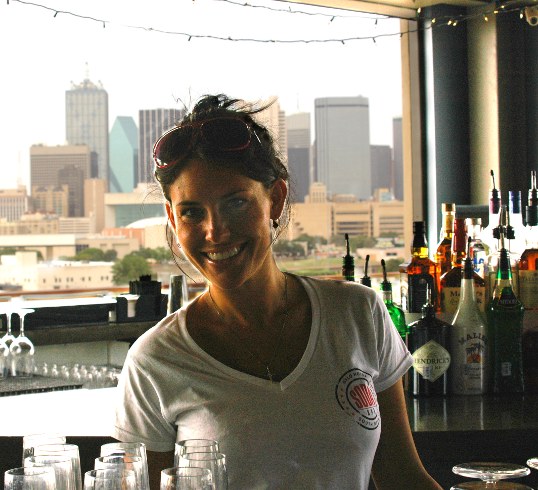
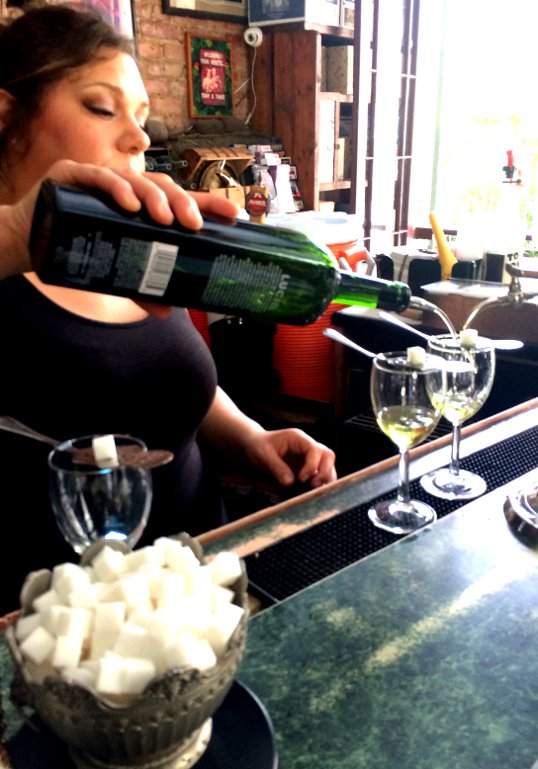
The bartender pouring the absinthe, note the clear green color.
Pirate’s Alley Cafe, New Orleans

Over several years, for the month of June, I wrote about a short story that was available online each day of the month…. It seemed like a good idea at the time. My blog readership fell precipitously and nobody seemed to give a damn about what I was doing – which was a surprising amount of work.

Because of this result, I’m going to do it again this year – In September this time… because it is September.

Today’s story, for day 7 – Why Don’t You Dance?, by Raymond Carver

Read it online here:
Why Don’t You Dance?, by Raymond Carver

He considered this as he sipped the whiskey.

—-Raymond Carver, Why Don’t You Dance?

If I could write like anyone, I would want to write like Raymond Chandler.

His stories are a revelation to me. His characters real, with flaws and good points, – with the flaws winning out in the balance by quite a bit.

What I like the best is the way he leaves stuff out. He doesn’t tell us everything, only what’s important. In today’s story, he doesn’t tell us how or why everything has come to the state it is, because that isn’t important. He doesn’t even tell us what happened… because that isn’t important.

He does tell us that they drank, and that they drank too much, and that they danced, and that the records were crappy.

Because that is what is important.

Interview with Raymond Carver:

INTERVIEWER
But what made you want to write?
CARVER
The only explanation I can give you is that my dad told me lots of stories about himself when he was a kid, and about his dad and his grandfather. His grandfather had fought in the Civil War. He fought for both sides! He was a turncoat. When the South began losing the war, he crossed over to the North and began fighting for the Union forces. My dad laughed when he told this story. He didn’t see anything wrong with it, and I guess I didn’t either. Anyway, my dad would tell me stories, anecdotes really, no moral to them, about tramping around in the woods, or else riding the rails and having to look out for railroad bulls. I loved his company and loved to listen to him tell me these stories.
—-Raymond Carver, from the Paris Review

A cute couple.

A Month of Short Stories 2017, Day 6 – And of Clay Are We Created, by Isabel Allende, translated by Margaret Sayers Peden

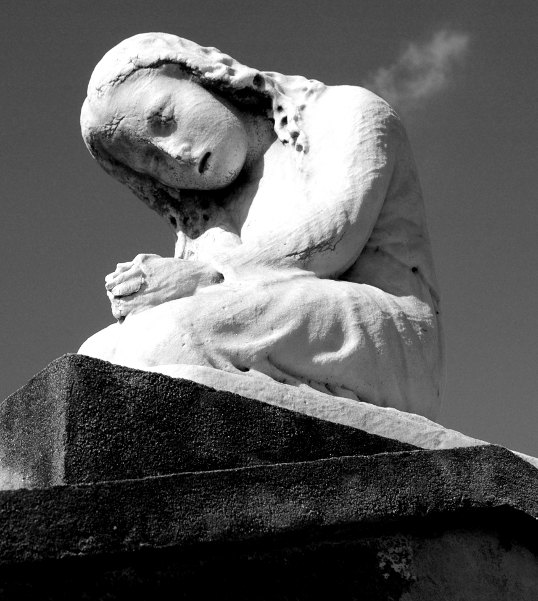
Statue on top of a crypt, Saint Louis Cemetery Number One, New Orleans

Over several years, for the month of June, I wrote about a short story that was available online each day of the month…. It seemed like a good idea at the time. My blog readership fell precipitously and nobody seemed to give a damn about what I was doing – which was a surprising amount of work.

Because of this result, I’m going to do it again this year – In September this time… because it is September.

Today’s story, for day 6 – And of Clay Are We Created, by by Isabel Allende, translated by Margaret Sayers Peden

Read it online here:

And of Clay Are We Created by Isabel Allende, translated by Margaret Sayers Peden

First a subterranean sob rocked the cotton fields, curling them like waves of foam. Geologists had set up their seismographs weeks before and knew that the mountain had awakened again. For some time they had predicted that the heat of the eruption could detach the eternal ice from the slopes of the volcano, but no one heeded their warnings; they sounded like the tales of frightened old women. The towns in the valley went about their daily life, deaf to the moaning of the earth, until that fateful Wednesday night in November when a prolonged roar announced the end of the world, and walls of snow broke loose, rolling in an avalanche of clay, stones, and water that descended on the villages and buried them beneath unfathomable meters of telluric vomit.

—-Isabel Allende, And of Clay Are We Created

There isn’t much I can add to today’s story. Any comment would seem trivial and trite. This one is the real deal. Just read it.

Interview with Isabel Allende:

Q. Can you elaborate on the idea of writing fiction—of telling a truth, of telling lies, of uncovering some kind of reality? Can you also talk about how these ideas might work together or against one another?

A. The first lie of fiction is that the author gives some order to the chaos of life: chronological order, or whatever order the author chooses. As a writer, you select some part of a whole. You decide that those things are important and the rest is not. And you write about those things from your perspective. Life is not that way. Everything happens simultaneously, in a chaotic way, and you don’t make choices. You are not the boss; life is the boss. So when you accept as a writer that fiction is lying, then you become free. You can do anything. Then you start walking in circles. The larger the circle, the more truth you can get. The wider the horizon—the more you walk, the more you linger over everything—the better chance you have of finding particles of truth.

Q. Where do you get your inspiration?

A. I am a good listener and a story hunter. Everybody has a story and all stories are interesting if they are told in the right tone. I read newspapers, and small stories buried deep within the paper can inspire a novel.

Q. How does inspiration work?

A. I spend ten, twelve hours a day alone in a room writing. I don’t talk to anybody. I don’t answer the telephone. I’m just a medium or an instrument of something that is happening beyond me, voices that talk through me. I’m creating a world that is fiction but that doesn’t belong to me. I’m not God; I’m just an instrument. And in that long, very patient daily exercise of writing I have discovered a lot about myself and about life. I have learned. I’m not conscious of what I’m writing. It’s a strange process—as if by this lying-in-fiction you discover little things that are true about yourself, about life, about people, about how the world works.

—-Isabel Allende, from her website

The land of lakes, volcanoes, and sun. A painting I bought on my last trip to Nicaragua.

A Month of Short Stories 2017, Day 5 – Pending Vegan, by Jonathan Lethem

The Wyly Theater in the Dallas Arts District

Over several years, for the month of June, I wrote about a short story that was available online each day of the month…. It seemed like a good idea at the time. My blog readership fell precipitously and nobody seemed to give a damn about what I was doing – which was a surprising amount of work.

Because of this result, I’m going to do it again this year – In September this time… because it is September.

Today’s story, for day 4 – Pending Vegan, by Jonathan Lethem
Read it online here:

Pending Vegan, by Jonathan Lethem

And, after the insipid triumphalist overture of music and video and prancing androgynous spandex, when the orcas finally entered the arena and began their leaping, SeaWorld was overwritten by their absolute and devastating presence. By their act of stitching two realms together, sky and water, merely for the delight of a stadium full of children—children who, in response, leaped, too, and vibrated in their seats, and gurgled incoherently, practically speaking in tongues. Other kids, older and more intrepid than his own, raced down to the plastic barrier to be splashed, to stand with their arms flapping. The killer whales, with their Emmett Kelly eyes, were God’s glorious lethal clowns. Their plush muscular bodies were the most unashamed things Pending Vegan had ever seen. Like panda bears redesigned by Albert Speer.

—-Jonathan Lethem, Pending Vegan

A few years ago, my son Lee and I went down to the Dallas Theater Center’s Wyly Theater to see a new musical, The Fortress of Solitude, adapted from Jonathan Lethem’s eponymous novel. It was Pay What You Can Night (pretty much the only way I can see quality live theater on an ongoing basis) – which is cool, though what we saw was essentially a dress rehearsal open to the public. Because of this, there was a bit of confusion and we discovered that our assigned seats weren’t there (the Wyly is infinitely reconfigurable and they had configured our seats out of existence). No problem, the box office had alternate seats which were better anyway (not that the Wyly has any bad seats) – we were placed in a line of vacant seats right up front. Two men sat next to us at the last minute.

The play was excellent, very enjoyable. I never read the novel, so I don’t know if it followed or did justice, but as a night of live musical entertainment, it fit the playbill. As the play ended, the man sitting next to Lee started asking him a series of questions, “Did you like the musical?” “What songs did you like?” – the inquiry seemed more pointed than curious. I looked at the man and at the Playbill folder in my hand and realized this was the author (of the play, not Jonathan Lethem, alas). The idea was to premiere the musical in the hinterlands (Dallas), iron out the rough spots, them move to Off Broadway (Public Theater) then, eventually, to the Great White Way.

It looks like the momentum has stalled and it probably never will make it to Broadway… but at least I saw it.

Today’s story, also by Jonathan Lethem, is a chronicle of a family’s trip to Sea World in San Diego. The protagonist is struggling with a sudden attack of giving a damn about animals and, possibly more importantly, just now coming off his prescription to anti-depressants. His doctor warns him he might, “see bums and pickpockets.” Worried that he might hallucinate, the doctor assures him that he won’t imagine them, he may simply notice them.

I, of course, have been to Sea World (the San Antonio version) with unruly children a couple of times. I dealt with it a little bit differently than the father in the story – I didn’t think about it. It was a day for the kids and all I was responsible for was trying my best they didn’t get eaten by sharks or destroy an expensive exhibit. All other thoughts were put on hold.

For about a quarter century.

—–

In the interview below, Lethem says, “I’d also have trouble imagining a fiction writer who, after visiting the place, wouldn’t start fooling around with story ideas.” When I first read this I disagreed – I couldn’t think of any story ideas from SeaWorld.

Then I remembered seeing the Shamu show one year. The Orca wasn’t in a good mood and basically stayed at the bottom of his tank and refused to do any tricks. He was the male in the pod and the two females were in the lake outside of the arena. They kept surfacing and making these loud sounds. There is no doubt they were laughing at him.

The neoprene-wet-suited show people tried to get on with the act. They even brought a volunteer from the audience out to try and coax him into getting to work. I thought, “Man, if I had a humiliated, cranky, and uncooperative killer whale at the bottom of a tank, the last thing I’d want to do is lean out and wiggle a fish over him.”

Hmmm. I guess that is an idea for a story.

Interview with Jonathan Lethem about this story:

This week’s story, “Pending Vegan,” follows one family, a husband and wife and their four-year-old twin daughters, on a trip to San Diego’s SeaWorld. When did you start thinking about using SeaWorld as the setting for a story? Did you ever consider inventing the theme park and fictionalizing everything, or was it important that the story be set in a real place?

This story really began with a class I taught, called Animals in Literature. I assigned Jack London, William Faulkner, Franz Kafka, Olaf Stapledon, Lydia Millet, J. R. Ackerley, and a bunch of other stuff, including some essays and theory. (Animals are actually pretty “hot” in theory now.) In the spirit of due diligence, I also read a bunch of animal-rights and vegan manifestos, which is how I blundered into the realm of “Fear of the Animal Planet” and so forth—books I purchased, and which sit staring at me from the shelf, even if I failed to assign them or, in many cases, even to read them. I suppose some of this bad faith leaked into the characters: What would it be to think you’ve gone about halfway, or not even halfway, down some irreversible ethical path, then got stuck there?

Of course all this remained inchoate until suddenly I visited SeaWorld. I can’t imagine anyone setting a story there who hadn’t visited. (I’d also have trouble imagining a fiction writer who, after visiting the place, wouldn’t start fooling around with story ideas.) Long ago, I’d have been certain to disguise it as “Fathomverse,” or “Poseidon’s Playhouse,” or “Orcasm,” or something. But that wouldn’t really be likely to fool anyone, would it? A lot of fiction—most?—derives some of its effects, and energy, from its hybrid nature: half documentary, or half confession or argument or whatever, and full of references outside itself, whether obvious to the reader or not. I’ve made my peace with this. Besides, I’d have had to give up “Sea World, Eat World.”

The story’s protagonist, Paul Espeseth, is going through a crisis of sorts, which he has hidden from both his family and his shrink. He’s renamed himself Pending Vegan as a way of acknowledging his increasing uneasiness with the relationship between man and beast, yet he’s acutely aware of his daughters’ ability to reconcile “their native animal-love and the pleasures of eating.” What’s it like to imagine a child’s version of the animal world versus an adult’s?

Forget “animal world” —what about just “world”? Where’s the script for breaking the news, to a kid, of reality’s roaring wackness? Its moral bankruptcy? Imagine a scene from the breakfast table with a six-year-old listening to an NPR report on the firing of nine air-force commanders over cheating on the tests to qualify as officers for oversight of nuclear missiles.
Six-year-old: “What did they cheat on?”
Father (already in trouble): “Well, see, they were in, like, ‘soldier school’…”
Six-year-old: “Don’t they know it was wrong?”
Father: “———”
Six-year-old: “What are nuclear missiles?”
Father: “———”
Six-year-old: “Why would they cheat? Don’t they want to be good at fighting?”
Father (suddenly impassioned, intense): “Well, actually, the reason this matters so much is that nuclear missiles are these weapons we don’t want anyone ever to use…” (He stops at brink of disaster.)
Six-year old: “—?!?—”
Father: “Uh, eat your pineapple.”
Six-year old: “My teacher told me that pineapple was bad for your skin.”
Father (with relief): “She’s definitely wrong.”

A dog bounds into the story in its final page. It’s not the first time dogs have shown up in your work (“Ava’s Apartment,” for example, an excerpt we published from your novel “Chronic City,” features a memorable three-legged dog). Do dogs hold a particular place in your imagination? Can you imagine a cat exercising as much power?

Cat person or dog person? Funny about that. I grew up with cats; I’m more familiar with them, more fond of them, and I identify with them more. My parents bred Siamese cats for a while, and in a lot of baby pictures I’m seen swimming in a mass of kittens. Dogs were in stories, first: “Nobody’s Boy,” “The Incredible Journey,” Jack London’s and—especially—Albert Payson Terhune’s work. I was probably the last boy in the history of boys to drink deep at the well of “Lad: A Dog” and “His Dog.” Meanwhile, real dogs terrified me. This lasted a while. Even after we got a dog, other people’s dogs terrified me. I was 33clear to me. As in the case of my character, dogs are a problem I can’t solve; they throw me back into the question of self and other. For a writer, that’s good. Writing a story about a cat would be like writing a story about my arm or my ear.

—- Interview with Jonathan Lethem in The New Yorker
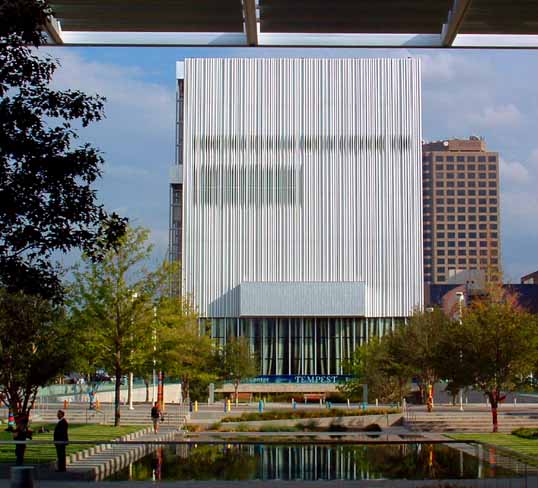
The Wyly Theater.