Dan Colcer
Deep Ellum Art Park
Dallas, Texas

Dan Colcer
Deep Ellum Art Park
Dallas, Texas
The same artist did this one:
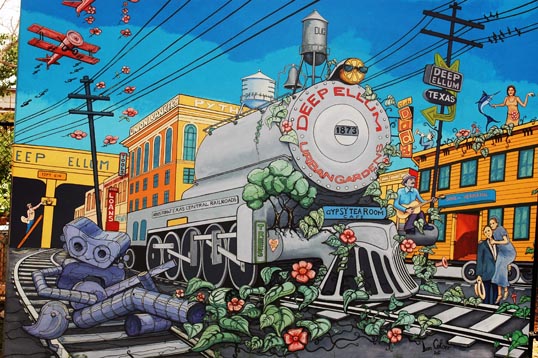
Painting at the entrance to the Urban Gardens, Deep Ellum, Dallas, Texas
from This Entry
Dan Colcer
Deep Ellum Art Park
Dallas, Texas
Dan Colcer
Deep Ellum Art Park
Dallas, Texas
The same artist did this one:
Painting at the entrance to the Urban Gardens, Deep Ellum, Dallas, Texas
from This Entry
“The aim is to balance the terror of being alive with the wonder of being alive.”
― Carlos Castaneda
“The stars are reflected from within the black water in the cistern. I find comfort in the omen I glean from this: light in the darkness, truth when it seems there is none.”
― Alice Hoffman, The Dovekeepers
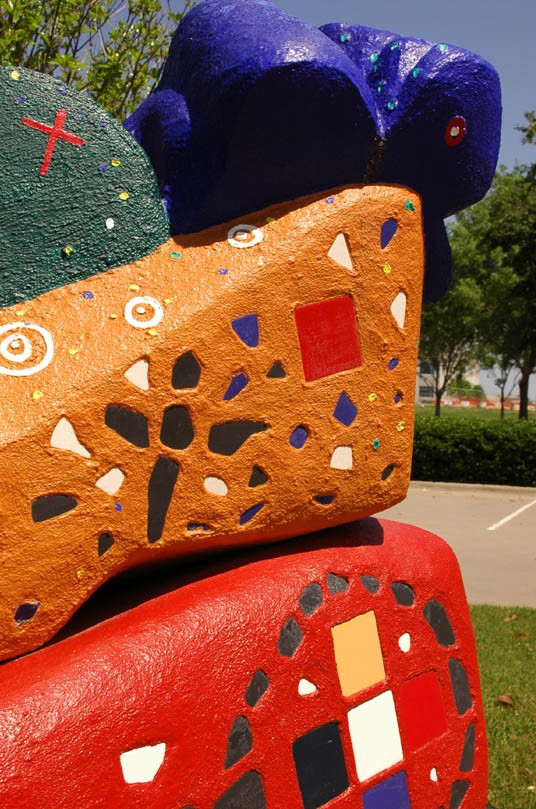
David McCullough, Dallas
Quanta: Celtic Spirit Catcher
2000, Acrylic, F6 Cement, Foam, Wire
Frisco, Texas
David McCullough, Dallas
Quanta: Celtic Spirit Catcher

David McCullough, Dallas
Quanta: Celtic Spirit Catcher
There is art where you least expect it. There is beauty in the most mundane.
The scenes you see every day, the dreary landscape of grinding drudgery is too often not seen. Take a look.
LBJ/Central Station – DART Red Line
LBJ/Central Station, providing easy access to Texas Instruments’ main campus, links nature and technology with cast stone columns with circuit board designs imbedded as insets. Built on the historic John B. Floyd farm acreage, the station also features a trellis gateway to the station platform. Station design team artist Frances Merritt-Thompson also produced the translucent panels in the overhead truss openings depicting images of the area.

DART LBJ/Central Station
Frances Merritt-Thompson
(click to enlarge)

Circuit Board Details in support columns
DART LBJ/Central Station
Frances Merritt-Thompson
(click to enlarge)
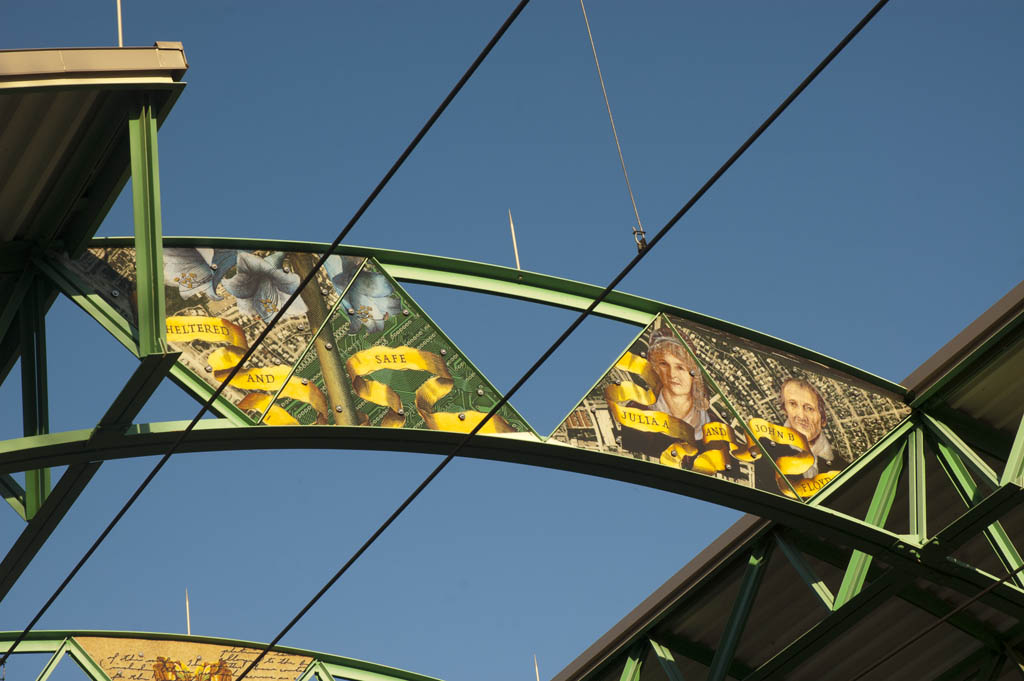
DART LBJ/Central Station
Frances Merritt-Thompson
(click to enlarge)
Other entries/photos from DART Stations:
Carrollton Collages
Plaza of the Americas, DART Station at Night
Gateway
Bike Lids
Next Stop
Dart Sunset
“I understood that fate could not be eluded forever; it came on leathery wings, swooping through the darkness like the bats in the orchards.”
― Alice Hoffman, The Dovekeepers
Zeke: It’s a twister! It’s a twister!
—The Wizard of Oz
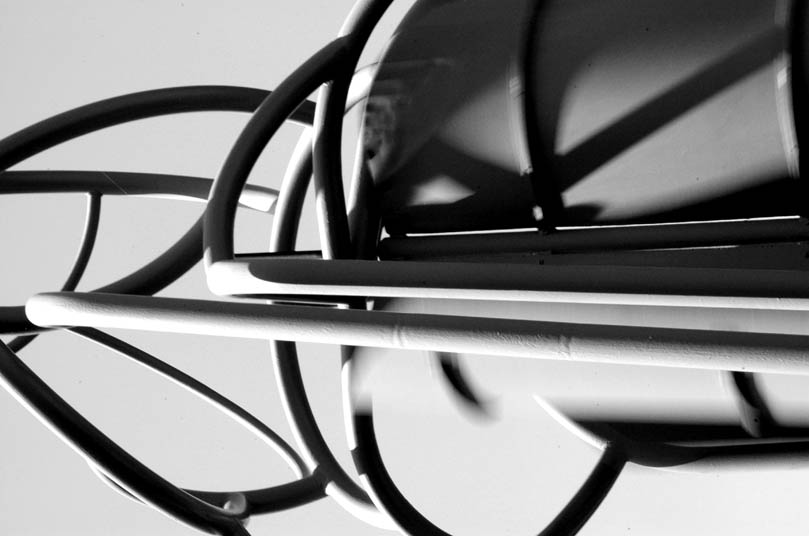
Art Shirer, Dallas
The Wiz, 2001, Steel, Paint
Frisco, Texas
Art Shirer, Dallas
The Wiz
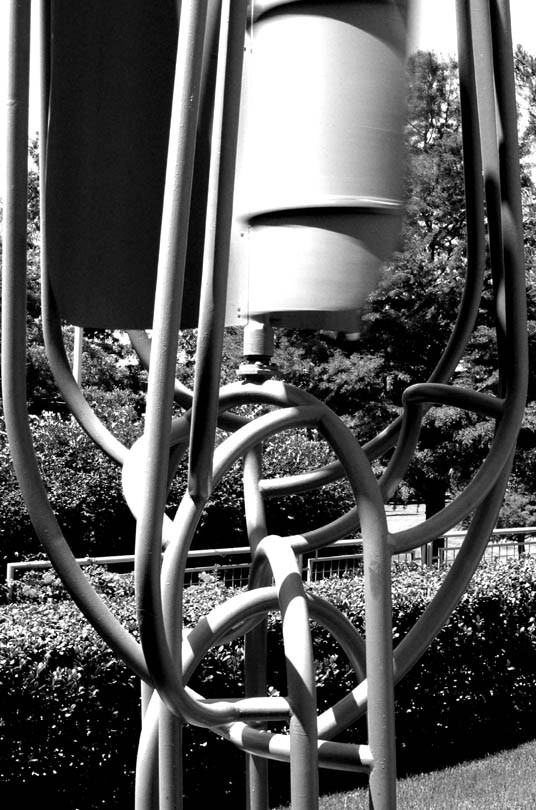
Art Shirer, Dallas
The Wiz
“Even as a small child, I understood that woman had secrets, and that some of these were only to be told to daughters. In this way we were bound together for eternity.”
― Alice Hoffman, The Dovekeepers
Michelle O’Michael, Houston
La Mujer Roja
2000, Steel, paint
Frisco, Texas

Michelle O’Michael, Houston
La Mujer Roja
(click to enlarge)
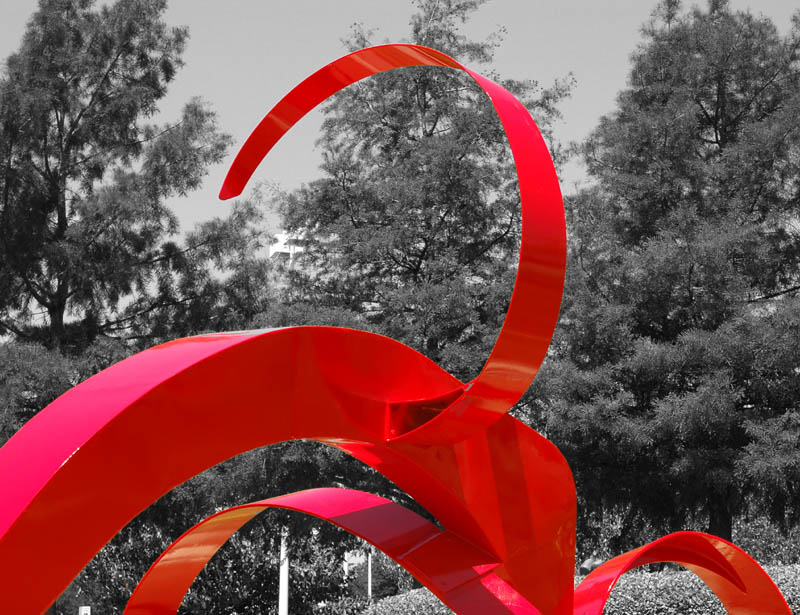
Michelle O’Michael, Houston
La Mujer Roja
(click to enlarge)

(click to enlarge)
The raw material for bronze in antiquity was copper ore that, unknown to the metalworkers of the day, contained enough tin to make the alloy. In many place, bronze and copper must have been thought of as distinct metals. There was no quest for the elements and no incentive to try to separate bronze into ingredients since it was already the superior metal for so many purposes. In a few places, pure tin was smelted from its own ore, cassiterite, and, too soft for weapons and utensils, wsa formed into ornaments. Where tin and copper were obtained from separate ores, it was naturally not long before bronze was being made purposely by putting the two metals together. Once it was known that bronze could be made in this way rather than relying on ores that happened to contain the right proportions of copper and tin, the hunt was on for the miraculous metal which had the power to make copper both more useful and more beautiful.
—-Periodic Tales: A Cultural History of the Elements, from Arsenic to Zinc – Hugh Aldersey-Williams

(click to enlarge)
Auguste Rodin, “Eve”
Willem de Kooning “Seated Woman”
Nasher Sculpture Center
Dallas, Texas
Deep Ellum
Dallas, Texas

(click to enlarge)
Other Examples:
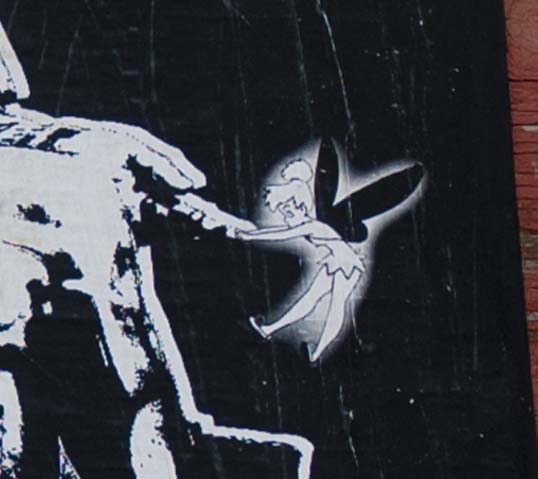
Detail
Audubon Park,
New Orleans, Louisiana

I have always been fascinated by the ragged cross-hatch patterns of trimmed fronds on the trunk of palm trees. Here’s one from New Orleans.
A few months ago, I posted this one, from Fair Park, here in Dallas.

(click to enlarge)
Previously in the Nasher XChange series:
Lara Almarcegui
Buried House
2226 Exeter Ave.
Oak Cliff Gardens
I began to feel old, out of shape, and drained as I worked my way north from Paul Quinn College to the third and final Nasher XChange exhibition on my bike ride through South Dallas. It was only a 12.5 mile ride – but these were tough miles. The last half of the route was hilly, the road was rough, and I had to stop every block, fighting my way through the traffic.
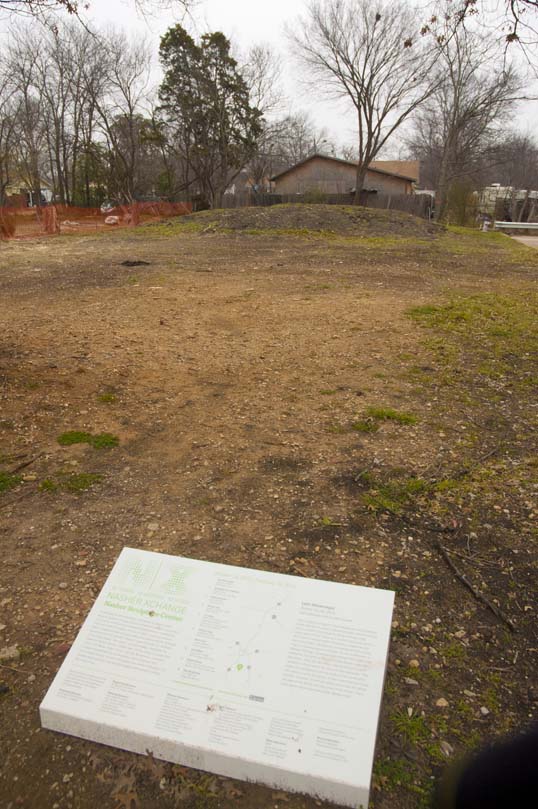
But once I rode up to Lara Almarcegui’s Buried House, I realized that here, more than any of the other sites, really begged to be seen by bicycle. I simply can’t imagine what it would be like to drive up to the now-vacant lot in an SUV, step out for a minute or two, then pile back in and drive home. It wouldn’t be the same… you would miss the point.
The work is meaningless without experiencing the surrounding neighborhood.
It is a tough part of town. The streets and sidewalks are in bad repair, cracked and heaving. Trash pickup is spotty at best. The modest homes are a varied melange – a torn up shack here, a burned hulk there, but there are also well-cared, decorated homes that are obviously a great source of pride to an unassuming owner.
And there were plenty of other vacant lots – most littered with junk and sprinkled with empty bottles.
You don’t see the details from a car… but you do from a tired, slow-moving bicycle.
Ironically, this is the second blog entry this February where I found myself taking a photo of a vacant lot. The other one, Arcady, was in the most tony enclave of Highland Park. That neighborhood is the polar opposite of the rugged Oak Cliff Gardens district where Buried House is located.
Destruction, renewal, the inevitable ultimate victory of chaos and entropy… rich and poor, our fate is already written.
After I left the site I had a a short ride on neighborhood streets until I reached the DART Kiest Station and after a short wait, caught the Blue Line downtown, where I switched to the Red line to Richardson and home.

Lara Almarcegui
Buried House
From the Nasher Website:
Buried House
2226 Exeter Ave.
Oak Cliff Gardens
The buried remains of a house offer an opportunity for reflection on the transition
and rebirth of one of Dallas’s oldest neighborhoods: Oak Cliff Gardens.
Almarcegui’s project for Nasher XChange, entitled Buried House, involves working with Dallas Area Habitat for Humanity on a house in Southeast Dallas already slated for demolition. After the demolition is finished, the artist will bury the house’s remains on the property, creating a sort of memorial site that nonetheless retains the building’s actual substance and provides a “free space” for reflection on the neighborhood’s past, present and future.
Almarcegui is working in Oak Cliff Gardens, a neighborhood in East Oak Cliff, with a history almost as old as Dallas itself. Near the site of the first stop for stagecoaches headed out of Dallas for Central Texas, the area surrounding the intersection at Lancaster and Ann Arbor roads became the small town of Lisbon, which was in turn annexed by the city in 1929.
Today, Oak Cliff Gardens is a neighborhood in transition. Many derelict, often vacant, homes will undergo renovations, thanks to the help of organizations such as Habitat for Humanity. These “wastelands” in the neighborhood embody a significant historical moment of possibility when anything might happen. Almarcegui hopes to draw attention to this area and make people in Dallas aware of its rich and varied character, before it is changed forever.

From Google Maps Streetview – what the house looked like before the demolition.
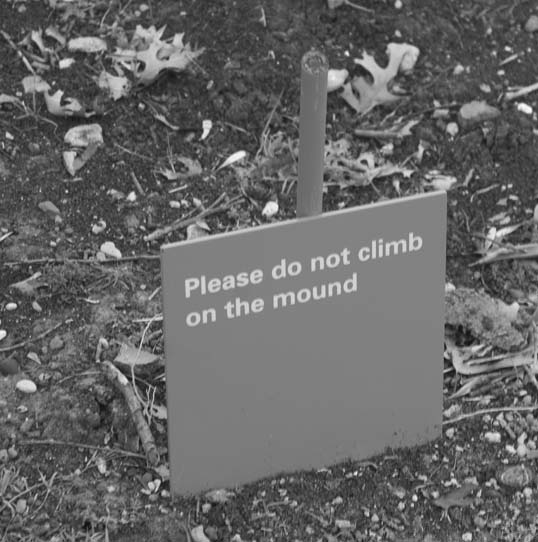
Lara Almarcegui
Buried House
Label Text:
Lara Almarcegui
Buried House, 2013
Demolished and buried house
Born in Spain and based in The Netherlands, Lara Almarcegui brings attention to places most people pass without noticing, such as derelict, abandoned buildings and seemingly vacant plots of land.
Working in environments and places in the midst of transformation, Almarcegui researches and documents them, developing unconventional and creative ways of drawing attention to them. As her contribution to Nasher XChange, Almarceguui has worked with Dallas Area Habitat for Humanity to locate a house already slated for demolition. After the demolition, she buried the house’s remains on the property. As the artist has explained, “This project is a sculptural work that is about the construction that used to stand, the history of the house and how it was erected. However it’s not just about the house, but about the past of the terrain and the future of the terrain. It is a work about construction and urban development.”

