
A helicopter flyi*g across the Dow*tow* Dallas Skyli*e. It’s o* a quest to fi*d a place to place its letter. O*ly o*e letter, a red letter, a gia*t letter. But Where, Where does it go?
Walking Tall

Another HDR picture of the “Walking Tall” version of the “Travelling Man” series of sculptures down in Deep Ellum here in Dallas.
I had a little accident taking these photos. One of his feet is on a bit of an elevated platform – it looks like a green disk. Do you see it?
I didn’t.
Stepped off and backwards – did protect my camera, though, as I tumbled into some gravel.
You can see one of the new DART stations across the street. I should have waited until a train was going by. Sometime, I’ll go do that.
Dart Mirror

Dart Mirror, a photo by chancew1 on Flickr.
Via Flickr:
The Dallas DART train, Red Line, reflected in the mirrored walls of an office building (actually the parking garage) at NW Highway and Central.
When I first moved to Dallas, thirty years ago, one of the places that I liked was the twin gold towers of Campbell Center. They were featured in the opening montage of Dallas (the television show – J.R. Ewing and all that, remember) and were an obvious feature at Highway 75 and Loop 12 – two gold reflecting office towers, shining in the setting sun, flanking a fancy hotel.
Now that I watch the opening credits, I can’t help but notice the Doubletree Hotel is not there. I have no idea when it was added. Anyhow…. Man, Dallas (the city) has grown.
I hired a secretary in one of the towers to rewrite and copy my resume – which must have worked because I was able to get a couple of job offers in a few days. That was not an easy feat in 1981 – the economy felt a lot like it does right now.
Over the decades, a lot of office towers have grown up in Dallas, overshadowing the twin gold towers. Nobody really thinks of them much anymore. I’ve been to a few wedding receptions in the hotel, had a fun New Year’s Eve at a party there once.
One cool thing now… at least cool to me… is that the DART Red Line train, going south from Park Lane along Greenville rises up onto an elevated track right behind Campbell Center. I always try and sit on the West side of the train so I can watch the reflection in the gold cladding of the buildings.
Always look for small enjoyments.
Snippet Sunday – Short Story – The Fortress of the Copper Thieves
This week for Snippet Sunday I’m putting up an entire short story. This is the rough first draft I wrote some months ago and then abandoned. The biggest problem is that it is simply too damn grim. I like a few things about it and want to completely re-write the thing in a lighter vein, if possible. In the meantime, here is what I’ve got. Any ideas?
The Fortress of the Copper Thieves
Mobungu tossed all afternoon – he had a two day shift of guard duty coming up starting that sundown and he wanted to get some sleep. In his dreams he ran through a thick forest – its image was blurred and indistinct because he had never actually seen more than a handful of trees at once – chased by something hissing and shaking the foliage behind him, out of his sight. He wanted to turn and look, but knew that if he paused, it would overtake him, whatever it was. In the dream he could feel hot breath on the back of his neck. All he could do was continue to rush forward in a fog of overpowering fear – thorn-studded vines tearing at his skin, brambles cutting his feet, and branches grabbing at him, pulling him back. It felt like he wasn’t moving at all and the thing behind was just about to catch up.
For the twentieth time he woke shivering, his blankets cold and wet – soaked through with his own sweat. Orange light was pouring in under the lip of the lean-to and Mobungu realized that it was finally evening and time for him to move to his guard post. His joints creaked as he rose and pulled on his tunic, then his woven serape marked with the double triangle symbol of his tribe, and placed the rusted iron pot over his head. He gathered up his spears and atlatl. They clanked as he bound the the throwing stick and the barbed shafts with the cloth strip that served as holster and sheath – again embroidered with the sign of his tribe. Mobungu shuffled out of the shelter and struggled through the cold mud down to the water.
His canoe was tied up on a stake driven into the slippery clay of the bank. Mobungu slid down and hooked a knee around the stake, reaching out with a metal bucket to bail the water out of the canoe. It was made of thin iron plates hammered flat and riveted together. It leaked like a sieve. As he worked, the clang of the bucket against the wet metal was familiar to Mobungu – but that didn’t make it any more pleasant.
The sound reminded him of his old pirogue, which never leaked and was always quiet. His father had built the canoe before he was born. It had been hollowed out from a single log – a log that must have been far larger than any piece of wood that Mobungu had ever seen. His father said they had built a fire inside the log and used scrapers to hollow it out, to fashion it into the long smooth shape that slid so silently through the water. His father had been a great warrior and the pirogue his prized possession. When his father had fallen in battle – an arrow pierced his throat – there was some talk in the village of the honor of burning his body in the fire of his battle-canoe, but his wife said that was too wasteful and the pirogue was passed down to his son.
Mobungu protected the pirogue as long as he could, but as the white powdery plant-death spread and spread the shortage of wood became so acute that one icy winter evening, the village elders commanded him to drag the canoe up to their metal hut where it was chopped apart and used for their heating-fire. It felt like a chunk of Mobungu’s heart had been ripped out and consumed by the Elder’s need for heat, but there wasn’t anything he could do about it.
Once the canoe was bailed, Mobungu slid into it, nestled himself against the cold bottom and ungiving sharp bulkhead and began to paddle. The oar was a metal tube with a flat piece bolted to the bottom and it was cold in his hands. The vessel was not efficient but Mobungu was strong and he moved quickly down the estuary and out into the choppy salt water of the large bay. It was short distance across to a small island where the first line of defense for his village was set up.
They had traveled a long way to reach this point, the farthest east they could go. Almost a third of his village – most of the children and all of the old people – had died in the terrible journey, but they had no choice; driven forward by tales of a gigantic ancient city full of treasures. The elders had called the tribe together and set them on the long trail to the east, knowing they could no longer survive on the dying lakes and barren mountains of their home. The pain and tribulations of the journey were almost unbearable, but the tales were truthful. Paddling with his head held high – as he neared the guard post Mobungu could see the rotting towers of the ancient city still glittering in the failing light of the setting sun. It was still a long way away, isolated on a huge island in the estuary, covering an island that split a mighty river that poured down from the north right before it joined with the sea.
The expanse of water between the shore and the city was rough and wide, but not an impenetrable barrier. After their terrible migration Mobungu’s tribe was stopped, though – trapped, starving, on the bank, thwarted in their desperate quest by the powerful tribe that lived in the city. They were doomed by the tribe of the copper thieves. The vast bay and the estuaries that lined it was guarded by the fortress of the copper thieves, which was on a small island. Mobungu’s guard post faced that island fortress, across a short stretch of water. If the copper thieves were to launch an attack on his village, a quick warning would be the only thing that might save them.
Darkness fell quickly as Mobungu slid into the guard station and climbed out of the canoe. He was replacing Teemanga, who had been on duty for the last two days. As he approached the shack Teemanga was stretched out beneath a blanket and snoring loudly. Sleeping while on guard duty was a crime punishable by death, but Mobungu simply kicked Teemanga on the back of his legs until he woke with a snort. There were many crimes that were going unpunished in these dark days.
“It’s all yours. Your food has been delivered,” said Teemanga as he gathered his few belongings together for his return to the village. He moved with a weary sloth and gestured at a small pile of stale disks of biscuit arranged on a cloth.
“That’s not enough for two days,” said Mobungu.
Teemanga shrugged, “That’s what you’ve got.”
“You bastard, You’ve taken some of mine, let me see.” Mobungu started grabbing at Teemanga, pulling on his clothes.
“Go ahead, look all you want. I’ve got nothing.”
“Then you must have already eaten it.”
Teemanga simply gave another shrug and silently walked down to his canoe, which was smaller and leaked even worse than Mobungu’s. He would have a difficult crossing in the cold darkness.
The sun was now completely gone and a cold fog blowing in from the sea. Mobungu sat down in a chair they had fashioned that looked out towards the island fort. It was invisible in the darkness and fog, but Mobungu knew his duty was to keep looking, no matter how futile. Weakened by hunger and exhaustion he didn’t think he slept, but still, the dream in the forest kept coming back, so he must have dozed off. He was amazed by the beauty of the forest but terrified by the unknown horror that chased him.
He thought he felt a scaly hand lined with icy razor claws begin to close on his shoulder when he started awake with a scream and realized the sun was rising to the east, the horizon glowing orange and peach, the water calm. The sun warmed him and gave him a little strength and after an hour or so burned the fog off of the water and Mobungu could see the fort of the copper thieves clear as crystal in the still morning air.
The island fortress was silhouetted against the distant slanted falling towers of the ancient city and stood like an impenetrable obstacle to the riches that must still be there. Mobungu lifted an apparatus they had built out of a metal tube and glass lenses found in an abandoned town along their journey and raised it to his eye.
The clear morning and magnification of the telescope enabled him to see the fortress clearer than he ever had. It looked so close, he could almost reach out and touch it.
The major part of the fortress was a huge star-shaped stone building, taking up most of the area of the little island. Mobungu knew that an assault against these vertical walls of stone was a hopeless gesture – the warriors within were safe from an outside threat. Rising from the center of the star was a series of gigantic steps leading up to a stone building in the shape of a giant pillar, towering up into the sky. This pillar was decorated with columns and windows and was built stout and strong.
The elders of the tribe had said that this giant pillar had once supported an enormous statue, reaching a hundred arms high. They said it was a statue of a woman and it was made of the most precious metal of all, it was made of copper.
Mobungu smiled at this – surely it wasn’t true. He had never seen more than a handful of copper in his life, what tribe could possibly have the unimaginable riches they could use to build a giant woman of this metal, and put her up on that stone pedestal. He closed his eyes and imagines the smooth, red-orange expanse of polished copper. He thought of the smooth curves of the giant woman, the swelling thighs, the overhanging breasts, the flowing hair molded in precious metal. Mubungu imagined she would be smiling at him, maybe with giant arms outstretched in welcoming.
It was impossible, but it warmed his heart to imagine it so.
The elders said the copper thieves pulled the statue down and melted it to make armor and weapons. Mobungu returned to his telescope and gazed at the top of the pedestal, at the statue the copper thieves had built to replace the woman they had destroyed.
This statue was obviously male, and, while not made of a rare and beautiful metal, it was constructed of something extremely precious to Mobungu and his tribe. It was made of wood.
It looked like it towered fifty arms high, half as big as the elders said the woman was, it wasn’t as high as the pedestal it perched above, but it was still the most massive thing Mobungu had ever seen made in his time. It was a stylized warrior, feet together, knees bent facing out to sea. His head was topped by a fringed helmet, his face obscured behind a lathwork of a protective screen. His hips were thrust forward and one arm held a huge round shield. The other arm was raised high, holding a spear toward the heavens. The tip of the spear was barbed with a wicked looking series of wooden hooks.
The statue was not very old. When his tribe had arrived the thing was still yellow and fresh and they could smell the fresh-cut aroma when the wind was right. They could still hear hammering and cutting sounds booming from the interior as the copper thieves completed some unseen bracing.
As the summer ended and the cold winter fell upon them, the tribe gazed upon the graying and weathering statue, imagining the warmth that the wood could produce. They never could figure out where the copper thieves had obtained the raw materials. All their searches west of the river were in vain, everything was dead, killed by the spreading white plant-death. Any attempt to cross the river or to approach the ancient city was met by swarms of soldiers from the army of the copper thieves. They were watching and would dispatch death upon any one that tried to enter their territory.
Mobungu looked at the statue, at the fortress below and at the small area of the island that bordered the fort. The island had grass. It was dormant and brown now, but during the summer the ground was green, a color Mobungu rarely saw. Most amazing of all – there were still living trees. Some stood alone, and a couple of small groves hugged the stone walls or the surging shore. Some had lost their leaves for the winter, but a few were pyramid-shaped and still held their foliage. Seeing the color green, and knowing the trees were still alive, filled Mobungu with longing and a tiny spark of hope.
Through the day and into the night Mobungu stared at the statue. He would look through the telescope until his eyes grew tired and then he would stare with his bare eyes. By the afternoon he had eaten all the biscuit that had been left for him and he knew he had a day and a half of hunger ahead of him.
He knew he was supposed to stay awake, but how was that possible for two days? That night was clear and the moon was full. As he sat in the chair and looked through the telescope he could see the statue and the fort below… dim but clear. Beyond, the ancient city seemed to glow with flickering ghosts in the moonlight.
Without realizing he was doing it, Mobungu drifted off into sleep and instantly began to dream. This time he was running through the forest but he didn’t feel the rough branches clutching at him, he didn’t feel the thorns of the vines tearing at his skin. Instead of a panicked run he felt like he was floating along a wooded path. He was able to look around and realized that the trees now looked like the ones he had seen that day on the fortress island. He was still being chased but he felt no fear.
Once he realized he wasn’t afraid any more, he drifted down to a stop along the path in the forest. He calmly turned toward what is was that was chasing him, and he saw the branches shaking and moving and he felt a great joy as he waited for whatever it was to emerge from hiding. The first thing he saw was a wooden man – a copy of the statue on the island, but small, human sized. His wooden skin was polished, supple, and showed a glossy grain. One arm was still extended back into the hidden shadows beneath the trees and as Mobungu watched, the wooden man held the hand of a companion that emerged into the light. It was a copper woman, a normal sized woman, a copy of the ancient statue that Mobungu imagined in his daydreams. She gleamed in the sun, polished and flawless. She stood beside the wooden man and they smiled at him, together. Mobungu noticed the swelling in the copper woman’s belly and he realized she was pregnant.
Mobungu woke, not in fear like he had every morning since before he could remember, but calm, relaxed. He realized he had a purpose. It was almost dawn, the moon had set, but there was the tiniest smear of gray across the eastern horizon. He took the cloth covering that wrapped his spears and wound it around the tip of his longest, straightest weapon. He gathered up a flint stone and striker that the guards had kept next to their lookout post. At one time, the idea was to light a signal fire in case of attack, but the fuel had long ago been used up. Still, Mobungu knew he could use it to kindle the tip of the spear. The cloth was of ancient origin and he knew it would melt and burn with a quick and strong flame.
He took the flint, striker, spear, and Atlatl and slid into the canoe. He paddled hard across the smooth morning sea towards the fortress of the copper thieves. The sun began to rise as he coursed across the water and the edge of the orange disk peeked above the broken towers of the ancient city as he slid against the shoreline and leaped up onto the island.
He had not been noticed yet. A single small canoe with one half-starved man must not be enough of a threat. He began to run and marveled at the feel of the dormant grass against his bare feel. He looked at the ruined city, closer than he had ever been to it before and realized that between the toppling towers small groves of trees were growing. He ran to the closest tree and touched it, feeling the rough bark against his fingertips. This one was leafless but he quickly moved to one that still was covered with green. The leaves were thin, sharp needles, and Mogundu ran his fingers into the branch, feeling the sharp tips pierce his skin. The ground was covered with needles that had fallen, but these felt soft against the soles of his feet. The tree gave off a sharp, sweet odor that he had never known, and a yellow sticky sap came away from his hands which smelled the same.
He heard shouting in the distance and realized that he had been seen. Knowing he didn’t have very much time he dropped to his knees in the sweet needles under the green tree and pulled out the flint and striker. A couple quick blows and the cloth wrapping on the end of his spear was glowing with flame. A spark fell and the bed of needles began to smolder. Mogundu stared and smiled at that, breathing in the sweet smoke and marveling at the crackling sound. He almost missed the soldier running at him, covered in shining copper armor and swinging an orange-gold sword.
The clanking armor slowed the soldier and Mogundu was able to dart up and run towards the fort. A horde of guards was pouring out of a line of copper-clad wooden doors and rushing toward him. They clanked along, faces hidden by copper screens, the rising sun glinting off their waving weapons. He was fast though, and he ran almost unchecked through their ranks. A swinging blade swished against his shoulder, slicing skin and leaving a red streak that began to spout. It was his left side, and Mogundu knew he didn’t really need that arm. He laughed at the pain and kept running until he began to approach the very wall of the fortress.
By now the cloth wrapping was burning brightly and flames were whipping back, fanned by the wind of his rushing forward. Without slowing down he used his right hand to fit the end of the spear into the atlatl and holding it firmly used all his momentum and the strength in his legs to swing the spear-thrower forward, launching the flaming spear in a high, fast arc towards the statue of the wooden man.
The spear rose with frightening speed, propelled by the leverage of the atlatl, until it struck the statue in the hip. The wood was dry and weathered and the burning cloth stuck to it like a bee to a flower.
Mogundu fell to his knees and stared, laughing like a madman, watching the flame immediately begin to spread. He was so delighted he never saw the guard running up behind him and swing down, his bright copper sheathed sword striking the kneeling man in the back of the neck, completely severing his head from the rest of Mogundu’s body. It was still laughing when it hit the ground.
That morning, as the villagers gathered they could see the column of smoke in the east. They rushed to the waterside to see the distant giant wooden man consumed by flame. They couldn’t know what had caused the conflagration, and it filled them with deep despair. After a short counsel with what leaders that still remained, they gathered their belongings together and began to move off, slowly, into another doomed journey, this one to the west.
Pretty damn depressing, huh. Well, to make you feel better, here’s a video to cheer you up. C’est Si Bon. It’s all good.
Fender Bender
Sometimes I sit up in the darkness
And I watch my baby as she sleeps
Then I climb in bed and I hold her tight
I just lay there awake in the middle of the night
Thinking ’bout the wreck on the highway
—-Bruce Springsteen, Wreck on the Highway
I was driving home from the library after having dropped off a stack – the traffic was heavy and jittery in a late rush-hour need to get home right now way. Everyone was driving faster than they should. This is on a neighborhood artery – Arapaho Road – six lanes, lots of stoplights, lots of in-and-out. I’ve seen too many fender benders in this sort of tumult so I took a deep breath, slowed down, and kept my eyes open.
I could see a clot of cars ahead of me forming around the railroad tracks. Behind me, I saw a car coming up fast, winding between the commuters, swerving between lanes. It was an ordinary ambiguous American sedan, some unidentifiable dark color, with a long dent, more like a big scrape, all down the left side. I could see the driver’s smooth round head sticking up – at first I thought they must be very short but I realized they were simply reclined, sitting back, one hand idly resting on the wheel. I noticed the nonchalant aggression of the driving, the macho languid position of the driver, and the evidence of past indiscretions and said to myself, “This person is about to have an accident.”
They pulled up to within inches of my rear bumper and as I touched my brakes to prepare for the stopped traffic ahead the car immediately swung to the right into the parking lane and used it to dash if front of me. I slowed down some more and watched as the car darted back into traffic right in front of me and immediately smashed into the halted cars.
There is the ubiquitous sound of accidents. The sudden screech of brakes, the squeal of rubber sliding on concrete. Then a fateful BANG! – a concussion wave that pushes against your head and drills into your ears. That is the crossing point when you know an accident, not a near-miss, has actually occurred. The irrevocable forces of chaos and entropy have been unleashed. After that the sound of rending metal as all three of Newton’s Laws of Motion work together to run up huge bills at the body shop. Finally, the tinkling coda as glass falls and shatters onto the unforgiving concrete.
I watched the crumpling as the rear of the car rose and then fell back. The trunk of the car in front flew open, forced straight up like a huge metal surrender flag. It wasn’t that bad of an accident, nothing more than the usual fender bender, thousands happen every day, but it is always such a shame. I’m not a car person, but when I see something like this I always think of the thousands of hours that went in to building the car and the tens of thousands of hours spent working to pay off a car loan. There is that beam of pride smile when someone shows off their new ride.
All torn asunder in a moment of testosterone.
A few years ago I was driving back home from the gym with Nick and Lee in the car. We were coming up Skillman and getting ready to cross the LBJ 635 Interstate. That’s a nasty little intersection, with a half-dozen busy roads all coming together in a confusing, curving snarl. Now that I think about it, it was the same time of day – late, evening starting to set in, not dark yet, everybody tired and in a hurry. Coming up to the light at the frontage road I saw that the green light was beginning to get the slightest hint of yellow. Looking ahead, I saw someone coming the other way in the left turn lane. He was accelerating, obviously going to try and cut me off, run the left turn in front of me before the light turned red. I’m not going to play chicken with my car so I started to brake.
Looking in my rear view mirror I saw a custom souped-up compact speeding up right on my tail. I could read his mind, “Oh shit! don’t tell me that asshole in the crappy mini-van is going to stop on that yellow light. I have places to be, I’m not going to wait.” I knew he was going to dart around me and run the light.
I think Nick had just picked up his learner’s permit and Lee was only a year behind. I told them, “Hey, watch this, there is about to be a car wreck.” They perked up, looking a little confused.
The car behind me roared as his glass-packs spewed exhaust when he stomped the accelerator and squealed around me. Meanwhile, the other car made his left turn toward the frontage road.
It was only a glancing blow. A quick POP! and a grind as the two scraped past each other. But the car from behind me lost his front right tire and careened in a quick curve until he smacked the bridge wall pretty hard. His car climbed the concrete and if it hadn’t hung up on the steel guard rail that ran a foot above the top of the wall he probably would have hurtled over and fallen into the eight lanes of heavy Interstate traffic screaming by thirty feet below.
Nick and Lee were flabbergasted. I glanced – their mouths were hanging open.
“How did you know that was going to happen?” they both said.
I did my fatherly duty and explained how important it is to pay very close attention to what is going on, to always check your mirrors, and to not be too aggressive or too fast.I don’t drive through that intersection very often but when I do I always make note of the bent guard rail about a third of the way across the bridge.
I’m afraid I didn’t stop in either case. I do feel bad about that, I kept on driving like nothing had happened. It was obvious that nobody was hurt – and there were plenty of others around that would be more than willing to get involved in a minor traffic brouhaha.
Plus, I may be going slow, but I have places to be too.
Today, I have to go to work. I hate slaving through the weekend. While I’m there, you can enjoy this video:
New Orleans Noir
No place as pretty and sad as New Orleans. Depending on if the sun’s shining or not. You ever notice that? Sun’s out, ain’t no prettier place on earth. No place more … resplendent. But gray and gloomy, cloudy, rainy, this town is so shabby, dreary, and downright depressing, makes you wanna take morphine and die.
—– From the short story Marigny Triangle by Eric Overmyer from the collection New Orleans Noir
Since my son Lee enrolled at Tulane I have been reading material set in New Orleans as much as possible. Confederacy of Dunces, Across Magazine Street, The Awakening, The Moviegoer, the Dave Robicheaux series, Zeitoun…. And there are plenty more to go.
I just finished a book of short stories set in The Big Easy – New Orleans Noir. As the title suggests, it is a book of hardboiled crime fiction. Eighteen different stories from eighteen different authors: Thomas Adcock, Ace Atkins, Patty Friedmann, David Fulmer, Barbara Hambly, Greg Herren, Laura Lippman, Tim McLoughlin, James Nolan, Ted O’Brien, Eric Overmyer, Jeri Cain Rossi, Maureen Tan, Jervey Tervalon, Olympia Vernon, Christine Wiltz, Kalamu Ya Salaam, and Julie Smith. This is one book in a series of noir collections, each one set in a different city. I haven’t read any of the others… and I’m not so sure… what city can be more Noir than New Orleans?
The book is divided into two parts – pre and post Katrina. The earlier stories are all over the place: time, tone, setting, genre. Some have a bit of horror thrown in – the excellent “Pony Girl” by Laura Lippman, for example. Post Katrina – well, they focus in on a horror of an entirely different sort. Not so much the rising water but the breakdown in society that can ensue after a disaster like that. I remember the Nicaraguan Earthquake in ’72 – it was that breakdown that was even more frightening than the tumbling masonry.
New Orleans is a city of neighborhoods. Each story is set in a different part of the city: Uptown, French Quarter, Bywater, Faubourg Marigny… with a map in the front to keep you oriented.
As you might expect from a collection with eighteen authors, the stories are a bit uneven. Still, the good outweigh the bad by a large margin. Ones that especially resonated with me?
The Lippman “Pony Girl” – short, visual, horrific. Really good.
All I Could Do Was Cry, from the Lower Ninth Ward… by Kalamu Ya Salaam – heartbreaking.
… Now that I look over the table of contents, there is really only one that I didn’t like. I’ll have to reread that one… maybe I missed something.
I’ll have to single out one of the post-Katrina stories, the one by Julie Smith, the woman that put the collection together. Her story, Loot, was a little uneven in pacing, I would like to have seen it written out longer… but the basic story, of the friendship between a lawyer and her housekeeper, was wonderful and felt real.
Don’t take my word for it, read the story here.
Now I have to decide what to read next. I have to be careful what I read because the style and attitude of what I’m reading has such a huge impact on what I write.
Let’s see… I bought a Kindle Book, I Wish, from Wren Emerson and I want to finish that. But I never read only one book at a time, I have a handful of non-fiction library books and a half-dozen in my “Current Reading” collection on my Kindle.
I did read a short story, “Child’s Play” by Alice Munro this afternoon. She is so good, her stories so perfect and jewel-like, they make my heart ache. Nobody does it like she does.
We can all dream
Ok, since I’m thinking about New Orleans, how about a little Big Easy Jazz, OK?
With a Great Big Noise Like Thunder
It’s odd how I can remember some things from when I was a little kid (odd because I can never remember where my keys are or what my PIN number is). For example, I remember this record album. It was a strange little educational thing for kids, all about outer space. The cover sticks in my mind – a cone-shaped rocketship, a circular space station with hub and spokes, and maybe an astronaut floating free.
I must have listened to the thing a million times because I can even remember bits of some of the voices and some of the songs. One in particular… how did it go? “With a Great Big Noise Like Thunder, the Rocket Takes off for space.” That’s it.
Well, the Internet is nothing if not a time machine for wasting time looking up useless crap. And here it is – The Record Album.

A Child's Introduction to Outer Spacechee
Let’s see, it came out in 1956, a year before I was born. I must have been really young when I was listening to it. That was a year before the first Sputnik, so I guess the album was ahead of its time.
Oh and the song, With a Great Big Noise Like Thunder? I was able to download the music – it is a lot cheesier than I remembered. But at that age, the cheesy sense isn’t very developed, it isn’t developed at all.
Now, not everything from back in the day is cheesy… well, maybe it is. But there is bad cheesy and good cheesy. You may disagree, but I think this video (ten years more recent than the children’s space record) is good cheesy.
Lives of folks like you
AS THE FLOWERS ARE ALL MADE SWEETER BY THE SUNSHINE AND THE DEW, SO THIS OLD WORLD IS MADE BRIGHTER BY THE LIVES OF FOLKS LIKE YOU.
—-Epitaph, Bonnie Parker, Oct. 1, 1910 – May 23, 1934
I was driving around in an unfamiliar part of town, more lost than not, when I noticed on my right, the Crown Hill Memorial Park Cemetery. I had been there once before, many years before, following the directions on some Find-A-Grave website. I had driven over there guided by some morbid curiosity – I wanted to see Bonnie Parker‘s gravesite.

Bonnie Parker's Gravesite
It is always peaceful to visit the grave site of someone you don’t know. I wonder who puts the flowers out for Bonnie after all these years.
The grave is in a nondescript spot.

The area around Bonnie Parker's Grave
Her mother is buried to the right of her. I’ve wondered about the recent family plot that is to the left, the Tyner plot. Do you have to pay extra to get a plot next to someone infamous? Or did people avoid it all these years. I think it would be cool to be buried next to Bonnie, simply for the kick of having people come visit and say, “Jeez Honey, look who’s right next door.”
What about Clyde? He’s buried across town, I’m afraid. Her family didn’t want him buried anywhere near Bonnie. There was some interest in having him moved next to her, but nothing came of it.
I tried to visit Clyde’s grave once. It’s in a particularly unpleasant part of town and when I walked up the gate to the small overgrown cemetery was locked. While I was contemplating hopping the fence, a transvestite prostitute appeared and asked me for some smokes. I decided it best to call it a day. Maybe I’ll try going back there again, some redevelopment has improved that area in the last decade.
I’m sorry, this is all too morbid, isn’t it. So watch this video, it’ll make you feel better.
Chipotle Sourdough Bread
I’ve been experimenting with the recipes and, more importantly, the techniques from the books/web site Artisan Bread in Five Minutes a Day. The basic idea is to make up a week-long supply of dough, let it rise, and keep the pre-risen dough in the refrigerator. When you want some bread you break off a chunk of dough and bake it. I bought a big, heavy, baking stone for the oven (or the grill outside in the Texas Summer Heat) and can use the same dough for artisan loaves, pan loaves, pizza, pitas, shaped loaves… whatever.
I have been straying from this technique in making sourdough bread.
It started back in January or so. I filled a little crock with a mixture of whole wheat flour, water, a little yeast, a little sugar, and let it sit until it foamed up… and about four days later it was nice and ripe. That was my sourdough starter. Now that same starter has been through maybe twenty cycles or so, every batch I make I save about a quarter of the dough and reuse it in the next, not adding any fresh prepared yeast.
What makes sourdough so… sourdoughy is a symbiotic culture of yeast and bacteria that forms over time. After six months my starter is getting to be good. There are a few little difficulties that I’m starting to learn to deal with.
First of all, the acid produced by the bacteria (what makes it taste sour) tends to break down the protein in the flour and makes the dough runny and keeps it from rising as much as it should. So instead of pre-rising it and then throwing a pile onto the stone (where it usually runs out and makes a pancake) I put the fresh dough into a loaf pan and let it rise there. It rises slowly, much slower than a batch of dough with commercial super-dooper (and pretty much flavorless) yeast, so I let it rise while I’m at work.

The ingredients for the Chiplotle Sourdough Bread set out. Flour, water, sourdogh starter (in plastic margarine container) and chopped chipotle peppers in adobo.
This is the routine: put the ingredients together before I go to bed at night – mix it up in the morning, setting aside one quarter of the dough to act as starter for the next batch – let it rise all day – bake it in the evening.
Ingredients:
—Four cups of flour (all-purpose, bread flour, whole wheat – whatever, in whatever mixture I feel like) with a pinch of salt and a tiny bit of sugar (I find this helps make the rising process more reliable).
—A little less than two cups water
—-Sourdough Starter – dough left over from the previous batch. Let it sit for at least a day or so, any longer than two days, put it in the fridge.
—Extras – in this case, about half a can of Chipotles in Adobo Sauce, chopped (be careful with these beasties, they are hot)
Mix the dough, don’t worry about kneading it or anything like that. Don’t forget to save some starter for next time, then stir in the extras if you want. Dump that in a loaf pan, cover it with something if you think about it, and let it sit out on the counter.

The dough mixed up and in the loaf pan. The adobo gives it a yellow color. A quarter of the dough goes into the margarine container as starter for the next batch.
Now, off to work. The little yeasties will multiply and the dough will rise while I’m there.
If you get bored waiting, here’s a video to watch:
Back home again. These twelve hour days are killer. Too tired to do much. Luckily, the stuff has risen like I wanted it to. Pop it in the oven, 450 or so, about forty minutes. I put a pan of water in the oven to help make a nice crust.

The dough rises while I'm at work.
Fresh sourdoughy goodness.
Meanwhile the starter is getting nice and ripe, ready for the next batch. I wonder how long I can keep this going. I’ve heard of sourdough starters that keep making over and over for decades.
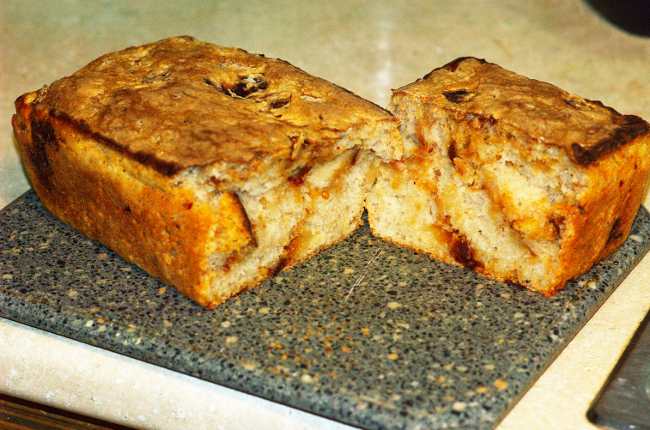
Finished loaf of Chipotle Sourdough Bread. A little too much Chipotle, it made the dough a bit wet and it came out very spicy. Still Delicious. There are kids over and it was gone in five minutes.
Notes from the Underground
I AM A SICK MAN…. I am a spiteful man. I am an unattractive man. I believe my liver is diseased.
—Dostoevsky, Fyodor . Notes from the Underground
Another long day, like the one before, like the one after, I don’t know when it will end. Looking at my calendar… maybe March of next year? Looking at my 401k… never.
It was so hot today… Summer won’t be here for another two weeks or so but it’s already smothering, baking. I had to drive all over the Metroplex, all the way from Bachman Lake (I remember when this was one of my favorite slices of the city… now, yikes!) out to the suburbs around Allen. Accidents everywhere, I had to navigate by GPS traffic reports, winding around avoiding the sections of red lines on the map.
I’m still further behind than I was the day before.
Oh, wait… I have to go to the kitchen and make my lunch for tomorrow. Maybe a nice piece of fish and some stir-fried vegetables. I’ll be back in a few minutes.
While you’re waiting. Here’s something to watch… a little entertainment.
OK, now I’m back.
Still here? Had fun watching the video? I thought so.
Well, let’s see, where was I?
Oh yes, Notes from the Underground
I write only for myself, and I wish to declare once and for all that if I write as though I were addressing readers, that is simply because it is easier for me to write in that form. It is a form, an empty form — I shall never have readers. I have made this plain already …
I don’t wish to be hampered by any restrictions in the compilation of my notes. I shall not attempt any system or method. I will jot things down as I remember them.
…..
I shall perhaps obtain actual relief from writing. Today, for instance, I am particularly oppressed by one memory of a distant past. It came back vividly to my mind a few days ago, and has remained haunting me like an annoying tune that one cannot get rid of. And yet I must get rid of it somehow. I have hundreds of such reminiscences; but at times some one stands out from the hundred and oppresses me. For some reason I believe that if I write it down I should get rid of it.
Why not try?
—Dostoevsky, Fyodor . Notes from the Underground
Oh, shoot! Look at the time. I keep reading that a good night’s sleep is important to health, well-being, and a happy life. Too late already for that tonight… but must do the best I can.
Toodles.
 Bill Chance