Melancholia

I usually struggle when writing about film to find something useful to write about without giving too much of the movie away. I have stopped watching or reading film reviews (before I see a film) at all – they all take the surprise away. I want to be stunned, if possible.

No such problem with Melancholia – the movie itself tells you the ending in the first few minutes. The director has said he doesn’t want there to be any suspense. He wants everyone to know how the movie ends. It ends with the destruction of the earth.

Since I don’t read film reviews any more I had never heard of Melancholia, even though I have been a semi-fan of the controversial and provocative director Lars von Trier for many years. It came on cable with an irresistible summary – “A woman’s troubled relationship with her sister is complicated by the appearance of a mysterious planet on a collision course with earth.” How could anyone resist a film like that?

The movie is divided into two chapters – each one named after one of the sisters. The first is “Justine” – and it concerns the events surrounding Justine’s (played by Kirsten Dunst) wedding reception. It’s a fancy, expensive affair, paid for by her sister’s fabulously wealthy brother-in-law John (Keifer Sutherland), and put together by a strange wedding planner (Udo Keir – he keeps walking by with his hand in front of his face to keep from looking at the bride – she has ruined “his wedding”). There’s the incredibly bitter mother (Charlotte Rampling), the asshole boss (Stellan Skarsgård), and plenty of other colorful characters.

The driving force, however, is Justine’s depression. She is crippled by melancholia to the extent that she often can’t even move. Lars von Trier has said that the movie was inspired by his own bouts with depression which make it impossible for him to work. Justine tries to put on a happy face at her own wedding celebration and to appreciate her husband, but it’s all hopeless. She is doomed.

Kirsten Dunst gives an amazing performance of a woman destroyed by depression, drowning in sadness so deep it can’t be swept away. It is painful to watch, but feels true to life – she helps us understand how she feels and how hopeless it all is.

The second chapter is titled “Claire” and the focus shifts to Justine’s sister as the mysterious planet, ironically named Melancholia appears and skims by the earth. Claire is played by Charlotte Gainsbourg, the daughter of Jane Birkin and Serge Gainsbourg – and has already had a long influential career in film, music, and fashion. As the doom earth is about to suffer become more and more obvious the roles of Claire and Justine become reversed.

The ultimate irony of Melancholia is that suffering from crippling depression makes you surprisingly equipped to deal with the end of the world.

So that’s the story of the film. Depressed woman finds out that reality is even worse than what she feared and then everybody dies.

Obviously, this isn’t a tale for everybody. At times it is maddeningly slow, and the lack of hope takes away the suspense that usually feeds a moviegoer’s hunger for entertainment. However, there is a strange beauty in doom, especially cinematic doom, and once the curtain comes down our little blue planet is still spinning out there. There really isn’t a giant killer planet lurking on the other side of the sun and we can take a little joy out of that.

I was surprisingly buoyed by Justine’s struggle (and Dunst’s performance) and her doom will, ultimately, be shared by us all – it’s only a matter of timing. She was able to muster up a little dignity at the end, and that might be enough.


What I learned this week, October 12, 2012

Then and Now:


In Dallas, October means the State Fair. And the State Fair means fried stuff.

Comprehensive 2012 Texas State Fair Fried Food Guide


Martyn Ashton takes the £10k carbon road bike used by Team Sky’s Bradley Wiggins & Mark Cavendish for a ride with a difference. With a plan to push the limits of road biking as far as his lycra legs would dare, Martyn looked to get his ultimate ride out of the awesome Pinarello Dogma 2. This bike won the 2012 Tour de France – surely it deserves a Road Bike Party!

Shot in various locations around the UK and featuring music from ‘Sound of Guns’. Road Bike Party captures some of the toughest stunts ever pulled on a carbon road bike.


How iPhones destroyed going to the movies — in more ways than one


13 Brains I’d Like To Eat


Cormac McCarthy Cuts to the Bone

Blood Meridian used to be a much different novel. McCarthy’s early drafts reveal how an American masterpiece was born.

At least this is what I pictured after I came across a recipe for homemade gunpowder in McCarthy’s notes. The laminated recipe, scrawled in small cursive letters on a bail bondsman’s notepad, is part of the Cormac McCarthy Papers—98 boxes of notes, letters, drafts, and correspondences on all of the reclusive author’s works—archived at Texas State University-San Marco’s Wittliff Collections. Bought for $2 million in 2008 as a joint venture between the university and Bill Wittliff (screenwriter of Lonesome Dove), the collection includes unpublished material such as a screenplay, Whales and Men, and drafts of an upcoming novel, The Passenger (not available for reading until after publication). But of primary interest to McCarthy’s most devoted fans are the multiple drafts of the Tennessean’s magnum opus, Blood Meridian or the Evening Redness in the West. The archives give us a unique look inside the working method of an artist who speaks little about his own work—and gives us clues as to how his reticence, when brought into Blood Meridian itself, transformed a good book into a cold-blooded masterpiece.


I’m not generally a big fan of bridal photograph shoots – but this one will do:

Bad-Ass Roller Derby Bridal Shoot

Source: frayededgeconcepts.files.wordpress.com / via: frayededgeconcepts.wordpress.com

From Frayed Edge Photography


40 Things To Say Before You Die


I live in a… well, in a completely different world than Camile Paglia. However, I’ve been reading some of her work online, am very interested in the book she is about to publish, and surprised how much we think alike, though our points of view are so very different.

Some meaty thought in some of these articles:

How Capitalism Can Save Art
Camille Paglia on why a new generation has chosen iPhones and other glittering gadgets as its canvas.

WHITHER THE ARTS? At Ricochet, Dave Carter links to Camille Paglia’s essay in the Wall Street Journal on the decline of the art world with a reminder of the wonders of the 700-year old Cologne Cathedral.

In the comments, Michael Malone of Forbes, ABC and PJM reminded readers of how the church managed to survive World War II:

I hate to burst anybody’s bubble about the ‘miraculous’ survival of Cologne Cathedral in WWII, but it was anything but that.  When my parents were touring the cathedral years ago and the tour guide began describing this miracle, my father, who actually had bombed Cologne, whispered to my mother, “We left it standing because it was perfect for targetting the rest of the city.”  On the same trip, sitting at a cafe enjoying his morning weiss beer and veal sausage, a local struck up a conversation with him, eventually asking, “Have you been to Cologne before, Herr Malone?”  My father casually replied, “No, but I’ve flown over it a couple times. . .”

And finally, a very interesting interview with some surprising points:

In “Glittering” return, Paglia lets loose

I don’t like the situation where the Democratic Party is the party of art and entertainment, the party of culture, while the Republicans have become the party of economics and traditional religion. What that does is weaken both sides. One of the themes in my book is the current impoverishment of the art world because of its knee-jerk hostility to religion, which is everywhere. That kind of sneering at religion that Christopher Hitchens specialized in, despite his total ignorance of religion and his unadmirable lifestyle, was no model for atheism. I think Hitchens was a burden to atheism in terms of his decadent circuit of constant parties and showy blather. He was a sybaritic socialite and roué – not a deep thinker — whose topical, meandering writing will not last. And I’m no fan of Richard Dawkins’ sniping, sniggering style of atheism, either.

A responsible atheist needs to be informed about religion in order to reject it. But the shallow, smirky atheism that’s au courant is simply strengthening the power of the Right. Secular humanism is spiritually hollow right now because art is so weak. If you don’t have art as a replacement for the Bible, then you’ve got nothing that is culturally sustaining. If all you have is “Mad Men” and the Jon Stewart “Daily Show,” then religion is going to win, because people need something as a framework to understand life. Every great religion contains enormous truths about the universe. That’s why my ’60s generation followed the Beat movement toward Zen Buddhism and then opened up that avenue to Hinduism – which is why the Beatles went to India with the Maharishi Mahesh Yogi. Then it all disappeared, when people became disillusioned with gurus. But spiritual quest was one of the great themes of the ’60s that has been lost and forgotten – that reverent embrace of all the world religions. This is why our art has become so narrow and empty. People in the humanities have sunk into this shallow, snobby, liberal style of stereotyping religious believers as ignorant and medieval, which is total nonsense. And meanwhile, the entire professional class in Manhattan and Los Angeles is doping themselves on meds and trying to survive in their manic, anxiety-filled world. And what are they producing that is of the slightest interest? Nothing. Nothing is being produced in movies or the fine arts today (except in architecture) that is not derivative of something else.


50 People You Wish You Knew In Real Life

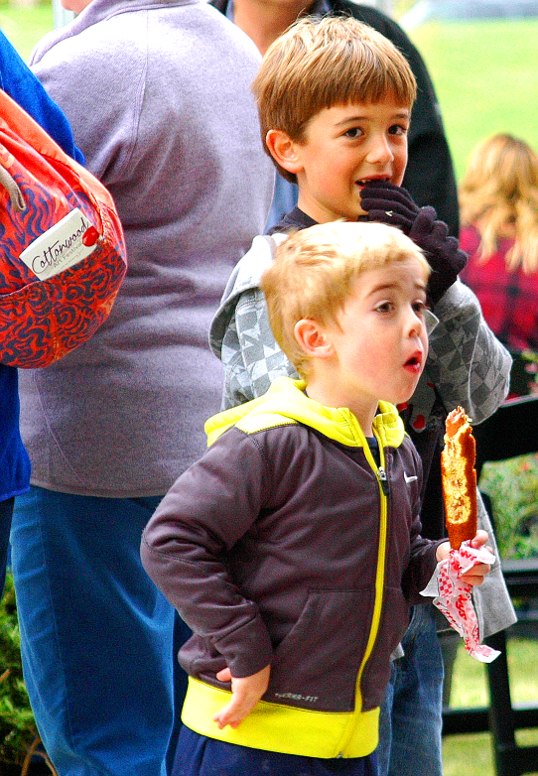
Corny Dog

There’s more than one way to eat a Corny Dog. At the Cottonwood Art Festival, Richardson, Texas.

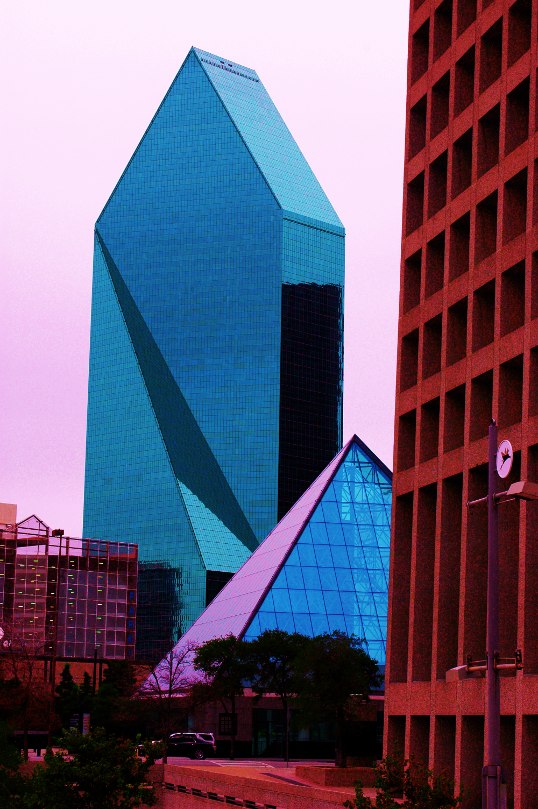
The Crystal Architecture of the City

Dallas, Texas. Taken at the same spot as this photo – turned 180 degrees.

Belo Garden

Belo Garden, Dallas, Texas

Click for a larger, more detailed version on Flickr.

This Rock and Roll thing, is it going to last?

A Hard Night’s Day – Beatles tribute band, Cottonwood Art Festival, Richardson, Texas

A Visit From the Goon Squad

Again, it was time to decide on the next book for me to read. At one time, that meant perusing the bookshelves in my home – when we lived in Mesquite our entire hallway was lined with shelves chock-a-block with tomes (that’s been reduced to one small and two full-sized bookcases… and they are only half full – mostly non-fiction reference). Now it is a ritual of clicking through the collections in my Kindle… preferably sitting at my laptop, looking up information on each possibility. As the thread of my life is shortening my choice in reading is becoming more selective – there isn’t enough time. When I was young I would finish a book no matter how much I detested or was bored by it. Now, if it isn’t grabbing me, I hit the REMOVE FROM DEVICE selection.

I have had Jennifer Egan’s  “A Visit From the Goon Squad” for some time – having picked it out from a recommended reading list somewhere. It was something I was sure to like; a novel of tightly connected short stories that won the Pulitzer Prize and many other awards. It had to be good.

However, I had been putting it off. After thinking about it, I’ve realized that it was because I hated the title. “A Visit From the Good Squad” had very negative associations in my noggin’ – though I’m not sure what they were. My mistake was in taking the phrase “Goon Squad” literally – the book does not (in the book the “Goon” is time itself – the central metaphor for the story). I knew nothing about the details of the book (I’ve been trying to avoid plot summaries of books and films – life is a bit more exciting that way) and the title left a bad taste in my mouth.

As I was researching my choice in next-to-read I discovered that HBO is making a cable series out of the book. That was good enough for me. I clicked it into my “READING” collection and dug in.

It didn’t take long for me to realize that (a) the book is very, very good… and (b) the stories are connected in a complex web of space, time, and human connections. I was not going to be able to keep track of everything without help. So I dug out a Staples Bagaase Composition Book (one of the great inventions of all time) and three fountain pens (turquoise, gold-brown, and purple – to help keep different threads separate) and took notes as I read. I wrote down each character, their age, the year (as best as I could figure) and all the connections between them.

By the end of the book I had about twelve pages of concise notes. Not all the possibilities worked out – but I can’t imagine enjoying the stories as much as I did without this effort. It was kind of fun to sit there annotating as I read… sort of like being back in school again.

About halfway through I thought that I probably wasn’t the first person that had this need to outline “A Visit From the Goon Squad” and a quick web search revealed that I wasn’t. Two resources were particularly useful – a detailed timeline of the interlocked stories of the most important dozen characters, and a wonderful 3-D construct, an Interactive Character Map of the denizens of the novel and their relationships with each other. With these resources at my disposal my note-taking became redundant but I forged ahead – a little sloppier – and did discover a couple of connections not noted in the online references.

Having gone into this book from “How to Live Safely in a Science Fictional Universe” I was relieved to find a more conventional narrative – one with real people and settings. Still, there are a few postmodern touches – especially in the fact that one chapter is told in PowerPoint.

I cared deeply about the characters and wanted to see them happy – which is a good thing, if not always (or even very often) possible. After all, time is a goon, and we are all due our visit from the goon squad.

Signs and Stencils

Exposition Park and Deep Ellum, Dallas, Texas