“Surrealism is destructive, but it destroys only what it considers to be shackles limiting our vision.”
― Salvador Dali

“Surrealism is destructive, but it destroys only what it considers to be shackles limiting our vision.”
― Salvador Dali
“Do not swear by the moon, for she changes constantly. then your love would also change.”
― William Shakespeare, Romeo and Juliet
I had read that there would be a lunar eclipse – not a total eclipse, but one that would last longer than any in history (well, at least in 580 years – good enough for me). I also read that it would occur well after midnight on a work night, so I didn’t think any more about it.
The sun was well set (even though there was a pink and purple glow left all around the horizon) as I walked to my car across my work parking lot. The moon was rising in the east and singularly full and beautiful, I even texted Candy to go look at it.
Then, at home I was so exhausted that after watching a bit of college basketball I fell into a hard, deep sleep. I woke up at two thirty in the morning and realized that I had to do a load of laundry (I had no shirts for the next work day) and that I had left my phone in my car.
After starting the washer going I stumbled out to my car to fetch my phone so I could charge it for the upcoming day. I had forgotten about the lunar eclipse but as I looked up from the sidewalk it looked like an irregular swipe had been taken across the lunar orb. The eclipse was more than half complete and it combined with the dark lunar seas to make an unexpected uneven border. It was really odd and interesting.
My new phone has an amazing set of (5) cameras and has examples of fantastic shots all over the internet. Unfortunately, I’m a boomer and still trying to figure the damn thing out… and this is the best I could do:

“If your kid needs a role model and you ain’t it, you’re both fucked.”
― George Carlin, Brain Droppings

From my blog (I called it an “Online Journal” then), The Daily Epiphany, Wednesday, November 7, 2001 – a smidge over twenty years ago:
The other day we were driving around, talking about this and that, complimenting someone (I don’t remember who) on their house and how it was decorated.
Lee piped up from the back seat, “I like that house, it’s very Feng Shui!”
“What did you say?” Candy asked.
“It’s very Feng Shui,” Lee replied.
Where does a nine-year-old learn about Feng Shui? It was a bit of a shock to hear a little kid use that term.
“It’s from Doctor Dolittle Two,” Lee said.
And a piece of flash fiction for today:
from fwriciton

I’m a skeptic about many things, and this definitely includes any methods or products that promise to be “life-changing” or “magical.” It’s not that I don’t want to believe that my life can be changed by a particularly thorough reorganization of my sock drawer, or that magic plays some part in how I arrange my bookshelves, but what I’ve tended to find with any attempts to relaunch my way of living, thanks to internet-approved organizing tips, is that the results are, more often than not, prosaic rather than magical and that instead of changing dramatically, my life simply shifts forward incrementally, as it probably was prone to do anyway.

America’s iconic orange cracker turns 100 this year
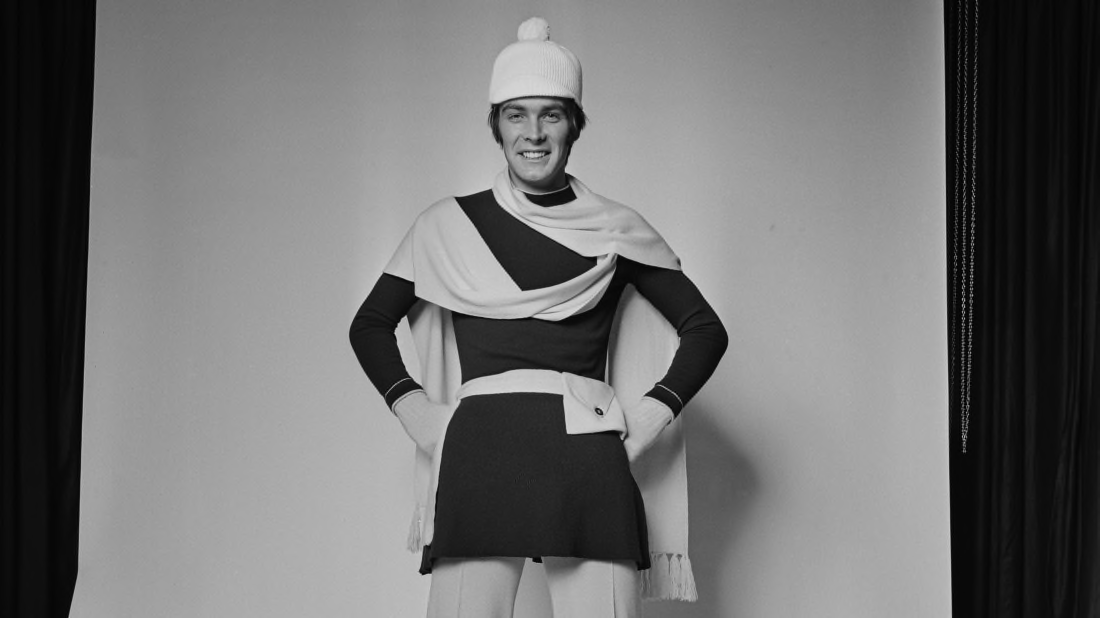
Back in 1954, Sports Illustrated ran an advertisement for a leather pouch that was touted as an ideal accessory for cross-country skiers who wanted to hold their lunch and ski wax. Hikers, equestrians, and bicyclists could also benefit from this waist-mounted sack, which was a bit like a backpack situated on the hips.

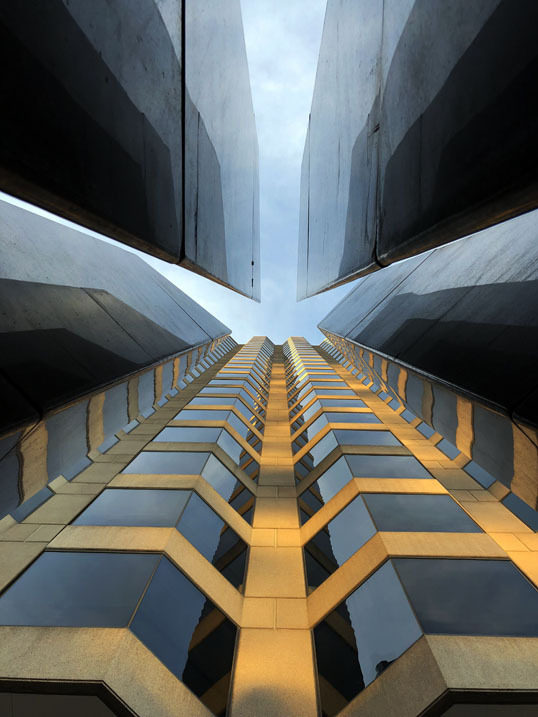
They are spreading like branching plants across the globe. Should we rein cities in or embrace their biomorphic potential?
The nonsensical computer-generated articles, spotted years after the problem was first seen, could lead to a wave of retractions.

The pair has built a nest. Now we humans have to figure out how to protect it.

“But the thought of being a lunatic did not greatly trouble him; the horror was that he might also be wrong.”
― George Orwell, 1984
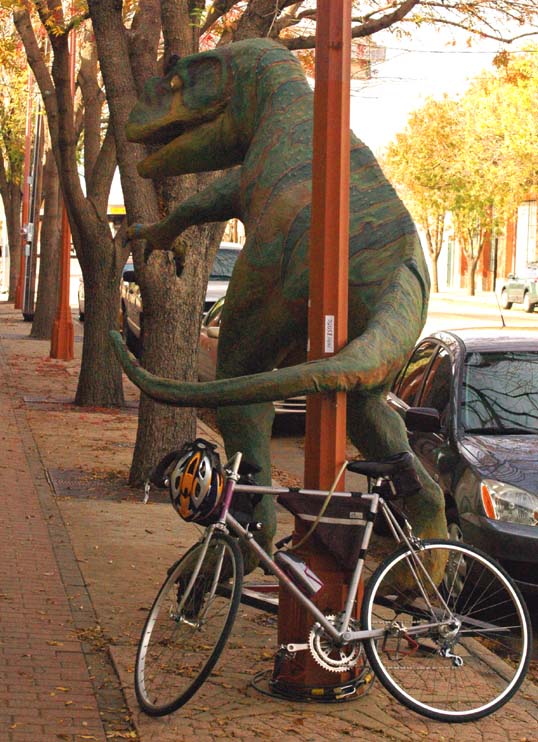
From my blog (I called it an “Online Journal” then), The Daily Epiphany, Friday, January 31, 1997
I’ve been thinking about Lee at the Dinosaur play we went to last week. Thinking about the start of the second act when the dinosaur, the three-horn, the Triceratops, no- the actor, no- the actress wearing the Triceratops costume emerged from the rear of the theater and moved down our very own aisle, making dinosaur-type noises (what kind of noise does a dinosaur make?) and glaring and gesticulating at all the enthralled children.
Lee was grinning, smiling, waving back with a little half wave. His radiant face was plastered with an unbelievable expression, one of absolute wonder and amazement, he looked like, well, he looked like he had seen a dinosaur. In the play, the protagonist (a paleontologist) and her daughter had traveled back in time by way of an incantation the daughter intoned. They ended up at the very nest of the dinosaur whose remains (egg shells and bones) they had been unearthing at the beginning of the play.
Lee knew this wasn’t a real dinosaur, he knew it was an actor inside an attractive, but not very realistic dinosaur suit. What was it? A Dinosaur or an Actor? What’s the difference? None to him. As an adult I, of course, hold no illusions of it being real, I could tell that, not only was it not a dinosaur, it was evenone of the other actors in the play, an actress, the actress playing the museum president. Actress-Dinosaur, ThreeHorn-Triceratops, DinoActress-MuseumPresidentActress, which is it?, which is real? and which is the illusion?
Children accept the fact that for all practical purposes there is no distinction between fantasy and reality. Adults forget, or choose to ignore this fact.
No difference you say? Reality and fantasy, no distinction? Run across this street then and get hit by that cross-town bus, there’s your distiction.
Yeah, that bus is real, all right, I think we can agree on that point. But why did it hit me? Bad luck? Destiny? Did the Tarot cards predict this?
“Yes, I can see it now, the cards will predict your future. You have drawn the Greyhound Card, along with the Hanged Man. I predict you will be smacked by the Lexington Avenue Cross-Town bus at seven thirty AM June 23rd 1998, after leaving Starbucks, looking at your watch, trying to catch the train.The bus will have an ad on the side, for Tyrone’s Seafood (Plate O’ Shrimp – $4.99), the driver’s name is Roger Slothrop.”
“But that can’t be true! I don’t even drink coffee!”
Our daily struggles we blame on the stars, on our parents, on the government, but who is to blame?
I suppose we need to watch out for that bus, but it would sure be nice to be able to pay for a ticket to the children’s theater and get to see a real dinosaur.
And a piece of flash fiction for today:
“It is never too late to be wise.”
― Daniel Defoe, Robinson Crusoe

Let’s see, the movie came out in 1964… but I would have seen it on an Army base (which one? probably Fort Leavenworth) which are second-run theaters (back then, a movie cost a quarter) so I would have seen it a year or two later. I would have been eight or nine years old. And yet I remember it like it was yesterday.
Robinson Crusoe on Mars is streaming on the Criterion Channel and I had nothing better to do, apparently, than to waste a precious afternoon of perfect weather re-watching it… after all these decades.
Despite the bilious title, it isn’t a bad movie at all. Adam West has a small, pre-Batman, part (spoiler – he dies near the beginning). The special effects are economical but practical, the flying saucers cool looking (they look like the aliens from the original War of the Worlds– which was made a decade earlier).


Oh, no wonder. Here is the answer from IMDB:
The Martian spacecraft are leftovers from The War of the Worlds (1953). Director Byron Haskin was involved in both projects, although George Pal is often given sole credit for the earlier classic.
I remember thinking that they looked the same in 1966 or whenever. War of the Worlds was on TV and had made quite a splash we me and my diminutive friends. But there was no internet then and I couldn’t find out for sure.
“You spend your whole life stuck in the labyrinth, thinking about how you’ll escape one day, and how awesome it will be, and imagining that future keeps you going, but you never do it. You just use the future to escape the present.”
― John Green, Looking for Alaska

Amanda found an article in the newspaper about some guy that had cut a series of mazes into his cornfield, about a half -hour east of the city – and was charging folks to walk around and get lost. It sounded like fun, so we bundled the kids and a friend up and headed out of town.
It was getting late, the sun was setting as we pulled up. It was a fun place, although everyone was tired and grumpy.
They have a number of mazes. One made out of hay bale tunnels – with instructions posted on the hay. It’s more of a puzzle than a maze. Then there are three labyrinths made up of fencing right near the parking lot. Jim liked those the best.
The main attraction, though, are the two labyrinths cut into the cornfield itself. They are huge, covering about a square mile or so. One maze is more twisty and complicated, the other more open, with long straightaways.
The rules are simple: no running, no pulling the corn, no picking the corn, no throwing the corn, no cutting through the corn. The smell of the ripe, dry cornfield was wonderful.
I can’t speak much of what it looked like because by the time we hit the cornfield maze the night was pitch black. A lot of people were in the maze had flashlights and/or glow sticks – plus some light (and noise) filtered across the freeway from the drag races going on there.
It was fun, wandering around in the dark, dodging the clumps of screaming kids (many ignoring the rule about no running), and trying to figure out the overall layout of the corn. It was easy to get truly lost, especially in the dark. There are clues to help you find your way out, plus a lot of workers in there checking on the customers… though we never needed any help – simply a lot of walking.
It took us about forty minutes to get through the Phase I maze – we probably walked two miles or so. Jim’s knee was aching, so he sat it out while Amy and I made it through Phase II a little quicker.
The kids kept getting frustrated in the maze when we would hit a dead end or realize we were at a spot we had passed before. I told them not to be so bothered, to relax and keep moving. “You have to walk down the wrong paths to find the right ones,” was my fatherly-zen advice.
They groaned at that.
“Canoes, too, are unobtrusive; they don’t storm the natural world or ride over it, but drift in upon it as a part of its own silence. As you either care about what the land is or not, so do you like or dislike quiet things–sailboats, or rainy green mornings in foreign places, or a grazing herd, or the ruins of old monasteries in the mountains. . . . Chances for being quiet nowadays are limited.”
― John Graves

From my blog (I called it an “Online Journal” then), The Daily Epiphany, Monday, March 13, 20008.
There’s this thing about being in a canoe, or a small sailboat even, on a lake in the wind. When you are going into the wind you’re going very slowly and in the case of a canoe you’re working very hard to push against the resistance. But since the waves are going the other way, opposite you, it seems like you’re moving very quickly, rushing along. It’s only when you watch the shore that you see the glacial progress you’re making.
On the other hand, when you turn around, and go with the wind at your back you, hopefully, will move right along with the waves and appear, when you look at the water, to almost be standing still. Again, it takes some proper point of reference, some object on the shore, to gauge your true rapid speed.
Nick, Lee, and I rented a canoe today, and went from one end of Cedar Lake to the other.
We started at the little park store, which has rentals. We had to wait because the operator who lives in a recreational vehicle beside the store and lives by himself had to close up for an hour and go into town. When he came back he could rent us the boat. He made us fill out all the paperwork, apologizing, “Please fill this out in case the State audits me.”
Candy asked, “Well, have they ever audited you?”
He said, “Yes, once. They came out a couple years ago but I told them that my wife had passed away that week and I couldn’t deal with it so they went away and haven’t come back.”
So we rented the little aluminum canoe for an hour, six dollars an hour, and we went out in it while Candy waited on the shore with the giant killer dog. The rental place is in a cove down at one end of the lake and due to the drought we’ve been in for the last couple years the lake levels are way down. It was difficult to get out of the cove because the water was so shallow.
I wanted to go the length of the lake, all the way to the dam but as we moved out into the center I wasn’t sure we would make it. The stout wind would catch the front of the canoe, where Nicholas sat ineffectually flailing at the water with one paddle, and spin it around so I would have to paddle hard and carefully to keep us pointed at the dam. Two other families had rented canoes right after us and they were unable to get out of the cove due to the wind.
After being spun twice I decided to move over to the west coastline, as close as possible, and pay close attention to steering the canoe – we were able to make progress that way. It was work, pushing against the wind, taking all the strength I had in my shoulders. It felt good to be paddling a canoe again; I’m really pretty good at it. I had a canoe of my own once, for a little while when I lived in Panama – a hollowed out log really – that I could take down to the lake and paddle around with. I guess that’s when I learned how to handle a paddle with some dexterity. In college sometimes in the spring we would go down to the Ozarks, rent canoes and shoot some easy rapids. Over the years Candy and I have gone to Caddo lake or some other camping place by the water and rented a boat.
Nicholas and Lee had never been in a canoe before. Lee was surprised to find out it was made of metal, he thought they were all made of wood. They both said the canoe was more stable than they thought it would be, they thought it would be harder to keep it from tipping over. I told them a lot of that was because I was working pretty hard at keeping it straight while they flailed around. Especially Nick at the front trying to paddle.
Today we made it all the way to the dam. No big deal, no great feat, but the kids seemed to enjoy it. We circled the concrete drainage structure, a tall cylinder sticking out of the water with a wrought iron valve wheel on top. Then we turned and headed back.
The wind and waves bore us along at a rapid speed on the return. It took us maybe forty minutes to reach the dam and only ten to get back. Poor Lee knelt on his knees in the center of the canoe during the whole trip and could barely stand when we pushed up onto shore. His young legs recovered their flexibility quickly enough.
I’m afraid my shoulders didn’t recover quite so fast.
And a piece of flash fiction for today:
from TriQuarterly

There are lots of bits of advice you probably weren’t given growing up. How to budget your money. How to know if you should marry the person you’re dating. How to make or break a habit.
Also assuredly on that list: How to make friends in adulthood.
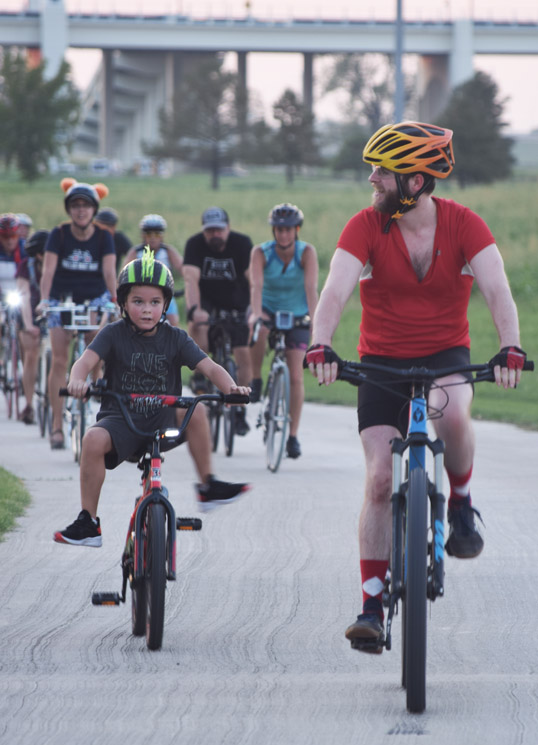
Activities such as lifting weights, hiking, or even woodworking teach us humility and keep us grounded in reality

When we think about the autumn and winter seasons, we often envisage a peaceful scene. It’s a time where we seek cosiness and wrap ourselves up against the elements, a comforting hot chocolate and weighted blanket never too far away from our reach.
But despite the changing leaves and general feeling of happy hibernation, they are also seasons of great stress, too.

Technology has given people more ways to connect, but has it also given them more opportunities to lie?
You might text your friend a white lie to get out of going to dinner, exaggerate your height on a dating profile to appear more attractive, or invent an excuse to your boss over email to save face.

Hiking isn’t just a long walk in the woods.

Some see Plato as a pure rationalist, others as a fantastical mythmaker. His deft use of stories tells a more complex tale
It’s just another day… and you’re just doing what you need to do.
You’re getting things done, and the day moves forward in this continuous sequence of checklists, actions, and respites.
But at various moments of your routine, you pause and take a good look at your surroundings.
The scenes of your everyday life. The blur of this all-too-familiar film.
And you can’t help but to wonder…
If there is more to it all.
“Well, I always know what I want. And when you know what you want–you go toward it. Sometimes you go very fast, and sometimes only an inch a year. Perhaps you feel happier when you go fast. I don’t know. I’ve forgotten the difference long ago, because it really doesn’t matter, so long as you move.”
― Ayn Rand, We the Living

I came across an interesting article about a building in Indiana that was rotated 90 degrees.

What is crazy about it is that the building never closed. The people kept going to their offices every day – power, telephone, water, sewer – never was shut off. They said that the folks working there never noticed the building moving.
I imagine a lowly clerk sitting at a desk in the middle of the room – far away across the sea of desks is a lonely window. The clerk looks out the distant widow longingly and watches the slow parade of distant objects – trees, buildings, power poles – across his limited field of view.
 Bill Chance