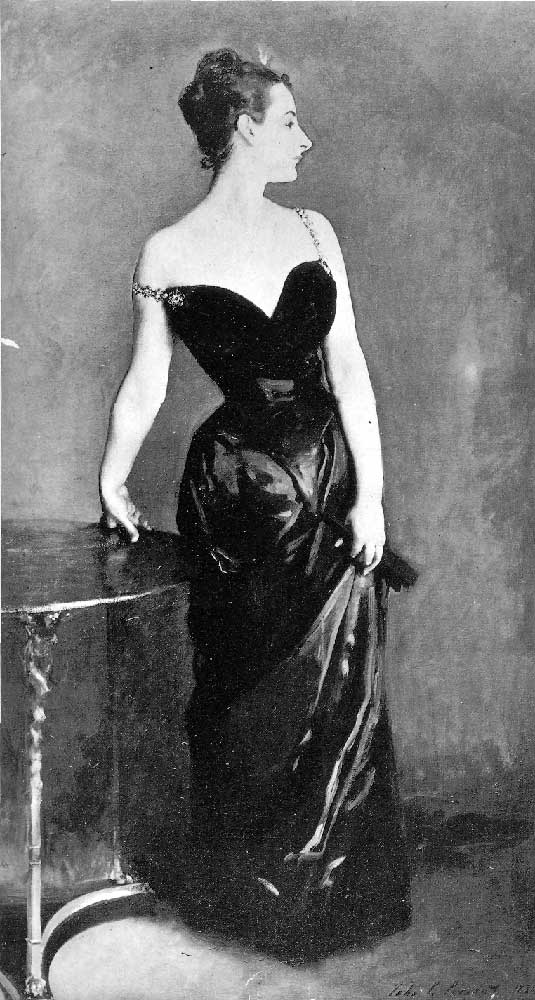
Fountain Columns

Irving Arts Center, Irving, Texas

Jesús Bautista Moroles
Fountain Columns, 1998
Dakota Mahogany Granite

Jesús Bautista Moroles Fountain Columns (click to enlarge)

Jesús Bautista Moroles
Fountain Columns
(click to enlarge)

“Elmore Leonard’s Ten Rules of Writing

1. Never open a book with weather.
2. Avoid prologues.
3. Never use a verb other than “said” to carry dialogue.
4. Never use an adverb to modify the verb “said”…he admonished gravely.
5. Keep your exclamation points under control. You are allowed no more than two or three per 100,000 words of prose.
6. Never use the words “suddenly” or “all hell broke loose.”
7. Use regional dialect, patois, sparingly.
8. Avoid detailed descriptions of characters.
9. Don’t go into great detail describing places and things.
10. Try to leave out the part that readers tend to skip.

My most important rule is one that sums up the 10.

If it sounds like writing, I rewrite it.”
― Elmore Leonard

Jesús Bautista Moroles Fountain Columns (click to enlarge)

Jesús Bautista Moroles
Fountain Columns
(click to enlarge)

Dallas Noir

Dallas-Noir

About a year and a half ago, I read a book called New Orleans Noir – which I enjoyed a lot. It was a collection of DARK short stories all set in a city I love very much… and a city, despite all its frivolity and fun, that has plenty of opportunities for that side of the human spirit.

The book was part of a series of noir short stories tied to individual cities. After reading it, I had a thought, “I wish they would do one of these on Dallas – but they never will.” I was wrong.

I missed it when the book was published or I would have gone to some of the events. I didn’t find out about the book until it made the rounds on social media. When the publication of Dallas Noir popped up in my facebook feed I was really excited. And in this day of ebooks and instant gratification, fifteen seconds later I was looking at the table of contents.

What was even cooler is that I have personally met two of the authors – I read their stories first.

David Haynes is an Associate Professor and Director of Creative Writing at SMU. About a decade ago I took a couple of classes in fiction writing from him through the Writer’s Garrett. I’ve always been amazed at how much more I learned from these than from my college writing classes (which set my writing back over a quarter-century – it’s my college writing classes that are responsible for me being a chemist).

His story, “Big Things Happening Here,” Oak Lawn, was more than excellent. Unique, subtle, very “literary” – it tells the story of two men that witness someone being abducted in a tony suburb and are drawn into a vast conspiracy… or maybe not. A thought provoking tale of the possibility of a secret undercurrent of modern life – an illustration of the adage, “Simply because you are paranoid doesn’t mean they are not out to get you.”

Next I read a story by Catherine Cuellar, “Dog Sitter,” Love Field. I have met her a number of times at events in the Arts District and bike rides. Her contribution was on the more civilized edge of the noir genre – a story of a domestic worker that kills a passerby by accident. It’s a finely characterized tale which captures the delicate and difficult life led by those right under our noses, yet right outside of the mainstream of society.

After those two I cranked through the collection in order. I was familiar with many of the writers – I’ve been reading Ben Fountain and Harry Hunsiker for a while. There was a wide variety in all the stories – which made it as enjoyable as a box of chocolates – but the locations were all familiar. They did a good enough job of inserting locations and people that any Dallasite will recognize to give me the creeps as I ride/drive/move around town and see things that remind me of the stories.

The last story was by Jonathan Woods, “Swingers Anonymous,” M Streets. I enjoyed his collection, Bad Juju & Other Tales of Madness and Mayhem – driving down to the Pearl Cup on Henderson to hear him read one night. I’ve always admired his writing – because he doesn’t fuck around. He writes like a truck wreck… the story comes at you two hundred proof and on fire. True to form, his story in Dallas Noir has a classic “grab your attention” opening line:

We all went over to Pauline’s to admire her breasts.

How can you not finish a story that starts like that?

Dallas Jail complex with the Margaret Hunt Hill bridge in the background. (click to enlarge)

Dallas Jail complex with the Margaret Hunt Hill bridge in the background.
(click to enlarge)

What I learned this week, November 22, 2013


5 city bikes that roll you through town in style
The latest in steel-framed, fender-clad, and leather-saddled bikes at a variety of price points.

Some of the ones that caught my eye:

Shinola Runwell

Purefix Bourbon

Public V7

If I could afford a new bike – this is what I would buy right now:
Xootr Swift


I love reading (and writing) short stories. Apparently, I’m not alone.

2013: The Year of the Short Story


In Dallas, a deafening slurping noise as the town goes crazy for Asian noodles


I’m going to have to go visit Sulphur Springs and use the public restrooms.


The Ten Sexiest Riffs in Music


You’ve probably already seen this – but it is the coolest music video I’ve ever seen. Be sure and check out all the channels.

Bob Dylan – Like a Rolling Stone – Official Video

For some reason, I really like “The Price is Right” channel… maybe it’s just Drew Carey lip-syncing Dylan.


A cow-orker is retiring at the end of the year (an awful lot are) and he stopped by my office for my help on getting his replacement up and going. I asked the innocent question, “Do you have any plans for retirement.”

He got all excited and launched into a long lecture on kayak fishing and, especially, about the particular kayak he is getting ready to buy – the Hobie Mirage Pro Angler 14. I have to admit – the thing is pretty cool.

The most amazing (to me) feature are the foot powered propulsion fins. Two flexible extensions underwater are moved by pedals to propel the kayak forward. Pretty cool… but not cheap.

Sunday Snippet – A Thousand Unnatural Shocks

Here’s a little thing I wrote the other day. It’s not very good – I know I won’t use it in my book. So I’ll put it up here for your amusement and ridicule.

The germ of the idea for this came from two places. One, a piece of fiction I read more than thirty years ago – One Ordinary Day, With Peanuts, by Shirley Jackson. The story left an impression on me and I always wanted to write something in a similar vein.

The other inspiration came from a book I stumbled across. I won’t mention the name – but it was a popular new-agey book of spirituality and such. I found it stumbling upon a blog written by a person that lived by its tenets. One chapter of the book recommended an experiment. It said that you should give the world forty eight hours to do something wonderful for you. It said that if you opened your mind, within two days the universe would prove to you that it was dominated by a beneficent force that would give you a sign, some unexpected positive event, to prove that it existed.

Well, this isn’t my usual cup of tea – but I was attracted to the scientific aspect. Also, forty eight hours is such a short period of time. I decided to give it a shot. And I did it right, I wrote down a commitment on a piece of paper, I was positive about the whole thing, I was optimistic. I can say I was even excited and curious about what boon the universe was going to deliver to me in the next couple of days.

I think you know what happened next. Almost immediately I had such bad luck – nothing I couldn’t deal with – but again and again unexpected disasters – frustrating, expensive, uncomfortable stuff kept coming at me from every direction. The few good things that occurred over those two days were the inevitable, expected result of hard work that I had done previously – not the unexpected wonder the book promised.

So the book failed for me. You could say that nothing happened that I couldn’t deal with – that things could have been worse… but that’s not what the book promised.

I guess the only good thing that came out of this disastrous two days is the idea for a story… even if it isn’t a very good one.

A Thousand Unnatural Shocks

by Bill Chance

Buford knew it was going to be a bad day but he didn’t think it would be this bad.

When he woke up it was cloudy and he couldn’t tell what time it was. His wife was nowhere to be found and the alarm clock was flashing twelves. By the time he dressed, the thunderstorm that had cut the power while he slept kicked in again and he ran through the rain to find his front left tire flat. Buford had to stretch out in the dirty cold water in the gutter to slip the jack underneath and was soaked by the time he had the tire changed.

At work, his badge didn’t operate the rotary door and he had to stand in the cold drizzle while the security guard called human resources. He knew something especially awful was happening when the HR woman had the guard escort him to an obscure conference room after letting him in. On the table was a cardboard box with all the personal stuff from his cubicle.

Apparently, they had found the irregularities in his petty cash account.

On the way home, someone turned left in front of him and made him swerve. He hit a light pole with his right fender. Buford was able to back out and continue on, but a cop gave him a ticket a block farther for his broken headlight and expired inspection sticker.

Back home, he discovered that the dog had pulled over the trash can and spread garbage throughout the house. The dog also fished out and ate last night’s leftovers and vomited them up on the couch. After cleaning the mess as best he could he put his dirty, wet clothes into the washing machine. On the rinse cycle, the hot water hose burst, flooding the utility room and kitchen and scalding Buford as he had to use a big wrench and wedge his foot against the wall to get the leverage he needed to shut off the balky valve.

Deciding he had better not try and do anything else for the rest of the day, Buford turned on the television and settled in his easy chair to watch television. He was admiring the vase of fresh flowers his wife had placed above the set when the dog chased the cat into the living room. The cat leaped on top of the television, knocking the vase over. The water spilled and trickled into the circuitry. With a sharp spark and a bang, it went dark. A column of rancid smoke rose from the back, a breaker tripped and the room went dark.

Buford did not dare budge; he sat there in the gloom, motionless, until Camille, his wife, came home.

————————————

He heard the keys jangling merrily in the lock.

“Why is it so dark in here?” Camille asked as she walked briskly through the room.

“Blown breaker.”

“Well, I’ll reset it then.” Buford cringed and he heard the click and the lights came on, expecting a fire or explosion. But it was his wife, after all, that threw the switch, so nothing bad happened.

“How was your day, dear?” she asked. “Not too horrible, I hope?”

“Worse than ever,” he replied. “For one thing, I lost my job.”

“No worries.” Camille answered. “I bought a lottery ticket on the way out this morning. Ten grand scratch-off winner.” She tossed a thick envelope on the coffee table. “If we need more, I’ll buy another.”

“So your day was good?” asked Buford.

“Of course it was; you know the drill.”

Camille reached into her pocket and removed a small object. It was a crude statue, made from some mottled mudstone, of a distorted human figure of extreme ugliness. The troll-like character was leering into space and holding a large, crimson, translucent jewel – clutching it with both arms wrapped around the gleaming gem like its life depended on it. Camille carefully placed the sculpture onto a sturdy wooden stand on the mantelpiece. Though diminutive and unattractive, it had a quality about it that commanded attention. Both Buford and Camille, husband and wife, stood for a minute or two, as they did most days when the charm was replaced back in its place, and thought about the day they had acquired it.

They were on the Mayan Coast of Mexico, on a bargain package vacation Camille had won at a company bingo game. Their cut-rate guide had been drinking and became lost; then his rattle-trap jeep broke down in an isolated village. The pair ventured out through the thick air – sweating so much in the tropical heat that it was painful.

“I can’t believe you got us into this,” Buford said to Camille, his voice thick with reproach and misery.

“Hey, all I did was win a contest. You are the one that jumped on it. You’re too cheap to pay for a trip on your own.Don’t blame this on me.”

They continued to snipe at each other as they walked down the muddy street between ragged huts made of crude sticks, reeds, and rusty corrugated steel. The village was strangely devoid of the usual beggars and con-men and they kept walking hoping to find some establishment that looked like it might have clean ice. They were ready to give up anything for something cold to drink when a strange old man approached them and spoke in almost perfect English.

“Ah, we don’t get so many tourists in our little town.”

“Well, you’re a long way off the beaten track,” Buford said to the man as his wife glared.

“That’s true, not so many are as lucky as you.”

“I wouldn’t say we were lucky. Not at all.”

The old man stared at them for a minute, and then continued.

“Well, I have something here for you, and I guarantee that your luck is going to change.”

Now that he thought about it, Buford realized that the old man didn’t say their luck would change for the better, only that it would change. And he had not been lying.

The old man offered up the little statue, the strange charm. Buford wanted to walk away, but Camille took the charm in her hand and stared into its jewel. From that point, they had no choice, she had to have it. The price was not too high and Buford peeled some bills off the roll he kept hidden in a pocket sewn into his waistband.

But the old man wasn’t finished. He talked about the charm and how it would bring good luck to whoever carried it.

“But, there’s a catch,” he said.

“Isn’t there always,” replied Buford. He was doubtful, but there was something about that ugly little statue that commanded interest. “This isn’t some sort of Monkey’s Paw or anything, is it?”

“No not at all.” Buford was surprised the old man knew the reference. “It works, but you have to remember that the amount of luck in the world is finite. The charm gives out good luck, but it takes it from other places, usually nearby.”

And that is how it worked. It didn’t take long to figure out that whichever one of them would carry the charm would have fantastic things happen to them. But it would always be at the expense of the second. The better that one did, the worse the other.

They tried switching every day, but that was too ragged… the bad luck would overtake the good. They had settled on three days. Camille would get it for three days, placing it in the stand on the mantle every night (they were afraid what the charm might do while they slept) and then Buford would get it for the same length of time.

It worked out for a while, but now everything seemed to be spinning out of control. The charm was working better and better, but the downsides were getting worse and worse.

————————————

“Why do you get the charm tomorrow?” asked Buford. “It isn’t fair. It was horrible today.”

“You need to do what I do, dear. When you have the charm, I stay in bed all day. Not too much bad can happen that way.”

“You know I can’t do that. I can’t lie still all day; I have to do something… anything. I’ll go crazy otherwise… what’s the use of the thing if you have to spend half your life in bed…. I think I should have it…. I really need it tomorrow.”

“Now, you know that’s not what we agreed on.”

“But it’s not fair!”

“Come on dear, “ Camille said, ending the discussion, “It’s time for bed. Don’t be so upset, tomorrow’s another day.”

————————————

At three in the morning, after hours of tossing and turning and being awakened from a restless half-sleep by Camille’s incessant snoring, Buford gave up, climbed out of bed and walked into the living room. There he looked at the charm on the mantelpiece and how it seemed to glow with a faint unearthly aura in the moonlight.

“There is no way I can get through another day like today,” Buford said to himself.

He knew he needed all the advantages he could get so he took the charm down and slipped it into his pocket. Then he opened the small metal safe at the bottom of the hall closet and carefully loaded the handgun. Holding it out in front, he returned to the bedroom and the uneven drone of Camille’s snores.

“I’m sorry dear, but this is not going to be your lucky day,” he said to his wife’s sleeping form as he raised the weapon.

Sunday Snippet – Free Breakfast

I have to be careful what I read while I’m writing. The style and feeling of what I’m reading tends to seep into, drown, and dominate what I put on paper.

Last week I plowed through Invisible Cities, by Italo Calvino. I’ll write about that book… maybe the day after tomorrow. But in the meantime… this is what happened.

Richardson2

Richardson2

Free Breakfast

Thelma bent and reached under the seat in front of her, pulled out her briefcase, and opened it on the meal-table which folded down from the seat back. Arranged in neat, alphabetical folders was information on a hundred cities that she had visited, either for work or for pleasure alone.

Anchorage, Birmingham, Cairo, Dallas… on and on. She was assiduous about collecting what would be useful on a return trip: lists of restaurants, business cards of important contacts, tourist magazines taken from hotel rooms – and would file these upon her return home. Thelma was especially fond of the compact maps that the rental car agencies would give out – she found these to be carefully designed for maximum help. They were the exact size and scale to get a renter around a city without any superfluous information or ornamentation.

She thumbed through the folders, one by one, allowing the memories of the previous visits to flood over her, hoping to jar loose a recollection of her present destination. She remembered getting a phone call in the middle of the night ordering her to go to the airport before dawn and getting on a flight, but she couldn’t remember where. All she remembered is thinking at the time that not only was that a city she had never been to, she had never even heard of it before that moment. It was odd that there was a city unknown to her (human geography had always been a passion)… but there it was. She couldn’t even remember getting on the plane, but assumed the ticket had been pre-purchased by her company… the way they always were.

Her memory was so bad because she was so tired. She had not had a good night’s sleep in weeks. Her nightmares had become so severe that her doctor said she was suffering the symptoms of Post Traumatic Stress Disorder – caused by the terrible subconscious memories of the nightmares – yet she could actually remember nothing from the dreams except vague impressions of deep, cold water, things moving in darkness, and breaking pipes. Awakened by the nightmares in her bed, she would lie in terror – confused about exactly where she was and even who she was. It was mid-summer but she would shiver with bone-deep cold, rising up from within.

The folders did not succeed in giving her a clue to her destination, so she closed the case and placed it back by her feet. She looked at the man sitting in the seat next to her – perhaps she could ask him their common destination. He was a large man, dressed formally, with an oddly-shaped beard, reading a book. Looking at the pages, all she could make out were squiggly lines in some unfamiliar alphabet. He probably didn’t even speak English – and how could she possibly ask a total stranger a question as stupid as, “Excuse me, do you know where this plane is going?”

Frustrated, she let out a sigh and tried to relax. Quicker that she imagined was possible, she slumped sideways against the reading man and fell asleep. For the first time in weeks she did not have a nightmare. She dreamed she was in a large green meadow, surrounded by steep, granite, rugged mountains capped with bits of snow. The meltwater coursed across the meadow in a hundred swift streams and as she walked up to a watercourse and began to step into it her foot began to rise up and she stepped again and again, higher and higher, as if on a rising stairway of air.

Soon, in her dream, Thelma was floating and then flying, rising and moving. She could see the patterns of the little streams in the meadow far below which, instead of joining into a larger river, meandered in a random pattern, sometimes joining together, sometimes splitting apart, so that the same configuration filled the entire area and it was impossible to determine where the water entered and where it left.

She rose higher and moved closer to the ragged vertical walls of rock until she could clearly see the small remaining nubs of snow and ice which were melting in the summer sun. Still higher, she began to look closer to see what was on the other side of the mountains… some sort of shape was emerging from the haze of distance.

But at this point she woke up. She felt refreshed from her first undisturbed sleep, but had to wipe a bit of spittle that had formed on her lips and she saw that it had stained the sleeve of the man sitting next to her. She turned to apologize but saw that he was still immersed in his reading and was paying no attention to her. She became aware of a noise and realized that the flight crew was making an announcement.

“We are now pulling up to the gate and will turn off the seatbelt sign as soon as the doors open. Will all passengers continuing on to Chicago, Paris, and Tokyo please remain seated while everyone debarking disembarks. We will only be on the ground for a short time. Thank you for your attention.”
Thelma frowned. She had missed the announcement of their location… but she was sure her stop was the first one on the flight, so at the ding of the bell, she collected her briefcase, rose, and retrieved her carryon bag from the overhead bin. She was the only person that left the plane.

The airport was crowded. Thelma could only see a few feet sideways through the surging sea of passengers. They did not seem to be the usual airport denizens – businessmen, families on holiday, students with backpacks – the mob wore tattered, wrinkled, out-of-style clothing – and had a thin, desperate, hungry look about them. Although there were men, women, and children of all ages and races, they did not seem to be in any family groupings – they all seemed to be struggling to get to their various destinations alone. The few that were carrying luggage had crude bags or parcels wrapped in dirty cloth.

Looking up above the crowd, Thelma realized that the airport looked exactly like every other airport – beams of steel or wood arched overhead, supporting a corrugated roof of light blue or cream metal. Large windows let in an orange light of either sunset or sunrise. Signs hung down with directions printed in several languages, none of which Thelma understood, and also included simple iconic drawings of mysterious objects. Finally, she spotted one sign that seemed to sport a sort of crude suitcase and an arrow beneath the puzzling lines of text – so she pushed her way in that location to get her checked luggage. She thought she remembered checking bags.

In complete contrast to the main concourse, the baggage claim area was deserted. A thin layer of dust covered the floor and Thelma could see her footprints as she walked across. A half-dozen huge metal belts emerged from openings in the wall that were covered with finger-shaped strips of rubberized cloth. These were all motionless and festooned with cobwebs. In some corners a hint of rust was beginning to appear on the machinery.

However, in the center of the room, there sat two bags, one large and one a bit smaller. They looked familiar to Thelma and she realized they were the same style and almost the same color as the carryon she held. She tried to check to make sure but the paper ID tags had been torn off.

Still, she collected the bags, attaching her carryon to the top of the smaller, and extending the handles, she lumbered out toward the twilit line of windows and glass doors. The automatic portal hissed open at her approach and she pulled her bags out to the curb. The thick humid air and oppressive heat struck her like a blow as she emerged from the cool air-conditioned terminal.

The orange light from earlier must have been sunset because it was now getting to be quite dark. She was happy to see, right in front of her, a large van parked along the curb. Large red symbols of some unknown language blazed across its side, but beneath, in smaller black block letters, were the welcome words “AIRPORT SHUTTLE”.

A man in a dark blue uniform and a jaunty cap stood beside the door and smiled at her. She stared at him – he looked familiar.

When Thelma was twelve, her parents had taken her on a driving trip across the continent, ending in New York. They had crossed the Mississippi on a huge bridge made up of silver steel beams and then had stopped in a tall Holiday Inn right on the Memphis riverbank. As they were checking in, she kept staring at the family in line in front of her. Outside she had seen the family which had already pulled up in a station wagon that was facing in the opposite direction. The father was untying a large valise from the rack on the roof. Thelma imagined that they were going on the same trip, coast to coast, but the other way, from East to West. There was a young boy about her age and something about him had drawn her to gawk. In her own way, she had fallen instantly in love with this boy.

Her family only stayed there for a day before they continued their journey, but everywhere Thelma went, to eat in the hotel restaurant, to swim in the pool, down the hall to fetch some ice from the machine, she would see the boy, sometimes close… sometimes at a distance, and her heart would ache. She never spoke to him and the boy never seemed to even notice her, but the day and the boy were etched deep into her head and heart forever.

Thelma realized that this man waiting at the Rental Car Van looked exactly like she imagined that boy would now. This could be him grown up. But what could she say? It would be silly to ask if he had been in a Holiday Inn with his parents decades earlier. And what if it was him? They had never spoken to each other.

“May I have your bags please,” he said with a sparkling smile.

She stood mute while he climbed into the van, carefully placing her bags on a tubular rack.

“And your purse, Ma’am?”

Thelma didn’t even think about how odd this request was as she handed him her handbag. Another flash of smile and he turned and climbed into the driver’s seat. She let out a soft sigh and began to follow but as she stepped forward the folding glass door of the van snapped shut an inch in front of her nose.

Shocked, Thelma staggered back a few steps as the van screeched its tires, sped away from the curb, and went careening down the street, disappearing around a concrete wall. Thelma felt panic welling up, she was now stranded in a strange city – she didn’t even know its name – without clothes, without ID, without money, without a credit card. She turned and retreated to the doors that she had emerged from, but found them locked.

At that moment, all the lights in the terminal went out. Thelma realized how late it was and how dark it had become. Still, who ever heard of an airport closing like that? What about the crowds trapped inside? She stood there for a long time, waiting for someone to come along or for something to happen, but no one did, and nothing occurred. The only thing she could do is start walking. In the distance, beyond the wall where the van had sped away, she could see the blue glow of streetlights.

She walked along the sidewalk as the road curved away from the airport. The way was well lighted by the ring-shaped streetlamps suspended high above on metal poles. She felt herself sweating through her clothes but made good time walking along the sidewalk. After a bit the sidewalk split away from the road and became a separate, paved trail. Thelma wasn’t sure about following it, but the road crossed a dark, swampy-looking patch on a bridge that had no walkway, so she had no choice.

The path entered a thick wooded area and curved first to the left, then to the right, and the streetlights were far enough distant so that the only thing visible was the bright concrete between the trees. The path became rougher and then the paving gave out until all that was left was a narrow, sandy lane. Thelma struggled along as best she could in the dark. The branches tore at her clothes and snipped at her face, thorny weeds underfoot sliced at her ankles.

Thelma decided she couldn’t go any farther and turned around to retreat. The path improved slightly but then began to go wild again and she realized she had made a wrong turn. Fighting back panic, she could think of nothing except to sit down in the soft sand along the widest patch of trail she could find.

She sat curled up, hugging her ankles and sobbed. The crying wore her out and she slowly gave up, stretched out in the warm sand, and fell asleep. She found herself in the same dream as she had on the plane, walking through the mountain meadow. As she approached a stream she began floating upward again, and looked ahead eagerly toward the rim of the surrounding mountains, hoping to get farther this time… and she was able to.

As she soared over the snowfields of the mountains she felt herself drifting lower on the other side, moving gently through waves of warm rising air. As she moved downward through the mist a shape began to form on the ground below. She saw long straight stretches of pale pavement, all emerging from a large building made of a complex series of giant halls. As the mist fell away she realized it was an airport and, though she had never seen it, it was the airport she had just left. As she drifted closer she saw the spot where the van had left her and the curving road away.

As Thelma’s dreamself passed high over the airport she saw a huge sign at the spot the largest road came up to the terminal. Though it was in an alphabet strange to her as she looked the symbols began to feel familiar and in her dream she realized the sign spelled out “Nepenthium International Airport.” That was the name of the city, Nepenthium.

The scene dissolved and she woke feeling the hot morning sun on her cheek. Aching, she gathered and pulled herself erect. Thelma was ravenous and thirsty, her clothes were torn and patches of sand stuck to her skin. Still, the peaceful sleep and pleasant dream had done her a world of good and she felt new hope welling up.

Looking around in the light of the rising sun she saw there was a barbed wire fence only a few feet into the woods on one side of the sandy path. There seemed to be light and space on the other side. She pushed her way through the tree branches and began to struggle over the wire. A barb jabbed her thigh. Fabric caught on the wire and she felt her clothing tear, but she pulled her way over. With a final rip as a hefty piece of cloth was left behind she fell clear and found herself on a strip of cool grass. She stood up and realized she had lost a shoe in the exertion to get over the wire. She kicked off the other and started moving barefoot. A trickle of blood ran down one leg.

The grass lined a road and on the other side was a large building. She waited for a gap in the passing cars and crossed the road. The building was undoubtedly a hotel and, although again the symbols on the sign were strange, she recognized a familiar logo of an international chain. Under the sign was a lettering board with black plastic letters lined up on a white glowing background.

The top line was a grouping of symbols, but underneath that was an English translation. It said, “Free Breakfast.”

Beyond the sign was a concrete apron in front of what must be the registration desk. Parked on the apron was the van from the airport. Thelma limped towards it, despite her torn clothing and desperate appearance.

Next to the van was the driver, standing there with the same bright smile. He had her luggage in a neat pile next to him. As she approached his grin expanded even wider and he reached his hand out and handed over her purse.

Short Story Day Thirty-One – Carnation, Lily, Lily, Rose

31. Carnation, Lily, Lily, Rose
Kelly Link
http://www.fenceportal.org/?page_id=2327

This is day Thirty-One of my Month of Short Stories – the last day – a story a day for June (and one day in July).

Carnation, Lily, Lily, Rose - by John Singer Sargent

Carnation, Lily, Lily, Rose – by John Singer Sargent

Today, for the last post of my Month of Short Stories – I present to you a story I have definitely read before. It’s been a long time, though, and I wanted you to know about this story, this book, and the writer.

I remember clearly, back then… 2002? probably… I was looking for something to read. I came across an article in Salon that listed their favorite books of the year. There, nestled in with such literary giants of our time like The Corrections, Bel Canto, and Austerlitz, was an odd looking little book of stories called Stranger Things Happen by Kelly Link. The magazine raved about it.

Surfing around the web I found plenty of other folks giving it a lot of love. So I bought the thing.

And it was amazing. The stories are best described as adult fairly tales – fantastic and imaginative – passionate and very, very odd. It lived up to expectations.

So please go out and get this book. If you are cheap, it’s available for free download – as are her other works. If you download it and like it as much as I did, you will buy a copy (I think I’ve bought three over the years). She’s coming out with a hardback special limited edition later this year – but it’s a little over my price range right now.

Today’s story, Carnation, Lily, Lily, Rose is a strange piece of fantastic fiction. A recently deceased man, stuck is some sort of odd limbo, is writing letters to his still-living wife. Unfortunately, he can’t remember her name, though he does remember a girl, Looly Bellows, that beat him up in fourth grade.

As time goes on, the scene gets stranger and stranger as his mind continues to drift further away from the mortal plane. I’m not sure if it is an accurate depiction of what happens when we die, and I don’t know if I want it to be, but it’s the sort of thing that should happen if the universe has as much of a sense of perverse humor and strange surprises in the next life as it does in this one.

Now, like all obsessions – this story led me down a long rabbit-hole. The title, Carnation, Lily, Lily, Rose is taken from a painting by John Singer Sargent. I had to do a little research on him, and came across the famous story of Madame X.

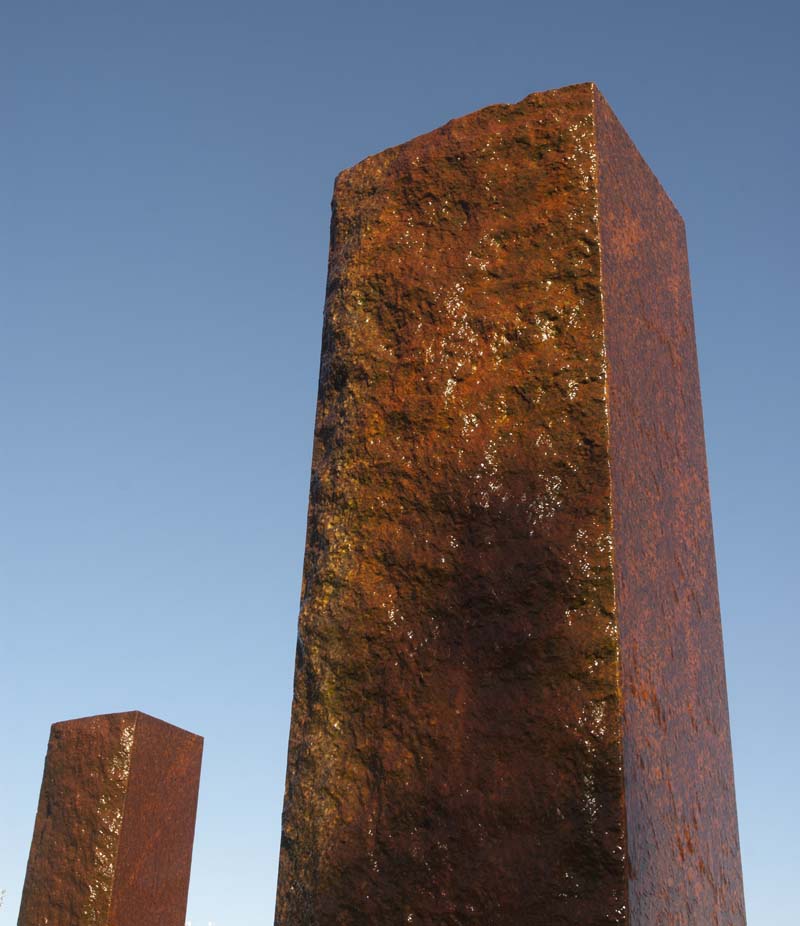
In Paris he did a portrait of Madame Pierre Gautreau, an young American woman from New Orleans. She was a rising star in Parisian High Society and her portrait caused a huge stir when it was unveiled. A huge stir of the wrong kind.

Sargent had painted her with one strap of her gown hanging down off her shoulder. This, along with her plunging neckline and powder-white skin gave the painting a sensual excitement that wasn’t acceptable at the time.

A photograph of the original painting of Madame X.

A photograph of the original painting of Madame X.

The repainted Madame X - her gown strap is back up on her shoulder.

The repainted Madame X – her gown strap is back up on her shoulder.

He re-did the painting with the strap in a more demure position – but the damage was done. Ms. Gautreau had to slink back to Louisiana to escape the social ridicule. Sargent had to flee to England to regain his reputation.

None of this has anything to do with the story – but it’s cool anyway. I’ve become a fan of Sargent because of this story, even though I’ve never been big on portraiture. I always stop and look at Dorothy whenever I visit the Dallas Museum of Art.

Dorothy, by John Singer Sargent, in the Dallas Museum of Art.

Dorothy, by John Singer Sargent, in the Dallas Museum of Art.

So, my advice is to read all of Stranger Things Happen – the other stories are just as odd, but in surprisingly different ways. Then go to the nearest good art museum and take a look at a Sargent – see what you can see in the eyes. It might be useful, help you remember things when you are stuck in limbo. We all will be there, sooner than we think.

I hope you enjoyed some of my month of short stories – it was fun and educational putting it together (though a surprising amount of work). Don’t know what I’ll do tomorrow… maybe a photograph.

Later.

I’ve been here for 3 days, and I’m trying to pretend that it’s just a vacation, like when we went to that island in that country. Santorini? Great Britain? The one with all the cliffs. The one with the hotel with the bunkbeds, and little squares of pink toilet paper, like handkerchiefs. It had seashells in the window too, didn’t it, that were transparent like bottle glass? They smelled like bleach? It was a very nice island. No trees. You said that when you died, you hoped heaven would be an island like that. And now I’m dead, and here I am.
—-Carnation, Lily, Lily, Rose, by Kelly Link

Short Story Day Thirty – Passion

30. Passion
Alice Munro
http://www.newyorker.com/archive/2004/03/22/040322fi_fiction

As we are in the ninth inning, the home stretch, of my month of short stories we come across Alice Munro. She is the master – the best of the best.

I have been voraciously reading Alice Munro for decades now… and she should be in my list of writers that I have read everything – but she writes so much (all short stories) that there is always more. Most of what she writes shows up first in the New Yorker – she is the quintessential New Yorker fictioner.

What she does is magical. Read her stories and pay attention to how she plays with time. There is usually several different time planes going on – complex, yet made clear by careful attention to detail. The story is often told by illuminating subtle changes in a character between fictional scenes that take place on different sides of a shift in the story. Often times this shift is never actually shown or described… merely inferred from what has scarred or uplifted (or both) the characters before and after. There are subtle connections across time and place – you have to look closely to figure them out – but they resonate deep in your mind as you read.

Today’s story, Passion, is pure Munro. A woman is looking back over a critical period of her life – how critical it was and in what way isn’t clear until the final sentence.

I didn’t do this on purpose – but it is very interesting to compare this story to yesterday’s – The Garden Party. Both are tales of class differences. But Passion – the Munro story – is the opposite… a mirror image, of Mansfield’s The Garden Party.

In this one, the protagonist is a poor girl that stumbles into contact with the wealthy. However, as occurs in yesterday’s tale – once in the other’s camp she is exposed to death, and is changed in complex and subtle ways. Both women (both about the same age) are smart, resourceful, and perceptive beyond their years and expectations and are relied upon to help keep things going smoothly. However, both learn that the world is a harder, more complicated, and dangerous place – with darkness, passion, and beauty all wrapped up and twined, twisted, and knotted together.

The wealthy Traverse family in today’s story is not as isolated or as heartless as the Sheridans in yesterday’s – but they are every bit as flawed and are quietly doomed.

Munro spells out this doom without embellishment or symbolism – she simply tells the story – with great skill. It’s perfect. It’s why she is the best.

She had thought that it was touch. Mouths, tongues, skin, bodies, banging bone on bone. Inflammation. Passion. But that wasn’t what she’d been working toward at all. She had seen deeper, deeper into him than she could ever have managed if they’d gone that way.

What she saw was final. As if she were at the edge of a flat dark body of water that stretched on and on. Cold, level water. Looking out at such dark, cold, level water, and knowing that it was all there was.

It wasn’t the drinking that was responsible. Drinking, needing to drink—that was just some sort of distraction, like everything else, from the thing that was waiting, no matter what, all the time.
—-Passion, by Alice Munro

Short Story Day Twenty-Nine – The Garden Party

29. The Garden Party
Katherine Mansfield
http://www.classicshorts.com/stories/TheGardenParty.html

This is day Twenty-nine of my Month of Short Stories – a story a day for June.

Katherine Mansfield was a writer from New Zealand that spent a large portion of her short life in Europe. She lived in the years around World War I. Her upbringing was very upper class (reflected in today’s story) but left that life behind for a bohemian existence. She hung out with some of the other great writers of the time like D.H. Lawrence and Virginia Woolf. She contracted tuberculosis and after years of illness she died at 34.

Today’s story is one of her later stories… and it’s one of the classics. When you first look at it what you see is a tale of class – the silly rich folks with their fancy smancy party, complete with cream puffs and a band, while down the lane the poor folks are dying. All this is true, and if it was all it would be a pretty good tale.

There’s more though, lots more. It’s a coming of age tale, with a twist. The young girl, Laura that has her first exposure to death… even to life outside of her garden party world – is modelled on the myth of Persephone. She visits the world of death and returns.

And the dead man that Laura sees – he is beautiful, untouched – he looks like he is sleeping. One of the turning points in the author’s life is when her beloved brother was killed in a grenade training accident in World War I. She said he was, “Blown to bits.”

So, here in a simple little story, we have issues of class, of life and death, of coming of age and the loss of innocence, and even the horrors of war. This complex tapestry – the end makes sense. Laura decides to tell us what life is… and she answers the only way she can.

There lay a young man, fast asleep – sleeping so soundly, so deeply, that he was far, far away from them both. Oh, so remote, so peaceful. He was dreaming. Never wake him up again. His head was sunk in the pillow, his eyes were closed; they were blind under the closed eyelids. He was given up to his dream. What did garden-parties and baskets and lace frocks matter to him? He was far from all those things. He was wonderful, beautiful. While they were laughing and while the band was playing, this marvel had come to the lane. Happy … happy … All is well, said that sleeping face. This is just as it should be. I am content.

But all the same you had to cry, and she couldn’t go out of the room without saying something to him. Laura gave a loud childish sob.

“Forgive my hat,” she said.
—-Katherine Mansfield, The Garden Party

Short Story Day Twenty-Eight – Pretty Boy

28. Pretty Boy
Richard Ford
http://www.guardian.co.uk/books/2005/jun/25/originalwriting.fiction5

This is day Twenty-eight of my Month of Short Stories – a story a day for June.

The cover of Richard Ford's novel - The Sportswriter.

The cover of Richard Ford’s novel – The Sportswriter.

One day, a while back… I remember I was at a crossroads, but I don’t remember what that was. Some sort of ridiculous existential panic. In adjusting my way of looking at the world, I decided to change what I was reading. That’s the sort of pitiful thing that I do. So I sat down with a fistful of recommended novels lists, and after a bit of seeking and thinking, I came up with The Sportswriter, by Richard Ford. I’m ashamed to admit that one reason was a strange, and probably perverse, fascination with the book’s cover.

So I bought the book and its much-ballyhooed sequel – Independence Day, and read them (the third novel in the Frank Bascome trilogy, The Lay of the Land, had not been published yet) in one gulp. I wasn’t sure what to think of the books…. They were very, very well-written – but I simply couldn’t get myself to care enough about Frank Bascome. I felt sorry for him – for the loss of his child – but his drowning in angst by simply living out the life of a New Jersey family man, sans family, wasn’t interesting enough. There didn’t seem to be enough there there.

Then, after a couple years, I stumbled across Richard Ford’s short stories… which were another deal altogether. More specifically, I read the collection Rock Springs. I found there was some meat on these bones. The stories in Rock Springs put Richard Ford in the category of Dirty Realism (this term was coined by Bill Buford of Granta – he said, “Dirty realism is the fiction of a new generation of American authors. They write about the belly-side of contemporary life – a deserted husband, an unwed mother, a car thief, a pickpocket, a drug addict – but they write about it with a disturbing detachment, at times verging on comedy. Understated, ironic, sometimes savage, but insistently compassionate, these stories constitute a new voice in fiction.”) – along with Raymond Carver, Tobias Wolff, Frederick Barthleme, Cormac McCarthy… and others. These are all writers I love and I was glad to find another one to read.

I read more about Richard Ford’s life – which I at first assumed was an Eastern, academic upbringing – to find he was born in Jackson, Mississippi, and lived a lot of places, including New Orleans (I think a person has to spend at least some time in New Orleans or he can’t fully understand humanity).

…..

Hmmmm…. That’s odd. While I was putting this together, I discoved that the story is in two parts and I had only read the first.

Here’s the second – Pretty Boy Part Two

Give me a few minutes to finish it up and I’ll get back to you.

…….

Ok, that was interesting. I think I liked the story better with the second half missing. There is a bit of action in the second half – but the characters are wooden and, in the end, it signifies nothing, or at least nothing much.

As a matter of fact, I wish I hadn’t read that second part. I think I’ll forget about it.

And so, he granted himself the year for his new money to take him someplace good. He told the two nice studious girls he’d been seeing since college that he was going away and maybe wouldn’t be back so soon. They each expressed regret. One drove him to the airport and kissed him goodbye. His family made no complaint.

In Paris, it was autumn, and he found a tiny, clean flat through a friend who knew a woman who did such things. It was light but noisy, so he was often out. He attended a beginners’ conversation class at the American Library, visited the American bookshop near where he rented in Rue Cassette. He read (for some reason) Thorstein Veblen and Karl Popper, but seemed to meet no one French. He declined dinner with the young business types from his class. He tried to speak, but found that if he spoke French to French men, they would answer him in English, which they wanted to practice.

—–Richard Ford, Pretty Boy

Short Story Day Twenty-Seven – From Hell’s Heart I Stab at Thee

27. From Hell’s Heart I Stab at Thee
Armando Vitalis
http://ubuntuone.com/6iBiMK1EvBCzdb8qqCgLdE

This is day Twenty-seven of my Month of Short Stories – a story a day for June.

A teacher once told me it was possible to make a living selling books that you had paid to have printed. This was decades before ebooks and online publishing. He said you could go around with cases of books and give talks or readings at book clubs, schools, and such and sell enough to get you through the day and on to the next stop. It would be a hardscrabble hand-to-mouth life… but it could be done.

I knew he was right, because I had met someone like that.

Nacogdoches, Texas, is a big town… or a small city in the deep piney woods of East Texas. I was there to deliver a talk on the effects of acid rain on the calcium cycle in red spruce forests at Stephen F. Austin University. My talk was over by noon and I had a hotel room for that night paid for by the University, and I was going to use it – so I had an afternoon to kill in Downtown Nacogdoches. There wasn’t much to do, but I wandered into some place off the square that sold antiques and notions – called The Runaway Mule.

There was a guy that seemed to be the owner, setting up folding chairs in a fan shape around a little worn wooden lectern. Nothing to do, I decided to help, and we chatted while we worked. I asked him about the name of his store.

“That’s a good question,” he said. “In 1912 a singing group called ‘The Six Mascots’ were singing in the opry house here. Someone rushed in and yelled that there was a runaway mule outside. The crowd left, figurin’ that the mule would be a better show that those singers. When they filed back in the head singer, Julius, was so pissed he let ’em have it. He was yellin’ stuff like, ‘Nacogdoches is full o’ roaches,’ and ‘the jackass is the flower of Tex-ass.’ Well, the crowd thought it was hilarious and the singers decided then and there to be comedians. That guy, Julius, changed his name to Groucho and they started goin’ by their family name, the Marx Brothers.”

That story seemed pretty far-fetched to me, but I had to admit it was a good one. We finished setting up the chairs. “What’s happening now?” I asked.

“Oh, the Nacogdoches Ladies Reading Society is having a meetin’.” the owner said. “Some writer I sure never heard of is coming in to try and sell some books.” He tapped a ratty looking cardboard box that had obviously been opened and re-sealed a few times, then pushed it under a folding table he had set up next to the lectern.

I thought this might be worth sitting in on, so I walked down and had a burger and shake a few doors down and came back in time for the Ladies Reading Society. Sure enough, I found the seats full of Texas matriarchs, gossiping and waving their programs to try and bat away the flies and heat.

Right on time, the author, Armando Vitalis appeared from the men’s room in the back of the store and took his place at the lectern. The writer was very tall and almost impossibly thin. His hair was thick, dark, long, and wild, with only a touch of gray starting to pepper his temples. He wore a light suit that was fashionable and expensive at one time but gone to shiny at the elbows and knees.

He introduced himself and went into a long story of how he had decided to become a writer while working as a bookkeeper at a foundry in Cleveland. He name dropped a few popular authors and expounded on their theories of fiction that he had pried from them during various parties at New York publishing houses. At hearing these famous names and stories of the exotic big city, the level of excitement of the Ladies Reading Society became noticeably higher – their faces would flush and their waving of programs went faster and more desperate.

Then Armando Vitalis did a couple of readings. First, he read an untitled short story that seemed to consist of a series of odd action-filled short scenes that seemed unconnected to each other. The women were confused, but eventually settled down in that way that folks sometimes do when they assume they are simply too uneducated and ignorant to understand what is being presented to them… but don’t want to admit it to anyone, even themselves.

Then he recited a scene from his new, as-yet unpublished novel, Laid With Iron Rails. It was an embarrassingly detailed love scene between an older woman and a much younger man. You could see the Reading Society ladies squirming, uncomfortable… but riveted nonetheless.

They all applauded with enthusiasm when he finished.

He sat at the folding table and commenced to autograph and sell copies of paperbacks he pulled from the ratty cardboard box and stacked on the table. The Nacodoches Reading Society lined up clutching their pocketbooks, waiting excited yet patient. Everyone bought at least one book. About half left with their purchases and the rest stayed behind, clumped together and talking in low tones, maybe hoping to get another chance to meet with the author.

I bought a copy of a novel, Game for His Crooked Jaw. I asked Vitalis to sign it “To Starbuck.” He glared at me, but I wanted him to know I recognized the quotes that he was using for his titles.

I never read the book. It was so poorly printed and cheaply bound, that it literally fell apart before I could get around to steeling myself up to diving into the thing.

The funny thing is, I did see Armando Vitalis one more time. That night, at the hotel bar, I saw him sitting at a table with the gray-haired, but remarkably well-preserved vice-president of the Nacodoches Ladies Reading Society. He seemed to be hitting a dark whiskey pretty hard while she sipped at a white wine. They were still there when I went back to my room.

There doesn’t seem to be any record of Armando Vitalis on the Internet anywhere. I don’t know how long he was able to keep up his dream of writing and selling his books. The only work I could find was this strange little short story From Hell’s Heart I Stab at Thee – which was published in a shoddy online zine called Handicapped by Laziness. The zine is long gone, but the link to the story still seems to work.

I’m not sure for how long.

She reached a point near the end of the market and was beginning to worry that her contact would not show. She was looking at a pyramid of strange, oblong, spiked fruits, nonchalantly resting her fingertips on one of the samples. She was trying to ignore the peddler that had sliced one open with a rusty machete and was offering her a sample of dripping purple flesh that gave off a pungent sour odor and was rapidly drawing an even thicker swarm of flies. Right then the top fruit in the pile exploded in the crack of a high powered bullet, spraying her with pieces of warm, sticky pulp and sending the crowd into a panicked frenzy.
—-Armando Vitalis, From Hell’s Heart I Stab at Thee