Short Story (Flash Fiction) Of the Day – Gingerbread, by Dafydd McKimm

And then Gretel, who had survived such horrors with him, taken in an instant by something so absurdly commonplace as a chill, skin ashen, her body racked with coughing, until she lay silent and still and he by her bedside alone, feeling like a helpless boy again.

—-Dafydd McKimm, Gingerbread

Today’s piece of short fiction explores the question, “What happens when the fairy tale ends?” Well, everyone doesn’t live happily ever after – at least in this case.

But there is still hope, there is still a future – as long as we are brave, and tough, and open to a new solution and a new future. It may not be happily ever after but it can be the best we can do.

Gingerbread, by Dafydd McKimm

from Flash Fiction Online


Short Story Of the Day (Flash Fiction) – Taylor Swift, by Hugh Behm-Steinberg

You’re in love; it’s great, you swipe on your phone and order: the next day a Taylor Swift clone shows up at your house. It’s not awkward, it’s everything you want.

—- Hugh Behm-Steinberg, Taylor Swift

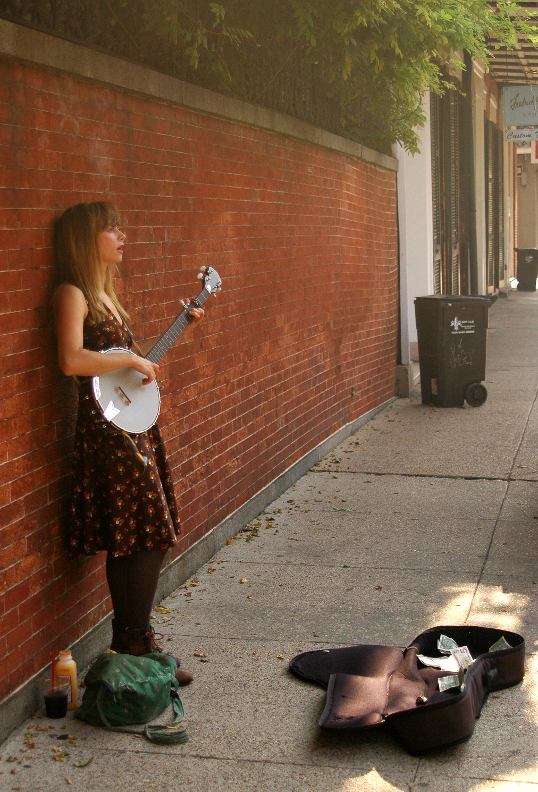
Banjo Player on Royal Street, French Quarter, New Orleans

Are you social distancing? Are you quarantined? What would be better than going online and ordering your own Taylor Swift?

A crackerjack piece of flash fiction. Click on the link and read it… it’s short and I know you have the time. That’s all we have right now is time. Ordinarily, I am not a big fan of writing in the second person… but in this case, it works. What do you think?

Read it here:

Taylor Swift, by Hugh Behm-Steinberg


From Electric Literature

Short Story (flash fiction) of the day – Bad Things Wrong by Barry Gifford

Roy and his mother managed to drag Spanky over the side and onto the floor, where he lay puking and gagging. Roy saw the remains of the reefer floating in the tub. Spanky was short and stout. Lying there on the bathroom floor, to Roy he resembled a big red hog, the kind of animal Louie Pinna had shoved into an industrial sausage maker. Roy began to laugh. He tried to stop but he could not.

—-Barry Gifford, Bad Things Wrong

Someone is having a bad day.

Somewhere, somehow last night while I was surfing around the internet I came across some photos from the David Lynch movie Wild at Heart. I read and discovered that the basic plot of the film was from a noorish novel by Barry Gifford – a writer I had never heard of.

He seems like the kind of writer you would like if you liked that kind of writer.

I’ll have to look for his books. His latest work is The Cuban Club. From the Publisher:

A masterpiece of mood and setting, character and remembrance, The Cuban Club is Barry Gifford’s ultimate coming-of-age story told as sixty-seven linked tales, a creation myth of the Fall as seen through the eyes of an innocent child on the cusp of becoming an innocent man.

Set in Chicago in the 1950s and early 1960s against the backdrop of small-time hoodlums in the Chicago mob and the girls and women attached to them, there is the nearness of heinous crimes, and the price to be paid for them. To Roy and his friends, these twists and tragedies drift by like curious flotsam. The tales themselves are koan-like, often ending in questions, with rarely a conclusion. The story that closes the book is in the form of a letter from Roy to his father four years after his father’s death, but written as if he were still alive. Indeed, throughout The Cuban Club Roy is still in some doubt whether divorce or even death really exists in a world where everything seems so alive and connected.

Sixty-seven linked tales – that sounds interesting. Today’s short story, from Barry Gifford’s website, seems to be one of the short tales – if not from the book, at least related to it.

Bad Things Wrong by Barry Gifford

It’s a short read but manages to cram a lot of hopelessness and terror in there – concentrated and merciless.


Short Story of the day – Button, Button by Richard Matheson

While she was stacking dishes, she turned abruptly, dried her hands, and took the package from the bottom cabinet. Opening it, she set the button unit on the table. She stared at it for a long time before taking the key from its envelope and removing the glass dome. She stared at the button. How ridiculous, she thought. All this furor over a meaningless button.

Reaching out, she pressed it down. For us, she thought angrily.

—-Richard Matheson, Button, Button

The button on the Maestro’s shirt – detail from “The Storm” a mural on Ace Parking Garage at 717 Leonard Street, Dallas, Texas

Sunday, I came out into the living room to eat some eggs that I had scrambled with a few beans and some sausage. The television was on and a series of old Twilight Zone episodes were playing from the Syfy channel. Right when I sat down I Sing the Body Electric – which was written by Ray Bradbury and adapted into a short story of the same name (I was familiar with it) was on.

(2 minute preview)

I love the old anthology television shows – Twilight Zone, The Outer Limits… especially Alfred Hitchcock Presents. First, it’s fun to spot famous actors – Twilight Zone was the Law and Order of its time. I Sing the Body Electric had Veronica Cartwright in it.

But what I really like are the stories. So many of these were written by famous and extremely skilled short story writers. I am amazed at the work.

Sure enough, the next episode was Mute, by Richard Matheson. He was an amazingly prolific pulpy writer and you have seen his work everywhere (probably best known for I Am Legend – made into several movies) – he wrote sixteen episodes of The Twilight Zone alone.

I looked for a copy of the short story Mute online, but couldn’t find one. I did find another Richard Matheson story however:

Button, Button by Richard Matheson

This is a famous story – the basis for a shitty Cameron Diaz move called The Box.

It was also made into an episode of The Twilight Zone – this time the 80’s incarnation.


The ending of the television is very different than the short story – not sure which I like better… at any rate, Richard Matheson wasn’t happy the Twilight Zone Version and used a pseudonym as the author. So read the story and watch the show. Which one do you prefer?

Actually, in looking around, I found something that I really liked… probably the most realistic take on the story.

This is Funny or Die’s version, which is genius:


Short Story of the Day (redux) – The Quest for “Blank Claveringi” by Patricia Highsmith

“I feel I stand in a desert with my hands outstretched, and you are raining down upon me.”
Patricia Highsmith, The Price of Salt

Illustration by Jean L. Huens for the Saturday Evening Post. Done for the short story “The Snails,” by Patricia Highsmith.

A long time ago – in 2012 I wrote a blog entry about a short story I remembered reading when I was a child.
The short story had scared the crap out of me when I first read it in 1967 (I would have been ten years old) in The Saturday Evening Post and it had never left my mind. In 2012 I did some web searching, found the story, and in a trip to the library found and read a couple of different versions of it.
Over the years since many people have hit that blog post searching for information on the story. It seems I wasn’t the only child frightened by this story of giant man eating snails.
The other day I finally found an online version of the story – someone has uploaded a PDF of the the version from Patricia Highsmith’s collection The Snail Watcher and Other Stories.
You can find the PDF here:
The Quest for “Blank Claveringi”
(Sorry, the PDF has been removed and the site now links to questionable material. If I find another copy, I’ll link it)
Andrew left a comment-
It’s one of the stories in “The Snail Watchers and other stories” and it’s available to borrow for 1 hour at archive.org – https://archive.org/details/snailwatcherothe0000high.
You have to sign up – but the Internet Archive is cool anyway – so now you can go read it. I’ve checked that book out, there are some other weird, worthy stories in it too. Thanks Andrew!
It’s a cool story – go read it.
Back in 2012, I wrote a bit of… I guess it would be fan fiction – a sequel to The Quest for “Blank Claveringi” – You can read that here:
I have wanted to write another sequel – a monster story about the National Guard fighting giant snails – sort of a Godzilla-type thing – The Attack of the “Blank Claveringi” – maybe I’ll write that over the weekend or sometime.
So little time.

Short Story (novella) of the day, The Situation by Jeff VanderMeer

My Manager was extremely thin, made of plastic,with paper covering the plastic. They had always hoped, I thought, that one day her heart would start, but her heart remained a dry leaf that drifted in her ribcage,animated to lift and fall only by her breathing. Some-times, when my Manager was angry, she would become so hot that the paper covering her would ignite, and the plastic beneath would begin to melt.

—-Jeff VanderMeer, The Situation

Art Deco mural from Fair Park in Dallas


The Situation, by Jeff VanderMeer

from Wired Magazine

About a year ago I started going to book club meetings at The Wild Detectives – a bookstore in Bishop Arts that features beer and coffee… a great place. Even though I don’t have much in common with the other readers and it’s really tough to get across town after work, I like to go. Actually, now that I think about it, the fact I don’t have much in common with the other readers is the best thing about going.

The book we will discuss the first Monday in February is The Dead Astronauts by Jeff VanderMeer. I’m cranking through the book and haven’t made up my mind yet. It’s very imaginative and well written but exceedingly weird. I like weird – but only if, at the end, there’s a point… some emotional connection. I’m not a big fan of weird for weird’s sake. I have a feeling that I will be a Jeff VanderMeer fan at the end.

I think that’s a good thing. It’s always good to find a new author isn’t it? Even though I have a ways to go on my Zola reading project and enough other books to… well, to fill up my rapidly declining lineup of years left.

Looking at other Jeff VanderMeer works there’s the Southern Reach Trilogy (I’ve seen the interesting movie Annihilation which was adapted from the first book in the trilogy) and I think those books will get added. Also there is the Borne novel which is set in the same insane world as The Dead Astronauts. That’s four more books to read. So little time, so many books.

As I was looking around for info (The Dead Astronauts is difficult enough I’m not worried about spoilers) on The Dead Astronauts and the Borne world I discovered an online short novella called The Situation. It is billed as a proto-Borne story – set in a preliminary version of that universe (are we reading about the origin of the giant bear named Mord?). So I sat down and read it.

And liked it. It is a sort-of comedy about the difficulty of surviving sane inside an evil bureaucracy. Quite a harrowing story. And well-worth the time and effort.

Shit. That means I’ll eventually have to read all those books. So many books, so little time.

Short Story of the Day – A Fight With a Cannon by Victor Hugo

A cannon that breaks its moorings suddenly becomes some strange, supernatural beast. It is a machine transformed into a monster. That short mass on wheels moves like a billiard-ball, rolls with the rolling of the ship, plunges with the pitching goes, comes, stops, seems to meditate, starts on its course again, shoots like an arrow from one end of the vessel to the other, whirls around, slips away, dodges, rears, bangs, crashes, kills, exterminates. It is a battering ram capriciously assaulting a wall. Add to this the fact that the ram is of metal, the wall of wood.

—-Victor Hugo, A Fight With a Cannon

Commemorative Air Force, Wings Over Dallas, Dallas, Texas

A FIGHT WITH A CANNON By Victor Hugo

All my life I have heard the phrase “A loose cannon” used to describe a person that, in some way or another, is dangerously out of control. Have heard it, as have you, thousands of times. I have never really thought about what it means.

Today’s short story A Fight With a Cannon by Victor Hugo explains what a loose cannon is and what it means in intricate, desperate, and horrific detail. Imagine a huge cylinder of metal, heavy and hard, on a carriage of wheels set loose unrestrained on a deck of a sailing ship on the high seas. It is a battering ram – full of random destructive motion. This is what a loose cannon is.

But what to do about it? And what to do after that? And after that? The story has the surprising solutions(s). Some people are not what they seem.  There is truly more than one kind of loose cannon.

Some helpful definitions:

Carronade – an obsolete naval gun of short barrel and large bore

Assignat – one of the notes issued as paper currency from 1789 to 1796 by the revolutionary government on the security of confiscated lands.

Chevalier – French History. the lowest title of rank in the old nobility.

Cascabel – a knoblike projection at the rear of the breech of a muzzleloading cannon.

Cross of Saint-Louis – The Royal and Military Order of Saint Louis was founded in 1693. The king would award the Cross of Saint-Louis to reward outstanding service to France. The recipient then became a “knight of Saint Louis”.

Ambuscade – an ambush.

Hammock-shroud – A poetical expression which derives its force from the fact that the bodies of sailors or other persons dying at sea are sewed up in hammocks and committed to the deep.
Short Story of the Day, The Peasant Marey, by Fyodor Dostoevsky

I liked to lie like that; a sleeping man is not molested, and meanwhile one can dream and think. But I could not dream, my heart was beating uneasily, and M.’s words, “Je haïs ces brigands!” were echoing in my ears.

—–Fyodor Dostoevsky, The Peasant Marey

The Wild Detectives in the Bishop Arts District.

Dallas Streetcar

Reunion Tower, taken from inside the Dallas Streetcar. On my way to Bishop Arts for a discussion of Gravity’s Rainbow.

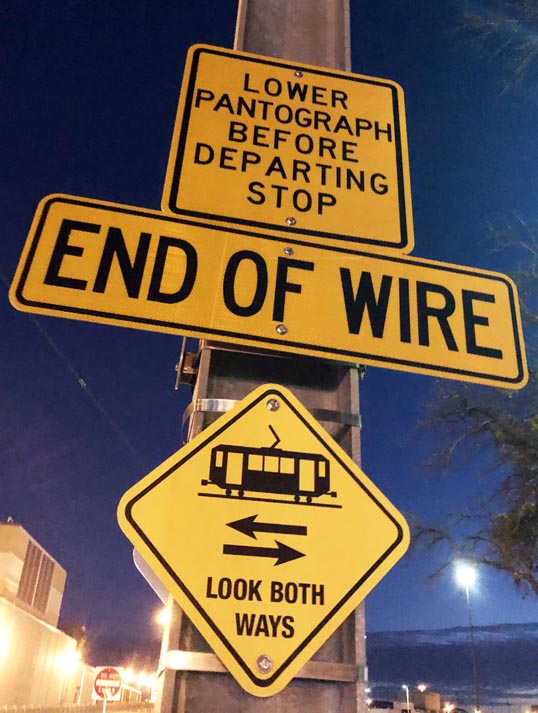
Signs at one end (downtown) of the Dallas Streetcar


Starting in January of this year, every Wednesday after work I took the DART train downtown, then rode the Streetcar to the Bishop Arts district – arriving at the bookstore The Wild Detectives. I was part of a group called the DRBC (Difficult Reading Book Club) and were slogging our way through Gravity’s Rainbow by Thomas Pynchon. It was a ton of fun, and when we finished up in the summer, it was announced that the next Difficult Book was going to be a trilogy by Virginia Woolf. I thought hard about it (even bought the books) but at the end decided that I didn’t want to give up the time to criss-cross the city… plus I had my own long/difficult reading project to complete (which I’m still working on after well over a year).

Today, though, I received an email outlining the next DRBC book – The Brothers Karamazov by Fyodor Dostoevsky. In theory, I read that book in college, but have no memory of it (at the time I was mixing literature and writing studies with Physical Chemistry classes – and the combination almost broke me) and suspect I might have made too liberal use of the study guides. But now, I want to read it, and read it in a diverse group, and maybe get a bit more out of it.

This will start up in January… sometime. In the meantime I thought I’d do some research on the deeper meaning of Dostoevsky’s work (without reading any of The Brothers Karamazov before it’s time) and maybe brushing up on some of his shorter works.

Thus, the short story of the day:

The Peasant Marey, by Fyodor Dostoevsky

available along with a number of Dostoevsky short stories at Project Gutenberg.

Here’s an audio version, if you prefer:

This is a (on the surface) simple story of a man in a Siberian Russian prison reminiscing about a slight incident from his childhood. There is a lot there beneath the surface, however. Worth the read.


Short Story of the Day – Chili’s Menu, by Cormac McCarthy by Justin Tapp

“They were watching, out there past men’s knowing, where stars are drowning and whales ferry their vast souls through the black and seamless sea.”
Cormac McCarthy, Blood Meridian, or the Evening Redness in the West

Transcendence, on the first night.

Today’s “short story” isn’t really a short story… it’s a satirical Chili’s Menu, written in the style of my (right now – though he has competition) favorite author, Cormac McCarthy.

From McSweeney’s

So, not really fiction… I’m not sure what the literary term for “literature written in the form of a fast-casual chain restaurant menu” is… whatever it is, this is it. And I enjoyed reading it.

If you don’t get where it is coming from, you haven’t read enough Cormac McCarthy. And you need to rectify that.


Short Story of the Day, Sticks by George Saunders

The first time I brought a date over she said: what’s with your dad and that pole? and I sat there blinking.

—- George Saunders, Sticks

Modern Art Museum of Fort Worth
Conjoined, Roxy Paine

George Saunders is a writer that amazes me. If I could write like any one person I would want to write like him (though I have said the same thing about  Raymond Carver… so, well, maybe it’s a tie).

I’ve written about stories by Saunders before:

Today’s short story is a one minute piece of flash fiction that contains an entire life full of frustration and regret. It’s funny and sad, in the terrible way that only funny things can be so sad. It’s called Sticks.


You can read it here: Sticks, by George Saunders

In the introduction to the published version in “Story” magazine he explains how he developed the idea for the story (if you follow my link above you can find out for yourself). That short explanation is as amazing as the fiction itself. We all see things along the road, especially along our commute to work, that become part of our lives so intimately that they disappear. Still, your imagination is filled with these things and the stories they generate. Only a genius like George Saunders can imagine something so poignant and unforgettable, so buoyant and unforgivable.

Modern Art Museum of Fort Worth