A Month of Short Stories 2017, Day 30 – SCHOOL by Melissa Goodrich

Sundance Square, Fort Worth, Texas

Over several years, for the month of June, I wrote about a short story that was available online each day of the month…. It seemed like a good idea at the time. My blog readership fell precipitously and nobody seemed to give a damn about what I was doing – which was a surprising amount of work.

Because of this result, I’m going to do it again this year – In September this time… because it is September.

Today’s story, for day 30 – SCHOOL by Melissa Goodrich
Read it online here:
SCHOOL by Melissa Goodrich

They eat spicy Cheetos and Ramen noodles, have the kind of beautiful faces that crack rearview mirrors.
—-Melissa Goodrich, SCHOOL

We were talking today, like we often do, about Game of Thrones, gratuitous nudity, and little person sex. I said, as I often do, “The problem with the world that Game of Thrones is set in, is that everybody’s life is miserable. From the most destitue peasant to the kings of the world, nobody is happy and life is so difficult and, despite the gratuitous nudity and little person sex, so joyless… If I lived there, I’d just kill myself, and anyone else would too.”

Someone else said, as they often do, “It’s like the life we live today.”

I replied, “No, we don’t live in miserable times… we live in the crazy times.”

Interview with Melissa Goodrich:

Is writing more of a blessing or a curse?
God. Both. I usually think I’m not writing enough. I’m haunted by those people who write every day, and run ten miles, and read new books and journals, and eat organically nurtured produce…I’m still a cereal-eater, a sleeper-inner, a person who writes slowly and then binge-watches TV.

But the blessing is I trust my voice now. And I trust that writing should be joyous and surprising, and that none of it is wasteful.
—-from Cultured Vultures

Kyde Warren Park, Dallas, Texas

Griffin Welding

“All happiness depends on courage and work.”
― Honoré de Balzac

Governor Nicholls St, New Orleans

The First Time

New Orleans Writing Marathon

Day Two, Tuesday, July 11, 2017

One snippet of what I wrote that day.

The first time Jambalaya Joe cooked for us he made – of course – jambalaya. A great black cast iron kettle, suspended over a ring of roaring blue gas jets fed by a rusty steel bottle mounted on his trailer, bubbled furiously and steamed like a witch’s cauldron into the humid Louisiana air.

Rice, mysterious lumps of meat, and bags of vegetables went in – to roil and cook.

Then Jambalaya Joe looked around as if to make sure nobody was watching (though we all were – ravenous after a long, hard working day) extracted a large tin box from a stained canvas bag, lifted it over the boiling pot, and opened the lid with the creak of old hinges.

A cloud of red spice tumbled out to disappear into the boil below. It changed the color of the stew from a flat brown to a fiery red.

“That’s his famous secret spice mix,” said some random stranger next to me, complete with a wink and a subtle elbow to the ribs.

Jambalaya Joe cooked the evening meal for us every night, hired by The Company to feed the work crew until the job was finished.

He made something different each night. Jambalaya became gumbo, then red beans and rice, Irish stew, chili, then spaghetti and meatballs… on and on – visiting every cuisine of the world. I never imagined a cast-iron kettle could be so versatile.

But every meal he dumped the exact same tin box filled with the same secret spice mix into the pot.

Looks Through A Closed Window

“Looking from outside into an open window one never sees as much as when one looks through a closed window. There is nothing more profound, more mysterious, more pregnant, more insidious, more dazzling than a window lighted by a single candle. What one can see out in the sunlight is always less interesting than what goes on behind a windowpane. In that black or luminous square life lives, life dreams, life suffers.”
― Charles Baudelaire

Window washing job I couldn't do Downtown Dallas, Texas

Window washing job I couldn’t do
Downtown Dallas, Texas

I Don’t Like Work — No Man Does

“I don’t like work–no man does–but I like what is in the work–the chance to find yourself. Your own reality–for yourself not for others–what no other man can ever know. They can only see the mere show, and never can tell what it really means.”
― Joseph Conrad, Heart of Darkness

Downtown Dallas, Texas

Downtown Dallas, Texas

A Month of Short Stories 2015, Day ten – Hollow

The last two years, for the month of June, I wrote about a short story that was available online each day of the month… you can see the list for 2014 and 2015 in the comments for this page. It seemed like a good idea at the time. My blog readership fell precipitously and nobody seemed to give a damn about what I was doing – which was a surprising amount of work.

Because of this result, I’m going to do it again this year.

Today’s story, for day ten – Hollow, by Breece D’J Pancake

Read it online here:

Hollow

So again today we have a story about work – about work under desperate conditions. Like yesterday‘s The Zero Meter Diving Team we have young men working in the energy industry. It is costing them their lives.

Hollow is the story of a West Virginia coal miner, Buddy. Things aren’t going very well for Buddy, he drinks too much, his lungs are shot, and his girl is looking to leave him and go back to life as a prostitute. The only thing he has going good is that the coal seam is unexpectedly thickening, promising some extra cash.

The author of the story, Breece D’J Pancake, grew up in the doom of the Appalachian coal mines. He shot himself at the age of twenty-six, at the time his first stories were being published.

At the end of Hollow – Buddy tries for a mental escape from his inescapable troubles by going on a hunt. He kills and skins his prey in an expert, methodical fashion. But there is something watching him that he is unaware of.

Something deadly… something waiting.

A Month of Short Stories 2014, Day 4 – Orientation

A year ago, for the month of June, I wrote about an online short story each day for the month. It seemed like a good idea at the time. My blog readership fell precipitously and nobody seemed to give a damn about what I was doing – which was a surprising amount of work.

Because of this result, I’m going to do it again this year.

Today’s story, for day Four – Orientation, by Daniel Orozco.

Read it online, here:

Orientation: A Short Story by Daniel Orozco

I remember when my kids were little I told them to watch a certain movie – because it had great wisdom to pass on to their growing and impressionable brains. The movie was Office Space – and I was proud of my fatherly wisdom in getting them educated in the ways of the world.

When the movie was over my son said to me, “Jeez Dad, you are so lucky that you don’t have a job like that.”

“Of course I do,” I said to him, “as a matter of fact, everybody has a job like that.”

There is truly great truth and wisdom in Office Space. I’m not talking about the romance where the nerdy guy ends up with Jennifer Aniston – that never happens. And I’m not talking about the part of the plot where they put in a virus and steal tiny bits of pennies on every transaction – that never…. well, actually it did happen – but that’s not important.

I’m talking about the TPS reports. Life is all about how you deal with the TPS reports and the humiliation that comes with having to fill them out.

As a matter of fact, in real life the TPS reports aren’t important – they are sort of a workplace MacGuffin – it’s really about the humiliation, pure and simple. Being humiliated in front of your “superiors” is the only profitable activity in the workforce that can’t be automated or outsourced.

Once you get to the point where your self-respect is a forgotten ghost of the past, your dreams have been ground to dust, and you are willing to do whatever degrading abasement is required to get through the day… you discover there is good money in that.

And that brings us to today’s story, Orientation. In it a new employee, you, is getting the introduction to a new job with your workspace, and most importantly, your cow-orkers.

The office is, of course, a horribly dehumanizing place. But the cow-orkers are all all too human. Everybody has a passionate crush on everybody else – though never reciprocally – so the place becomes a vicious circle of unrequited desire and lust.

Everybody has their quirks – from hiding in the ladies room now and then to an actual serial killer. These are open secrets, though nobody ever talks about them. Except during orientation.

It’s ultimately an uplifting story. Flawed humanity oozes up through the sea of cubicles like a flawed template through a Powerpoint Presentation.

Those are the offices and these are the cubicles. That’s my cubicle there, and this is your cubicle. This is your phone. Never answer your phone. Let the Voicemail System answer it. This is your Voicemail System Manual. There are no personal phone calls allowed. We do, however, allow for emergencies. If you must make an emergency phone call, ask your supervisor first. If you can’t find your supervisor, ask Phillip Spiers, who sits over there. He’ll check with Clarissa Nicks, who sits over there. If you make an emergency phone call without asking, you may be let go.These are your in- and out-boxes. All the forms in your inbox must be logged in by the date shown in the upper- left- hand corner, initialed by you in the upper-right-hand corner, and distributed to the Processing Analyst whose name is numerically coded in the lower-left-hand corner. The lower-right-hand corner is left blank. Here’s your Processing Analyst Numerical Code Index. And here’s your Forms Processing Procedures Manual.

What I learned this week, December 07, 2013

The 10 most crucial books of the year.


The 20 Best Craft Breweries of 2013


What do you call a machine that hangs out with musicians?


100 Notable books of 2013 – From the New York Times, edited (reduced down) by me.

FICTION & POETRY

THE ACCURSED. By Joyce Carol Oates. (Ecco/HarperCollins, $27.99.) Oates’s extravagantly horrifying, funny and prolix postmodern Gothic novel purports to be the definitive account of a curse that infected bucolic Princeton, N.J., in 1905 and 1906.

BLEEDING EDGE. By Thomas Pynchon. (Penguin Press, $28.95.) Airliners crash not only into the twin towers but into a shaggy-dog tale involving a fraud investigator and a white-collar outlaw in this vital, audacious novel.

THE CIRCLE. By Dave Eggers. (Knopf/McSweeney’s, $27.95.) In a disturbing not-too-distant future, human existence flows through the portal of a company that gives Eggers’s novel its title.

CLAIRE OF THE SEA LIGHT. By Edwidge Danticat. (Knopf, $25.95.) Danticat’s novel is less about a Haitian girl who disappears on her birthday than about the heart of a magical seaside village.

THE COLOR MASTER: Stories. By Aimee Bender. (Doubleday, $25.95.) Physical objects help Bender’s characters grasp an overwhelming world.

THE DINNER. By Herman Koch. Translated by Sam Garrett. (Hogarth, $24.) In this clever, dark Dutch novel, two couples dine out under the cloud of a terrible crime committed by their teenage sons.

DIRTY LOVE. By Andre Dubus III. (Norton, $25.95.) Four linked stories expose their characters’ bottomless needs and stubborn weaknesses.

DISSIDENT GARDENS. By Jonathan Lethem. (Doubleday, $27.95.) Spanning 80 years and three generations, Lethem’s novel realistically portrays an enchanted — or disenchanted — garden of American leftists in Queens.

DOCTOR SLEEP. By Stephen King. (Scribner, $30.) Now grown up, Danny, the boy with psycho-intuitive powers in “The Shining,” helps another threatened magic child in a novel that shares the virtues of King’s best work.

DUPLEX. By Kathryn Davis. (Graywolf, $24.) A schoolteacher takes an unusual lover in this astonishing, double-hinged novel set in a fantastical suburbia.

THE FLAMETHROWERS. By Rachel Kushner. (Scribner, $26.99.) In Kushner’s frequently dazzling second novel, an impressionable artist navigates the volatile worlds of New York and Rome in the 1970s.

THE GOLDFINCH. By Donna Tartt. (Little, Brown, $30.) The “Goldfinch” of the title of Tartt’s smartly written Dickensian novel is a painting smuggled through the early years of a boy’s life — his prize, his guilt and his burden.

THE GOOD LORD BIRD. By James McBride. (Riverhead, $27.95.) McBride’s romp of a novel, the 2013 National Book Award winner, is narrated by a freed slave boy who passes as a girl. It’s a risky portrait of the radical abolitionist John Brown in which irreverence becomes a new form of ­homage.

A GUIDE TO BEING BORN: Stories. By Ramona Ausubel. (Riverhead, $26.95.) Ausubel’s fantastical collection traces a cycle of transformation: from love to conception to gestation to birth.

I WANT TO SHOW YOU MORE: Stories. By Jamie Quatro. (Grove, $24.) Quatro’s strange, thrilling and disarmingly honest first collection draws from a pool of resonant themes (Christianity, marital infidelity, cancer, running) in agile ­recombinations.

MADDADDAM. By Margaret Atwood. (Nan A. Talese/Doubleday, $27.95.) The survivors of “Oryx and Crake” and “The Year of the Flood” await a final showdown, in a trilogy’s concluding entry.

METAPHYSICAL DOG. By Frank Bidart. (Farrar, Straus & Giroux, $24.) To immerse oneself in these poems is to enter a crowd of unusual characters: artistic geniuses, violent misfits, dramatic self-accusers (including the poet himself).

THE SON. By Philipp Meyer. (Ecco/Harper­Collins, $27.99.) Members of a Texas clan grope their way from the ordeals of the frontier to celebrity culture’s absurdities in this masterly multigenerational saga.

THE SOUND OF THINGS FALLING. By Juan Gabriel Vásquez. Translated by Anne McLean. (Riverhead, $27.95.) This gripping Colombian novel, built on the country’s tragic history with the drug trade, meditates on love, fate and death.

TENTH OF DECEMBER: Stories. By George Saunders. (Random House, $26.) Saunders’s relentless humor and beatific generosity of spirit keep his highly moral tales from succumbing to life’s darker aspects.

WANT NOT. By Jonathan Miles. (Houghton Miff­lin Harcourt, $26.) Linking disparate characters and story threads, Miles’s novel explores varieties of waste and decay in a consumer world.

NONFICTION

THE AMERICAN WAY OF POVERTY: How the Other Half Still Lives. By Sasha Abramsky. (Nation Books, $26.99.) This ambitious study, based on Abramsky’s travels around the country meeting the poor, both describes and prescribes.

THE CANCER CHRONICLES: Unlocking Medicine’s Deepest Mystery. By George Johnson. (Knopf, $27.95.) Johnson’s fascinating look at cancer reveals certain profound truths about life itself.

ECSTATIC NATION: Confidence, Crisis, and Compromise, 1848-1877. By Brenda Wine­apple. (Harper, $35.) A masterly Civil War-era history, full of foiled schemes, misfired plans and less-than-happy ­endings.

THE FARAWAY NEARBY. By Rebecca Solnit. (Viking, $25.95.) Digressive essays, loosely about storytelling, reflect a difficult year in Solnit’s life.

FIVE DAYS AT MEMORIAL: Life and Death in a Storm-Ravaged Hospital. By Sheri Fink. (Crown, $27.) The case of a surgeon suspected of euthanizing patients during the Katrina disaster.

THE GUNS AT LAST LIGHT: The War in Western Europe, 1944-1945. By Rick Atkinson. (Holt, $40.) The final volume of Atkinson’s monumental war trilogy shows that the road to Berlin was far from smooth.

THE RIDDLE OF THE LABYRINTH: The Quest to Crack an Ancient Code. By Margalit Fox. (Ecco/HarperCollins, $27.99.)Focusing on an unheralded but heroic Brooklyn classics professor, Fox turns the decipherment of Linear B into a detective story.

THE SKIES BELONG TO US: Love and Terror in the Golden Age of Hijacking. By Brendan I. Koer­ner. (Crown, $26.) Refusing to make ’60s avatars of the unlikely couple behind a 1972 skyjacking, Koerner finds a deeper truth about the nature of extremism.

THE SLEEPWALKERS: How Europe Went to War in 1914. By Christopher Clark. (Harper, $29.99.) A Cambridge professor offers a thoroughly comprehensible account of the polarization of a continent, without fixing guilt on one leader or nation.

THOSE ANGRY DAYS: Roosevelt, Lindbergh, and America’s Fight Over World War II, 1939-1941. By Lynne Olson. (Random House, $30.) The savage political dispute between Roosevelt and the isolationist movement, presented in spellbinding detail.

TO SAVE EVERYTHING, CLICK HERE: The Folly of Technological Solutionism. By Evgeny Morozov. (PublicAffairs, $28.99.) Digital-age transparency may threaten the spirit of democracy, Morozov warns.

THE UNWINDING: An Inner History of the New America. By George Packer. (Farrar, Straus & Giroux, $27.) With a nod to John Dos Passos, Packer offers a gripping narrative survey of today’s hard times; the 2013 National Book Award winner for nonfiction.


Mentally Strong People: The 13 Things They Avoid


5 Jobs with the Worst Bosses

Between Candy and I, we have three of the five covered.


Inside the Box

People don’t actually like creativity.

Arc

Welder outside the Plaza of the Americas, Dallas, Texas

plaza2

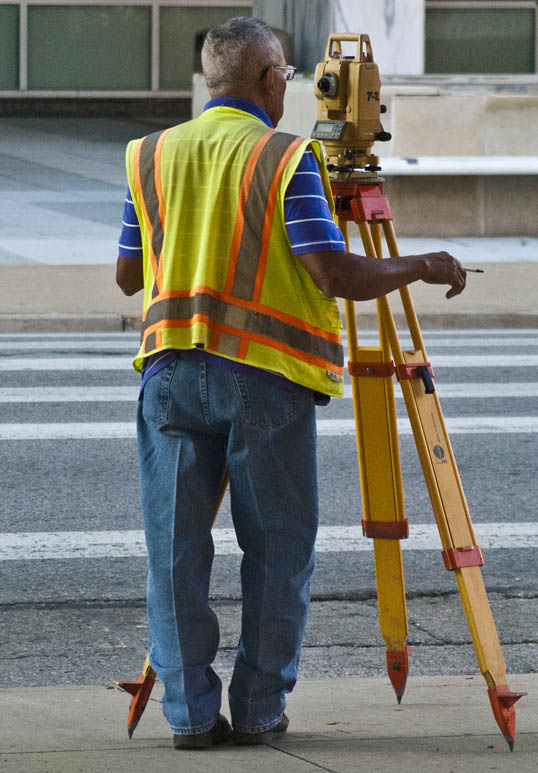
Always overlooked is the beauty of work. Every day we walk, move, and live on, under, and around steel welded by unknown men wearing heavy dark masks to protect them from the rays of the arc.

He wields the power that melts steel, joins the strong, flickering and cracking in blinding plasma, high voltage, matter reduced to its most elemental stage.

And all he wants is his paycheck and to go home. And high above, the skyscraper grows higher and higher.

Where I Used to Work

Construction going up

When I first moved to Dallas, in 1981, my first job was downtown. I remember the quiet thrill of riding the bus into the forest of skyscrapers every morning – it was an exciting time. I felt that something was really happening – I wasn’t sure what it was, but it was something (I still don’t know what it was, and am pretty sure it wasn’t anything after all).

For a year or so my office was in the Kirby Building on Main Street. The interesting thing about that is a year earlier I had visited Dallas and had seen the Kirby Building from the Adolphus Hotel and wondered to myself, “What would it be like to work in a building like that?” It was a complete coincidence that I found myself toiling away in that very same space only a year later. The Kirby was a grand old place, much too ornate for a whippersnapper like myself and after awhile we moved to less expensive digs.

One thing I remember about the Kirby is that it had old fashioned carpets (they might have been wool) and on dry winter days you had to walk around with a key in your hand to touch the heavy brass doorknob and ground yourself or the static spark would leap out like Lilliputian lightning and shock the crap out of your fingertips whenever you would open a door. An odd thing to remember after all that time, but you don’t forget that much pain easily.

In the decades since, the Kirby Building has been converted into condominiums. I don’t know if they put in new carpet – I suppose they would have to. I hope it is conductive and non-static.

We moved across downtown to another venerable old edifice, this one not so ornate. It was the Cotton Exchange Building. It was like working in a time warp – they had a cotton trading floor and a restaurant on the ground floor that had not changed a bit since the fifties. We were afraid to eat the salad dressing.

I loved working there. These were the salad days in Dallas and I could watch the high rise buildings going up all around. They sprouted like giant glass asparagus from every available scrap of space. I loved to note the various construction techniques and architectural details – mostly how they made the shape such that they had the maximum number of corner offices. It was a cool place.

But all good things must pass and the Cotton Exchange building was too old and not profitable enough. To prepare for demolition they stripped a modern tacky exterior off and found a classic deco building underneath. There was some talk of preservation, but it was too little, too late.

They imploded the building. I thought about going down there to watch the old lady collapse under the thumb of the dynamite – but it was too early in the morning and I told myself I preferred to remember it as it was. For decades the lot sat vacant and I wondered why they had blown it up.

Now, finally, there is construction. Across the street the First Baptist Church is undergoing a massive renovation and the place of the old Cotton Exchange is being used… as a parking garage. I walked by a while back and took a couple of pictures.

I’m a little disappointed that the beloved old Cotton Exchange has been reduced to a spot for a garage… but I guess at least it is something. People have to park somewhere.

Even Baptists.

The new church across the street.