Die of a Sort of Creeping Common Sense

“Nowadays most people die of a sort of creeping common sense, and discover when it is too late that the only things one never regrets are one’s mistakes.”
― Oscar Wilde, The Picture of Dorian Gray

Sculpture, Tree welded from cable, DCCCD Bill J. Priest Institute for Economic Development, Dallas, Texas

Oblique Strategy: Honor thy error as a hidden intention

After a long day of not getting much done I found myself bereft of ideas. My computer has thousands of text files that I have typed up to remember things, going back twenty years, and I decided to peruse them and see if I could find something useful.

I came across this quote about a Chekhov short story by one of my favorite writers, Tobias Wolff:

There’s a wonderful story of his about a soldier who’s returning from Manchuria, dying on a troop ship, but too ignorant to realize he’s dying. He was a brute, and that comes through, but he also has a very tender side. So he dies, in this state of longing and unredeemed ignorance, and most stories would end there. But Chekhov has the burial at sea, and then he follows the body, the weighted body going down and down and down. And a shark comes up, and nudges it, and swims away. And then he moves the vision back up to the sea and the sky where just at that moment the sun is breaking through the clouds and he talks about the light dancing on the water — and I’m trying to get this right — with a sort of joy for which there is no word in the language of men. So you get this tragic thing, this man dying in complete ignorance, a man with all the goodness in his heart that was never realized, so you have that incredible focus on the individual. And then suddenly he opens it up so we can see where we fit into this and how small it is. It doesn’t diminish your feeling for the character, but it gives you a sense of the finitude of our duration here and our problems. He’s an amazing writer. I love Chekhov. I could go on all day about him.

What an amazing story review. I, too, love Chekhov, but I doubt that the story will be as good as this review.

I don’t know, maybe it’s better. A quick Google search and I found the name of the story is Gusev.

It’s readily available online. Here’s one translation:

Gusev by Anton Chekhov, translated by Constance Garnett

I’m going off to read it now – I suggest you do likewise.

Beer and Batuman

“I found myself remembering the day in kindergarten when the teachers showed us Dumbo, and I realized for the first time that all the kids in the class, even the bullies, rooted for Dumbo, against Dumbo’s tormentors. Invariably they laughed and cheered, both when Dumbo succeeded and when bad things happened to his enemies. But they’re you, I thought to myself. How did they not know? They didn’t know. It was astounding, an astounding truth. Everyone thought they were Dumbo.”
― Elif Batuman, The Idiot

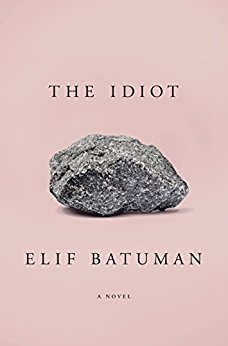
The Idiot, by Elif Batuman

Oblique Strategy: You are an engineer

In my struggle to live life outwardly, I spotted an event on Facebook that looked interesting. There was going to be a Book Club discussion at The Wild Detectives in Bishop Arts. I love that place – named after a Roberto Bolaño novel – it has a carefully curated collection of books, coffee and beer. What else do you need? On the weekends, they turn the wifi off – so people will be forced to talk to each other.

What could be better than to meet in a place like that and talk about a book?

The selected tome was The Idiot by Elif Batuman. The book is a bildungsroman about a ninteen-year-old woman attending her first year at Harvard.

I only had a little over a week before the meeting so I set up a spreadsheet with the number of pages per day I had to read. I have a terrible confession to make. I had a nice heavy hardback copy and the Kindle version. I never picked up the physical book. The new Paperwhite is simply too good.

I’m sorry.

The book was very interesting. Terribly well-written, it was unique in that the protagonist, Selin, was the most passive main character I have ever read in a novel. She drifts along, only slightly buffeted by life. Reading about her, I had the image of a person sliding down a featureless sheet of ice, silently observing the scenery go by (in very great and subtle detail).

So my feelings on the novel were mixed. It was interesting in that this woman’s life in her freshman year was incredibly different than mine (in a bildungsroman you can’t help but compare the protagonists experiences to your own) – for example: sex, drugs, and rock and roll make no significant appearance in her life at all.

One interesting aspect of the novel is that it takes place at the very beginning of the internet age: Selin is confused at first by this email thing – until she embraces it and has the most significant relationship with a slow email conversation with someone she met in Russian class.

The Wild Detectives is way across town from my ‘hood and I fought through the traffic after work, arriving early enough for a preliminary beer (Texas Ale Project‘s Fire Ant Funeral – if you are interested).

I really enjoyed the discussion. We started talking about the cover (I never even noticed there was a rock on the cover). Talking about the email, someone brought up that it was like letter writing in the time of classic Russian Novels (like Dostoevsky’s own version of The Idiot) people would write letters to each other, the distance and time separating the two adding a surreal aspect to a relationship.

A very nice way to wile away an evening.

The next novel we will discuss is The Seventh Function of Language by Laurent Binet. I bought a hardback copy at the bookstore – I’ll avoid temptation and not buy the Kindle version. We won’t meet until January, so I won’t need a spreadsheet to egg on the pages.

One Star Amazon Reviews of Cloud Atlas

One of the soul’s great tragedies is to execute a work and then realize, once it’s finished, that it’s not any good. The tragedy is especially great when one realizes that the work is the best he could have done. But to write a work, knowing beforehand that it’s bound to be flawed and imperfect; to see while writing it that it’s flawed and imperfect – this is the height of spiritual torture and humiliation. Not only am I dissatisfied with the poems I write now; I also know that I’ll be dissatisfied with the poems I write in the future.

All we can be certain of when we write is that we write badly; the only great and perfect works are the ones we never dream of realizing.
—-Fernando Pessoa, The Book of Disquiet

Falling Water Fountain, Dallas Arboretum

I read somewhere where someone had listed a bunch of one-star Amazon reviews of one of their favorite books. Interesting. “Cloud Atlas” is one of my favorites… one that comes to mind. I loved it and was enthralled. However, I can imagine it isn’t for everyone.

And I am right.

Avoid it if you value your time
Cloud Atlas is one of those book you just drag yourself through page after page waiting for them to get interesting only it never does. It just drags and and drags and drags. It has these stories that never really come to a conclusion and are totally unrelated which are tied together by a flimsy piece of twine ready to snap at the first breeze.

I had to “slog” through it…
I read a lot of fiction, and this is the worst book I’ve read in a long time. The plot (was there one?) was impossible for me to follow. The book did not ” flow” either. I really did not like this book and only finished reading it to see if it would “take off”, which it never did.

Could not get past the first 200 pages
I have previously read two Mitchell books and liked them both, to a degree, but this one just bored me to tears in its first 200 pages. Maybe the stories conclude in the second half, but who cares? There is not one character in the first four stories that even remotely interests me. And the minutia of dialog and detail is downright tedious. Life is too short to waste hours on a book that just doesn’t make any sense for hundreds of pages. Sorry, but awards aside, this one really is a gimmick in search of a plot.

Not worth the read
While I did enjoy the overall arch of the story and how all of the characters interacted with each other, portions of this story dragged on a bit. I kept reading under the general impression that it would get better, but it did not.

Very tough to read, even harder to like
The story, which is not very interesting, is written in the first person. This means the dialogue is not easy to follow. But, this is probably good because the language changes with the time period of the main character. The 18th century language at least made sense, but when the story moves into the apocalyptic future and the author presents future dialects the language becomes nonsense.

The world is dying, but we never find out why. The big revelation is that some people will treat other people badly if it makes their life easier. Still this could have been interesting if there was a single character I could identify with. For me this story is a lot like The Road, a grim tribulation for the reader.

waste of time
So…I bought this book because I hated the movie so much. But they made a movie out of it, after all, so I figured there must be something to it that just didn’t translate well into film.

Well, I was wrong. I knew in the first 90 seconds into this book that it was unreadable. Still, I soldiered ahead, thinking maybe it was just one of those books that takes a while to get into. Nope. I’m still angry that I wasted an entire night trying to slog through this mess. Thank goodness it was only one night of psychological torture.

Loved it….at first
I was very excited to get Cloud Atlas for my Kindle. Dived right in and loved the first third of the book. Extraordinary writing; Mitchell was weaving a spellbinding tale. Then I hit “the wall” with the chapter on Sonmi. The book turned toward preachiness and difficult-to-follow language and structure. I saw where it was going so I slogged through the chapter hoping for better. The next chapter was worse, mega-preachy and really hard to follow. It was like Mitchell put down a challenge to readers to get through it, and while he was at it bludgeoned us with stuff that made me feel like I was sitting through a basic, and boring, philosophy class. I skimmed that chapter, then gave up. Made it about halfway through, but by that time I didn’t care how it ended. Sorry Mr. Mitchell.

Waste of TimeI have read a few really bad books in my day and this one is one of the worst. The author writes like Herman Melville with a very bad case of ADD. I knew about the multiple stories and the time periods covered prior to starting the book and I expected it to be a difficult just because of this ambitious goal. What I did not expect was the multiple thoughts and vectors the author would take in the same paragraph throughout the book. It was extremely difficult to follow mainly because the book is written so poorly. It wasn’t a bad story and it seems that the author had great intentions with the story line, but the writing style is so bad that it completely detracts from the story and makes the book impossible to enjoy. There is a lot of detail and a great deal of description, but in far too many paragraphs throughout the book, the author goes from one thought to another, one time period to another, one character to another and these numerous vectors within the same paragraph are extremely hard to follow. Especially when the author makes no attempt to tie his thoughts together in the ensuing paragraphs.

One of the Worst Recommendations I’ve Received
I almost put this book down I was so frustrated with it. The only thing it has going for it is that the author successfully writes in six different styles, all accurate to the time period the stories are set in. However, I feel that it is poorly written and poorly executed. The idea of splitting the six stories in half and having them “fold in on each other” sounded clever when it was explained to me, but reading it was a different matter entirely. Since the stories were split up I lost interest in the characters and had a hard time remembering who was who when I got back to the second half of the stories. Many of the characters are stupid or unsympathetic. Also, the whole idea of reincarnation, which is supposed to drive this book, really fails in the stories. The Warner Brothers site claims that the book/movie “explores how the actions and consequences of individual lives impact one another throughout the past, the present and the future.” But, the characters do not impact the lives of their future reincarnations at all. They learn absolutely nothing from their past experiences. Also, at one point near the end of the novel the author flat out explains his title to the reader, even though it was already abundantly obvious (to anyone with a brain) why he named it Cloud Atlas. If you have to explain the title of the novel within the novel you have failed. If you have to outright ask your reader whether your title is “revolutionary or gimmicky” the answer is already pretty obvious.

It’s too late to get a refund
It makes no sense, it’s impossible to follow, the stories aren’t interesting enough to keep reading. And now I’ve let too much time pass and I can’t get my money back. I’m only 8% into the book and can’t even imagine continuing and I read all of the Game of Thrones books! And I hated them, too, but at least there was a story.
Oh well – I fell for the Tom Hanks/Halle Berry movie trailer – at least I won’t waste my money on the movie. Sheesh – Penny Marshall and Cloud Atlas at the same time. I must be losing my mind……….

Clous Atlas
What a piece of crap. I read relentlessly and this is the most unreadable piece of drivel I have run across in a long while. It makes “Atlas Shrugged” seem like “Fun with Dick and Jane”. DO NOT BUY THIS BOOK. DO NOT READ THIS BOOK.

Cruise the Boulevards Of Regret

“You can only cruise the boulevards of regret so far, and then you’ve got to get back up onto the freeway again.”
― Thomas Pynchon, Inherent Vice

Cover of Inherent Vice, by Thomas Pynchon

Cover of Inherent Vice, by Thomas Pynchon

So, last September I read Inherent Vice by Thomas Pynchon because… well, because it is Thomas Pynchon – but more specifically because I had read that Paul Thomas Anderson (Boogie Nights, Magnolia, There Will Be Blood, The Master) was making a film based on the book and I wanted to experience the text first.

Pynchon has occupied a great many of my thoughts and a large part of my time ever since I first picked up a paperback copy of Gravity’s Rainbow at the KU Bookstore in 1976 or so (I was not able to finish it for a quarter century – not until a summary, an online page by page annotation, and wiki helped me keep the characters straight). I have read most of the rest of his oeuvre (still have an unopened copy of Bleeding Edge on my bookshelf) and am most assuredly a fan.

Up until I read Inherent Vice I considered Pynchon’s fiction to be unfilmable. After reading it, I agreed with PTA in that Inherent Vice was only almost unfilmable. He had tried to adapt Vineland into a movie, but realized that was impossible.

Because of business and inattention to the Internet, I missed the Dallas showings of the film in December, but finally a wider release was in the offing. My son and his friends saw it over the initial weekend, but I wasn’t able to fit the time in so I decided to go after work.

On Monday I logged into the Alamo Drafthouse website (it’s only a stone’s throw from my house and my work) and bought a ticket for that evening. I was tired and it was bitter cold and I knew that if I didn’t buy it ahead of time I would wimp out after work and go home and sleep.

The Alamo Drafthouse is such a nice experience. You get a reserved seat, craft beer (Temptress Baby!) and the food isn’t bad at all. I ordered a hamburger – a Royale With Cheese, of course. Alamo’s policy of no talking and no cellphones is certainly a welcome perk.

So… how was the film.

If you are a fan of Paul Thomas Anderson you will be disappointed. This isn’t a PTA movie; it is a Pynchon movie. PTA’s movies can be weird (Frogs!?) but this one is WEIRD. What makes it crazy making if you don’t know what to expect is that he sets the stage with so many familiar tropes and then abandons them without a moment’s hesitation or regret. From the trailer you might think that it is a detective story – about a search for a missing billionaire and the detective’s old girlfriend – hoary old familiar plot devices -, but from the book I knew that this is a feint – that nothing is going to be explained, nothing is going to make sense, and the mystery will fade away rather than be resolved. What the hell exactly is The Golden Fang anyways?

You might also think that this is going to be a druggie comedy in the style of The Big Lebowski. There are elements of that – but the comedy is overshadowed by Pynchon’s signature paranoia and despair.
But, that said – I thought it was great. It is the kind of thing you will like if you like that kind of thing.

Despite the ending being changed and large sections of the novel excised (you have to do this to get a tolerable running time) it is amazingly faithful to the book – for good and bad.
What was crazy for me is the way the characters speak. I have been reading Pynchon for so long I am very familiar with the unique language a Pynchonian character uses – his cadence, style, and subject matter. I have been reading these letters on the page and hearing them in my head for decades.

Now, to hear these words coming out of another human being’s mouth was astounding. I could only shake my head at this ephemeral world of imagination now come to life on the silver screen.

Emancipate Yourselves From Mental Slavery

Emancipate yourselves from mental slavery;
None but ourselves can free our mind.
Wo! Have no fear for atomic energy,
‘Cause none of them-a can-a stop-a the time.
—-Bob Marley, Redemption Song

I always have a tickle in the back of my head for jerked chicken – the Jamaican dish.

The best jerk I had was in Key West – I remember it like it was yesterday. At least I remember the chicken – I have no idea what the name of the restaurant was. We were walking down Duval, back to our hotel, and it was late, very late… late even for Key West. But Candy and the kids were hungry so we ducked into the first restaurant we saw and sat down. The prices were a bit high for a late-night snack, but this was Key West and nothing comes cheap when it has to be hauled out to that island.

I looked at the menu and my eyes fell on the Jerked Chicken. I was a bit stunned when it arrived. It was an entire chicken – the whole thing. It had been expertly knifed (I have seen chefs do this on TV since) so that it was still whole, though boneless. It was flattened, dredged in jerk spices and then grilled expertly. I didn’t think I could eat the whole thing – but it was so delicious I couldn’t help but soldier through. I’m pretty sure that I didn’t sleep at all that night, but it was worth it. You never remember the pain as much as the pleasure.

When we actually went to Jamaica I wanted to get some authentic jerk but never pulled it off. We were only there for a day on a cruise. My idea was to somehow get to a jerk stand out on a highway somewhere – a place where the locals ate. But on a cruise shore excursion the time is short and the forces are allayed against you doing what you want to do.

The kids went up in the mountains to do a zipline thing and they were served some jerk chicken. The said that it was from a shack and the chickens were all running around a pen behind the place. It must have been great – I was so jealous.

Nick and I did have a little time and a little cash to spare before the ship sailed so we hired a cab to drive us into Montego Bay for some exploring on our own. I had planned on having the driver take us to a place that he knew about where we could get some food, but we spent all our money and most of our time in the city and barely made the boat before departure time.

I need to go back.

But in the meantime I discovered by reading a local blog that there was a new Jamaican Restaurant, The Jamaica Cabana that opened up only couple miles or so north of where we live. The blog made the place look great – so I made a point of trying to get up there.

It took longer than I wanted – but Nick and I had an evening free so we drove to the place for dinner.

Jamaica Cabana Richardson Texas

Jamaica Cabana
Richardson Texas

The parking lot was packed with people eating at a crowded local Tex-Mex emporium, while The Jamaica Cabana was mostly empty. I simply can’t understand the desire to gobble down mild cheddar cheese enchiladas covered in Hormel Chili perched between a puddle of bland rice and a pile of lard larded mashed pintos. Try something new, folks. Free your mind.

The menu was full of great looking stuff – but I couldn’t resist ordering the Jerk Chicken.

The chicken came with vegetables and plantains – I love plantains. One the side were what the menu described as “rice with peas” – though it was actually rice and beans.

Jerk Chicken, plantains, and vegetables

Jerk Chicken, plantains, and vegetables

The food was fabulous and the owner very friendly. There were two bottles of very hot Jamaican sauce on the table – be careful, they are of the “delayed reaction” heat. Cool for me, if dinner doesn’t make the top of my head sweat, it isn’t spicy enough.

Now I have to go back and explore the rest of that menu….

A Month of Short Stories 2014, Day 6 – A Clean, Well-Lighted Place

A year ago, for the month of June, I wrote about an online short story each day for the month. It seemed like a good idea at the time. My blog readership fell precipitously and nobody seemed to give a damn about what I was doing – which was a surprising amount of work.

Because of this result, I’m going to do it again this year.

Today’s story, for day Six – A Clean, Well-Lighted Place, by Ernest Hemingway.

Read it online here:

A Clean, Well-Lighted Place

Like yesterday, we have a story about the desperate perspective of age.

Unlike yesterday the point of view isn’t the person themselves, but a pair of waiters, one young and one old, one impatient and one unhurried, as they observe their last customer of the night, an elderly drunk stacking up saucers, one for each brandy.

I am so much in awe of Hemingway – for the pure efficiency of his prose. The story is very short, told almost entirely in tiny snippets of dialog – yet it is so full of complex subtlety and power. Where a lesser writer might describe in careful detail and attempted elegant metaphor the sound of metal on wood echoing across the darkness, Hemingway simply says, “They were putting up the shutters.”

He cuts out everything that isn’t absolutely necessary and in that gains an unparalleled dynamic efficacy.

A Clean, Well-Lighted Place is a masterful collection of mostly unattributed dialog. So skillfully constructed with subtle inconsistencies that long-standing literary controversies have arisen over who actually said what.

A work of fiction should not spell everything out. The reader has to work for his entertainment, for his wisdom.

And then, like a clever piece of music, the text explodes into one final big paragraph which throws the lonely sad desperation of the older waiter onto the page with devastating effect. Finally, the reader understands what the waiter, and the author, and humanity itself shares with the poor old man that only wants to sit there and quietly drink his brandy in a clean, will-lighted place.

He only wants to put the darkness off for a few more minutes.

“Good night,” the other said. Turning off the electric light he continued the conversation with himself, It was the light of course but it is necessary that the place be clean and pleasant. You do not want music. Certainly you do not want music. Nor can you stand before a bar with dignity although that is all that is provided for these hours. What did he fear? It was not a fear or dread, It was a nothing that he knew too well. It was all a nothing and a man was a nothing too. It was only that and light was all it needed and a certain cleanness and order. Some lived in it and never felt it but he knew it all was nada y pues nada y nada y pues nada. Our nada who art in nada, nada be thy name thy kingdom nada thy will be nada in nada as it is in nada. Give us this nada our daily nada and nada us our nada as we nada our nadas and nada us not into nada but deliver us from nada; pues nada. Hail nothing full of nothing, nothing is with thee. He smiled and stood before a bar with a shining steam pressure coffee machine.

A Month of Short Stories 2014, Day 3 – Regret

A year ago, for the month of June, I wrote about an online short story each day for the month. It seemed like a good idea at the time. My blog readership fell precipitously and nobody seemed to give a damn about what I was doing – which was a surprising amount of work.

Because of this result, I’m going to do it again this year.

Today’s story, for day three – is Regret, by Kate Chopin.

Read it online, here:
Regret

I read Kate Chopin’s best known work – the novel The Awakening in college, like most people do. It left a strong impression on me – both the story itself, and the strong character of its doomed protagonist.

I must not have been paying too much attention, however. In my defence, I was studying chemistry and literature and didn’t have enough time to do my reading all proper in between the marathon laboratory stints.

You see, the thing is, if you would have asked me about The Awakening I would have told you it was a European story, a French story, and the beach where so much takes place must have been on the Riviera somewhere.

What was I thinking? How could I have been so mistaken? A quick read, and a foggy memory, I guess.

As an adult, I reread The Awakening and realized that it wasn’t European at all – it took place in New Orleans – and the beach was Belle Isle. Now, I suppose in some way I wasn’t too far off – New Orleans is the most European of American cities – the French Influence is hard to miss.

But still….

Now today’s story, Regret… there is no doubt where this is taking place. Nowhere else will you find names like: Mamzelle Aurlie, Ti Nomme, little Lodie, Marcline and Marclette.

In a short story there is plot, and setting (this one has a little plot and an implied setting) and there is characterization. The reward of Regret is in its characterization.

It’s tough to find room in a work this brief for a protagonist to learn and to change – but Chopin pulls it off.

Not only does the protagonist learn and change… but she realizes that it is all in vain, that it is too late.

Isn’t it always?

She turned into the house. There was much work awaiting her, for the children had left a sad disorder behind them; but she did not at once set about the task of righting it. Mamzelle Aurlie seated herself beside the table. She gave one slow glance through the room, into which the evening shadows were creeping and deepening around her solitary figure. She let her head fall down upon her bended arm, and began to cry. Oh, but she cried! Not softly, as women often do. She cried like a man, with sobs that seemed to tear her very soul. She did not notice Ponto licking her hand.

A Month of Short Stories 2014, Day 2 – On the Gull’s Road

A year ago, for the month of June, I wrote about an online short story each day for the month. It seemed like a good idea at the time. My blog readership fell precipitously and nobody seemed to give a damn about what I was doing – which was a surprising amount of work.

Because of this result, I’m going to do it again this year.

For the second entry in this month’s list of short stories, on this second day of June, I give you a classic chestnut by Willa Cather, On the Gull’s Road.

Read the story online here:
On the Gull’s Road

I know people that read a lot of Cather. I haven’t read that much.

I always think of her as a Nebraska writer (though I know she lived most of her life in New York) and primarily as a chronicler of life on the plains.

This story couldn’t be further from that. It’s a story of doomed young love on a ship leaving Italy.

One thing that jumps out is her wonderful ability to describe life on a ship. I’ve been on cruises – and the whole deal is so much different that what a sea voyage from Italy in that time must have been – but I recognize the scene and the unique unfettered feel that riding the waves leaves behind.

The sun had disappeared over the high ridge behind the city, and the stone pines stood black and flat against the fires of the afterglow. The lilac haze that hung over the long, lazy slopes of Vesuvius warmed with golden light, and films of blue vapor began to float down toward Baiae. The sky, the sea, and the city between them turned a shimmering violet, fading grayer as the lights began to glow like luminous pearls along the water-front, — the necklace of an irreclaimable queen. Behind me I heard a low exclamation; a slight, stifled sound, but it seemed the perfect vocalization of that weariness with which we at last let go of beauty, after we have held it until the senses are darkened. When I turned to her again, she seemed to have fallen asleep.

Of course, the oddest thing about the story is the ambiguous sex of the narrator – who falls in love with the doomed, married Mrs. Ebbling. Reading it, I assumed the narrator was a man (…anticipating a consular appointment…) but on careful examination it seems that this little fact is deliberately blurred. The narrator’s name is never mentioned and is never referred to by any pronoun that would give their sex away.

This ambiguity adds a layer of unreal mystery to the love between the two young people. It reinforces the melancholy, the feeling of loss, of regret, and of nostalgia that permeates the story.

There is a lot more here than a simple shipboard infatuation.

“Don’t say that. When I leave you day after tomorrow, I shall have given you all my life. I can’t tell you how, but it is true. There is something in each of us that does not belong to the family or to society, not even to ourselves. Sometimes it is given in marriage, and sometimes it is given in love, but oftener it is never given at all. We have nothing to do with giving or withholding it. It is a wild thing that sings in us once and flies away and never comes back, and mine has flown to you. When one loves like that, it is enough, somehow. The other things can go if they must. That is why I can live without you, and die without you.”

A Month of Short Stories 2014, Day 1 – A Lack of Order in the Floating Object Room

A year ago, for the month of June, I wrote about an online short story each day for the month. It seemed like a good idea at the time. My blog readership fell precipitously and nobody seemed to give a damn about what I was doing – which was a surprising amount of work.

Because of this result, I’m going to do it again this year.

Today, the first of June, I present a nice, brief, short story by George Saunders, A Lack of Order in the Floating Object Room. It’s available online, here:

A Lack of Order in the Floating Object Room

Go ahead and read it – won’t take too long.

I have become a fan of George Saunders in the last few years. One of his stories, Sea Oak, was read and written about in the aforementioned June of 2013. More recently I wrote about the book, Tenth of December – his most recent tome of short fiction. I have checked his book Pastoralia out from the local library and it is next on my reading list.

His stories are full of tragedy and absurd humor. They dwell on the corporate influence on our lives today and take the soulless void of daily life – and stretch it to the extreme. Below this surface, though, lies the innermost desires and passions of the human heart struggling to rise through the thick layers of bullshit to be seen in the light of day.

Or something like that.

Today’s piece, A Lack of Order in the Floating Object Room is of the type. It’s typical Saunders fare. As a matter of fact, it is prototypical.

What made the work interesting, is an introduction by author Tobias Wolff. Tobias Wolff is another of my favorite writers – his story Hunters in the Snow was also in my list of last year’s June subjects. I hear him speak at the Dallas Museum of Art once – his lecture on a classic poem (Two roads diverged…) has affected my views on literature ever since I heard it.

Read the introduction here:

Genius: an Introduction to George Saunders’ “A Lack of Order in the Floating Object Room”

It turns out that Tobias Wolff picked A Lack of Order in the Floating Object Room out of the slush pile back in 1986 and gave George Saunders a fellowship that jump-started his writing career. In the years since Saunders has emerged as one of the most important writers of our day.

It’s always interesting to learn what twist of fate has enabled someone to rise from the vast pool of striving mediocrity into the rarefied air of success and fame.

That’s all it takes – the ability to craft something that will grip an uber-talented man like Wolff and make an impression strong enough for him to remember the moment of reading the story almost thirty years later.

That’s all it takes.

I opt for the Juarez at the Hollo-Chick Haus. It’s a South of the Border Taste Riot. A Hollo-Chick is a kind of chicken conglomerate, the size of a football and hollowed out. You can have whatever you want in there, croutons or sweet-and-sour pork or a light salad even. The Juarez is the one filled with sour cream and refried beans and some little sliced black things. I opt for extra sauce packets.

Always opt for extra sauce packets.

Zoli’s New York Style

Try driving across a city when you are hungry – you will notice that there is a pizza joint on every corner. There is pizza everywhere.

Plus, the simple word pizza means something different to different people – there are so many varieties. Most people have a favorite and will defend their choice of crust – from crackerlike to deep dish – to the death. Then there are toppings – from traditional Margherita to fried eggs or squid ink. The place can vary from a corner take-out dive all the way up to a sit-down formal experience with wines to match the toppings and everything in between. A family owned local hangout to a massive international corporate chain.

Whatever you like.

I’m not a very good judge. My opinion is that pizza is like sex – when it is good, it’s great and when it is bad – it’s still pretty good.

Everyone has to have their go-to pizza joint. Ours is Cane Rosso in Deep Ellum (Pizza Napoletana with its famous “tip sag”) – I like to sit at the bar and watch the pies go into the giant wood burning dome of an oven, where they cook for only a few seconds (a close second is Urban Crust in old downtown Plano).

I stumbled across a list of 16 Iconic Pizzerias Across the Metroplex. I’ve been to about half of these (Eno’s and Mama’s are two more favorites) – and probably won’t make too much of an attempt to add more. The city is simply too spread out and there are too many good ones too close. Cane Rosso did make the grade, which is not a surprise. Campisi’s Egyption Lounge is on the list more for its history than its food, IMHO.

We were in Bishop Arts this weekend, looking for something to eat in a place that wasn’t too smoky and I remembered that Cane Rosso had opened a branch up there in the old Bee Enchilada location (shame it closed) called Zoli’s. They promised “New York Style Pizza” and that sounded good.

Here’s a useful graphic that outlines the difference in the various styles of pizza sold at the two spots. Zoli’s uses metal ovens instead of the giant domed wood-burner at Cane Rosso, plus it offers three styles – New York, Grandma, and Sicilian.

(click to enlarge)

Photo Courtesy Cane Rosso and Zoli's (click to enlarge)

Photo Courtesy Cane Rosso and Zoli’s
(click to enlarge)

Good stuff.

Zoli's, Dallas, Texas

Zoli’s, Dallas, Texas

Lunch special at Zoli's - Ceaser Salad, Slice, Knot of Garlic Bread

Lunch special at Zoli’s – Ceaser Salad, Slice, Knot of Garlic Bread

So, was Zoli’s great or was it merely good. I liked it a lot, but I was very hungry. You’ll have to go try it for yourself.