Dick Love

“I’ve been making a list of the things they don’t teach you at school. They don’t teach you how to love somebody. They don’t teach you how to be famous. They don’t teach you how to be rich or how to be poor. They don’t teach you how to walk away from someone you don’t love any longer. They don’t teach you how to know what’s going on in someone else’s mind. They don’t teach you what to say to someone who’s dying. They don’t teach you anything worth knowing.”
Neil Gaiman, The Kindly Ones

Graffiti on the wall across the street from Lee Harvey’s, Dallas, Texas

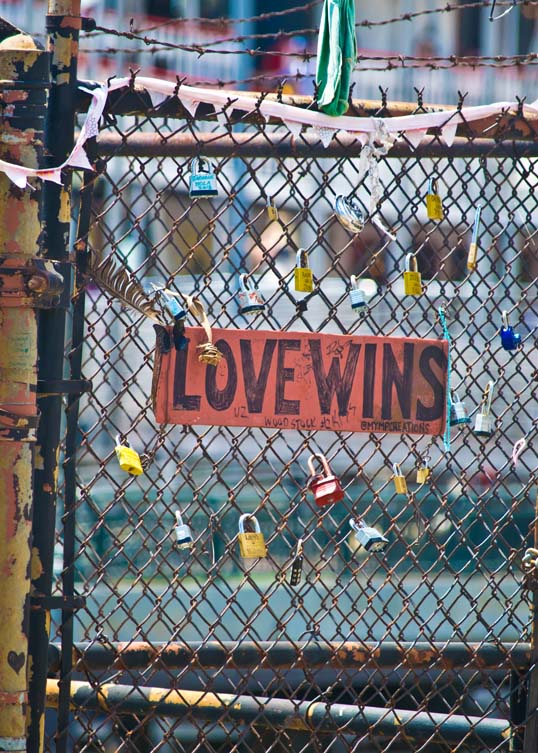
Love Wins

“In the end, love wins. It does win. We know it wins. When a person dies, love isn’t turned off like a faucet. It is an amazingly resilient part of us.”
― J.K. Rowling

French Quarter Levee, New Orleans

A Month of Short Stories 2017, Day 28 – The Model Millionaire by Oscar Wilde

Downtown Dallas, Texas

Over several years, for the month of June, I wrote about a short story that was available online each day of the month…. It seemed like a good idea at the time. My blog readership fell precipitously and nobody seemed to give a damn about what I was doing – which was a surprising amount of work.

Because of this result, I’m going to do it again this year – In September this time… because it is September.

Today’s story, for day 28 – The Model Millionaire by Oscar Wilde
Read it online here:
The Model Millionaire by Oscar Wilde

Unless one is wealthy there is no use in being a charming fellow. Romance is the privilege of the rich, not the profession of the unemployed. The poor should be practical and prosaic. It is better to have a permanent income than to be fascinating. These are the great truths of modern life which Hughie Erskine never realized. Poor Hughie! Intellectually, we must admit, he was not of much importance. He never said a brilliant or even an ill-natured thing in his life. But then he was wonderfully good-looking, with his crisp brown hair, his clear-cut profile, and his grey eyes. He was as popular with men as he was with women, and he had every accomplishment except that of making money.
—-Oscar Wilde, The Model Millionaire

Today’s story is a simple one – a man, not necessarily a great or charitable man, makes a great and charitable gesture, and suffers the consequences.

There is nobody better at writing aphorisms than Oscar Wilde. Even his fiction is generously sprinkled with entertaining pithy tidbits of wisdom that can be extracted and stand on their own. Finding these not-so-hidden jewels embedded in the text is one of the joys of reading Wilde.

Dorothy Parker said in a 1927 issue of Life:

If, with the literate, I am
Impelled to try an epigram,
I never seek to take the credit;
We all assume that Oscar said it.

A short list of Oscar Wilde Aphorisms (there are many, many more):

  1. I think that God, in creating man, somewhat overestimated his ability.
  2. The world is a stage, but the play is badly cast.
  3. Always forgive your enemies; nothing annoys them so much.
  4. It is absurd to divide people into good and bad. People are either charming or tedious.
  5. The only thing to do with good advice is pass it on. It is never any use to oneself.
  6. Some cause happiness wherever they go; others whenever they go.
  7. What is a cynic? A man who knows the price of everything and the value of nothing.
  8. A little sincerity is a dangerous thing, and a great deal of it is absolutely fatal.
  9. When I was young I thought that money was the most important thing in life; now that I am old I know that it is.
  10. There are only two tragedies in life: one is not getting what one wants, and the other is getting it.
  11. Memory is the diary that we all carry about with us.
  12. Woman begins by resisting a man`s advances and ends by blocking his retreat.
  13. Beware of women who do not hide their age. A woman who reveals her age is capable of anything.
  14. A thing is not necessarily right because a man dies for it.
  15. Art is the most intense form of individualism that the world has known.
  16. I choose my friends for their good looks, my acquaintances for their good characters, and my enemies for their good intellects. A man cannot be too careful in the choice of his enemies.
  17. Work is the curse of the drinking classes.
  18. Anyone who lives within their means suffers from a lack of imagination.
  19. True friends stab you in the front.
  20. Education is an admirable thing, but it is well to remember from time to time that nothing that is worth knowing can be taught.
  21. Moderation is a fatal thing. Nothing succeeds like excess.
  22. I never put off till tomorrow what I can do the day after.
  23. Action is the last refuge of those who cannot dream.
  24. I can resist everything except temptation.
  25. I like persons better than principles, and I like persons with no principles better than anything else in the world.
  26. The pure and simple truth is rarely pure and never simple.
  27. Men marry because they are tired; women because they are curious. Both are disappointed.
  28. Fashion is a form of ugliness so intolerable that we have to alter it every six months.
  29. There is only one thing in life worse than being talked about, and that is not being talked about.
  30. Morality is simply the attitude we adopt towards people whom we personally dislike.
  31. How can a woman be expected to be happy with a man who insists on treating her as if she were a perfectly normal human being?
  32. A gentleman is one who never hurts anyone’s feelings unintentionally.
  33. The old believe everything, the middle-aged suspect everything, the young know everything.
  34. I like men who have a future and women who have a past.
  35. Quotation is a serviceable substitute for wit.

Oscar Wilde:

Upon the other hand, whenever a community or a powerful section of a community, or a government of any kind, attempts to dictate to the artist what he is to do, Art either entirely vanishes, or becomes stereotyped, or degenerates into a low and ignoble form of craft. A work of art is the unique result of a unique temperament. Its beauty comes from the fact that the author is what he is. It has nothing to do with the fact that other people want what they want. Indeed, the moment that an artist takes notice of what other people want, and tries to supply the demand, he ceases to be an artist, and becomes a dull or an amusing craftsman, an honest or a dishonest tradesman. He has no further claim to be considered as an artist. Art is the most intense mode of Individualism that the world has known. I am inclined to say that it is the only real mode of Individualism that the world has known. Crime, which, under certain conditions, may seem to have created Individualism, must take cognizance of other people and interfere with them. It belongs to the sphere of action. But alone, without any reference to his neighbors, without any interference, the artist can fashion a beautiful thing; and if he does not do it solely for his own pleasure, he is not an artist at all.
—-from The Soul of Man under Socialism

Rising cloud over the Hyatt, downtown Dallas, Texas

A Month of Short Stories 2017, Day 1 – Love (“Amor”) by Clarice Lispector

(click to enlarge)

Over several years, for the month of June, I wrote about a short story that was available online each day of the month…. It seemed like a good idea at the time. My blog readership fell precipitously and nobody seemed to give a damn about what I was doing – which was a surprising amount of work.

Because of this result, I’m going to do it again this year – In September this time… because it is September.

Today’s story, for day 1 – Love (“Amor”), by Clarice Lispector.

Read it online here:

Love (“Amor”) From The Complete Stories; Translated by Katrina Dodson By CLARICE LISPECTOR

Ana’s children were good, something true and succulent. They were growing up, taking their baths, demanding for themselves, misbehaved, ever more complete moments. The kitchen was after all spacious, the faulty stove gave off small explosions.
—-from Love, by Clarice Lispector

I don’t know where I first heard of Clarice Lispector and her short stories… it was surprisingly recent. She is considered one of the masters of the form from Brazil. I checked out a book of her stories, translated into English, of course, from the library and am working through them.

Her work has that surreal quality that translated stories usually have – especially the ones from Latin America. The emotional knowledge is so subtle, acute, and accurate, it is almost painfully real and exciting fantasy at the same time. It makes me wish I could write like that.

Today’s story, Love, shows that there is nothing more delicate and unbalanced than an ordinary modern family life. Anything can tip the cart over – even something as simple as a blind man chewing gum.

A Month of Short Stories 2015, Day Twenty Two – The Other Wife

The last two years, for the month of June, I wrote about a short story that was available online each day of the month… you can see the list for 2014 and 2015 in the comments for this page. It seemed like a good idea at the time. My blog readership fell precipitously and nobody seemed to give a damn about what I was doing – which was a surprising amount of work.

Because of this result, I’m going to do it again this year.

Today’s story, for day twenty two – The Other Wife, by Colette

Read it online here:

The Other Wife

Today, in this modern age, in this best of all possible worlds, it isn’t unusual to be out with someone and run into an ex – either yours or theirs (or both’s). But in the time of Colette – not so long ago, really – it was probably a rare and uncomfortable occurrence.

Perhaps that’s the reason that seeing her new husband’s recently divorced wife at a seaside restaurant table leaves so big of an impression on a wife. I guess it starts with her slight vexation at finding he never mentioned that they both had blue eyes – though I bet she would have been more angry had he brought it up. I can assure you that his ex-wife is the last person in the entire world he wanted to see that day.

And for good reason.

There are subtleties of the heart that are beyond my ability to understand and convey. Luckily for us all, there is Colette.

She knows. She knows.

“She’s just difficult!”
Alice fanned herself irritably, and cast brief glances at the woman in white, who was smoking, her head resting against the back of the cane chair, her eyes closed with an air of satisfied lassitude.
Marc shrugged his shoulders modestly.
“That’s the right word,” he admitted. “What can you do? You have to feel sorry for people who are never satisfied. But we’re satisfied . . . Aren’t we, darling?”
She did not answer. She was looking furtively, and closely, at her husband’s face, ruddy and regular; at his thick hair, threaded here and there with white silk; at his short, well-cared-for hands; and doubtful for the first time, she asked herself, “What more did she want from him?”
And as they were leaving, while Marc was paying the bill and asking for the chauffeur and about the route, she kept looking, with envy and curiosity, at the woman in white, this dissatisfied, this difficult, this superior . . .

You Are A Conductor Of Light

“It may be that you are not yourself luminous, but that you are a conductor of light. Some people without possessing genius have a remarkable power of stimulating it.”

― Arthur Conan Doyle

Luminous Santa Fe Trestle Trail Dallas, Texas

Luminous
Santa Fe Trestle Trail
Dallas, Texas

Custom Love Lock on the Santa Fe Trestle Trail.

The Opposite Of Love Is Not Hate, It’s Indifference

“The opposite of love is not hate, it’s indifference. The opposite of art is not ugliness, it’s indifference. The opposite of faith is not heresy, it’s indifference. And the opposite of life is not death, it’s indifference.”
― Elie Wiesel

Paula & Lucky Santa Fe Trestle Trail Dallas, Texas

Paula & Lucky
Santa Fe Trestle Trail
Dallas, Texas

A Month of Short Stories 2014, Day 22 – The Nightingale and the Rose

A year ago, for the month of June, I wrote about an online short story each day for the month. It seemed like a good idea at the time. My blog readership fell precipitously and nobody seemed to give a damn about what I was doing – which was a surprising amount of work.

Because of this result, I’m going to do it again this year.

Today’s story, for day Twenty Two – The Nightingale and the Rose, by Oscar Wilde

Read it online here:

The Nightingale and the Rose

There is no wittier writer in the history of the world than Oscar Wilde. I remember reading The Portrait of Dorian Gray as a kid and staring in wonder across the pages at the pithy quotes and aphorisms sprinkled throughout the text. These nuggets of wisdom and bile were a second story concealed within the main book – I had a feeling that Wilde was pouring his real beliefs and feelings into these witticisms as much as into the events of the main text.

The novel feels like it was written by compiling a long, long list of witty barbs – and only then constructing a story as a framework or trellis to display them on.

  • there is only one thing in the world worse than being talked about, and that is not being talked about
  • But beauty, real beauty, ends where an intellectual expression begins.
  • You seem to forget that I am married, and the one charm of marriage is that it makes a life of deception absolutely necessary for both parties.
  • Being natural is simply a pose, and the most irritating pose I know.
  • As for believing things, I can believe anything, provided that it is quite incredible.
  • Every portrait that is painted with feeling is a portrait of the artist, not of the sitter.
  • I can’t help detesting my relations. I suppose it comes from the fact that none of us can stand other people having the same faults as ourselves.
  • genius lasts longer than beauty.
  • The only way to get rid of a temptation is to yield to it.
  • The bravest man amongst us is afraid of himself.
  • It has been said that the great events of the world take place in the brain. It is in the brain, and the brain only, that the great sins of the world take place also.
  • I always like to know everything about my new friends, and nothing about my old ones.
  • Nowadays most people die of a sort of creeping common sense, and discover when it is too late that the only things one never regrets are one’s mistakes.
  • He was always late on principle, his principle being that punctuality is the thief of time.
  • I never talk during music–at least, during good music. If one hears bad music, it is one’s duty to drown it in conversation.
  • Nowadays people know the price of everything and the value of nothing.
  • Men marry because they are tired; women, because they are curious: both are disappointed.
  • She was free in her prison of passion.
  • Children begin by loving their parents; as they grow older they judge them; sometimes they forgive them.
  • To be in love is to surpass one’s self.
  • Women … inspire us with the desire to do masterpieces, and always prevent us from carrying them out.
  • There are only two kinds of people who are really fascinating — people who know absolutely everything, and people who know absolutely nothing.
  • There is always something ridiculous about the emotions of people whom one has ceased to love.
  • We live in an age when unnecessary things are our only necessities.
  • One can always be kind to people about whom one cares nothing.
  • It often seems to me that art conceals the artist far more completely than it ever reveals him.
  • Is insincerity such a terrible thing? I think not. It is merely a method by which we can multiply our personalities.
  • Each of us has heaven and hell in him.
  • I love scandals about other people, but scandals about myself don’t interest me. They have not got the charm of novelty.
  • Sin is a thing that writes itself across a man’s face. It cannot be concealed. People talk sometimes of secret vices. There are no such things. If a wretched man has a vice, it shows itself in the lines of his mouth, the droop of his eyelids, the moulding of his hands even.
  • Each of us has heaven and hell in him.
  • Nobody ever commits a crime without doing something stupid.
  • The husbands of very beautiful women belong to the criminal classes.
  • It is perfectly monstrous the way people go about nowadays saying things against one behind one’s back that are absolutely and entirely true.
  • Women love us for our defects. If we have enough of them, they will forgive us everything, even our intellects.
  • A man can be happy with any woman, as long as he does not love her.
  • I like men who have a future and woman who have a past.
  • Moderation is a fatal thing. Enough is as bad as a meal. More than enough is as good as a feast.
  • I admit that I think that it is better to be beautiful than to be good. But on the other hand, no one is more ready than I am to acknowledge that it is better to be good than to be ugly.
  • Scepticism is the beginning of faith.
  • The only horrible thing in the world is ennui,
  • To get back my youth I would do anything in the world, except take exercise, get up early, or be respectable.
  • The tragedy of old age is not that one is old, but that one is young.

Over the years I have become a big fan of quotations. Oscar Wilde is the never ending fount of the pithy quote. For that, if nothing else, I am grateful.

Today’s story is very short and simple tale – not enough room for any extraneous worlds of wisdom. Alas.

But it starts out as a romantic fairy tale and appears to be so until you reach the final, dying words. Never fear, though – Wilde’s bitter cynicism will not be denied.

“No red rose in all my garden!” he cried, and his beautiful eyes filled with tears. “Ah, on what little things does happiness depend! I have read all that the wise men have written, and all the secrets of philosophy are mine, yet for want of a red rose is my life made wretched.”

A Month of Short Stories 2014, Day 11 – Mirrorball

A year ago, for the month of June, I wrote about an online short story each day for the month. It seemed like a good idea at the time. My blog readership fell precipitously and nobody seemed to give a damn about what I was doing – which was a surprising amount of work.

Because of this result, I’m going to do it again this year.

Today’s story, for day eleven – Mirrorball, by Mary Gaitskill.
Read it online here:

Mirrorball

Over the years I have read a lot of short stories. A lot of short stories…. Maybe a story every other day (with a lot of gaps, of course) since I was ten years old. That comes out to over eight thousand stories.

Obviously, that’s too high – but still, I have read a lot.

They all get mixed up – I’m always reading something that sort of feels familiar and then when I get to the end I realize I have read it before. I get authors mixed up, collections, anthologies and now with this internet thing… it’s so confusing.

One author that has always stood out is Mary Gaitskill. Her stories are full of desperate characters involved in all sorts of nasty trouble. She seems to know what she is writing about – she claims to have spent time as a stripper and a callgirl. I guess she is best known for writing the short story that the movie Secretary is based on – although the two are very different. She claims the movie was too charming and nice.

I know I’ve read the collection, Bad Behavior, that Secretary was in, but I don’t particularly remember it – I’ll have to read it again.

At any rate, today’s story is very different. This one is from her newest collection. Mirrorball is the story of a woman that has a one-night stand with a second-rate rock star and loses a piece of her soul in the process.

It’s a very unusual piece of writing.

I enjoyed the story, even though it isn’t really my cup of tea. It’s sort of an anti-Hemingway story in that nothing much happens (a couple of sexual encounters… and that’s about it) but a lot of words are spilled upon the page.

It’s a story told of a world inside of yet unknown to the characters; the world of their own souls – split, tortured, stolen, released.

It takes some skilled wordsmithing to go with something as ethereal as that and make it real to the reader. Read it, you decide.

He was a musician, well regarded in his hometown and little known anywhere else. This fact sometimes gnawed at him and yet was sometimes a secret relief; he had seen musicians get sucked up by fame and it was like watching a frog get stuffed into a bottle, staring out with its face, its splayed legs, its private beating throat distorted and revealed against the glass. Fame, of course, was bigger and more fun than a bottle, but still, once you were behind the glass and blown up huge for all to see, there you were. It would suddenly be harder to sit and drink in the anonymous little haunts where songs were still alive and moving in the murky darkness, where a girl might still look at him and wonder who he was. And he might wonder about her.

A Month of Short Stories 2014, Day 2 – On the Gull’s Road

A year ago, for the month of June, I wrote about an online short story each day for the month. It seemed like a good idea at the time. My blog readership fell precipitously and nobody seemed to give a damn about what I was doing – which was a surprising amount of work.

Because of this result, I’m going to do it again this year.

For the second entry in this month’s list of short stories, on this second day of June, I give you a classic chestnut by Willa Cather, On the Gull’s Road.

Read the story online here:
On the Gull’s Road

I know people that read a lot of Cather. I haven’t read that much.

I always think of her as a Nebraska writer (though I know she lived most of her life in New York) and primarily as a chronicler of life on the plains.

This story couldn’t be further from that. It’s a story of doomed young love on a ship leaving Italy.

One thing that jumps out is her wonderful ability to describe life on a ship. I’ve been on cruises – and the whole deal is so much different that what a sea voyage from Italy in that time must have been – but I recognize the scene and the unique unfettered feel that riding the waves leaves behind.

The sun had disappeared over the high ridge behind the city, and the stone pines stood black and flat against the fires of the afterglow. The lilac haze that hung over the long, lazy slopes of Vesuvius warmed with golden light, and films of blue vapor began to float down toward Baiae. The sky, the sea, and the city between them turned a shimmering violet, fading grayer as the lights began to glow like luminous pearls along the water-front, — the necklace of an irreclaimable queen. Behind me I heard a low exclamation; a slight, stifled sound, but it seemed the perfect vocalization of that weariness with which we at last let go of beauty, after we have held it until the senses are darkened. When I turned to her again, she seemed to have fallen asleep.

Of course, the oddest thing about the story is the ambiguous sex of the narrator – who falls in love with the doomed, married Mrs. Ebbling. Reading it, I assumed the narrator was a man (…anticipating a consular appointment…) but on careful examination it seems that this little fact is deliberately blurred. The narrator’s name is never mentioned and is never referred to by any pronoun that would give their sex away.

This ambiguity adds a layer of unreal mystery to the love between the two young people. It reinforces the melancholy, the feeling of loss, of regret, and of nostalgia that permeates the story.

There is a lot more here than a simple shipboard infatuation.

“Don’t say that. When I leave you day after tomorrow, I shall have given you all my life. I can’t tell you how, but it is true. There is something in each of us that does not belong to the family or to society, not even to ourselves. Sometimes it is given in marriage, and sometimes it is given in love, but oftener it is never given at all. We have nothing to do with giving or withholding it. It is a wild thing that sings in us once and flies away and never comes back, and mine has flown to you. When one loves like that, it is enough, somehow. The other things can go if they must. That is why I can live without you, and die without you.”