Traffic

I think the key image of the 20th century is the man in the motor car. It sums up everything: the elements of speed, drama, aggression, the junction of advertising and consumer goods with the technological landscape. The sense of violence and desire, power and energy; the shared experience of moving together through an elaborately signalled landscape.
We spend a substantial part of our lives in the motor car, and the experience of driving condenses many of the experiences of being a human being…, the marriage of the physical aspects of ourselves with the imaginative and technological aspects of our lives. I think the 20th century reaches its highest expression on the highway. Everything is there: the speed and violence of our age; the strange love affair with the machine, with its own death.
—-J.G. Ballard, Narration for Crash! (1971), a short film by Harley Cokeliss

(click to enlarge)

(click to enlarge)

“In a sense life in the high-rise had begun to resemble the world outside – there were the same ruthlessness and agression concealed within a set of polite conventions.”
― J.G. Ballard, High-Rise

Delta

“The industries were there because of the river. They had come for its navigational convenience and its fresh water. They would not, and could not, linger beside a tidal creek. For nature to take its course was simply unthinkable. The Sixth World War would do less damage to southern Louisiana. Nature, in this place, had become an enemy of the state.”
—- John McPhee, The Control of Nature, Atchafalaya

(click to enlarge)

(click to enlarge)

The structure was obviously undermined, but how much so, and where? What was solid, what was not? What was directly below the gates and the roadway? With a diamond drill, in a central position, they bored the first of many holes in the structure. When they had penetrated to basal levels, they lowered a television camera into the hole. They saw fish.
—-John McPhee, The Control of Nature

Deere

(click to enlarge)

(click to enlarge)

Well, I’m working on the new railroad
With mud up to my knees
I’m digging for big John Henry
And he’s so hard to please
And I’ve been all around this world

Hang me oh hang me and I’ll be dead and gone
It’s not the hanging that I mind it’s laying in the grave so long
And I’ve been all around this world

Well, the new railroad is ready, boys
And the cars are on the track
And if our women leave us
Money’ll bring ’em back
And I’ve been all around this world

—- Working on the New Railroad (trad)

Kite

“A kite is a victim you are sure of.
You love it because it pulls
gentle enough to call you master,
strong enough to call you fool;
because it lives
like a desperate trained falcon
in the high sweet air,
and you can always haul it down
to tame it in your drawer.

A kite is a fish you have already caught
in a pool where no fish come,
so you play him carefully and long,
and hope he won’t give up,
or the wind die down.

A kite is the last poem you’ve written
so you give it to the wind,
but you don’t let it go
until someone finds you
something else to do.”
― Leonard Cohen, The Spice Box of Earth

Dallas, Texas (click to enlarge)

Dallas, Texas
(click to enlarge)

“Throw your dreams into space like a kite, and you do not know what it will bring back, a new life, a new friend, a new love, a new country.”
― Anaïs Nin

River Bottom Bicycle Route

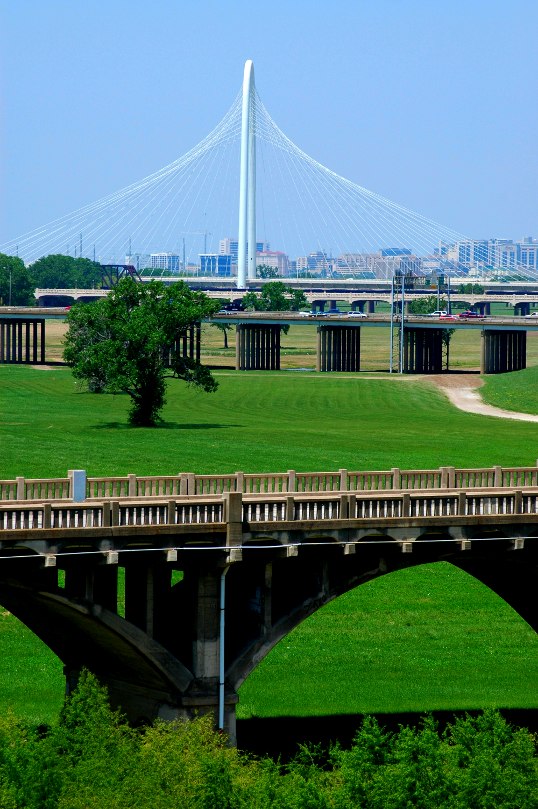
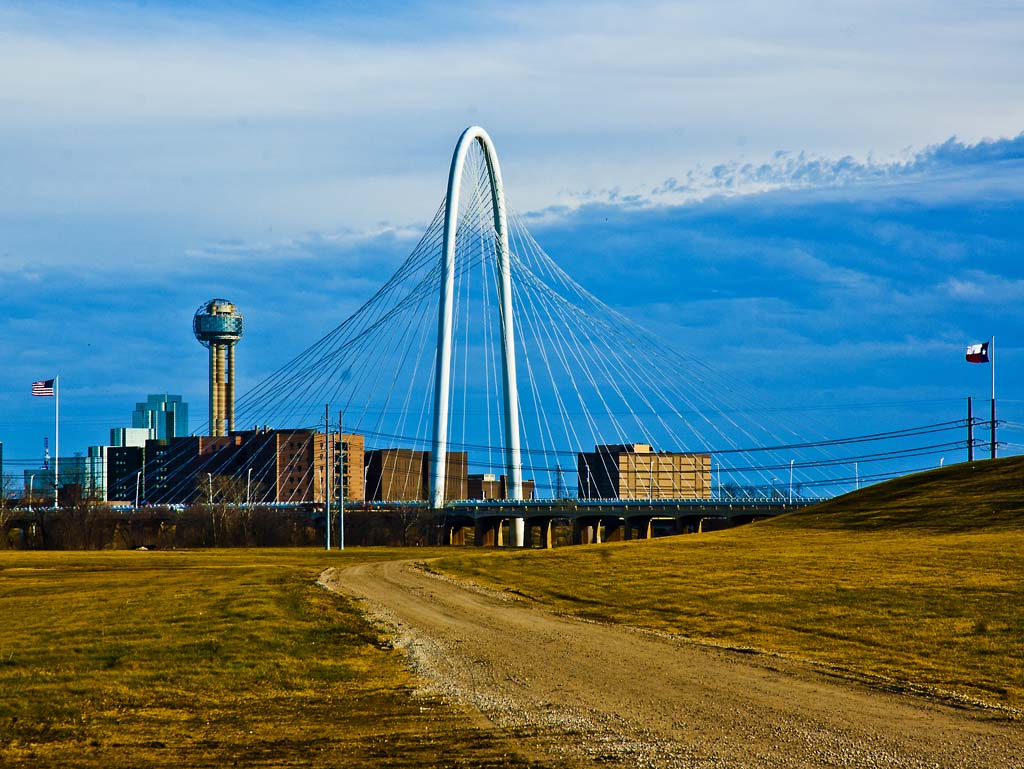
View from the high point of the Jefferson Viaduct Cycletrack, Trinity River, Dallas, Texas

View from the high point of the Jefferson Viaduct Cycletrack, Trinity River, Dallas, Texas

I have been struggling with a nasty something – maybe nothing more than a stubborn cold – since Christmas or so. I took a look at my notes (the good thing about obscessive journaling – I have notes going back decades) and realized I always get sick on the days between Christmas and New Year. Maybe it’s an allergy to not going to work.

At any rate, since I have been unable to breathe (that oxygen addiction – a nasty habit) and the weather outside has been frightful I haven’t been riding my bike. I really miss it. Yesterday, I was able to get out and ride around the neighborhood. Though I was obviously out of shape and unused to the saddle, it was fun. So today I decided to take a longer ride.

A while back, I went to the Nasher for a lecture on Nasher Xchange – an ambitious art installation that involves ten varied works all across the city. During the lecture, the artists and organizers repeatedly emphasized the size of Dallas, how it is all spread out, and how much driving is involved in getting to all of the sites of the exhibition. One inspiration for the Nasher Xchange is the Skulptur Projekte Münster – which is held every ten years. Munster is so much more compact that Dallas, however, and they talked about how much different it is to have a similar exhibition in a car-based city like Dallas.

This is all true, of course – but I take exception to the whole car thing. By combining a bicycle with the DART train, you can move all over the city – a little slower, of course, but in a more interesting way – without a car.

So I decided to visit the Nasher Xchange sites without use of a car. Some of them are not really permanent, so it may not work out, but eight at least are doable. The thing will end February 16 – so it’s time to get crackin’.

I’ve been to three so far. I’ll write blogs about them when I’m done. I’ve been thinking about dear sunset by Ugo Rondinone and how best to visit it by bicycle. It’s a multicolored wooden pier jutting out into Fishtrap Lake, in West Dallas. There is no train station nearby, so a substantial bike ride will be needed.

Another thing in my “Things to do” list for 2014 is to organize a bicycle ride. An idea turned over in my head – organize a bike ride from the 8th and Corinth DART station, down the Santa Fe Trestle Trail and then north along the gravel roads in the Trinity River Bottoms to Hampton Road, on to Fishtrap Lake, and then back. It’s a six and a half mile route, one way, thirteen miles total. Not too far for a recreational ride.
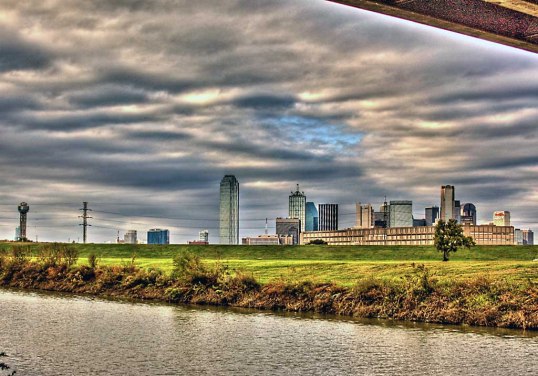
Trinity River, Dallas, Texas (click to enlarge)

Trinity River, Dallas, Texas
(click to enlarge)

The only thing was, I was not familiar with the route at all. There’s a lot of construction down there, and I wasn’t sure of the condition of those roads – would they be muddy? Too rough?

So I decided to do the ride today. And it was a blast. The roads are bumpy in some places (they are actually paved in a few) but nothing a fat tire bike couldn’t get through. The route is, of course, flat, and the scenery is pretty impressive. If you’ve never been in the Trinity River Bottoms, it’s a surreal mixture of vast open floodplain with giant city skyscrapers looming up on the horizon.
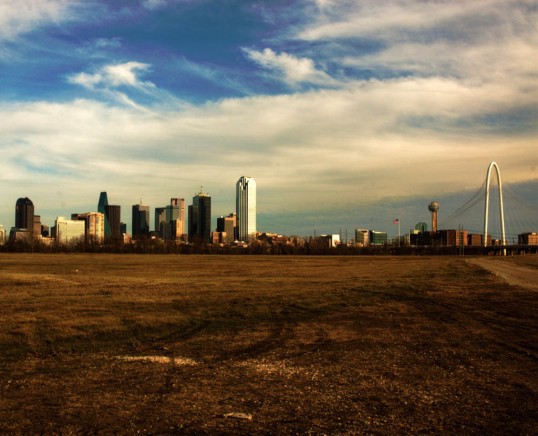
Trinity River Bottoms (click to enlarge)

Trinity River Bottoms
(click to enlarge)

The only negative was that it was very, very windy down there. Thirty mile per hour southerly winds made it a struggle going one way (though I barely had to pedal going the other). I was pretty worn out by the end. But that’s… well, if not rare… not an everyday condition.

So I think I’ll go ahead and set a date, start the thing in motion. Next weekend is already spoken for, but I’ll see if I can find a Saturday in there sometime.

Hope the weather is good.
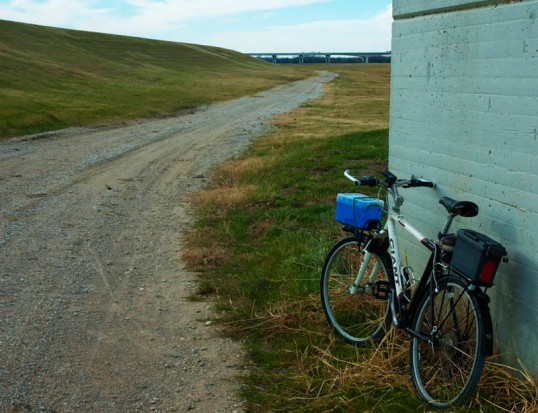
My commuter bike along the gravel road in the Trinity River Bottoms (click to enlarge)

My commuter bike along the gravel road in the Trinity River Bottoms
(click to enlarge)
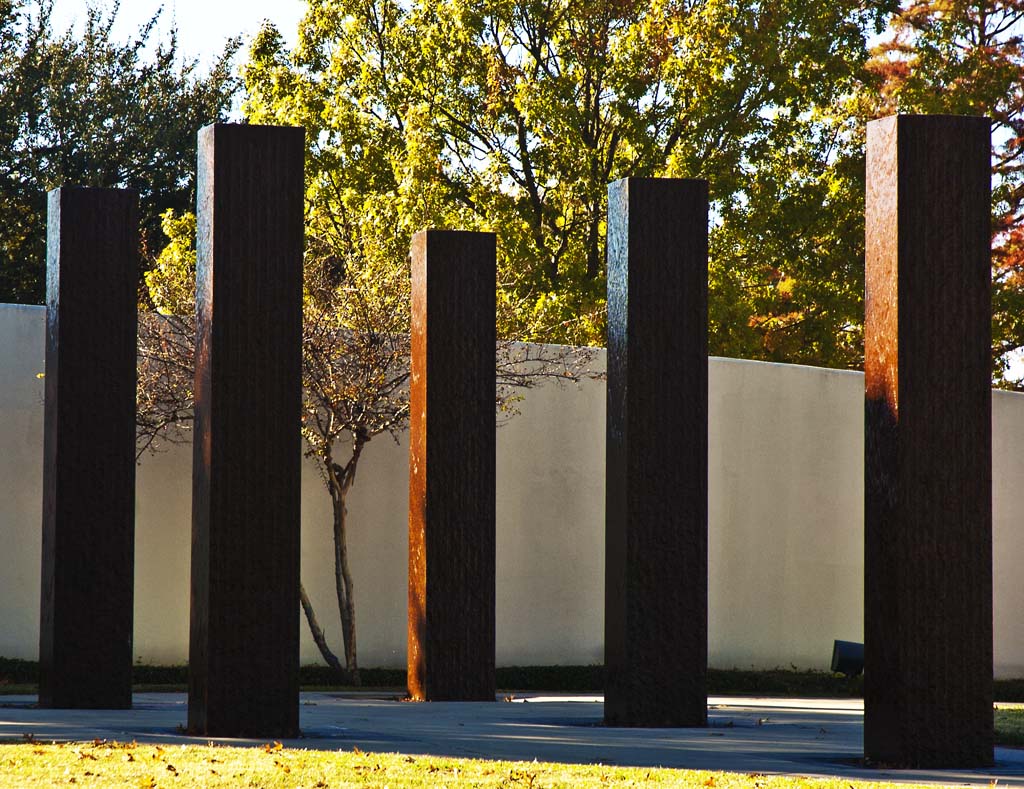
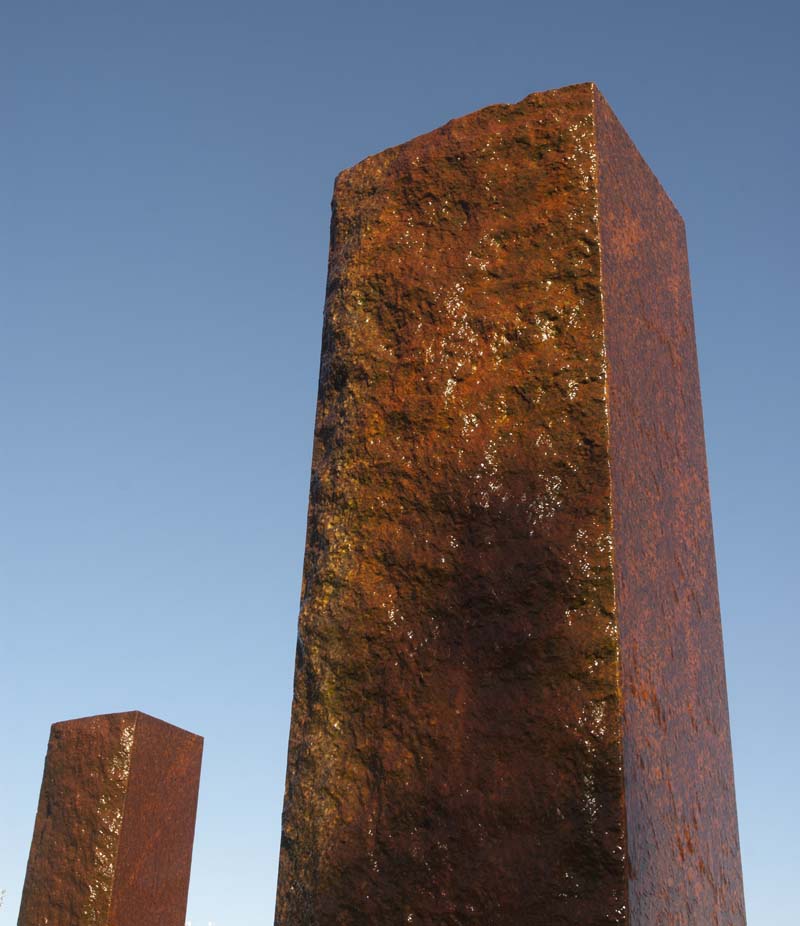
Fountain Columns

Irving Arts Center, Irving, Texas

Jesús Bautista Moroles
Fountain Columns, 1998
Dakota Mahogany Granite

Jesús Bautista Moroles Fountain Columns (click to enlarge)

Jesús Bautista Moroles
Fountain Columns
(click to enlarge)

“Elmore Leonard’s Ten Rules of Writing

1. Never open a book with weather.
2. Avoid prologues.
3. Never use a verb other than “said” to carry dialogue.
4. Never use an adverb to modify the verb “said”…he admonished gravely.
5. Keep your exclamation points under control. You are allowed no more than two or three per 100,000 words of prose.
6. Never use the words “suddenly” or “all hell broke loose.”
7. Use regional dialect, patois, sparingly.
8. Avoid detailed descriptions of characters.
9. Don’t go into great detail describing places and things.
10. Try to leave out the part that readers tend to skip.

My most important rule is one that sums up the 10.

If it sounds like writing, I rewrite it.”
― Elmore Leonard

Jesús Bautista Moroles Fountain Columns (click to enlarge)

Jesús Bautista Moroles
Fountain Columns
(click to enlarge)

Dancers, Real and Steel

Dallas Arts District, Dallas, Texas

Dallas Arts District, Dallas, Texas

Frisco, Texas

Frisco, Texas

Dallas Arts District, Dallas, Texas

Dallas Arts District, Dallas, Texas

Frisco, Texas

Frisco, Texas

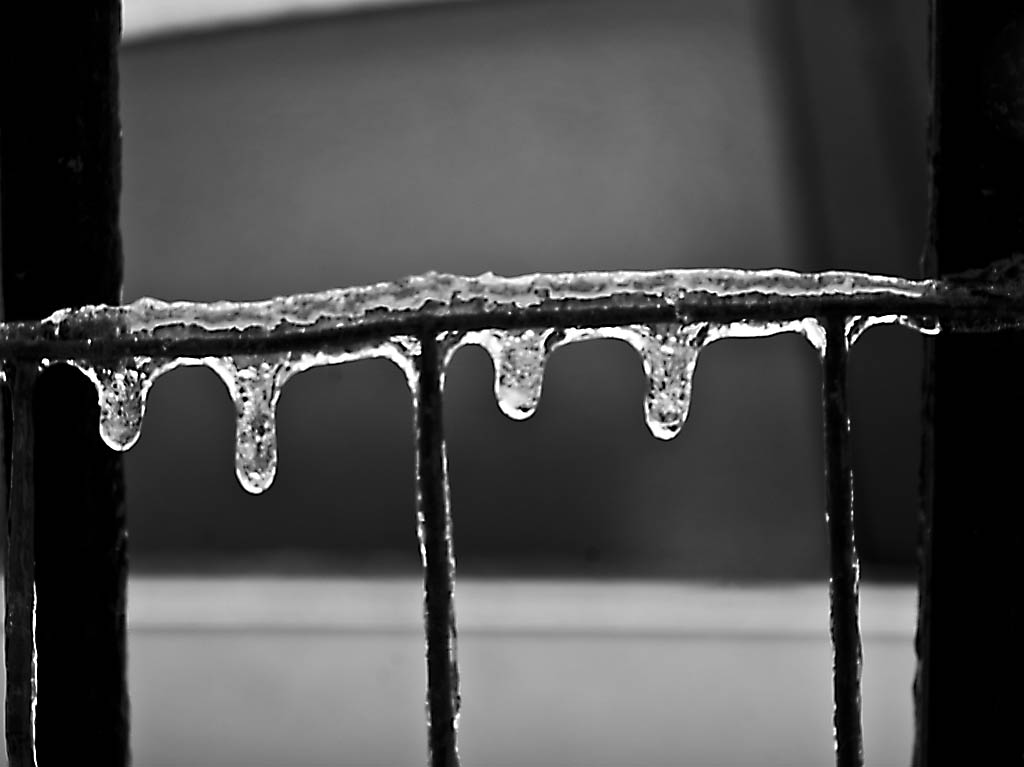
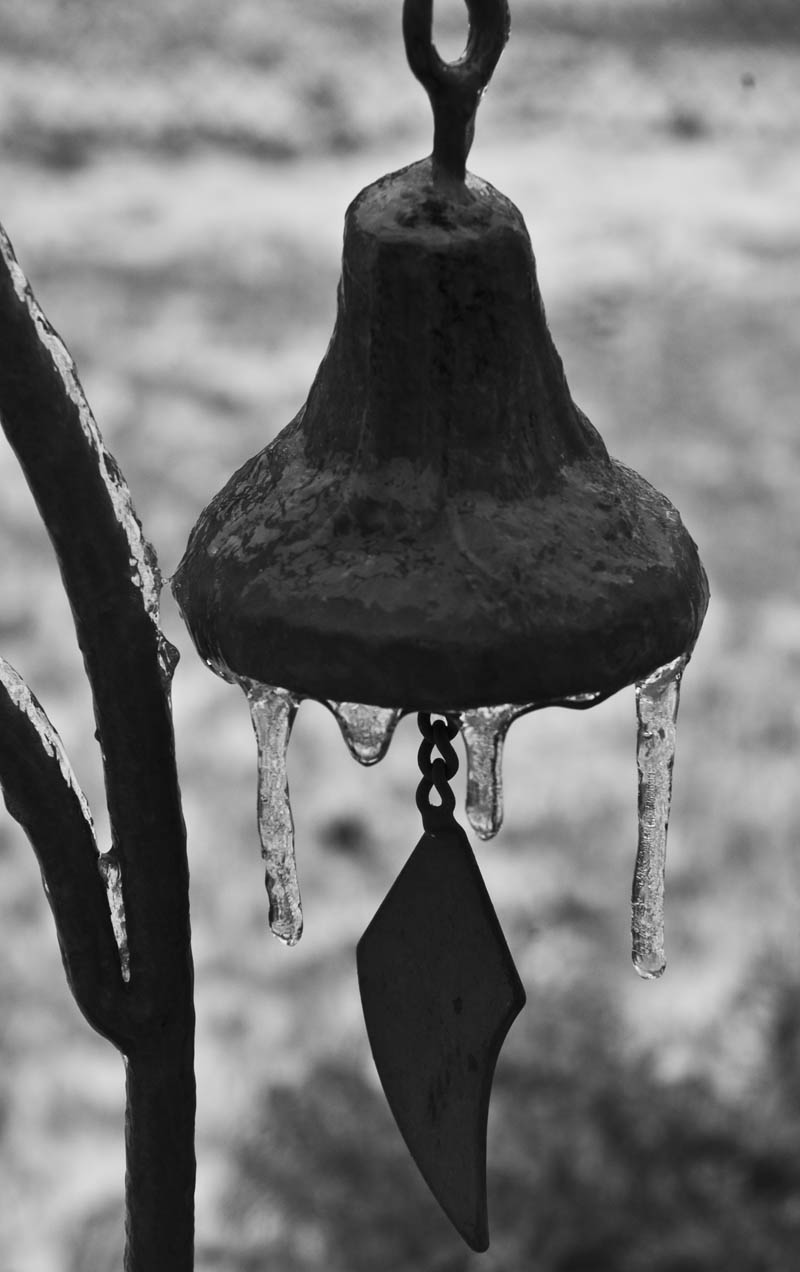
Ice and Iron

(click to enlarge)

(click to enlarge)

A hungry feeling came o’er me stealing
And the mice were squealing in my prison cell
And the old triangle went jingle jangle
All along the banks of the royal canal

To begin the morning the screw was bawling
“Get up, ya bowsie, and clean up your cell”
And the old triangle went jingle jangle
All along the banks of the royal canal

The screw was peeping, Humpy Gussy was sleeping
As I lay there dreaming of my girl, Sal
And the old triangle went jingle jangle
All along the banks of the royal canal

Up in the female prison there are seventy-five women
And ’tis among them I wish I did dwell
Then the old triangle could go jingle jangle
All along the banks of the royal canal
—-The Auld Triangle, trad, Dominic Behan

(click to enlarge)

(click to enlarge)