What I learned this week, January 18, 2013

Earlier this year, I saw the new Wes Anderson film Moonrise Kingdom and really liked it.

moonrise_kingdom

Now that it has received a nomination for Best Original Screenplay, Focus Pictures has made the entire script available on their website. Check it out – it’s illustrated and colorful and a lot of fun.

It’s also available in PDF here.


babes1

30 Essential Texas Restaurants to Visit Before You Die

I’ve eaten at over half of these (including Babes Chicken Dinner House). I was not overly impressed by the list. Most of these restaurants are not very good – they are touristy and over-hyped. They probably were excellent at one time but have jumped the shark and now exist as a caricature of themselves. Some may be excellent, such as, say, The Mansion on Turtle Creek, or Fearing’s  but these are so famous you don’t really need an article to tell you that.

Give me an interesting new place over these hoary old chestnuts anyday.


Life After Blue

At the heart of the enduring liberal ideal is a truth that is often forgotten in today’s political debates: the relationship between order and liberty does not have to be zero sum. More government can mean less freedom, and more freedom can mean less government—but things don’t always work out that way.

At one level this is obvious; people don’t so much surrender their liberty by forming a government and agreeing to live in an ordered society as they defend it. Life in an anarchy governed only by the law of the jungle is less free than life as a member of a democratic commonwealth. But this non-zero sum relationship holds in other ways. To have the freedom to drive at 65 miles per hour on an interstate highway, I must accept a lot of rules and restrictions. But the end result of all the requirements about driver’s licenses, insurance, registration and traffic laws is that I can go much faster and farther than I could in a state of nature. There is more order and more liberty in a modern industrial democracy than there is in the forest where our ancestors lived.

The secret of Anglo-American civilization has been its ability to combine the two elements of order and liberty at successively higher levels of both. To think constructively about our future we shouldn’t be thinking about a zero sum tradeoff between order and freedom; we should be thinking about how to build the kind of order that extends our liberty in new and important ways.


bike love: feels like flying


Vintage Bicycle on Magazine Street

Magazine Street, New Orleans

Magazine Street, New Orleans

Perfect urban bicycling… Mixte frame, rear rack, front basket, fenders, upright bars, warning bell, kickstand, chainguard,  leather pants, red shoes.

Three Bicycling Stories

A Photograph Doesn’t Do Justice 

I like taking photographs, though it is ultimately a frustrating and futile exercise. I see an image in my mind and I want to commit it to pixels, but I never can. What ends up on the screen is a poor echo, a warped ghost, of what was in my head. Still, I keep trying.

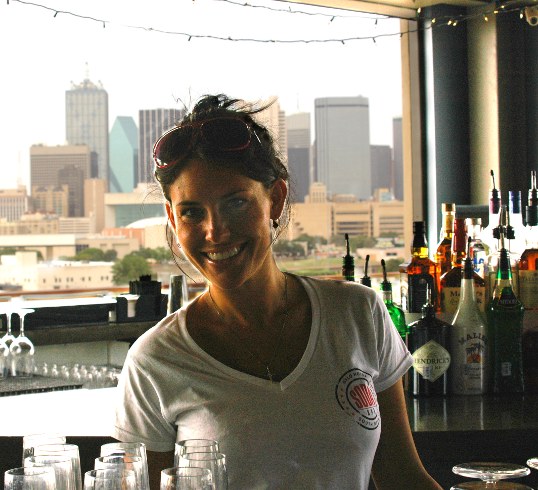
This woman, a bartender at the NYLO Southside, asked Candy, "Is your husband a professional photographer?"Candy answered, "He thinks he is."

This woman, a bartender at the NYLO Southside, asked Candy, “Is your husband a professional photographer?”
Candy answered, “He thinks he is.”

Sometimes, there are images, real images that appear in the eye, of such subtle and ephemeral beauty that a camera can never come close to capturing.

The other morning I was riding my bike to work. I had left before dawn and was moving west on Summit Drive just after Grove Road. It’s a quiet little residential street, perfect for bike riding. Going West, it’s a slight downhill, just right – steep enough to coast but not so much to require brakes – a nice little rest in the middle of my commute.

Behind me, the sun was breaking the horizon, the orange globe peeking out throwing a sudden bright warm light down the street. All along the street were thousands of black birds (grackles, I think) covering the yards, wires, and trees.

The birds did not like me or my bike. Maybe my flashing headlight helped spook them, but they all took off and began to fly away from me. As I moved down the street a massive wave of birds formed in front of me, a cacophony of squawking and flapping wings as they fled in formation.

It was like a giant, solid, noisy, black moving thing, this wave of birds, contrasted with the bare trees and piles of autumn leaves, all bathed in the coral light from the sunrise. A living shape, a rolling cloud, lasting only a few seconds until I reached the turn at the bottom of the hill when they scattered, the wave dissolving into the dawn air, the flock dissipating as quickly as it formed.

As surely as this scene could never be photographed… too evanescent and ethereal for a lens – words fail me. Trust me, it was beautiful – I smiled all the way to work and even for a few minutes in the land of the cubicals until the daily grind ground the moment out.

Still, it is there, in my memory. I’ve never been much of a morning person, but sometimes it’s nice to get up in time to see what the rising sun brings.

My First Fall 

At my age, I’m really afraid of bicycle accidents. I’m a lot more brittle than I used to be and I don’t heal as fast. Still, I ride slowly and carefully and hadn’t fallen for a long, long time.

Until now.

I was going West on Spring Valley (not far from the story above). There is a rail line that bisects my city north to south and is a surprising barrier to cycling – there are only a couple places where it can be crossed and none of them are very safe. The Spring Valley crossing is one of the best – open, wide, and not too much traffic.

Between the rails there are these rubber pads to fill in the gaps for the cars that cross. Unfortunately, the pads had a gap between them… not too much, maybe an inch. The gap, unfortunately  runs parallel to the curb – along the direction of travel. On a bike, cracks or gaps running across your path are a mere bump, but cracks running in the same direction your are – are a disaster.

I am starting to rebuild my commuter bike – an old mountain bike – so I am riding my road bike around town. The road bike has narrow tires. Narrow enough to fit right into the gap between the thick rubber mats.

So I wasn’t looking closely enough and my tire dropped into the gap. It immediately grabbed the rubber and stopped. Instant endo – a nasty crash where your forward momentum throws you over your front handlebars.

I felt the tire drop and grab so I had a split second to prepare myself. I was able to drop a shoulder and roll when I hit, so I wasn’t hurt. I was worried about my bike, but other than a broken toe clip and a missing bar end plug, not a scratch. Luckily, there weren’t any cars behind me, or that might have been a fatal crash.

All’s well that ends well. Hopefully, I’ll have another run of good luck.

It’s frustrating though. I’m sure the city thinks that railroad crossing is fine and doesn’t need any work even though it contains a hidden disaster to anyone riding a bike through there. I don’t have any choice, I’ll have to ride over the crossing at least twice a day when I’m riding to work and most other rides – it’s the only good way to get the the southwest part of town from where I live. I’ll have to be careful and not forget what happened – look out for that gap.

Of course, flying over the handlebars isn’t something you forget anytime soon.
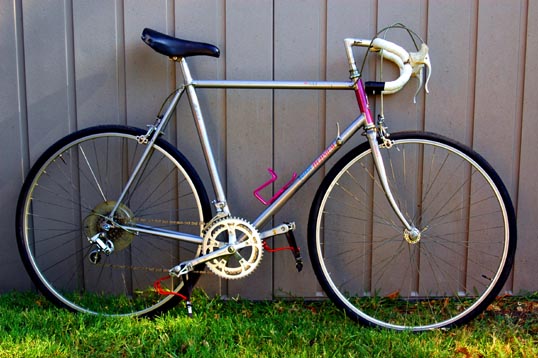
My road bike - an ancient Raleigh Technium.

My road bike – an ancient Raleigh Technium.

My commuter bicycle - I'm now taking it apart for a rebuild.

My commuter bicycle – I’m now taking it apart for a rebuild.

Riding in the Rain 

My goal for 2013 is three thousand miles on my bicycle. Not too hard, that’s only a bit under ten miles per day (my work commute is ten miles round trip). Still, it will require consistent riding, under less than ideal conditions. Texas winters are cold, spring is wet, and summers… well, they can be fatal.

Rain was predicted for today, but when I woke up in the morning, I checked out the internet weather and the radar maps and it looked like I had a couple hours before the thunderstorms arrived. So I decided to get going and get in twenty miles or so. Never trust anything you read on the ‘net.

The fog was thick as I headed out and withing a couple miles it started to mist and sprinkle. It was fairly warm, so the light rain actually felt nice. I decided to ignore the weather and kept heading out on the route I had in mind.

Over the next few miles the rain slowly increased. Still, it wasn’t too bad and I kept going. Once you are soaked… you can’t get any wetter, so I didn’t want to give up. My phone rang and it was Candy, offering to pick me up, but I said I was doing fine. By this time I was around Galatyn Parkway along Highway 75 and I wanted to go north into Spring Creek and the trails up there.

Then the sky opened up.

I’ve been thinking about rigging my commuter bike for riding in the rain and reading up about bicycle fenders. One article I read had this nice quote:

I’ve cycled through thunderstorms in the U.S. Midwest and Texas and even a typhoon or two in Tokyo. For the Californians on the list, fill a bucket with water, toss in a tray of ice cubes (for the hail) and have a friend throw the contents on you — that approximates about half a second of a typical Midwestern spring storm.

That’s what it felt like – someone dumping a five gallon bucket of iced water on my head twice a second. It’s true that once you are soaked, more water doesn’t make you wetter… but I couldn’t even see. Luckily, a few feet up ahead the trail scooted underneath Highway 75, so I was able to take shelter until the tempest subsided.

It was amazing, waiting there, dripping, under the highway, watching the trickle of a creek rising quickly to become a raging torrent. I was safe on the elevated trail, leaning up against a guardrail halfway between the stream and the roadway above. The various drainpipes associated with the highway all began spewing vast cascades of roaring water, some falling in brown cataracts and others splashing against trees and logs into great sprays of foam. I never noticed, but the roadway is drilled with a pattern of drainage holes and all these began to spew a grid of falling fountains from the bridge far above.

The scene was unexpected and beautiful and it made me laugh to look at my private spectacular water display.

The rain was falling so hard I knew it couldn’t last too long and once the storm subsided to a mere rainstorm I bundled up my wet clothes and headed home. I couldn’t ride the trail all the way because the low-water crossings along Duck Creek were submerged. The waterfowl were all lined up along their swollen eponymous waterway watching the flotsam and jetsam closely, picking out any edible particle that came floating by.

I did manage to get my twenty miles in, and all my stuff is hanging in the house trying to dry out. I’m not sure if I’ll go out in a thunderstorm like that again… but it was kind of fun.

Beater Bike in the French Quarter

Nothing is old… it is vintage. And if it is vintage… it is cool. It’s not rust… it’s a patina.

All bicycles weigh fifty pounds. A thirty-pound bicycle needs a twenty-pound lock. A forty-pound bicycle needs a ten-pound lock. A fifty-pound bicycle doesn’t need a lock. ~Author Unknown

Bicycle, French Quarter, New Orleans

Bicycle, French Quarter, New Orleans

After your first day of cycling, one dream is inevitable. A memory of motion lingers in the muscles of your legs, and round and round they seem to go. You ride through Dreamland on wonderful dream bicycles that change and grow.
—-H.G. Wells, The Wheels of Chance

A Thing of Beauty

I know I should not give things – physical objects – attributes beyond what they are – simply shapes of metal, rubber, and leather. Things are not as important as people.

Bicycles…. umm, that’s another matter.

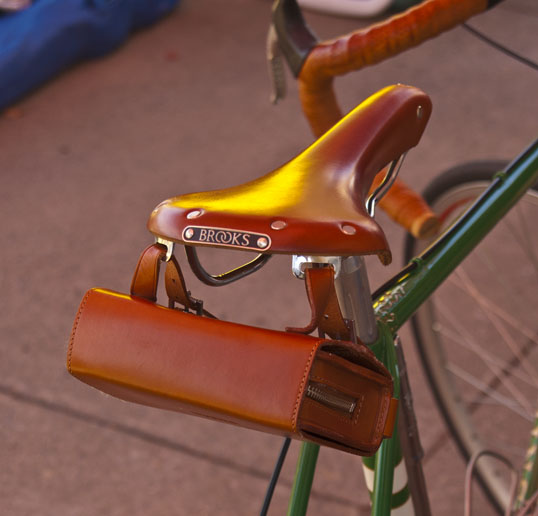
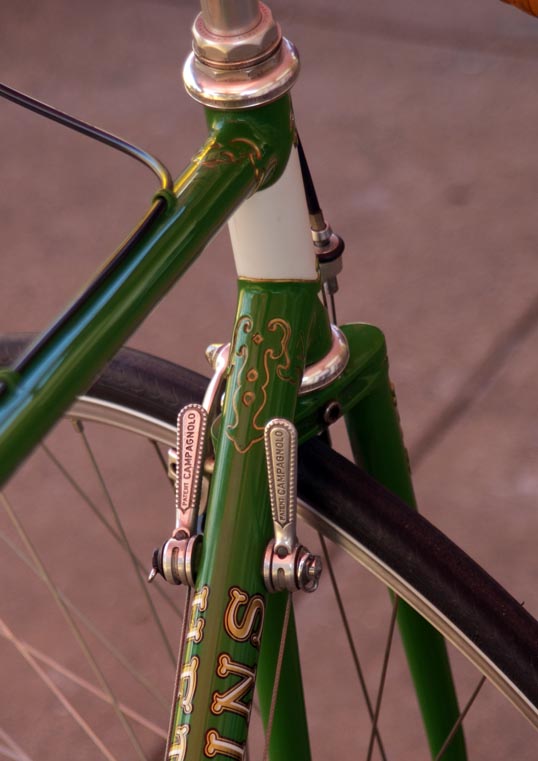
At a vintage bicycle ride/show/swap meet I attended a while back there was a Hetchins bicycle that was of such sublime beauty that I can’t really think of it as a physical object only. The Hetchins bikes are known for intricate lugwork and for being, well, transcendent works of art.

This one was painted green with the lugs set off with gold paint – and a full complement of Brooks leather saddle, bar tape, and tool bag. Vintage Campagnolo… of course.

A simple bicycle, yet such a thing of beauty.

vintage3

vintage2

vintage1

Mystery Sculpture

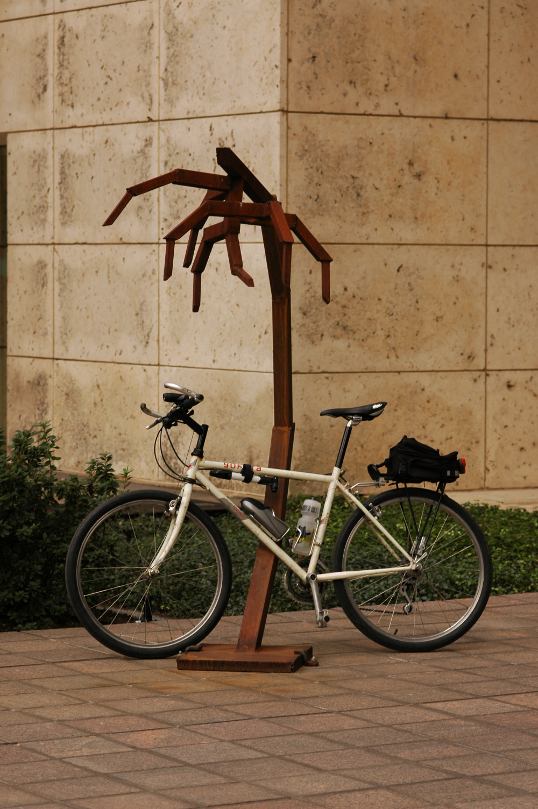
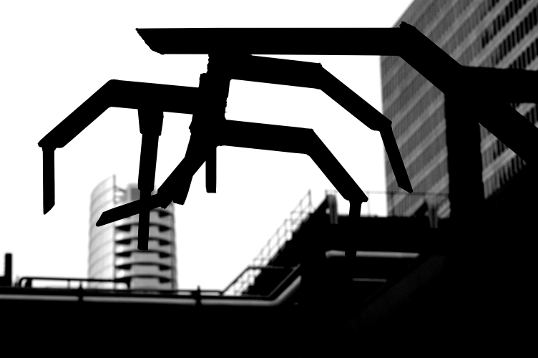
While I was riding my commuter bike around downtown Dallas, I stumbled across this piece of welded iron sculpture in back of the office building at 2001 Bryan Street.

I looked around and couldn’t find any type of plaque or label or anything. I have no idea what the sculpture is or who did it or who put it out there in back of that skyscraper.

Still, whatever, I like the thing and am glad I found it. It sort of feels like my own personal secret sculpture, in the middle of the big city.

The Mystery Sculpture, welded iron.

The Mystery Sculpture, welded iron.

The sculpture, with the Eye of Sauron in the background.

The sculpture, with the Eye of Sauron in the background.

My commuter bicycle, leaning up against the mystery sculpture.

My commuter bicycle, leaning up against the mystery sculpture.

Cycling in Style

Stylish bike rider, French Quarter, New Orleans

Stylish bike rider, French Quarter, New Orleans

Despite the fact that (in additional to the least-cool) I am the least fashionable person on the planet I am interested in the idea of bicycling style, or chic, or whatever you want to call it. Not the old spandex, carbon, and logo style, but the more relaxed, European, style of riding a bike in the urban environs.

I went on a fun ride the other day with a nice group visiting some boutiques and such in a couple of stylish and hip neighborhoods of Dallas.

Yes, they exist.

Looking through the library I discovered a book by David Byrne, where he relates some of his experiences riding a folding bike through some of the more interesting cities of the world.

He starts out insulting my city… which is pretty world-renowned for cycling unfriendliness.

Bicycle Diaries

by David Byrne

Chapter One – American Cities

Most US cities are not very bike-friendly. They’re not very pedestrian-friendly either. They’re car-friendly – or at least they try very hard to be. In most of the cities one could say that the machines have won. Lives, city planning, budgets, and time are all focused around the automobile. It’s long-term unsustainable and short-term lousy living. How did it get this way? Maybe we can blame Le Corbusier for his “visionary” Radiant City proposals in the early part of the last century:

His utopian proposals — cities (or just towers really) enmeshed in a net of multilane roads — were perfectly in sync with what the car and oil companies wanted. Given that four of the five biggest corporations in the world still are oil and gas companies, it’s not surprising how these weird and car-friendly visions have lingered. In the postwar period general Motors was the largest company in the whole world. Its president, Charlie Wilson said, “What’s good for GM is good for the country.” Does anyone still believe that GM ever had the country’s best interests at heart?

Maybe we can also blame Robert Moses, who was so successful at slicing up New York City with elevated expressways and concrete canyons. His force of will and proselytizing had wide ranging effects. Other cities copied his example. Or maybe we can blame Hitler, who built the autobahns in order to allow German troops and supplies fast, efficient, and reliable access to all points along the fronts during World War II.

I try to explore some of these towns — Dallas, Detroit, Phoenix, Atlanta — by bike, and it’s frustrating. The various parts of town are often “connected” — if one can call it that — mainly by freeways, massive awe-inspiring concrete ribbons that usually kill the neighborhoods they pass through, and often the ones they are supposed to connect as well. The areas bordering expressways inevitably become dead zones. There may be, near the edges of town, an exit ramp leading to a KFC or a Red Lobster, but that’s not a neighborhood. What remains of the severed communities is eventually replaced by shopping malls and big-box stores isolated in vast deserts of parking. These are strung along the highways that have killed the towns that the highways were meant to connect. The roads, housing developments with no focus, and shopping centers eventually sprawl as far as the eye can see as the highways inched farther and farther out. Monotonous, tedious, exhausting… and soon to be gone, I suspect.

He’s right of course… but not completely right. There is hope. Dallas (and every big modern city) does have its notorious web of high speed freeways, concrete ribbons of death.

But they don’t cover the whole city. In between these barriers are real neighborhoods with real people living in them. The challenge is to get off the freeway and find what’s there – and a bicycle is the best way to do it.

The freeways become a barrier to pierce. The city is working on creating routes and I’m working on finding them.


Harrow

The other day I came across an article: 5 landmarks you probably didn’t know about in Downtown Dallas. I knew four of the landmarks well, but had never heard of or been to Lubben Plaza outside the Belo building in downtown.

Last Saturday, after I did a group bike ride on Exposition Avenue and Deep Ellum that visited a number of fashion boutiques in the area (but before I came across the car fire) I wanted to ride a few more miles so I crossed downtown Dallas along the Sharrows on Main Street and jumped over to the park.

There were three cool sculptures there:

LUBBEN PLAZA

Belo Corp. developed Lubben Plaza in 1985 to commemorate the centennial of The Dallas Morning News. It was given to the City of Dallas in honor of Belo’s long-time employees, past and present.

It is named for John F. Lubben and his son Joseph A. Lubben, who together completed 101 years of combined service to the Company.

Belo commissioned three Texas artists to produce the sculptures installed here. “Harrow” by Linnea Glatt and “Journey to Sirius” by George Smith were installed in 1992 in commemoration of Belo’s sesquicentannial. “Gateway Stele” by Jesus Bautista Moroles was installed in 1994, when Belo developed the current Lubben East parking lot.

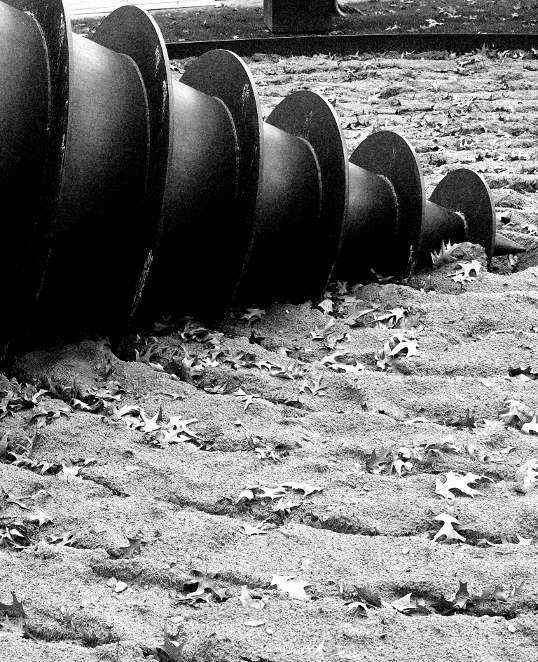
The most obvious piece was “Harrow”. It’s a giant steel spiral that rotates slowly around a circular bed of sand, cutting a series of concentric eponymous harrows and it goes.

The Harrow, in Lubben Park, Dallas, Texas

The Harrow, in Lubben Park, Dallas, Texas

HARROW

1992

by Linnea Glatt

Dallas, TX

Combining elements of time, motion and place, “Harrow” is an installation of many materials and elements. The motorized cone of Cor-Ten steel turns on a circular track completing one revolution in 24 hours. As the cone turns, its bands travel through a bed of sand forming concentric rings, Seats of Cor-Ten and wood are placed in informal groups amidst trees outside the circle of sand.

James Cinquemani designed and produced the mechanical elements of “Harrow”.

Linnea Glatt:

“I am interested in the idea of placemaking, of which this is my most obvious manifestation. Of my works, ‘Harrow’ is the most active and on the contrary the most serene and contemplative. The repetition and constancy of the bands of the cone drawing in the sand symbolize for me the cyclical nature of life and the balancing of life’s events. The gesture is meant to embrace, to settle and to provoke thought. As with my previous pieces, ‘Harrow’ implies a human presence and dialogue.”

 harrow1

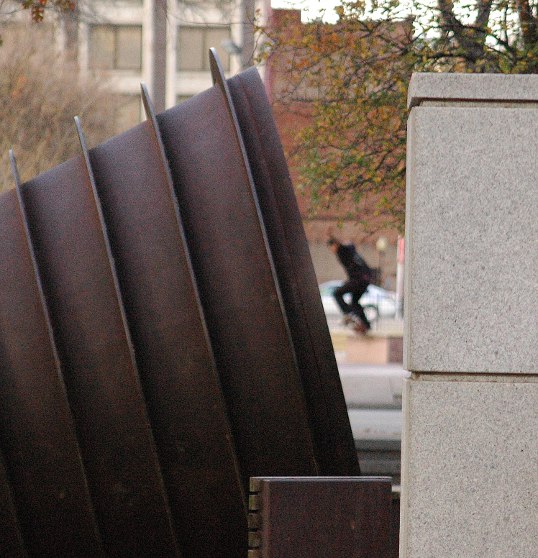
A distant, out of focus skateboarder jumps across the street from The Harrow.

A distant, out of focus skateboarder jumps across the street from The Harrow.

The Harrow, by Linnea Glatt

The Harrow, by Linnea Glatt

I sat and looked at it for a while, but it didn’t seem to be moving. Maybe they shut it off on the weekends. I’ll have to check it out again, see if I can see it roll.

Bicycle Thieves

French Quarter, New Orleans

French Quarter, New Orleans


.
.
.
The illusion of security is a heavy burden in the world.
.
.
.

Here and There – Chihuly and Winfrey Point

A photo I took a while back of the Chihuly Exhibit in the Arboretum, with White Rock Lake’s Winfrey Point in the distance across an arm of the lake. This huge glass sculpture is called “The Sun.”

Chihuly with Winfrey Point in the background, across the water.

Chihuly with Winfrey Point in the background, across the water.

A shot I took from a bicycle ride on Winfrey Point, with the Arboretum and the Chihuly Sun in the background.

Arboretum from Winfrey Point, a peloton of cyclists going by on the road.

Arboretum from Winfrey Point, a peloton of cyclists going by on the road.