Short Story (Flash Fiction) Of the Day, Pumpkins by Francine Prose

Actually, she is beheaded, her body thrown from the car and decapitated with such force that the head sails through the air and lands in a pile of pumpkins spilled out onto the road.

—-Francine Prose, Pumpkins

Reflecting Pool, City Hall, Dallas, Texas

In surfing around the internet and trying to learn/get inspiration on some flash fiction – I keep reading about the story Pumpkins, by Francine Prose. No wonder. It is crackerjack.

Read it here (Googledocs PDF):

Pumpkins by Francine Prose

Sunday Snippet, Tubers by Bill Chance

Alvin York was a man that knew what he liked and what he liked was roasted potatoes.

—-Bill Chance, Tubers

No Fried Egg Today


Tubers

by Bill Chance


Alvin York was a man that knew what he liked and what he liked was roasted potatoes. He had meticulously arranged his schedule so that he had a half-hour between the time the bus arrived at the station and the time the train left for his office in the city. He would buy a cardboard container of tiny round roasted taters from a squat man in a beret that had a cart next to the newsstand. He would also pick up that day’s newspaper from the stand and then read the editorial and sports pages while he ate his potatoes.

They were small and immature, the kind his mother had always referred to as new. Each one was bite-sized, tender, and sweet – a perfect morning snack. They were warm, but not so hot that you couldn’t pick them up with your fingers and eat them with ease.

The container was a sort of flat-bottomed cone, an ingenious folded design that the man in the beret would slide from a stack on top of his cart, open the lid, and then silently scoop out a serving of steaming spuds. Alvin even had a favorite table and chair, near the newsstand and facing the train platform, with the big art Deco clock in view also, so he could relax without fear of missing his ride. Some mornings, somebody else would be sitting at his table and that would put a frown on Alvin’s face, a frown slightly deeper than usual, as he was forced to search around for a different, inferior, perch.

Today, the station was very busy and crowded. Alvin worried about finding a proper spot. But as he stood outside the newsstand, next to the cart and the man with a beret, with his briefcase in one hand, his brand new newspaper under his arm, and his container of potatoes in the other, he saw a stranger rise from his favorite table and stride toward the platform.

“My lucky day,” Alvin said to himself as he moved in quickly, before anyone else could snag his seat.

The table was already covered in newspapers; obviously the previous sitter was an irresponsible litterer. Alvin sighed as he placed his food container on the table and arranged the bulky folded pages of newsprint in some sort of order, extracting his favorite sections in the battle.

When he finally brought the sports section below his eye level, Alvin jumped a bit when he saw that another man was occupying the chair opposite him… at his own table. He was bothered by the nerve of this person, obviously no more than another working commuter like himself, in his damp trench coat and briefcase, and his audacity at taking the chair without asking. There was no understanding the coarse effrontery of the population in these new days. Taking a seat without asking permission was a coarse and crude action of great brass, no matter how crowded the station or how occupied Alvin was arranging his paper.

Looking at the man, Alvin saw his container of roasted potatoes in the center of the table and that helped him feel a little better. He eagerly reached out and snatched a savory sphere off the top of the pile and popped it into his mouth.

He was surprised to see the man opposite not ignoring him as he ate and read, but staring at him with narrowed eyes – it was as if he took the potato eating as a personal affront. The man seemed suddenly silently angry. The man continued to stare at Alvin as he slowly reached out himself and ate one of the potatoes.

Alvin felt a strong sudden wave of heat course across his face. He was shocked, what kind of man steals another’s food? Alvin was not a greedy man, he considered himself benevolent and unselfish – but this was beyond the pale. Someone’s property is sacred, especially his food, especially his food during his morning commute. He did not know what to do. Looking at the other man’s eyes, he saw raw emotion but couldn’t really understand… was the man angry? But why should he be angry at Alvin? It was he who was the thief.

Should he say something? But what? His mind a buzzing hive Alvin decided against speaking up, he didn’t want to start a scene and had no idea how the stranger would react to such a provocation. There was really only one possible course of action.

Alvin ate another potato.

He stared at the man, wondering what he would do next. His eyes narrowed even further, his mouth set in a tense rictus, the skin on his face tight. Alvin gasped as the man reached out again for a potato and then seemed to have to use a great deal of willpower to relax his set jaw enough to get the food in past his teeth.

This continued, each man staring at the other, silent anger increasing, as they worked their way back and forth through the entire order of potatoes.

Finally, the man snatched the last one out, and with a wordless but audible irate grunt yanked the empty cardboard up and crumpled it in his fist. He stood quickly, spun on his heels, and marched stiffly to the nearest exit, disappearing into the street. He threw the crumpled container in a trash can as he left.

“Well I never!” Alvin finally shouted the moment he was sure the man was out of earshot. “The nerve! What is this world coming to?”

Looking up at the clock he saw it was only a few minutes until his train left. Still upset, he stood on shaking legs as he gathered the pile of newspapers together off the top of the table, arranging them so he could dump them in the recycle bin on the way to the train.

“Never was able to read my paper,” he whined out loud to nobody in particular, “My morning break ruined!”

Then, as he picked up the last section of newspaper, he looked down at the now bare table to see his container of potatoes, still resting where he had left it before sifting through the double set of newspapers. He had lost track. He must have covered them with the unused pile of newspaper. The container of potatoes that he had been eating had belonged to the other man.


Later that afternoon, as he was preparing for the trip home, he called his wife.

“I was going to heat up some chicken,” she said.

“Dear, I was thinking, why don’t we go out to that new Italian place down the block? I know you’ve wanted to try it out.”

“On a Wednesday?” his wife asked. She sounded incredulous.

“What the hell,” he said. “Let’s live a little.”

His wife was even more surprised when Alvin ordered a bottle of wine to go with the meal. They each had a glass and, over their salads Alvin spoke.

“I have a story to tell you, dear. It’s a good one.”

And he told her about the stranger and the potatoes. He had been thinking about it all day and looking forward to getting it off of his chest. He laughed at the end, and his wife let out a little chuckle, but then she suddenly looked thoughtful.

“What’s the matter?” Alvin asked.

“Well, I was thinking?”

“About what?”

“Right now, in another part of town somewhere, I’ll bet that man is telling the same story to his wife -the story about a stranger eating his potatoes.”

“Yes, I suppose so.”

“But it will be a different… he doesn’t know. He thinks you were stealing his potatoes. His story isn’t funny; I imagine he was terrified.”

“Yes, I guess he was.”

Short Story (Flash Fiction) Of the Day, The City of Things Finished by Jared Graham

The old man felt at home in the gloaming. He leaned close to the window, the fresh air teasing his nose and the whiskers of his long, white beard. All day he felt the oppression of his old body, a weathered hull tired of the ocean’s endless lapping.

—-Jared Graham, The City of Things Finished

Sailboats on White Rock Lake, Dallas, TX

Read it here:

The City of Things Finished by Jared Graham

from The Citron Review

What I learned this week, June 19, 2020

This equation will change how you see the world (the logistic map)

I have always been facinated with the Mandelbrot set and fractal math in general – this is a particularly good example.


The ‘Untranslatable’ Emotions You Never Knew You Had

From gigil to wabi-sabi and tarab, there are many foreign emotion words with no English equivalent. Learning to identify and cultivate these experiences could give you a richer and more successful life.

Some of these are fascinating

  • Desbundar (Portuguese) – to shed one’s inhibitions in having fun
  • Tarab (Arabic) – a musically induced state of ecstasy or enchantment
  • Shinrin-yoku (Japanese) – the relaxation gained from bathing in the forest, figuratively or literally
  • ktsuarpok (Inuit) – the anticipation one feels when waiting for someone, whereby one keeps going outside to check if they have arrived
  • Natsukashii (Japanese) – a nostalgic longing for the past, with happiness for the fond memory, yet sadness that it is no longer
  • Wabi-sabi (Japanese) – a “dark, desolate sublimity” centered on transience and imperfection in beauty
  • Saudade (Portuguese) – a melancholic longing or nostalgia for a person, place or thing that is far away either spatially or in time – a vague, dreaming wistfulness for phenomena that may not even exist
  • Sehnsucht (German) – “life-longings”, an intense desire for alternative states and realizations of life, even if they are unattainable
  • Pihentagyú (Hungarian) – literally meaning “with a relaxed brain”, it describes quick-witted people who can come up with sophisticated jokes or solutions
  • Desenrascanço (Portuguese) – to artfully disentangle oneself from a troublesome situation

Read more here:

The ‘Untranslatable’ Emotions You Never Knew You Had


Bread and Butter Pickles

I have always loved these things – and never knew why they were called that. Apparently, during the depression people made sandwiches with bread, butter, and pickles. And it seems to have been delicious.

Read about it here:

The history and mystery of America’s long-lost pickle sandwich


The History of Popcorn

I always thought that popcorn was a modern invention. I was wrong.

Long before boxes of Pop Secret lined grocery store shelves, corn began as a wild grass called teosinte in southwestern Mexico, according to research compiled by Mexico’s National Institute of Anthropology and History. Corn was probably cultivated as a domesticated crop around 9,000 years ago, but it wasn’t until 2012 that archaeologists unearthed the first evidence of popcorn in Peru: 6,700-year-old corn cobs studded with puffed kernels.

…..

Early popcorn probably resembled parched corn, which is made by cooking dried kernels, often in a frying pan. (Because parched corn typically uses kernels with lower water content, curbing its ability to pop, it’s considered a predecessor of CornNuts.) “Parched corn is much crunchier,” Frank says. “We know that in the early Southwest, there was popcorn—it just wasn’t a Jiffy Pop that you’d put in your microwave.”

The fluffy popcorn we know and love today is, in part, the result of thousands of years of careful cultivation of a few different strains of corn by those early tribes.

Read more here:

The History of Popcorn: How One Grain Became a Staple Snack


Corn in a Cup


_______________________________________________________________________________________________________________________________

Steadman and Thompson’s first meeting

The story of Hunter S. Thompson and Ralph Steadman covering the Kentucky derby.

Read it here:

Decadence and Depravity in Louisville, Kentucky


_______________________________________________________________________________________________________________________________


Short Story Of the Day, The Lagoon by Joseph Conrad

A rumor powerful and gentle, a rumor vast and faint; the rumor of trembling leaves, of stirring boughs, ran through the tangled depths of the forests, ran over the starry smoothness of the lagoon, and the water between the piles lapped the slimy timber once with a sudden splash. A breath of warm air touched the two men’s faces and passed on with a mournful sound – a breath loud and short like an uneasy sigh of the dreaming earth.

—- Joseph Conrad, The Lagoon

The land of lakes, volcanoes, and sun. A painting I bought on my last trip to Nicaragua.

I re-read The Secret Sharer the other night (haven’t we all read that in school?) and now I’m thinking of Nostromo – a novel I started once (inspired by the ship in the original Alien) but never finished. I want to finish it now.

So we have a Joseph Conrad short story, The Lagoon, about death and love and courage… and the jungle.

Read it here:

The Lagoon by Joseph Conrad

From East of the Web

Short Story Of the Day (Flash Fiction) A Story of Stolen Salamis by Lydia Davis

The landlord was resigned and philosophical, but corrected him: ‘They were not sausages. They were salamis.’

—- Lydia Davis, A Story of Stolen Salamis 

Meat Case – Italian Sausage and more

Lydia Davis is a well-known and acknowledged master of writing short short fiction. She was writing these before Flash Fiction even existed.

Today we have five of her works, all crackerjack – the first one is a tale of stolen salamis. Read them all and learn.

Read it here:

A Story of Stolen Salamis by Lydia Davis

From Five Dials

Sic Mundus Creatus Est

“The distinction between past, present and future is only a stubbornly persistent illusion”
― Albert Einstein

Dark

It was almost a year ago when I became seriously ill during a writing event in New Orleans (this year’s event has been cancelled – not sure if I would have gone – will try to go next year). The blog entry is here: Back From the Shadows Again.

So I spent a couple days in intensive care and a few more in the Tulane Medical center. When I was released I was very weak and spent a week at my son’s apartment on Poydras until I felt strong enough to make it back to Dallas.

I spent most of my time there sleeping or struggling with reality. My son Lee has a studio apartment with a massive HD television that dominates the longest wall. While I was fading in and out of this world, he was binge watching some incredibly strange German-language television show. He apologized for ignoring me and watching for hours on end – but I needed to be left alone so I could rest and it was fine. I was not completely conscious and looking at the television from an angle – I was not sure exactly what I was seeing (and could not read the subtitles). What I thought I saw was extremely odd and sort of disturbing and haunted my illness-enhanced dreams.

The view from my son Lee’s apartment – New Orleans, Louisiana

“Lee, what the hell are you watching?” I asked.

“Dark.” Was his reply.

When I made it back to Dallas I had to see what it was that Lee had binged and I had sort-of been subjected to.

Sure enough, it was Dark – the first Netflix original German Language series. There had been two seasons so far, with a third (and final) one scheduled for the future. Eventually, as my life returned to normal, I watched the thing – eagerly expecting something odd and original.

It certainly was that and more. True to its title, it is dark. It is a strange, incredibly complex tale of time travel and evil that makes Stranger Things (which it is sometimes mistakenly compared to) look like Fuller House. The fact that it is in German makes it even more exotic (dubbing is available but not recommended). I really enjoyed it – even though I had to take extensive notes and do online research after each episode to try and keep up with the convoluted and confusing tangle of characters (most appear at different times and different ages – everyone is related to everyone else in unexpected ways).

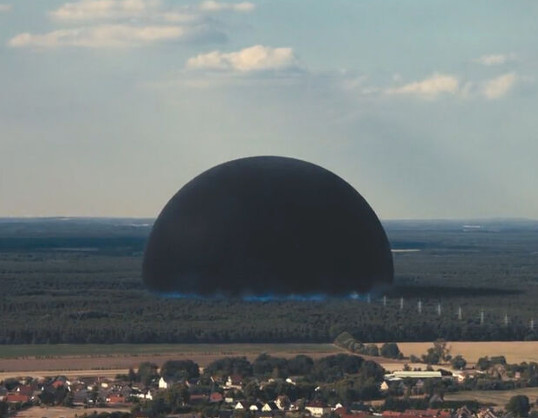
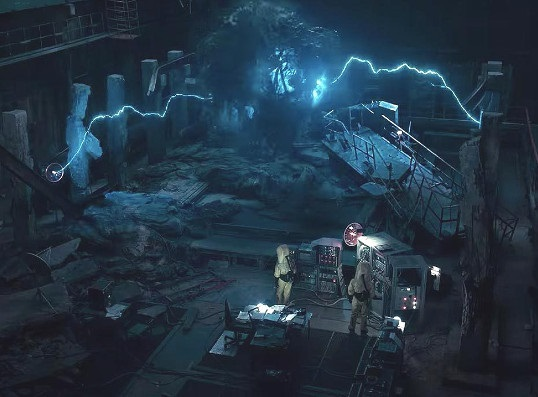
Certain scenes had been burned into my mind from that New Orleans sick bed – it was fun to see them reappear in context. The discovery of the “God Particle” in the future (and in the past) was one.

The God Particle

And now the third (and final) season is about to drop (June 27, 2020 – the day of the Dark apocalypse). So I’m re-binging the original (a couple episodes a day as I ride my spin bike) and refreshing my notes.

The Date of the Dark Apocalypse

You only have a few days left – be there or be square.

The question is not where – it is when.

Short Story Of the Day, Misery by Anton Chekhov

His misery is immense, beyond all bounds. If Iona’s heart were to burst and his misery to flow out, it would flood the whole world, it seems, but yet it is not seen. It has found a hiding-place in such an insignificant shell that one would not have found it with a candle by daylight. . . .

—–Anton Chekhov, Misery

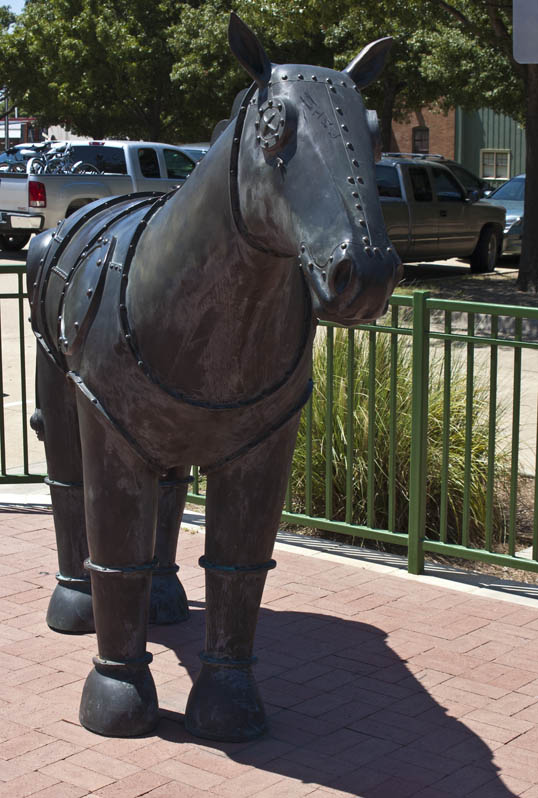
Iron Horse, by Tom Askman
Plano, Texas

Read it here:

Misery by Anton Chekhov

Sunday Snippet – Alphasmart by Bill Chance

“She’s not my wife,” the man said, “She’s my aunt, and she likes you.”

—–Bill Chance, random file from my Alphasmart Neo

Map Bag

My Not-A-Purse. What is strange is that I found this image floating around on the internet – I don’t know where it originally came from. But if you look, there is an Alphasmart Neo sticking up in the bag. I can’t believe other people out there have Neos in their bags, exactly like mine.

Over the decades I have been on a quest for the perfect, distraction-free, portable writing machine.

I have experimented with netbooks, phones with bluetooth keyboards and tablets with wired keyboards (which actually works well – but not in the sun).

My Toshiba Netbook – rode my bike to a coffee shop.

Bluetooth Keyboard and my phone.

My android tablet and portable keyboard, I stopped my bike ride on the Bridge Park over the Trinity River to get some writing done.

My favorite (but long obsolete) solution, however, has always been the Alphasmart. It’s a portable keyboard, powered by double A batteries (which last years) with a tiny four line display. You type text into it and it keeps the text. To export, you USB the thing to your regular computer, hit SEND, and it retypes your text back into whatever program you want. Amazing and simple.

I used an Alphasmart 3000 for a couple years. I wasn’t happy with it – the keyboard was clunky and hard to type fast on. I replaced it with an upgraded version that had an excellent keyboard – the  Neo – which was really good. I still have it – I lost one key somewhere, but it isn’t an important one. I need to dig that thing out and start carrying it again.

The medium used to generate words (handwriting, Alphasmart, tablet, phone laptop, desktop, digital or tape recorder, manual typewriter, Dragon naturally speaking) has a huge influence on how I write. I think I’m going to dig out the Alphasmart Neo and carry it again. Since you can only see four short lines (a tiny bit of text) at any one time, it helps to kill off your internal editor – you just move on. It does tend to produce small bits of jarring snippets of text, however. These, hopefully, can be expanded and re-used later.

I found some files on my computer from many years ago labled “AS1, AS2, AS3…” and so one. These were collections of stuff I had written on the Alphasmart Neo up to a decade ago.

Here’s one:

I was about to leave a run-down roadhouse in Bumfucker, Arkansas, when I offered two bottles of Budweiser to a local couple I had just met.

“One for you and one for your wife.”

“She’s not my wife,” the man said, “She’s my aunt, and she likes you.”

Later I was lying on a noisy mattress in the back of her trailer, thinking, there are other people in this room. But they were only cats.

I’m actually sort of excited about bringing my Alphasmart Neo back from the dead. If you want one – they are readily available used for 35 bucks or so from Ebay.

Short Story (Flash Fiction) Of the Day, In A Shop by Jevgenija Zukova

We left the shop; I gathered my hair in a bun. While it was just windy outside, the storm of thoughts in my mind was predesignating shocking guilt and shame. I swore to myself: ‘I will never let this happen again’.

—–Jevgenija Zukova, In A Shop


Shopping for vegetables, trying out samples.

There is that difficulty in deciding who is going to pick up the check, navigating the emotional ramifications in a cacophony of shopping noises. This was always a challenge – now, wearing a mask, with nobody within six feet – a nightmare.

Read it here:

In A Shop by Jevgenija Zukova

from Life is Acid And Sweet

Jevgenija Zukova about page