X , Nasher XChange, Entry Two of Ten

Previously in the Nasher XChange series:
Flock in Space, Nasher XChange, Entry One of Ten

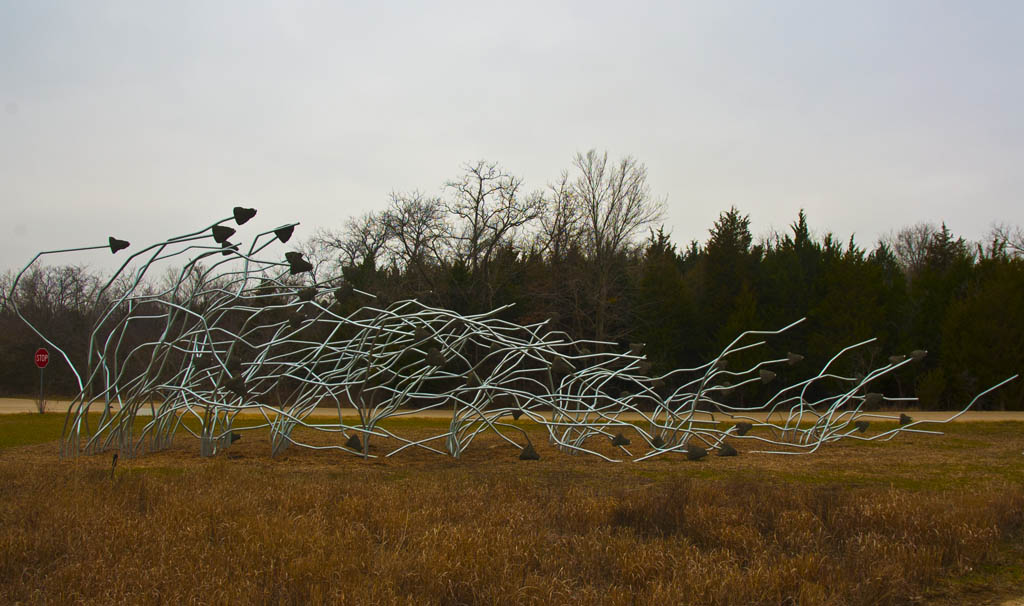
Out of the wide variety of the Nasher XChange art exhibition the sculpture/work that is closest to where I live is X, a sculpture done by Liz Larner on the University of Texas at Dallas (UTD) campus. It’s ten easy bicycle miles, with a trail the whole way. On cold and wet Sunday morning, I bundled up and rode up there – forgetting my map, so I had to wander the campus a bit until I found the sculpture.

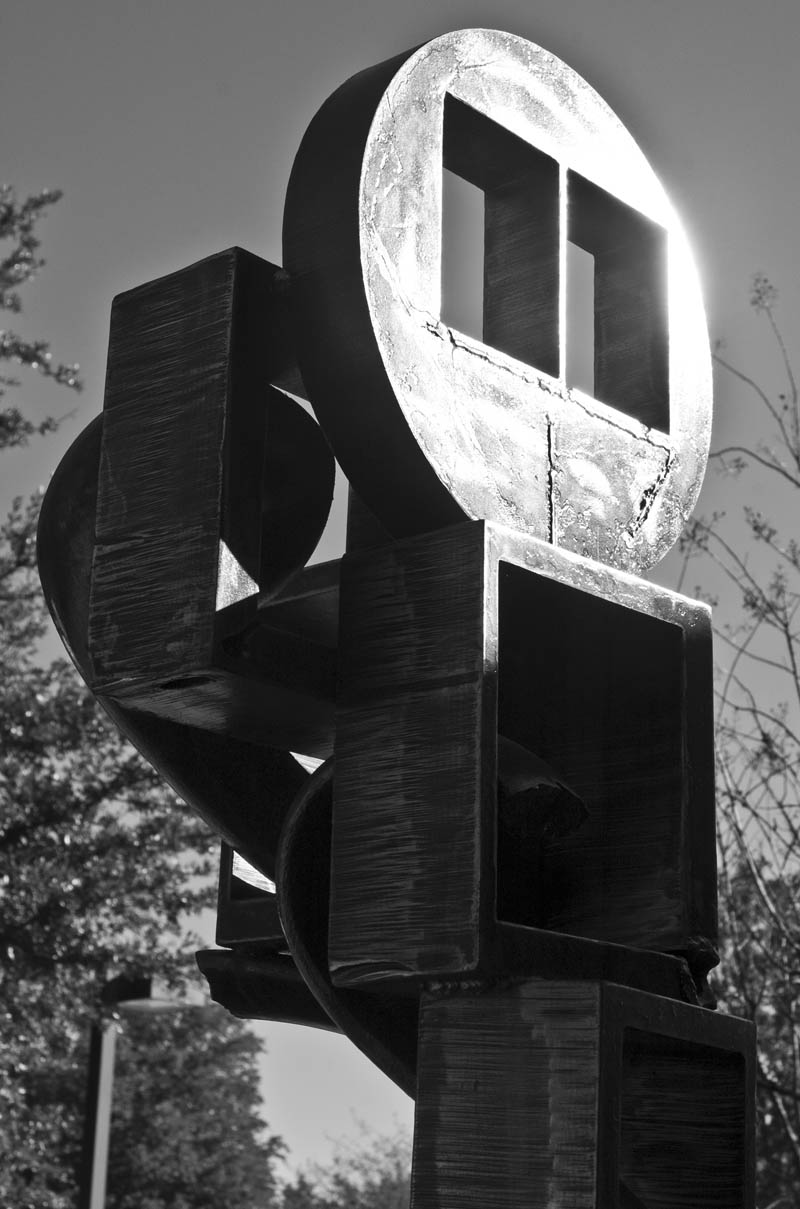
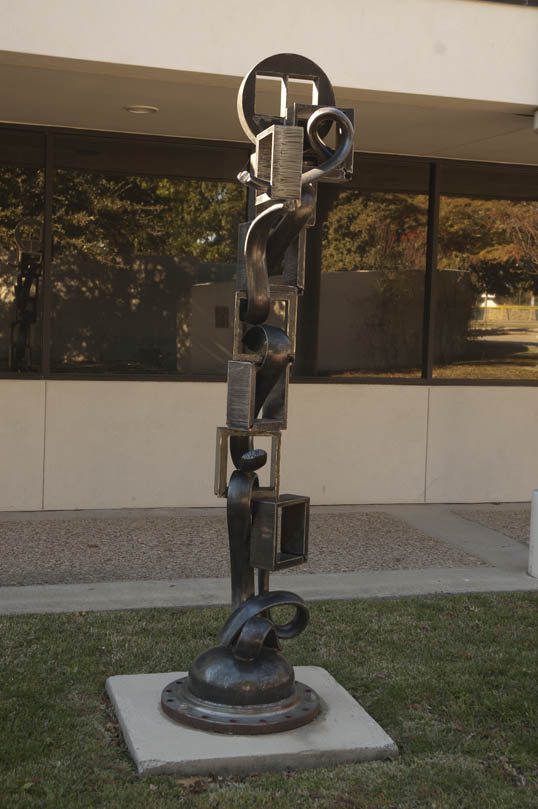
There are actually two versions. A preliminary wooden version sits inside a lobby of the new arts and science building while a polished metal version sits in a deep, narrow grass-covered atrium outside. It’s a surprisingly isolated location – I can’t imagine too many people visiting it there, unless you count the students walking by overhead along some exterior corridors.

In some ways I like the wooden, temporary version better. It seems warmer and more organic – a nice contrast to the abstract mathematical variable qualities of the X.
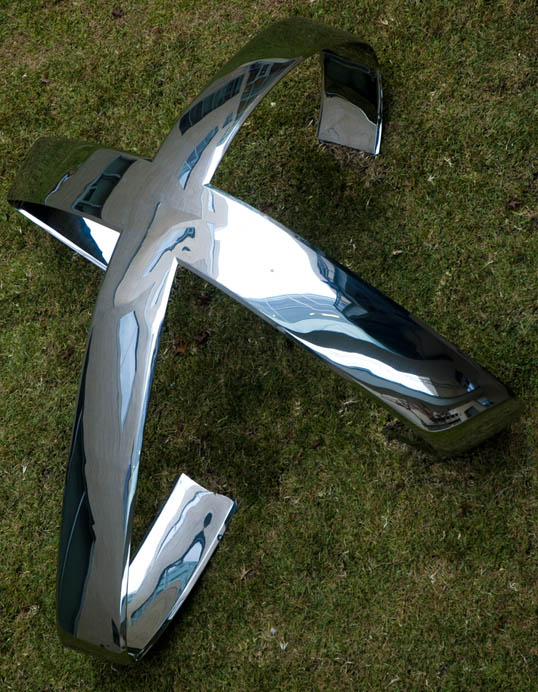
Liz Larner X,  UTD, Richardson, Texas
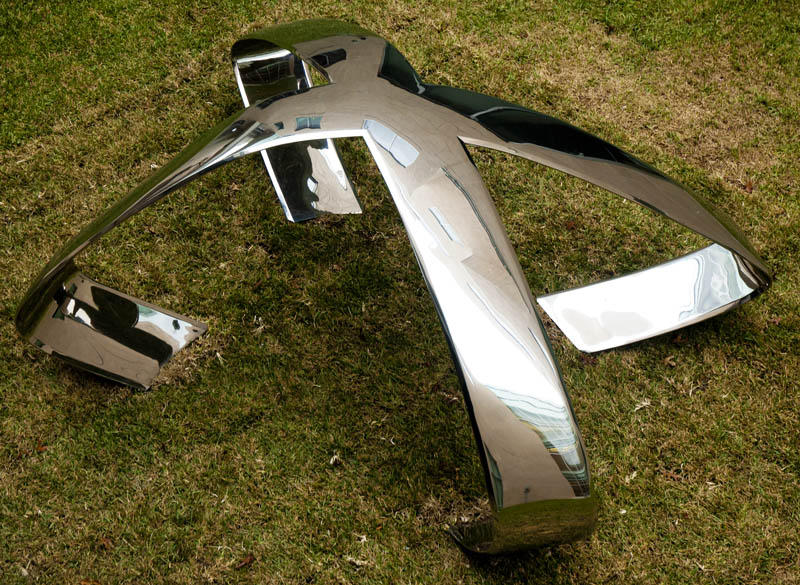
Liz Larner
X,
UTD, Richardson, Texas

Liz Larner X,  UTD, Richardson, Texas (click to enlarge)

Liz Larner
X,
UTD, Richardson, Texas
(click to enlarge)

From the Nasher Website:

Liz Larner
Los Angeles, California
X
800 W. Campbell Rd.
University of Texas at Dallas
Edith O’Donnell Arts and Technology Building

Two sculptures elegantly symbolize the intersection of art and technology.

Liz Larner is a Los Angeles-based artist whose work has been characterized by a sustained examination into the nature of sculpture. For Nasher XChange, Larner has created two sculptures for the new Edith O’Donnell Arts and Technology Building as a symbol for the exchange of ideas between these disciplines. Arts and Technology is a new interdisciplinary curriculum at UT Dallas that fosters collaboration at the intersection of the arts and humanities with science and engineering, and is a partnership between the Erik Jonsson School of Engineering and Computer Science and the School of Arts and Humanities.

The innovative X-shape of the sculptures, described by the artist as continuing her “investigation into the open form and the use of line to create volume,” has been developed over several years and could not have been realized without the use of digital modeling technology.

Larner’s experience working both with and without technology intrigued faculty at UT Dallas, and made this pairing a natural fit as the program progresses through its first year. A wood version of the sculpture, on view inside the building, embodies the intersection of traditional sculpture media and new technology. The stainless steel version, being made for the outdoor courtyard, evokes the futuristic and technological, providing a fleeting succession of colors and flashes of light and shadow reflecting the activities and experiences of the building’s occupants and visitors.
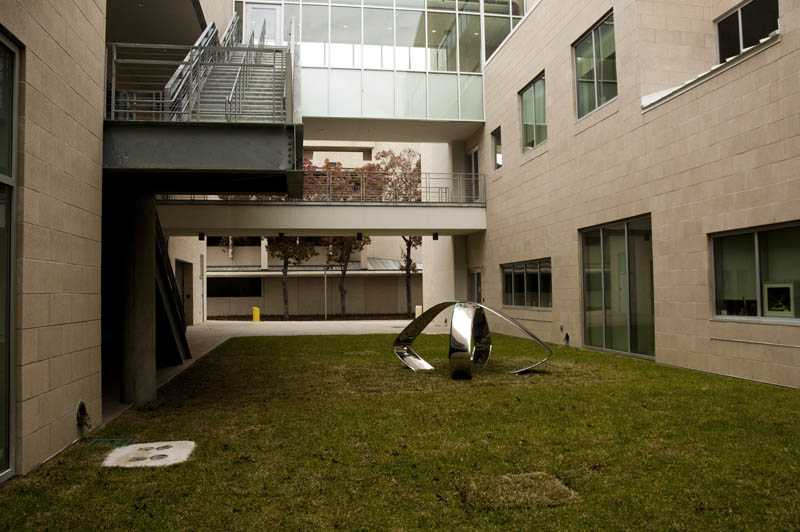
Liz Larner X,  UTD, Richardson, Texas (click to enlarge)

Liz Larner
X,
UTD, Richardson, Texas
(click to enlarge)
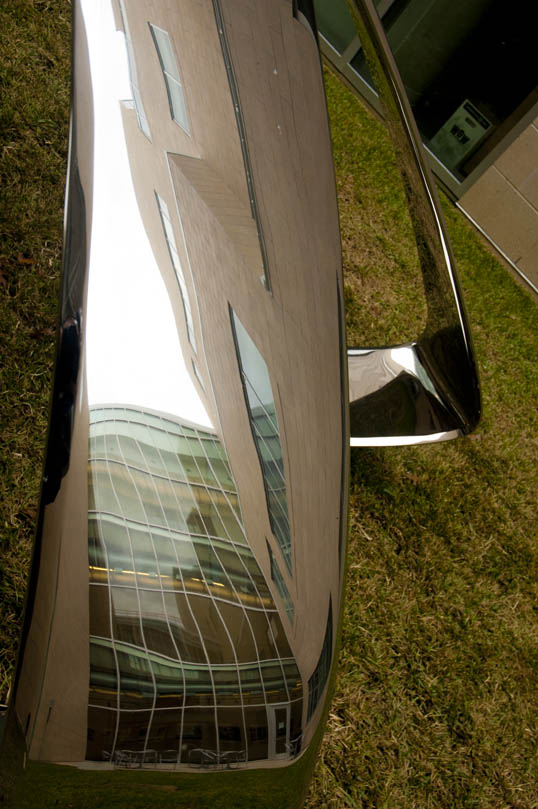
Liz Larner X,  UTD, Richardson, Texas (click to enlarge)

Liz Larner
X,
UTD, Richardson, Texas
(click to enlarge)

Liz Larner X,  UTD, Richardson, Texas

Liz Larner
X,
UTD, Richardson, Texas

From the Label Text:
Liz Larner
X, 2013
Stainless steel
Courtesy of the artist and Regen Projects, Los Angeles

Los Angeles-based artist Liz Larner engages some of the most intrinsic issues of sculpture, such as the relation of line and mass, or of volume and density, yet she does so in unexpected ways, in a range of materials and techniques. For Nasher XChange, Larner has created two sculptures for the new Edith O’Donnell Arts and Technology Building that can be seen as figures enacting the exchange of ideas between these disciplines. The X-shape of the sculptures, described by the artist as continuing “my investigation into the open form and the use of line to create volume,” has developed over several years and could not have been realized without Larner’s use of digital modeling technology. A wood version of the sculpture, on view inside the building, embodies the intersection of traditional sculpture media and new technology. A stainless steel version, seen here, evokes the futuristic and technological, providing a fleeting succession of colors and flashes of light and shadow reflecting the activities and experiences of the building’s occupants and visitors.

Liz Larner X,  UTD, Richardson, Texas Indoor, Wooden Version (click to enlarge)

Liz Larner
X,
UTD, Richardson, Texas
Indoor, Wooden Version
(click to enlarge)

My Raleigh Technium road bike reflected in the window outside X,  UTD, Richardson, Texas
My Raleigh Technium road bike reflected in the window outside
X,
UTD, Richardson, Texas

Flock in Space, Nasher XChange, Entry One of Ten

In October, I went to a lecture at the Nasher Sculpture Center about the Nasher XChange – a fascinating exhibition of ten varied artistic works spread out across Dallas. Listening to the speakers – one subject they kept coming back to again and again is how big the city is, how spread out the sites of the XChange are, and how much driving they have had to do on this project. They kept talking about Dallas as a “car oriented city” and the way the city seems to consist completely of massive freeways and parking lots.

The lecture was entertaining and interesting and I agree, mostly, with the speakers. However, this is not how it has to be. If you never get out of your car then the city does seem to consist of freeways and parking lots.

It is huge and spread out – but I have learned that if you have a DART train pass and a bicycle, you can get anywhere. I made the decision, right then and there, to visit all ten Nasher Xchange sites without using a car. I immediately took a look at the map and began plotting my routes.

The weather has been nasty this winter which has really cut into my bike riding – plus I’ve been sick a lot (Cedar Fever, actually) so I didn’t get out as fast as I wanted to. As of this weekend, I had been to (or seen) six. There were still three sites in South Dallas that were still on my list.

I worked out a route – take the Red DART line from Richardson to Downtown Dallas, then the Green Line to the Buckner Station. Then I could ride to the sculpture Flock in Space at the Trinity River Audubon Center, then a trail through the Great Trinity Forest on to Black & Blue Cultural Oasis in the Hills at Paul Quinn College. At that point I would turn north and ride through the neighborhoods to the third Nasher exhibit – Buried House. Then catch the DART Blue Line at the Kiest Station – transfer to the Red Line downtows and back home. The biking distance was 12.5 miles – not too far.

But this was a part of the city that I was not familiar with at all. I wasn’t too comfortable with my route; sometimes it’s hard to decide how bad traffic is based on Google Maps – but you have to do the best you can do.

The weather today was not too good, cold with a little spitting rain, but there’s a cold front blowing in and it’s not going to get better soon. The Nasher XChange Exhibition ends soon. So it was now or never.

The only problem I had getting from the train station to the first exhibit – at the Trinity River Audubon Center was the fact that the neighborhood had a lot of folks with pit bulls running loose. I can usually outrun a dog on my bike, but it’s not a lot of fun.

I’m going to have to go back to the Audubon Center again – with nicer weather and more time. The bike trails are really nice. The sculpture was very cool. But I had somewhere to get to so I snapped a few pictures and set out again.

Flock in Space, Ruben Ochoa Trinity River Audubon Center, Dallas, Texas (click to enlarge)

Flock in Space, Ruben Ochoa
Trinity River Audubon Center, Dallas, Texas
(click to enlarge)

Flock in Space, Ruben Ochoa Trinity River Audubon Center, Dallas, Texas (click to enlarge)

Flock in Space, Ruben Ochoa
Trinity River Audubon Center, Dallas, Texas
(click to enlarge)

From the Label Text:

Ruben Ochoa
Flock in Space, 2013
Concrete and steel

Ruben Ochoa is a Los Angeles-based artist who has created a unique body of work that transforms common materials into breathtaking sculptures. For his Nasher Xchange commission. Ochoa has responded to the origins of the rinity River Audubon Center – now a beautiful nature preserve at the edge of the largest urban hardwood forest in the United States – as an illegal dump site in Southeast Dallas. Ochoa has installed a group of concrete and steel sculptures derived from post footings in chain link fences. In conversation with Brancusi’s iconic sculpture Bird in Space, Ochoa envisions his installation as man-made forms morphing into organic movement, reminiscent of a flock of birds. By evoking the site’s change from urban dumping ground to place of scenic beauty, Ochoa’s work reflects the malleability and resiliency of nature.

My commuter bike in front of Flock in Space, Ruben Ochoa Trinity River Audubon Center, Dallas, Texas (click to enlarge)

My commuter bike in front of Flock in Space, Ruben Ochoa
Trinity River Audubon Center, Dallas, Texas
(click to enlarge)

Flock in Space, Ruben Ochoa Trinity River Audubon Center, Dallas, Texas (click to enlarge)

Flock in Space, Ruben Ochoa
Trinity River Audubon Center, Dallas, Texas
(click to enlarge)

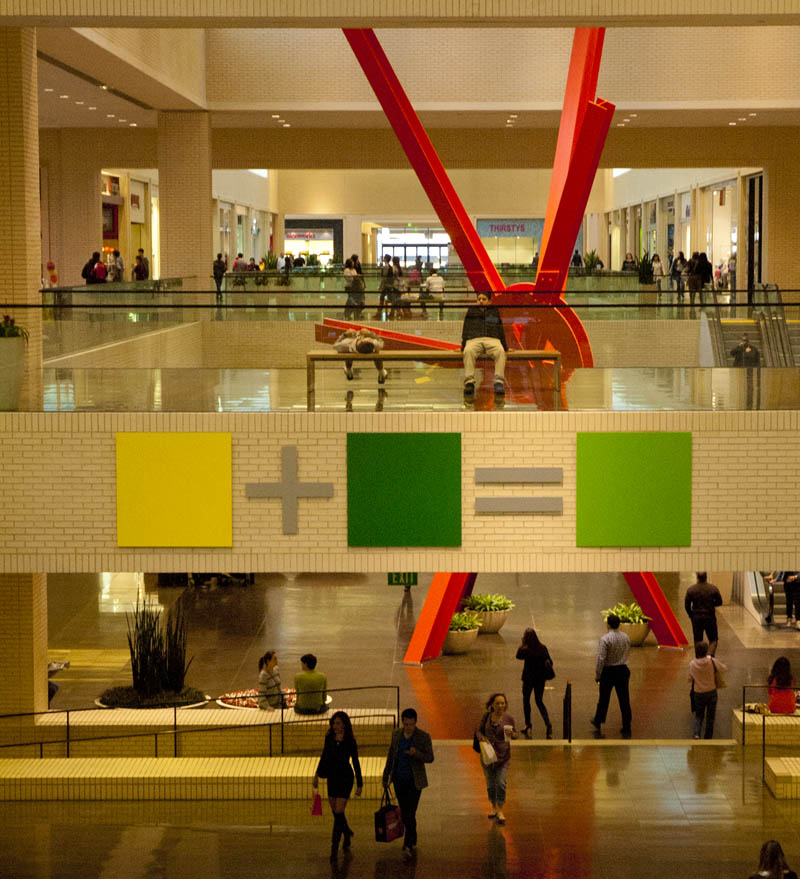
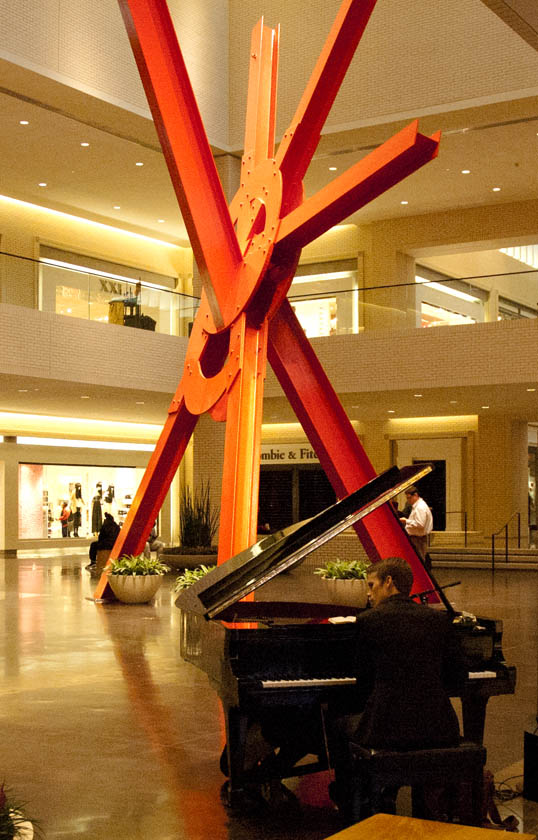
Ad Astra

Northpark Center, Dallas, Texas (click to enlarge)

Northpark Center, Dallas, Texas
(click to enlarge)

Mark di Suvero
Ad Astra, 2005
Painted Steel
48 x 25 feet

Other works by di Suvero in the Dallas area – Proverb and Ave

Pamela Nelson and Robert A. Wilson
Color Equations, 2007
4′ x4′ Placards (aluminum with glossy vinyl Surface

I took the train to the Park Lane station and walked across Central Expressway to Northpark Center to look at one of the Nasher Xchange sculptures there. To walk to Northpark is a subversive act in itself. It is the epitome of car culture, of consumer culture, of upper crust shopping culture.

I felt like I was an alien, a barbarian spy infiltrating a pecunious fortress.

Of course Northpark is more than a mere shopping experience. It is the heart of Raymond Nasher’s real estate empire and the main source of the funds he used to build his incredible collection of sculpture and his museums, including Dallas’s Nasher Sculpture Center. There are some incredible artworks installed in the mall.

So I had to walk around and look at them. It is a very odd and unique setting for some amazing art. To be there looking at sculpture and not toting little bags with designer names or logos on them…. it was surreal.

Ad Astra, Mark di Suvero Northpark Center Dallas, Texas

Ad Astra, Mark di Suvero
Northpark Center
Dallas, Texas

Ad Astra, Mark di Suvero Northpark Center Dallas, Texas (click to enlarge)

Ad Astra, Mark di Suvero
Northpark Center
Dallas, Texas
(click to enlarge)

It’s a Slam Dunk

“Basketball is an intricate, high-speed game filled with split-second, spontaneous decisions. But that spontaneity is possible only when everyone first engages in hours of highly repetitive and structured practice–perfecting their shooting, dribbling, and passing and running plays over and over again–and agrees to play a carefully defined role on the court. . . . spontaneity isn’t random.”

― Malcolm Gladwell

Irving Arts Center
Irving, Texas

George Tobolowsky (Dallas, TX)
It’s a Slam Dunk (2007)
Welded Steel

In the background is Fountain Columns by Jesús Bautista Moroles

George Tobolowsky (Dallas, TX) It's a Slam Dunk (2007) (click to enlarge)

George Tobolowsky (Dallas, TX)
It’s a Slam Dunk (2007)
(click to enlarge)

“I am more than just a Serious basketball fan. I am a life-long Addict. I was addicted from birth, in fact, because I was born in Kentucky.”
― Hunter S. Thompson

George Tobolowsky (Dallas, TX) It's a Slam Dunk (2007) (click to enlarge)

George Tobolowsky (Dallas, TX)
It’s a Slam Dunk (2007)
(click to enlarge)

“We old athletes carry the disfigurements and markings of contests remembered only by us and no one else. Nothing is more lost than a forgotten game.”
― Pat Conroy

George Tobolowsky (Dallas, TX) It's a Slam Dunk (2007)

George Tobolowsky (Dallas, TX)
It’s a Slam Dunk (2007)

“And I would be the first to admit that probably, in a lot of press conferences over the time that I have been in coaching, indulging my own sense of humor at press conferences has not been greatly to my benefit.”
― Robert Montgomery Knight

When I first graduated from college I took a job in a small city isolated out on the windswept Great Plains, only a few miles from the little town my family was from. I didn’t know anybody in town and there wasn’t all that much to do anyway so I thought I’d take a class at the local junior college. It was funny, I had trouble enrolling (I had to get permission from a dean) because, even though I had four years at university, my high school transcripts were unavailable, lost in the revolution.

I had never been able to take psychology – the classes often filled up, with preference given to students in the major, plus it was impossible to fit a class in around my extensive laboratory courses. So I enrolled in Psych 101 at the junior college.

It was shocking how easy the class was, especially after coming through four years of chemistry, math, and physics. I barely had to study and I don’t think I missed a single question on a single exam. Yet the other student constantly complained about the amount of work assigned and the difficulty of the tests. It was like high school. I remember thinking that if at university anyone would dare (and none ever did) complain, the professor would have simply pointed to the door.

The instructor, however, was excellent. A very old man, he taught an interesting class and dealt with the whining with more patience than I thought possible… or necessary.

One day he came up to me before class and asked me a question.

“Your last name, did you have a father from around here.”

“Yes, my dad is from a small town nearby.”

“Did he play basketball?”

“Yes.”

“I remember being the referee when your father played in high school. I had never seen an athlete like that. He was the best basketball player I ever reffed.”

“You’re kidding. You remember him after all this time?”

“Yes, it was quite a game. I remember I fouled him out of the game near the end.”

The next weekend I told this story to my father.

“He’s lying,” my father said, “I never fouled out of a game.”

Travelers

“Don’t be amazed if you see my eyes always wandering. In fact, this is my way of reading, and it is only in this way that reading proves fruitful to me. If a book truly interests me, I cannot follow it for more than a few lines before my mind, having seized on a thought that the text suggests to it, or a feeling, or a question, or an image, goes off on a tangent and springs from thought to thought, from image to image, in an itinerary of reasonings and fantasies that I feel the need to pursue to the end, moving away from the book until I have lost sight of it. The stimulus of reading is indispensable to me, and of meaty reading, even if, of every book, I manage to read no more than a few pages. But those few pages already enclose for me whole universes, which I can never exhaust.”
― Italo Calvino, If on a Winter’s Night a Traveler

Travelers
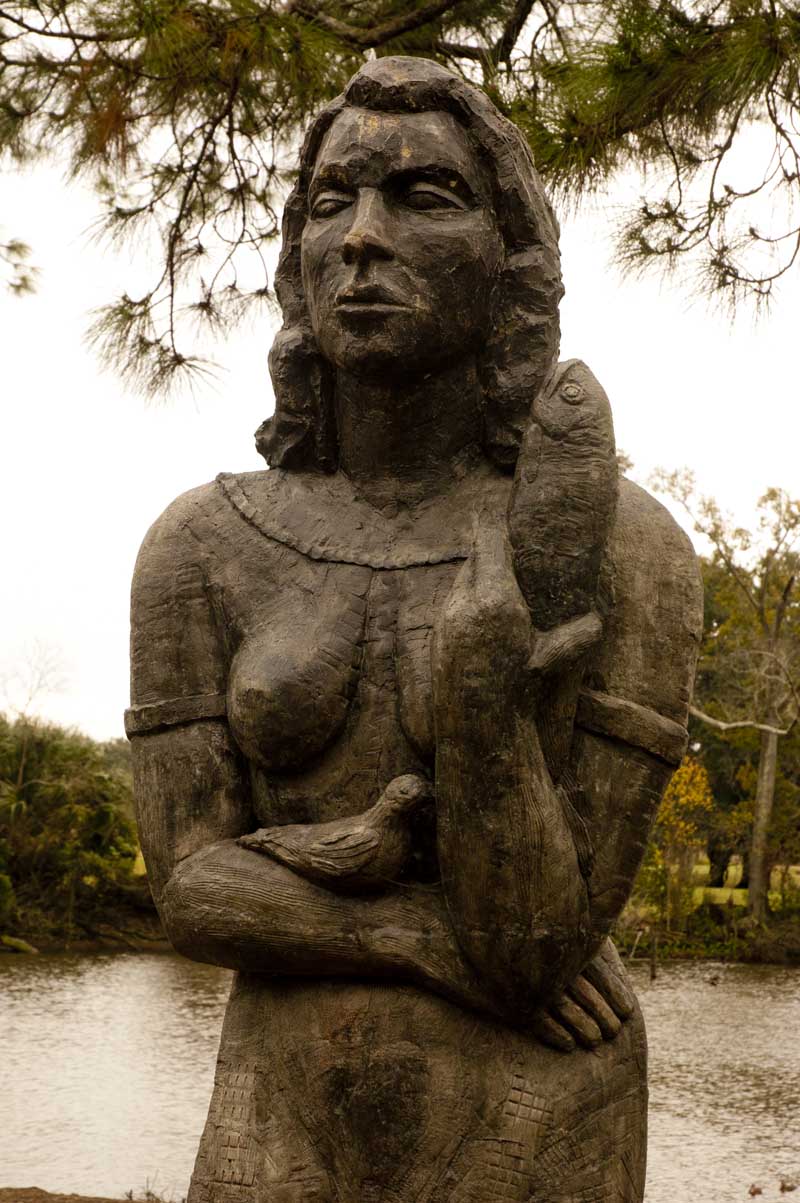
Deborah Masters
Sculpture for New Orleans
Audubon Park
New Orleans, Louisiana

Travelers  Deborah Masters Audubon Park, New Orleans (click to enlarge)

Travelers
Deborah Masters
Audubon Park, New Orleans
(click to enlarge)

If we find poetry in the service station and motel, if we are drawn to the airport or train carriage, it is perhaps because, in spite of their architectural compromises and discomforts, in spite of their garish colours and harsh lighting, we implicitly feel that these isolated places offer us a material setting for an alternative to the selfish ease, the habits and confinement of the ordinary, rooted world.”
― Alain de Botton, The Art of Travel

Travelers  Deborah Masters Audubon Park, New Orleans (click to enlarge)

Travelers
Deborah Masters
Audubon Park, New Orleans
(click to enlarge)

“What is that feeling when you’re driving away from people and they recede on the plain till you see their specks dispersing? – it’s the too-huge world vaulting us, and it’s good-bye. But we lean forward to the next crazy venture beneath the skies.”
― Jack Kerouac, On the Road

Baritone

Used to tell Ma sometimes
When I see them riding blinds
Gonna make me a home out in the wind
In the wind, Lord in the wind
Make me a home out in the wind

I don’t like it in the wind
Wanna go back home again
But I can’t go home thisaway
Thisaway, Lord Lord Lord
And I can’t go home thisaway

I was young when I left home
And I been out rambling ‘round
And I never wrote a letter to my home
To my home, Lord Lord Lord
And I never wrote a letter to my home
—-Bob Dylan, I Was Young When I Left Home

My little bike ride through the Tulane campus was bittersweet. It was fun but I was filled with a melancholy nostalgia. Lee has graduated – this might be my last visit… or at least it will be the last visit with any connection or significance. I remembered visiting five years ago for parent’s weekend, walking the sidewalks on the guided tour, imagining what it would be like to study at such a beautiful place in such an amazing city.

This last visit – I almost felt more connection than with my own campus… that was long ago and I was just a kid, anyway. Nobody knows the terrible lucidity of nostalgia at a young age – it only comes with the onslaught of incipient dotage.

Baritone
Mia Westerlund Roosen
Tulane Campus
New Orleans, Louisiana

Baritone Mia Westerlund Roosen Tulane Campus, New Orleans (click to enlarge)

Baritone
Mia Westerlund Roosen
Tulane Campus, New Orleans
(click to enlarge)

“The Greek word for “return” is nostos. Algos means “suffering.” So nostalgia is the suffering caused by an unappeased yearning to return.”
― Milan Kundera, Ignorance

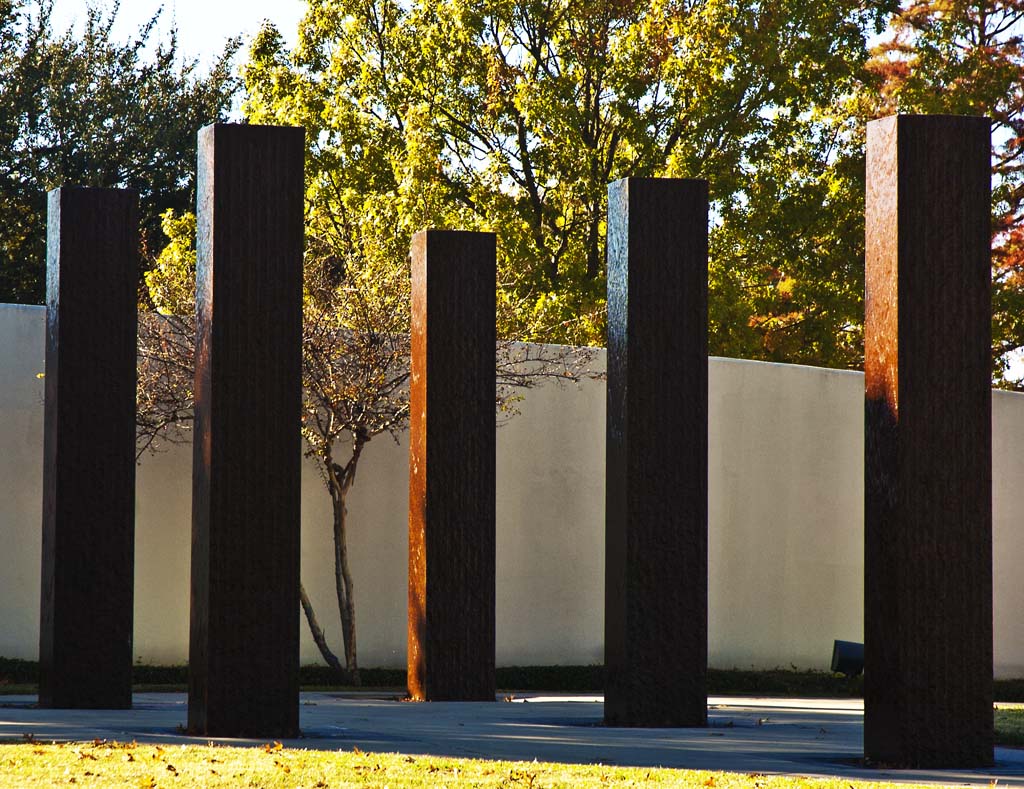
Fountain Columns

Irving Arts Center, Irving, Texas

Jesús Bautista Moroles
Fountain Columns, 1998
Dakota Mahogany Granite

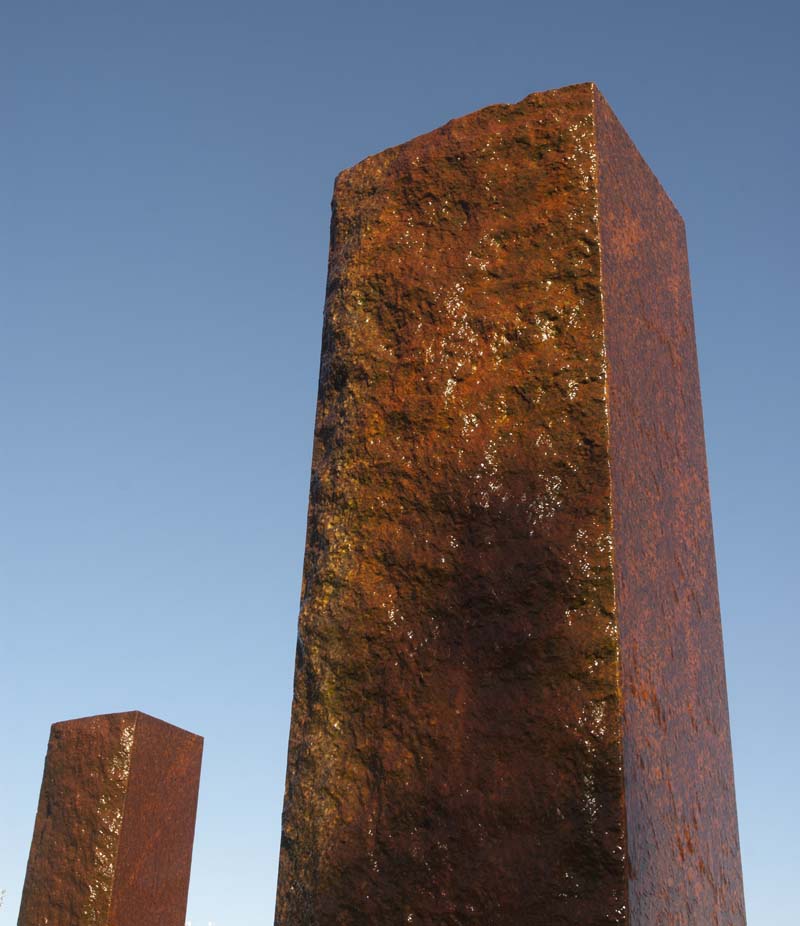
Jesús Bautista Moroles Fountain Columns (click to enlarge)

Jesús Bautista Moroles
Fountain Columns
(click to enlarge)

“Elmore Leonard’s Ten Rules of Writing

1. Never open a book with weather.
2. Avoid prologues.
3. Never use a verb other than “said” to carry dialogue.
4. Never use an adverb to modify the verb “said”…he admonished gravely.
5. Keep your exclamation points under control. You are allowed no more than two or three per 100,000 words of prose.
6. Never use the words “suddenly” or “all hell broke loose.”
7. Use regional dialect, patois, sparingly.
8. Avoid detailed descriptions of characters.
9. Don’t go into great detail describing places and things.
10. Try to leave out the part that readers tend to skip.

My most important rule is one that sums up the 10.

If it sounds like writing, I rewrite it.”
― Elmore Leonard

Jesús Bautista Moroles Fountain Columns (click to enlarge)

Jesús Bautista Moroles
Fountain Columns
(click to enlarge)

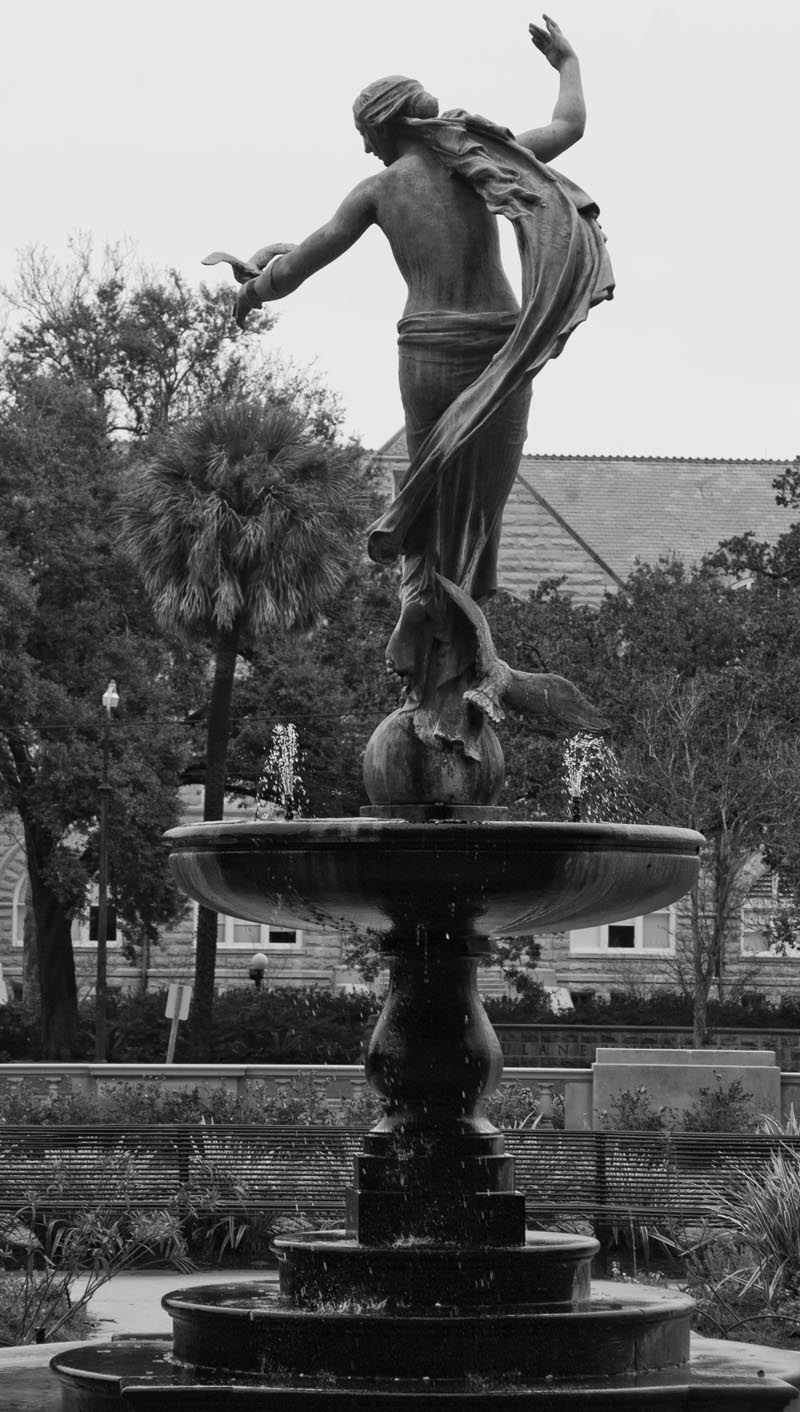
Audubon Fountain

Audubon Park, New Orleans

“i see you drinking at a fountain with tiny
blue hands, no, your hands are not tiny
they are small, and the fountain is in France
where you write me that last letter and
I answered and never heard from you again.
ANGELS AND GOD, all in uppercase, and you
knew famous artists and most of them
were your lovers, and I wrote back, it’s all right,
go ahead, enter their lives, I’m not jealous
because we’ve never met. we got close once in
New Orleans, one half block, but never met, never
touched. so you went with the famous and wrote
about the famous, and, of course, what you found out
is that the famous are worried about
their fame- not the beautiful young girl in bed
with them, who gives them that, and then awakens
in the morning to write upper case poems about
ANGELS AND GOD.”
—-An Almost Made Up Poem, Charles Bukowski

Audubon Park, New Orleans (click to enlarge)

Audubon Park, New Orleans
(click to enlarge)

Audubon Park, New Orleans (click to enlarge)

Audubon Park, New Orleans
(click to enlarge)

Timber

There are a handful of modern sculptures scattered across the various quads on the Tulane campus in New Orleans. One I noticed the first time, more than four years ago, that we took Lee there for a visit was a construction of wood and a stack of handmade multi-colored glass blocks that stands in front of the Architecture building.

I always like to take a look at it when I visit.

Timber
Glass, Steel, and Wood, 1982
by
Gene Koss, American

Timber, by Gene Koss, Tulane University, New Orleans, Louisiana (click to enlarge)

Timber, by Gene Koss, Tulane University, New Orleans, Louisiana
(click to enlarge)

Timber, by Gene Koss, Tulane University, New Orleans, Louisiana (click to enlarge)

Timber, by Gene Koss, Tulane University, New Orleans, Louisiana
(click to enlarge)

Timber, by Gene Koss, Tulane University, New Orleans, Louisiana (click to enlarge)

Timber, by Gene Koss, Tulane University, New Orleans, Louisiana
(click to enlarge)

Square Deal #2

George Tobolowsky
Square Deal #2
Welded Steel
Irving Arts Center, Irving, Texas

George Tobolowsky Square Deal #2 Irving, Texas (click to enlarge)

George Tobolowsky
Square Deal #2
Irving, Texas
(click to enlarge)

George Tobolowsky Square Deal #2 Irving, Texas (click to enlarge)

George Tobolowsky
Square Deal #2
Irving, Texas
(click to enlarge)

George Tobolowsky Square Deal #2 Irving, Texas

George Tobolowsky
Square Deal #2
Irving, Texas

How Sculptor George Tobolowsky Got ‘The Calling’
Until he was in his 50s, he was just a businessman with a hobby.