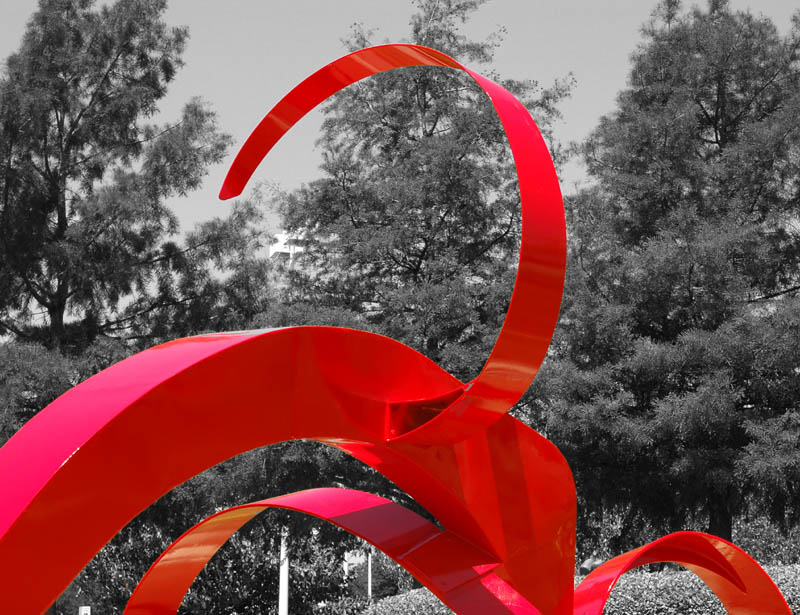
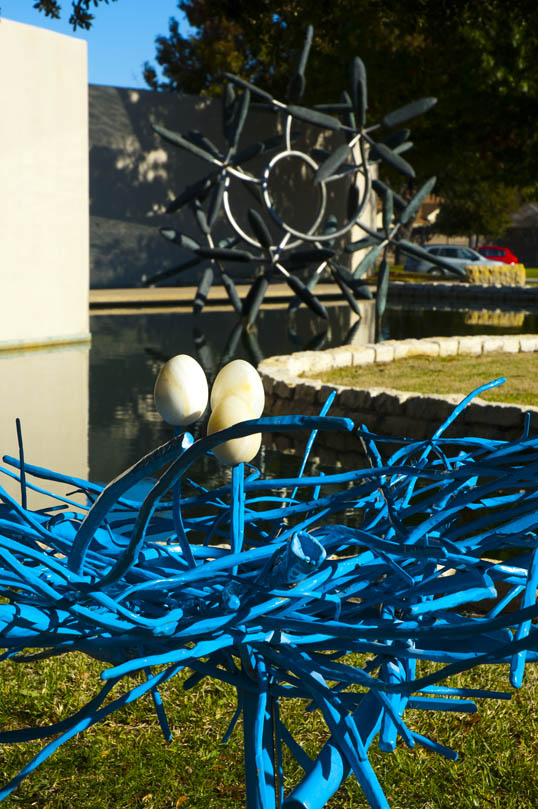
La Mujer Roja

“Even as a small child, I understood that woman had secrets, and that some of these were only to be told to daughters. In this way we were bound together for eternity.”
― Alice Hoffman, The Dovekeepers

Michelle O’Michael, Houston
La Mujer Roja
2000, Steel, paint
Frisco, Texas

Michelle O’Michael, Houston La Mujer Roja (click to enlarge)

Michelle O’Michael, Houston
La Mujer Roja
(click to enlarge)

Michelle O’Michael, Houston La Mujer Roja (click to enlarge)

Michelle O’Michael, Houston
La Mujer Roja
(click to enlarge)

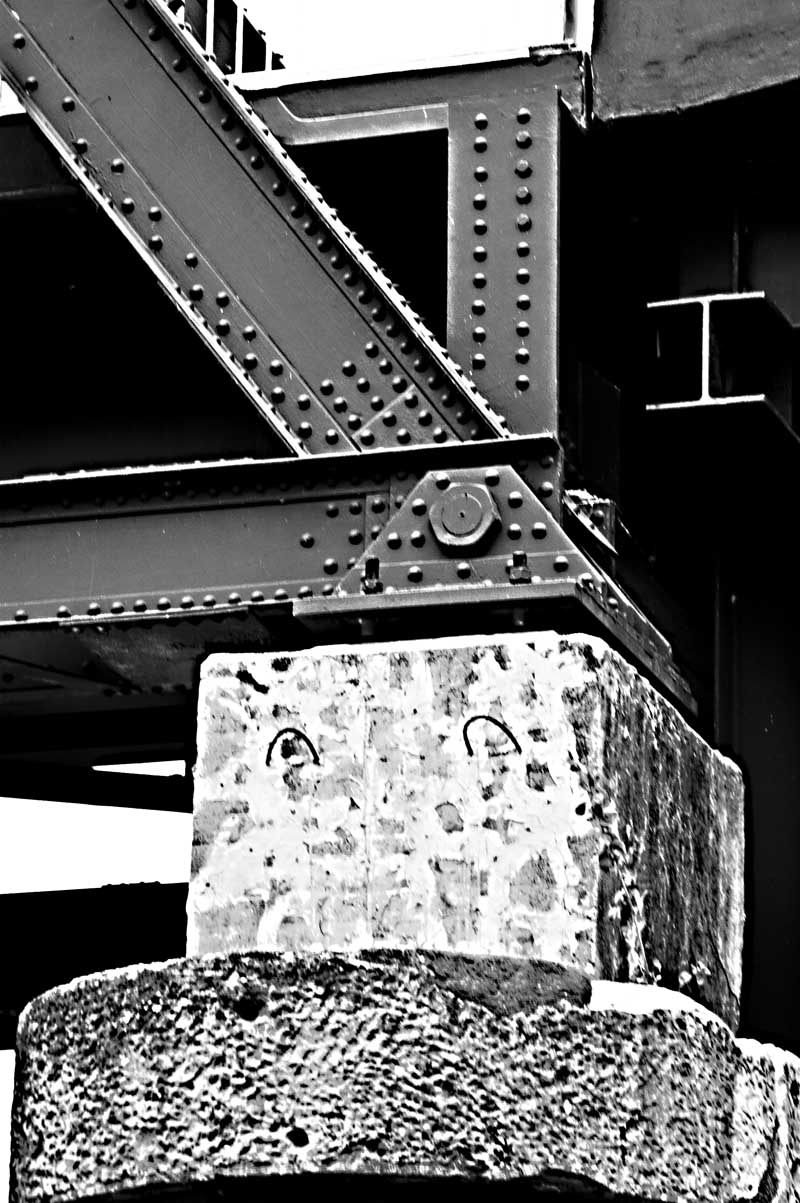
Steel, Rivets, and Concrete

(click to enlarge)

(click to enlarge)

What I really wanted was rivets, by heaven! Rivets. To get on with the work—to stop the hole. Rivets I wanted. There were cases of them down at the coast—cases—piled up—burst—split! You kicked a loose rivet at every second step in that station-yard on the hillside. Rivets had rolled into the grove of death. You could fill your pockets with rivets for the trouble of stooping down—and there wasn’t one rivet to be found where it was wanted. We had plates that would do, but nothing to fasten them with.
—-Heart of Darkness, Joseph Conrad

It’s a Slam Dunk

“Basketball is an intricate, high-speed game filled with split-second, spontaneous decisions. But that spontaneity is possible only when everyone first engages in hours of highly repetitive and structured practice–perfecting their shooting, dribbling, and passing and running plays over and over again–and agrees to play a carefully defined role on the court. . . . spontaneity isn’t random.”

― Malcolm Gladwell

Irving Arts Center
Irving, Texas

George Tobolowsky (Dallas, TX)
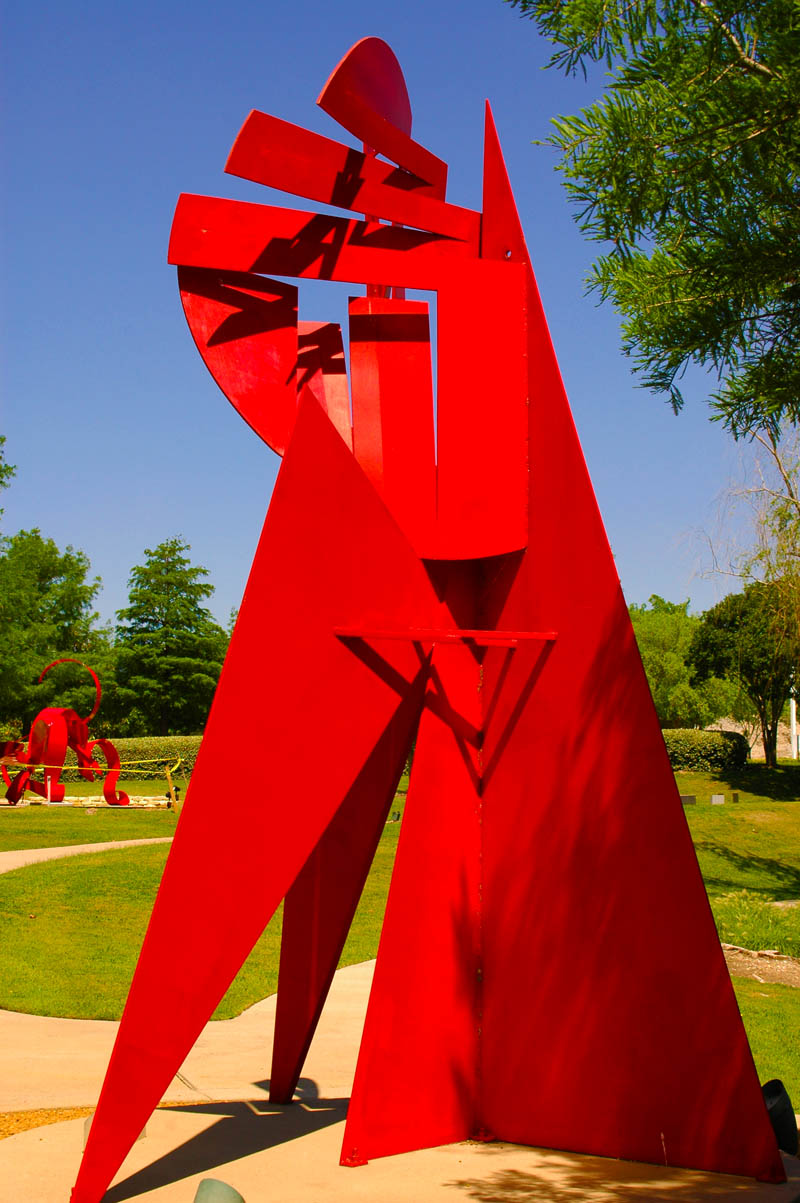
It’s a Slam Dunk (2007)
Welded Steel

In the background is Fountain Columns by Jesús Bautista Moroles

George Tobolowsky (Dallas, TX) It's a Slam Dunk (2007) (click to enlarge)

George Tobolowsky (Dallas, TX)
It’s a Slam Dunk (2007)
(click to enlarge)

“I am more than just a Serious basketball fan. I am a life-long Addict. I was addicted from birth, in fact, because I was born in Kentucky.”
― Hunter S. Thompson

George Tobolowsky (Dallas, TX) It's a Slam Dunk (2007) (click to enlarge)

George Tobolowsky (Dallas, TX)
It’s a Slam Dunk (2007)
(click to enlarge)

“We old athletes carry the disfigurements and markings of contests remembered only by us and no one else. Nothing is more lost than a forgotten game.”
― Pat Conroy
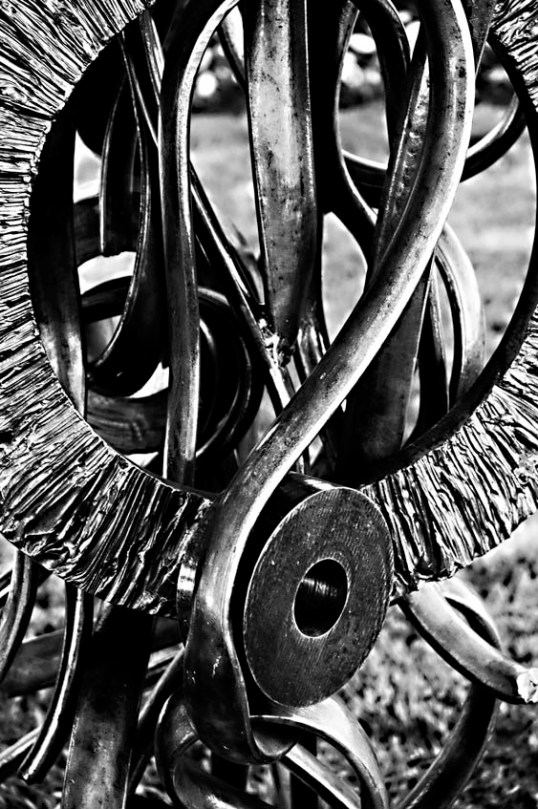
George Tobolowsky (Dallas, TX) It's a Slam Dunk (2007)

George Tobolowsky (Dallas, TX)
It’s a Slam Dunk (2007)

“And I would be the first to admit that probably, in a lot of press conferences over the time that I have been in coaching, indulging my own sense of humor at press conferences has not been greatly to my benefit.”
― Robert Montgomery Knight

When I first graduated from college I took a job in a small city isolated out on the windswept Great Plains, only a few miles from the little town my family was from. I didn’t know anybody in town and there wasn’t all that much to do anyway so I thought I’d take a class at the local junior college. It was funny, I had trouble enrolling (I had to get permission from a dean) because, even though I had four years at university, my high school transcripts were unavailable, lost in the revolution.

I had never been able to take psychology – the classes often filled up, with preference given to students in the major, plus it was impossible to fit a class in around my extensive laboratory courses. So I enrolled in Psych 101 at the junior college.

It was shocking how easy the class was, especially after coming through four years of chemistry, math, and physics. I barely had to study and I don’t think I missed a single question on a single exam. Yet the other student constantly complained about the amount of work assigned and the difficulty of the tests. It was like high school. I remember thinking that if at university anyone would dare (and none ever did) complain, the professor would have simply pointed to the door.

The instructor, however, was excellent. A very old man, he taught an interesting class and dealt with the whining with more patience than I thought possible… or necessary.

One day he came up to me before class and asked me a question.

“Your last name, did you have a father from around here.”

“Yes, my dad is from a small town nearby.”

“Did he play basketball?”

“Yes.”

“I remember being the referee when your father played in high school. I had never seen an athlete like that. He was the best basketball player I ever reffed.”

“You’re kidding. You remember him after all this time?”

“Yes, it was quite a game. I remember I fouled him out of the game near the end.”

The next weekend I told this story to my father.

“He’s lying,” my father said, “I never fouled out of a game.”

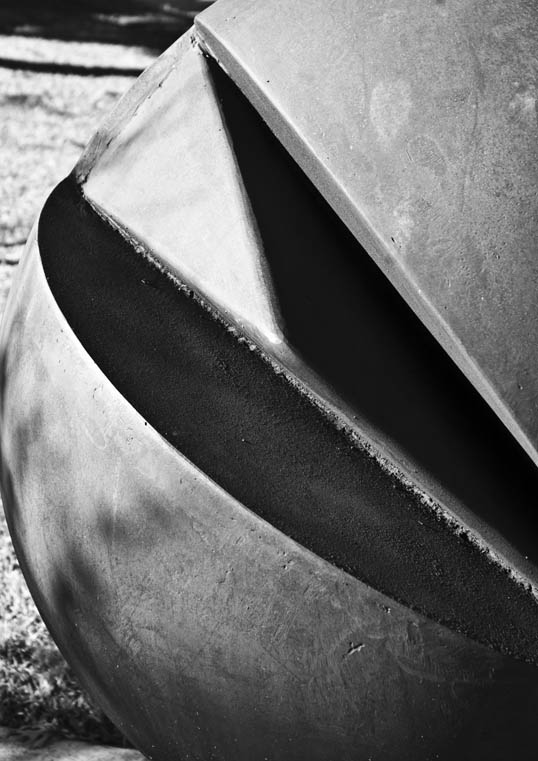
Deere

(click to enlarge)

(click to enlarge)

Well, I’m working on the new railroad
With mud up to my knees
I’m digging for big John Henry
And he’s so hard to please
And I’ve been all around this world

Hang me oh hang me and I’ll be dead and gone
It’s not the hanging that I mind it’s laying in the grave so long
And I’ve been all around this world

Well, the new railroad is ready, boys
And the cars are on the track
And if our women leave us
Money’ll bring ’em back
And I’ve been all around this world

—- Working on the New Railroad (trad)

Timber

There are a handful of modern sculptures scattered across the various quads on the Tulane campus in New Orleans. One I noticed the first time, more than four years ago, that we took Lee there for a visit was a construction of wood and a stack of handmade multi-colored glass blocks that stands in front of the Architecture building.

I always like to take a look at it when I visit.

Timber
Glass, Steel, and Wood, 1982
by
Gene Koss, American

Timber, by Gene Koss, Tulane University, New Orleans, Louisiana (click to enlarge)

Timber, by Gene Koss, Tulane University, New Orleans, Louisiana
(click to enlarge)

Timber, by Gene Koss, Tulane University, New Orleans, Louisiana (click to enlarge)

Timber, by Gene Koss, Tulane University, New Orleans, Louisiana
(click to enlarge)

Timber, by Gene Koss, Tulane University, New Orleans, Louisiana (click to enlarge)

Timber, by Gene Koss, Tulane University, New Orleans, Louisiana
(click to enlarge)

Politicized Democracy

Irving Arts Center, Irving, Texas

John Brough Miller
(Argyle, TX)
’03 Politicized Democracy
Mild Steel

democracy2

democracy1

“The inferred kinetic energy is in the mind of the viewer.”
– J. Brough Miller

Dwelling

Irving Arts Center, Irving, Texas
Larry Whiteley
Dwelling, 2005
Painted Steel

Irving artist Larry Whiteley makes flowers and more from steel

Larry Whiteley, Dwelling

Larry Whiteley, Dwelling

Larry Whiteley, Dwelling

Larry Whiteley, Dwelling

Behind Dwelling, you can see Star Flower, by James Surls.

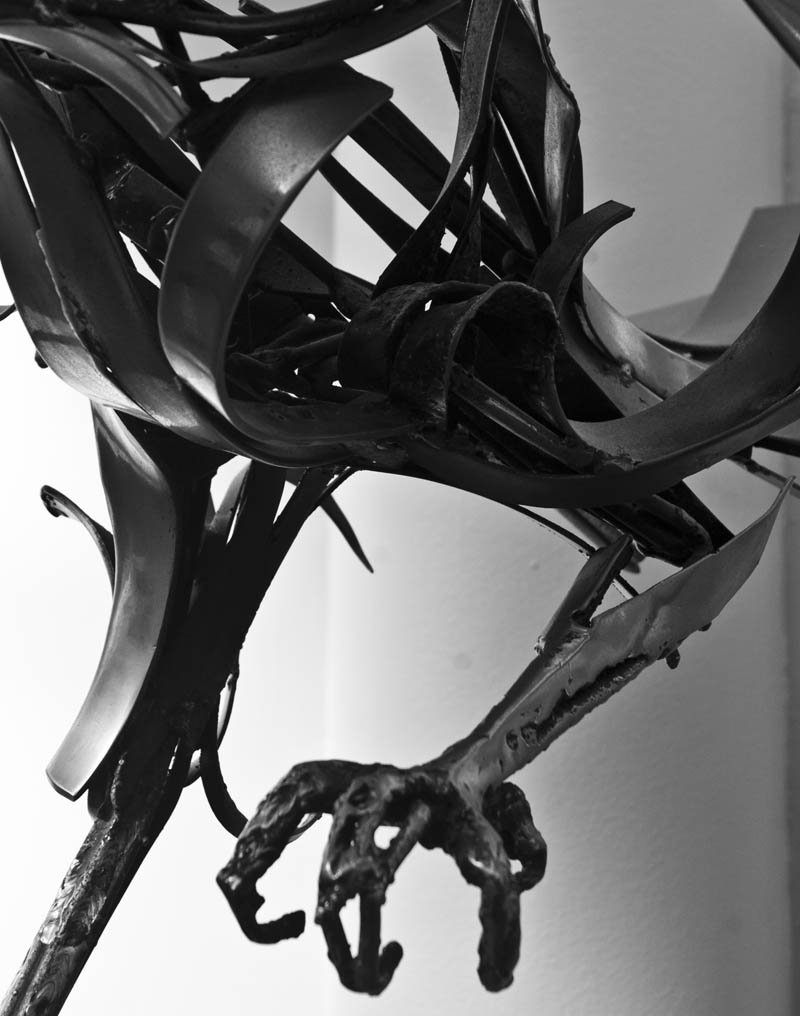
Talons

Sculpture by the side door to the Irving Arts Center, Irving, Texas

(click to enlarge)

(click to enlarge)

(click to enlarge)

(click to enlarge)

(click to enlarge)

(click to enlarge)

Blanco #17

Mac Whitney, Ovilla, Blanco #17, 1985 steel, paint

Mac Whitney, Blanco #17 (click to enlarge)

Mac Whitney, Blanco #17
(click to enlarge)

Mac Whitney, Blanco #17 (click to enlarge)

Mac Whitney, Blanco #17
(click to enlarge)

Mac Whitney, Blanco #17 (click to enlarge)

Mac Whitney, Blanco #17
(click to enlarge)

My Curves Are Not Mad

The vertical is in my spirit. It helps me to define precisely the direction of lines, and in quick sketches I never indicate a curve, that of a branch in landscape for example, without being aware of its relationship to the vertical.
My curves are not mad.

La verticale est dans mon esprit. Elle m’aide à préciser la direction des lignes, et dans mes dessins rapides je n’indique pas une courbe, par exemple, celle d’une branche dans un paysage, sans avoir conscience de son rapport avec la verticale.
Mes courbes ne sont pas folles.

—-Henri Matisse from Jazz

Boy looking at his shadow on Richard Serra's My Curves Are Not Mad - Nasher Sculpture Center, Dallas, Texas

Boy looking at his shadow on Richard Serra’s My Curves Are Not Mad – Nasher Sculpture Center, Dallas, Texas

Walking around Nasher garden, I spotted this child walking up to Richard Serra’s massive Cor-Ten walk-through sculpture, My Curves Are Not Mad – he stopped and stared at his shadow on the steel. I barely had time to raise my camera and squeeze off this shot.

Earlier in the day, we had listened to a discussion of public art and the way it relates to the current Nasher Xchange exhibition that is taking place in various public locations all over the city of Dallas. A lot of the discussion touched on the controversy over Richard Serra’s Tilted Arc and how the public’s attitude toward public sculpture has changed in the time since that disaster. It was a very interesting discussion.

Everybody seems to like My Curves Are Not Mad – but then again, it wasn’t installed by the government.

And certainly the history of public sculpture has been disastrous but that doesn’t mean it ought not to continue and the only way it even has a chance to continue is if the work gets out into the public.
—-Richard Serra