Zulu Coconut

I love Mardi Gras in New Orleans but we simply couldn’t afford to go this year. When I’m at a parade, I suffer from “bead frenzy” – where I want to grab those throws, no matter how many tons of cheap plastic beads I have stashed away in the back of a closet. It gets crazy… but that’s the idea. I love grabbing beads, and especially Doubloons… but there is one Mardi Gras throw that I have never caught and always wanted. I wanted a Zulu Coconut.

The Krewe of Zulu – full name Zulu Social Aid & Pleasure Club – has a long and storied history, intimately intertwined with the racial politics and culture of New Orleans. The legend is that Zulu started out as a satire on and parody of the upper-crust white celebration of Mardi Gras. After its beginings in the first decade of the 20th century, Zulu became the largest primarily African-American parade in New Orleans’ colorful panoply of Mardi Gras Krewes.

Zulu had its struggles over the years. The civil rights movement in the 1960’s threatened the Krewe, but it was able to survive and reformed its image somewhat. Katrina was a terrible shock, both financially and spiritually, but the Krewe fought its way back. Now, the climax of Carnival in New Orleans is on Tuesday, Mardi Gras itself, with the two (arguably) most famous Krewes taking to the streets, The Krewe of Rex, and The Zulu Social Aid & Pleasure Club.

Through all the changes and decades though, Zulu was famous for one thing especially. The most desirous of all Carnival throws – the Zulu Coconut.

In the early days, long before cheap chains of Chinese-made beads, the parades threw expensive glass necklaces. The folks of Zulu could not afford these and decided to purchase inexpensive coconuts and hand them out instead. Over the years these involved into hand-painted and prized souvenirs.

There is an inherent problem, however, with throwing something as hard and heavy as a coconut from an elevated parade float into the middle of a frenzied crowd. A lot of people were getting hurt. In 1987, Zulu was unable to get any insurance coverage and there was a halt to the throwing of coconuts. The legislature had to step in.

Anywhere else in the country, the government would ban the throwing of coconuts. Louisiana is not anywhere else, however. In 1988, Governor Edwin W. Edwards signed Louisiana State Bill #SB188, the “Coconut Bill”, into law removing liability from injuries resulting from a coconut – enabling the tradition to resume. Instead of banning the coconut, they banned the lawsuits.

They did stop throwing – the coconuts are now, more or less, handed out. Also, they started using imported carefully hollowed out ‘nuts that are a lot lighter (though more fragile). They still are all hand-painted by the Krewe members. There are still lawsuits, but the tradition continues. According to most counts, about one hundred thousand coconuts are handed out on Mardi Gras during the Zulu parade.

Still, they are hard to get. I know people that have been going to Carnival in New Orleans their entire life and never had one on their paws. Most folks I talked to said you had to know someone in Zulu and make an appointment to meet them along the route to get a coconut.

I wanted one… wanted it bad.

I was talking about this to my son Lee, who lives in New Orleans and goes to school at Tulane.

“Oh, yeah dad, I get Zulu coconuts every year, it’s no big deal.”
“You’re kidding me Lee. What do you do with them?”
“Oh, I mostly give them to girls. Do you want one?”
“Yes I want one. I really want one.”
“I’ll get you one next Mardi Gras.”

He went on to tell me his secret method of getting Zulu coconuts, which I will not share here. It is ingenious, simple, and foolproof … and something I don’t want to make public.

So, this year, on Tuesday afternoon, while I was staring at a computer screen at work, a text came in to my phone from Lee.

“Got 2 Coconuts 4 U”

He did drop one later (though I suspect he might have given it to a girl) – and he forgot to bring the other one to Lafayette when we drove there for his Rugby Game – but the other day he came home for a surprise weekend visit and brought me my coconut.

My Zulu coconut. There is a sort of a face on the top - but it is where the broken bit is.

It’s not a thing of beauty – simply a coconut spray painted a bilious gold, with some glitter paint pen decorations and two cheap googly eyes glued on. Lee dropped this one too – I glued a piece back on but it still has one busted hole under one eye.

I love it, though. I need to build a little shelf to display it properly… maybe next to my little monster heads in boxes.

I have always wanted a Zulu coconut.

My son Lee, at the Zulu parade, with a new friend.
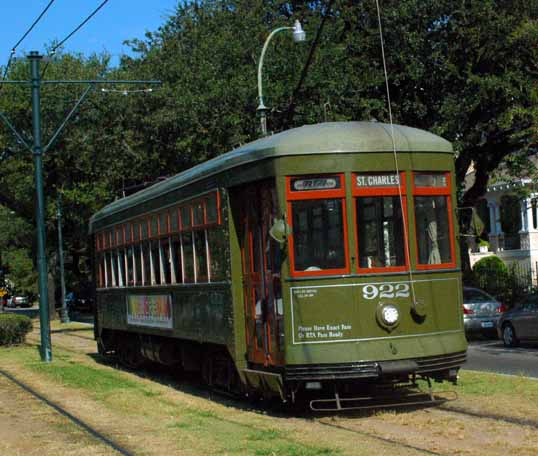
New Orleans – St. Charles Streetcar

The grandest ride in America was the St. Charles streetcar. You could catch the old green-painted, lumbering iron car under the colonade in front of the Pearl and for pocket change travel on the neutral ground down arguably the most beautiful street in the western world. The canopy of live oaks over the neutral ground created a green-gold tunnel as far as the eye could see. On the corners, black men sold ice cream and sno’balls from carts with parasols on them, and in the winter the pink and maroon neon on the Katz & Besthoff drugstores glowed like electrified smoke inside the fog.

—– from The Tin Roof Blowdown By James Lee Burke

The St. Charles streecar in New Orleans is one of my favorite things in the whole world. If you have never ridden it, put it on your bucket list. Now.

The best time to ride the streetcar is at sunset on a hot late summer evening. The windows open and the breeze from the motion sweeps the sweltering afternoon away as the purple sky darkens beyond the southern mansions and ancient oaks. You sit on the wooden seats jostling as the machine tumbles down the neutral ground. The lights flicker mysteriously and each new section of track is greeted with a flash of lightning, a clacking cacophony, and a whiff of ozone from under the wheels.

The streetcar becomes a time machine… no… not that… it is a timeless machine. The streetcar is exactly as it was ages ago, the floods, Katrina, countless Krewes from countless parades gone except for the risible plastic beads hanging from the trees, the mansions, the music, the food… all are distilled into a parallel pair of rails and high voltage overhead that lumber from the edge of the French Quarter way out past Tulane and Audubon park.

The streetcar is not only a tourist attraction – you share your ride with office drones from downtown banks, lawyers from big firms, and dishwashers nodding off after a long day – the heartbeat of a city brought cheek-to-jowl together. It isn’t very fast – waiting for riders making change at the old-fashioned boxes, drivers bracing themselves to swing heavy levers, stopping at lights while the cross traffic fights out of the way. You can almost walk this fast. But you get there and the getting is everything.

When we are in town we usually stay in a bed and breakfast on St. Charles not far from Tulane and when I wake up in the morning I always like to lay in bed and listen for the streetcars. When you ride them they are all jangling and jump but somehow, from outside, they are smoother, slick steel wheels and sliding commutator sparking along. A bell at the intersections if the cars don’t move fast enough.

Like all of New Orleans, it’s hard to figure out why there aren’t more fatalities along the route, with the traffic, walkers, runners all thrown together with few signs and fewer rules. But they get along, somehow. They always do.

Inside the St. Charles Streetcar

One of my favorite spots is this unassuming little coffee shop at St. Charles and St. Andrews. I like to sit out front, sip my coffee, and watch the streetcars go by.

New Orleans – Lafayette Cemetery #1

When you visit New Orleans for the first time, you can’t help but notice the cemeteries. Because the city is built on a swamp below sea level, you can’t bury anything underground. The cemeteries consist of cities of elaborate above ground crypts and mausoleums instead of grids of tombstones.

Right in the middle of the Garden District, one block off the St. Charles streetcar line is Lafayette Cemetery #1. It was established in 1833, when that part of the city was called Lafayette. I had wanted to take a tour of the cemetery but I wasn’t able to get away until Sunday – and the cemetery was closed on Sunday.

Something to do on my the next trip.

The Lafayette Cemetery #1 was closed, but I still could take pictures from the gate.

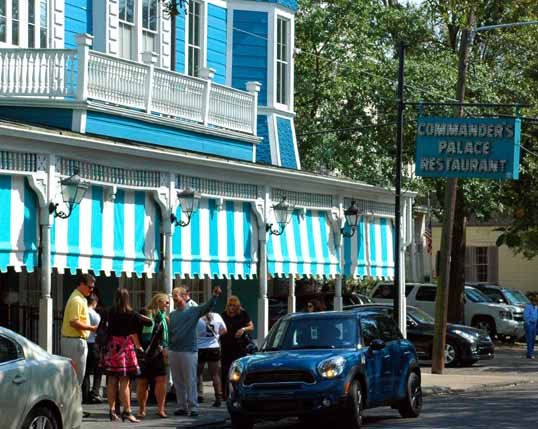
Across the street from the cemetery is Commander’s Palace, one of New Orleans’ best and most famous restaurants.

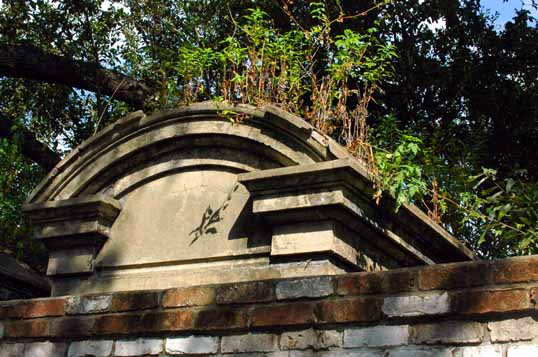
Ferns grow from the ancient wall around the cemetery across the street from Commander’s Palace.

The crypts are elaborate and showing their age. You can see how the legends of ghosts and supernatural come from places like this.

The elaborate vegetation-covered tombs stick up over the wall surrounding the cemetery.

New Orleans Architecture – Lower Garden District – Kayak Storage

In art – in the life worth living – there is always a struggle between beauty and functionality. I love finding examples that combine the two.

In the Lower Garden District – St. Andrews and Chestnut – Someone is using a beautiful old wrought iron balcony to store a couple of kayaks. I’m not sure why, but I really like that.

Animated Streetcar

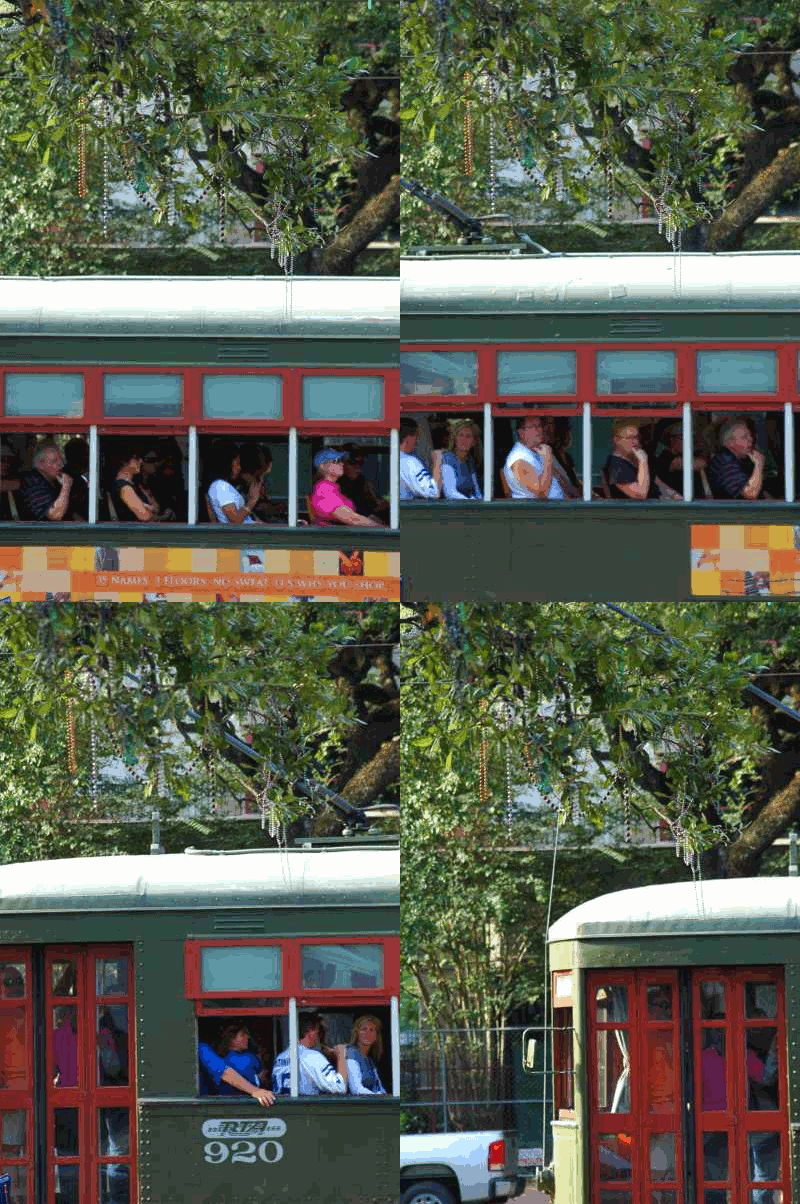
It was Sunday and the Saints were playing downtown. The Saint Charles Streetcar was crowded.

Saint Charles Streetcar, beads still in the trees.

Getting off the Saint Charles Streetcar in the Garden District.

Photograph – Jogging in the Neutral Ground

(Click To Enlarge)

Everywhere else, the space between the two lanes of traffic on a divided road is called the median. In New Orleans it is called the Neutral Ground. The legend is that it is called this because in the early days when the French lived in the Quarter and the Americans lived in what is now downtown and beyond they would meet in the wide median of Canal Street (named because there was going to be a canal built there – that is why the street and median is so wide – but it never was built) to resolve their differences.

Now, all medians in the city are referred to as the “neutral ground.” This is especially important during Mardi Gras, where a lot of people watch the parades from the neutral ground. If you are waiting for a certain person in a Krewe they will tell you if they are on the street side or neutral ground side.

Along Canal Street, Saint Charles (where this picture was taken) and Carrollton Avenue, the streetcars run in the neutral ground. I’ve got some pictures of the Saint Charles Streetcar (one of my favorite things in the world) that I’ll be putting up here. The Saint Charles neutral ground is a wonderful and popular place to go running in New Orleans.

What I learned this week, November 11, 2011

Looking around the shelves at a used book store I came across a copy of 500 Essential Cult Books. I’m casting around for something to read right at this moment.

I didn’t buy the book, but I did sit down with it, some index cards, and a Parker 21 that I carry, and sat down at a table to go through most of the 500.

My first impression is that I was shocked at how many of the books I had already read… somewhere around half. The books were divided into categories and some I had read almost all of the selection.

At any rate, I filled a couple cards with books that I had not read and that looked interesting. Some I already have in my library or Kindle, most I do not. Here’s the list, in no particular order:

  • Generation X – Douglas Coupland
  • Nausea – Jean Paul Sartre
  • Been Down so Long it Looks Like Up to Me – Richard Farina
  • Cathedral – Raymond Chandler
  • A Feast of Snakes – Harry Crews
  • Perfume – Patrick Suskind
  • The Sheltering Sky – Paul Bowles
  • VOX – Nicholson Baker
  • The Wasp Factory – Ian Banks
  • We Need to Talk About Kevin – Lionel Shriver
  • Almost Transparent Blue – Ryu Murakami
  • Bad Behavior – Mary Gaitskill
  • Cocaine Nights – J. G. Ballard
  • The Ginger Man – J. P. Donleavy
  • Atomised – Hichael Houellebecq
  • Young Adam – Alexander Trocchi
  • Wonderland Avenue – Danny Sugarman
  • A Hero of Our Time – Mikhail Lemontov
  • How Late it Was, How Late – James Kelman
  • Of Love and Hunger – Julian Maclaren-Ross
  • D. B. C. Pierre – Vernon God Little
  • Nelson Algren – A Walk on the Wild Side

I’ve been reading a lot about the “Bubble in Higher Education.” One of the interesting articles in that vein is called, Where Have All the Chemists Gone?   It links to a New York Times article – Why Science Majors Change Their Minds (It’s Just So Darn Hard)

You can read both of these articles and decide what you think about it on your own, but it does bring back an experience of my own, one I’ve talked about ad nauseum – but still…. I think I’ll write it down here. This is something that happened almost forty years ago… so maybe the trends identified in the articles aren’t so new after all.

I remember my first freshman chemistry class at the generic big Midwestern public university. It was held in a large old gothic auditorium (since burned down) where they played the basketball games back in the twenties and thirties. The professor walked out on the first day and said, “This is Chemistry 301, Introduction to Chemistry for Chemistry Majors. You should only take this class if you are going to get a major in Chemistry. There are three hundred and fifty students in this class. We graduate about forty chemists a semester. You need to do the math. If you don’t think you can make it through this class, drop as soon as you can to minimize the damage to your academic career.”

I was stunned when about a dozen kids walked out at that point. How low must their self-esteem be to give up at that point (or maybe they realized they were in the wrong classroom). The first exam took over half the class. The mid-term dropped half of those that were still left. At the end of the semester the class was well under a hundred. The really bad thing was that, three years later, Physical Chemistry took a third of those that had made it that far (I still believe that P-Chem is one of the absolute evils in the world – I know if any other chemists are reading this – I just gave you a nightmare).

A few years ago I was at a meeting of the American Chemical Society in Arlington (I remember there were three Nobel Prize Winners at the dinner) and the the topic was improving chemistry education. I was talking to a professor afterward about how to increase the enrolment of chemists and he said, “Actually, in my experience, most of the student that can be chemists, are chemists… what we need is to increase the understanding of some of the basic tenets in the non-chemist population.” This was a guy that should know what he was talking about.

Oh, and the article talks about how grades are lower in STEM classes than in, say, business or liberal arts. No shit. My goal in chemistry was to graduate, that was it (I consider my bare C- in P-Chem I and II to be one of the greatest accomplishments in my life. I managed to pass two semesters in a subject where I had absolutely no idea what the hell was going on at all). In the decades since, I don’t think I have ever had anyone ask me my GPA. I have hired a few chemists in my day and if I ever had a job applicant with a 4.0 and a major in chemistry (In reality I never have seen or heard of such a thing) I would not hire them. To get a 4.0 in a chemistry curriculum you would either have to be too smart to be in the same world as I am, or some sort of mutant that could not relate to ordinary human beings in any meaningful way.


Another list of “Must Eat At” places in New Orleans.

New Orleans – A Foodie’s Paradise

  • Gumbo at the Gumbo Shop
  • Crawfish Etouffee at Chartres House Café
  • Jambalaya at Coop’s Place
  • Red Beans and Rice at Joey K.’s
  • Muffulettas at Central Grocery Co.
  • Beignets at Café Du Monde
  • Bananas Foster at Brennan’s
  • King Cakes at Sucre
  • Po’ Boys at Parkway Bakery & Tavern

I’ve been to six of the nine… though some were a long time ago. I wrote about Joey K’s the other day. Last year I set out to find the best Shrimp Po-Boy in New Orleans, and Parkway was the best, IMHO.


How to make pancakes from scratch

Wallet Pancakes

Why imitation syrup is better than the real thing

How to make the best diner pancakes in america


a new word for our time
ineptocracy


Man, I would love to snag a 2011 Rangers World Championship Cap. I wonder what impoverished tropical hell hole I’d have to go to so I could buy one of some poor dude’s head.

Where does World Series Runners-Up Gear Go?


A few more Scopitones. Starting to scrape the bottom of the barrel.

I used to Love the Tijuana Brass, back in the day. This song and Scopitone is not why.

Great Hair… terrible rock and roll.

There have been some very good versions of Telstar over the years. This is not one of them. Plus odd and wildly inappropriate footage.

Petula Clark… one of the greats. There was “Downtown”, “I Know a Place”, “My Love”, “Colour My World”, “A Sign of the Times”,  and “Don’t Sleep in the Subway.”

Oh…. and this:

And, last but least… The absolute worst:


The Stooges Brass Band

The kids at Tulane are so lucky (in many different ways) – and I’m not sure they realize it fully. Can you imagine going to college in that city? Being young and having that much history, music, and soul around you all the time would be an unbelievable experience.

All I had was bad disco.

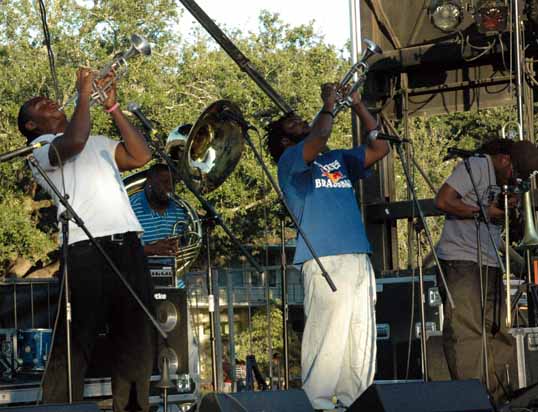
After driving to New Orleans we were able to catch some of the homecoming festivities on campus. The Stooges Brass Band was set up on the Quad in back of the student center – though most of the kids seemed more interested in lining up for some free food.

The Stooges Brass Band

The Stooges Brass Band

The Stooges Brass Band

The Stooges Brass Band

The Stooges Brass Band

The Stooges Brass Band

I really liked The Stooges and wanted to stick around for the next act, Big Sam’s Funky Nation, but Lee had to work. He has a very important job. He works the door at The Boot. He said he was scheduled to work happy hour. We asked how long that was and he said, “Six to Ten.”

Great Music, Great Food, a Great City, and a four hour long happy hour.

The Boot

Lee working the door at The Boot. You can see his face on the right of the pipe sticking up.

Happy Hour at The Boot

It was a big Friday Evening Happy Hour Homecoming crowd at The Boot. Lee says it's always like that.

Doreen’s Jazz New Orleans

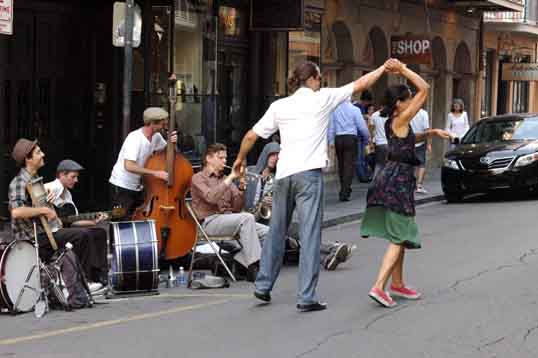
It was such a nice day to be walking around the French Quarter. Not much more than a block down Royal Street from the Nola Jitterbugs was another band playing in the street. These folks were playing the real thing, the traditional New Orleans Jazz. It was Doreen Ketchens and her band, Doreen’s Jazz New Orleans. They were very good.

Jitterbugs in the French Quarter

New Orleans is Culture. New Orleans is Architecture. New Orleans is Food. But more than anything, New Orleans is Music… Live Music.

Jazz is the one true American art form. Jazz was born in New Orleans.

At any time of any day or night you can hear live music in New Orleans. You can see dancing.

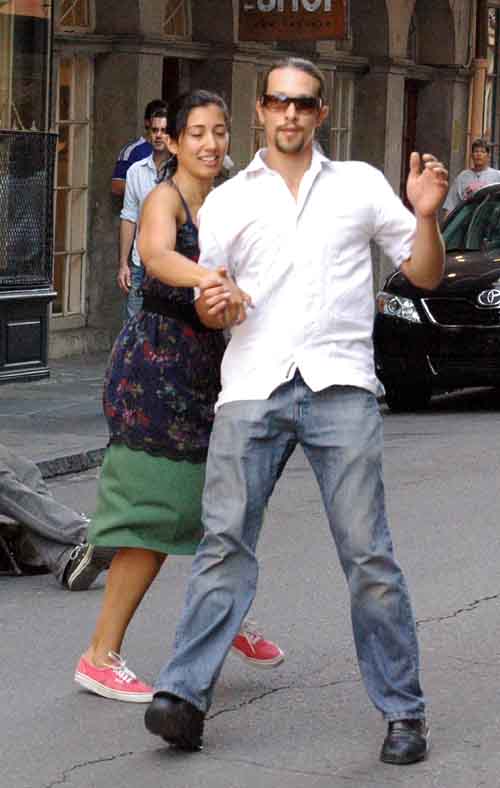
Even Jitterbugs in the French Quarter.

Nola Jitterbugs

Dancers – Chance Bushman and Giselle Anguizola

Music – Loose Marbles