A Month of Short Stories 2014, Day 3 – Regret

A year ago, for the month of June, I wrote about an online short story each day for the month. It seemed like a good idea at the time. My blog readership fell precipitously and nobody seemed to give a damn about what I was doing – which was a surprising amount of work.

Because of this result, I’m going to do it again this year.

Today’s story, for day three – is Regret, by Kate Chopin.

Read it online, here:
Regret

I read Kate Chopin’s best known work – the novel The Awakening in college, like most people do. It left a strong impression on me – both the story itself, and the strong character of its doomed protagonist.

I must not have been paying too much attention, however. In my defence, I was studying chemistry and literature and didn’t have enough time to do my reading all proper in between the marathon laboratory stints.

You see, the thing is, if you would have asked me about The Awakening I would have told you it was a European story, a French story, and the beach where so much takes place must have been on the Riviera somewhere.

What was I thinking? How could I have been so mistaken? A quick read, and a foggy memory, I guess.

As an adult, I reread The Awakening and realized that it wasn’t European at all – it took place in New Orleans – and the beach was Belle Isle. Now, I suppose in some way I wasn’t too far off – New Orleans is the most European of American cities – the French Influence is hard to miss.

But still….

Now today’s story, Regret… there is no doubt where this is taking place. Nowhere else will you find names like: Mamzelle Aurlie, Ti Nomme, little Lodie, Marcline and Marclette.

In a short story there is plot, and setting (this one has a little plot and an implied setting) and there is characterization. The reward of Regret is in its characterization.

It’s tough to find room in a work this brief for a protagonist to learn and to change – but Chopin pulls it off.

Not only does the protagonist learn and change… but she realizes that it is all in vain, that it is too late.

Isn’t it always?

She turned into the house. There was much work awaiting her, for the children had left a sad disorder behind them; but she did not at once set about the task of righting it. Mamzelle Aurlie seated herself beside the table. She gave one slow glance through the room, into which the evening shadows were creeping and deepening around her solitary figure. She let her head fall down upon her bended arm, and began to cry. Oh, but she cried! Not softly, as women often do. She cried like a man, with sobs that seemed to tear her very soul. She did not notice Ponto licking her hand.
A Month of Short Stories 2014, Day 2 – On the Gull’s Road

A year ago, for the month of June, I wrote about an online short story each day for the month. It seemed like a good idea at the time. My blog readership fell precipitously and nobody seemed to give a damn about what I was doing – which was a surprising amount of work.

Because of this result, I’m going to do it again this year.

For the second entry in this month’s list of short stories, on this second day of June, I give you a classic chestnut by Willa Cather, On the Gull’s Road.

Read the story online here:
On the Gull’s Road

I know people that read a lot of Cather. I haven’t read that much.

I always think of her as a Nebraska writer (though I know she lived most of her life in New York) and primarily as a chronicler of life on the plains.

This story couldn’t be further from that. It’s a story of doomed young love on a ship leaving Italy.

One thing that jumps out is her wonderful ability to describe life on a ship. I’ve been on cruises – and the whole deal is so much different that what a sea voyage from Italy in that time must have been – but I recognize the scene and the unique unfettered feel that riding the waves leaves behind.

The sun had disappeared over the high ridge behind the city, and the stone pines stood black and flat against the fires of the afterglow. The lilac haze that hung over the long, lazy slopes of Vesuvius warmed with golden light, and films of blue vapor began to float down toward Baiae. The sky, the sea, and the city between them turned a shimmering violet, fading grayer as the lights began to glow like luminous pearls along the water-front, — the necklace of an irreclaimable queen. Behind me I heard a low exclamation; a slight, stifled sound, but it seemed the perfect vocalization of that weariness with which we at last let go of beauty, after we have held it until the senses are darkened. When I turned to her again, she seemed to have fallen asleep.

Of course, the oddest thing about the story is the ambiguous sex of the narrator – who falls in love with the doomed, married Mrs. Ebbling. Reading it, I assumed the narrator was a man (…anticipating a consular appointment…) but on careful examination it seems that this little fact is deliberately blurred. The narrator’s name is never mentioned and is never referred to by any pronoun that would give their sex away.

This ambiguity adds a layer of unreal mystery to the love between the two young people. It reinforces the melancholy, the feeling of loss, of regret, and of nostalgia that permeates the story.

There is a lot more here than a simple shipboard infatuation.

“Don’t say that. When I leave you day after tomorrow, I shall have given you all my life. I can’t tell you how, but it is true. There is something in each of us that does not belong to the family or to society, not even to ourselves. Sometimes it is given in marriage, and sometimes it is given in love, but oftener it is never given at all. We have nothing to do with giving or withholding it. It is a wild thing that sings in us once and flies away and never comes back, and mine has flown to you. When one loves like that, it is enough, somehow. The other things can go if they must. That is why I can live without you, and die without you.”

A Month of Short Stories 2014, Day 1 – A Lack of Order in the Floating Object Room

A year ago, for the month of June, I wrote about an online short story each day for the month. It seemed like a good idea at the time. My blog readership fell precipitously and nobody seemed to give a damn about what I was doing – which was a surprising amount of work.

Because of this result, I’m going to do it again this year.

Today, the first of June, I present a nice, brief, short story by George Saunders, A Lack of Order in the Floating Object Room. It’s available online, here:

A Lack of Order in the Floating Object Room

Go ahead and read it – won’t take too long.

I have become a fan of George Saunders in the last few years. One of his stories, Sea Oak, was read and written about in the aforementioned June of 2013. More recently I wrote about the book, Tenth of December – his most recent tome of short fiction. I have checked his book Pastoralia out from the local library and it is next on my reading list.

His stories are full of tragedy and absurd humor. They dwell on the corporate influence on our lives today and take the soulless void of daily life – and stretch it to the extreme. Below this surface, though, lies the innermost desires and passions of the human heart struggling to rise through the thick layers of bullshit to be seen in the light of day.

Or something like that.

Today’s piece, A Lack of Order in the Floating Object Room is of the type. It’s typical Saunders fare. As a matter of fact, it is prototypical.

What made the work interesting, is an introduction by author Tobias Wolff. Tobias Wolff is another of my favorite writers – his story Hunters in the Snow was also in my list of last year’s June subjects. I hear him speak at the Dallas Museum of Art once – his lecture on a classic poem (Two roads diverged…) has affected my views on literature ever since I heard it.

Read the introduction here:

Genius: an Introduction to George Saunders’ “A Lack of Order in the Floating Object Room”

It turns out that Tobias Wolff picked A Lack of Order in the Floating Object Room out of the slush pile back in 1986 and gave George Saunders a fellowship that jump-started his writing career. In the years since Saunders has emerged as one of the most important writers of our day.

It’s always interesting to learn what twist of fate has enabled someone to rise from the vast pool of striving mediocrity into the rarefied air of success and fame.

That’s all it takes – the ability to craft something that will grip an uber-talented man like Wolff and make an impression strong enough for him to remember the moment of reading the story almost thirty years later.

That’s all it takes.

I opt for the Juarez at the Hollo-Chick Haus. It’s a South of the Border Taste Riot. A Hollo-Chick is a kind of chicken conglomerate, the size of a football and hollowed out. You can have whatever you want in there, croutons or sweet-and-sour pork or a light salad even. The Juarez is the one filled with sour cream and refried beans and some little sliced black things. I opt for extra sauce packets.

Always opt for extra sauce packets.

Stevenson

Tony Cragg
Stevenson, Bronze, 1939

Tony Cragg, Stevenson, Dallas Museum of Art (click to enlarge)

Tony Cragg, Stevenson, Dallas Museum of Art
(click to enlarge)

I’ve been a big fan of Tony Cragg ever since I visited his exhibition at the Nasher. It made me happy to discover this fantastic bronze in the garden of the Dallas Museum of Art.

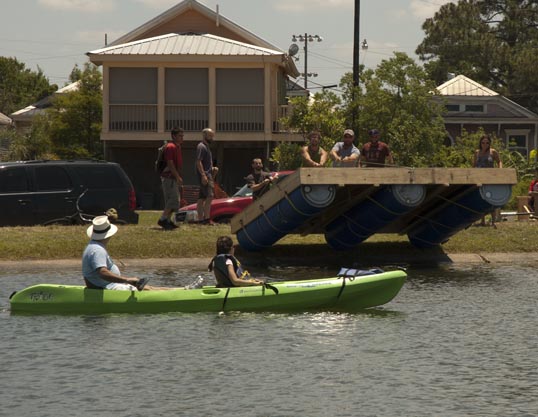
Construction Project at the Bayou Boogaloo

While in New Orleans for Lee’s Tulane Graduation I rode my bicycle to Bayou St. John for the Bayou Boogaloo. There is always a festival going on in The Big Easy and they are always fun. This was a particularly good one.

I bought a beer and found a shady spot on the shore of the Bayou. I sat there chatting with the locals about cycling, music, and aging hippies. We watched the watercraft plying the waves. It was a beautiful day.

A small group of people arrived on the far shore (not very far away) towing something on a trailer. They proceeded to extract a large, homemade barge consisting of a wooden platform with plastic barrels strapped underneath for floatation. We wondered how they were going to launch the ungainly contraption.

The guy had it going on. He directed his motley crew with efficiency and before you could swallow your gumbo they flipped it neatly into the water – using ropes to control the weight.

Then the guy proceeded to start hauling out prefabricated railings, benches, and an umbrella – screwing everything into place with a portable drill. It was an efficient and impressive display of carpentry. He soon had his own portable floating party barge, right in the middle of the bayou.

“Get that guy’s name,” one of the folks sitting next to me said between gulps of Abita Amber and bites of muffuletta. “I need a new deck and that’s the best carpenter I’ve seen in New Orleans.”

As I watched he extracted a full-blown steel anchor and dropped it into the mud at the bottom of the bayou.

The barge arrives and is flipped

The barge arrives and is flipped

over into the Bayou St. John.

over into the Bayou St. John.

Pretty bare bones at this point - but it floats.

Pretty bare bones at this point – but it floats.

Adding benches and railings.

Adding benches and railings.

Dropping Anchor.

Dropping Anchor.

Laissez les bons temps rouler

Laissez les bons temps rouler

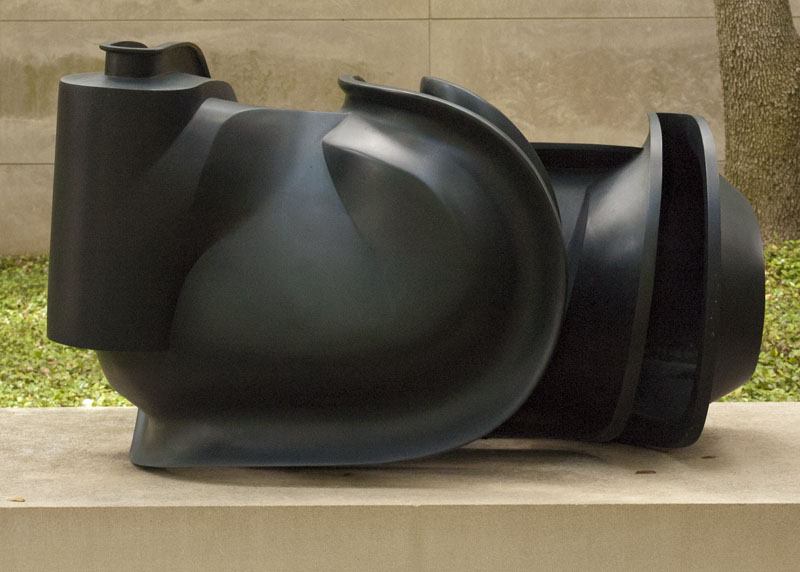
Figure for Landscape

Figure for Landscape
Barbara Hepworth
1960, Bronze
Dallas Museum of Art
Dallas, Texas

Figure for Landscape Barbara Hepworth (click to enlarge)

Figure for Landscape
Barbara Hepworth
(click to enlarge)

Figure for Landscape Barbara Hepworth

Figure for Landscape
Barbara Hepworth

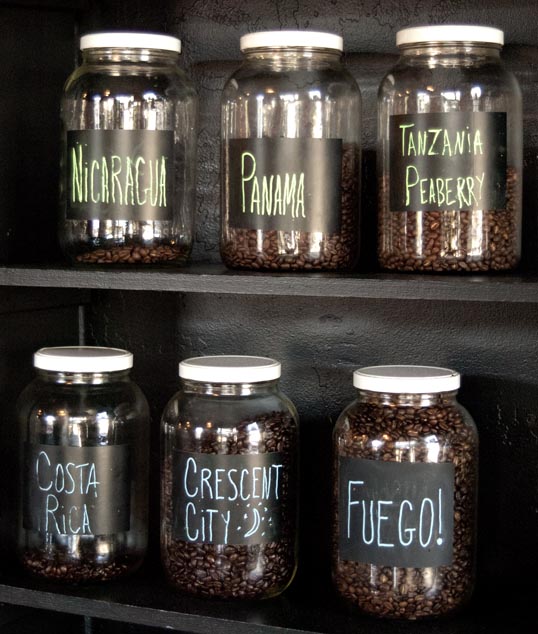
Nicaragua, Panama, Tanzania Peaberry

Nicaragua, Panama, Tanzania Peaberry, Costa Rica, Crescent City, Fuego!

Nicaragua, Panama, Tanzania Peaberry, Costa Rica, Crescent City, Fuego!

Nicaragua, Panama, Tanzania Peaberry, Costa Rica, Crescent City, Fuego!

Mojo Coffee, Magazine Street, New Orleans, Louisiana

Complete Steel

What may this mean.
That thou, dead corpse, again, in complete steel,
Revisit’st thus the glimpses of the moon.
Making night hideous ; and we, fools of nature,
So horridly to shake our disposition,
With thoughts beyond the reaches of our souls?
Say, why is this?
—-Shakespeare, Hamlet

Dallas Museum of Art, Dallas, Texas Untitled, Ellsworth Kelly (click to enlarge)

Dallas Museum of Art, Dallas, Texas
Untitled, Ellsworth Kelly
(click to enlarge)

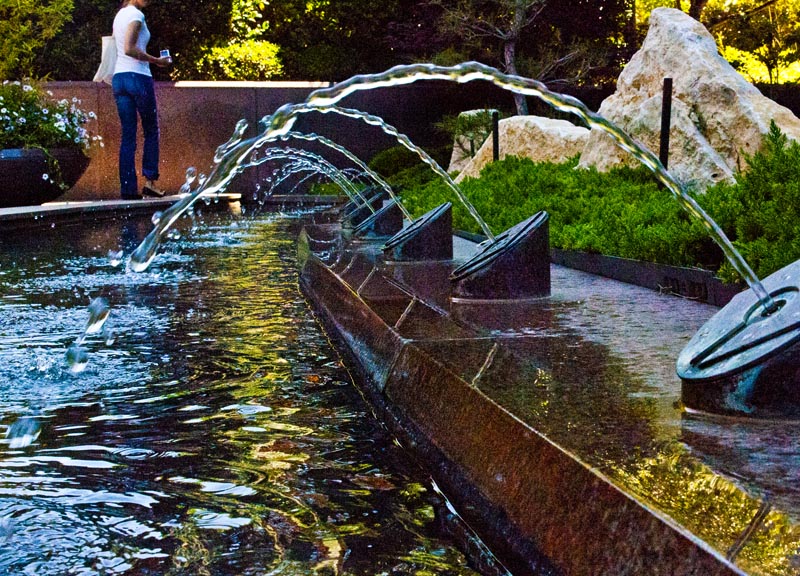
Water

Crow Collection of Asian Art
Dallas, Texas

Taken on the Stop and Photograph the Roses bicycle ride.

(click to enlarge)

(click to enlarge)

Mojo

Out the window of:

Mojo Coffee
Magazine Street
New Orleans, Louisiana

One of my favorite places.

With the St. Vincent’s Guest House in the background across the street.

Mojo Coffee, Magazine Street, New Orleans, Louisiana (click to enlarge)

Mojo Coffee, Magazine Street, New Orleans, Louisiana
(click to enlarge)