A Month of Short Stories 2015, Day Six – The Semplica-Girl Diaries

The last two years, for the month of June, I wrote about a short story that was available online each day of the month… you can see the list for 2014 and 2015 in the comments for this page. It seemed like a good idea at the time. My blog readership fell precipitously and nobody seemed to give a damn about what I was doing – which was a surprising amount of work.

Because of this result, I’m going to do it again this year.

Today’s story, for day six – The Semplica-Girl Diaries, by George Saunders

Read it online here:

The Semplica-Girl Diaries

All my life I have had neighbors that take better care of their lawns and other landscaping than I do. They are always out there, doing battle against the natural increase in entropy. I have seen grown men crawling around on their hands and knees on a hot Texas afternoon all over their lawn pulling out individual stems or blades of diverse species of plants (weeds) one by one. They must have that bright-green, carpet-like monoculture of their carefully-chosen cultivar covering the entire sward.

It seems like insanity to me. I say I am going for the more environmentally-friendly method of allowing nature to take its natural course… as much as the neighborhood association (Nazis) and the City Inspectors (more Nazis) will allow. That is, of course, bullshit – I am simply lazy.

What is going on here? Is it a way to fight back the inevitable advance of death, chaos, and decay? (suburban life is singularly dedicated to concealing the inevitable march and ultimate victory of death, chaos, and decay) Or is it a “keeping up with the Joneses” thing? (artificial tokens of wealth are again, totally unknown to my way of thinking) Or is it simply a way to pass the time? Or maybe a habit, born of generations of suburban life?

Or all of the above.

Todays story, another long one (but very worth reading, trust me) takes all this to an extreme. It is a set of diary entries by a family man, a father of children, that is struggling and failing to keep up with the Joneses. (It’s always especially tough when the Joneses have kids that hang out with yours) He is in debt, his car is a wreck “Kids got in, Eva (middle child) asked what was meaning of ‘junkorama.’ At that moment, bumper fell off.” and his lawn is bereft of ornament.

He writes one evening, after attending the birthday party at his daughter’s friend’s place.

Do not really like rich people, as they make us poor people feel dopey and inadequate. Not that we are poor. I would say we are middle. We are very, very lucky. I know that. But still, it is not right that rich people make us middle people feel dopey and inadequate.

Am writing this still drunk and it is getting late and tomorrow is Monday, which means work.

Work, work, work. Stupid work. Am so tired of work.

Good night.

And that brings us to the concept of the Semplica-Girls. When I first read the story, it took me a while to grasp the concept (it is so horrifying) and then I had to re-read the thing before I figured out what SG stood for. (Semplica-Girl, of course). To make things easier for you, I’ll explain. Semplica-Girls are living lawn ornaments – desperate young women from the poorest countries that sign a contract agreeing to perform on a rich person’s property. They are strung together on wires run through their brains (a micro-line run through a pathway burned by a very fine laser – it doesn’t even hurt) and hoisted up into the air as decorations.

The story is written more as a comedy than as a cruel dystopia. Somehow, that makes the horror worse.

The father-diarist wins some money in a scratch-off lottery and decides to blow the cash on an extravagant party for his oldest daughter, plus a lawn make-over, complete with four SGs(Semplica Girls) strung together, wafting in the breeze, quietly chatting with each other, four feet off the ground.

Everyone is happy. Everyone except Eva – the father’s most sensitive daughter. She is upset.

I’m pretty sure the SG are not happy, either.

Things do not end well… Actually, maybe they do. I guess they end the way that everything always ends.
A Month of Short Stories 2015, Day 5 – The Nose

The last two years, for the month of June, I wrote about a short story that was available online each day of the month… you can see the list for 2014 and 2015 in the comments for this page. It seemed like a good idea at the time. My blog readership fell precipitously and nobody seemed to give a damn about what I was doing – which was a surprising amount of work.

Because of this result, I’m going to do it again this year.

Today’s story, for day five – The Nose, by Nikolai Vasilievich Gogol

Read it online here:

The Nose

Farce really does occur in this world, and, sometimes, farce altogether without an element of probability.
—-Gogol, The Nose

For day 5 we have something a little longer, a little harder to read. Written in 1836, it’s in that formal, stilted style of classic prose, especially translated from Russian.

But the story is anything but stilted. It’s the mysterious story of a missing body part, and it’s as postmodern as anything you will read tomorrow. It is full of what we now know as magic realism – dream sequences – and surreal asides directly from author to reader.

I don’t really know what to make of it. Is it a satire of Russian society and culture? Is it a thinly-veiled psycho-sexual fever dream? (take a text version of the story, do a find-and-replace with “nose” and “penis” and see how that changes the story… but it doesn’t quite work) Or is it simply a joke told by the author… a bit of silly nonsense – an entertaining trifle?

Is Batman a transvestite? Who knows?

Even Gogol is confused. In two places the story becomes shrouded in mist and the author admits that further developments are beyond the kin of man. Near the end he confeses that he doesn’t know what happened or why it did – why Kovalev didn’t know not to place a newspaper ad looking for his nose, or how the nose ended up in the loaf of bread at the beginning of the story, no less. Plus, he, as the author, should know these things.

And the strangest, most unintelligible fact of all is that authors actually can select such occurrences for their subject! I confess this too to pass my comprehension, to — — But no; I will say just that I do not understand it.

And if he, Gogol himself, doesn’t understand it, how can we, almost two hundred years later, reading his words translated into a foreign tongue, looking, not at paper, but at a matrix of glowing diodes hooked to a vast network of wires and radio waves… how can we hope to understand?

What I really don’t understand is that the great composer, Shostakovich, actually wrote an opera (his first) based around this story. What is that all about?

A Month of Short Stories 2015, Day 4 – Bullet in the Brain

The last two years, for the month of June, I wrote about a short story that was available online each day of the month… you can see the list for 2014 and 2015 in the comments for this page. It seemed like a good idea at the time. My blog readership fell precipitously and nobody seemed to give a damn about what I was doing – which was a surprising amount of work.

Because of this result, I’m going to do it again this year.

Today’s story, for day four – Bullet in the Brain , by Tobias Wolff
Read it online here:

Bullet in the Brain

I have always had a soft spot for Tobias Wolff. First of all – he’s a crackerjack writer. Probably best known for his memoir This Boy’s Life (made into a film starring Leonardo DiCaprio and Robert De Niro); I especially love his short stories. In the Garden of the North American Martyrs is among the best.

Genius.

Plus, there is this little story. He had come to Dallas to speak and read from a new novel, “Old School.” It was part of the Dallas Arts and Letters Live series at the Dallas Museum of Art. I was excited to go.

However, since I have no money, I couldn’t afford to sit in the main auditorium. There were discounted seats in the museum theater, where you could watch the lecture on a large closed-circuit screen. Almost as good as live, but a lot cheaper.

Right before the lecture, I look up, and there is Tobias Wolff standing right in front of me. He had heard about the handful of us in the remote room and come down to get us. He spoke and then led us to a row of seats he had installed in the front row of the auditorium, where we were able to sit.

Pretty damn cool.

Today’s story is Bullet in the Brain.

It is a little bit gimmicky – it reminds me a lot of the classic An Occurrence at Owl Creek Bridge. It’s interesting, especially given Wolff’s penchant for creative nonfiction, that the protagonist/victim is a particularly vile and self-centered literary critic. I’d bet that Tobias Wolff had someone (or more than one) – a particular person in mind and enjoyed writing about him coming to such an ignominious end.

But it is still the work of a genius. As a wannabe writer I was gobsmacked by this simple sentence:

“She looked at him with drowning eyes.”

That is a perfect sentence – I can’t imagine anything else being there.

Someone without the required skills, someone such as I, might write something like:

“She looked at him and he turned away.”

Or:

“She looked at him with a running nose.”

Or worse:

“She looked at him with a triangle of spinach stuck to an incisor.”

Or ever worse:

“She looked at him the way his ex-wife always did and his intestines instantly doubled in knots, causing him to keel over in agony.”

But he didn’t write anything terrible like that. He wrote the perfect sentence.

A Month of Short Stories 2015, Day 3 – They’re Made out of Meat

The last two years, for the month of June, I wrote about a short story that was available online each day of the month… you can see the list for 2014 and 2015 in the comments for this page. It seemed like a good idea at the time. My blog readership fell precipitously and nobody seemed to give a damn about what I was doing – which was a surprising amount of work.

Because of this result, I’m going to do it again this year.

Today’s story, for day Three – They’re Made out of Meat, by Terry Bisson

Read it online here:

They’re Made out of Meat

So today we have something short, something funny – a bit of a palate cleanser if you will.

It’s Science Fiction, or Speculative Fiction… if you prefer. Like all good speculative stories, it attempts to posit a possible answer to a Big Science question – a cosmic conundrum. It’s called the Drake Equation.

Up until a few years ago, mankind didn’t know if there were any other planets out there. Now, thanks to tremendous advancements in telescopes, space based observatories, and innovative software, we now know that there are planets everywhere… trillions upon trillions of them. And they are of all sorts of sizes and distances – plus there is no reason to think there aren’t even more moons out there, orbiting all those planets.

So you take the equation – what percentage of planets are Earth-like – or at least how many have an atmosphere and at least a little bit of water. Even if those conditions are only fulfilled by, say, one in a billion – that means there are at least thousands of earth-like planets out there – most likely millions. And it isn’t a stretch to look at life here and come to the conclusion that if extraterrestrial life is possible – then it is inevitable.

So, I think that maybe we can say that we are probably not alone in the universe. But there is one problem with this line of thinking.

Where is everybody?

This story gives one possible answer to the question.

Go ahead and click over and read the thing – it will only take you about five minutes. It will be worth it, I promise.

A Month of Short Stories 2015, Day 2 – What Is Remembered

The last two years, for the month of June, I wrote about a short story that was available online each day of the month… you can see the list for 2014 and 2015 in the comments for this page. It seemed like a good idea at the time. My blog readership fell precipitously and nobody seemed to give a damn about what I was doing – which was a surprising amount of work.

Because of this result, I’m going to do it again this year.

Today’s story, for day two – What is Remembered, by Alice Munro.

Read it online here:

What Is Remembered

This afternoon, I worked on making a list of stories I am going to read and write about for my June Month Of Short Stories and realized that a lot of them will be linking with the New Yorker. Well, not very surprising….

Here we are on the second day, and we have a story very different that the first… instead of the efficient, biting prose of Raymond Carver, we have the lush genius of Alice Munro.

She doesn’t cut her words to the bone. She is quite generous with her word count. For example, in today’s story, here is her description of the arrangement of napkins at a funeral’s buffet table:

She looked down at the table napkins, which were folded in quarters. They were not as big as dinner napkins or as small as cocktail napkins. They were set in overlapping rows, so that a corner of each napkin (the corner embroidered with a tiny blue or pink or yellow flower) overlapped the folded corner of its neighbor. No two napkins embroidered with the same color of flower were touching each other. Nobody had disturbed them, or if they had—for she did see a few people around the room holding napkins—they had picked up napkins from the end of the row in a careful way, and this order had been maintained.

The amazing thing, the genius of Munro, is that this seemingly odd bit of description encapsulates the whole story, somehow. It has nothing to do and everything to do with the rest of the work.

This is the story of an affair – or of a one-night stand… a one-evening stand, really. But it isn’t a prudish morality tale – it is a laying out of a woman’s life and how much more there is than meets the eye.

Alice Munro doesn’t write with words as much as she writes with time. What is Remembered, like much of her work, moves back and forth over handfuls of decades, following the echoes of the past into the future and the conception of the future into the past. Like the title implies, this is a story about memory and how a person’s fate isn’t so much shaped by what they do as much as it is by how they remember what they have done.

On the ferry ride home, after the fact:

She had to join the crowd of jostling bodies making their way up the stairs, and when she reached the passenger deck she sat in the first seat she saw. She did not even bother, as she usually did, to look for a seat next to a window. She had an hour and a half before the boat docked on the other side of the strait, and during this time she had a great deal of work to do.

No sooner had the boat started to move than the people beside her began to talk. They were not casual talkers who had met on the ferry but friends or family who knew each other well and would find plenty to say for the entire crossing. So she got up and climbed to the top deck, where there were always fewer people, and sat on one of the bins that contained life preservers. She ached in expected and unexpected places.

The job she had to do, as she saw it, was to remember everything—and, by remember, she meant experience it in her mind, one more time—then store it away forever. This day’s experience set in order, none of it left ragged or lying about, all of it gathered in like treasure and finished with, set aside.

She had “an hour and a half” and a “job she had to do.” She had to fix what had happened into her memory, all of it, exactly as it had happened.

As the rest of the tale unfolds, we learn she didn’t do her job well. She forgot a lot. And what she forgot might have been more important than what she remembered – it protected her from a life that was not only wildly different, was a life that would not have been her own.

What we remember, what we forget, what comes back to us after it is too late….

A Month of Short Stories 2015, Day 1 – What We Talk About When We Talk About Love

The last two years, for the month of June, I wrote about a short story that was available online each day of the month… you can see the list for 2014 and 2015 in the comments for this page. It seemed like a good idea at the time. My blog readership fell precipitously and nobody seemed to give a damn about what I was doing – which was a surprising amount of work.

Because of this result, I’m going to do it again this year.

Today’s story, for day 1 – What We Talk About When We Talk About Love, by Raymond Carver.

Read it online here:

What We Talk About When We Talk About Love

This podcast has an audio version, read by the author. The actual story starts at the 6 minute mark.

It is no accident that I am opening the month of short stories with a Raymond Carver story. I have been reading his work a lot over the last year and I have decided that his stories are the stories I would write if I could.

Today’s What We Talk About When We Talk About Love is a classic, arguably his most famous. It is especially well known now – because it is a stage version of that simple story that is being developed and staged during last year’s Oscar Winning Best Picture, Birdman.

Birdman opens with the quote that is on Raymond Carver’s tombstone:

“And did you get what
you wanted from this life, even so?
I did.
And what did you want?
To call myself beloved, to feel myself
beloved on the earth.”

The plot of What We Talk About When We Talk About Love is simple enough. Four people, two couples, sit around a table drinking and talking. There is a lot of drinking in Carver’s stories, and a lot of hopelessness. In this story one couple talks about her ex-lover, who never was able to get over her and was cursed with an unstable mind. It lead to his death.

Was this love? Or was it madness? Or was it both? Or is there even a difference?

Those are only some of the subtle and complex questions the story brings up – it is overflowing with ideas and questions, despite its short length.

That is one thing I love about Carver’s stories – the efficiency and the brevity. It is genius to be able to say so much in such a small space.

In researching and reading deep about how he worked I did discover one interesting fact. Carver didn’t write with quite that much brevity. His editor was relentless in driving him to down his word count – to cut his prose to the bone.

For example, once you’ve read What We Talk About When We Talk About Love – then go to this story, Beginners, from the New Yorker. It’s the same story, in draft form, before editor Gordon Lish had Carver chop away at the prose.

It makes for a very different story. I like the short version better. The stuff that has been exorcised – it’s all fluff, things you know anyway… or at least will know once you think about it. There is genius in brevity.

Thinking about Carver’s short stories and about movies… there is a well-known film, Short Cuts, directed by Robert Altman, that strings together several Carver stories, but not today’s. I watched the film to see if it gave me any more insight into the writing.

I was disappointed… even though the movie was well-done. It was more of an Altman movie than a Carver one. For example, it was moved from the Northwest to sunny Los Angeles. These stories need overcast skies, I think. Altman’s natural humor is sprinkled throughout – which dilutes the agony of the characters too much, I think.

Even though I haven’t said very much, I don’t think I’m going to say any more. Brevity…. well, you know.

A Drone Over the Trinity

“Whatever question arose, a swarm of these drones, without having finished their buzzing on a previous theme, flew over to the new one and by their hum drowned and obscured the voices of those who were disputing honestly.”
― Leo Tolstoy, War and Peace

The scenes of the swollen Trinity river have been popular sightseeing attractions here for the last few weeks. Luckily, here, the flooding has been more of an inconvenience that the deadly danger that it has posed downstream. The high water is an interesting and strangely beautiful change – and not so morbid of an attraction.

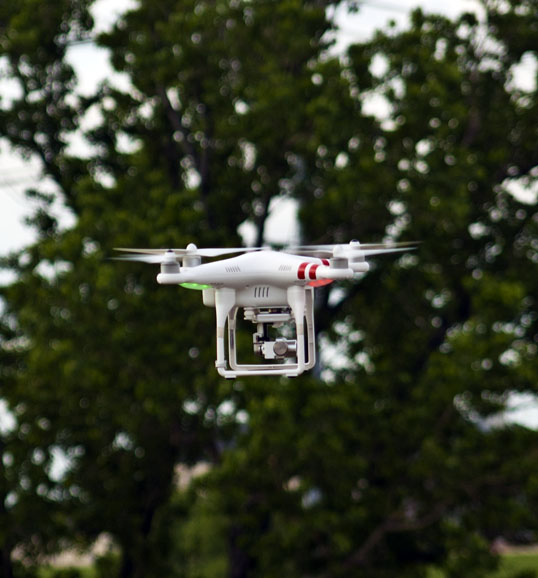
In this modern world, odd occurrences inevitably attract a new breed of gawker – drones. A couple showed up at the Continental Bridge Park while I was down there looking at the water. They had a drone in a case – extracted it, and flew it around the place.
I think it was one of these. It was very capable, flying all over the place, a surprising distance. The pilot must have been very confident – if anything went wrong it would have been lost forever in the rushing floodwaters.

The drone flying off the edge of the Continental Bridge Park, Dallas, Texas

The drone flying off the edge of the Continental Bridge Park, Dallas, Texas

The drone with the cable stays of the Margaret Hunt Hill Bridge in the background.

The drone with the cable stays of the Margaret Hunt Hill Bridge in the background.

The drone coming in for a landing. She would catch it as it landed.

The drone coming in for a landing. She would catch it as it landed.

This wasn’t shot on the same day, but some of the footage is in the same spot.

Texas Flood

Well there’s floodin’ down in Texas
All of the telephone lines are down
Well there’s floodin’ down in Texas
All of the telephone lines are down
And I’ve been tryin’ to call my baby
Lord and I can’t get a single sound

Well dark clouds are rollin’ in
Man I’m standin’ out in the rain
Well dark clouds are rollin’ in
Man I’m standin’ out in the rain
Yeah flood water keep a rollin’
Man it’s about to drive poor me insane
—-Texas Flood, Stevie Ray Vaughn

Trinity River,  Dallas, Texas

Trinity River,
Dallas, Texas

Legions Of These Myrmidons

“One day when I went out to my wood-pile, or rather my pile of stumps, I observed two large ants, the one red, the other much larger, nearly half an inch long, and black, fiercely contending with one another. Having once got hold they never let go, but struggled and wrestled and rolled on the chips incessantly. Looking farther, I was surprised to find that the chips were covered with such combatants, that it was not a duellum, but a bellum, a war between two races of ants, the red always pitted against the black, and frequently two red ones to one black. The legions of these Myrmidons covered all the hills and vales in my wood-yard, and the ground was already strewn with the dead and dying, both red and black. It was the only battle which I have ever witnessed, the only battle-field I ever trod while the battle was raging; internecine war; the red republicans on the one hand, and the black imperialists on the other. On every side they were engaged in deadly combat, yet without any noise that I could hear, and human soldiers never fought so resolutely.”
― Henry David Thoreau, Walden

I was out moving around the city with my bicycle and a DART pass. I had my tablet in a backpack and decided to head downtown and see if there was anything interesting on my Love Lock USB Dead Drop. The water in the Trinity was up, but I didn’t know how high it was on that day – so I thought I’d at least give it a shot.

Crossing the river on the DART train I looked out and saw the Santa Fe Trestle trail snaking its way across and a few inches above the water – so it looked like I could make the crossing. I started to ride down from the Corinth train station and soon I was on a narrow strip of concrete with water all around.

Finally, though, I reached a spot where the water was coursing over the pavement. I’m not an idiot, I knew it was time to head back. I did get off my bike and fished out my camera for some flood shots.

Concentrating on the water and my camera I didn’t notice one important fact. All the fire ants from across the vast river bottom plain had been forced up onto the narrow strip of trail. At my feet they were boiling in a thick red mass.

If you know anything about Texas – you know that fire ants will swarm you and then when one bites, they all do. Nasty, nasty things.

It hurt, but not too bad. I did the fire and dance, sweeping them off as fast as I could.

Then it was out of there, as fast as I could pedal.

The Santa Fe Trestle Trail snaking its way through the flooded Trinity River Bottoms. Dallas, Texas.

The Santa Fe Trestle Trail snaking its way through the flooded Trinity River Bottoms.
Dallas, Texas.

The view across the Flooded Trinity, Dallas, Texas

The view across the Flooded Trinity, Dallas, Texas

As the water moved from one side of the trail to the other, through drowned drainage pipes, it left a maelstrom in it s wake. Trinity River Bottoms, Dallas, Texas

As the water moved from one side of the trail to the other, through drowned drainage pipes, it left a maelstrom in its wake.
Trinity River Bottoms, Dallas, Texas

Finally, the water overtakes the trail. Dallas, Texas

Finally, the water overtakes the trail.
Dallas, Texas

Too Lost By Then To Stop

“I dream that I have found us both again,
With spring so many strangers’ lives away,
And we, so free,
Out walking by the sea,
With someone else’s paper words to say….

They took us at the gates of green return,
Too lost by then to stop, and ask them why-
Do children meet again?
Does any trace remain,
Along the superhighways of July?”
― Thomas Pynchon, Gravity’s Rainbow

Continental Bridge Park, Dallas, Texas

Continental Bridge Park,
Dallas, Texas