Short Story Day 3 – A Study in Emerald

3. – A Study in Emerald
Neil Gaiman

Click to access emerald.pdf

Now we find ourselves with a short story set in a nonexistent past, but not of the past (real or imagined) – the story is almost a decade old (it won the Hugo Award for Best Short Story in 2004) but it is a piece of the modern, internet world. You can call it a form of fan-fiction. As a matter of fact, it is a Crossover – the characters and style from Sherlock Holmes have been transplanted into the world of H.P. Lovecraft’s Cthulhu Mythos.

Not only that… it is a world of alternate history. In it, 700 years prior, Lovecraft’s Great Old Ones have… well, if you want to know what they have done, you have to read the thing.

Finally, it is in a unique and modern form. It’s published on the ‘net as a PDF – in the format of a Victorian Newspaper, complete with odd and disturbing advertisements. Take a close look at the ads, BTW, they are full of interesting references.

Clever and cleverer. The short piece manages to cram a lot of (alternate) history and backstory in and around its detective yarn.

Be careful about that yarn… you are forewarned. Nobody is who you think they are. Black is white and white is black. See if you can figure it out. If you can’t, the Wikipedia Page will illuminate it all for you.

So it is all clever and as skillfully put together as a Swiss Watch… but it is worth reading? Of course it is. It is a lot of fun. It is a puzzle inside a puzzle, wrapped in a puzzle. It is a pastiche. It is a homage. It is the sort of think you will like, especially if you like that sort of thing.

I shall not forget the mirrored surface of the underground lake, nor the thing that emerged from the lake, its eyes opening and closing, and the singing whispers that accompanied it as it rose, wreathing their way about it like the buzzing of flies bigger than worlds.

That I survived was a miracle, but survive I did, and I returned to England with my nerves in shreds and tatters. The place that leech-like mouth had touched me was tattooed forever, frog-white, into the skin of my now-withered shoulder. I had once been a crack-shot. Now I had nothing, save a fear of the world-beneath-the-world akin to panic which meant I would gladly pay sixpence of my army pension for a Hansom cab, rather than a penny to travel underground.
—-from A Study in Emerald, by Neil Gaiman

Short Story Day 2 – Heat

2. – Heat
Joyce Carol Oates
http://www.classicshorts.com/stories/heat.html

Ok, now for something completely different. We swerve away from the careful, slightly arcane prose of W. Somerset Maugham to the modern, spare, gut-wrenching writing of Joyce Carol Oates.

I have read a lot of her stories over the years. As a matter of fact, I’m working through a massive tome (well, it would be massive if it wasn’t stored as a collection of electrons in my Kindle) of her collected works… spanning more than four decades of her prodigious output.

One of her best is the classic, Where Are You Going, Where Have You Been – which I re-read a week ago, read carefully, trying to fully understand the implications and observations of that frightening tale of adolescence and loss of innocence.

Heat is a very short, odd story. On the surface it is a horror story – the tale of the murder of twin girls, little more than children. It is more than this salacious collection of lurid facts, however.

The story is told from the point of view of another girl, a friend of the murdered twins. It is told in a simple, yet disjointed style. At first, it seems like a mannered, but straightforward telling of a horrific incident in the narrator’s youth.

If you pay close attention, however, the narrator begins including details that there is no way she could possibly know about. You can’t help but think, “Was she there? Did she see something? Was she involved in some way?” Of course she wasn’t… the reader knows this – but you can’t help but think.

Then there is the connection with the narrator’s adult life – her passions and destructive behavior. What is the relationship between these passages and the deaths of her twin friends from her childhood? Is she a reliable narrator? Why is she telling us all this?

The final line of the story seems to provide an answer – if not a complete and not a fully understandable one.

Now, if W. Somerset Maugham in his story seemed to hint at a second world, a world of chaos and primitive passions, one that civilized men almost always lack the courage to embrace – here we have Joyce Carol Oates completely tearing the tissue-like barrier between the two completely away – leaving the frightening reality that lies just beyond our everyday thoughts and actions completely exposed. It sits there bleeding and pulsing like a disembodied heart – and she enjoins us to look at it and acknowledge its existence through her fiction.

Or at least I think so.

Behind the icehouse in his car I’d think of Rhea and Rhoda and what happened that day upstairs in Roger Whipple’s room. And the funeral parlor with the twins like dolls laid out and their eyes like dolls’ eyes too that shut when you tilt them back. One night when I wasn’t asleep but wasn’t awake either I saw my parents standing in the doorway of my bedroom watching me and I knew their thoughts, how they were thinking of Rhea and Rhoda and of me their daughter wondering how they could keep me from harm, and there was no clear answer.
—-Joyce Carol Oates, Heat

Short Story Day 1 – The Fall of Edward Barnard

1. – The Fall of Edward Barnard by W. Somerset Maugham
http://www.online-literature.com/maugham/the-trembling/3/

Over the years, I had not read very much… not anything, really, by W. Somerset Maugham. I did sit down with The Razor’s Edge once, a few decades ago, but couldn’t get very far into it. Although he wrote right at the edge of the modern era, his prose was too stifled and stuffy for my tastes. I set it aside after a few pages and didn’t revisit Maugham, though I knew this was a mistake – there had to be worth there, he is too well known and lauded for me to ignore.

This last weekend, I rode my bike into the crystal towers of downtown Dallas… intending to hang out there a bit before riding back up north. I went over to Klyde Warren Park, bought some lunch from a food truck, and settled in to rest a bit before pedalling home. I realized that I had forgotten my Kindle and discovered I wanted something to read. After a bit of frustration I remembered that the park had a reading area, complete with shelves full of books.

I walked over and perused the selection, eventually picking up a copy of W. Somerset Maugham’s Complete Short Stories – in a couple of volumes. I sat down and read a couple. There was a deliciously evil little tale set in two times and locations – A Woman of Fifty… and a very short work set in Guatemala about a Nicaraguan revolutionary on the run called The Man With the Scar.

I really enjoyed both of these stories. I realized that the stylized writing is employed by Maugham as a device to emphasize the wild irony of the stories beneath. He is not writing about proper society, but about the turbulent chaos that lies beneath and beyond… and that is a subject that fascinates me.

Those two little tales gave me enough rest to ride home and then I procured a selection of Maugham’s stories to read… more in depth. I started with Rain – a juicy story about the conflict between a strict missionary and a woman of ill repute while both are stranded in a cheap hotel in Pago Pago. It is arguably the best known of his short stories and has been made into a handful of films.

It was crackerjack. It impressed me enough for me to elevate the next story in the collection, The Fall of Edward Barnard to the first of my June Month of the Short Story daily selections.

The Fall of Edward Barnard is very similar to Rain – it is sort of the flip side of the same story, though with less horrific consequences (it even has an almost happy ending – though terrible in its own happy way). If you have the time read both… and then compare and contrast.

They concern the conflict between the European/American style – the ambitious, religious, strict, repressed, overbearing way of looking at life and the world with the relaxed, sensual, permissive way of the primitive South Sea Islands. Again, the archaic prose is used to good effect – be sure and don’t let that stop your reading or enjoyment; fight through the language (Word of the day: quixotry) until you get to the point where the author relents and lets loose a little.

So now I have added another classic author to my personal pantheon. It is interesting in that he is not overly careful about maintaining a strict point of view or even consistent tone – he lets his prose go where it needs to to tell the story. When I write, I sweat blood trying to make sure I don’t reveal facts or ideas that are not available to my point of view character at the time the story is unfolding…. Perhaps I need to relax a bit and let the story tell itself.

Something to think about.

“I think of Chicago now and I see a dark, grey city, all stone–it is like a prison–and a ceaseless turmoil. And what does all that activity amount to? Does one get there the best out of life? Is that what we come into the world for, to hurry to an office, and work hour after hour till night, then hurry home and dine and go to a theatre? Is that how I must spend my youth? Youth lasts so short a time, Bateman. And when I am old, what have I to look forward to? To hurry from my home in the morning to my office and work hour after hour till night, and then hurry home again, and dine and go to a theatre? That may be worth while if you make a fortune; I don’t know, it depends on your nature; but if you don’t, is it worth while then? I want to make more out of my life than that, Bateman.”
—-W. Somerset Maugham, The Fall of Edward Barnard

June Short Story Month – A Story a Day

I read, more or less, a short story every day. Not every day, but most. Somedays, if I’m not working hard on a novel or other book, and the selections are shortish, I’ll read two or three. I have been doing that all my life. Let’s see… maybe three hundred short stories a year for maybe forty years – that’s in the neighborhood of twelve thousand short stories.

Seems like a lot.

So, it looks like May has been declared short story month. I’m not sure where I read that – or what person or organization actually declared the month. Probably some random blogger. I don’t think the Official International Board for Naming Months Shit had anything to do with it.

Anyway. I missed it. But it did get me thinking. After the gears stopped creaking and the smoke cleared I decided to make June my non-official short story month. I will read a story a day, take notes, and eventually write a blog entry on it.

I will definitely stick to my schedule on reading them – though I might wait before putting it online if there is something else I want to write about that day, so be patient.

The next step is to make a list. I went out to look for:

  1. Thirty One stories by different authors. Yes, I know that June only has thirty days… but thirty one seems like a better number. So it will drag over into July. So sue me.
  2. Stories that I don’t remember reading. This isn’t a firm rule, there are a couple that I read a while back that I want to revisit… but generally new stuff. This wipes out a long list of some of my favorite authors – Ballard, Poe, Denis Johnson, Flannery O’Connor, Lovecraft, Pynchon, Russell Banks… that would otherwise have featured positions because I have read, as far as I can tell, everything they wrote. Or at least all the short stories. On the other hand, there are a few authors on here that I have never read. I’m a bit ashamed of that and see this as a good opportunity for an introduction. Which ones? I’m not telling.
  3. I’m going for breadth, not quality. This is not a list of the best short stories, but an attempt at a wide sampling, hopefully to find something unknown, a new rabbit hole to fall down. I tried to select shorter works whenever possible – time is in great demand.
  4. Finally, I wanted them all to be available free, online, in some sort of readable format. So that all of you can read along if you wish. This was the most difficult and restrictive of the requirements. I’ll include a link with each entry.

This list may change – especially if a link goes dead. Any suggestions will be gladly accepted – if this works, I may do it again.

I thought it would be difficult to fill out the list, but it was very easy. I had to trim it down. I could have gone to a hundred without much trouble.

When I write a review I am careful to only give a tiny hint of a plot – I detest spoilers. Hopefully, I can come up with something interesting to say about each story. Again, I hope that this may look interesting enough that somebody else will read at least a few of these and throw their opinions up.
I’ll start tomorrow… and here’s the current list so far:

1. – The Fall of Edward Barnard
W. Somerset Maugham
http://www.online-literature.com/maugham/the-trembling/3/

2. – Heat
Joyce Carol Oates
http://www.classicshorts.com/stories/heat.html

3. – A Study in Emerald
Neil Gaiman

Click to access emerald.pdf

4. – The School
Donald Barthelme
http://www.npr.org/programs/death/readings/stories/bart.html

5. – Symbols and Signs
Vladimir Nabokov
http://www.newyorker.com/archive/1948/05/15/1948_05_15_031_TNY_CARDS_000214135

6. – Gooseberries
Anton Chekhov
http://www.eldritchpress.org/ac/gooseb.html

7. – Sea Oak
George Saunders
http://www.barcelonareview.com/20/e_gs.htm

8. Thirteen Wives
Steve Millhauser
http://www.newyorker.com/fiction/features/2013/05/27/130527fi_fiction_millhauser

9. – “A 32-Year Old Day Tripper”
Haruki Murakami
http://wednesdayafternoonpicnic.blogspot.com/2010/05/32-year-old-day-tripper_01.html

10 – The Crawling Sky
Joe R Lansdale
http://subterraneanpress.com/magazine/spring_2011/fiction_the_crawling_sky_by_joe_r._lansdale/

Other works
(new story changes each week)
http://www.joerlansdale.com/stories.shtml

11. The Piece of String
Guy de Maupassant
http://www.classicshorts.com/stories/string.html

12. Paladin of the Lost Hour
Harlan Ellison
http://harlanellison.com/iwrite/paladin.htm

13. A Father’s Story
Andre Dubus

Click to access FathersStory.pdf

14. Beyond the Door
Philip K Dick
http://www.gutenberg.org/ebooks/28644

15. Wiggle Room
David Foster Wallace
http://www.newyorker.com/fiction/features/2009/03/09/090309fi_fiction_wallace

16. – The Ones Who Walk Away From Omelas
Ursula K LeGuin
http://harelbarzilai.org/words/omelas.txt

Click to access rprnts.omelas.pdf

17. The Dark Arts
Ben Marcus
http://www.newyorker.com/fiction/features/2013/05/20/130520fi_fiction_marcus

18. The Landlady
Roald Dahl
http://www.nexuslearning.net/books/holt-eol2/collection%203/landlady.htm
Man From the South
http://www.americanliterature.com/author/roald-dahl/short-story/man-from-the-south

19. Eyes of a Blue Dog
Gabriel Garcia Marquez
http://www.classicshorts.com/stories/bluedog.html

20. A Telephone Call
Dorothy Parker
http://www.classicshorts.com/stories/teleycal.html

21. Mexican Manifesto
Roberto Bolaño
http://www.newyorker.com/fiction/features/2013/04/22/130422fi_fiction_bolano

22. The Sandman
E.T.A. Hoffmann
http://www.fln.vcu.edu/hoffmann/sand_e.html

23. Hunters in the Snow
Tobias Wolff
http://www.classicshorts.com/stories/huntsnow.html

24 Red Nails (Conan the Barbarian)
Robert E Howard
http://www.gutenberg.org/ebooks/32759

25. The Use of Force
William Carlos Williams
http://www.classicshorts.com/stories/force.html

26. The Secret Room
Alain Robbe-Grillet
http://www.101bananas.com/library2/secretroom.html

27. From Hell’s Heart I Stab at Thee
Armando Vitalis
http://ubuntuone.com/6iBiMK1EvBCzdb8qqCgLdE

28. Pretty Boy
Richard Ford
http://www.guardian.co.uk/books/2005/jun/25/originalwriting.fiction5

29. The Garden Party
Katherine Mansfield
http://www.classicshorts.com/stories/TheGardenParty.html

30. Passion
Alice Munro
http://www.newyorker.com/archive/2004/03/22/040322fi_fiction

31. Carnation, Lily, Lily, Rose
Kelly Link
http://www.fenceportal.org/?page_id=2327

Ready Player One

Old School Video game inspired graffiti, Deep Ellum, Dallas, Texas

Old School Video game inspired graffiti, Deep Ellum, Dallas, Texas

I was looking through the READ (that’s as “red” not “reed”) folder on my Kindle and also in my Goodreads list at the books I’ve cranked through recently. After some thought I decided to give a bit of opinion on some of them… in case you might be interested (or interested in avoiding them).

Picking books to read is always a difficult and tricky proposition. I am not a particularly fast reader (especially now that my eyes and brain are getting old and worn out) so to commit to a novel is an investment of a good bit of precious time. That said, I do love the feeling of perusing a list on the Kindle or a shelf of paper and deciding which tome to dive into next.

One feature that is always attractive are those books that have a movie deal done. I always like the read the book first (the book is always better, isn’t it?) and that way, when the film is flickering there in the dark, I can go if I want to – rather than giving the pathetic excuse, “I’m sorry, but I don’t want to see that until I get a ’round2 reading the novel.” Sad.

But sometimes it leads me down a good path. If some Hollywood Icon is ready to plop down a few million dollars on a story… doesn’t that mean it might be good? Of course not, but it’s a nice thought.

So somehow I stumbled across a story about a book called Ready Player One by Ernest Cline and the fact that it is about to be filmed. I’m not now and have never been a gamer, but was looking for some lightish fiction – something fun and not too straining – and this one seemed to fit the bill. Plus, it was on sale.

And it was what it promised. A fast moving story – more than a little on the predictable side, but I did care about the characters… and that’s the important part.
I’m late to the party on this book, so bear with me – also, I don’t like to put spoilers in my reviews, so everything I write about will be obvious in the first few pages.

Ready Player One is set in a world that is similar to The Matrix. War and Pollution have pretty much destroyed the planet and the survivors spend most of their time in a virtual world, hooked up to a powerful computer network, living out artificial lives that are usually more pleasant and interesting than their real ones. It is different from The Matrix in that this is voluntary and everyone knows what is going on… though the border between real and virtual does get a little hazy now and then.

One unanswered question is that how much is the dystopian future caused by the presence of this virtual world – in other words… if everyone didn’t have this escape would they get off their butts and make the earth a better place to live?

Within this virtual world the founder of the network has created a fiendishly difficult game – a puzzle – a scavenger hunt – and the first person to solve the riddle through to the end will gain the most valuable prize imaginable – the complete ownership and control of the virtual system. He or she will become a living god.

The plot proceeds from this premise… pretty much in the way you think it does. My biggest complaint is the basic story – which is a classic teenaged fantasy fulfillment tale. I also wasn’t bowled over by the gaming elements of the story… it’s simply not my thing.

What I really did enjoy were the puzzle elements themselves. The game master was only a little younger than me and he based all the games, clues, and Easter Eggs in the virtual world on 1980’s pop culture trivia. A lot of fun and a lot of guilty memories for me.

So, if you are looking for a fun and exciting read, not too deep in philosophy or moral paradox, and steeped in Brat Pack Movie, New Age Music, and early computing trivia… then this is your man.

Now I’m ready for the film.

game2

A Visit From the Goon Squad

Again, it was time to decide on the next book for me to read. At one time, that meant perusing the bookshelves in my home – when we lived in Mesquite our entire hallway was lined with shelves chock-a-block with tomes (that’s been reduced to one small and two full-sized bookcases… and they are only half full – mostly non-fiction reference). Now it is a ritual of clicking through the collections in my Kindle… preferably sitting at my laptop, looking up information on each possibility. As the thread of my life is shortening my choice in reading is becoming more selective – there isn’t enough time. When I was young I would finish a book no matter how much I detested or was bored by it. Now, if it isn’t grabbing me, I hit the REMOVE FROM DEVICE selection.

I have had Jennifer Egan’s  “A Visit From the Goon Squad” for some time – having picked it out from a recommended reading list somewhere. It was something I was sure to like; a novel of tightly connected short stories that won the Pulitzer Prize and many other awards. It had to be good.

However, I had been putting it off. After thinking about it, I’ve realized that it was because I hated the title. “A Visit From the Good Squad” had very negative associations in my noggin’ – though I’m not sure what they were. My mistake was in taking the phrase “Goon Squad” literally – the book does not (in the book the “Goon” is time itself – the central metaphor for the story). I knew nothing about the details of the book (I’ve been trying to avoid plot summaries of books and films – life is a bit more exciting that way) and the title left a bad taste in my mouth.

As I was researching my choice in next-to-read I discovered that HBO is making a cable series out of the book. That was good enough for me. I clicked it into my “READING” collection and dug in.

It didn’t take long for me to realize that (a) the book is very, very good… and (b) the stories are connected in a complex web of space, time, and human connections. I was not going to be able to keep track of everything without help. So I dug out a Staples Bagaase Composition Book (one of the great inventions of all time) and three fountain pens (turquoise, gold-brown, and purple – to help keep different threads separate) and took notes as I read. I wrote down each character, their age, the year (as best as I could figure) and all the connections between them.

By the end of the book I had about twelve pages of concise notes. Not all the possibilities worked out – but I can’t imagine enjoying the stories as much as I did without this effort. It was kind of fun to sit there annotating as I read… sort of like being back in school again.

About halfway through I thought that I probably wasn’t the first person that had this need to outline “A Visit From the Goon Squad” and a quick web search revealed that I wasn’t. Two resources were particularly useful – a detailed timeline of the interlocked stories of the most important dozen characters, and a wonderful 3-D construct, an Interactive Character Map of the denizens of the novel and their relationships with each other. With these resources at my disposal my note-taking became redundant but I forged ahead – a little sloppier – and did discover a couple of connections not noted in the online references.

Having gone into this book from “How to Live Safely in a Science Fictional Universe” I was relieved to find a more conventional narrative – one with real people and settings. Still, there are a few postmodern touches – especially in the fact that one chapter is told in PowerPoint.

I cared deeply about the characters and wanted to see them happy – which is a good thing, if not always (or even very often) possible. After all, time is a goon, and we are all due our visit from the goon squad.

How to Live Safely in a Science Fictional Universe

 “Desire is suffering. A simple equation, and a nice catchphrase. But flipped around, it is more troubling: suffering is desire.”

—- Charles Yu, “How to Live Safely in a Science Fictional Universe”

I was looking for something fun and not too heavy to read so I paged through the books I’d bought (mostly during Amazon sales) for my Kindle and settled the cursor over “How to Live Safely in a Science Fictional Universe” by Charles Yu – clicking it into my “READING” folder.

It’s an odd, postmodern bit of strangeness. You know, right away, when you find out that the protagonist’s name is Charles Yu, the same as the author. You suspect that the protagonist claims to have written the book that you are reading… and you would be right… sort of.

Yu (the protagonist) works as a time machine repairman. For the last ten years he has lived in his own time machine, a TM-31 Recreational Time Travel Device. Though there isn’t any extra space in the thing, he does have two companions – TAMMY, his love interest – an attractive bit of programming, and Ed, his non-existent, ontologically valid dog.

He works in Minor Universe 31 (not a coincidence that it has the same model number as his machine) – which is a pretty grim stretch of time-space continuum. It is broken, never really finished, and cobbled together from New York and Los Angeles scrunched together, with half of Tokyo thrown in for leavening.

Protagonist Yu gets himself in a real jam. He returns to his time machine after it gets some needed maintenance and sees himself climbing out of it. He panics, shoots himself, then jumps into the time machine and escapes into the past.

He is now stuck in a time loop. His only hope is to write a book that will tell his future self how to escape from the trap. The book that he is writing is “How to Live Safely in a Science Fictional Universe,” and you are reading it.

There are, obviously, many twists and turns of space and time and many turns of phrase and twists of fate. Physics enters into it too. And hypertext.

The book has links in it – including a link to a YouTube video on the famous Libet experiment on free will.

So I don’t know if I really decided to read this book… or simply went along with the flow when I discovered that I had already moved it into my READING folder on my Kindle – then fooled myself into believing that I had chosen it – and now am lying to y’all about deciding…. or something like that.

So, all well and good. Food for thought. But, the big question is, do you give a damn?

And the answer is, surprisingly, yes. The beating heart of the book is the relationship between Charles Yu and his father. I can say with pretty strong confidence that the grip of emotion is present in both the author and his eponymous protagonist. The story is the search for his father, who has also become lost in time, and an examination of the father and son’s life together. This is the meat of the story. There are a few passages that will rip your heart out… and that is the reason to read the book.

The science fictional pyrotechnics are just added dessert.

 “I don’t miss him anymore. Most of the time, anyway. I want to. I wish I could but unfortunately, it’s true: time does heal. It will do so whether you like it or not, and there’s nothing anyone can do about it. If you’re not careful, time will take away everything that ever hurt you, everything you have lost, and replace it with knowledge. Time is a machine: it will convert your pain into experience… It will force you to move on and you will not have a choice in the matter.”

—- Charles Yu, “How to Live Safely in a Science Fictional Universe”

Oh, and this book sure feels unstageable and unfilmable… but it’s been adapted into a one-man play and Chris Columbus has optioned it for a film.

“There must be some kind of internal time distortion effect in here, because when I look at myself in the little mirror above my sink, what I see is my father’s face, my face turning into his. I am beginning to feel how the man looked, especially how he looked on those nights he came home so tired he couldn’t even make it through dinner without nodding off, sitting there with his bowl of soup cooling in front of him, a rich pork-and-winter-melon-saturated broth that, moment by moment, was losing – or giving up – its tiny quantum of heat into the vast average temperature of the universe.”

—- Charles Yu, “How to Live Safely in a Science Fictional Universe “

Never Let Me Go

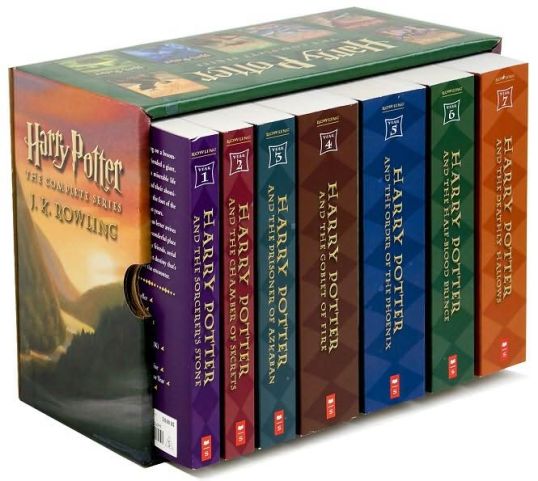
After slogging through the seven Harry Potter tomes I wanted to read something completely different – so I decided to read the novel, “Never Let Me Go,” by Kazuo Ishiguro, the author best known for “Remains of the Day.” It was one of Time Magazine’s Top 100 novels of all time.

It is a subtle story, told in three parts. The first is set in Hailsham, a boarding school in England. The story is told as a memory by Kathy and concentrates on her and two other children at the school, Tommy and Ruth. The three are followed through the short time they stay together after they leave school and then their fate as adults.

I’m not sure how to describe the genre of the novel. It is usually described as a Dystopian Science Fiction Novel – or even as a “Sci-fi Thriller” – but that does the story short shrift. It is not set in a distant future, but in an alternate recent past, one shaped by fictional postwar scientific advances that are by no means beyond probability or comprehension to readers of today. I won’t discuss exactly what these are in order to not spoil the novel, in case you want to read it (and you should). If you want to know, you can read here.

But it is not a typical Science Fiction novel. It is told in Kathy’s voice, and is full of her concerns. She concentrates on the small, everyday interactions between her and the people that she loves, while the terrible truths lie sleeping, just off screen, ready to wake at any moment. She knows, but does not know. As one of the teachers at Hailsham says, “You are told, but not told.”

In the end it is a romance. Kathy loves… but she doesn’t have enough time.

Neither do any of us.


Now, after finishing, I realize that, even though my intention was to read something completely different than Harry Potter, there are a lot of similarities. The style and intent are opposites – Never Let Me Go is an elegiac postmodern literary tour-de-force while the Harry Potter books are, for all their sound and fury, children’s stories.

Yet they both start in exclusive British boarding schools for very special children. There isn’t much difference, really, between Hailsham and Hogwarts. The students are cut off from normal society – hidden from and shunned by ordinary people. The theme of children trying to find their way without parents is central to both, as are the issues of fate, duty, and sacrifice.

Both feature childhood love triangles – in Never Let Me Go it is two girls and a boy – and the difficulties of navigating the riptides of love as the three move from being children to adults.

Oh, and finally, both have been made into films… though not very many people saw the cinematic version of Never Let Me Go. I picked it up from the library and it is good – though without Kathy’s hopeful voice narrating things it is terribly sad. Somehow, actually seeing the awful fate that awaits these doomed children from Hailsham is so much harder to take.


The title of the book and film is from a song on a cassette tape that Kathy picks up at a school swap meet. For the film, they had to come up with the actual music of the fictional Judy Bridgewater.

These two songs have nothing to do with the book or film… but I like them anyway.

NEVER LET ME GO Featurette – Working Together

Official Trailer (possible spoilers)

Harry Potter and the Too Many Pages

My kids have a history with the Harry Potter books. They were just the right age… Well, Nick was at first. He read the first three or so – I remember going to the bookstore in Mesquite at midnight and picking up the books as they were released, so he could start in the next morning. He would devour them.

Nick reading Harry Potter.

Nick reading Harry Potter. Is this the first one?

As the years went by, the books came out while we were out of town, in the middle of summer vacation. Once, we knew we would be in Santa Fe, New Mexico. So I reserved a copy at a bookstore there and Nick and I (he was old enough to stay up now – I don’t know which book it was) went down to pick it up. I remember the night – there was some serious nerdery going on in that bookstore – kids in costume, groups, organized events. I also remember one girl that had a friend in St. Louis. Since midnight there was an hour earlier, her friend was reading her the first chapter over her cell phone while she waited.

Nick sort of grew out of the books. He says he hasn’t read the last two. Lee took over… catching up and reading the rest as they came out. We learned the last book would come out while we were driving through West Texas so we reseved a copy in Amarillo. Back in the hotel, he went down to the lobby and stayed up all night (he has always been a night owl) – reading the thing. He said some strange people came into the hotel after three AM, but they left him alone. He finished the whole book about the time we left in the morning.

I had read the first book, gobbled it down quickly not long after it came out but never read any of the others. I saw… some of the films… maybe three of them. I sort of put them out of my mind as the years went by. I thought about reading them – but the massive size and the time it would require put me off.

But now that they are available as ebooks – I decided to read them on my Kindle. Somehow, the invisible digital bytes hiding inside the tiny tablet seemed less onerous than lugging around giant paper tomes and over four thousand pages of the US edition. So I charged through all seven, one after another. It took a few weeks – I have been busy, but with the Kindle I can carry it with me and grab spare minutes here and there. I liked to take it with me on my bicycle and stop to read when I wanted to take a bit of a rest.

So… what did I think about the beloved series?

First, the experience of reading this much in one gulp is overwhelming. I’ve said before that I have to be careful about what I’m reading because it has such a strong effect on my writing. I was pretty much unable to write any fiction while wallowing in the world of Harry Potter. I did squeeze out a couple mediocre tales of children or teens that didn’t fit in anywhere – lonely, confused, and abandoned… not my usual fare.

But it was an interesting experience – being immersed in J. K. Rowling’s world.

Unfortunately, reading like that does show the flaws in the books pretty starkly. Without a gap between the books the repetitive nature of the first six is obvious and tiring. It’s really the same story told six times. The last one breaks the chain… it is a fully realized grown-up novel.

Also, her overuse of creaky literary crutches – hackneyed plot devices – stuck out. The Harry Potter series is the home of the Hallowed MacGuffin. If you don’t know what a MacGuffin is… read this. Every book revolves around some object (or person), sometimes referred to in the title, that have all the characters dancing around like puppets on strings. But, in the end, that object (or person) really has nothing to do with the actual story at all. That makes it a MacGuffin. The later books have multiple MacGuffins.

There’s nothing wrong with a MacGuffin, of course. You could not have detective stories without them. Hitchcock loved them. The Maltese Falcon is the classic MacGuffin… and there’s no better story than that. But Harry Potter overused them – and when you read all the books and they keep hitting you one after another… a bit much.

She also likes to have all her characters stand around at the end of the books and speak directly about what was really going on – giving out plenty of information that was crudely, cruelly and sometimes arbitrarily withheld from the reader up until then.

And then there’s the Pensieve. Every writer struggles with backstory and point of view. In the Harry Potter books the point of view is held tightly to the hero (with the exception of a prolog or afterward here or there) and she needed a way to bring in information that wasn’t otherwise available to Harry, either by time, space, or the needs of the plot.

So, invent a Pensieve – basically a big bucket – and whenever you need to bring in information that Harry isn’t privy to, have the hero stick his head into the bucket – he falls in, and exactly what you need to have the story go forward (and nothing more) is delivered… by magic.

I shouldn’t complain – it works – but it’s a bit obvious, awkward, and lazy.

Still, though, after all the creaky prose and obvious plot devices it is one hell of a story. Especially when it’s read in one enormous gulp – like a professional eater and a mountain of hot dogs – the world of Harry Potter is irresistible and addictive. You can’t stop reading.

There is plenty there to strike a chord, plenty more to think about. It’s easy to see how it has sold so many copies and become such a touchstone for so many people of several different generations.

I’m just glad I’m done so I can get back to my own pitiful little world.

Brief Encounters with Che Guevara

There’s so little in the world we can be sure of, and maybe it’s that lack, that flaw or deficiency, if you will, that drives our strongest compulsions.

—- Ben Fountain, Brief Encounters with Che Guevara

After finishing the massive collection of J. G. Ballard’s fiction, I’m cruising my Kindle, finishing off some fiction that I have started and slacked off on.

From the first time I stumbled across a description of it – I was irresistibly drawn to Ben Fountain’s collection Brief Encounters With Che Guevara. First, he is an author that shares a city with me. Originally, from North Carolina (I was born there – in the first of many burgs I lived in with the word “Fort” as its prefix) he has a law degree from Duke (where my son goes to school) and then moved to Dallas to practice real estate law.

He struggled for years before he finally was able to publish this book. Malcolm Gladwell even wrote about his delayed genius. Finally he is recognized as a great writer and has gained additional fame for articles published in the aftermath of the Haitian Earthquake (I know a little about Latin American Third World Earthquakes).

There are eight stories in the book:

  • Near-Extinct Birds of the Central Cordillera (my favorite)
  • Rêve Haitien
  • The Good Ones are Already Taken
  • Asian Tiger
  • Bouki and the Cocaine
  • The Lion’s Mouth (really excellent story of Sierra Leone and the compulsions of aid workers)
  • Brief Encounters with Che Guevara
  • Fantasy for Eleven Fingers (odd story… reminds me of Campion’s “The Piano” – even before the end)

I absolutely loved the first story – Near-Extinct Birds of the Central Cordillera – set in Columbia, a country Fountain has no experience with.

He says in an interview:

“It’s better to go. It would have been better if I had gone to Colombia, it would have been better if I had gone to Sierra Leone. You never know what you’re missing. You never know what you don’t know until you go. But you can’t always go. You don’t have unlimited time and unlimited money. And so you do the next best thing—you try to imagine yourself into these places. The way I did it was to read everything I could get my hands on and to talk to other people who might have information. If there were helpful movies or documentaries, I sought those out. I was just trying to soak it all up and imagine my way into it using that basic research and my own experience in similar places or similar situations.

I actually think his distance from Colombia helped the story. It’s the story of an ornithologist kidnapped by Colombian rebels. While in captivity he discovers a natural prize of infinite value – though nobody else really understands. In the end, it is he who does not understand. It is the confusion of the ornithologist when confronted with the fatal mysteries of the third world that forms the backbone of the story.

It is this discord between the first and third worlds… this frission when confronted with something that is older, more passionate, and raw than anything you have ever thought possible – and then the dawning of the realization that this jewel of wonder is wrapped in impenetrable layers of horror and death, doom and madness… and there isn’t anything you can do about it – that’s what it likes to be exposed to the third world.

Believe me, I know.

Fountain seems to feel this in his stories and skirts it without completely diving in – but he comes closer than most anything I’ve read since the simple Ray Bradbury story, The Highway.

I would love to read his work as it continues to mature… to see him dig closer to the heart of darkness. Unfortunately he seems to be seduced by politics and moving more away from what I want to read. We’ll see, I won’t give up on him. I won’t give up looking for what I want.

On the other hand, I guess if you want something done, if you want to read something different, maybe you have to do just dig in and do it yourself.

Addicted to Haiti by Ben Fountain

After the Earthquake, but Before the Flood  by Ben Fountain

 What to Read? Ben Fountain Recommends

Brief Encounters with Che Guevara, Ben Fountain

Hot Zones

Better Late Than Never: A Review of Ben Fountain’s Brief Encounters With Che Guevara