“Will Postwar be nothing but “events,” newly created one moment to the next? No links? Is it the end of history?”
― Thomas Pynchon, Gravity’s Rainbow

Deep Ellum, sometime ago
“Will Postwar be nothing but “events,” newly created one moment to the next? No links? Is it the end of history?”
― Thomas Pynchon, Gravity’s Rainbow
Deep Ellum, sometime ago
Out at sea a single clarinet begins to play, a droll melody joined in on after a few bars by guitars and mandolins. Birds huddle bright-eyed on the beach. Katje’s heart lightens, a little, at the sound.
—-Thomas Pynchon, Gravity’s Rainbow
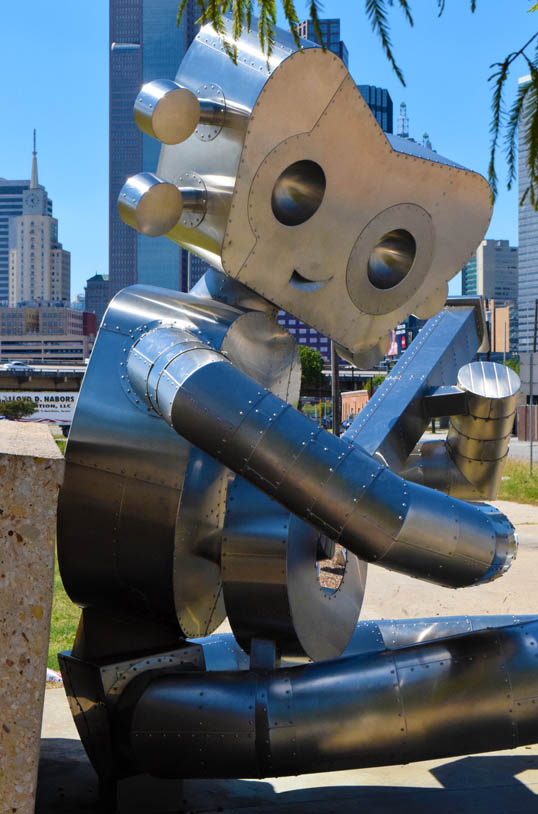
Travelling Man, Deep Ellum, Dallas, Texas
“His life had been tied to the past. He’d seen himself a point on a moving wavefront, propagating through sterile history—a known past, a projectable future. But she was the breaking of the wave. Suddenly there was a beach, the unpredictable… new life. Past and future stopped at the beach: that was how he’d set it out. But he wanted to believe it too, the same way he loved her, past all words—believe that no matter how bad the time, nothing was fixed, everything could be changed and she could always deny the dark sea at his back, love it away. And (selfishly) that from a somber youth, squarely founded on Death—along for Death’s ride—he might, with her, find his way to life and to joy.”
― Thomas Pynchon, Gravity’s Rainbow
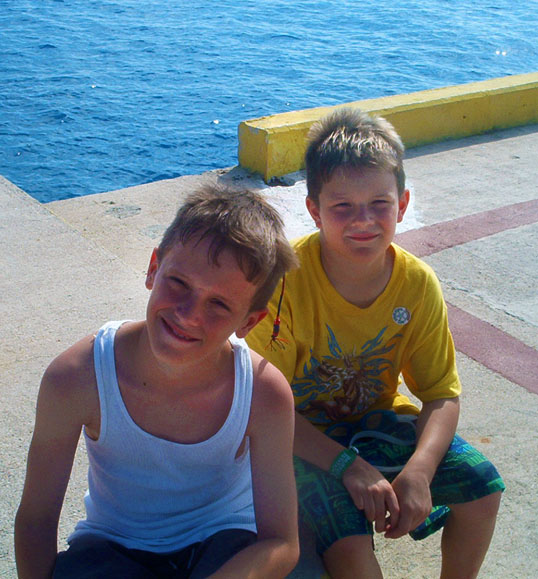
Nick and Lee, Cozumel, 2002

Nick and Lee, Cozumel,2018
I was cleaning out and organizing some old files.
“Do we really want to travel in hermetically sealed popemobiles through the rural provinces of France, Mexico and the Far East, eating only in Hard Rock Cafes and McDonalds? Or do we want to eat without fear, tearing into the local stew, the humble taqueria’s mystery meat, the sincerely offered gift of a lightly grilled fish head? I know what I want. I want it all. I want to try everything once.”
― Anthony Bourdain, Kitchen Confidential: Adventures in the Culinary Underbelly

Travelling Man… and a jet, Deep Ellum, Dallas, Texas
“My most important piece of advice to all you would-be writers: When you write, try to leave out all the parts readers skip.”
― Elmore Leonard, Elmore Leonard’s 10 Rules of Writing
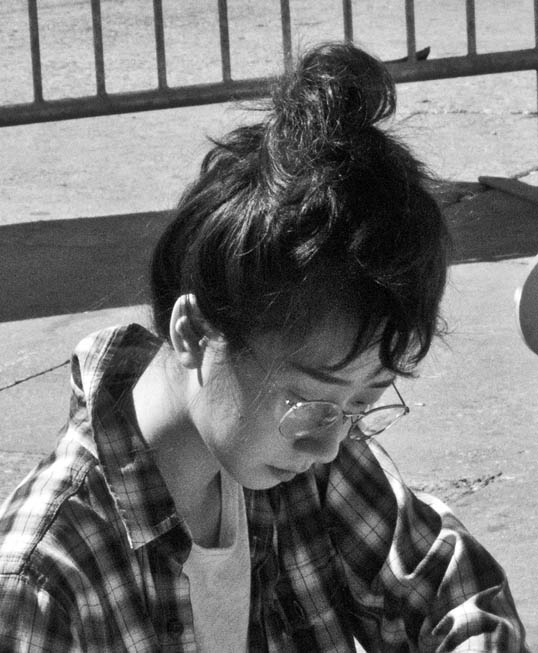
Deep Ellum, Dallas, Texas
“TO BE A TOURIST is to escape accountability. Errors and failings don’t cling to you the way they do back home. You’re able to drift across continents and languages, suspending the operation of sound thought. Tourism is the march of stupidity. You’re expected to be stupid.
― Don DeLillo, The Names

Tourists reflected in a metal bird. Travelling Man Sculpture, Deep Ellum, Dallas, Texas
“The more people you have to ask for permission, the more dangerous a project gets.”
―
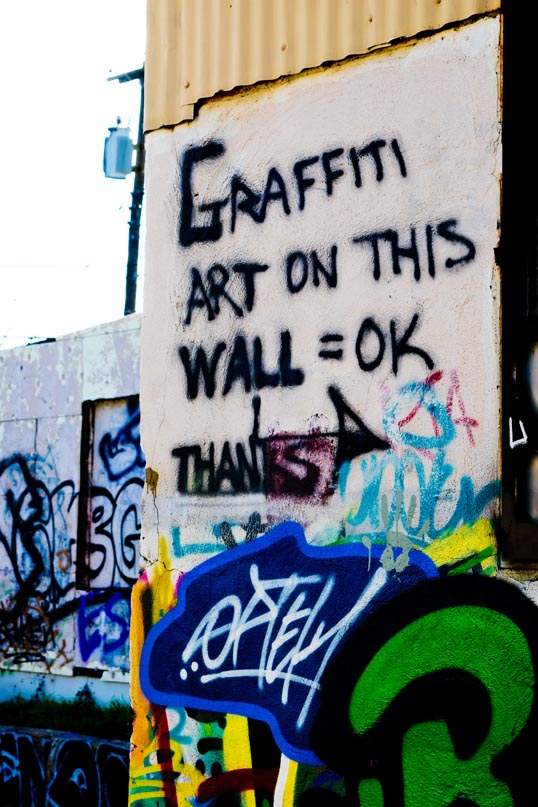
Fabrication Yard, Dallas, Texas
“If there is a life force operating in Nature, still there is nothing so analogous in a bureaucracy. Nothing so mystical. It all comes down, as it must, to the desires of individual men.”
― Thomas Pynchon, Gravity’s Rainbow

Reunion Tower, taken from inside the Dallas Streetcar. On my way to Bishop Arts for a discussion of Gravity’s Rainbow.
I seen her beat the hell out of a tin peddler with a live chicken one time ’cause he give her a argument. She had the chicken in one han’, an’ the ax in the other, about to cut its head off. She aimed to go for that peddler with the ax, but she forgot which hand was which, an’ she takes after him with the chicken. Couldn’ even eat that chicken when she got done. They wasn’t nothing but a pair of legs in her han’. Grampa throwed his hip outa joint laughin’.”
― John Steinbeck, The Grapes of Wrath

Commemorative Air Force, Wings Over Dallas, Dallas, Texas
Paradoxical phase, when weak stimuli get strong responses…. When did it happen? A certain early stage of sleep: you had not heard the Mosquitoes and Lancasters tonight on route to Germany, their engines battering apart the sky, shaking and ripping it, for a full hour, a few puffs of winter cloud drifting below the steel-riveted underside of the night, vibrating with the constancy, the terror, of so many bombers outward bound. Your own form immobile, mouth-breathing, alone face-up on the narrow cot next to the wall so pictureless, chartless, mapless: so habitually Hank… .Your feet pointed toward a high slit window at the far end of the room. Starlight, the steady sound of the bombers’ departure, icy air seeping in. The table littered with broken-spined books, scribbled columns headed Time / Stimulus / Secretion (30 sec) / Remarks, teacups, saucers, pencils, pens. You slept, you dreamed: thousands of feet above your face the steel bombers passed, wave after wave.
—-Thomas Pynchon, Gravity’s Rainbow

Business End, B-24 Liberator, Commemorative Air Force, Dallas, Texas
 Bill Chance