When we think about the autumn and winter seasons, we often envisage a peaceful scene. It’s a time where we seek cosiness and wrap ourselves up against the elements, a comforting hot chocolate and weighted blanket never too far away from our reach.
But despite the changing leaves and general feeling of happy hibernation, they are also seasons of great stress, too.
I am, of course, describing a book cover—or rather, the book cover, that of the current literary zeitgeist, whose abstract splotches are a ubiquitous presence in the new releases display at your local bookstore.
All artists have a lot in common. Whether you’re a comic artist or a painter – you still experience similar situations like lack of inspiration or constantly being asked “Will you draw me?”
This is the border crossing at Boquillas. The rowboat says, “La Enchilada” on its side. The boatman charges $2 for a trip across the Rio Grande. You can see the burros and trucks on the Mexican side – a ride into town costs 4 dollars.
From my old blog, The Daily Epiphany, Friday, March 23, 2001 (just a few months before 9/11 changed everything)
El hombre escribiendo
The border between the US and Mexico is a big deal in most places – controlled bridges, customs, crowds, fences, razor wire, a complete difference from one side to another.
Here in Big Bend the border is a greenish sluggish river, barely waist deep, and the crossing is a decrepit old rowboat called “La Enchilada.” A ride across the Rio Grande cost $2. “Pay me on the other side,” the boat’s captain told me – apparently to avoid the onus of doing business in a US National Park. Two quick strokes on his paddle and we were in Mexico.
A busy crowd on the gravel bar was hawking handmade jewelry, walking sticks, and rides by burro, horse, or pickup truck into the village. I walked past the jabbering, bargaining crowd (a handful of elderly tourists were renting some burros) and hoofed it the mile or so into the village.
It was a dusty, sandy walk through the floodplain thicket of Mesquite into the village of Boquillas itself. It’s a dirt-poor border town, a few short dusty gravel streets lined with scattered adobe huts. Each hut has its own table covered with rock crystals, scavenged from the nearby mountains, for sale. The main street has one restaurant, Falcon’s, and a handful of cantinas – some very shady looking.
Above the village rears the amazing escarpment of the Sierra del Carmen. Those cliffs, jagged like broken teeth dominate the skyline of the entire park, visible clear up to the headquarters thirty miles away.
I settled into the breezeway of Falcon’s – surprisingly seat once I was out of the burning sun and shaded by the roof of traditional vigas. A few others were already there – a big group of tourists sitting at one long table and a couple of local Texas ranchers with their families – the men were bargaining with the owner of the restaurant over the sale of a pickup truck.
Two rooms selling really bad Mexican handicrafts flanked the open breezeway. I had hoped to buy Candy a birthday present there, but there wasn’t anything worth looking at. At the end of one room was the restaurant kitchen, which looked like one from a small apartment. The owner’s daughter stood there looking bored and cranked out the food. One tourist asked to, “see the menu” and the daughter replied, “tacos y burritos.” Each were three for a dollar.
I ordered a Corona and a plate with three tacos and three burritos. The food was greasy and good – small handmade corn tortillas served with a bowl of diced jalapenos and onions. The beer was cold. I sat and ate and drank my beer and wrote a little in my notebook.
Local children selling little woven bracelets carried on pieces of cardboard swarmed the restaurant. I bought two for Nicholas, one said Big Bend the other Boquillas. The pesky kids were really bothering the big table of tourists. Eventually the wife of the restaurant’s owner came out and shooed them away – even the few that were standing around my table.
“El hombre escribiendo!” she shouted at the children near me.
After finishing a second beer I decided to walk around a bit more, having to constantly fend off the little street vendors. I decided I was still thirsty so I stopped by one of the cantinas for a cold Dos Equis. It was a roomy bar with tables and two pool tables at the back; Spanish rap music blared out of an unseen boombox somewhere. The long bar was lined with every imaginable brand of cheap Mexican tequila, mescal, and sotol.
A sunburned Mexican drunk conned me into buying him a Tecate – then left me alone. A couple of American college girls came in for beers and then three guys wearing Chi Omega Intramurals T-shirts came in for shots and bought a round for the girls. “Where you from?” the bartender asked the girls. “Indiana.”
An older couple came in and bought four bottles of some odd colored liquor. The bartender carefully wrapped it so they could get it back across the border.
The owner came and sat with me and we spoke a bit, mixing English and Spanish. It is so rare that I speak Spanish anymore my mouth felt odd forming the sounds. The Mexican beer helped.
He made some rude remarks in Spanish about the girls at the bar; then asked me where I was from. I told him I drove through Monahans to get to Big Bend. “Big prison in Monahans,” the owner said, “I have nephew in prison there.”
Then he indicated the sunburned drunk, “He the police here, only police in Boquillas.” I considered asking to see his badge but thought better of it. With the sleazy cantina, the dusty streets, and the mountains rising high overhead things were getting way too Treasure of the Sierra Madre feeling for me, so I decided to head back to Texas.
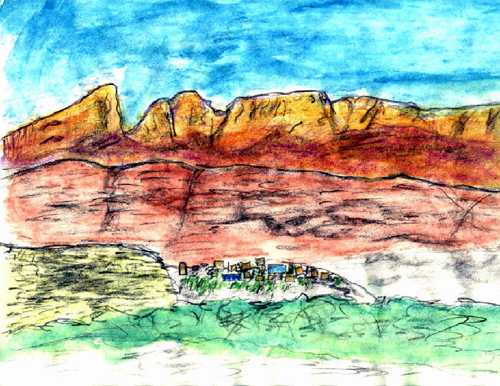
A sketch I made in 2001 along the Rio Grande, the village of Boquillas, with the Sierra Del Carmen in the background.
Anyone who has ever attended a keynote, lecture, or presentation of any kind knows how important it is to take good notes. How many times have you been at a presentation for work and afterward wished you had written down that key idea that you somehow can’t remember?
A while back, in my corporate days, I was experiencing this far too often. So I went back to my college days and pulled out a note-taking method I used to use, one of the most popular note-taking methods of all time, the “Cornell Note-taking System.” It’s named after a Cornell University educator who invented the system in the 1940s. Here’s how it works, as explained on the Cornell System official website.
Bicycle Drag Races, Continental Bridge Park, Dallas, Texas
Scientists believe that the answer lies in the workings of our metabolism, the complex set of chemical reactions in our cells, which convert the calories we eat into the energy our body requires for breathing, maintaining organ functions, and generally keeping us alive.
Composer Danny Elfman discusses venturing into new territory, taking criticism with a grain of salt, and the difficulty of understanding your own creative process.
I am a self-confessed ‘bad replier’ – if I could add an out-of-office to my phone which would tell all of my friends to expect a reply within five to seven working days, I would.
Trophy from the Gravity’s Rainbow Challenge. Yes, I read the whole thing.
I am ploughing through “Foucault’s Pendulum” with my Difficult Reading Book Club. There is surprisingly little useful information out there on what is really going on.
New research suggests that the highest-performing teams have found subtle ways of leveraging social connections during the pandemic to fuel their success. The findings offer important clues on ways any organization can foster greater connectedness — even within a remote or hybrid work setting — to engineer higher-performing teams.
A surprising grant of certiorari places a high-stakes regulatory case on the Court’s docket, with profound implications for EPA authority to regulate greenhouse gases.
Rotterdam Express
Container Ship
New Orleans, Louisiana
This is fascinating – to the point I picked up the book. Will write more about this later.
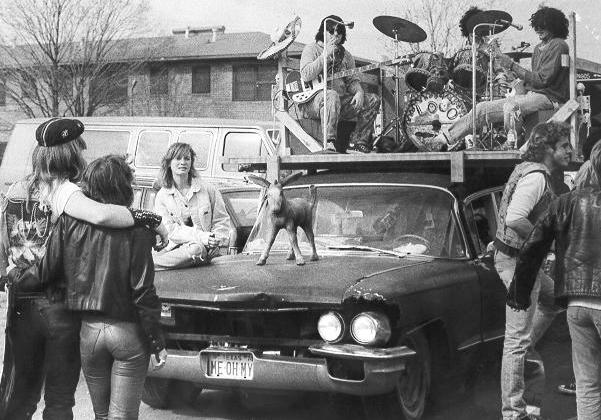
One of the cool things is that you could go down into a pit area and look at what was left of the vehicles after they ran their race. If their was enough left in one piece you could even sit in the driver’s seat and get your picture taken.
Or you could talk to the drivers. For some reason this driver, from a cheese-wedge shaped car that made it down quickly in one piece, seemed very popular in the pits.
William Shakespeare devised new words and countless plot tropes that still appear in everyday life. Famous quotes from his plays are easily recognizable; phrases like “To be or not to be,” “wherefore art thou, Romeo,” and “et tu, Brute?” instantly evoke images of wooden stages and Elizabethan costumes. But an incredible number of lines from his plays have become so ingrained into modern vernacular that we no longer recognize them as lines from plays at all. Here are 21 phrases you use but may not have known came from the Bard of Avon.
My mouth waters at the slightest whiff of pungent, fermented cabbage and I’ll eat it with everything from fried rice to dumplings, summer rolls, or, ahem, straight out of the jar. I still have a lot to learn from Mom when it comes to kimchi-making (there are over a hundred different kinds!) but the recipe for mak kimchi, or simple kimchi, has been a great place to start
What the invention of the hypodermic needle was to morphine addiction, the invention of the smart phone was to behavioral addictions (addictions involving a behavior rather than a drug): pornography, gambling, gaming, shopping, tweeting, Facebooking, doomscrolling … the list goes on.
If we keep going down this path, soon we won’t have much of a “middle class” at all. When I first started writing about the economy many years ago, I often wrote about the tens of millions of “working poor” Americans that were enduring so many hardships. But at this point most of the nation now falls into the “working poor” category.
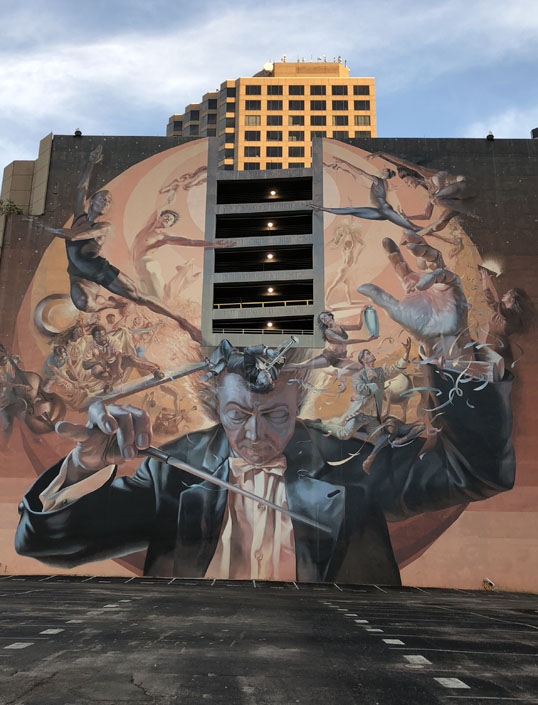
The full mural (previous photo center bottom) – Ace Parking, Dallas, “The Storm” Art Mural on Ace Parking Garage at 717 Leonard Street
An entire town went quiet so the world’s most iconic violin could be immortalized.
The Trinity River was still boiling, but it had obviously been higher a couple days earlier. The dropping river left its burden of mud. Soon enough all will be dust.
Everything in our homes gathers dust. But what exactly is it? Where does it come from, and why does it keep coming back? Is it from outside? Is it fibres from our clothes and cells from our skin?
With only 1,000 ever made, the CTC was noted for its uncanny ability to always sit perfectly in the mix and was used on many hit records, such as “Tell Me Something Good” by Rufus and “Low Rider” by War, for its spectacular short delay and doubling effects.
It’s basically a speaker and microphone separated by a twenty foot coil of garden hose.
The major takeaway from this study is that “you do not need to lose weight to be healthy,” said Dr. Gaesser. “You will be better off, in terms of mortality risk, by increasing your physical activity and fitness than by intentionally losing weight.”
I think this old, stupid joke is… I laughed harder at this than anything else I ever did.
I am shocked at how many people are leaving my place of work. The most common reason is the vaccination mandate – but a lot of people are just burned out. It won’t be long – but I will join them soon. It’s pretty much all I think about.
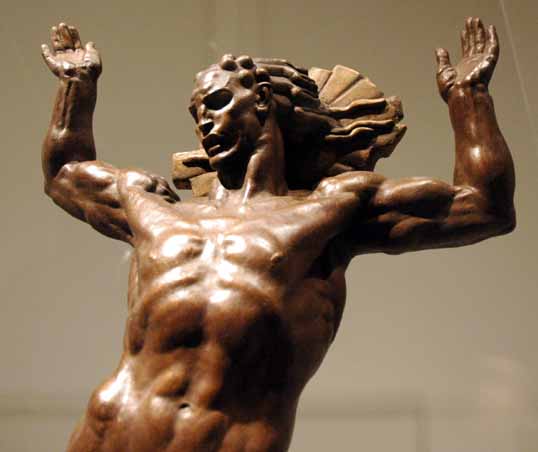
Standing Man With Radiating Words, Leslie Dill, Sydney and Walda Besthoff Sculpture Garden
It’s to be expected that the words we use will change and develop over time as they begin to be used in original and innovative new contexts. But in some instances, these developments can lead to words gaining new meanings entirely different from their original implications—and the 25 words listed here have done just that.
Something
In front of
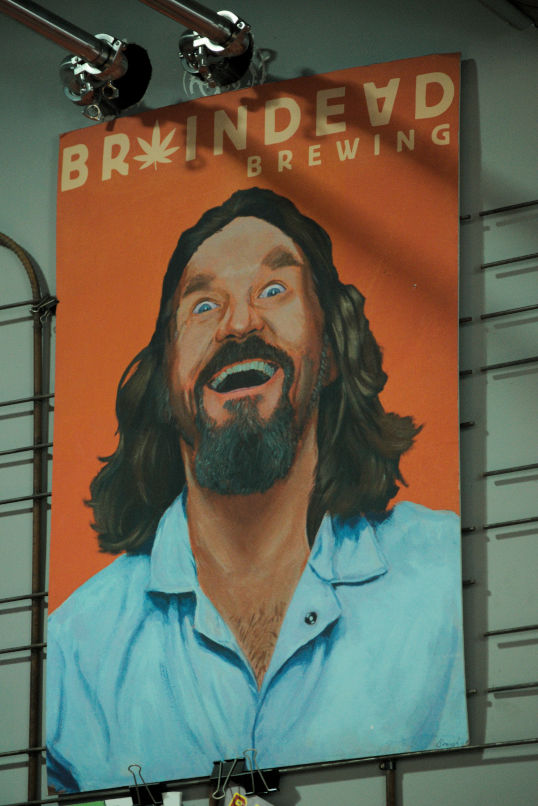
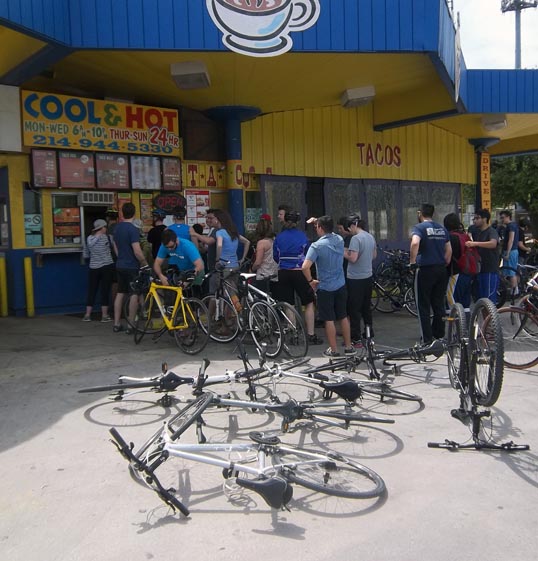
Braindead Brewing
Deep Ellum
Dallas, Texas
If your brain is a heaving mess of work and life to-dos, find some focus with these straightforward steps from Ryder Carroll, creator of the Bullet Journal.
Damian Priour, Austin
Temple (detail)
2000 fossil limestone, glass, steel
In Memory of Buddy Langston 1947-2004
Frisco, Texas
English has changed a lot in the last several hundred years, and there are many words once used that we would no longer recognize today. For whatever reason, we started pronouncing them differently, or stopped using them entirely, and they became obsolete. There are some old words, however, that are nearly obsolete, but we still recognize them because they were lucky enough to get stuck in set phrases that have lasted across the centuries. Here are 12 words that survived by getting fossilized in idioms.
Fountainhead
Charles Long
Northpark Center
Dallas, Texas
A twenty-four-hour news cycle that preys on this human propensity has undeniably aggravated the problem and swelled the 8% to appear as 98%, but at the heart of this warping of reality is an ancient tendency of mind so hard-wired into our psyche that it exists independently of external events.
New Orleans Gargoyle,
Thomas Randolph Morrison,
New Orleans, Louisiana
Count me as a Buster Benson fan. His 2016 Cognitive bias cheat sheet is legendary among behavioral designers. I have a framed print out of his codex in my home and I’ve enjoyed his writing on various topics for years. He has extensive experience building products that move people at Slack, Twitter, and Habit Labs.
The recent surge in stories about young men abandoning higher education — college women outnumber men 3 to 2 — may have surprised a few headline writers, but the graffiti about the decline of men and boys has been on the wall for decades.
Is your mental health in need of a boost? Here’s how embracing the Nordic concept of ‘friluftsliv’ could help.
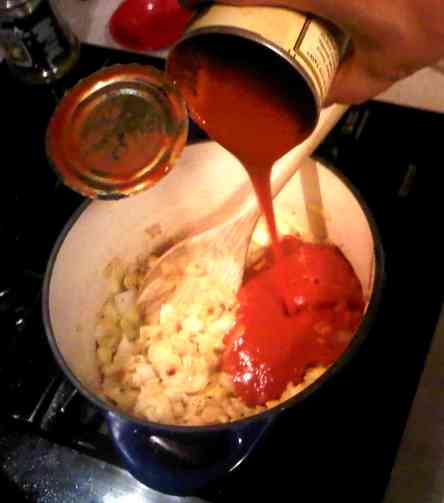
I pour a can of tomato sauce over the pasta, garlic, one chipotle pepper (only one!) and onions that I have been cooking in olive oil in a medium dutch oven.
First, the ingredients. You’ll need a 28-ounce can of whole, peeled tomatoes; one peeled, halved onion; and 5 tablespoons of butter. (Yes, 5 whole tablespoons of butter.) You’ll also want a pinch or two of salt.
Put everything together in a single pot and set it to simmer over medium heat on the stove for 45 minutes, uncovered. Give it the occasional stir.
And that’s it. After the 45 minutes is up, toss out the onion halves, and pour the sauce over your favorite pasta. Easy.
For decades, Kate Edgley struggled with insomnia. She tried everything, but nothing seemed to work… Here, she reveals the terrible toll it took on her life – and how she eventually realised her dreams
Here’s a jarring thought: Most political analysts and most political strategists for our two political parties have been operating off flawed data and flawed assumptions. The result has been one political surprise after another and the election of the two most unsatisfactory presidents, in the minds of many voters, since Franklin Pierce and James Buchanan in the 1850s.
Much of the show’s thematic arc follows the Rose family as they slowly loosen their grip on the superficial beliefs and identities they previously held and come to embrace the community—ultimately becoming far warmer, more compassionate citizens in the process. One of the real victories in storytelling throughout the show’s arc is the absence of heavy-handed moralizing or preaching. Rather, the town and its people simply exist as they are, and themes are explored through a matter-of-fact demonstration of how things could be. This is true in the refreshing, straightforward way that David and Patrick’s openly gay relationship plays out, as well as the theme I’d like to discuss here, which is the lack of corporate control over the small town’s economy.
My Xootr Folding bike on the West Bank Levee Trail
Stress can feel like a baseline condition for many of us – especially during a pandemic. But there are ways to help alleviate the very worst of it, whether through support, sleep or radical self-care
Only when we admit we have a problem can we begin to find solutions. In the first episode of How to Build a Happy Life, we explore the neuroscience of emotional management, practices that help us befriend our inner monologue, and challenges to getting in touch with our feelings. Our journey to happier living starts with the question: How do I feel right now?
The aluminum grid of the Winspear Opera House sunshade – very high overhead, reflected in the pool.
Our social and political deterioration did not start with Joe Biden’s election or Jonathan Greenblatt’s elevation to the leadership of the Anti-Defamation League.
We didn’t need a new poll from The University of Virginia Center for Politics and Project Home Fire to tell us that many Democrats see fascists when they look at Republicans and many Republicans see Communists when they look at Democrats. Forty-one percent of Biden voters and 52 percent of Trump voters at least somewhat agree that the time has come to split the country into red and blue states. There is a widespread feeling on both sides that we are not friends but enemies.
If you’re not used to having a lot of friends any more, you may actually need to remind yourself to engage. Set time on your calendar for a phone call or make plans to get a cup of coffee or to do something else together. As an adult, your life gets busy, so scheduling time with friends is a recognition of the complexity of your life, not a sign that you’re doing something you don’t really want to do.
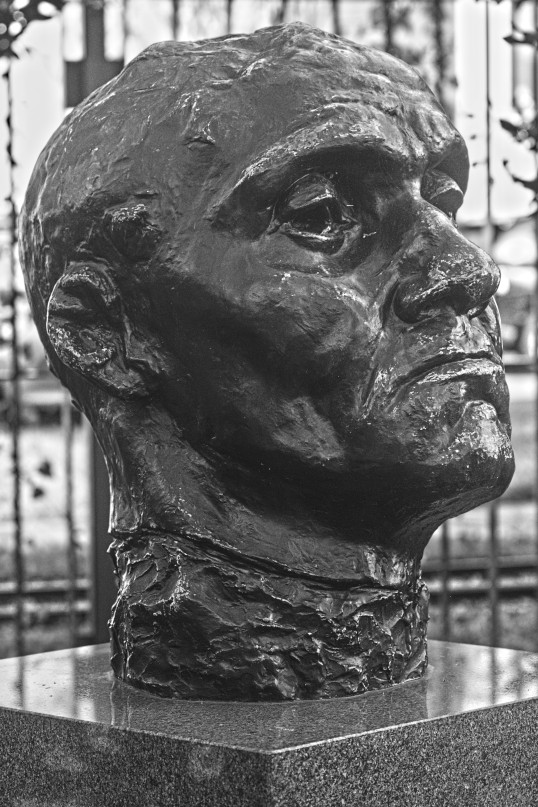
Monumental Head of Jean d’Aire (from The Burghers of Calais), Auguste Rodin, Sydney and Walda Besthoff Sculpture Garden
In the 2nd century CE, in the sunset of his life, the Roman Emperor Marcus Aurelius began recording meditations on how he had lived. The questions he asked himself are the same ones many of us find ourselves asking today: how does a person live a meaningful life? How does one find resilience in the face of suffering? What does it mean to be happy?
I wonder what this guy was thinking… “Wow, there are too many people here! I give up!” or, more likely, “Hey! Quit staring at my penis!”
A decade or two ago, if you wanted to learn something new, you’d have to pick up a book or find a way to get some hands-on experience. Now though, educational tools are at our fingertips: there are incredible online resources for everything you could want to learn. It’s literally never been easier to gain new skills—which is why it’s a great use of your spare time.
William Shakespeare devised new words and countless plot tropes that still appear in everyday life. Famous quotes from his plays are easily recognizable; phrases like “To be or not to be,” “wherefore art thou, Romeo,” and “et tu, Brute?” instantly evoke images of wooden stages and Elizabethan costumes. But an incredible number of lines from his plays have become so ingrained into modern vernacular that we no longer recognize them as lines from plays at all. Here are 21 phrases you use but may not have known came from the Bard of Avon.




















 Bill Chance