Blooms

“You’re frustrated because you keep waiting for the blooming of flowers of which you have yet to sow the seeds.”
― Steve Maraboli

Dallas Blooms, Dallas Arboretum

blooms3

It was odd walking around the Arboretum – I kept expecting to see the Chihuly Glass and it isn’t there any more. The gorgeous colors of Dallas Blooms made up for the absence of the sculptures.

My poor picture taking talents don’t do justice. Peggy does a better job than I do.

“I stopped in front of a florist’s window. Behind me, the screeching and throbbing boulevard vanished. Gone, too, were the voices of newspaper vendors selling their daily poisoned flowers. Facing me, behind the glass curtain, a fairyland. Shining, plump carnations, with the pink voluptuousness of women about to reach maturity, poised for the first step of a sprightly dance; shamelessly lascivious gladioli; virginal branches of white lilac; roses lost in pure meditation, undecided between the metaphysical white and the unreal yellow of a sky after the rain.”
― Emil Dorian, Quality of Witness: A Romanian Diary, 1937-1944

Kissing in the Tulips

blooms5

Dallas Blooms, Dallas Arboretum

blooms6

I posted an entry with pictures of this sculpture before – The Kiss.

The vegetation around it looked a lot different in July.

kiss1_1

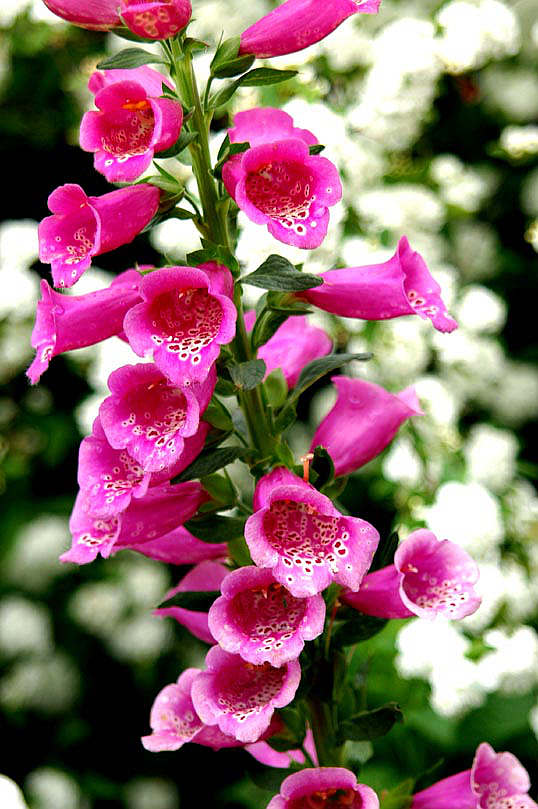
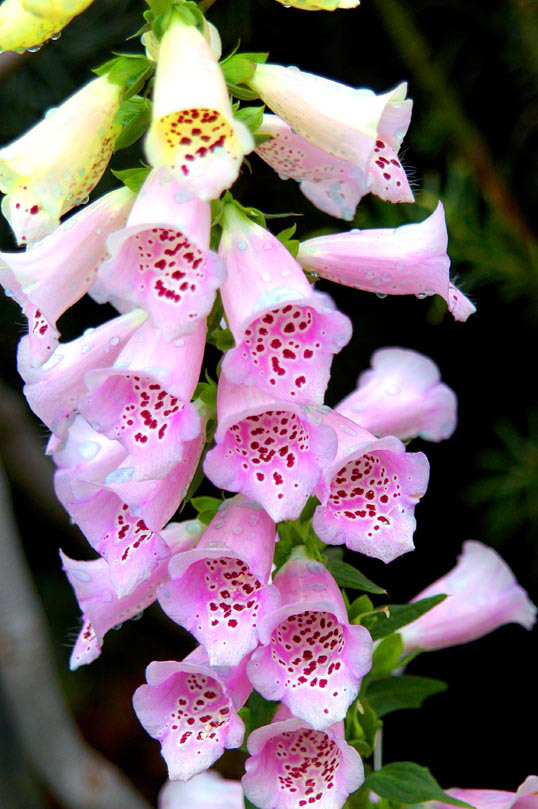
Digitalis

Dallas Blooms, Dallas Arboretum

The Foxglove now in crimson tresses rich
Depends, whose freckled bells to insect tribe
Afford a canopy of velvet bliss.

—-Wordsworth

digit3

A chemical extract from foxglove, digitalis, is both a famous deadly poison and a precious remedy for heart disease. The difference, like everything else in life, is timing and dosage.

In digitalis the gap between poison and remedy is very, very small.

digit1

How did it get its name?

According to the 19th-century book, English Botany, Or, Coloured Figures of British Plants:

Dr. Prior, whose authority is great in the origin of popular names, says “It seems probably that the name was in the first place, foxes’ glew, or music, in reference to the favourite instrument of an earlier time, a ring of bells hung on an arched support, the tintinnabulum”… we cannot quite agree with Dr. Prior for it seems quite probable that the shape of the flowers suggested the idea of a glove, and that associated with the name of the botanist Fuchs, who first gave it a botanical name, may have been easily corrupted into foxglove. It happens, moreover, the name foxglove is a very ancient one and exists in a list of plants as old as the time of Edward III. The “folks” of our ancestors were the fairies and nothing is more likely than that the pretty coloured bells of the plant would be designated “folksgloves,” afterwards, “foxglove.” In Wales it is declared to be a favourite lurking-place of the fairies, who are said to occasion a snapping sound when children, holding one end of the digitalis bell, suddenly strike the other on the hand to hear the clap of fairy thunder, with which the indignant fairy makes her escape from her injured retreat. In south of Scotland it is called “bloody fingers” more northward, “deadman’s bells” whilst in Wales it is known as “fairy-folks-fingers” or “lambs-tongue-leaves”

digit2

The Scottish doctor William Withering, while working as a physician in the 18th Century, had one of his patients come to him with a very bad heart condition and since Withering had no effective treatment for him, thought he was going to die. The patient went instead to a local gypsy, took a secret herbal remedy – and survived and improved. When the doctor found out he searched out the gypsy. The herbal remedy was made from a variety of things, but the active ingredient was the purple foxglove, digitalis purpurea.

Withering tried out various formulations of digitalis plant extracts on hundreds patients, and found that the dried, powdered leaf worked with amazing and successful results. He introduced its use officially in 1785.

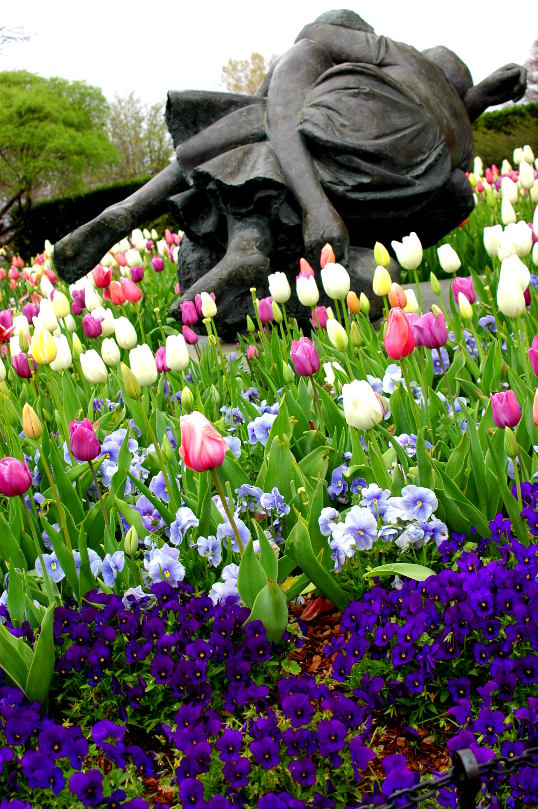
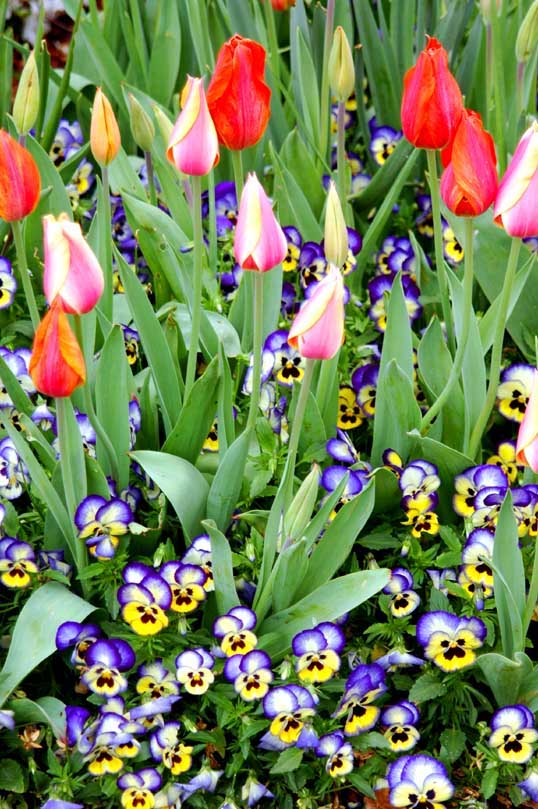
Tulips and Pansies

Dallas Blooms, Dallas Arboretum

blooms1

Lotus Blossoms

Reflecting Pond, New Orleans Museum of Art

.

lotus2

.

lotus1

http://youtu.be/9ANjraiP0A0

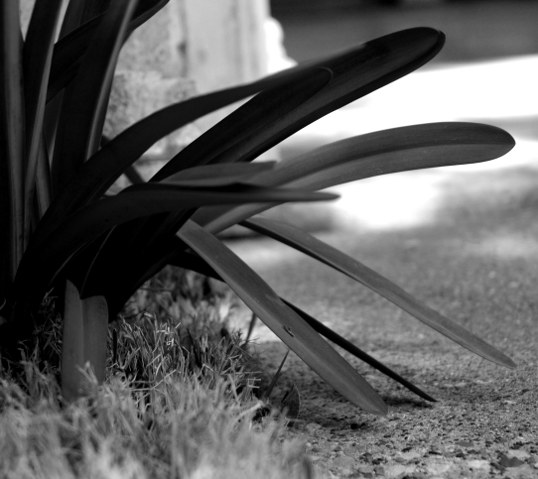
The Geometry of Nature

To be interested in the changing seasons is a happier state of mind than to be hopelessly in love with spring.
—-George Santayana

geometry1

Though his health and family had been broken in the process, he’d found his purpose in life — to share the ancient key discovered anew in the garden: if we feed the earth, it will feed us.
I see that is the secret, too, to living. Though the earth demands its sacrifices, spring will always return.
—- Melissa Coleman

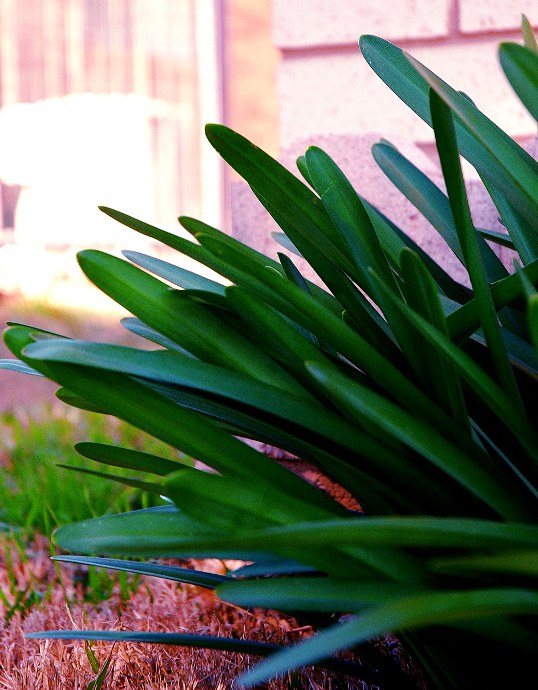
Spring comes early in Texas. Spring comes in the middle of winter. The green shoots that will collect the energy, energize the chlorophyll, store the sugar needed for this season’s flowers are already pulling themselves up out of the black soil.

The curve of the leaves is still pristine – not yet tattered by the windstorms to come or eaten by the insects still sleeping in their eggs. On my way to work I watch the green tips poke up, multiply, and spread out to catch the fire of the morning sun peeking over the horizon.

The dead heat, yellow straw and the dry dust is still a long way off, but it will come. Let them grow when they will – while they can.

geometry2

April is the cruelest month, breeding
lilacs out of the dead land, mixing
memory and desire, stirring
dull roots with spring rain.
—- T.S. Eliot, The Waste Land

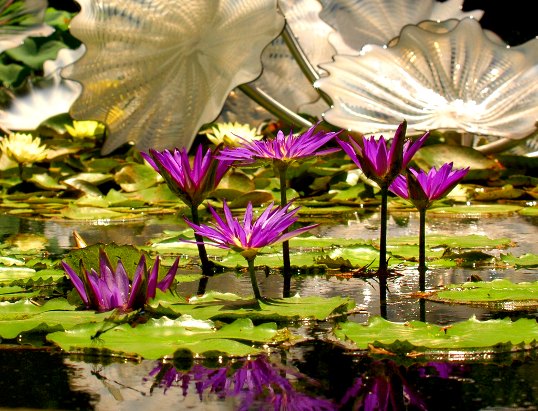
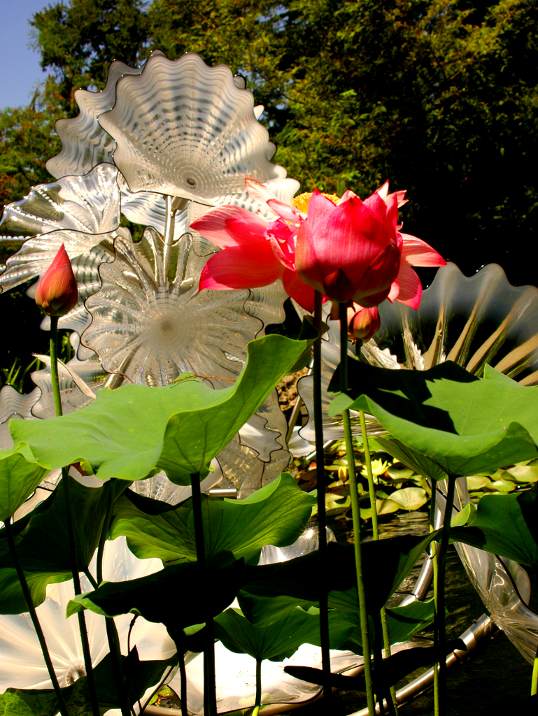
Lotus Blossoms – Glass and Flesh

The Chihuly Exhibit, Persian Garden Pool, at the Dallas Arboretum

For a larger size and better resolution version – Click for Flickr

Chihuly Glass at the Dallas Arboretum

Again, Visit Flickr for a larger and better resolution version.

These are the sculptures that were damaged during the hail storm not too long ago. They look fine now.

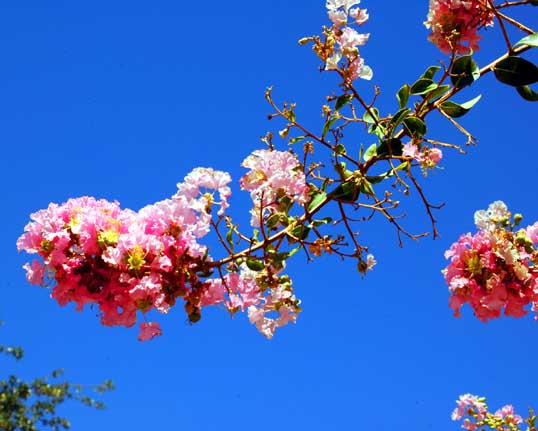
Crape Myrtle

It hit 106 degrees Fahrenheit today (that sounds hotter than 41 Celsius somehow) – a record high for the day. At least it isn’t too dry yet – there are still afternoon thunderstorms popping up here and there. Once the soil become completely desiccated and starts splitting open like an overripe tomato… that’s when things get really bad.

Most of the grass is still green – anything not watered will go brown soon enough. But the spring flowers are all gone. The only color left – the only reliable color in summer Texas heat – are the crape myrtle shrubs/trees. They defiantly keep blooming after everything else has given up all hope.

I braved the heat for a little bike ride and carried my camera. Shot some photos of Crape Myrtle blooms while I took a water break.

Crape Myrtle blooms.

Azaleas

On our visit to Lafayette we could not help but notice the beauty of all the azaleas blooming across south Louisiana. No matter how humble your little cottage might be, you can have all the color you want exploding outside.

Azalea in Lafayette, Louisiana

I stepped out of a little restaurant and walked around back to take this picture. As I was raising the camera a couple of guys tumbled out of the business next door. They looked a little mixed between confused and upset and one said, “Is there anything I can do to help you?” – and not in a tone of voice that implied he really wanted to help me with anything.

“Nope, I’m just taking pictures of the flowers.”

“He’s just taking pictures of the flowers,” the guy said to his buddy, in a disgusted tone, and they went back inside without another glance at me.

Azaleas don’t do very well in Dallas, where I live. The soil is not acidic enough – right under the surface is a thick layer of limestone (caliche) that keeps the soil basic. A lot of people do plant them and fight the acidity. Some pour swimming pool acid (hydrochloric) into a trench before planting – the best thing is to dig a big hole and fill it with peat moss. Still, no matter what you do, eventually the caliche will infiltrate the soil and your flowering bushes are toast.

East Texas has beautiful azeleas. I remember, years ago, doing a bicycle ride along the Azalea Trail in Tyler. It was gorgeous. Maybe a road trip this spring would be an idea.

Dallas is right on the edge between two areas of vegetation. To the east, it’s all piney woods, dogwood, and azaleas. To the west – mequite and prickly pear.

None of it is like what I saw in South Louisiana, though. The things seemed to grow like weeds.