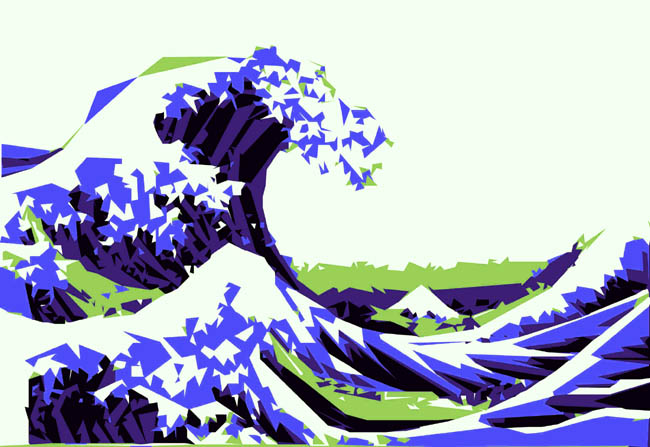
Short Story Of the Day, A Boom in the Morning by Bill Chance

Everybody had to get up early and was scurrying around the house making plans for the day – who would go where, what they would do, and what they could skip.

—-Bill Chance, A Boom in the Morning

NASA Photo

I have been feeling in a deep hopeless rut lately, and I’m sure a lot of you have too. After writing another Sunday Snippet I decided to set an ambitious goal for myself. I’ll write a short piece of fiction every day and put it up here. Obviously, quality will vary – you get what you get. Length too – I’ll have to write something short on busy days. They will be raw first drafts and full of errors.

I’m not sure how long I can keep it up… I do write quickly, but coming up with an idea every day will be a difficult challenge. So far so good. Maybe a hundred in a row might be a good, achievable, and tough goal.

Here’s another one for today (#22). What do you think? Any comments, criticism, insults, ideas, prompts, abuse … anything is welcome. Feel free to comment or contact me.

Thanks for reading.


A Boom in the Morning

Space isn’t remote at all. It’s only an hour’s drive away if your car could go straight upwards.

—-Sir Fred Hoyle

Hank knew it was going to be a busy, crazy day, and very warm for the first of February. His son had three soccer games and two basketball games. His daughter had art lessons and a basketball game. His car was in the shop. A typical insane Saturday in 2003 in a suburb east of Dallas.

Everybody had to get up early and was scurrying around the house making plans – who would go where, what they would do, and what they could skip.

He was looking for his wife’s keys when the house shook – some sort of boom. Even though the ground seemed to shudder for a split second it wasn’t really that loud, not much louder than the usual background rumbling vibrations from the three big freeways that surrounded their neighborhood. He was so preoccupied that he put it immediately out of mind. “What was that?” his wife Sara asked, “Was that a sonic boom?” If she hadn’t said that, he wouldn’t have remembered anything about the sound.

Sara drove him to her mother’s apartment and he borrowed her car (they had tried to figure out a way to get through the day with only one vehicle but couldn’t quite work it out). He drove home, picked up Elizabeth, their daughter, stopped by the bank to get money, left her at her art lesson (she took two one-hour lessons each Saturday, from nine to eleven AM), and drove down to Starbucks for a couple rare hours of relaxation.

Hank hadn’t been sitting very long when his cell phone rang.

“Did you hear about the shuttle,” an unknown voice said on the other end.

“What?”

“Oh, I think I punched the wrong number,” the voice said, and hung up.

A minute later it rang again; it was Sara, calling from the soccer fields.

“Did you hear about the shuttle?” she asked. He hadn’t been near a TV or live radio all day (He and Elizabeth had been listening to her favorite electronic dance station in the car – it’s only a tape playing on the radio, no DJ or news) and had no idea.

“Hang up, I’ll use something new, the Internet news feed on my Nextel cell phone to figure out what was up and call you back,” Hank said.

He punched into CNN from his phone and read on the tiny screen about the explosion and about the debris falling to the east, on Nacogdoches. Then he read about the sound, the explosion that could be heard.

He felt a sudden, terrible shock as he remembered what his wife had said an hour earlier and was sickened when he realized what it meant.

That was the boom… it was the shuttle blowing up over their heads.

He thought about the rest of the day, how busy they were going to be. Should they cancel anything? Was this going to change things? It had happened only a few miles over their heads.

No, no, nothing. For them, nothing would change. Hank continued to sip his coffee. Soon, he was thinking about his daughter’s afternoon basketball game, and if they had a chance of winning… not that he really cared.

Short Story Of the Day, Heat Wave by Bill Chance

She stopped for gas. Shoved her card into the slot and clicked the automatic hook-deal on the handle so the gas would flow on its own. Susanna purposely stepped back, out from under the sheltering gas station roof onto the unprotected part of the apron and strolled to a lonely strip of turf that bordered the station.

—-Bill Chance, Heat Wave

Galatyn Fountain, Richardson, Texas

I have been feeling in a deep hopeless rut lately, and I’m sure a lot of you have too. After writing another Sunday Snippet I decided to set an ambitious goal for myself. I’ll write a short piece of fiction every day and put it up here. Obviously, quality will vary – you get what you get. Length too – I’ll have to write something short on busy days. They will be raw first drafts and full of errors.

I’m not sure how long I can keep it up… I do write quickly, but coming up with an idea every day will be a difficult challenge. So far so good. Maybe a hundred in a row might be a good, achievable, and tough goal.

Here’s another one for today (#21). What do you think? Any comments, criticism, insults, ideas, prompts, abuse … anything is welcome. Feel free to comment or contact me.

Thanks for reading.


Heat Wave


Susanna drove home from work that afternoon, the tape of “How Stella Got Her Groove Back” speaking its pages from the cassette player in the dash. Now, to listen to a tape while driving takes a lot of concentration. Susanna could listen and drive, watch the road, but not anything else. It was plot, voice, character, and oncoming traffic. Some effort, skill maybe, was needed; she had been checking out tapes from the library long enough that she could do it.

With all her attention focused like that, Susanna did not even consciously notice some shapes smearing on the windshield. Instinctively, her hand twisted the knob on the steering column, setting the wipers in motion. Several minutes went by before she actually realized what was happening, what was smattering on the glass.

It was raining.

Ordinarily this would not be a big deal at all. But it had been so long, exactly a month, and the intervening oven days so broiling that Susanna had forgotten about rain. It was no more than a sprinkle, but ohh, it looked so good.

She stopped for gas. Shoved her card into the slot and clicked the automatic hook-deal on the handle so the gas would flow on its own. Susanna purposely stepped back, out from under the sheltering gas station roof onto the unprotected part of the apron and strolled to a lonely strip of turf that bordered the station. She wanted to feel the rain, get wet, and see the spots form on her white shirt. She felt like yelling, singing, dancing.

The smell was wonderful. Suzanna had forgotten the odor of fresh rain on dry grass.

It was not much of a shower, not enough to end the drought. The triple digit days would return by the weekend. But it was something… a respite. More than that, it was the return of hope. Someday, the killer heat will dissipate; the drought will drown. Until that day, those indisputable facts were impossible to imagine.

Hope- a reminder that things will get better, that we will all survive. That’s what we’ve been missing.

Short Story Of the Day, Whump Whump Whump by Bill Chance

The station was a squat peninsula in a vast sea of corn on the south side of the highway. The tall, green, thick stalks blocked any breeze that might have been able to stir.  Russ was bent over, trying to carefully meter out exactly five dollars’ worth of fuel, “click, whoosh, click, whoosh” but he still gazed across the highway where hay fields stretched to the horizon.

—-Bill Chance, Whump Whump Whump

Decatur, Texas

I have been feeling in a deep hopeless rut lately, and I’m sure a lot of you have too. After writing another Sunday Snippet I decided to set an ambitious goal for myself. I’ll write a short piece of fiction every day and put it up here. Obviously, quality will vary – you get what you get. Length too – I’ll have to write something short on busy days. They will be raw first drafts and full of errors.

I’m not sure how long I can keep it up… I do write quickly, but coming up with an idea every day will be a difficult challenge. So far so good. Maybe a hundred in a row might be a good, achievable, and tough goal.

Here’s another one for today (#20). What do you think? Any comments, criticism, insults, ideas, prompts, abuse … anything is welcome. Feel free to comment or contact me.

Thanks for reading.


Whump Whump Whump

It was hot, even for July in the plains, and Russ Hathoway felt like he took a physical blow every time he left or entered the little cinder block building to tend to the pumps. It was as much of a shock to enter the cold of the inside, with the humming window units spaced around the back wall, as it was to battle with the searing sun. He was pumping gas all summer to make enough money to pay for his tuition. He was working toward a math degree at the state university. He didn’t know how he would ever make it – not only money-wise, but the other kids, mostly from countries he had never heard of, were so, so much smarter than he was.

And now he was stuck working at this gas station in the middle of nowhere. The customers liked him though, and the owner noticed the place made more money when Russ was manning the pumps. So the owner and his whole family piled in the station wagon and took off for the whole month, leaving the place for Russ alone. That was fine, more hours, more money. And in the slow times Russ could pull his textbook out and jot calculations on the chalkboard behind the counter – get a head start on the fall semester. In that summer of ’77 gas had jumped to sixty-two and nine/tenths cents per gallon and the customers always complained about it – like Russ had any influence on oil prices.

The station was a squat peninsula in a vast sea of corn on the south side of the highway. The tall, green, thick stalks blocked any breeze that might have been able to stir.  Russ was bent over, trying to carefully meter out exactly five dollars’ worth of fuel, “click, whoosh, click, whoosh” but he still gazed across the highway where hay fields stretched to the horizon. Today a “Green Monster” – a giant spindly machine armed with a crew of young men Russ’ age moved around the field scooping up rectangular bales with a probing conveyor belt until the crew grabbed and stacked the compressed fodder into a growing cube – like giant green fuzzy sugar cubes.

He knew some of the boys working on the Monster – they were bronzed and shirtless, which looked pretty fun to Russ, struggling in his oil-stained uniform and Standard Oil cap. His distraction caused him to give one click to many and the total jumped to $5.10.

“Shit,” Russ muttered. He didn’t mind giving the customer and extra dime of fuel, but he knew the station owner carefully checked the amounts stored inside the pumps against what the cash register said he sold and if there was a significant difference, he would chew Russ out and dock his salary.

One morning, business was slow – almost no cars disturbed the heat wave ripples rising from the asphalt highway. Russ was sitting on the little plastic chair with his textbook spread open. He would scratch his head, scribble in a spiral notebook, or squiggle on the chalkboard. To his left was the giant cash register with its brass keys, deep polished wood, and stark cash signs sticking up above. He remembered how difficult the register was to operate when he first started, pushing the keys and pulling the heavy lever to register the sale and open the cash box.

Now he could work the thing without even looking at it. He enjoyed the rhythm, effort, and most of all, the sound of the mechanism as it did its work. He would make up little poems to go along with the cadence of the operation, “Thank You HapPy People,” he would mutter to himself.

To his right was the calculator. It was used to add up charges and discounts to the gas station’s commercial accounts – diesel semis or fleets of delivery trucks. The owner had worked out special rates and prices with these companies and the calculator was needed to figure out the charges. The owner and his kids struggled with this, but for Russ it was second nature.

This big box of numbers fascinated him. It was an Olivetti Divisumma 24, made in Italy with exquisite craftsmanship. Every two months a technician stopped by and removed the case, exposing an impossibly complex three dimensional jungle of wheels, gears, and levers. He would adjust and lubricate the delicate mechanism while Russ stared over his shoulder.

Russ had a strong innate curiosity and he couldn’t help but try to figure out how it worked. It had an electric motor inside that set all the gears turning, but all the logic, all the intelligence of the thing was mechanical – set inside that metal brain of tiny interlocking parts.

It would add by moving gears and printing out the result on a little strip of paper (the technician always replaced the ribbon). Multiplication was simply addition done over and over. Russ would multiply two numbers and listen to the repeated whump whump whump of the mechanism as it moved around, adding over and over again. Subtraction, again, was simple. It was only addition in reverse.

What Russ found really fascinating was that the machine could divide. It took him a while to figure that one out. It divided by adding. The smaller number, the divisor, would simply be added up over and over until it was just less than the dividend, the large number. The calculator would then print this whole number out, along with a remainder.

Russ couldn’t help but try this out. He was amazed by this simple bit of arithmetic. He would try it with evenly divided numbers and then with operations that left a remainder. He guessed this crude arithmetic was fine for financial calculations – “how many gallons can someone buy?”, for example, and “how much change was left?”.

That morning, though, a question occurred to him. What would happen if he entered a formula where the machine had to divide by zero? It would try and add that zero over and over again, but it would never increase. Russ shook his head and casually reached over, entering 7 divided by zero, and pushed the equal sign.

Whump, Whump, Whump, Whump,” the machine started in. That made sense, it was trying to add that zero up. An hour later, though, it was still going “Whump, Whump, Whump,” and Russ was starting to get worried. He pulled on all the levers and pushed all the buttons but nothing changed. “Whump, Whump, Whump.”

After staring at it and thinking a bit, Russ unplugged the machine. The noise stopped. Relieved, he plugged it back in, but it started in, “Whump, Whump, Whump.” Russ let it run all day.

“Oh, Shit! man, I’m in big trouble now,” Russ said out loud.

The old man told him that it cost seven hundred and fifty dollars. And now he had broken it. The owner will be docking Russ’ pay ‘til the cows come home.

Seven hundred fifty. At three bucks and hour, less taxes…. That was almost two semesters of tuition.

Whump, Whump, Whump.”

It would be two weeks before the owner came back. Russ left a notebook by the machine and did all the calculations by hand, but that would only get him by until the owner saw what he had done. All day the sound haunted him. Sometimes he would unplug it for relief from the noise, but he always let it run all night.

He would come in the morning to open up, hoping it had stopped in the night, but was always greeted by that infernal sound.

Whump, Whump, Whump,” the calculator droned on in the background.

Days moved into weeks and Russ began to worry more and more. He had no idea what he would do when the owner returned.

He thought of lying to the owner, saying it, “Just started up by itself.” That didn’t sound like it would work.

Then, miracles of miracles. Two days before the owner’s return, Russ was sitting there listening to the sound. He was used to it, it was the background to his day. He was even used to the anxiety that it produced. That worry too had faded into the background, even though it was always there. Russ knew he would have to live with that too, which was worse.

Suddenly, a second of silence. That silence, the lack of “Whump, Whump, Whump,” was the loudest thing Russ had ever heard. It was followed by a strident clattering as the machine began to print out on its paper tape.

Russ stared as it printed. Line after line of numbers. They looked random, but there it was, a long number that stretched almost to ninety digits. Finally, it stopped and the machine sat there silent and still, waiting for its next task.

Russ pulled out the tape and looked at it. Thinking, he figured the gears must have slipped a little bit with each Whump – and finally, after weeks, they slipped enough to add up to seven.

To this day, forty-four years later, on the wall of his office in the bowels of the University Mathematics Department, next to his PhD diploma, hangs an oddly shaped frame containing a long strip of aged yellowing paper. On that paper is a single, long number.

When asked, Professor Hathoway, Chairman of the math department, likes to answer with a wry smile, “That number is the answer to seven divided by zero.”

Short Story Of the Day, Dog-Bone by Bill Chance

If the Chicxulub asteroid hadn’t killed the dinosaurs then intelligent reptiles would be building rocket ships.

—-Bill Chance, Dog Bone

Mural, covered by “For Rent” sign
Deep Ellum
Dallas, Texas

I have been feeling in a deep hopeless rut lately, and I’m sure a lot of you have too. After writing another Sunday Snippet I decided to set an ambitious goal for myself. I’ll write a short piece of fiction every day and put it up here. Obviously, quality will vary – you get what you get. Length too – I’ll have to write something short on busy days. They will be raw first drafts and full of errors.

I’m not sure how long I can keep it up… I do write quickly, but coming up with an idea every day will be a difficult challenge. So far so good. Maybe a hundred in a row might be a good, achievable, and tough goal.

Here’s another one for today (#19). What do you think? Any comments, criticism, insults, ideas, prompts, abuse … anything is welcome. Feel free to comment or contact me.

Thanks for reading.


Dog-Bone

“After all this time, it is really going to happen.” John Random kept repeating this to himself over and over again. Ever since that layer of Iridium-enriched stuff was discovered on Earth back in the nineteen eighties; scientists, then artists, philosophers, and finally politicians talked about cosmic collisions. Now it was real.

Random kept reading about it. There on the ship, clunker though it was, he had access to all the information he needed. They were far from earth, so there was an irritating delay in conversation, (not that anyone wanted to talk anymore) but there was a constant flow of data. Before sleep period he would request books, journal articles, anything that struck his fancy and by the time he woke up, the information would be in the ship’s computer.

His partner, Zane Miller, didn’t read anything anymore. Two years ago, before the flight, Zane was selected as mission commander. He was the glamour-puss, in Random’s mind. The face of the mission. The first year, when they were still doing weekly news conferences, Zane did all the talking, John stayed in the background smiling and wearing his coveralls. Everyone knew Random was along to do the grunt work.

Well, it didn’t work out that way. As they looped back and forth through he solar system that first year, examining and mapping various objects detected from earth, the big lunar radar picked up the giant comet, the frozen, deadly snowball screaming in from beyond Neptune. It looked like it would be coming close so earth followed it and as that year went by the news became worse and worse.

Miller and Random’s mission was forgotten. First the news conferences stopped, then the mission support went away as earth’s entire focus shifted to the killer comet. It didn’t really affect them, their route was preprogrammed, too far from earth for any assistance, they were on their own. Still it started to get lonely. Random didn’t care so much, it was no mistake that someone of his temperament was selected on a multi-year space mission, but it drove Zane up the wall.

“Why complete the mission? it’s all going to be gone anyway!” Zane would rant on.

“Well, I don’t know,” Random would reply. “I guess mostly ’cause I can’t think of anything else to do.”

“Don’t you understand? It’s the end… we’re out here and earth is doomed. All dead! Gone!”

“I understand. But I don’t know what I’m going to do about it.”

They had the same simple argument a hundred times during that awful month. Then Random discovered Zane had pulled out the emergency medical kit and broken all the seals. All the drug packs were gone. After that time Zane was a lot calmer, though he completely stopped his share of the checklists, never helped with the observations. He spent all the time in his sleep chamber. Sometimes Random could hear him moaning.

Not that it mattered. Random could handle the duties of the mission alone with no problem. It kept him a little busier but still left him with enough time for his reading. Between the last object and the one they were looking at next they had to loop clear out around Jupiter and back in, It was the longest hiatus of the mission. He had done a lot of reading by then, about the comet and other cosmic impacts.

He read of the schools of thought that held that evolution was largely a function of vast swaths of time and avoiding extinction events. The random nature of these collisions meant that it was a crapshoot for any species to survive long enough to migrate into space. If the Chicxulub asteroid hadn’t killed the dinosaurs then intelligent reptiles would be building rocket ships.

That was the reason for their mission. To examine the large objects floating through the solar system, to help learn their compositions and then design ways to intercept and destroy them. If man could determine a way to protect that fragile blue ball from the ravages of space, then they could gain the time needed to reach for the stars.

It was too late, obviously. Not that the mission had revealed much, anyway. Hunks of rock, chunks of ice, nothing that the spectrographs and lunar radar hadn’t predicted.

Well, nothing surprising until this object, anyway.

They had decelerated down into this vicinity and when the fusion engines had cooled enough to allow them to see out, Random had pulled the telescope into position and started visual observations. Zane had been in his chamber for days, lost in the world of the medical kit drugs.

“Umm, you’d better come out and take a look at this,” Random barked into the intercom.

“Who gives a shit!” came the expected answer.

“Really, Zane, this is something different, really different.”

“You wake me up again and I’ll come out there, kick your ass, and knock you out into space, You Hear!”

Random didn’t have any answer for that so he shut down the intercom and looked back into the telescope.

The object wasn’t an ordinary hunk of space rock, that was for sure. It was much larger than they expected, maybe two miles in length. Jet-black and smooth. He glanced at the radio spectroscope and confirmed that it absorbed almost all the radiation that fell on it. That is why the radar underestimated its size. It was very regular in shape, elongated, with a double lobed swelling at each end. It looked like a giant dog-bone. Like a colossal stylized chew-toy.

Random knew it wasn’t natural. He also knew it hadn’t been made on earth.

For weeks, Random held position near the object, studying it. He tried to get the attention of mission control back on earth, but they weren’t even monitoring his broadcasts. Every ounce of effort, every minute of time was being spent back there preparing the interceptor rockets that would attempt to destroy the comet before it reached earth. They were working around the clock, even though they knew it was hopeless.

Random carefully recorded his observations. “This is the greatest discovery of all time”, he reminded himself. He tried not to think about the fact that there wouldn’t be an earth to return to and nobody to see his work.

On the day the earth was going to send its missiles toward the comet, Zane Miller emerged from his chamber. He looked awful, trembling, trying to shake off his months of drug induced haze.

“Today’s the day,” he said to Random, like nothing had happened.

“Yup,” was all he could think in reply.

“What the hell is that!” Zane screamed, pointing out the view-port.

“It’s the object… other than that, I have no idea.”

The dog-bone wasn’t jet-black any more. It was glowing red now.

“It’s heating up,” said Random. “It’s been gaining hundreds of degrees every day for a week now. It moving too. For weeks it held the same orientation but three days ago I came out here and it had rotated almost ninety degrees.”

Visibly shaken, Zane sat down across from Random and they tuned in the Earth broadcast. Every ear on the planet or off would be watching as the rockets streaked toward the comet, all life on earth hanging in the balance.

The rockets flew, the enormous bombs exploded on cue. But it was like throwing a pebble at a bullet. Everybody knew that it was hopeless, but watched breathlessly as the lunar radar tracked the comet. Slowly the announcer conveyed the inevitable, that the missiles hadn’t worked, that the comet had pierced the explosions unharmed, that the earth was doomed.

“Well, that’s it, Zane said,” glancing back to his chamber, thinking about the medication, thinking about what might be put together to form a fatal dose.

Random was suddenly startled by a bright light from the view-port.

“Jeez, look!”

The object was white hot. Glowing as bright as a small oblong sun. Suddenly, it visibly shuddered and threw off a bolt of incredible energy. For a split second the beam was visible and even though the view-port darkened automatically the light was so intense both men were blinded for minutes.

When their eyesight returned they peered out the view-port, then trained the telescope on the object to confirm what they saw. The dog-bone was dark and black again. Cold. Inert.

They looked at each other. Even before the announcement came in from earth they knew where the beam had gone.

“It is a miracle!” said the announcer. “The missiles must have weakened the comet to the point that once it neared the earth’s gravity, it fell apart. It has been completely destroyed, blown into a million pieces.”

For another week they continued to watch the object as earth reported amazing meteor showers and millions killed as the remains of the comet continued to pound the planet. Man, life itself, would survive, though.

Then they received a message from mission control, the first that had come through in months.

“Hello, how are you?”

“Fine,” replied Random.

“I guess you have heard the great news. What are you looking at now?”

The two men had known this question was coming and they had decided on an answer.

“Only another chunk of ice and rock.”

On the long trip back, Zane helped Random carefully erase all the records of the observations of the object. They spliced together bits of data from other observations and blurred the records, nobody would suspect the location of the dog-bone.

Then Zane retreated to his chamber and his medical kit. He knew he wouldn’t be able to survive without the drugs. It would be a decade before he found that fatal dose.

Random was in charge now. He monitored the mission, fixed the little things that came up, did the grunt work. He read some more, read about how man could protect itself, could continue on, could someday reach for the stars. He chuckled to himself when he thought about that. He thought about the time far in the future when people were able to venture out beyond.

He thought about the blinding light, about the dog-bone; and about what, and who, they would find on that day.

Short Story Of the Day, The Wave by Bill Chance

“Can’t we haul them up with us somehow?” the youngest asked.

“Llamas can’t climb trees,” the old man replied.

—-Bill Chance, The Wave

The Wave that Washes us all

The Wave that Washes us all

I have been feeling in a deep hopeless rut lately, and I’m sure a lot of you have too. After writing another Sunday Snippet I decided to set an ambitious goal for myself. I’ll write a short piece of fiction every day and put it up here. Obviously, quality will vary – you get what you get. Length too – I’ll have to write something short on busy days. They will be raw first drafts and full of errors.

I’m not sure how long I can keep it up… I do write quickly, but coming up with an idea every day will be a difficult challenge. So far so good. Maybe a hundred in a row might be a good, achievable, and tough goal.

Here’s another one for today (#18). What do you think? Any comments, criticism, insults, ideas, prompts, abuse … anything is welcome. Feel free to comment or contact me.

Thanks for reading.


The Wave

They pushed the llamas faster than they wanted to go but they knew they had to reach the tree. The bare brown ground was covered in a spiderweb of cracks for miles and miles and miles – from one horizon to another. The rise that had the tree on top of it was barely perceptible but the old man could feel it in his bones, having made the crossing so many times before.  Finally, the great tree appeared on the horizon and they knew they were going to make it.

They removed the packets of salt and sulfur from the backs of the llamas and hauled them up into the tree. The llamas were then let free to wander – to tie them would mean certain death. As it was, they would be lucky if half survived the wave… llamas can’t climb trees.

“Can’t we haul them up with us somehow?” the youngest asked.

“Llamas can’t climb trees,” the old man replied.

“But they can swim,” the youngest said.

“To a point.”

They climbed and tied themselves to branches and slept as best they could.

The wave came not as a wall of water at first but as a swelling of the ground until the cracks all closed up. Then the water began to deepen. Then there was the sound and the wave and the water. The cries of the llamas were pitiful as they were lifted and tumbled and struggled to keep their heads above water.

And then it was over. The water receded back over the horizon as quickly as it had come.  The sun baked the ground until the cracks reappeared. The old men lowered the packs of salt and sulfur from the tree as the young men gathered the surviving llamas up across the plain.

There were enough to continue, although for each of them, their loads would be heavier.

Short Story Of the Day, The Reluctant I by Bill Chance

Oscar had, on the other hand, been working there forever. He was as grumpy as Cynthia was cheerful. Still, he knew everything and was the person you wanted around when things were going South.

—-Bill Chance, The Reluctant I

Sculpture and Building
Downtown Dallas, Texas
Near the Arts District DART Station


I have been feeling in a deep hopeless rut lately, and I’m sure a lot of you have too. After writing another Sunday Snippet I decided to set an ambitious goal for myself. I’ll write a short piece of fiction every day and put it up here. Obviously, quality will vary – you get what you get. Length too – I’ll have to write something short on busy days. They will be raw first drafts and full of errors.

I’m not sure how long I can keep it up… I do write quickly, but coming up with an idea every day will be a difficult challenge. So far so good. Maybe a hundred in a row might be a good, achievable, and tough goal.

Here’s another one for today (#17). What do you think? Any comments, criticism, insults, ideas, prompts, abuse … anything is welcome. Feel free to comment or contact me.

Thanks for reading.


Today, I writing using a writing prompt from the book by Brian Kiteley, The 3 A.M. Epiphany. It… and its companion, The 4 A.M. Breakthrough, are unusually useful collections of prompts in that each one is designed to teach a lesson – rather than some random idea seed. The prompt I used this time happened to be the first on in the book.

Description of this week’s Writing Prompt #1

The Reluctant I

Write a first-person story in which you use the first-person pronoun (I or me or my) only two times – but keep the I somehow important to the narrative you’re constructing.  The point of this exercise is to imagine a narrator who is less interest in himself than in what he is observing.  You can make your narrator someone who sees an interesting event in which he is not necessarily a participant.  Or you can make him self-effacing, yet a major participant in the events related.  It is very important in this exercise to make sure your reader is not surprised, forty or fifty words into the piece, to realize that this is a first-person narration.  Show us quickly who is observing the scene.  600 words


The Reluctant I

I was sipping at a morning cup of strong coffee, filling a sheet of paper with my checklist of things to do for the day, and looking out the window, thinking between items. The sky was an amazing and unusual crystalline blue. The plane was so small at first and it looked oddly low. It came on fast, growing and growing until I could see the rivets around the pilots’ windows.

Then at a huge speed it disappeared around the corner of the building an there was a tremendous crash followed by an impossibly intense crunching and cracking. The building bent to the side. People that work that high off the ground are used to swaying in the wind but this was far beyond that. The windows blew out and the building came still after a few seconds.

Cynthia sat at the next desk and Oscar at the one beyond that. They both leaped up and ran towards the stairwell at the center of the building but were driven back by a solid wall of acrid smoke spilling from that direction.

Cynthia was new, she had only been there for two months, transferred from the Philadelphia office. She brightened up the place terrifically and her effortless good looks and cheerful disposition helped everyone look forward to coming to work more than they otherwise would.

Oscar had, on the other hand, been working there forever. He was as grumpy as Cynthia was cheerful. Still, he knew everything and was the person you wanted around when things were going South.

Cynthia was covered with black soot and ran to the shattered windows to try and get some breathable air. Oscar was slower and didn’t retreat in time and his suit was burning. He fell to the floor and rolled but was unable to extinguish the flames. Suddenly, he rose up and ran straight into the smoke and flames to his death.

The smoke was advancing and getting thicker and it was becoming impossible to breathe. Crouching flat on the ground right next to the open hole in the wall helped but it only bought a few short seconds.

The look on Cynthia’s face was horrific. It was a mix of unbearable fear and hopeless resignation that I had never seen before. The heat was beginning to rise and the tatters of curtains overhead were bursting into flame. The black smoke began to shut out the entire world. The scream from Cynthia was awful as she succumbed to the flames. It wasn’t very loud because she couldn’t inhale enough air for that, but what floated abouve the din of the burning office contained a thousand lifetimes of agony.

There was only one choice left.

Anyone that works in a high rise building, especially the few that work in the rarefied air over a thousand feet off the ground inevitably thinks of the fall.

First there is the feeling of weightlessness. There is the comfort of being away from the heat and burning smoke, the air fresh and clean, the sky blue and the sun shining. The column of smoke is now high, high overhead and starting to retreat quicker and quicker.

The air, so comforting at first, begins to rush and push and it feels like being held in a soft cushion or giant hand. There is a quiet, peaceful space and only the sound of the ever increasing wind is heard and that isn’t as loud as you would think.

There isn’t much time, but there is enough for the fresh fast breeze to start to clear the burning from lungs and nose and the eyes to clear and truly see. There is a desire to twist around see below and there it is… rushing up, coming close, impossibly fast until….

Short Story Of the Day, Technology by Bill Chance

“There are three intolerable things in life – cold coffee, lukewarm champagne, and overexcited women…” he said, trailing off.

—-Bill Chance, Technology


I have been feeling in a deep hopeless rut lately, and I’m sure a lot of you have too. After writing another Sunday Snippet I decided to set an ambitious goal for myself. I’ll write a short piece of fiction every day and put it up here. Obviously, quality will vary – you get what you get. Length too – I’ll have to write something short on busy days. They will be raw first drafts and full of errors.

I’m not sure how long I can keep it up… I do write quickly, but coming up with an idea every day will be a difficult challenge. So far so good. Maybe a hundred in a row might be a good, achievable, and tough goal.

Here’s another one for today (#16). What do you think? Any comments, criticism, insults, ideas, prompts, abuse … anything is welcome. Feel free to comment or contact me.

Thanks for reading.


Anna Karina


Technology

Wilfred had tested positive and was in strict quarantine. He wrote low-level code for a living and could easily work from home. His condominium was more than large enough for one person. There were grocery stores and number of restaurants in his area that offered delivery – he wasn’t going to starve.

But he hated eating alone.

His place had plenty of storage space and he was always fighting his hoarding tendencies. Every now and then, though, his habit of keeping stuff served him well. Not very often, but sometimes.

As he dreaded another sandwich alone (he had taken to eating over the counter where he made his food to minimize cleanup) he had a sudden idea. Digging around in a disused walk-in closet he found an ancient dot-matrix printer and a big box of blank continuous pin-feed paper. He even had some extra stashed ribbon cartridges, enough to do a lot of printing.

He dragged it out and set it up on a sturdy side table. He was disappointed when he realized his laptop didn’t have a parallel port – but Amazon had a surprising collection of USB to parallel adapters with prime overnight delivery. While he was on the site he ordered a pack of large foam core board, some rubber cement, and a nice cutter for curved mat boards. Tape and scissors, he already had.

One of his common tasks as a code jockey was to write printer drivers, and it didn’t take him long to cobble together something to output some surprisingly good graphics (black and white, of course) to the ancient dot matrix.

The next job was to pick five people and download some quality images. His dining room table would seat six and he had nice quality place settings for himself and five others. There were so many folks to choose from, but it was his party and he could invite whomever he wanted.

It took a while to get used to the noise of the dot matrix in his condo. He had forgotten how loud and slow the things were. But the image of the paper slowly unfolding from the box and running through the printer was comforting and the noise ultimately became almost soothing.

Then there was the gluing, the cutting and trimming, and putting it all together. The smell of the rubber cement was nasty in the closed in space, and Wilfred decided he should have used double sided tape. But it did work and the odor finally dissipated.

Finally, he was done. He had several days to decide on his first menu and have the food delivered. He decided that it didn’t have to be too fancy and he should make what he liked. Nobody was getting enough exercise so it better be healthy. He settled on baked chicken meatballs with garlic-dill yogurt sauce served over zucchini noodles with mixed vegetables and sweet potatoes on the side.

He filled the six plates and put one at each place. Then he filled glasses with water and a nice white that he had stashed away.

So there he was with five other people – the foam core cutouts firmly taped up on each chair, arranged man-woman, with him at one head.

To his right was the French actress Anna Karina – the photo he printed was of her at her prime as a star of the early sixties New Wave. Her stunning beauty translated well to the black and white dot matrix printing – so many of her movies weren’t in color – Wilfred thought of her that way.

“After all,” she said, “Things are what they are. A message is a message, plates are plates, men are men, and life is life.”

To his left as the author Patricia Highsmith. She was born in Texas but settled in Paris and had a very unconventional life. She was burdened with alcoholism and depression, but sometimes that made for lively dinner conversation. She was plainspoken, dryly funny, and fun at the table, in general.

“I know you have it in you, Wilfred,” Patricia said suddenly at the end of a silence, “the capacity to be terribly happy.”

Beyond her was Oscar Wilde. Wilfred always loved the way he wove witty aphorisms through his writing and imagined he was always good for a quip to keep the conversation going. He was not disappointed.

“I’m a man of simple tastes. I’m always satisfied with the best,” he said, and everyone raised their glasses.

On the other side, next to Anna Karina, was the massive presence of Orson Welles. Mr. Welles was on good behavior and really enjoyed the food. His tales of some of the famous people he had met kept everyone enraptured.

“There are three intolerable things in life – cold coffee, lukewarm champagne, and overexcited women…” he said, trailing off.

Finally, at the other end of the table, was Cleopatra. Her English was surprisingly good for an ancient Egyptian Queen. She looked at life and the world in general in a wildly different way that anybody else and had the others thinking deeply about their own perspectives.

“Marc Antony?” she said, “I never understood how such a big man had such a small brain.” And everybody chuckled.

The meal ended but Wilfred still sat there enjoying the company and the conversation. Finally he collected the plates and glasses and was momentarily bothered by the amount of food that was wasted.

“But that’s the price for good company,” Patricia Highsmith pointed out. And she was right.

Everyone had such a good time. So they made plans for another dinner in a few days.

“I’m sorry,” said Oscar Wilde, “I have to fly to Paris for a meeting with my agent. There’s a play coming out and he is desperate for me to make some changes.”

The others talked about it for a minute and the decision was made to invite Groucho Marx.

“Then Groucho it is,” said Wilfred. He had plenty of paper and foamcore left and had learned to sleep through the sound of printing.


Short Story Of the Day, Nouvelle Vague by Bill Chance

They would take a purposeful minute of silence every now and then. “If there’s nothing to say, let’s have a minute of silence” was their motto.

—-Bill Chance, Nouvelle Vague


I have been feeling in a deep hopeless rut lately, and I’m sure a lot of you have too. After writing another Sunday Snippet I decided to set an ambitious goal for myself. I’ll write a short piece of fiction every day and put it up here. Obviously, quality will vary – you get what you get. Length too – I’ll have to write something short on busy days. They will be raw first drafts and full of errors.

I’m not sure how long I can keep it up… I do write quickly, but coming up with an idea every day will be a difficult challenge. So far so good. Maybe a hundred in a row might be a good, achievable, and tough goal.

Here’s another one for today (#15). What do you think? Any comments, criticism, insults, ideas, prompts, abuse … anything is welcome. Feel free to comment or contact me.

Thanks for reading.


Nouvelle Vague


Armando loved cars. And his girlfriend Cecile had a great one. Her father had a bit of cash stashed away and bought her a vintage light blue ’65 Mustang Convertible to drive around while she was at school. She used to say, “I live the top down life.”

The two of them also loved film… or more precisely, movies, because they mostly watched them on tape. The VHS format had recently defeated its deathly adversary, the Betamax, and a rental store for the hard-core movie aficionado had opened up near his apartment. The two of them were renting stacks of tapes and working their way through the French New Wave.

Though they lived in a tumbleweed-blown college town in the middle of the great plains they liked to pretend they were in Paris. A greasy spoon was a pale but workable substitute for a Parisian Cafe – one even had sidewalk tables for those few days where the weather wasn’t blowing ice or baking heat. They watched Godard and talked politics over meals and she cut her hair like Anna Karina.

Like all Nouvelle Vague couples they saved their important, passionate conversations for the times they were driving in the car. She named the Mustang Metal Hurlant. They would drive with the top down, sometimes slowly or sometimes sliding around the gravely corners. They would take turns driving and would imagine a camera on the hood shooting through the windshield as they talked about their dreams, argued, or the passenger would lean against the driver and they would cruise in silence.

They would take a purposeful minute of silence every now and then. “If there’s nothing to say, let’s have a minute of silence” was their motto. A minute of silence can be a long time. A real minute of silence takes forever. But they took pride in being able to pull it off.

It took some effort but they learned to dance The Madison. Never found a place in public they could show off.

There was nothing better than driving around with the top down in the twilight evening after a hot day. The convertible made its own breeze and the world was awash in magical colors once the sun set until it became too dark. They kept a little cooler of iced beer cans under the dash and would sneak sips when they knew the cops weren’t watching. Even the condensation on the curved aluminum was beautiful and delicious.

At the end of one of these perfect evenings the night crept down the sky until they had to think of something else to do.

“I know!” Armando said, “Look over there.”

It was the last drive in theater. The VHS tapes had killed the drive in – but there was one last one, hanging on, out there on the edge of town, at the end of time.

They didn’t even look to see what movie was playing, but paid their money and drove in. They were the only customers – the space vast and empty.

“At least we’ll be able to see close,” said Cecile. She drove down right to the front, with the towering white screen rising above them like a fortification. Cecile looked over the door, confused.

“Hey! Where are all the little speakers on poles?”

“Oh, those are long gone,” said Armando, “People kept stealing them. You just tune in on the radio for the sound.”

“This car doesn’t have a radio.”

They drove all the way back to the one spot, right beside the snack bar that still had a speaker. The single employee (who owned the theater and had taken their money earlier) popping corn and filling sodas could keep an eye on that one. They watched the movie on the tiny, distant screen, with nothing but space between.

Still it was nice. And sitting there in that specific instant in that vintage car with the top down watching the last drive in alone (except for the snack bar guy) in that peculiar slice of time they were happy, content and in the moment – blissful and unaware of the tumult and pandemonium that was bearing down on them… on everybody… like a tsunami of insanity – only a few short decades away.

Short Story Of the Day, Devil’s Claws by Bill Chance

“ They came across a place where a lamb had died over the winter. Every year a few would not make it through the snowstorms, maybe trapped out in the field by quick forming drifts… and freeze to death. There were some leg bones, some ribs scattered around, and the tiny skull was already half-covered with red dirt. They kicked at the bones a bit.”

—-Bill Chance, Devil’s Claws

I have been feeling in a deep hopeless rut lately, and I’m sure a lot of you have too. After writing another Sunday Snippet I decided to set an ambitious goal for myself. I’ll write a short piece of fiction every day and put it up here. Obviously, quality will vary – you get what you get. Length too – I’ll have to write something short on busy days. They will be raw first drafts and full of errors.

I’m not sure how long I can keep it up… I do write quickly, but coming up with an idea every day will be a difficult challenge. So far so good. Maybe a hundred in a row might be a good, achievable, and tough goal.

Here’s another one for today (#14). What do you think? Any comments, criticism, insults, ideas, prompts, abuse … anything is welcome. Feel free to comment or contact me.

Thanks for reading.


Devil’s Claws


In the city, Sam Monaghan had been an elite baseball player – the offensive star of a select team, The Bombers. Not too bad of a pitcher either. He had to give up the sport in Coldgrove. That left a frustrating gap in his life, like a missing tooth in his jaw. The attackers had used his Bombers’ bat on his mother and he could not bear to hold one in his hands again.

They had lived in a brownstone in the old meatpacking district – they felt like urban pioneers. Until the one afternoon when Sam’s mother, Paula, came home from work to find the two tweakers that Sam’s father had hired to paint his little sister Brenda’s nursery waiting. After the attack on his wife that left her in a wheelchair, Sam’s father had moved the family out to the tiny rural hamlet of Coldgrove.

“Sam, I wish you would make some friends in the school here,” his mother said to him as he pushed her chair out onto the porch so she could watch the sun set.

“I know mom, I’ll try. I just don’t have anything in common with these kids.”

“What about Duane, dear? He lives on the next farm over, you can walk there whenever you want. He is only a grade below you.”

“I’ll see mom. I’ll see.”

“His mom says he plays baseball.”

Sam turned away.

She was talking about Duane Clankman, who was a year older than Sam was, even though Duane was a grade below. To Sam the whole Clankman clan existed somewhere out of time, as if they had been away from civilization for ages. Coldgrove itself felt out of whack for him.

Duane’s brothers and sisters were scattered all up and down the grades and you could pick them out of a crowd easy; the same thin, limp, blondish hair, homedone haircuts, clothes handed down from one to another, the same pale watery eyes, long faces, and the same blank, lost look.

Still, his mother protested and Sam could not resist her requests. Soon he was walking across the cow pasture, along the green algae-choked slough, to the Clankman’s farmhouse. They called the noon meal dinner and it was the best fried chicken he had ever tasted. He asked Mrs. Clankman for her secret.

“Oh honey, you just dip ‘em in milk, dredge in flour, salt and pepper, and fry ‘em in the ‘lectric skillet,” she said

“Then why is your chicken so good?”

“Oh honey, ‘cause an hour before you ate it that bird was runnin’ around in the front yard, eatin’ bugs.”

Duane’s mother wrapped a few pieces up and put them in a paper bag. A bit of grease made the bag translucent in places.

“You give this chicken to your mother, now,” she said, with a sad smile and a nod.

After dinner, Sam and Duane went for a long walk in the old west pasture. Sam’s mother had asked them to look for Devil’s Claws. The dry dark gray seedpods were scattered all over the pasture, hung up in among the prickly pears and clumps of sawgrass. She wanted to take a mess of claws, spray paint them gold and silver, and glue little plastic googly eyes on… decorate them up for a craft show the women were putting on down at the new library in town.

Along with the paper bag of chicken, they carried blue plastic bags from Wal-Mart to stuff the claws in. They were hard to carry even though they weighed almost nothing; the hooks tore at the cheap thin plastic until the claws would tumble out if you did not hold the bag exactly right.

They came across a place where a lamb had died over the winter. Every year a few would not make it through the snowstorms, maybe trapped out in the field by quick forming drifts… and freeze to death. There were some leg bones, some ribs scattered around, and the tiny skull was already half-covered with red dirt. They kicked at the bones a bit.

“Look at how the meadow grows here,” Duane said.

The thin brown grass of the old spent pasture was lush and green around the bones. Nourished by death, the body of the lamb.

Sam thought about why the grass was so thick and healthy around where the lamb had died. He thought about how the lamb had eaten the grass while it lived and now that it was gone, it gave everything back to the ground and to the grass that had nourished it.

“Duane?” Sam said, “You’re on the Coldgrove school baseball team, aren’t you?”

“Yeah, though I’m not so good. Just another body.”

“Do you think I could get on the team?”

“Yup, easy. Coach is always looking for players. Sometimes we barely put together a whole team.”

“Ok, then. I’ll need a new bat though.”

Short Story Of the Day, the descent by Bill Chance

“ As he collapsed into deep slumber he felt himself still plummeting through the earth.”

—-Bill Chance, the descent

Dallas Museum of Art
Dallas, Texas


I have been feeling in a deep hopeless rut lately, and I’m sure a lot of you have too. After writing another Sunday Snippet I decided to set an ambitious goal for myself. I’ll write a short piece of fiction every day and put it up here. Obviously, quality will vary – you get what you get. Length too – I’ll have to write something short on busy days. They will be raw first drafts and full of errors.

I’m not sure how long I can keep it up… I do write quickly, but coming up with an idea every day will be a difficult challenge. So far so good. Maybe a hundred in a row might be a good, achievable, and tough goal.

Here’s another one for today (#13). What do you think? Any comments, criticism, insults, ideas, prompts, abuse … anything is welcome. Feel free to comment or contact me.

Thanks for reading.


the descent

Lucien stood in front of the refrigerator and scooped a large spoonfull of chicken salad into a small white bowl. He added a handful of curved shaved shards of Parmesan cheese and ate it standing there.

He was struck by such exhaustion he barely made it to his bedroom before tumbling over into the tangle of sheets, pillows, and quilts in a sudden torpidity. As he collapsed into deep slumber he felt himself still plummeting through the earth, falling into a jagged opening dream-chasm,  falling faster and faster into the darkness of sleep. Eventually, at the bottom of the opaque void he found himself wandering blindly, stumbling into and between the jagged remains of his lost hopes and broken dreams.