Daily Writing Tip 5 of 100, 7.Write to please just one person

For one hundred days, I’m going to post a writing tip each day. I have a whole bookshelf full of writing books and I want to do some reading and increased studying of this valuable resource. This will help me keep track of anything I’ve learned, and help motivate me to keep going. If anyone has a favorite tip of their own to add, contact me. I’d love to put it up here.

Today’s tip – Write to please just one person

Source – Bagombo Snuff Box, Kurt Vonnegut

Write to please just one person. If you open a window and make love to the world, so to speak, your story will get pneumonia.

I find that it does help to have a specific person in mind as I write a story. I find myself thinking “Oh, they will like that” or “This… they will not expect.” The more real and immediate the chosen person is the better. I picture them curled up in an easy chair and smiling at the book. I feel having an individual, specific reader gives a motivation to the writing and distracts the Inner Editor – that troublemaking old bastard.

Daily Writing Tip 4 of 100, Get In, Get Out. Don’t Linger. Go On.

For one hundred days, I’m going to post a writing tip each day. I have a whole bookshelf full of writing books and I want to do some reading and increased studying of this valuable resource. This will help me keep track of anything I’ve learned, and help motivate me to keep going. If anyone has a favorite tip of their own to add, contact me. I’d love to put it up here.

Today’s tip – Get In, Get Out. Don’t Linger. Go On.

Source – A Storyteller’s Shoptalk by Raymond Carver

When I was 27, back in 1966, I found I was having trouble concentrating my attention on long narrative fiction. For a time I experienced difficulty in trying to read it as well as in attempting to write it. My attention span had gone out on me; I no longer had the patience to try to write novels. It’s an involved story, too tedious to talk about here. But I know it has much to do now with why I write poems and short stories. Get in, get out. Don’t linger. Go on. It could be that I lost any great ambitions at about the same time, in my late 20’s. If I did, I think it was good it happened. Ambition and a little luck are good things for a writer to have going for him. Too much ambition and bad luck, or no luck at all, can be killing. There has to be talent.

I have become a huge fan of Raymond Carver. If I could write like anyone – I would like to write like him.

His short stories are so economical and so perfectly slightly off-kilter. Odd enough to be educational but not so strange to be twee. There is a lot of drinking in Carver’s stories, a lot of hopelessness… and just enough love to make sure most everyone is able to get out of bed in the morning.

Today’s hint is, I suppose… I hope… a key to getting that right.

Daily Writing Tip 3 of 100, To Get Started, Write One True Sentence

For one hundred days, I’m going to post a writing tip each day. I have a whole bookshelf full of writing books and I want to do some reading and increased studying of this valuable resource. This will help me keep track of anything I’ve learned, and help motivate me to keep going. If anyone has a favorite tip of their own to add, contact me. I’d love to put it up here.

Today’s tip – To get started, write one true sentence

Source – Earnest Hemmingway, from A Moveable Feast

Sometimes when I was starting a new story and I could not get it going, I would sit in front of the fire and squeeze the peel of the little oranges into the edge of the flame and watch the sputter of blue that they made. I would stand and look out over the roofs of Paris and think, “Do not worry. You have always written before and you will write now. All you have to do is write one true sentence. Write the truest sentence that you know.” So finally I would write one true sentence, and then go on from there. It was easy then because there was always one true sentence that I knew or had seen or had heard someone say. If I started to write elaborately, or like someone introducing or presenting something, I found that I could cut that scrollwork or ornament out and throw it away and start with the first true simple declarative sentence I had written.

Like a lot of people, I finally made it around to read A Moveable Feast after the attacks in Paris. I have loved Hemmingway’s fiction, especially his short stories, for a long time. I have always admired his economy of words more than anything. The idea of a memoir about the halcyon days in Paris between the wars always felt too precious for my taste, so I didn’t read it until recently. I was wrong.

Among other things, there is so much good writing advice in A Moveable Feast. The pages spell out in detail Hemmingway’s method of writing, including his habit of writing in cafes.

And a few hints… like this one today.

Daily Writing Tip 2 of 100, Use All Five Senses

For one hundred days, I’m going to post a writing tip each day. I have a whole bookshelf full of writing books and I want to do some reading and increased studying of this valuable resource. This will help me keep track of anything I’ve learned, and help motivate me to keep going. If anyone has a favorite tip of their own to add, contact me. I’d love to put it up here.

Today’s tip – Use All Five Senses When Describing a Setting

Source – my experience – also, Jody Hedlund’s Blog Entry – 5 Tips for Writing Better Settings

We have an easier time adding in visual descriptions. But we can’t forget to bring our scenes alive through the use of textures, sounds, smells, and tastes. Maybe we can’t get ALL five senses onto every page. But as I write each scene, I make a conscious effort to find places to include as many as possible.

I actually made a reference card that says simply: Visual, Hearing, Taste, Touch, Smell. When writing a description from a POV character I check off each box and add a strong sensory impression from each of the five senses. It would seem to be clunky, but works very well. It’s amazing how much stronger and more intense the reading experience is when all five senses are used. It also serves to draw the reader into the scene in a way they wouldn’t otherwise.

The card, the list, helps keep this principle in my mind whenever I’m writing.

Daily Writing Tip 1 of 100, Draft a Mission Statement For Your Work

For one hundred days, I’m going to post a writing tip each day. I have a whole bookshelf full of writing books and I want to do some reading and increased studying of this valuable resource. This will help me keep track of anything I’ve learned, and help motivate me to keep going. If anyone has a favorite tip of their own to add, contact me. I’d love to put it up here.

Today’s tip – Draft a Mission Statement For Your Work

Source – “Writing Tools – 50 Essential Strategies for Every Writer” by Roy Peter Clark.

I cannot overstate the value of this exercise. It gave me a view over the horizon as I drafted the story. This 250-word mission statement, which took about ten minutes to write, helped create a 25,000-word series. It provided the language I needed to share my hopes with other writers, editors, and readers. It could be tested, expanded, revised – and it was – during the writing process.

What a great idea! At work, I am always derisive and suspicious of corporate Mission Statements and such – they are classic vessels of mendacity. However, a personal mission statement – especially one tied to a specific piece of work – will be such a focusing… a crystallizing snip of text. It will be a weapon to fight procrastination, general fuzziness, and fatal ennui.

I have a short story I want a first draft finished by Wednesday and have been waffling terribly. This is (right now) a perfect opportunity to write out a mission statement for the story – then hammer out a few thousand words.

Later….

Interstellar Bait Shop

saucer1

Van Taurus examined the planet below as he orbited, trying to determine the best place to land. He knew that through his planet’s research and his extensive personal surgical procedures he would be able to superficially mix with the inhabitants of the planet below – even speak a few rudimentary phrases of their languages. But he had to pick the proper place to land. He didn’t want to set down in a densely populated city – it would create too much attention – or even a panic that would overwhelm him and make his mission of study impossible. Likewise, he didn’t want to settle in an isolated spot – that would make his intention of personally interacting with the natives difficult or impossible.

He knew his predecessors had made a policy of seeking out tracts of small, portable rectangular identical dwellings clustered in rural areas – thinking that such simple folk would be more accepting and malleable – but their missions had all been abject failures, so he rejected that plan.

He noticed the layout of some cities of what looked like more modern construction – a spoke and wheel arrangement. The dense central urban area that had strips of some smooth material radiating out – most connecting with other population centers some distance away. He decided to land somewhere along one of these connections, thinking that would be a spot little noticed but one that would give him eventual access to the population of the planet.

Van Taurus selected a large – but not too huge – urban area, then a spoke radiating out, and finally he found a vacant area next to the smooth strip. During the dark period he maneuvered his ship through the atmosphere and set it down in the center of the vacant area, about five ship-widths from the transportation corridor.

saucer6

Location of the landing

He knew from the research on the planet’s electromagnetic communication that the people were very familiar with the shape of his ship – obviously learned from the many failed missions that had preceded him. The circular ship, oval in cross-section – and lined with viewing ports had become a symbol of his planet’s visits – yet the population didn’t seem to take it all that seriously. It was almost treated in their entertainment communications as a subject of strange humor, rather than the momentous discovery it really was.

This was another in a long string of curious mysteries that Van Taurus had intended to solve when he volunteered for the dangerous mission – one that no fellow explorer had ever returned.

So it was with trepidation that Van Taurus peered from his viewports as the planet’s single star rose above the horizon. He expected to see a large, agitated crowd of the planet’s population, possibly afraid, possibly hostile.

Instead, he saw no one. The only activity was a steady stream of transportation modules along the smooth strip of prepared surface. There were a wide variety of metal capsules moving at a high speed, most containing only a single individual. They sped along without any visible means of power or guidance, and Van Taurus used his remote spectrograph to discover that each was spewing a mixture of toxic gasses out the small pipe in their tail. Why? He couldn’t imagine.

Another mystery.

After a few diurnal cycles without anyone paying any attention to his ship, Van Taurus felt confident and bored enough to venture forth, walking along the transportation strip in the direction he knew the distant city to be located.

He didn’t have to travel far before he came upon a small, colorful structure that seemed to offer for trade a selection of foodstuffs and other small items. He entered and moved in front of an individual that stood at the front of the room. He had carefully prepared his statement.

“My name is Van Taurus and I am an alien on your planet. I mean you no harm.”

“An alien? Well hell, what’s one more? Let me tell where the folks around here go for labor”

Van Taurus didn’t know exactly what the word “labor” meant, but the man seemed to understand that he was an alien and didn’t seem too disturbed about the fact. Perhaps this civilization had expected someone like him and prepared a location to communicate with aliens and he was being directed to it. He allowed himself a bit of praise in his choice of landing spot – so close to the alien gathering place.

When he reached the location described to him he found a group standing around. Metal capsules, larger than most, would arrive and the occupant would gesture at a small number of the group, and these individuals would climb into a large open box on the back of the capsule. They would then speed away.

He was confused by this, but one gestured at him from a capsule, and, almost reflexively, he climbed in with the others. He was transported to a spot where the group spent the day picking up blocks of artificial stone and carrying them from one location to another. At the end of the period, they each were handed a small bundle of flexible sheets.

On the return trip, his crude knowledge of at least three of the planet’s languages allowed him to learn from the others in the back of the capsule that these sheets could be exchanged for food and other goods from locations such as the one he had visited earlier.

He stopped on the walk back to the spaceship and the man seemed glad to see him, once he displayed his collection of sheets. He exchanged a few for various foodstuffs. Van Taurus found the food to be palatable though strange, and oddly unfulfilling.

He settled into a routine of walking to the gathering spot, going off to do some strange, meaningless task, often involving killing and removing harmless vegetation, and afterwards purchasing food at the small building.

Some days he would spend in the space around his ship, doing scientific research. He was fascinated by the small, long, wriggling eyeless creatures that lived in the soil where he had landed. He traded for a tool from the building and had dug out a pile of these animals when he was surprised by a capsule stopping and the occupants offering him a small stack of sheets for the creatures.

He asked his fellow laborers about that and they explained about “fishing” and helped him make a sign of cardboard that said, “Van Taurus Bait Shop.” It wasn’t long before he was collecting enough sheets in exchange for the creatures that he didn’t have to go on the trips with the laborers again, though he did miss the companionship.

Van Taurus was alarmed when he began to exhaust the supply of creatures around his ship. But the man in the colorful building explained that he had collected enough of the exchange sheets to move to a location a distance away that had a structure made of some sort of cut and assembled vegetative matter. It was at the intersection of two transportation paths and was thus, as the man explained “A Prime Location.” More importantly, the space behind it had a terrible odor and was always wet with excess water – Van Taurus suspected that is was used for the disposal of waste products from various creatures. However, it did contain the wriggling creatures in a tremendous, virtually endless, supply. They were larger and more vigorous also, and brought in more exchange sheets.

Van Taurus was able to trade these for another, larger flat communication display that said, “Van Taurus Baits – Best Wigglers West of the Mississippi!” The man from the building had recommended that – even though it confused Van Taurus, he was able to exchange more of the creatures than ever before.

Over time, he forgot about his mission and concentrated on activities that accumulated more and increasingly valuable exchange sheets. His spaceship was neglected and eventually vandalized by the younger local inhabitants. Finally, it was reduced to an ignored shell sitting along the transportation corridor.

saucer2

saucer3

saucer4

saucer5

We Can Be Heroes

I usually don’t write about celebrities, especially musicians, when they pass away. I understand the sadness of their family and friends and mourn along with them. I am not without sympathy. But I am not their family and friends and, let’s face it, am not really affected personally by their passing.

You see, being an artist gives a person a kind of immortality. The art takes on its own life. Long after an artist is gone, the work remains. Especially now, when everything is digital and instantly accessible an artistic ghostly presence is forever there in the cloud. They may be gone, but they will never be forgotten.

This time it’s different. A month ago I came across an online article – VIDEO: New David Bowie song possibly the most David Bowie song ever. I watched the video for Blackstar and I had to agree – the music and the video – the only way to describe it is David Fucking Bowie.

So I started taking notes about my memories of David Bowie.

There was a cable television documentary – David Bowie: Five Years. It was fascinating to watch, because I could pin the precious years of my young life along with the progression of Bowie’s music and career.

I actually read about Bowie before I heard him. You forget, back in the day, how difficult it was to actually hear music that wasn’t on the top forty list. There were no digital downloads and I was living outside the country and glam rock wasn’t all that popular in Nicaragua at the time. So I read all I could about music, and read a lot about David Bowie – without actually being able to hear his music.

The first time I heard “Space Oddity” was on a battery powered FM radio while I was sitting in a pickup truck in the middle of a vast hot dusty field during harvest, waiting for a load of wheat to come from the harvesting combine. I remember the moment like it was yesterday.

Of course, once I made it to college, a variety of music became more available, though nothing like today. For an amazing decade David Bowie’s various styles and personas led what was happening with me and my friends, anticipating: glam, punk, electronic, and then dance music.

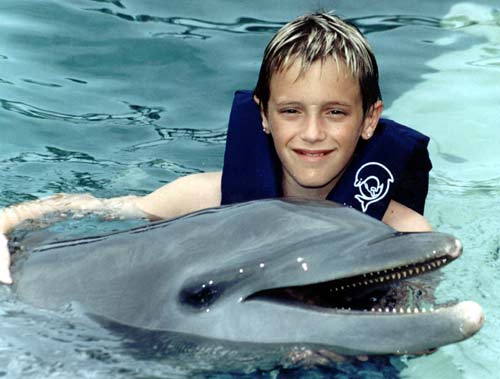
Even, decades later, when I was making a video to show at Nick’s high school graduation, mixing photos and music, I chose Heroes as one of the songs. I went to quite a bit of trouble to make sure this photo appeared during the lines:

Nick in Mexico

Nick in Mexico

I, I wish you could swim
Like the dolphins, like dolphins can swim
Though nothing, nothing will keep us together
We can beat them, forever and ever
Oh we can be heroes, just for one day

So when I stumbled across Blackstar and the first single, Lazarus, I was glad to see some more new stuff from Bowie, David Fucking Bowie, after all these years. I watched it and tried to figure out what was going on. I couldn’t.

Yesterday, I found out.

https://vimeo.com/151069699

Monkeys With A Bland Grin

“For God’s sake, let us be men
not monkeys minding machines
or sitting with our tails curled
while the machine amuses us, the radio or film or gramophone.

Monkeys with a bland grin on our faces.”
― D.H. Lawrence, Selected Letters

Deep Ellum Texas

Deep Ellum
Texas

And Then Retreated Into Their Money Or Their Vast Carelessness

“I couldn’t forgive him or like him, but I saw that what he had done was, to him, entirely justified. It was all very careless and confused. They were careless people, Tom and Daisy—they smashed up things and creatures and then retreated back into their money or their vast carelessness, or whatever it was that kept them together, and let other people clean up the mess they had made.”
― F. Scott Fitzgerald, The Great Gatsby

Polo Sculpture Plano, Texas

Polo Sculpture
Plano, Texas