Sunday Snippet, Boca Diablo (part 4 – Quan Kaq) by Bill Chance

“Even bad coffee is better than no coffee at all.”

― David Lynch

Have a drink.

Boca Diablo (part 4, Quan Kaq)

Read Part 1 Here

Read Part 2 Here

Read Part 3 Here

Read Part 5 Here

Flynn was Dwayne’s advisor for his Doctoral Dissertation. Dwayne was worried about that, but he didn’t have any choice – Flynn was the only other Lepidopterist in the entire Entomology Department. Dwayne wanted to write his dissertation on the orange butterflies he had seen years before at Boca Diablo – his preoccupation and passion for those memories was total and nothing else was of importance to him.

But Flynn had continued to doubt the existence of the insects.

He said, many times, “Butterflies, as you well know, for all their panoply of hues, solid or variegated, dull or dazzling, are not colored at random. There has to be a reason for their appearance, something that millennia of natural selection had settled upon. Butterflies in that region, in that climate can be bland or camouflaged, or they can be a brilliant blue, yellow, or green – but not orange. It simply isn’t seen and there is no reason for it.”

Dwayne would reply that it was something that he had seen and it was there, reason or not. He was more than pleasantly surprised when he received the official letter that Flynn had approved his dissertation subject, had sent a request for travel funding to the University Board, and requested a meeting, “to discuss this matter further.”

“I’m so happy that you approved my subject,” Dwayne said to Flynn as they sat down across from each other. “But tell me, you have never thought they existed, what has changed your mind?”

“I still don’t think they exist,” Flynn said, “But I think that there is maybe a slight chance, and it’s a mystery that I don’t think we can ignore.”

“What? Why?”

“Read this.” Flynn passed a thick, elaborately bound leather volume across the table. Dwayne took a look at the title, “Myths and Beliefs of the Tutaconta Indians.”

“What does this have to do with my butterflies?”

“Just read it, as soon as you can, and get back to me,” Flynn said, stood up, and simply walked away.

Dwayne started in that evening, reading from front cover to back. He didn’t stop until he was finished at dawn the next day.

The Tutaconta Indians were a large and successful Pre-Columbian civilization that shared a lot of similarities with the more well-known Toltec and Maya. The history was that they built large elaborate cities that had completely and mysteriously disappeared into the jungles where they had been raised.

Dwayne’s interest became intense when he read of the legendary capital of Protamayo, which was supposedly located on the slopes of the dormant volcano which later became the Boca Diablo.

At the height of the Tutaconta civilization Boca Diablo was a tall conical mountain until a series of violent eruptions and subsequent collapses reduced the mountain to the complex of lava flows and craters that exist today. The Tutaconta capital, Protamayo, was destroyed in this cataclysm with an almost unimaginable loss of life. In a few years after this the entire Tutaconta civilization collapsed, leaving no trace except whispery collections of legend and rumors that had spread through other nearby, luckier tribes.

The book Dwayne had been handed, attributed to the author Lazarus Leon, was written in a lurid style, treating these legends as if they were absolute fact, with almost no archeological evidence to back it up. Still, its style was convincing and Dwayne was caught up in the fervent storytelling.

After chapters detailing the rise and fall of the Tutaconta Empire and the destruction of the Protamayo capital came book sections describing daily life in the civilization, with chapters on the peasant population and the royal class.

While the description of the laboring masses was as grim as could be expected from a primitive society, the upper strata lived a life of incredible privilege and luxury. The book hinted that this ever-widening gap between rich and poor, along with the increasing decadence and depravity of the so-called nobles was responsible for the destruction of the society – that the volcanic eruption was simply a terrible outside event that set the extinction in motion.

To emphasize these points followed a series of chapters on the religious practices of this upper class. They were a collection of warrior priests and practices of mass human sacrifices were the hallmark of their legacy. Page after page of stomach-turning descriptions of death and debauchery in such detail that Dwayne wondered about the source of this text – and how much was from a fevered imagination of the author.

But these royal warrior priests were possessed of immense power and lived what seemed to be preternaturally long lives. They were described as being “Several hands taller than ordinary men,” was would live a number of lifetimes without seeming to grow older.

Dwayne began to read faster and faster as the text began to give tantalizing hints about sacred magical potions that were used to acquire great strength, divine knowledge, and extraordinary long life. Finally, near the end of the book he found the passage that explained why Flynn was so suddenly extremely interested.

“The Royal Priests of Protamayo had developed a number of techniques, most involving sacrifice to the gods, to improve their physical and mental powers, and to extend their lives. More important than anything else, however, was the Brebare Magico, or magic potion that they called Quan Kaq Itzac. The exact formula for this elixir is, of course, unknown – but it was said to be prepared from the crushed bodies of sacred insects, along with a special blend of spices and human blood. These insects were also called Quan Kaq and have been described to be giant, bright orange, butterflies. These were specially bred and cared for by the most learned of priests and destined for no other purpose than the preparation of the sacred drugs that gave great powers and long life.”
Short Story of the Day, Flash Fiction, Pete and Jenny in the Harbour Hotel by Lisette Abrahams

“Why do people have to be this lonely? What’s the point of it all? Millions of people in this world, all of them yearning, looking to others to satisfy them, yet isolating themselves. Why? Was the earth put here just to nourish human loneliness?”

― Haruki Murakami, Sputnik Sweetheart

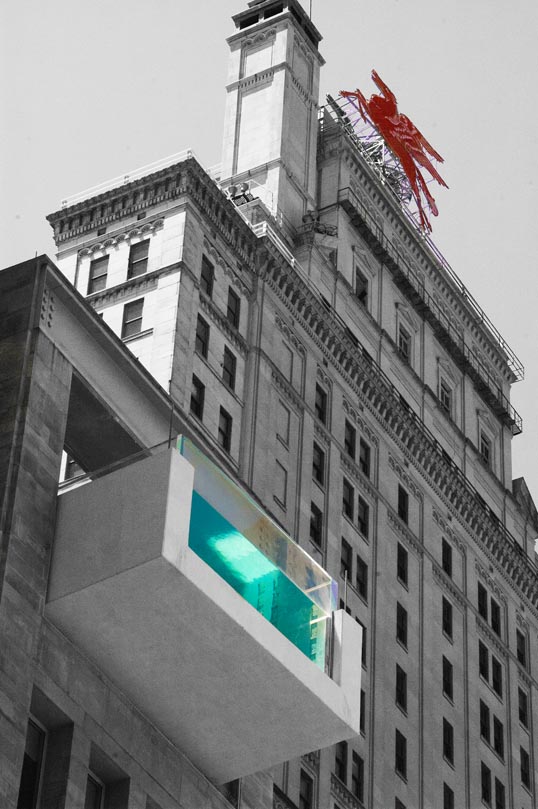
Magnolia Hotel (Pegasus) and Joule Hotel (pool) Dallas, Texas

From my old journal, The Daily Epiphany, February 19, 2003 – writing about something that happened more than twenty years before that:

Niagara Falls

I wasn’t prepared mentally for the cold or for the snow. We were right in the snow belt that forms from the lake effect in Buffalo and it freaked me out that when I’d walk along the road my feet would actually be above the cars due to the six foot deep snow that piled up there. The building where we worked was right next to the hotel, which was near the airport, and we didn’t get rental cars – which made it tough to find entertainment in the evening.

One night a small group of us – I was the only one from Dallas, but there were two women and a guy from Atlanta – and another guy from California – sitting around the hotel bar (the hotel bar was actually a Playboy Club – there’s a blast from the past) griping about the fact we didn’t get cars and had nowhere to go. We talked about how none of us had ever seen Niagara Falls and how it wasn’t very far away. At that point I actually had an idea, “Hey, wait, there’s five of us… somebody can take a shuttle over to the airport and rent a car for one day – we’ll split the cost. We all travel a lot and have car discounts – we could get a compact for thirty bucks or so – divided five ways… that’s pretty cheap.” Everyone brightened up and the guy from Atlanta volunteered to go get the car.

One problem was that by the time he was able to actually pick the thing up and drive back it was well after midnight. The other problem was that three was a pretty severe blizzard, even for Buffalo, swirling around that night. We were from Georgia, Texas, and California… what did we know.

We piled in and set off. We didn’t know where we were going and were forced to navigate with the car rental map through a swirling opaque mass of flakes. Somehow, we finally found Niagara Falls, New York – though it took a long time, maybe hours (my memory fails on some details).
“No, not the American side,” I said, “I want to go to the Canadian side!” With that comment our odyssey became international.

We reached the bridge sometime around three AM and I couldn’t help but notice that there was a good two feet of snow on the road and no tire tracks. We were the only ones crossing that night. Traction was good, however, so we headed on across. There was an interesting conversation with the border guard, “Where are you from?” “Well, I’m from Texas, they’re from Georgia…” that sort of thing. She didn’t approve of us being out in the weather, but I don’t think she wanted to hassle with us or get out of her little heated shack so we were allowed to go on. As we entered Canada the blizzard stopped and only a light few snowflakes continued to drift down.

The falls were incredibly beautiful. I had seen many photos of the falls of course, but they were all taken in the summer. I had no idea how it looked at this time of year. The American side was completely frozen into a wall of ice. On the Canadian side the water poured free into enormous fingers of ice pointing upward, thrusting against the power of the water. The river below was solid ice with a white layer of snow covering it. The most amazing thing was the famous whirlpool below the falls. It was invisible beneath the ice but a huge, perfectly round disk of ice was free and rotating slowly in the middle of the river. The whole scene was incredible and beautiful. You don’t see that much ice in Texas.

When we drove up the whole falls was lit with powerful spotlights, making them clearly visible in the dark. While we were watching they were switched off for the night. The falls became even more beautiful at that point. There was so much snow on the ground and the clouds were so low that the whole area became lit as clearly as daylight with that strange city snow-light you see in the winter. I was transfixed.

A few snowflakes still fell as a delicate counterpoint to the awesome power of the rushing water. Everything was quiet with that stillness that a thick layer of snow brings. Quiet except for the roaring of the falls. We had the whole place to ourselves – there were no other tourists or sightseers out at that time or in that weather.

We didn’t stay long – our faces began to freeze and we piled back into the rental and headed back. When we reached the bridge there were no tracks on our side and still a single set going the other way.

And today’s flash fiction:

Pete and Jenny in the Harbour Hotel by Lisette Abrahams

from Reflex Fiction

What I learned this week, Jun 4, 2021

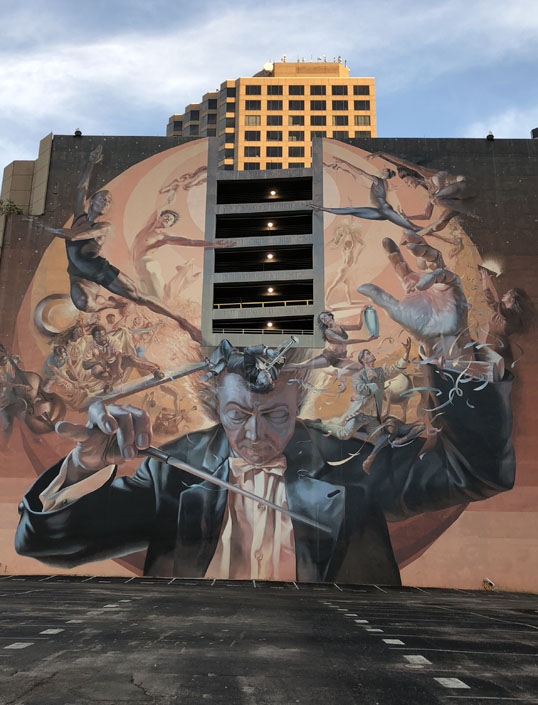
The full mural (previous photo center bottom) – Ace Parking, Dallas, “The Storm” Art Mural on Ace Parking Garage at 717 Leonard Street

Why Some People Get Burned Out and Others Don’t

Everyone faces stress at work, but some people are able to handle the onslaught of long hours, high pressure, and work crises in a way that wards off burnout. You can get better at handling stress by making several mental shifts:

  • Don’t be the source of your stress. Resist your perfectionist tendencies and your drive for constant high achievement. Recognize when you’re being too hard on yourself, and let go.
  • Recognize your limitations. Don’t try to be a hero. If you don’t have the ability or bandwidth to do something, be honest with yourself and ask for help.
  • Reevaluate your perspective. Do you view a particular situation as a threat to something you value? Or do you view it as a problem to be solved? Change how you see the situation to bring your stress levels down.

My Raspberry Pi writing machine sitting on top of my secretary. The top folds shut holding the wireless keyboard and mouse inside. I still can use the secretary for handwriting, note vintage Saheaffer Triumph nib fountain desk pen.

How the Personal Computer Broke the Human Body

Decades before ‘Zoom fatigue’ broke our spirits, the so-called computer revolution brought with it a world of pain previously unknown to humankind.


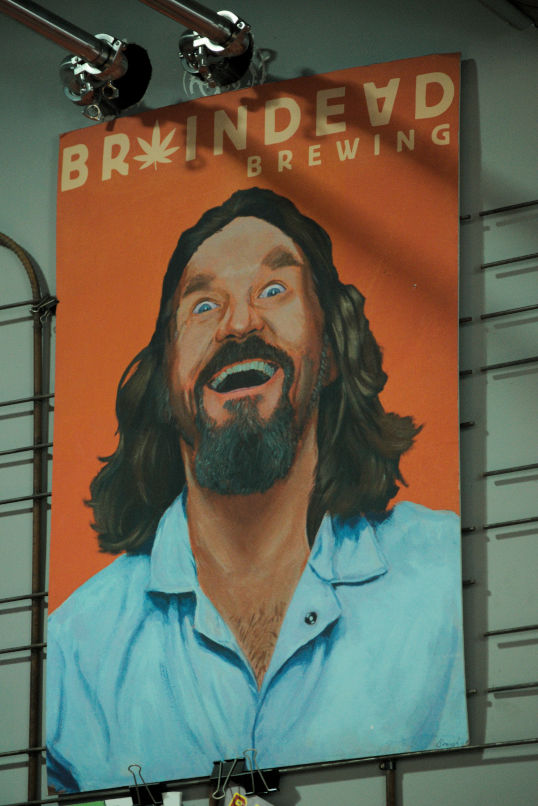
Artwork in the Braindead Brewing Company, Deep Ellum, Dallas, Texas

The Brain-Changing Magic of New Experiences

There is a connection between novelty and happiness.


Amedeo Modigliani. Jacques and Berthe Lipchitz. 1916. Oil on canvas, 81.3 x 54.3 cm. Art Institute of Chicago.

170 Hypothetical Questions That’ll Give Your Brain a Workout 

1. If you had the chance, would you want to be pain-free for the rest of your life?

2. Would you take a $70k/week job offer where you get paid to sit in a pitch-black room and do nothing for 20 hours a day?

3. What would I hear if I asked a group of people who know you for five adjectives to describe you?

4. Which place on the planet would you never want to live, and why?

5. Which famous person’s body would you take over if you were a zombie?


The Paddlewheeler Creole Queen – idled by the virus on the riverfront, New Orleans

Now proven against coronavirus, mRNA can do so much more

The mRNA technology — developed for its speed and flexibility as opposed to expectations it would provide strong protection against an infectious disease– has pleased and astonished even those who already advocated for it.


Pedestrian bridge, Tipton Park, Dallas, Texas (click for full sized version on Flickr)

Who Killed the Recumbent Bicycle?

Recumbent bicycles, ridden from a reclined position, are faster than standard upright bikes, and many people find them more comfortable, too. So why are they such a rare sight on the road today?


Apartment Building, The Cedars, Dallas, Texas

Why America’s New Apartment Buildings All Look the Same

Cheap stick framing has led to a proliferation of blocky, forgettable mid-rises—and more than a few construction fires.

Short Story of the Day, Flash Fiction, Six Ways to Start Something, and Five to End it by Rachel O’Cleary

““I think you still love me, but we can’t escape the fact that I’m not enough for you. I knew this was going to happen. So I’m not blaming you for falling in love with another woman. I’m not angry, either. I should be, but I’m not. I just feel pain. A lot of pain. I thought I could imagine how much this would hurt, but I was wrong.”

― Haruki Murakami, South of the Border, West of the Sun

Trees reflected in a pond, inverted, with Chihuly, Red Reeds

From my old journal, The Daily Epiphany, August 4, 2002:

I Hate Raymond

In Miami I had to wait forever to get through immigration. In situations where a mass of people run up against the bureaucracy I have this ability to choose the slowest line. The sign said, “US Citizens Only” so I thought it would be quick flash of the passport – but all the people in front of me kept producing documents printed on tanned weasel skin, with a charcoal sketch instead of a photograph – which would cause the immigration agent to frown, walk around his little cube, and one-finger type stuff into his computer keyboard.

Crammed into this giant, crowded room were maybe fifty different lines and some crept while others (the ones that you aren’t in) seemed to leap. Everybody kept cutting through the lines. One group of teenaged missionaries from our plane cut through – moving in a giant, red-tee-shirted group from one line to another.
Somebody shouted out, “Hey, go to the back of the line.”
Their leader replied, “Excuse us, we’ve been helping the poor people in Nicaragua.”
“Good for you – now go to the back of the fucking line,” was the reply.
Finally, I reached the frowning immigration agent. He glanced at my passport and waved me through in less than two seconds.

And today’s flash fiction:

Six Ways to Start Something, and Five to End it by Rachel O’Cleary

from Ellipsis Zine

Rachel O’Cleary Twitter

Bicycle Parking

“Ever bike? Now that’s something that makes life worth living!…Oh, to just grip your handlebars and lay down to it, and go ripping and tearing through streets and road, over railroad tracks and bridges, threading crowds, avoiding collisions, at twenty miles or more an hour, and wondering all the time when you’re going to smash up. Well, now, that’s something! And then go home again after three hours of it…and then to think that tomorrow I can do it all over again!”
― Jack London

Stylish bike rider, French Quarter, New Orleans

So, May was bike month and in honor of the times the City of Richardson, where I live, sponsored a bicycle parking scavenger hunt. The idea was to track down bike parking (bicycle racks) throughout the city and report them on an interactive digital online map. Despite the possibilities of actual prizes, I sort of ignored the thing.

Until our quarterly meeting with the city on transportation alternatives – where we were reminded of the event and encouraged to participate. There was only a week or so left in the month, but that included a three-day weekend and I decided to give it a whirl.

I became sort of obsessed. I planned out bike routes through the city – guided by searches I made on Google Maps. My eyes became accustomed to the tell-tale shapes of the various types of bike racks. I’d stop and take a photo with my phone, then post them on the web site.

Here’s the final map (I’m not sure how long it will stay up, hopefully, it will be a permanent reference and we can add useful bike parking outside the city). The various participants logged 250 or so bike racks during the month.

It was fun and a good excuse to explore the city on my bike.

Here’s a few that I found:

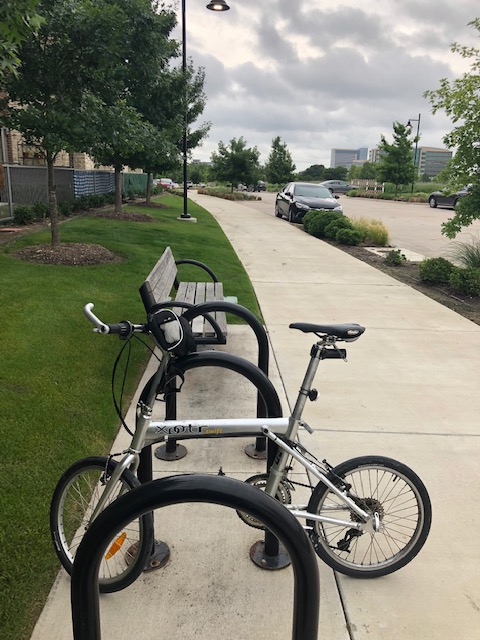
Loop racks next to a bench. I found a bunch of these in an area where a lot of new apartments are going up. That’s my Xootr folding bike.
New racks at the middle school near my house.
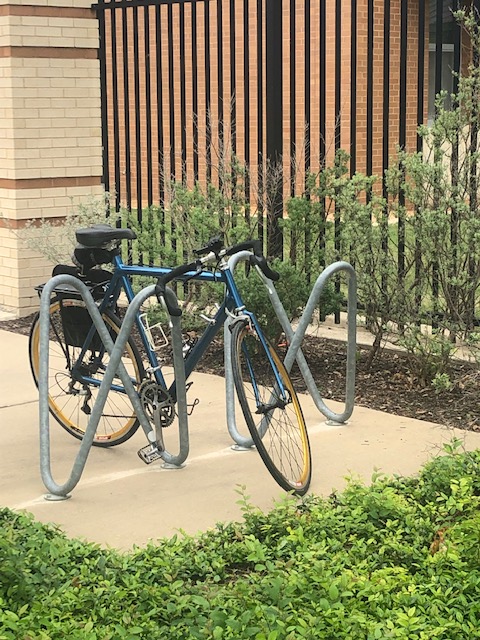
A unique rack at a fire station. That’s my vintage Cannondale (1987) that I ride as my everyday bike.
A gas station. There is a good taqueria inside – worth a bike ride.

What I learned this week, June 1st, 2021

at DFW Airport

How to stop overthinking

Grappling with your thoughts will leave you even more entangled in worry. Use metacognitive strategies to break free


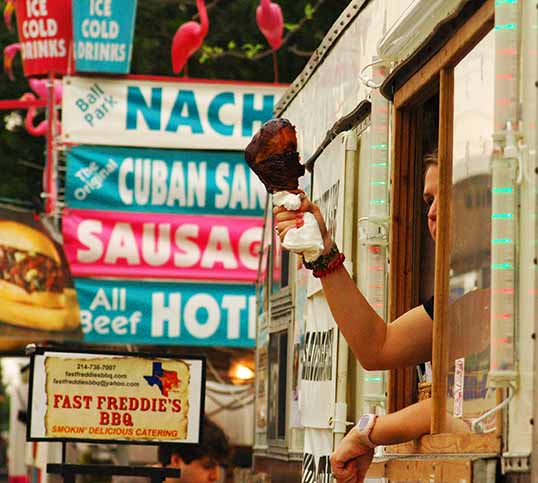
This woman was waving a turkey leg out of her food trailer. When someone came up to buy one, she said, “Let me get you a fresh one hon, this is my demo model, I’ve been waving it out this window for hours.”

Junk

Why do we eat bad food?


Braindead Brewing, Deep Ellum, Dallas, Texas

The Hidden Costs of Happiness

We all want to know how to be happy, but we rarely consider the hidden costs of happiness. It is not free. And despite what Cover Girl or Tony Robbins or the Dalai Lama once told you, it’s not always easy breezy either.


from Sightings, by Mai-Thu Perret, 2016, Nasher Sculpture Center, Dallas, Texas

What Happens to Our Brains When We Get Depressed?

The human brain, in all its complexity, is nearly impossible to model. One neuroscientist is trying anyway


Running up that hill at the end.

Running From the Pain

Exercise can be a very effective way to treat depression. So why don’t American doctors prescribe it?


Arts District, Dallas, Texas

8 Rules to Do Everything Better

The most important principles to grow your body and mind


Running of the bulls, New Orleans, Louisiana

This Is Your Brain on Exercise

Exercise is as good for your brain as it is for your body, and researchers are just beginning to discover why