A Month of Short Stories 2017, Day 3 – The Ambush, by Donna Tartt

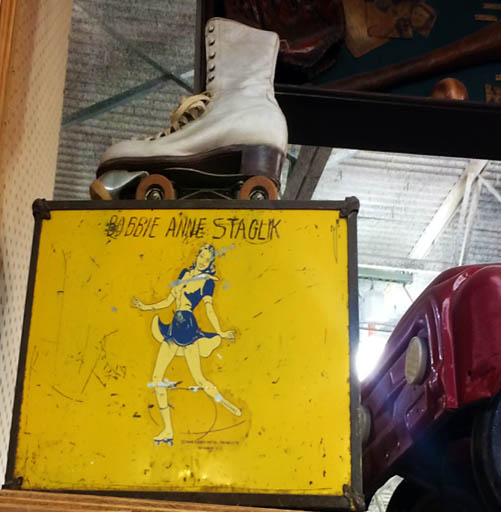
M41 Walker Bulldog
Liberty Park
Plano, Texas

Over several years, for the month of June, I wrote about a short story that was available online each day of the month…. It seemed like a good idea at the time. My blog readership fell precipitously and nobody seemed to give a damn about what I was doing – which was a surprising amount of work.

Because of this result, I’m going to do it again this year – In September this time… because it is September.

Today’s story, for day 3 – The Ambush, by Donna Tartt

Read it online here:

The Ambush, by Donna Tartt

“Oh my God!” he said. “Stay with me, Hank! You can’t die, you son of a bitch!”

I grimaced and tossed my head from side to side in agony as Tim – in a desperate effort to revive me – pounded on my chest. I was impressed by his profanity, but even more impressed that he had taken the Lord’s name in vain on my behalf.

Far away, from the back porch, Tim’s grandmother called out to us in a thin, irritating voice: “Do you all want lemonade?”

—-Donna Tartt, The Ambush

A while back I read Donna Tartt’s The Secret History and liked it more than I anticipated. The Goldfinch is on my list of books to read – a long list that is, unfortunately, growing rather than shrinking.

Maybe before I die.

Today’s story, The Ambush, is a spectacularly well written tale of childhood and war. The descriptions are all too precise and knowing for a child of eight (the narrator) and you know it is being told from a point far in the future. That the memories are so strong and accurate shows how important the events are to the character, the author, and the reader.

It is a story of the time, a time gone, but of a time I remember. It’s a story of the death of a friend’s father and of the death of a certain kind of life we used to live.

This is something that the novel does better than any other art form: reproducing the inner life and the inner experience of another person, particularly extreme forms of consciousness like grief, dreams, drunkenness, spiritual revelations, even insanity. Unlike movies, where we’re always onlookers, in novels we have the experience of being someone else: knowing another person’s soul from the inside. No other art form does that. And I like dealing with particularly intense inner experiences because I think that in many ways, this is what the novel does best.
—-Donna Tartt

A Month of Short Stories 2017, Day 2 – The Itch, by Don DeLillo

Crow Collection of Asian Art
Sculpture Garden
Dallas, Texas

Over several years, for the month of June, I wrote about a short story that was available online each day of the month…. It seemed like a good idea at the time. My blog readership fell precipitously and nobody seemed to give a damn about what I was doing – which was a surprising amount of work.

Because of this result, I’m going to do it again this year – In September this time… because it is September.

Today’s story, for day 2 – The Itch, by Don DeLillo.

Read it online here:
The Itch, by Don DeLillo

But nobody showed up, so he sat awhile looking at the wall. It was one of those Saturdays that feel like Sunday. He didn’t know how to explain this. It happened intermittently, more often in the warmer months, and it was probably normal, although he’d never discussed it with anyone.
—-Don DeLillo, The Itch, opening lines

I have read some of Don Dellilo’s work… not what I would say a lot of it… not by any means all of it. The most notable absence is the massive novel Underworld which I have been meaning to read for a couple decades. Tomes of that weight and size require a commitment that I have been unable to grant for some time. Maybe soon.

Maybe before I die.

At any rate, I loved his novel White Noise enough that the other things he has written pale in my mind. That novel rotates around a bucolic modern scene that is interrupted by an Airborne Toxic Event of some kind… something that I am sort of familiar with in real life. It is an entertaining and haunting work of fiction.

In modernist fiction, there is an interesting difference between novels and short stories. In a novel, the strange detachment of modern life has to be dealt with and resolved… at least partially. In a short story, the author is free to wallow in the surrealism of daily life in this best of all possible worlds.

In today’s story that surrealism takes the form of an itch. The protagonist bounces from doctor to doctor… getting no help, and towards a possible love interest. But always present, if sometimes latent, is the itch, possessing a strange and fearful symmetry, and a perverse unpredictability. It doesn’t make life unbearable, but it probably makes it less fun. Which seems pretty unbearable.

Interviews:

I’m thinking of two dimensions of a screen or a page on which people read. We hope, writers hope, that in fact their characters are living in a three-dimensional world, first in the writer’s mind, then in the minds of readers.

When I’m conceiving a scene, do I see it in three dimensions? It’s not so easy to answer what appears to be a simple question. I see it — I see characters, I see people, I see streets, cars — and they seem to exist in this special level of mental reality. I could not distinguish the features of a character’s face when I have an idea concerning this character, when I see him or her in a room, and in most cases the room itself is fairly generic — except when I’m actually describing a room — this does happen somewhere in “Zero K” — and then I see a room much more clearly.
—-from an LA Times Interview

INTERVIEWER
Do you have any idea what made you a writer?
DON DeLILLO
I have an idea but I’m not sure I believe it. Maybe I wanted to learn how to think. Writing is a concentrated form of thinking. I don’t know what I think about certain subjects, even today, until I sit down and try to write about them. Maybe I wanted to find more rigorous ways of thinking. We’re talking now about the earliest writing I did and about the power of language to counteract the wallow of late adolescence, to define things, define muddled experience in economical ways. Let’s not forget that writing is convenient. It requires the simplest tools. A young writer sees that with words and sentences on a piece of paper that costs less than a penny he can place himself more clearly in the world. Words on a page, that’s all it takes to help him separate himself from the forces around him, streets and people and pressures and feelings. He learns to think about these things, to ride his own sentences into new perceptions. How much of this did I feel at the time? Maybe just an inkling, an instinct. Writing was mainly an unnameable urge, an urge partly propelled by the writers I was reading at the time.
—-From The Paris Review

Crow Collection of Asian Art
Sculpture Garden
Dallas, Texas

A Month of Short Stories 2017, Day 1 – Love (“Amor”) by Clarice Lispector

(click to enlarge)

Over several years, for the month of June, I wrote about a short story that was available online each day of the month…. It seemed like a good idea at the time. My blog readership fell precipitously and nobody seemed to give a damn about what I was doing – which was a surprising amount of work.

Because of this result, I’m going to do it again this year – In September this time… because it is September.

Today’s story, for day 1 – Love (“Amor”), by Clarice Lispector.

Read it online here:

Love (“Amor”) From The Complete Stories; Translated by Katrina Dodson By CLARICE LISPECTOR

Ana’s children were good, something true and succulent. They were growing up, taking their baths, demanding for themselves, misbehaved, ever more complete moments. The kitchen was after all spacious, the faulty stove gave off small explosions.
—-from Love, by Clarice Lispector

I don’t know where I first heard of Clarice Lispector and her short stories… it was surprisingly recent. She is considered one of the masters of the form from Brazil. I checked out a book of her stories, translated into English, of course, from the library and am working through them.

Her work has that surreal quality that translated stories usually have – especially the ones from Latin America. The emotional knowledge is so subtle, acute, and accurate, it is almost painfully real and exciting fantasy at the same time. It makes me wish I could write like that.

Today’s story, Love, shows that there is nothing more delicate and unbalanced than an ordinary modern family life. Anything can tip the cart over – even something as simple as a blind man chewing gum.

Who Loved Chopin

“Q: What genres do you especially enjoy reading? And which do you avoid?

A: I love reading anything about gigantic animate blobs of molten iron who secretly long to be concert pianists. It’s not a particularly well-populated genre, but in particular I’d mention, “Grog, Who Loved Chopin,” as well as the somewhat derivative “Clom, Big Fan of Mozart.”
― George Saunders

Downtown Dallas, Texas

Griffin Welding

“All happiness depends on courage and work.”
― Honoré de Balzac

Governor Nicholls St, New Orleans

Your First… Your Worst

“Your first 10,000 photographs are your worst.”
― Henri Cartier-Bresson

Half-Price Books, Dallas, Texas

Half-Price Books, Dallas, Texas

The Storm is 400 Miles Away

“People seemed to believe that technology had stripped hurricanes of their power to kill. No hurricane expert endorsed this view.”
― Erik Larson, Isaac’s Storm: A Man, a Time, and the Deadliest Hurricane in History

While 400 miles to the south, Hurricane Harvey brings terror, destruction, and death – here all it has done so far is brushed the sky with its outermost bands and made for a beautiful sunset.

The ponds at the end of my block, Richardson, Texas

The ponds at the end of my block, Richardson, Texas

“Wild Books, Homeless Books”

“Second hand books are wild books, homeless books; they have come together in vast flocks of variegated feather, and have a charm which the domesticated volumes of the library lack.”
― Virginia Woolf

Display at main Half-Price Books, Dallas, Texas

Everybody has their addictions; I think an important part of life is to constantly take a brave look at what you are addicted to and try and choose better ones.

I used to be addicted to buying used books. My dealer of choice was Half Price Books here in Dallas. When I first moved to the area in the early 80’s, I lived on Lower Greenville and their main store was on Mockingbird, next to Campisi’s Egyptian. It was a short walk to the old-school used book store – with its labyrinthine passages. I bought too many books.

Then they moved to Northwest Highway and an old Captain’s Cargo store. It retained the odd sailing-ship style staircases and had an strange open plan. I moved too to a spot that was too close. I kept buying too many books.

One day I drove there and found the store closed. Confused and disappointed, I turned and saw that they had opened up into a gigantic warehouse-style space across the street. This was very bad. I went in and found a book of quotations I had been looking for for years. My addiction blossomed into full-fledged hopelessness. It’s funny, I only bought used books – never new. There was something about the feeling that other, unknown hands had moved over these pages before. Something about the faint smell of mold. I preferred books that had a few notes in the margin, a handful of bent corners, evidence of someone having been here before me.

Nobody ever held an Intervention for me, but when we moved to Richardson the moving company charged us a hefty upfee because of all the books. What finally broke me was the arrival of the Kindle – now I can carry a library in my pocket. I have more books in my Kindle than I can read over the rest of my pitiful life.

Jeff Koterba color carton for 7/21/09
“Mars”

Now, I have two large and one small bookshelf. This is my limit. To buy a new book, something has to go.

Is my addiction gone?… of course not. It may be under control. I do check way too many books out of the library… but that is really an addiction that I can live with.

Today, I went to Half-Price to look for a particular book that was too expensive in its ebook form. I found it in the Clearance Section for two dollars. You can be a very well-read person and never leave the Half-Price Books Clearance Rack. I suspect that the employees sometimes put really good books into Clearance as a favor to society.

At any rate, my classic book by a famous author that has helped keep society from completely (so far) running off the rails was two dollars. I also bought a blank book (my bullet journal is almost full) and it was ten.

So, I guess that putting wonderful, skillful, important words on paper reduces the value of a book by eighty percent.

Display at main Half-Price Books, Dallas, Texas

What I learned this week, August 26, 2017

NASA wants to spend $3B drilling into a volcano to save the United States

One of the things I sort of worry about is an imminent eruption of the Yellowstone Supervolcano. Good to know that NASA has an idea. Of course, I wonder… why is NASA the organization that is looking at drilling underground?

NASA Has a $3.46 Billion Plan to Ensure the Yellowstone Supervolcano Doesn’t Erupt


Comment: Why having lots of bikes isn’t as crazy as it sounds


Bike riding isn’t child’s play anymore, and cycling crash deaths are soaring

Forty years ago, riding a bike was child’s play, and the overwhelming majority of those killed in bike crashes were children. Over the years, biking for fitness and as part of the daily commute has changed that dramatically. According to a report released Thursday, the average age of cyclists killed in collisions in 2015 was 45.

Actually, it is well known that as cycling increases, cycling accidents and deaths actually goes down.


Stylish bike rider, French Quarter, New Orleans

10 Things cyclists wish drivers understood

Cruiser in the French Quarter


10 unwritten cycling rules you need to ignore


Comment: Why electric bikes, not electric cars, are the transport revolution we need


7 Spell-Binding Documentaries About Drugs to Watch on Netflix


The Future Recedes

“Unfortunately, the clock is ticking, the hours are going by. The past increases, the future recedes. Possibilities decreasing, regrets mounting.”
― Haruki Murakami, Dance Dance Dance

Mural, Deep Ellum, Dallas, Texas