“God created man and, finding him not sufficiently alone, gave him a companion to make him feel his solitude more keenly”
― Paul Valéry

(click to enlarge)
Adam, by Emile-Antoine Bourdelle, plus admirer
Cullen Sculpture Garden
Houston, Texas
“God created man and, finding him not sufficiently alone, gave him a companion to make him feel his solitude more keenly”
― Paul Valéry
(click to enlarge)
Adam, by Emile-Antoine Bourdelle, plus admirer
Cullen Sculpture Garden
Houston, Texas
“At night I dream that you and I are two plants
that grew together, roots entwined,
and that you know the earth and the rain like my mouth,
since we are made of earth and rain.”
― Pablo Neruda, Regalo de un Poeta
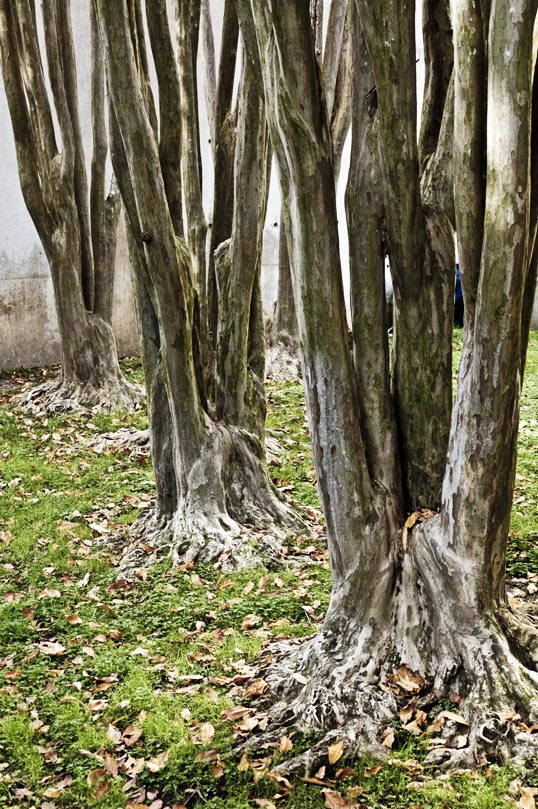
Crepe Myrtles
Houston, Texas
In the Cullen Sculpture Garden at the Houston Museum of Fine Arts there are many beautiful sculptures. But none are more beautiful that the naturally sculpted trunks of the crepe myrtle trees.
“Are we fallen angels who didn’t want to believe that nothing is nothing and so were born to lose our loved ones and dear friends one by one and finally our own life, to see it proved?”
― Jack Kerouac, The Dharma Bums

Continental Bridge Park
Dallas, Texas
“In a lucid dream, you have a sharper sense of color and lucidity than with your eyes open. I’m interested in the point where imaginative seeing and outside seeing meet, where it becomes difficult to differentiate between seeing from the inside and seeing from the outside.”
—-James Turrell, The Other Horizon
From the Houston Museum of Fine Arts website:
In the mid-1960s James Turrell pioneered a new concern with the phenomena of space and light, often referred to as the Light & Space Movement. Turrell sought not to depict light but to use light itself as his material, and his earliest works investigated the effects of artificial light. He also developed a number of installations that heightened the relationship between light and the architectural frame.
The MFAH commissioned Turrell’s The Light Inside for the underground tunnel linking the museum’s Caroline Wiess Law Building with the Audrey Jones Beck Building when the latter opened in 2000. The Light Inside turns the walls of the tunnel into vessels for conducting light. An expanded version of his earlier explorations of light in his Shallow Space Construction series, Turrell’s The Light Inside is an all-encompassing environment.
Transcending the traditional confines of built spaces, The Light Inside acts as both a passage and a destination. The raised walkway guides visitors forward and gives them the sense of floating in space, while the changing cycle of illumination (which shifts from blue, to crimson, to magenta) further invites contemplation. The Light Inside makes the experience of moving between the Law and the Beck Buildings not only an exploration of light and space, but also a profound and awe-inspiring experience.

JAMES TURRELL
American, born 1943
The Light Inside
1999
Neon and ambient light
I have been a big fan of James Turrell for over a decade, ever since a certain day in 2004. That was the day near the opening of the Nasher Sculpture Center – when I took Lee down there to visit the sparkling spanking new museum. I wrote about it in a blog entry that was eventually published in a local magazine.
My favorite piece might have been the installation Tending (Blue) by James Turrell. We walked into a little opening lit by odd, shifting colors into the wall at the north end of the garden. The passage made a right turn and opened into a small room lined with dark stone benches. The walls on the upper half were featureless and smooth. A gray skylight lighted the whole chamber. The effect was strange and very peaceful. I liked it a lot.
Lee and I left the chamber and walked back up the garden and inside the building. We wandered downstairs and into the auditorium where a film was showing. It told the story of Raymond Nasher and his late wife, how they started out building Northpark Mall, acquired a fortune, and then became premiere collectors of modern sculpture. Mr. Nasher talked about his life, his wife, and his passion for the new sculpture center. The film then showed the construction of the center, how a handful of visionary architects and a few thousand men in hard hats converted a grimy downtown parking lot (I’ve parked there many times, put my quarters or dollar bills into a rusty numbered slot) into a thing of great value and beauty. They talked a lot of how it will be there forever. The film was fun and interesting – it really helped me appreciate the place.
On opening day Raymond Nasher said, “I put Patsy (his wife, the collector, who had passed away a couple years before) in charge of the weather today, and, as you can see, it’s beautiful.
One thing was odd, though. On the part of the film that covered opening day, Nasher and Turrell themselves went into the Tending (Blue) chamber that Lee and I had walked out of only minutes before. The benefactor and the artist sat on the benches and looked around. The skylight rectangle in the ceiling wasn’t gray like we saw it, but a deep cerulean blue.
“What’s up with that?” I asked.
“Let’s go back and check it out,” Lee said.
We hiked back down and entered the chamber again. The skylight was still gray. Something didn’t look right, though. I stood under it, looking up, trying to figure out what I was seeing and how it could change colors so dramatically. I was halfway convinced that it was a rectangle of light projected on the ceiling by some hidden apparatus (the upper walls are washed in subtle changing color from hidden computer controlled LED’s) when I was suddenly struck between the eyes with a big, cold drop of water. I wiped my face in surprise and looked down at some small pools of water at my feet.
“That’s weird, Lee,” I said, “I can’t believe it, but this roof is leaking.”
I looked back up, trying to find the telltale discoloration of a water leak, when, with a sudden shock, I realized what the hell I was actually looking at. That wasn’t a skylight, that wasn’t a projected rectangle at all, it was simply a big hole in the ceiling. I was looking directly at the sky. Once my eyes and my brain were in sync I could see the subtle variation of the clouds passing by overhead. The edges of the hole must have been cut back like razors – there was no visible frame around the opening, simply a featureless rectangle of light. It was amazing.
That’s why the rectangle looked blue in the film – it was a cloudless day. Now I want to go back. I want to go at sunset… I want to figure out how to go at dawn. The city sky at night… will it be brown? I want to sit in there during a rainstorm. I especially want to go there on that rarest of Texas days, a snowstorm.
Now, of course, Tending (Blue) is no more, destroyed in a paroxysm of greed and corruption.

JAMES TURRELL
American, born 1943
The Light Inside
1999
Neon and ambient light
When I went to Houston over the holidays to visit my family there I wanted to visit the Turrell work at the Museum of Fine Arts, The Light Inside. It’s a tunnel under the street between two buildings, festooned with Turrell’s signature unreal lighting and surreal experience.
A really cool thing, though the experience is a little lessened by the museum guard constantly barking out, “Stay on the walkway! Don’t touch the sides!” It’s beautiful and memorable, though it does lack the pure esthetic simplicity and connection with nature that the late Tending (Blue) offered.

JAMES TURRELL
American, born 1943
The Light Inside
1999
Neon and ambient light
I can’t write about Turrell without mentioning Roden Crater. Since the 1970’s he has been hollowing out an extinct volcano in a desolate and isolated stretch of Arizona – converting it into a giant gallery for his manipulations of light, space, and expectations. Visiting this place in at the top of my bucket list.
I only hope I’m able to live long enough.
“Don’t blame you,” said Marvin and counted five hundred and ninety-seven thousand million sheep before falling asleep again a second later.”
― Douglas Adams, The Hitchhiker’s Guide to the Galaxy


Stylish bike rider, French Quarter, New Orleans


My Xootr folding bicycle, Trinity River Bottoms, Dallas, Texas
Why is the 1 percent suffering from this peculiar mass delusion? Well, actually, it’s not that hard to understand. Because if you’re reading this article, chances are that you are in the top 1 percent of global income. And chances are also that you really don’t feel like a tycoon.
The cutoff for the global 1 percent starts quite a bit lower than the parochial American version preferred by pundits. I’m on it. So is David Sirota. And if your personal income is higher than $32,500, so are you. The global elite to which you and I belong enjoys fantastic wealth compared to the rest of the world: We have more food, clothes, comfortable housing, electronic gadgets, health care, travel and leisure than almost every other living person, not to mention virtually every human being who has ever lived. We are also mostly privileged to live in societies that offer quite a lot in the way of public amenities, from well-policed streets and clean water, to museums and libraries, to public officials who do their jobs without requiring a hefty bribe. And I haven’t even mentioned the social safety nets our governments provide.
So why don’t we feel like Scrooge McDuck, rolling around in all of our glorious riches? Why do we feel kinda, y’know, middle class?
Because we don’t compare our personal experiences to a Tanzanian subsistence farmer who labors in the hot sun for 12 hours before repairing to his one-room abode for a meal of cornmeal porridge and cabbage. We compare ourselves to other Americans, many of whom, darn them, seem to have much more money than we do.
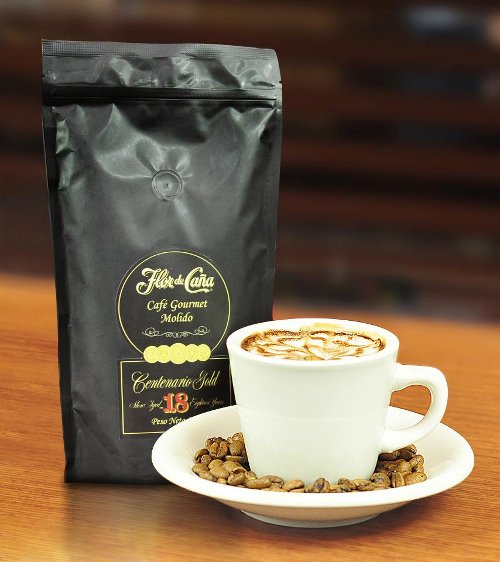
Es café macerado en ron, posee todas las propiedades organolépticas del ron, pero tiene grado de alcohol
Now this is a blast from the dim, dizzy, foggy past.

B-Cycle Bike Share stand, Fair Park, Dallas, Texas
It has been cold here – but it hasn’t been this cold.
Inherent Vice Looks like it is more Thomas Pynchon than Paul Thomas Anderson. And I thing that is a good thing…..
“I live my life in growing orbits which move out over this wondrous world, I am circling around God, around ancient towers and i have been circling for a thousand years. And I still dont know if I am an eagle or a storm or a great song.”
― Rainer Maria Rilke, Rilke’s Book of Hours: Love Poems to God
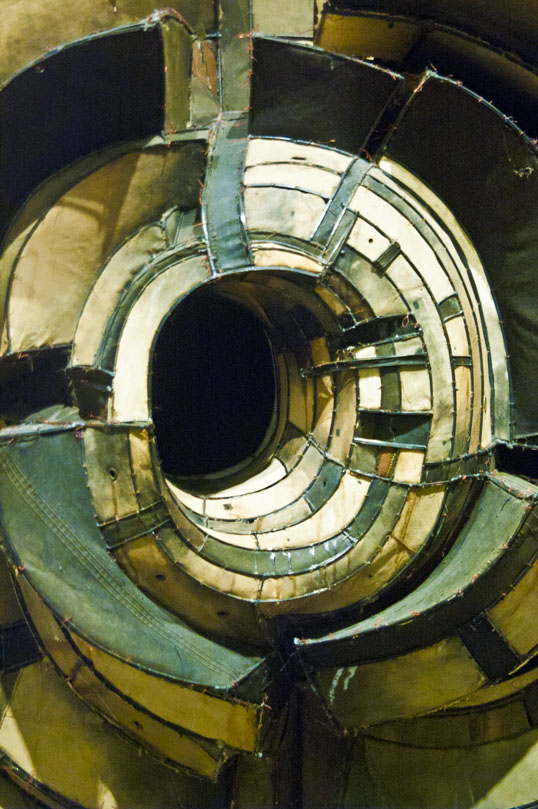
Lee Bontecou
American, Born 1931
Untitled
1962
Welded steel, epoxy, canvas, fabric, saw blade, wire
Museum of Fine Arts
Houston, Texas
“Soon it got dusk, a grapy dusk, a purple dusk over tangerine groves and long melon fields; the sun the color of pressed grapes, slashed with burgandy red, the fields the color of love and Spanish mysteries.”
― Jack Kerouac, On the Road

Painted parking meter and Brooks saddle, Deep Ellum, Dallas, Texas
“His own image; no longer a dark, gray bird, ugly and disagreeable to look at, but a graceful and beautiful swan. To be born in a duck’s nest, in a farmyard, is of no consequence to a bird, if it is hatched from a swan’s egg.”
― Hans Christian Andersen, The Ugly Duckling

David Smith
American 1906-1965
Leda
1938
Painted Steel
Museum of Fine Arts
Houston, Texas
From the label text:
David Smith learned the technique of welding steel from working in a car factory, and he applied this skill to the art of sculpture. Leda is based on the Greco-Roman myth about a god who takes the form of a swan and then seduces a woman. Here, Smith offers a witty interpretation of the unlikely act of lovemaking between a bird and a woman.
“A small daily task, if it be really daily, will beat the labours of a spasmodic Hercules.”
― Anthony Trollope

Paul Manship
American, 1885-1966
Hercules Upholding the Heavens
1918
Bronze
The Museum Of Fine Arts
Houston, Texas
 Bill Chance