Short Story Day 4 – The School

4. – The School
Donald Barthelme
http://www.npr.org/programs/death/readings/stories/bart.html

I came upon the writings of Donald Barthelme in an odd, backward way. I stumbled across an article in the New Yorker (Good Losers, March 8, 1999) written by two of his brothers, Stephen and Frederick. It was an eloquent piece about an extremely successful family, the father a famous and influential architect and three sons that were noteworthy writers. The article was about two of them, Frederick and Stephen, who had become terribly addicted to gambling. It was fascinating and horrifying to read how these enormously talented and intelligent men were destroying their lives by driving down to the cheap casinos along the Mississippi coast and blowing all their livelihood on blackjack binges.

During the course of the article the brothers wrote about their older brother, Donald, and his revolutionary genius as an author. That interested me enough to do some research and to start to read his stuff.

Most of what Donald Barthelme writes are very short stories, flash fiction. They are unique and unusual bits of text – not what you are expecting or used to reading. They give up on a regular plot arc and make the reader figure out the meaning from a series of seemingly unrelated, often ridiculous statements, occurrences, or facts.

It’s a bit of an acquired taste. At first it was attractive to me because of its short nature – I figured I could read these little morsels of tales in some spare seconds here or there. But their simplicity turned out to be an illusion. The stories were more complex and deeper than they appeared on the surface. It took longer than I expected and were more work than I was prepared for – the tiny things had to be re-read and thought about.

Eventually, I came around. I haven’t read everything Donald Barthelme (or his brothers) have written – but it’s in the repertoire. I’ll get to it eventually.

Today’s selection, The School, is a good representative. We all have had the experience of being in a class of children keeping animals or plants in the classroom for educational purposes. Most have had the experience of having something die under these conditions – the shared sadness, responsibility, and disappointment. This very short work takes that experience and amplifies it to the point of ridiculous terror and then takes a very unexpected turn.

Read it, see if you like it.

At any rate, it’s the rare piece of serious fiction that reminds me of a Monty Python sketch (a reminder only – the tone and theme are very different) in the way this one does.

Of course we expected the tropical fish to die, that was no surprise. Those numbers, you look at them crooked and they’re belly-up on the surface. But the lesson plan called for a tropical fish input at that point, there was nothing we could do, it happens every year, you just have to hurry past it.
—-The School, from Sixty Stories, by Donald Barthelme
Short Story Day 3 – A Study in Emerald

3. – A Study in Emerald
Neil Gaiman

Click to access emerald.pdf

Now we find ourselves with a short story set in a nonexistent past, but not of the past (real or imagined) – the story is almost a decade old (it won the Hugo Award for Best Short Story in 2004) but it is a piece of the modern, internet world. You can call it a form of fan-fiction. As a matter of fact, it is a Crossover – the characters and style from Sherlock Holmes have been transplanted into the world of H.P. Lovecraft’s Cthulhu Mythos.

Not only that… it is a world of alternate history. In it, 700 years prior, Lovecraft’s Great Old Ones have… well, if you want to know what they have done, you have to read the thing.

Finally, it is in a unique and modern form. It’s published on the ‘net as a PDF – in the format of a Victorian Newspaper, complete with odd and disturbing advertisements. Take a close look at the ads, BTW, they are full of interesting references.

Clever and cleverer. The short piece manages to cram a lot of (alternate) history and backstory in and around its detective yarn.

Be careful about that yarn… you are forewarned. Nobody is who you think they are. Black is white and white is black. See if you can figure it out. If you can’t, the Wikipedia Page will illuminate it all for you.

So it is all clever and as skillfully put together as a Swiss Watch… but it is worth reading? Of course it is. It is a lot of fun. It is a puzzle inside a puzzle, wrapped in a puzzle. It is a pastiche. It is a homage. It is the sort of think you will like, especially if you like that sort of thing.

I shall not forget the mirrored surface of the underground lake, nor the thing that emerged from the lake, its eyes opening and closing, and the singing whispers that accompanied it as it rose, wreathing their way about it like the buzzing of flies bigger than worlds.

That I survived was a miracle, but survive I did, and I returned to England with my nerves in shreds and tatters. The place that leech-like mouth had touched me was tattooed forever, frog-white, into the skin of my now-withered shoulder. I had once been a crack-shot. Now I had nothing, save a fear of the world-beneath-the-world akin to panic which meant I would gladly pay sixpence of my army pension for a Hansom cab, rather than a penny to travel underground.
—-from A Study in Emerald, by Neil Gaiman

Short Story Day 1 – The Fall of Edward Barnard

1. – The Fall of Edward Barnard by W. Somerset Maugham
http://www.online-literature.com/maugham/the-trembling/3/

Over the years, I had not read very much… not anything, really, by W. Somerset Maugham. I did sit down with The Razor’s Edge once, a few decades ago, but couldn’t get very far into it. Although he wrote right at the edge of the modern era, his prose was too stifled and stuffy for my tastes. I set it aside after a few pages and didn’t revisit Maugham, though I knew this was a mistake – there had to be worth there, he is too well known and lauded for me to ignore.

This last weekend, I rode my bike into the crystal towers of downtown Dallas… intending to hang out there a bit before riding back up north. I went over to Klyde Warren Park, bought some lunch from a food truck, and settled in to rest a bit before pedalling home. I realized that I had forgotten my Kindle and discovered I wanted something to read. After a bit of frustration I remembered that the park had a reading area, complete with shelves full of books.

I walked over and perused the selection, eventually picking up a copy of W. Somerset Maugham’s Complete Short Stories – in a couple of volumes. I sat down and read a couple. There was a deliciously evil little tale set in two times and locations – A Woman of Fifty… and a very short work set in Guatemala about a Nicaraguan revolutionary on the run called The Man With the Scar.

I really enjoyed both of these stories. I realized that the stylized writing is employed by Maugham as a device to emphasize the wild irony of the stories beneath. He is not writing about proper society, but about the turbulent chaos that lies beneath and beyond… and that is a subject that fascinates me.

Those two little tales gave me enough rest to ride home and then I procured a selection of Maugham’s stories to read… more in depth. I started with Rain – a juicy story about the conflict between a strict missionary and a woman of ill repute while both are stranded in a cheap hotel in Pago Pago. It is arguably the best known of his short stories and has been made into a handful of films.

It was crackerjack. It impressed me enough for me to elevate the next story in the collection, The Fall of Edward Barnard to the first of my June Month of the Short Story daily selections.

The Fall of Edward Barnard is very similar to Rain – it is sort of the flip side of the same story, though with less horrific consequences (it even has an almost happy ending – though terrible in its own happy way). If you have the time read both… and then compare and contrast.

They concern the conflict between the European/American style – the ambitious, religious, strict, repressed, overbearing way of looking at life and the world with the relaxed, sensual, permissive way of the primitive South Sea Islands. Again, the archaic prose is used to good effect – be sure and don’t let that stop your reading or enjoyment; fight through the language (Word of the day: quixotry) until you get to the point where the author relents and lets loose a little.

So now I have added another classic author to my personal pantheon. It is interesting in that he is not overly careful about maintaining a strict point of view or even consistent tone – he lets his prose go where it needs to to tell the story. When I write, I sweat blood trying to make sure I don’t reveal facts or ideas that are not available to my point of view character at the time the story is unfolding…. Perhaps I need to relax a bit and let the story tell itself.

Something to think about.

“I think of Chicago now and I see a dark, grey city, all stone–it is like a prison–and a ceaseless turmoil. And what does all that activity amount to? Does one get there the best out of life? Is that what we come into the world for, to hurry to an office, and work hour after hour till night, then hurry home and dine and go to a theatre? Is that how I must spend my youth? Youth lasts so short a time, Bateman. And when I am old, what have I to look forward to? To hurry from my home in the morning to my office and work hour after hour till night, and then hurry home again, and dine and go to a theatre? That may be worth while if you make a fortune; I don’t know, it depends on your nature; but if you don’t, is it worth while then? I want to make more out of my life than that, Bateman.”
—-W. Somerset Maugham, The Fall of Edward Barnard

June Short Story Month – A Story a Day

I read, more or less, a short story every day. Not every day, but most. Somedays, if I’m not working hard on a novel or other book, and the selections are shortish, I’ll read two or three. I have been doing that all my life. Let’s see… maybe three hundred short stories a year for maybe forty years – that’s in the neighborhood of twelve thousand short stories.

Seems like a lot.

So, it looks like May has been declared short story month. I’m not sure where I read that – or what person or organization actually declared the month. Probably some random blogger. I don’t think the Official International Board for Naming Months Shit had anything to do with it.

Anyway. I missed it. But it did get me thinking. After the gears stopped creaking and the smoke cleared I decided to make June my non-official short story month. I will read a story a day, take notes, and eventually write a blog entry on it.

I will definitely stick to my schedule on reading them – though I might wait before putting it online if there is something else I want to write about that day, so be patient.

The next step is to make a list. I went out to look for:

  1. Thirty One stories by different authors. Yes, I know that June only has thirty days… but thirty one seems like a better number. So it will drag over into July. So sue me.
  2. Stories that I don’t remember reading. This isn’t a firm rule, there are a couple that I read a while back that I want to revisit… but generally new stuff. This wipes out a long list of some of my favorite authors – Ballard, Poe, Denis Johnson, Flannery O’Connor, Lovecraft, Pynchon, Russell Banks… that would otherwise have featured positions because I have read, as far as I can tell, everything they wrote. Or at least all the short stories. On the other hand, there are a few authors on here that I have never read. I’m a bit ashamed of that and see this as a good opportunity for an introduction. Which ones? I’m not telling.
  3. I’m going for breadth, not quality. This is not a list of the best short stories, but an attempt at a wide sampling, hopefully to find something unknown, a new rabbit hole to fall down. I tried to select shorter works whenever possible – time is in great demand.
  4. Finally, I wanted them all to be available free, online, in some sort of readable format. So that all of you can read along if you wish. This was the most difficult and restrictive of the requirements. I’ll include a link with each entry.

This list may change – especially if a link goes dead. Any suggestions will be gladly accepted – if this works, I may do it again.

I thought it would be difficult to fill out the list, but it was very easy. I had to trim it down. I could have gone to a hundred without much trouble.

When I write a review I am careful to only give a tiny hint of a plot – I detest spoilers. Hopefully, I can come up with something interesting to say about each story. Again, I hope that this may look interesting enough that somebody else will read at least a few of these and throw their opinions up.
I’ll start tomorrow… and here’s the current list so far:

1. – The Fall of Edward Barnard
W. Somerset Maugham
http://www.online-literature.com/maugham/the-trembling/3/

2. – Heat
Joyce Carol Oates
http://www.classicshorts.com/stories/heat.html

3. – A Study in Emerald
Neil Gaiman

Click to access emerald.pdf

4. – The School
Donald Barthelme
http://www.npr.org/programs/death/readings/stories/bart.html

5. – Symbols and Signs
Vladimir Nabokov
http://www.newyorker.com/archive/1948/05/15/1948_05_15_031_TNY_CARDS_000214135

6. – Gooseberries
Anton Chekhov
http://www.eldritchpress.org/ac/gooseb.html

7. – Sea Oak
George Saunders
http://www.barcelonareview.com/20/e_gs.htm

8. Thirteen Wives
Steve Millhauser
http://www.newyorker.com/fiction/features/2013/05/27/130527fi_fiction_millhauser

9. – “A 32-Year Old Day Tripper”
Haruki Murakami
http://wednesdayafternoonpicnic.blogspot.com/2010/05/32-year-old-day-tripper_01.html

10 – The Crawling Sky
Joe R Lansdale
http://subterraneanpress.com/magazine/spring_2011/fiction_the_crawling_sky_by_joe_r._lansdale/

Other works
(new story changes each week)
http://www.joerlansdale.com/stories.shtml

11. The Piece of String
Guy de Maupassant
http://www.classicshorts.com/stories/string.html

12. Paladin of the Lost Hour
Harlan Ellison
http://harlanellison.com/iwrite/paladin.htm

13. A Father’s Story
Andre Dubus

Click to access FathersStory.pdf

14. Beyond the Door
Philip K Dick
http://www.gutenberg.org/ebooks/28644

15. Wiggle Room
David Foster Wallace
http://www.newyorker.com/fiction/features/2009/03/09/090309fi_fiction_wallace

16. – The Ones Who Walk Away From Omelas
Ursula K LeGuin
http://harelbarzilai.org/words/omelas.txt

Click to access rprnts.omelas.pdf

17. The Dark Arts
Ben Marcus
http://www.newyorker.com/fiction/features/2013/05/20/130520fi_fiction_marcus

18. The Landlady
Roald Dahl
http://www.nexuslearning.net/books/holt-eol2/collection%203/landlady.htm
Man From the South
http://www.americanliterature.com/author/roald-dahl/short-story/man-from-the-south

19. Eyes of a Blue Dog
Gabriel Garcia Marquez
http://www.classicshorts.com/stories/bluedog.html

20. A Telephone Call
Dorothy Parker
http://www.classicshorts.com/stories/teleycal.html

21. Mexican Manifesto
Roberto Bolaño
http://www.newyorker.com/fiction/features/2013/04/22/130422fi_fiction_bolano

22. The Sandman
E.T.A. Hoffmann
http://www.fln.vcu.edu/hoffmann/sand_e.html

23. Hunters in the Snow
Tobias Wolff
http://www.classicshorts.com/stories/huntsnow.html

24 Red Nails (Conan the Barbarian)
Robert E Howard
http://www.gutenberg.org/ebooks/32759

25. The Use of Force
William Carlos Williams
http://www.classicshorts.com/stories/force.html

26. The Secret Room
Alain Robbe-Grillet
http://www.101bananas.com/library2/secretroom.html

27. From Hell’s Heart I Stab at Thee
Armando Vitalis
http://ubuntuone.com/6iBiMK1EvBCzdb8qqCgLdE

28. Pretty Boy
Richard Ford
http://www.guardian.co.uk/books/2005/jun/25/originalwriting.fiction5

29. The Garden Party
Katherine Mansfield
http://www.classicshorts.com/stories/TheGardenParty.html

30. Passion
Alice Munro
http://www.newyorker.com/archive/2004/03/22/040322fi_fiction

31. Carnation, Lily, Lily, Rose
Kelly Link
http://www.fenceportal.org/?page_id=2327

Brief Encounters with Che Guevara

There’s so little in the world we can be sure of, and maybe it’s that lack, that flaw or deficiency, if you will, that drives our strongest compulsions.

—- Ben Fountain, Brief Encounters with Che Guevara

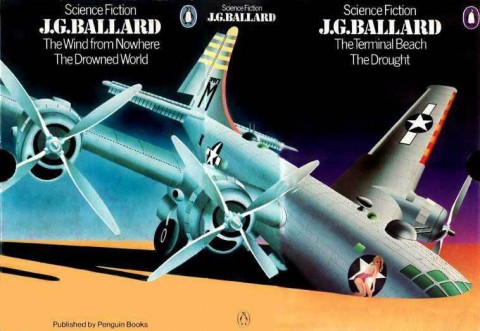
After finishing the massive collection of J. G. Ballard’s fiction, I’m cruising my Kindle, finishing off some fiction that I have started and slacked off on.

From the first time I stumbled across a description of it – I was irresistibly drawn to Ben Fountain’s collection Brief Encounters With Che Guevara. First, he is an author that shares a city with me. Originally, from North Carolina (I was born there – in the first of many burgs I lived in with the word “Fort” as its prefix) he has a law degree from Duke (where my son goes to school) and then moved to Dallas to practice real estate law.

He struggled for years before he finally was able to publish this book. Malcolm Gladwell even wrote about his delayed genius. Finally he is recognized as a great writer and has gained additional fame for articles published in the aftermath of the Haitian Earthquake (I know a little about Latin American Third World Earthquakes).

There are eight stories in the book:

  • Near-Extinct Birds of the Central Cordillera (my favorite)
  • Rêve Haitien
  • The Good Ones are Already Taken
  • Asian Tiger
  • Bouki and the Cocaine
  • The Lion’s Mouth (really excellent story of Sierra Leone and the compulsions of aid workers)
  • Brief Encounters with Che Guevara
  • Fantasy for Eleven Fingers (odd story… reminds me of Campion’s “The Piano” – even before the end)

I absolutely loved the first story – Near-Extinct Birds of the Central Cordillera – set in Columbia, a country Fountain has no experience with.

He says in an interview:

“It’s better to go. It would have been better if I had gone to Colombia, it would have been better if I had gone to Sierra Leone. You never know what you’re missing. You never know what you don’t know until you go. But you can’t always go. You don’t have unlimited time and unlimited money. And so you do the next best thing—you try to imagine yourself into these places. The way I did it was to read everything I could get my hands on and to talk to other people who might have information. If there were helpful movies or documentaries, I sought those out. I was just trying to soak it all up and imagine my way into it using that basic research and my own experience in similar places or similar situations.

I actually think his distance from Colombia helped the story. It’s the story of an ornithologist kidnapped by Colombian rebels. While in captivity he discovers a natural prize of infinite value – though nobody else really understands. In the end, it is he who does not understand. It is the confusion of the ornithologist when confronted with the fatal mysteries of the third world that forms the backbone of the story.

It is this discord between the first and third worlds… this frission when confronted with something that is older, more passionate, and raw than anything you have ever thought possible – and then the dawning of the realization that this jewel of wonder is wrapped in impenetrable layers of horror and death, doom and madness… and there isn’t anything you can do about it – that’s what it likes to be exposed to the third world.

Believe me, I know.

Fountain seems to feel this in his stories and skirts it without completely diving in – but he comes closer than most anything I’ve read since the simple Ray Bradbury story, The Highway.

I would love to read his work as it continues to mature… to see him dig closer to the heart of darkness. Unfortunately he seems to be seduced by politics and moving more away from what I want to read. We’ll see, I won’t give up on him. I won’t give up looking for what I want.

On the other hand, I guess if you want something done, if you want to read something different, maybe you have to do just dig in and do it yourself.

Addicted to Haiti by Ben Fountain

After the Earthquake, but Before the Flood  by Ben Fountain

 What to Read? Ben Fountain Recommends

Brief Encounters with Che Guevara, Ben Fountain

Hot Zones

Better Late Than Never: A Review of Ben Fountain’s Brief Encounters With Che Guevara

Finally Finished

Well, one thing about writing this thing is that I can get dates. Let’s see here it is, September 17, 2011 is when I started reading the Complete Stories of J. G. Ballard. I finished it this week… so it took me about ten months to get through the whole thing.

By no means is that the only thing I’ve read in the last year. I’d read a few stories and then jump to something else… only to return when that was done. The last week or so, though, I made a concentrated push to get through to the end.

It is a massive tome. Ninety Eight short stories, novellas, and novelettes, ending up one short of one thousand two hundred pages. The paper version weighs about four pounds and would be a real pain to carry around. Inside my Kindle, though, the weight of all those bytes is barely noticeable.

I had read a lot of these stories before. In high school, in the 1970’s I discovered his short fiction and gobbled up what I could get my paws on. What was cool about reading this now is that the stories were arranged in chronological order – so I revisited what I remembered and then continued to cruise right on past, on into the future (which now is the relatively recent past). I would look at the dates on the later stories and think of myself sitting there in 1973, and realizing what I was reading wouldn’t be written for another decade.

Since this is his complete body of work, in order, you can’t help but notice the continuing themes. The lonely, wealthy woman living alone in a crumbling estate, exerting an inexorable influence on the protagonist and the people living around him. The abandoned decadent tourist destination. The desiccated sea with dry sand waves and coral canyons. Empty swimming pools. Nature, time, and technology intersecting and reacting in unexpected, beautiful, and horrific ways…. And many more.

Near the end there are three longer works: News from the Sun, Memories of the Space Age, and Myths of the Near Future. These three, read consecutively, are fascinating companions to each other. They are essentially the same story, told with tiny shifts in attitude and points of view. They deal with the theory that man’s ventures into outer space have set loose a change in the very nature of time itself and the entire human race, in a series of events centered on the now long-abandoned Florida NASA launch sites is becoming unstuck in time. It is never clear whether this is a disaster – a punishment for shaking off our bonds, or a further leap in evolution where the human race is able to exist within and without time itself. The strong impression is that it is both.

Fascinating. Especially powerful in that, within these vast movements of irresistible forces the central theme of the stories remains the human relationships of the protagonists and how they struggle to maintain their place, their loves, their very lives.

Ballard writes:

I just tend to write whatever comes mentally to hand, and what I find interesting at a particular time. These decisions as to what one’s going to write tend to be made somewhere at the back of one’s mind, so one can’t consciously say: ‘that’s what I’m going to write’. It doesn’t work out like that! (interview in ‘J. G. Ballard: The First Twenty Years’, 1976).

I’m barely aware of what is going on. Recurrent ideas assemble themselves, obsessions solidify themselves … (interview in ‘The Paris Review’, 1984).

I feel that the writer of fantasy has a marked tendency to select images and ideas which directly reflect the internal landscapes of his mind, and the reader of fantasy must interpret them on this level, distinguishing between the manifest content, which may seen obscure, meaningless or nightmarish, and the latent content, the private vocabulary of symbols drawn by the narrative from the writer’s mind (‘Time, Memory and Inner Space’, 1963).

Some of the stories, especially some of the later ones are more experimental pieces… a skilled author showing off what he can do – pushing the boundaries of fiction. Some of these work better than others.

Vermilion Sands

Vermilion Sands

Still, I think my favorite are the Vermilion Sands stores – especially The Cloud-Sculptors of Coral D. Something about that decadent vacation spot really gets to me.

Now, the tough question. What to read next?

  • 1 • Prima Belladonna • [Vermilion Sands] • (1956) • shortstory
  • 12 • Escapement • (1956) • shortstory
  • 23 • The Concentration City • (1957) • shortstory (aka Build-Up)
  • 39 • Venus Smiles • [Vermilion Sands] • (1957) • shortstory
  • 50 • Manhole 69 • (1957) • shortstory
  • 68 • Track 12 • (1958) • shortstory
  • 72 • The Waiting Grounds • (1959) • novelette
  • 96 • Now: Zero • (1959) • shortstory
  • 106 • The Sound-Sweep • (1959) • novelette
  • 137 • Zone of Terror • (1960) • shortstory
  • 150 • Chronopolis • (1960) • novelette
  • 169 • The Voices of Time • (1960) • novelette
  • 196 • The Last World of Mr. Goddard • (1960) • shortstory
  • 208 • Studio 5, The Stars • [Vermilion Sands] • (1961) • novelette
  • 235 • Deep End • (1961) • shortstory
  • 244 • The Overloaded Man • (1961) • shortstory
  • 255 • Mr F. is Mr F. • (1961) • shortstory
  • 267 • Billennium • (1961) • shortstory
  • 279 • The Gentle Assassin • (1961) • shortstory
  • 289 • The Insane Ones • (1962) • shortstory
  • 298 • The Garden of Time • (1962) • shortstory
  • 305 • The Thousand Dreams of Stellavista • [Vermilion Sands] • (1962) • shortstory
  • 321 • Thirteen to Centaurus • (1962) • novelette
  • 339 • Passport to Eternity • (1962) • shortstory
  • 355 • The Cage of Sand • (1962) • novelette
  • 373 • The Watch-Towers • (1962) • novelette
  • 395 • The Singing Statues • [Vermilion Sands] • (1962) • shortstory
  • 405 • The Man on the 99th Floor • (1962) • shortstory
  • 412 • The Subliminal Man • (1963) • shortstory
  • 426 • The Reptile Enclosure • (1963) • shortstory
  • 435 • A Question of Re-Entry • (1963) • novelette
  • 459 • The Time-Tombs • (1963) • novelette
  • 472 • Now Wakes the Sea • (1963) • shortstory
  • 480 • The Venus Hunters • (1963) • novelette
  • 504 • End-Game • (1963) • novelette
  • 521 • Minus One • (1963) • shortstory
  • 530 • The Sudden Afternoon • (1963) • shortstory
  • 541 • The Screen Game • [Vermilion Sands] • (1963) • novelette
  • 559 • Time of Passage • (1964) • shortstory
  • 569 • Prisoner of the Coral Deep • (1964) • shortstory
  • 574 • The Lost Leonardo • (1964) • shortstory
  • 589 • The Terminal Beach • (1964) • novelette
  • 605 • The Illuminated Man • (1964) • novelette
  • 628 • The Delta at Sunset • (1964) • shortstory
  • 641 • The Drowned Giant • (1964) • shortstory
  • 650 • The Gioconda of the Twilight Noon • (1964) • shortstory
  • 658 • The Volcano Dances • (1964) • shortstory
  • 663 • The Beach Murders • (1969) • shortstory
  • 669 • The Day of Forever • (1966) • shortstory
  • 683 • The Impossible Man • (1966) • shortstory
  • 697 • Storm-Bird, Storm-Dreamer • (1966) • shortstory
  • 711 • Tomorrow is a Million Years • (1966) • shortstory
  • 720 • The Assassination of John Fitzgerald Kennedy Considered as a Downhill Motor Race • (1966) • shortstory
  • 722 • Cry Hope, Cry Fury! • [Vermilion Sands] • (1967) • shortstory
  • 735 • The Recognition • (1967) • shortstory
  • 755 • The Cloud-Sculptors of Coral D • [Vermilion Sands] • (1967) • shortstory
  • 757 • Why I Want to Fuck Ronald Reagan • (1968) • shortstory
  • 760 • The Dead Astronaut • (1968) • shortstory
  • 769 • The Comsat Angels • (1968) • shortstory
  • 781 • The Killing Ground • (1969) • shortstory
  • 788 • A Place and a Time to Die • (1969) • shortstory
  • 795 • Say Goodbye to the Wind • [Vermilion Sands] • (1970) • shortstory
  • 806 • The Greatest Television Show on Earth • (1972) • shortstory
  • 811 • My Dream of Flying to Wake Island • (1974) • shortstory
  • 820 • The Air Disaster • (1975) • shortstory
  • 828 • Low-Flying Aircraft • (1975) • shortstory
  • 841 • The Life and Death of God • (1976) • shortstory
  • 849 • Notes Towards a Mental Breakdown (1976 version) • (1976) • shortstory
  • 856 • The 60 Minute Zoom • (1976) • shortstory
  • 864 • The Smile • (1976) • shortstory
  • 873 • The Ultimate City • (1976) • novella
  • 925 • The Dead Time • (1977) • novelette
  • 940 • The Index • (1977) • shortstory
  • 946 • The Intensive Care Unit • (1977) • shortstory
  • 953 • Theatre of War • (1977) • novelette
  • 968 • Having a Wonderful Time • (1978) • shortstory
  • 972 • One Afternoon at Utah Beach • (1978) • shortstory
  • 982 • Zodiac 2000 • (1978) • shortstory
  • 989 • Motel Architecture • (1978) • shortstory
  • 1000 • A Host of Furious Fancies • (1980) • shortstory
  • 1010 • News from the Sun • (1981) • novelette
  • 1037 • Memories of the Space Age • (1982) • novelette
  • 1061 • Myths of the Near Future • (1982) • novelette
  • 1085 • Report on an Unidentified Space Station • (1982) • shortstory
  • 1090 • The Object of the Attack • (1984) • shortstory
  • 1101 • Answers to a Questionnaire • (1985) • shortstory
  • 1105 • The Man Who Walked on the Moon • (1985) • shortstory
  • 1116 • The Secret History of World War 3 • (1988) • shortstory
  • 1124 • Love in a Colder Climate • (1989) • shortstory
  • 1130 • The Enormous Space • (1989) • shortstory
  • 1139 • The Largest Theme Park in the World • (1989) • shortstory
  • 1145 • War Fever • (1989) • novelette
  • 1161 • Dream Cargoes • (1990) • shortstory
  • 1173 • A Guide to Virtual Death • (1992) • shortfiction
  • 1175 • The Message from Mars • (1992) • shortstory
  • 1184 • Report from an Obscure Planet • (1992) • shortstory
  • 1189 • The Secret Autobiography of J.G.B. • (1981) • shortstory (aka The Secret Autobiography of J. G. B******)
  • 1192 • The Dying Fall • (1996) • shortstory

Knockemstiff

After I finished Volt I moved right on into another book of short stories set in the gray area between doomed small-town America and the outskirts of hell. This one is called Knockemstiff, by Donald Ray Pollock. The eighteen stories take place from the sixties to the nineties and contain a lot of interconnected characters – all living (if you can call it living) in a small Ohio town with the odd name of Knockemstiff. It seems like a stretch of literary license to make up a name like that for a set of stories like this – but the town used to exist. The author actually grew up there. There is even a map in the front of the book – like a trailer park trashy Lord of the Rings. One woman that shows up in several stories has KNOCKEMSTIFF as a tramp-stamp tattoo.

The author says that some of the events in the stories were inspired by stuff he saw – but the real inspiration was the decades he spent as a blue collar worker  – a meatpacking plant and thirty years at a paper mill. After three marriages and four stints in rehab he quit work to write.

The first story, about a boy with a drunken, violent father, who gets the both of them in a nasty fistfight in the concession stand of the Torch Drive-in movie theater during a showing of Godzilla. It was pretty horrific in its details – the kid’s father drinking whiskey from the car’s ashtray and wiping the sweat off his head with a paper bag – but it was well-written and effective and not too over the top.

Now then, though, the second story, Dynamite Hole… well, to say it was over the top is a bit of an understatement. These are not stories for the easily offended or the weak of heart. Dynamite Hole is a true journey to the heart of perversion and hopeless doom. Do not read this book if you don’t have a strong stomach and a good sense of the separation between fact and fiction.

Now, I really liked this book. That does not make me a bad person. This is a fiction, these are lies. Even if the town once existed – this stuff did not really happen like this (I hope). It is a set of horrific tales about the dregs of human scum… all of which somehow end up in the same tiny hamlet – soon to become a well-deserved ghost town. Maybe sharing a read with these folks makes me feel a little bit better about my own flaws… I don’t know. It’s well written, interesting, entertaining – that’s good enough for me.

Even the titles of the stories seem to seep with quiet disaster.

  • Real Life
  • Dynamite Hole
  • Knockemstiff
  • Hair’s Fate
  • Pills
  • Giganthomachy
  • Schott’s Bridge
  • Lard
  • Fish Sticks
  • Bactine
  • Discipline
  • Assailants
  • Rainy Sunday
  • Holler
  • I Start Over
  • Blessed
  • Honolulu
  • The Fights

Minor characters in one story turn out to be the protagonists in another. I thought of going through one more time and making a chart of who was related to whom and who did what and what nasty end they came to. But before I could get started, I decided I didn’t really want to spend that much time with these people… at least not right now.

Despite the deep horrific lives these folks live – the Bactine huffing, the living for years in abandoned cars out in the woods, the tons of stuff I won’t even write them down here – there are moments of hope and redemption. In one of the last stories, Blessed, a father is driving with his family into the city so his wife can sell some blood (he can’t sell any because of the hepatitis). The father’s promising burglary career as a second story man was destroyed when he fell off the roof of a pharmacy in the middle of the night. The little family road trip goes about as horribly wrong as possible. What really bother’s him, though, is the fact that he has come to realize that his son is mute. When they return home, his wife won’t let him back into the house until he cleans up (for well-deserved reasons).

As he peers into the window, he sees and hears his son talking excitedly to his wife, the boy’s mother. He isn’t mute – he only refuses to speak in the presence of his dad. The father takes this as a good sign and determines to go on, as best he can.

Such is life in Knockemstiff.

 Gothic Hillbilly Noir?

Winosburg, Ohio

‘Knockemstiff’ Writer Pulls No Punches

REVIEW OF KNOCKEMSTIFF BY DONALD RAY POLLOCK

The Action of Grace in Territory Held Largely by the Devil

I have been working my way through the stories in Knockemstiff, a collection by Donald Ray Pollock. The characters in the tales are unrelenting losers – it’s harrowing. You would never want to meet these people and shouldn’t care when they meet their inevitable doom. The stories are not for the faint of heart (I’ll write about the book itself in a few days).

Yet, you do care. The stories do work.

In researching the literature I came across a quote from Flannery O’Connor. This make sense, she was a master of the grotesque and the sacrificial outsider. Knockemstiff is in Ohio, not the South of O’Connor’s milieu – but there is a kinship.

The piece I read had a quote:

From my own experience in trying to make stories “work,” I have discovered that what is needed is an action that is totally unexpected, yet totally believable, and I have found that, for me, this is always an action that indicates that grace has been offered. And frequently it is an action in which the devil has been the unwilling instrument of grace. This is not a piece of knowledge that I consciously put into my stories; it is a discovery that I get out of them. 

And this is it in a nutshell. That’s some of the best advice on fiction I’ve read in a long time.

The quote came from a book, Mystery and Manners – Occasional Prose, Selected and Edited by Sallay and Robert Fitzgerald.

An expanded selection reads:

To insure our sense of mystery, we need a sense of evil which sees the devil as a real spirit who must be made to name himself, and not simply to name himself as vague evil, but to name himself with his specific personality for every occasion. Literature, like virtue, does not thrive in an atmosphere where the devil is not recognized as existing both in himself and as a dramatic necessity for the writer. 

We are now living in an age which doubts both fact and value. It is the life of this age that we wish to see and judge. The novelist can no longer reflect a balance from the world he sees around him; instead, he has to try to create one. It is the way of drama that with one stroke the writer has both to mirror and to judge. When such a writer has a freak for his hero, he is not simply showing us what we are, but what we have been and what we could become. His prophet-freak is an image of himself. 

In such a picture, grace, in the theological sense, is not lacking. There is a moment in every great story in which the presence of grace can be felt as it waits to be accepted or rejected, even though the reader may not recognize this moment. 

Story-writers are always talking about what makes a story “work.” From my own experience in trying to make stories “work,” I have discovered that what is needed is an action that is totally unexpected, yet totally believable, and I have found that, for me, this is always an action that indicates that grace has been offered. And frequently it is an action in which the devil has been the unwilling instrument of grace. This is not a piece of knowledge that I consciously put into my stories; it is a discovery that I get out of them. 

I have found, in short, from reading my own writing, that my subject in fiction is the action of grace in territory held largely by the devil. 

I have also found that what I write is read by an audience which puts little stock either in grace or the devil. You discover your audience at the same time and in the same way that you discover your subject; but it is an added blow.

There is another sentence in there that I had to think about, think about hard….

There is a moment in every great story in which the presence of grace can be felt as it waits to be accepted or rejected, even though the reader may not recognize this moment. 

And there is the lesson for a writer. Even in the most terrible of circumstances and even with the most degenerate of characters there is a moment where grace is offered, and the story happens in the next split second… when the offer is accepted or rejected.

I have been digging through stories that I have read, looking for that moment… and usually finding it.

I have added, right at the top, of the notes I use to develop a story idea, “Where is the grace offered, how is it felt, and why is it accepted or rejected.”

There is always more to be learned. That’s why we get out of bed in the morning.

Volt

I had a little money left over on an Amazon.com gift card and began to choose some Kindle books. I picked up a couple of short story selections, Knockemstiff, by Donald Ray Pollock and Volt, by Alan Heathcock. Pretty much by a flip of the coin, I read Volt first.

Volt has eight semi-connected longish short stories. Right off the bat, the description of a farmer accidentally killing his son while tilling a field resonated with me. I’m a father and have spent a little time on a tractor seat bouncing in the heat and dust, watching a mile-distant fence line slowly, inexorably approach.  That awful scene was enough to justify the price of the book and the time to read it. I thought that first story could have ended after those two pages.

It didn’t though, as the father, destroyed by the accident and jolted by a near miss with a freight train – runs away. And runs and runs and runs – putting Forest Gump to shame. He ends up wiping his life away and building a new one, of sorts. It’s a journey worthy of Odysseus, and likewise, he finds that home is not what it used to be. Too much water under the bridge.

The stories are all small-town Gothic. They are set in the hopeless wide-spot-in-the-road of Krafton… an imaginary town. Trust me as one who knows – there are a lot of Kraftons out there. One hell of a lot. These are forgotten hamlets where everyone with any ambition or brains left town long ago – leaving the impression that the remaining conscripts – imprisoned by tradition, lack of imagination, and ennui – exist simply to work their way back down the evolutionary chain. There is even a Biblical Flood – though plenty of unworthy survive.

There is one hopeful character, Sheriff Helen Farraley, a plump middle-aged former grocery store manager pressed into service to combat evil no mortal should have to face. Her decisions seem insane, until you try to see her world through those eyes.

At the end of the finely crafted book, I felt I knew the doomed citizens of Krafton, and hoped somehow, someday they find the redemption that they deserve, even if they don’t see it or don’t chose it for themselves.

Now, on to Knockemstiff.

New York Times Review – Stories of Small-Town Strife

‘Volt’ writer Alan Heathcock’s internal duality fuels his gripping prose and creates his epic stories

‘Volt’: Stories for Mourning, After A Nameless Loss

BOOK REVIEW: Alan Heathcock

Bookslut – VOLT BY ALAN HEATHCOCK

The Best American Noir of the Century

The Kindle is like crack. Every day I get an email with the “Deal of the Day,” and every day I need to figure out how I am going to resist. It isn’t the money – these books go from ninety nine cents up to, say four bucks. It isn’t the space, either. My Kindle can hold a small library in its memory and what it won’t hold Amazon will store out in the clouds. It’s simply time. There are too many books and life is too short and time is running out too fast.

Sometimes, though, I can’t resist. I buy and I read.

One temptation given in to was a big book that came in for a one-day sale… I think it was $1.99 or so.

I love big, thick anthologies of short stories. Especially with time so short and life so mixed-up and confusing, the ability to scrape up a few spare minutes and read a whole story – complete in and of itself – no remembering galaxies of characters, confused clusters of settings, and subtle plot threads that weave and waft through the delicate tapestry of a novel… one shot, simple, fast, powerful. Give me a tome with twenty or thirty or more of these miniature jewels and I’m a happy camper.

The buck ninety-nine deal came in over the ether for purchase of the Best American Noir of the Century. Couldn’t resist – hit the “buy with one click” button and it was mine.

Reading it took a little longer. It had 39 stories, so it took a few days to plow through. The stories covered about 83 years and were in chronological order. Noir isn’t really a genre, more like an attitude, and you could feel how the stories changed over time.

The book is 800 pages… which made me glad that it was only some bits stored in the Kindle memory. That’s a lot lighter.

There is a lot of criticism of this anthology… mostly concerning the meaning of the term Noir. A lot of folks take Noir to be a hardboiled detective novel. They are disappointed because, although there are some classics in the collection, it takes a broader view of Noir and includes some stories with supernatural elements and other borderline tales.

That’s fine with me. I was surprised to find that I liked some of the more offbeat, longer, and modern riffs. I recommend the anthology highly… it’s the kind of thing you will like if you like that kind of thing.

Like any group of thirty nine tales, the offerings can be a little uneven. Some folks will like stories I didn’t… but here are a few that stood out in my mind:

Harlan Ellison: 1993: Mefisto in Onyx – Harlan Ellison, not surprisingly, comes up with a loose, weird, caterwauling tale that isn’t what it seems to be and then it turns out not to be that either. Surprising and entertaining.

Ed Gorman: 1995: Out There in the Darkness – Inspired the book and film, “The Poker Club.” The opposite of Mefisto in Onyx… a tale of four ordinary guys, folks you know and love trapped in a cycle of escalating violence.

Elmore Leonard: 2002: When The Women Come Out to Dance – Fantastic tale about a relationship between two women that turns out to be the opposite of what it seems.

Christopher Coake: 2003: All Through the House – One of the best stories I’ve read in a while. A unique structure, told in a series of short, clear scenes in reverse chronological order. Despite it descending into the past, every new section brings an unknown revelation. At the end, you are left devastated by what you know will come to destroy the innocent doomed characters.

Steve Fisher: 1938 You’ll Always Remember Me – Probably my favorite of the older works. A classic Noir.

Joyce Carol Oates: 1997: Faithless – A dark tale that, not surprisingly, reads like the best literature.

Oh, and there is a lot more, famous authors: James M. Cain, Mickey Spillane, Jim Thompson, Patricia Highsmith, James Ellroy, James Lee Burke. Each story is prefaced with a biography of the author – these can be as great a revelation as the fiction.

It makes me want to read more from some of these folks. Thats more like heroin.