What I learned this week, February 28, 2014

I have written below about a presentation I attended concerning a small piece of freeway near Dallas’ Downtown. It was an important and interesting meeting, but what I wrote about it goes on a little long, and I wanted to write a little about what I think is the real crux of the matter.

I’ll write more at length about it later, I need to do some thinking and some research and some more thinking first.

This is the speaker, traffic planner Ian Lockwood’s presentation. Watch the whole thing. His talk should be available on youtube soon.

What jumped at me in particular were two slides (13 and 14 in the presentation). The first, printed from a book, was this statement:

In his 1911 book The Prinicples of Scientific Management, Frederick Winslow Taylor, a pioneer in the efficiency movement, wrote: “The goal of human labor and thought is efficiency. Technical calculation is in all respects superior to human judgement, in fact human judgement cannot be trusted because it is pagued by laxity, ambiguity and unnecessary complexity. Subjectivity is an obstacle to clear thinking…. That which cannot be measured either does not exist or is of no value….The affairs of citizens are best guided and conducted by experts.”

The bolded part of the quote was underlined, with a handwritten note and arrow that said, “THE BEGINNING OF THE END.”

The bullet at the bottom of the slide emphasized the point, “That which cannot be measured either does not exist or is of no value….The affairs of citizens are best guided and conducted by experts.

This is contrasted to the next slide, which is a quote by Thomas Jefferson:

“I know no safe depository of the ultimate powers of the society but the people themselves. And if we think them not enlightened enough to exercise their control with a wholesome discretion, the remedy is not to take it from them, but to inform their discretion.”

Thomas Jefferson September 28, 1820

The contrast, the frisson between the two ways of looking at the world illuminated by these quotes is an amazing concept. If I learned nothing else, this was worth taking the train downtown after work.


I-345 near downtown Dallas

I-345 near downtown Dallas

Dallas has this nasty, falling down 1.4 miles of freeway on the east side of downtown. It’s name is I-345, though nobody knows that. It is an elevated monstrosity that is an ugly barrier between the city center and Deep Ellum.

It also needs replacing. A movement is growing to remove the freeway instead of rebuilding it.

How Dallas is Throwing Away $4 Billion

The more I thought about that idea – the more sense it made.

Of course, the government has no imagination and soon, this headline came out.

TxDOT to Repair, Not Tear Down I-345: Lipstick on a Traffic-Fed Pig?
TxDOT tells Dallas it will repair and not remove the highway separating Deep Ellum and downtown
TxDOT has decided to keep the highway separating Deep Ellum and downtown, but Mayor Rawlings hasn’t

This pissed a lot of people in Dallas off, including me.

So I found out about a meeting at D Magazine (Great write-up about it here) with a presentation on how the modern American Urban High Speed traffic system is killing the city. I sent off for a ticket and rode the train downtown after work. I was more than a little ragged after a tough day at work and felt out of place – but the talk by Ian Lockwood was more than interesting.

They were taping the talk and I think I heard someone say it would be going onto Youtube. I’ll put it on here if I find it, but in the meantime, this one covers most of what he said. I know it’s long, but take the time to watch it if you can, it’s a revelation.

Here’s another photo I took of a typical day on I-345

Car fire just north of downtown, Dallas.

Car fire just north of downtown, Dallas.


Hall & Oates “Rich Girl” wasn’t about a girl after all.

I feel as if I have been living a lie all my life.

“Daryl wrote it,” John confessed, talking about his other musical half. “It was about a guy who was the heir to a fast food fortune.” We can’t help but feel like everything we know in life is a lie now. “He realized ‘Rich Girl’ sounded a lot better than ‘Rich Guy.’”


11 Books That Will Definitely Disturb You


This is an interesting list – there are some amazingly strange films on this. And they all can be piped directly into your living room.

The 50 Best Movies on Netflix Instant (My Version)


10 Awesome Bottle Openers

What I learned this week, December 07, 2013

The 10 most crucial books of the year.


The 20 Best Craft Breweries of 2013


What do you call a machine that hangs out with musicians?


100 Notable books of 2013 – From the New York Times, edited (reduced down) by me.

FICTION & POETRY

THE ACCURSED. By Joyce Carol Oates. (Ecco/HarperCollins, $27.99.) Oates’s extravagantly horrifying, funny and prolix postmodern Gothic novel purports to be the definitive account of a curse that infected bucolic Princeton, N.J., in 1905 and 1906.

BLEEDING EDGE. By Thomas Pynchon. (Penguin Press, $28.95.) Airliners crash not only into the twin towers but into a shaggy-dog tale involving a fraud investigator and a white-collar outlaw in this vital, audacious novel.

THE CIRCLE. By Dave Eggers. (Knopf/McSweeney’s, $27.95.) In a disturbing not-too-distant future, human existence flows through the portal of a company that gives Eggers’s novel its title.

CLAIRE OF THE SEA LIGHT. By Edwidge Danticat. (Knopf, $25.95.) Danticat’s novel is less about a Haitian girl who disappears on her birthday than about the heart of a magical seaside village.

THE COLOR MASTER: Stories. By Aimee Bender. (Doubleday, $25.95.) Physical objects help Bender’s characters grasp an overwhelming world.

THE DINNER. By Herman Koch. Translated by Sam Garrett. (Hogarth, $24.) In this clever, dark Dutch novel, two couples dine out under the cloud of a terrible crime committed by their teenage sons.

DIRTY LOVE. By Andre Dubus III. (Norton, $25.95.) Four linked stories expose their characters’ bottomless needs and stubborn weaknesses.

DISSIDENT GARDENS. By Jonathan Lethem. (Doubleday, $27.95.) Spanning 80 years and three generations, Lethem’s novel realistically portrays an enchanted — or disenchanted — garden of American leftists in Queens.

DOCTOR SLEEP. By Stephen King. (Scribner, $30.) Now grown up, Danny, the boy with psycho-intuitive powers in “The Shining,” helps another threatened magic child in a novel that shares the virtues of King’s best work.

DUPLEX. By Kathryn Davis. (Graywolf, $24.) A schoolteacher takes an unusual lover in this astonishing, double-hinged novel set in a fantastical suburbia.

THE FLAMETHROWERS. By Rachel Kushner. (Scribner, $26.99.) In Kushner’s frequently dazzling second novel, an impressionable artist navigates the volatile worlds of New York and Rome in the 1970s.

THE GOLDFINCH. By Donna Tartt. (Little, Brown, $30.) The “Goldfinch” of the title of Tartt’s smartly written Dickensian novel is a painting smuggled through the early years of a boy’s life — his prize, his guilt and his burden.

THE GOOD LORD BIRD. By James McBride. (Riverhead, $27.95.) McBride’s romp of a novel, the 2013 National Book Award winner, is narrated by a freed slave boy who passes as a girl. It’s a risky portrait of the radical abolitionist John Brown in which irreverence becomes a new form of ­homage.

A GUIDE TO BEING BORN: Stories. By Ramona Ausubel. (Riverhead, $26.95.) Ausubel’s fantastical collection traces a cycle of transformation: from love to conception to gestation to birth.

I WANT TO SHOW YOU MORE: Stories. By Jamie Quatro. (Grove, $24.) Quatro’s strange, thrilling and disarmingly honest first collection draws from a pool of resonant themes (Christianity, marital infidelity, cancer, running) in agile ­recombinations.

MADDADDAM. By Margaret Atwood. (Nan A. Talese/Doubleday, $27.95.) The survivors of “Oryx and Crake” and “The Year of the Flood” await a final showdown, in a trilogy’s concluding entry.

METAPHYSICAL DOG. By Frank Bidart. (Farrar, Straus & Giroux, $24.) To immerse oneself in these poems is to enter a crowd of unusual characters: artistic geniuses, violent misfits, dramatic self-accusers (including the poet himself).

THE SON. By Philipp Meyer. (Ecco/Harper­Collins, $27.99.) Members of a Texas clan grope their way from the ordeals of the frontier to celebrity culture’s absurdities in this masterly multigenerational saga.

THE SOUND OF THINGS FALLING. By Juan Gabriel Vásquez. Translated by Anne McLean. (Riverhead, $27.95.) This gripping Colombian novel, built on the country’s tragic history with the drug trade, meditates on love, fate and death.

TENTH OF DECEMBER: Stories. By George Saunders. (Random House, $26.) Saunders’s relentless humor and beatific generosity of spirit keep his highly moral tales from succumbing to life’s darker aspects.

WANT NOT. By Jonathan Miles. (Houghton Miff­lin Harcourt, $26.) Linking disparate characters and story threads, Miles’s novel explores varieties of waste and decay in a consumer world.

NONFICTION

THE AMERICAN WAY OF POVERTY: How the Other Half Still Lives. By Sasha Abramsky. (Nation Books, $26.99.) This ambitious study, based on Abramsky’s travels around the country meeting the poor, both describes and prescribes.

THE CANCER CHRONICLES: Unlocking Medicine’s Deepest Mystery. By George Johnson. (Knopf, $27.95.) Johnson’s fascinating look at cancer reveals certain profound truths about life itself.

ECSTATIC NATION: Confidence, Crisis, and Compromise, 1848-1877. By Brenda Wine­apple. (Harper, $35.) A masterly Civil War-era history, full of foiled schemes, misfired plans and less-than-happy ­endings.

THE FARAWAY NEARBY. By Rebecca Solnit. (Viking, $25.95.) Digressive essays, loosely about storytelling, reflect a difficult year in Solnit’s life.

FIVE DAYS AT MEMORIAL: Life and Death in a Storm-Ravaged Hospital. By Sheri Fink. (Crown, $27.) The case of a surgeon suspected of euthanizing patients during the Katrina disaster.

THE GUNS AT LAST LIGHT: The War in Western Europe, 1944-1945. By Rick Atkinson. (Holt, $40.) The final volume of Atkinson’s monumental war trilogy shows that the road to Berlin was far from smooth.

THE RIDDLE OF THE LABYRINTH: The Quest to Crack an Ancient Code. By Margalit Fox. (Ecco/HarperCollins, $27.99.)Focusing on an unheralded but heroic Brooklyn classics professor, Fox turns the decipherment of Linear B into a detective story.

THE SKIES BELONG TO US: Love and Terror in the Golden Age of Hijacking. By Brendan I. Koer­ner. (Crown, $26.) Refusing to make ’60s avatars of the unlikely couple behind a 1972 skyjacking, Koerner finds a deeper truth about the nature of extremism.

THE SLEEPWALKERS: How Europe Went to War in 1914. By Christopher Clark. (Harper, $29.99.) A Cambridge professor offers a thoroughly comprehensible account of the polarization of a continent, without fixing guilt on one leader or nation.

THOSE ANGRY DAYS: Roosevelt, Lindbergh, and America’s Fight Over World War II, 1939-1941. By Lynne Olson. (Random House, $30.) The savage political dispute between Roosevelt and the isolationist movement, presented in spellbinding detail.

TO SAVE EVERYTHING, CLICK HERE: The Folly of Technological Solutionism. By Evgeny Morozov. (PublicAffairs, $28.99.) Digital-age transparency may threaten the spirit of democracy, Morozov warns.

THE UNWINDING: An Inner History of the New America. By George Packer. (Farrar, Straus & Giroux, $27.) With a nod to John Dos Passos, Packer offers a gripping narrative survey of today’s hard times; the 2013 National Book Award winner for nonfiction.


Mentally Strong People: The 13 Things They Avoid


5 Jobs with the Worst Bosses

Between Candy and I, we have three of the five covered.


Inside the Box

People don’t actually like creativity.

What I learned this week, April 26, 2013

The Worst #1 songs of the 1980’s

The Worst #1 songs of the 1970’s

The Worst #1 songs of the 1960’s

Music is definitely getting worse over the years. There are a couple on the 1960’s list that I thought were pretty good songs (Downtown, Windy) but the other two…. Well, there’s one on the 1980’s that has sentimental value for me (Mickey, I can’t believe that made #1 – it really does suck) but otherwise that is a bunch of rank music. I would imagine that the 90’s and the ought’s would be even worse. What even makes a #1 song anymore anyway?


Creatures of Coherence: Why We’re So Obsessed With Causation


The Revolutionary Effect of the Paperback Book

This simple innovation transformed the reading habits of an entire nation


First Impressions are important.

It’s everybody’s nightmare to have a bad first day on the job. No matter how bad yours was – it was better than this guy’s.

It was also, of course, his last day on the job.


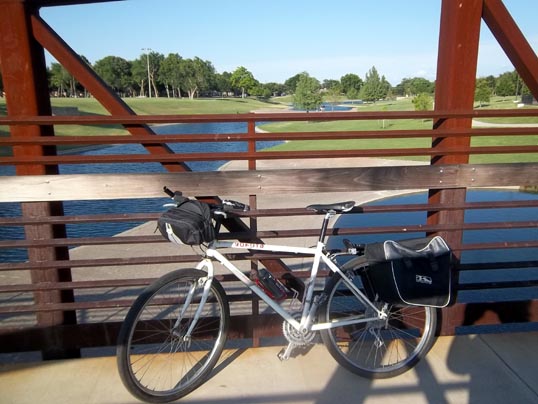
My road bike - an ancient Raleigh Technium.

My road bike – an ancient Raleigh Technium.

Seven Health Problems Eased by Exercise

Magazine Street, New Orleans

Magazine Street, New Orleans


I didn’t make it to this beer festival in Fort Worth – I still haven’t completely recoverd from the Big One at Fair Park a couple of weeks ago… But had I realized it was sponsored by Paste Magazine – one of my favorite things, I might have made the trip.

A big shout out to Lakewood Brewing (located only a couple miles from where I live) in this nice writeup.

Paste Untapped – Fort Worth, Texas


Accidental engineering: 10 mistakes turned into innovation


Trammell Crow Center and the Winspear Sunscreen

Trammell Crow Center and the Winspear Sunscreen

DALLAS is known for its conservative manner, an obsession with American football and oil—not so much for its culture. But recently, that has been changing.

Dallas Art Fair Cultivating culture


The lost algorithm

I’m glad to have stumbled across this article. I actually had a teacher (seventh grade, I think) spend a day or so and taught the class how to do square roots on paper. A skill that will be very useful when the zombie apocalypse comes and our calculators stop working. Oh, and if memory serves, after learning the square root method (the same one in the linked article, I remember “bringing down the next two”), we quickly went over a way to do cube roots. Only a couple of us could do that. I don’t remember how, which is cool… because who would ever have a reason to do cube roots on paper?


Five Statistics Problems That Will Change The Way You See The World


Quick Rant: Worst Name for a Restaurant in Dallas
You’ll have to click on the link to find out.


Faulkner House Books

When I’m lucky enough to visit New Orleans I try to avoid the more obvious tourist traps. I see nothing special about the bitter Joe and greasy dough at Cafe Du Monde, rarely set foot on Bourbon Street, and try to walk out of the Quarter (or at least skirt the edges) whenever possible. Still, there is cool stuff even in the heart of touristland.

One special little spot is Pirate’s Alley. It’s a narrow passage that runs alongside the St. Louis Cathedral, connecting Jackson Square with Royal Street. History drips onto the cobblestones like Spanish Moss from an iron balcony.

Usually I like to aimlessly drift through and see what there is to see. There is usually something interesting. Once, I stumbled across a fashion shoot in the alley.

Fashion Shoot in Pirate's Alley (click to enlarge)

Fashion Shoot in Pirate’s Alley (click to enlarge)

On our last trip – I walked down Decatur from Canal, headed for Pirate’s Alley. This time I was going somewhere in particular – an unusual state for me in the Big Easy. I had realized that I had never visited Faulkner House Books – a tiny bookstore located in the alley.

What makes this store so famous is that it occupies an apartment on the lower floor where William Faulkner once lived. There, in that very space, he hammered out his first novel Soldier’s Pay, begining the transition from unknown poet to Nobel prize winning novelist.

So I crossed Jackson Square – ignoring the thick crowd of artists, musicians, tourists, and fortunetellers – strolled down the alley past the Absinthe House and pushed the doors open to the bookstore.

It’s a small place – not hard to imagine it as a tiny apartment for a young, struggling writer. It’s packed with bookcases, every inch of wall covered, plus a collection of free-standing cases.

“Can I help you?” a woman asked.

“Umm, I’m just looking.”

“Well, the rare and first editions are around the corner, and ask me if you need anything.”

I glanced and saw a well-dressed elderly gentleman delicately thumbing through the case. The woman walked over to him and began to talk about the history of each volume he was examining. I heard him talking about which editions he already had in his collection and what holes he was trying to fill.

Those books were obviously not in my price range so I moved back toward the entrance and began to peruse the ordinary mass market offerings – after all, I had to buy something. I considered picking up a Faulkner novel but decided instead on Same Place, Same Things, a book of short stories by Tim Gautreaux. A South Louisiana writer, I had read another collection of his, Welding With Children, and really liked it.

We had talked about Tim Gautreaux while walking around on our New Orleans Writing Marathon the day before. I had discovered that he had written a story, Waiting for the Evening News, (contained in the book I chose) based on a train derailment in Livingston, Louisiana in 1982. I wanted to read that story because I had worked that train derailment when I was a consultant to the Emergency Response Division of the EPA.

Paperback in hand, I waited while the other man paid for his purchases – two beautiful, large books. His bill came to just under a thousand dollars. After he left, I handed my little trade sale paperback to the woman.

“Sorry, my purchase isn’t quite as big as his,” I said.

She ignored this. “This is very good work, have you read him before?”

I said I had and told her a quick version of the story of the derailment. She smiled and rang me up.

The entrance to Faulkner House Books

The entrance to Faulkner House Books

faulkner2

Right after I took a photo of the plaque, this guy did the same thing.

Right after I took a photo of the plaque, this guy did the same thing.

He and his wife never went in the store - he just moved along, not even taking his eye out of the viewfinder.

He and his wife never went in the store – he just moved along, not even taking his eye out of the viewfinder.

An old video of the train derailment at Livingston. I worked there for a couple weeks – providing technical assistance and taking samples to help determine when the residents could return home. I’m in the video, though unrecognizable, at about the nine minute mark.

Cloud Atlas

“Our lives are not our own, from womb to tomb we are bound to others, past and present. And by each crime and every kindness, we birth our future.”—- Cloud Atlas, Sonmi 451

Near where I work, across the highway, there’s this neighborhood that’s really run down. Tucked into the NorthWest corner of the gigantic High Five interchange, there are a few square miles of apartments that are nowhere to be wandering late at night.

When they were built – I imagine in the late 1970’s – they must have been nice… full of young folks hanging around the pools, new wave music pumping out the sliding glass doors, Coors Beer and big hair everywhere. When I moved to Dallas in 1981, a lot of my friends lived in an area just like that, a few miles to the south, around Park Lane and 75. A lot like right now the economy was horrible everywhere in the country except Texas, and young folks were streaming from everywhere to get work. The difference was that interest rates were in the double digits and nobody could buy a house, so the apartment complexes were teeming with these ambitious newcomers. It was an exciting time to live in Dallas.

Within a short few years however, the interest rates dropped and all these people could suddenly buy themselves a house in the exploding northern suburbs. At the same time a new interpretation of federal law made it illegal to have a “singles apartment complex.” Rents fell below the cost of maintenance and these apartments across the city fell… and fell fast. Within a few years it was crack city. Nobody seemed to care, there was plenty of land to the north, but to me – it marked the passing of something special.

As the apartments fell into disrepair the surrounding commercial district fell too, though more slowly. There was a nice multiplex movie theater right across the highway from my work that hung on until a couple years ago – until it too went under and has been sitting vacant.

Now, though, there are stirrings of revitalization, spates of rezoning, threats of demolition of the more neglected properties, contentious City Council Meetings, rumors of big money beginning to move. And suddenly, the movie theater is renovated in an amazingly short time and reopens as a Studio Movie Grill.

I’ve been prattling on about the cycle of a neighborhood that you don’t care about because I’m thinking about the first film I saw in that Studio Movie Grill, a film unstuck in time, a movie about decay, about cycles and revitalization, about evil crimes and disaster, about friendship and love… I went down this weekend and saw Cloud Atlas.

I was eagerly awaiting this movie. The book, Cloud Atlas, was… is… arguably the best thing I’ve read. It is massive, subtle, complex, and with a unique structure. I clearly remember reading the thing and thinking, “Well, there will never be a movie done of this thing, it could never be done.” I was wrong.

You see the book consists of six separate stories – far apart in time, and in tone. They are arranged from the oldest, set onboard a sailing vessel in the South Pacific in the nineteenth century, and progress through time until the sixth one occurs in the far dystopian future. There is no transition between stories -each one ends suddenly, unexpectedly, literally in the middle of sentences and the text then jumps to the next, where the previous story appears as a work of fiction. After the far future story ends(it is the only tale told in one piece) the book winds back down, finishing the tales, one by one, until it ends where it began. The structure looks like this:

  1. The Pacific Journal of Adam Ewing
  2. Letters from Zedelghem
  3. Half-Lives: The First Luisa Rey Mystery
  4. The Ghastly Ordeal of Timothy Cavendish
  5. An Orison of Sonmi-451
  6. Sloosha’s Crossin’ an’ Ev’rythin’ After
  7. An Orison of Sonmi-451
  8. The Ghastly Ordeal of Timothy Cavendish
  9. Half-Lives: The First Luisa Rey Mystery
  10. Letters from Zedelghem
  11. The Pacific Journal of Adam Ewing

How do you do this in film? I had no idea. I waited for the movie to come out and decided to see it, on opening weekend at the new Studio Grill across from where I work. Ordinarily, I would go to one of the art-house cinemas… but we want to support the place.

I have to say that I enjoyed the Studio Movie Grill. The seat rows are set wide apart, and each seat has a swiveling table built into it. There is something enjoyably decadent about having a nice draft of wheat beer while a waitress brings you some grilled chicken during the opening trailers. It’s not cheap – but I think I’ll go back. They are building an Alamo Draft House near where we live – that sounds even better.

The film – at first I was taken aback. They solved the problem of the complex structure of the book by making it more complex. Abandoning the orderly stair-like nested structure of the book, the movie jumps willy-nilly from story to story… seemingly at random.

Soon enough, though, I realized the jumps were not random. They were stringing the scenes together by theme. This emphasizes the connections between the stories, the eternal ideas across time, and that works in a fast, visual medium. The fact that the movie jumps across such a wide swath of space-time helps in that it is never a problem to figure out where you are.

I don’t know how confusing all this is to someone that hasn’t read the book… but I don’t think you will have a problem. Of course, you could save yourself the trouble by reading the damn thing. Really, read it.

What didn’t work? Well, first, the language. It’s hard to follow sometimes, really tough to figure out what the hell they are talking about. They should have used only a taste of how the characters actually spoke… and then slipped back to contemporary English. The same handful of actors play multiple roles – and that is generally cool. The only problem is that having certain characters jump across racial lines was a bit awkward – some of the makeup is too obvious and distracting. Now, I do have to say that Hugo Weaving makes an imposing and effective evil Nurse Noakes. The credits show all the characters the major actors play (watch for one of Hugh Grant’s performances – you will not recognize him).

The connections between the stories are much more obvious in the movie than the book. Even little things – all the stories (except maybe for one) – at a moment of extreme tension and risk to the heroes – have someone smashed over the head of the bad guy unexpectedly by an off-camera rescuer. Watch for a blue glass button – it ties together the first and last stories.

So did I like it? I loved it. Not everyone will (it doesn’t look like it’s doing well at the box office). It’s a difficult movie, very long (almost three hours – which went by quickly for me), extremely ambitious – obviously an attempt to make a big-budget, big-star, big-time art house film. It’s surprisingly violent and relies a lot on its special effects. It requires work on the part of the viewer, and a lot of people don’t like that.

But in the end, I gave a damn about the characters – and that’s the important thing. The movie is different from the book – less subtle, more flashy – but in the end that’s actually a good thing. Instead of one, we have two… or more accurately, instead of six, we have twelve great stories.

What I learned this week, October 26, 2012

13 Reasons You Should Start Biking To Work

The ponds at Huffhines.

My Commute Home from Work

Since I wrote this blog entry, the weather has cooled off a bit and now I’m able to ride both to and from work. I shoot for about two to three times a week. Now, though, it’s getting dark sooner and pretty soon it’ll be dark when I leave for work and dark when I come home. I have put lights on my bike but I’ll have to think hard about fighting rush hour traffic pre-dawn and post sunset.


Alice Munro is about to have a new book of short stories come out. I’ve always said I think she is the unquestioned master of the form. Her writing is beyond language.

You can read one of the stories, “To Reach Japan” – Here.


This clip is a few years old; I remember the good old days when this is the biggest problem we had to worry about.


Kindle

Call Me Ishmael

My 6,128 Favorite Books

Joe Queenan on how a harmless juvenile pastime turned into a lifelong personality disorder.


TEXAS Tells UN Poll Watchers: Don’t Even Try It


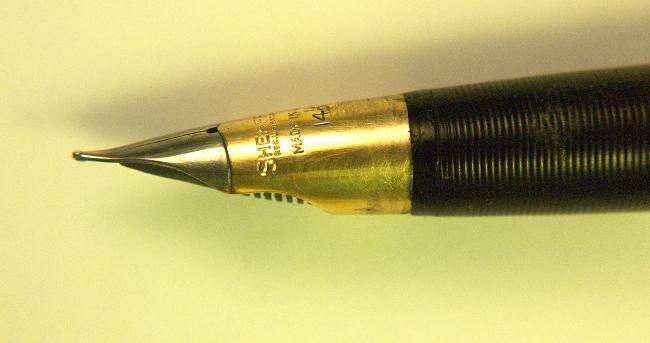
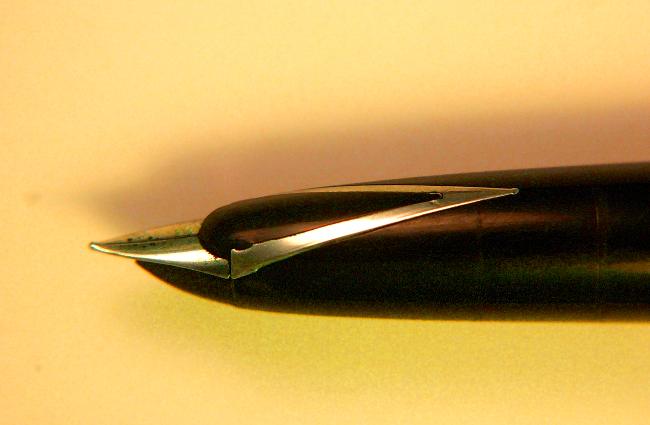
Sheaffer Inlaid Nib

Sheaffer Inlaid Nib

Notes about Notes
Fountain Pens

A surprising number of very technical people have recently re-embraced the fountain pen for everyday writing. They’re drawn to fountain pens not from nostalgia or from a desire for expensive jewelry, but because they enjoy the way the pen feels in their hand — or the way their writing looks on the page.

Sheaffer Triumph Nib

Sheaffer Triumph Nib

Sheaffer Dolphin Nib

Sheaffer Dolphin Nib


It’s nice to see an Oak Cliff Restaurant, Smoke, get this sort of attention. Nice burger too.

Best Bacon Burgers in the US – Dallas – Smoke


 ONN’s Presidential Debate Gives Average Americans Totally Unsupervised Airtime


The Rise of the DFW Brew

The Action of Grace in Territory Held Largely by the Devil

I have been working my way through the stories in Knockemstiff, a collection by Donald Ray Pollock. The characters in the tales are unrelenting losers – it’s harrowing. You would never want to meet these people and shouldn’t care when they meet their inevitable doom. The stories are not for the faint of heart (I’ll write about the book itself in a few days).

Yet, you do care. The stories do work.

In researching the literature I came across a quote from Flannery O’Connor. This make sense, she was a master of the grotesque and the sacrificial outsider. Knockemstiff is in Ohio, not the South of O’Connor’s milieu – but there is a kinship.

The piece I read had a quote:

From my own experience in trying to make stories “work,” I have discovered that what is needed is an action that is totally unexpected, yet totally believable, and I have found that, for me, this is always an action that indicates that grace has been offered. And frequently it is an action in which the devil has been the unwilling instrument of grace. This is not a piece of knowledge that I consciously put into my stories; it is a discovery that I get out of them. 

And this is it in a nutshell. That’s some of the best advice on fiction I’ve read in a long time.

The quote came from a book, Mystery and Manners – Occasional Prose, Selected and Edited by Sallay and Robert Fitzgerald.

An expanded selection reads:

To insure our sense of mystery, we need a sense of evil which sees the devil as a real spirit who must be made to name himself, and not simply to name himself as vague evil, but to name himself with his specific personality for every occasion. Literature, like virtue, does not thrive in an atmosphere where the devil is not recognized as existing both in himself and as a dramatic necessity for the writer. 

We are now living in an age which doubts both fact and value. It is the life of this age that we wish to see and judge. The novelist can no longer reflect a balance from the world he sees around him; instead, he has to try to create one. It is the way of drama that with one stroke the writer has both to mirror and to judge. When such a writer has a freak for his hero, he is not simply showing us what we are, but what we have been and what we could become. His prophet-freak is an image of himself. 

In such a picture, grace, in the theological sense, is not lacking. There is a moment in every great story in which the presence of grace can be felt as it waits to be accepted or rejected, even though the reader may not recognize this moment. 

Story-writers are always talking about what makes a story “work.” From my own experience in trying to make stories “work,” I have discovered that what is needed is an action that is totally unexpected, yet totally believable, and I have found that, for me, this is always an action that indicates that grace has been offered. And frequently it is an action in which the devil has been the unwilling instrument of grace. This is not a piece of knowledge that I consciously put into my stories; it is a discovery that I get out of them. 

I have found, in short, from reading my own writing, that my subject in fiction is the action of grace in territory held largely by the devil. 

I have also found that what I write is read by an audience which puts little stock either in grace or the devil. You discover your audience at the same time and in the same way that you discover your subject; but it is an added blow.

There is another sentence in there that I had to think about, think about hard….

There is a moment in every great story in which the presence of grace can be felt as it waits to be accepted or rejected, even though the reader may not recognize this moment. 

And there is the lesson for a writer. Even in the most terrible of circumstances and even with the most degenerate of characters there is a moment where grace is offered, and the story happens in the next split second… when the offer is accepted or rejected.

I have been digging through stories that I have read, looking for that moment… and usually finding it.

I have added, right at the top, of the notes I use to develop a story idea, “Where is the grace offered, how is it felt, and why is it accepted or rejected.”

There is always more to be learned. That’s why we get out of bed in the morning.

What I learned this week, April 20, 2012


The 21 Absolute Worst Things in The World


Actual poster from the mid-50’s issued by Senator Joseph McCarthy at the height of the Red Scare and anti communist witch hunt in Washington.


100 Essential Reads for the Lifelong Learner

All the Information in the World

In my surfing a few days ago I came across, as I’m sure you did, the news that after 244 years Encyclopedia Britannica was giving up on its print edition.

We never had Britannica in our house – it was too expensive. We had a cheaper, more “modern” looking set… I don’t remember the brand. Of course, my schools – every school (I went to… I think twelve different ones)  library had a set of Britannicas. I wasn’t a big fan of them; they seemed too stuffy for my taste. I loved the top-line World Book (which looks like it is still in print) – I remember when I discovered the transparent acetate pages that showed the human anatomy in several layers. It seemed like amazing information luxury to me.

Most kids used the various encyclopedias to plagiarize their school reports, usually cribbing the short paragraphs out verbatim.  I, on the other hand, used to read encyclopedias cover to cover, from AA, through Z, and on to devour each annual update and addendum. I loved reading them. I’d read my books at home, then I devour the ones in the school library, then on to the history sets (I loved these because they were in chronological order) and finally the long shelves of Time/Life educational books.

Sitting here, writing this, I remember the hours spent turning the pages, the slight fungus odor of the old paper, the weight of the editions as they came off the shelf, the nasty paper cuts – I remember following the footnotes and then the memory of getting to the same article in alphabetical order. I retained a surprisingly large amount of information – not sure how much good it did me. The tomes were good on dry facts but not so much on wisdom.

I am not overwhelmed with wistful nostalgic sadness, though. Plenty of people are full of woe that an age has passed and they lament the disappearance of such a totem of their youth. My thoughts run in a different direction. What I think about is what a kid that, in a vain attempt to satisfy his unquenchable curiosity, was forced to read encyclopedias cover to cover, volume to volume, could have done if he had been born a few decades later and had access to the internet. It would have been like drinking from a fire hydrant.

I’ve been seeing headlines like, “Encyclopedia Britannica killed by Wikipedia!” That is not true at all – Wikipedia is a great thing, but sometimes you want information that wasn’t written by nineteen-year-olds. There will always be a place for the verified truth.

“This has nothing to do with Wikipedia or Google,” Encyclopaedia Britannica Inc. President Jorge Cauz said. “This has to do with the fact that now Britannica sells its digital products to a large number of people.”

The top year for the printed encyclopedia was 1990, when 120,000 sets were sold, Cauz said. That number fell to 40,000 just six years later in 1996, he said. The company started exploring digital publishing in the 1970s. The first CD-ROM edition was published in 1989 and a version went online in 1994.

The final hardcover encyclopedia set weighs 129 pounds and is available for sale at Britannica’s website for $1,395.

An entire set costs more than an iPad. A low-end tablet is half that.  There is an iOS app which is free, but has a $1.99 a month subscription for unlimited content.

If you went back in time to, say 1969, and said, “Hey, for half the cost of that shelf full of heavy books, I’m going to give you a little book or pad, about the size of a magazine, that you can take anywhere with you and when you touch it, the content you are looking for will appear on it, more or less instantly. It will be in full color, with sound and full-motion television, when appropriate. You’ll have to throw the old, paper ones away, though. To keep it updated you’ll have to pay two dollars a month. Oh, and if you need a break you can play Angry Birds on it too.”

What do you think the reaction would have been? It makes me think of Arthur C Clarke’s third law- Any sufficiently advanced technology is indistinguishable from magic. A fully loaded iPad would have looked like magic in 1969. And that’s 1969! I remember 1969. I was twelve. I was reading encyclopedias in 1969.

I wish I had had an iPad.

This is me in 1969 (or so). I look like a kid that read encyclopedias cover to cover.

#Britannica

No More Encyclopedia Britannica

The Death of the Encyclopedia

Encyclopedia Books–The End of an Era

Throw the book at ‘em

Encyclopedias and Wikis

Goodbye Britannica, We Will Miss You!

Death of a Salesman Part 2: Encyclopaedia Britannicas Going Out Of Print

Encyclopedia Britannica going 100% Digital

Britannica encyclopedia out of print but the bibles still going strong

Encyclopedia Britannica to end print editions

No More Print edition of Encyclopaedia Britannica

Encyclopaedia Britannnica RIP

WILL YOU MISS THE ENCYCLOPEDIA?

No more Encyclopedia Britannicas in book form

The World on a Shelf

Encyclopedia Britannica is going digital only.

Encyclopedia Britannica to End Print Editions

No More Encyclopaedia Britannica Books

My Encyclopedia Britannica Set is Dusty but Not Forgotten

Encyclopedia Britannica

Encyclopaedia Britannica To Stop Publishing Books After 244 Years

Goodbye Encyclopedia Britannica

My thoughts on a lost era: Encyclopedia Britannica to stop printing books

Closing the Book: Encyclopedia Britannica Goes All Digital

read / end of an era

Encyclopedia Britannica ends publication after 244 years

CHECK OUT SOME THINGS THAT ARE GOING BYE BYE

End of an encyclopedic era

Wikipedia and the Internet just killed 244-year-old Encyclopaedia Britannica

Rule Britannica

Encyclopedia Britannica Goes Out of Print

ENCYCLOPAEDIA BRITANNICA, PRINTED NO MORE

Encyclopaedia Britannica To End Print Editions

Encyclopaedia Britannica wiped out by Wikipedia, selling final print edition

Encyclopedia Britannica Goes Out of Print

La Desperada

A few weeks ago I read a book that I ordinarily would not have read. This isn’t surprising, I’m not the target audience for this genre of fiction. I volunteered to read and review the new book by the teacher of a fiction class I took a few years ago, Patricia (Pooks) Burroughs. It’s a historical romance novel called La Desperada.

I didn’t want to put this up until the book was available – you can buy the ebook here. Go ahead, get it… you know you want to. I guarantee that this is the sort of thing you will like if you like this sort of thing.

This is the second romance novel I’ve read. The first was a random thin paperback Harlequin I picked up maybe thirty years ago and read out of sheer curiosity. Don’t ask the title, it’s long lost in my memory, along with the plot, characters, theme… or anything at all about the book except my visceral reaction to it. I remember that I read it in a couple of hours, although I’m not a particularly fast reader. I was able to crank through it so quickly because, First – I had the feeling I knew what the next sentence, paragraph, scene, chapter, all of it – was going to be. And I was always right. Second, I could read it fast because there was nothing there.

I did not become a fan of the genre after that first taste.

So now I am faced with La Desperada and writing a review of a book in a genre that I simply don’t read. Luckily, La Desperada is a much, much better book that that old Harlequin. It is a Romance, but there is much more going on between the pages, and it is written with a lot more ambition, excitement, and skill.

I went to school in Lawrence, Kansas. On days when the weather was nice, I used to walk from my dorm across Iowa Street into an ancient cemetery for a nice quiet place to sit outside and study. Sometimes I would even lean against an old tombstone with a textbook in my lap. Over time, I read most of the stones – they were all victims of Quantrill’s raid – where in a prelude to the civil war a band of Missouri based outlaws came across and burned Lawrence, slaughtering a good many of the residents.

I’m familiar with the history and passion of those days of violence and banditry and was glad to read that the prologue of La Desperada was set in Clay County, Missouri and that the heart of the conflict was born from the evil that spread across the land in those days.

Then the real story begins in West Texas – the town of Cavendish in 1881. Civilization had a tenuous hold on that wild land. There was still a place for men like Clayton Dougherty – men representing the law though they were at best barely on the right side of it – and too often, on the wrong. The uneasy, unstable, and ultimately cataclysmic triangle of Clayton, his intelligent and virtuous but scarred brother Joel, and Joel’s wife Elizabeth is thrown into violence and death when an outlaw, Boone Coulter shows up.

Once the story gets going, Boone and Elizabeth are on the run together, trying to escape their doom fleeing through the rugged desert and mountains of far West Texas and the untamed frontier towns of New Mexico.

I’ve driven North from Van Horn, Texas, along the valley east of the Sierra Diablo and felt the silent menace of those ragged cliffs and heat blasted salt flats. It looks wild and dangerous, and is so, even from a minivan. I’ve hiked up McKittrick Canyon in the Guadalupe Mountains (which must be the location of Boone’s hidden cabin hideout) and seen the magical beauty that a little water and shade can create in the high desert. My favorite aspect of La Desperada is the effort, imagination, and attention to detail that Patricia injects into the romance to pay homage to the setting and the landscape. West Texas, for good and bad, becomes another character in the story, and that is a very good thing.

That is the skill and effort that elevates the story above the run-of-the-mill romance. There is a real story here, real danger, real complexity. The romantic storyline is intact and moves as expected, but beyond that there is plenty of meat to sink your teeth into.

My only complaint with the book was the sex scenes. They arrive periodically and predictably and I found myself simply skipping these sections. This is not due to any prudishness on my part – I’m up for a little titillation without any qualms. I simply found the sex scenes in La Desperada clichéd and, I’m afraid, simply unexciting. I don’t know if that is a requirement of the genre (Bodice Ripping in the Old West) or not. At any rate, jumping over a page now and then didn’t damage the story at all – so it was all good.

When you are writing about someone else’s work, it is usually a bad idea to opine about what you would like to see done differently. You should write about what the book is, not what it is not. In this case, however, I want to give my opinion; I can’t resist. There is a secondary character that works to move the story forward – he has a doomed relationship with the the outlaw’s sister – his name is Miguél Obregón. I found this flawed, dangerous, evil, yet honorable in his own way character to be the most interesting thing in the book. I would love to read a book written about the love story between him and the sister from his point of view.

That would be something.

Links:

Sample Chapter

Review from Book Babe

Review from Journey of a Bookseller

Fresh Fiction