The Effort of the Frogs

We may know that the work we continue to put off doing will be bad. Worse, however, is the work we never do. A work that’s finished is at least finished. It may be poor, but it exists, like the miserable plant in the lone flowerpot of my neighbour who’s crippled. That plant is her happiness, and sometimes it’s even mine. What I write, bad as it is, may provide some hurt or sad soul a few moments of distraction from something worse. That’s enough for me, or it isn’t enough, but it serves some purpose, and so it is with all of life.
—-Fernando Pessoa, The Book of Disquiet

Frog Fountain, Dallas Arboretum

Day after day, the frogs threw out the water, tirelessly. Mostly for the amusement of children on hot summer days, the water still flowed on overcast afternoons when nobody was there to see it. Only on the rare forecast of freezing did the caretaker turn the brass valve that stopped the arching torrent. On those days, the frogs rested.

Our Own Concept

“We never love anyone. What we love is the idea we have of someone. It’s our own concept—our own selves—that we love.”
—- Fernando Pessoa, The Book of Disquiet

Dallas Arboretum

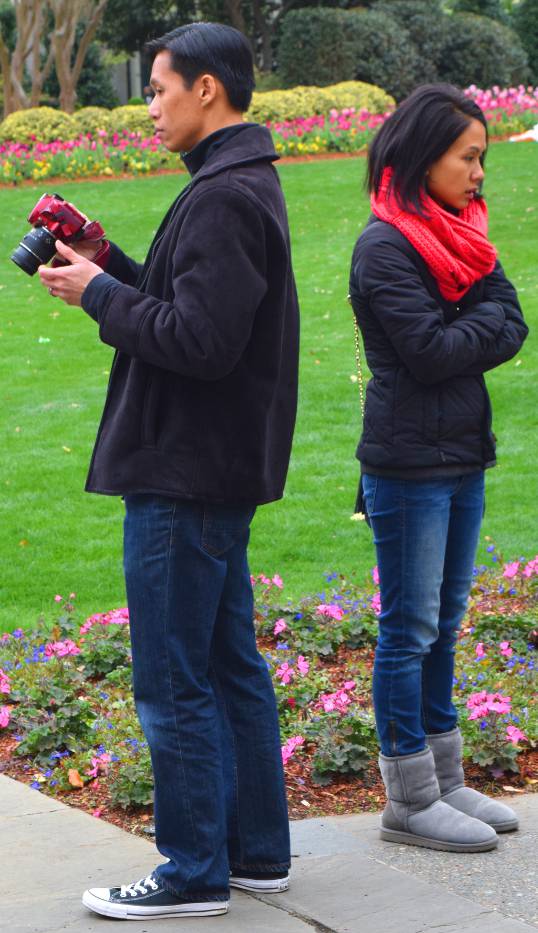
John (thinking to himself) There is nothing to take a picture of around here, especially with this camera. I can’t believe she gave me this thing, it’s got a crop sensor, every pro I’ve read about uses a full frame. And it’s red! What real photographer uses a red camera? Black is so much more professional. All these flowers? Might as well be a tourist with an old IPhone. All those awful colors. A real photographer wants dark and gritty. That’s what’s cool now.

I can’t believe how much it cost to park at this place. We could have stayed home and watched house flipping shows. The weather is so bad, overcast and cold. Who wants to be outside on a terrible day like this.

Jane (thinking to herself) He hasn’t looked at me all day, really looked. I gave him that camera, worked overtime for months to save enough for it. You’d think he’d take a picture of me. I’m wearing my Uggs – he loves it when I wear my Uggs… at least when I wear only my Uggs. Maybe that’s it. And my red scarf, the one that my aunt knitted for me. Wouldn’t it go well with the colorful flowers?

The flowers are so beautiful, especially all the tulips. They remind me of home.

I had hoped this would be a special trip. All he wants to do is to watch other people fix up houses on the television. And the weather is so beautiful, no burning Texas sun and it’s nice and cool. Who can resist a day like today?

Tarts and Tadpoles

“Tarts and tadpoles!…The boy is still alive!”

—-L. Frank Baum, Rinkitink in Oz

Tadpole Pool, Dallas Arboretum

There are few things as fascinating as tadpoles in a jar.

The tail slowly shrinks as the legs – back first, then front – appear and grow.

Does the tadpole understand what is going on? It must be frightening… to wake up in the morning (do tadpoles sleep? do they dream wet tadpole dreams?) only to find fresh, unknown appendages growing out of their body. They have a wonderful fish-like life – their precious gills – until they turn into lungs. Do they understand how they are following the evolution of their ancestors?

Of course they don’t.

Do they imagine what might come next? Do they dream of growing wings? A tadpole, like everyone, must dream of flight. What a blow it must be when they realize that they are stuck with their legs, no matter how muscular and sinewy they feel and how high and graceful their leap.

As a Bee is Caught in the Lasso of Perfume

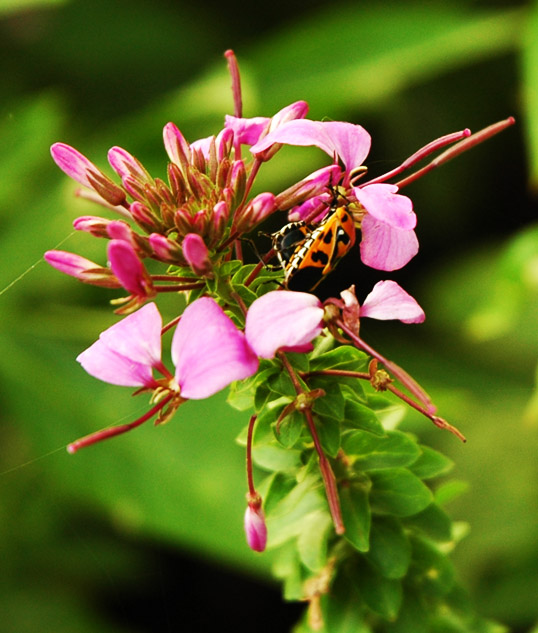
“She sat beside him on the bench, and her presence troubled him. He was inside the atmosphere, or light, or scent she spread, as a boat is inside the drag of a whirlpool, as a bee is caught in the lasso of perfume from the throat of a flower.”
― A.S. Byatt, Angels and Insects

Dallas Arboretum Dallas, Texas

Dallas Arboretum
Dallas, Texas

Who needs a macro.

More Blooms

“The breath of wind that moved them was still chilly on this day in May; the flowers gently resisted, curling up with a kind of trembling grace and turning their pale stamens towards the ground. The sun shone through them, revealing a pattern of interlacing, delicate blue veins, visible through the opaque petals; this added something alive to the flower’s fragility, to it’s ethereal quality, something almost human ,in the way that human can mean frailty and endurance both at the same time. The wind could ruffle these ravishing creations but it couldn’t destroy them, or even crush them; they swayed there, dreamily; they seemed ready to fall but held fast to their slim strong branches-…”
― Irène Némirovsky

Dallas Blooms, Dallas Arboretum

blooms4

“The beauty of that June day was almost staggering. After the wet spring, everything that could turn green had outdone itself in greenness and everything that could even dream of blooming or blossoming was in bloom and blossom. The sunlight was a benediction. The breezes were so caressingly soft and intimate on the skin as to be embarrassing.”
― Dan Simmons, Drood

Still More Blooms

“A garden to walk in and immensity to dream in–what more could he ask? A few flowers at his feet and above him the stars.”
― Victor Hugo, Les Misérables

Dallas Blooms, Dallas Arboretum

“A flower blossoms for its own joy.”
― Oscar Wilde

blooms7

“There has fallen a splendid tear
From the passion-flower at the gate.
She is coming, my dove, my dear;
She is coming, my life, my fate.
The red rose cries, “She is near, she is near;”
And the white rose weeps, “She is late;”
The larkspur listens, “I hear, I hear;”
And the lily whispers, “I wait.”

She is coming, my own, my sweet;
Were it ever so airy a tread,
My heart would hear her and beat,
Were it earth in an earthy bed;
My dust would hear her and beat,
Had I lain for a century dead,
Would start and tremble under her feet,
And blossom in purple and red.”
― Alfred Tennyson

Blooms

“You’re frustrated because you keep waiting for the blooming of flowers of which you have yet to sow the seeds.”
― Steve Maraboli

Dallas Blooms, Dallas Arboretum

blooms3

It was odd walking around the Arboretum – I kept expecting to see the Chihuly Glass and it isn’t there any more. The gorgeous colors of Dallas Blooms made up for the absence of the sculptures.

My poor picture taking talents don’t do justice. Peggy does a better job than I do.

“I stopped in front of a florist’s window. Behind me, the screeching and throbbing boulevard vanished. Gone, too, were the voices of newspaper vendors selling their daily poisoned flowers. Facing me, behind the glass curtain, a fairyland. Shining, plump carnations, with the pink voluptuousness of women about to reach maturity, poised for the first step of a sprightly dance; shamelessly lascivious gladioli; virginal branches of white lilac; roses lost in pure meditation, undecided between the metaphysical white and the unreal yellow of a sky after the rain.”
― Emil Dorian, Quality of Witness: A Romanian Diary, 1937-1944

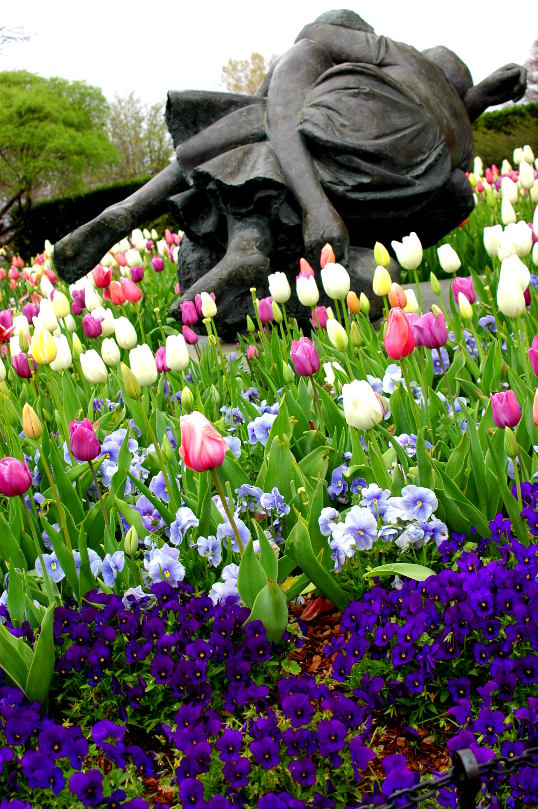
Kissing in the Tulips

blooms5

Dallas Blooms, Dallas Arboretum

blooms6

I posted an entry with pictures of this sculpture before – The Kiss.

The vegetation around it looked a lot different in July.

kiss1_1

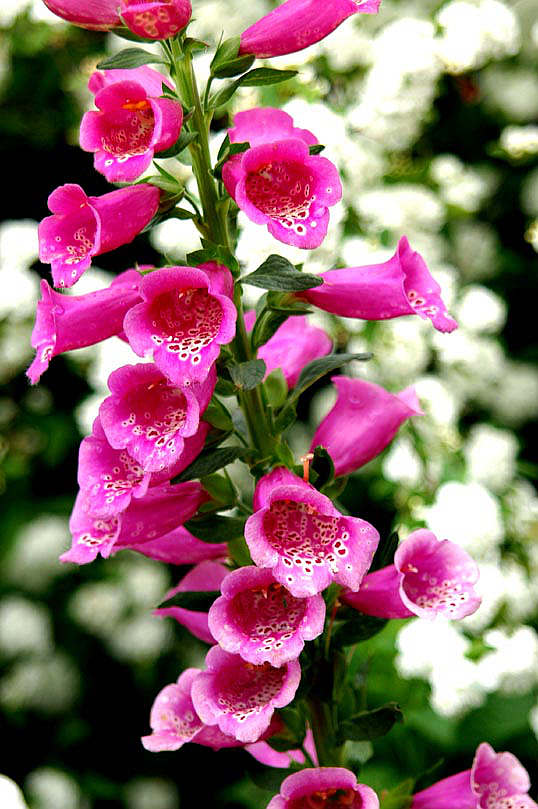
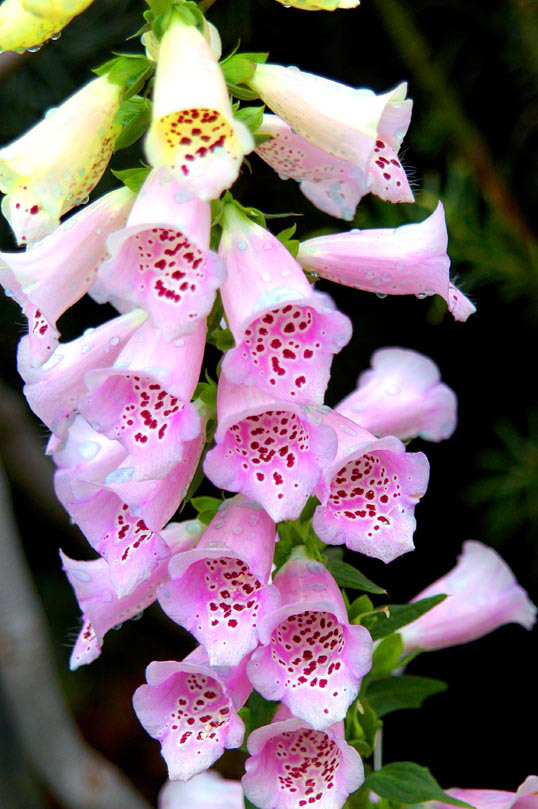
Digitalis

Dallas Blooms, Dallas Arboretum

The Foxglove now in crimson tresses rich
Depends, whose freckled bells to insect tribe
Afford a canopy of velvet bliss.

—-Wordsworth

digit3

A chemical extract from foxglove, digitalis, is both a famous deadly poison and a precious remedy for heart disease. The difference, like everything else in life, is timing and dosage.

In digitalis the gap between poison and remedy is very, very small.

digit1

How did it get its name?

According to the 19th-century book, English Botany, Or, Coloured Figures of British Plants:

Dr. Prior, whose authority is great in the origin of popular names, says “It seems probably that the name was in the first place, foxes’ glew, or music, in reference to the favourite instrument of an earlier time, a ring of bells hung on an arched support, the tintinnabulum”… we cannot quite agree with Dr. Prior for it seems quite probable that the shape of the flowers suggested the idea of a glove, and that associated with the name of the botanist Fuchs, who first gave it a botanical name, may have been easily corrupted into foxglove. It happens, moreover, the name foxglove is a very ancient one and exists in a list of plants as old as the time of Edward III. The “folks” of our ancestors were the fairies and nothing is more likely than that the pretty coloured bells of the plant would be designated “folksgloves,” afterwards, “foxglove.” In Wales it is declared to be a favourite lurking-place of the fairies, who are said to occasion a snapping sound when children, holding one end of the digitalis bell, suddenly strike the other on the hand to hear the clap of fairy thunder, with which the indignant fairy makes her escape from her injured retreat. In south of Scotland it is called “bloody fingers” more northward, “deadman’s bells” whilst in Wales it is known as “fairy-folks-fingers” or “lambs-tongue-leaves”

digit2

The Scottish doctor William Withering, while working as a physician in the 18th Century, had one of his patients come to him with a very bad heart condition and since Withering had no effective treatment for him, thought he was going to die. The patient went instead to a local gypsy, took a secret herbal remedy – and survived and improved. When the doctor found out he searched out the gypsy. The herbal remedy was made from a variety of things, but the active ingredient was the purple foxglove, digitalis purpurea.

Withering tried out various formulations of digitalis plant extracts on hundreds patients, and found that the dried, powdered leaf worked with amazing and successful results. He introduced its use officially in 1785.