Rider

“What he loved in horses was what he loved in men, the blood and the heat of the blood that ran them.”
—-Cormac McCarthy, All the Pretty Horses

Shawnee Trail Sculpture, Central Park, Frisco Texas, bronze by Anita Pauwels

“But there were two things they agreed upon wholly and that were never spoken and that was that God had put horses on earth to work cattle and that other than cattle there was no wealth proper to a man.”
—-Cormac McCarthy, All the Pretty Horses
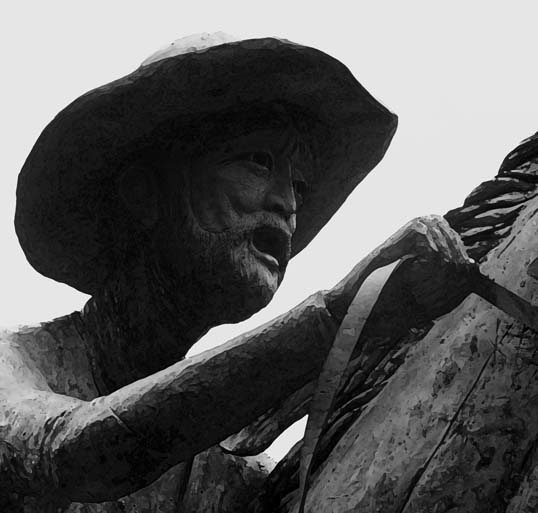
Shawnee Trail, by Anita Pauwels, Frisco, Texas

Shawnee Trail, by Anita Pauwels, Frisco, Texas

“He found he was breathing in rhythm with the horse as if some part of the horse were within him breathing and then he descended into some deeper collusion for which he had not even a name.”

“…and in his sleep he dreamt of horses and the horses in his dream moved gravely among the tilted stones like horses come upon an antique site where some ordering of the world had failed and if anything had been written on the stones the weathers had taken it away again and the horses were wary and moved with great circumspection carrying in their blood as they did the recollection of this and other places where horses once had been and would be again. Finally what he saw in his dream was that the order in the horse’s heart was more durable for it was written in a place where no rain could erase it.”

“He thought the world’s heart beat at some terrible cost and that the world’s pain and its beauty moved in a relationship of diverging equity and that in this headlong deficit the blood of multitudes might ultimately be exacted for the vision of a single flower.”

—-Cormac McCarthy, All the Pretty Horses

Gateway

I find myself working towards an art which includes a spiritual dimension. I have become increasingly aware of art as a dialogue between matter and spirit. In recent works, I have emphasized myth, symbol and dream to evoke an atmosphere in which the sculpture and its environment speak to the subconscious to make the observer aware of the dreamlike nature of life, of which we all are part.
—-Hans Van de Bovenkamp

Not too far, not very far at all, from the pile of steel boxes I wrote about yesterday, is the Arapaho DART station with another sculpture. This is a good one, by a famous sculptor, Hans Van de Bovenkamp, that you have never seen.

I’ve seen it, though. Richardson’s Central Trail – a hike-and-bike strip of concrete that runs through the city, parallel to the DART tracks and Highway 75, now being extended to the south – goes right by it. Otherwise, commuters on the bus or train never get more than a glimpse. It is exposed to the traffic going by on Greenville Avenue – but everyone is driving too fast to notice.

I didn’t look too hard and didn’t see a label or plaque. This is a public sculpture, though, so there is information on the internet. The sculpture is called Gateway, and, as I’ve said is by Hans Van de Bovenkamp. It’s painted aluminum (begining to fade a bit – might need a recoat) and is a variation of a theme of Bovenkamp – there is a bigger version in Oklahoma City.

The sculpture "Gateway" at the Arapaho DART station, Richardson, Texas.

The sculpture “Gateway” at the Arapaho DART station, Richardson, Texas.

A DART train pulls in. Arapaho Station, Gateway Sculpture

A DART train pulls in. Arapaho Station, Gateway Sculpture

Gateway, by Hans Van de Bovenkamp

Gateway, by Hans Van de Bovenkamp

Gateway, by Hans Van de Bovenkamp, Richardson, Texas

Gateway, by Hans Van de Bovenkamp, Richardson, Texas

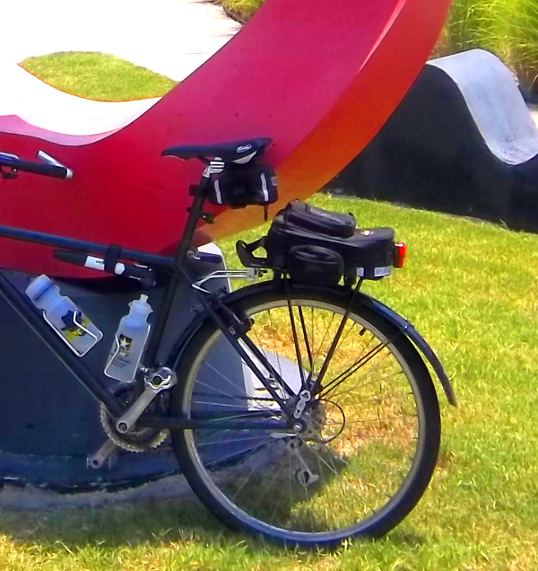
Gateway sculpture and commuter bike

Gateway sculpture and commuter bike

Steel Boxes

One of the nice things about being a fan of sculpture is that you run into it all the time – if you are able to keep moving and your eyes open.

On a bike ride the other day, I pulled over for a minute to look at a sculpture I spotted in an unexpected place. It was off of Arapaho Road, not far from the DART station – in a stretch of very unartistic industrial buildings.

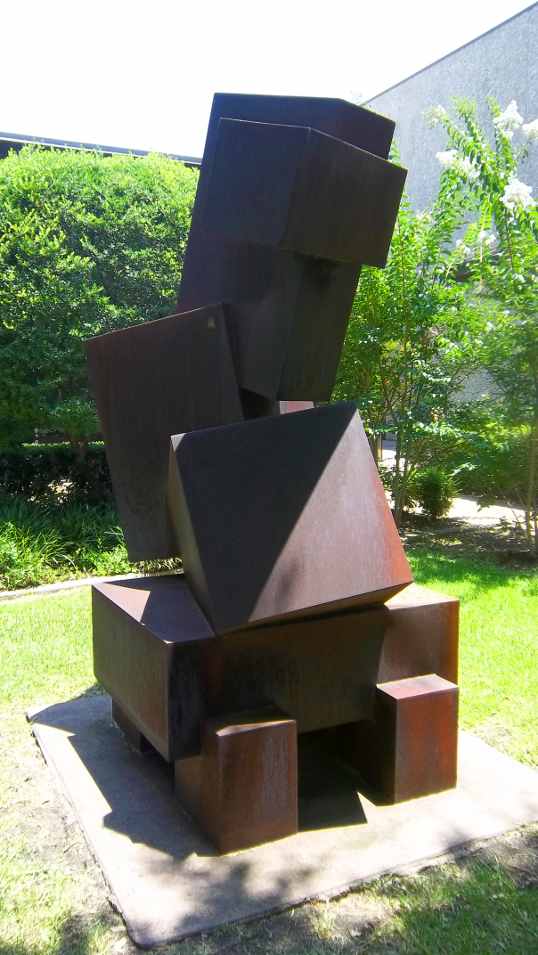
The Richardson Factory that belonged to General Packaging Corporation had a steel sculpture (probably welded of Cor-Ten) in a grassy spot next to the main entrance. You would never spot this from a car – but it’s obvious from the cockpit of a bicycle. I turned in (it was a holiday and the place was closed) and took a good look.

I was not able to find a label or plate, so I don’t know the sculpture’s name or artist. The only thing that turned up on a web search is a sculpture called Strange Romance by a sculptor from Taos named Ted Egri (he passed away a couple of years ago). I’m not sure if this is the sculpture – it doesn’t look like a Strange Romance… and the style is a little different from the rest of Ted Egri’s work.

But, the thing was obviously commissioned for the spot – the factory makes cardboard cartons and wooden boxes – the sculpture was made to commemorate the products.

At any rate – for any reason and by any artist – I liked the thing. I sipped from my water bottle and took a rest before riding on. I tipped my helmet to the folks at General Packaging for spending the money and having the thing built and installed in front of their otherwise nondescript factory. They made my day a little more pleasant… for a few minutes at least.

Sculpture at General Packaging.

Sculpture at General Packaging.

200 East Arapaho Road, Richardson, TX

200 East Arapaho Road, Richardson, TX

Sculpture and Commuter Bike. All Steel.

Sculpture and Commuter Bike. All Steel.

boxes4

Staples

Texas Sculpture Garden
Frisco, Texas

And I said, I don’t care if they lay me off either, because I told, I told Bill that if they move my desk one more time, then, then I’m, I’m quitting, I’m going to quit. And, and I told Don too, because they’ve moved my desk four times already this year, and I used to be over by the window, and I could see the squirrels, and they were married, but then, they switched from the Swingline to the Boston stapler, but I kept my Swingline stapler because it didn’t bind up as much, and I kept the staples for the Swingline stapler and it’s not okay because if they take my stapler then I’ll set the building on fire…
—- Milton, Office Space

Staples
Paul Kittelson, Houston
2001 Stainless Steel

Staples, Paul Kittelson

Staples, Paul Kittelson

“Why do people have to be this lonely? What’s the point of it all? Millions of people in this world, all of them yearning, looking to others to satisfy them, yet isolating themselves. Why? Was the earth put here just to nourish human loneliness?”
― Haruki Murakami, Sputnik Sweetheart

Staples, Paul Kittelson

Staples, Paul Kittelson

“The gods are strange. It is not our vices only they make instruments to scourge us. They bring us to ruin through what in us is good, gentle, humane, loving.”
― Oscar Wilde, De Profundis

Staples, Paul Kittelson, photograph manipulated in Corel Painter

Staples, Paul Kittelson, photograph manipulated in Corel Painter

“Sometimes you climb out of bed in the morning and you think, I’m not going to make it, but you laugh inside — remembering all the times you’ve felt that way.”
― Charles Bukowski

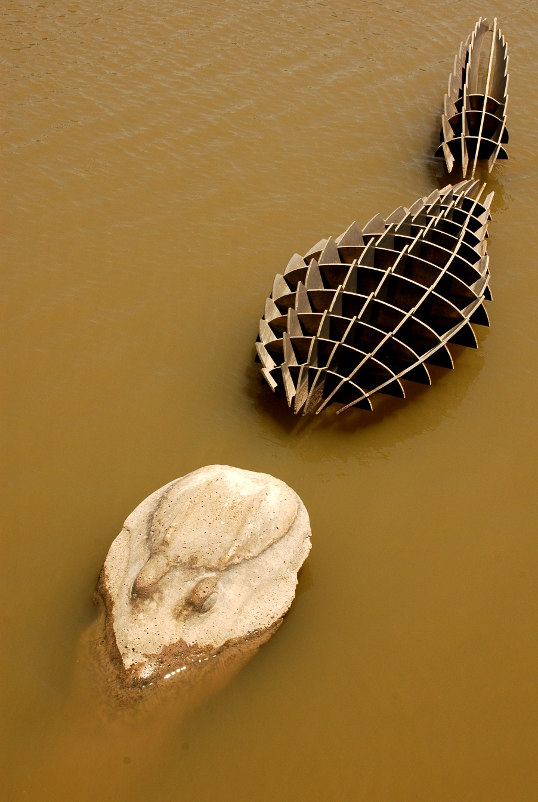
Alligator

Texas Sculpture Garden
Frisco, Texas

Alligator
Robert Tabak
American (Texas)
2003

“While he sat there he decided he would buy a waterbed. He had always imagined owning a waterbed when he was successful, but now it struck him that getting the bed might invoke the man he wanted to become. You bought a waterbed and so became the sort of man who owned a waterbed.”
― Lisa Moore, Alligator

Alligator, Robert Tabak

Alligator, Robert Tabak

“maybe humans are just the pet alligators that Gd flushed down the toilet”
—- Chuck Palahniuk

Balance

“There is no such thing as work-life balance. Everything worth fighting for unbalances your life.”
― Alain de Botton

Texas Sculpture Garden,
Frisco, Texas

Andrew Rogers
Australian
Balance
1997

“Something is always born of excess: great art was born of great terror, great loneliness, great inhibitions, instabilities, and it always balances them.”
― Anaïs Nin

Balance, Andrew Rogers

Balance, Andrew Rogers

“You are a beautiful person, Doctor. Clearheaded. Strong. But you seem always to be dragging your heart along the ground. From now on, little by little, you must prepare yourself to face death. If you devote all of your future energy to living, you will not be able to die well. You must begin to shift gears, a little at a time. Living and dying are, in a sense, of equal value.”–Nimit in “Thailand”
― Haruki Murakami, after the quake

“The fact is that nothing is more difficult to believe than the truth; conversely, nothing seduces like the power of lies, the greater the better. It’s only natural, and you will have to find the right balance. Having said that, let me add that this particular old woman hasn’t been collecting only years; she has also collected stories, and none sadder or more terrible than the one she’s about to tell you. You have been at the heart of this story without knowing it until today …”
― Carlos Ruiz Zafón, The Midnight Palace

“It seems to me what is called for is an exquisite balance between two conflicting needs: the most skeptical scrutiny of all hypotheses that are served up to us and at the same time a great openness to new ideas. Obviously those two modes of thought are in some tension. But if you are able to exercise only one of these modes, whichever one it is, you’re in deep trouble.

If you are only skeptical, then no new ideas make it through to you. You never learn anything new. You become a crotchety old person convinced that nonsense is ruling the world. (There is, of course, much data to support you.) But every now and then, maybe once in a hundred cases, a new idea turns out to be on the mark, valid and wonderful. If you are too much in the habit of being skeptical about everything, you are going to miss or resent it, and either way you will be standing in the way of understanding and progress.

On the other hand, if you are open to the point of gullibility and have not an ounce of skeptical sense in you, then you cannot distinguish the useful as from the worthless ones.”
― Carl Sagan

“The great systems that inform the world about the truth and life invariably claim to be absolutely truthful and well-balanced. In reality they are quaking bridges built out of yearning.”
― Peter Høeg, Tales of the Night

Again in the Meadows

Texas Sculpture Garden,
Frisco, Texas

James Surls
American (Colorado/Texas)
Again in the Meadows
2002

“There’s no art to find the mind’s construction in the face”
― William Shakespeare

Photographs manipulated with Corel Painter and The Gimp.

James Surls, Again in the Meadows

James Surls, Again in the Meadows

“I believe that the justification of art is the internal combustion it ignites in the hearts of men and not its shallow, externalized, public manifestations. The purpose of art is not the release of a momentary ejection of adrenaline but is, rather, the gradual, lifelong construction of a state of wonder and serenity.”
― Glenn Gould

James Surls, Again in the Meadows, plus a construction crane, a pile of dirt, and a stop sign

James Surls, Again in the Meadows, plus a construction crane, a pile of dirt, and a stop sign

The whole difference between a construction and a creation is exactly this: that a thing constructed can be loved after it is constructed; but a thing created is loved before it exists.
—- G. K. Chesterton

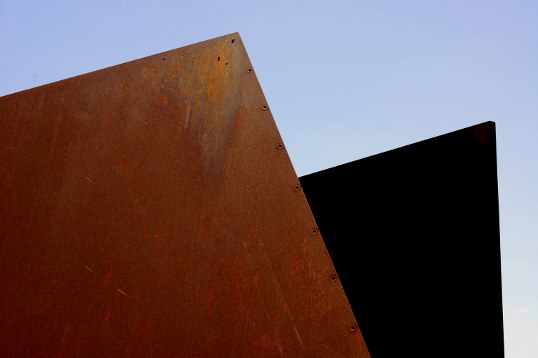
Right Angles (#23)

Texas Sculpture Garden,
Frisco, Texas

Gunner Theel American (New York)
Right Angles (#23)

Swerve me? The path to my fixed purpose is laid with iron rails, whereon my soul is grooved to run. Over unsounded gorges, through the rifled hearts of mountains, under torrents’ beds, unerringly I rush! Naught’s an obstacle, naught’s an angle to the iron way!
—-Melville, Moby Dick

right_angles2

So, so you think you can tell Heaven from Hell,
blue skies from pain.
Can you tell a green field from a cold steel rail?
A smile from a veil?
Do you think you can tell?
—-Pink Floyd, Wish You Were Here

right_angles1

We must beat the iron while it is hot, but we may polish it at leisure.
—-John Dryden

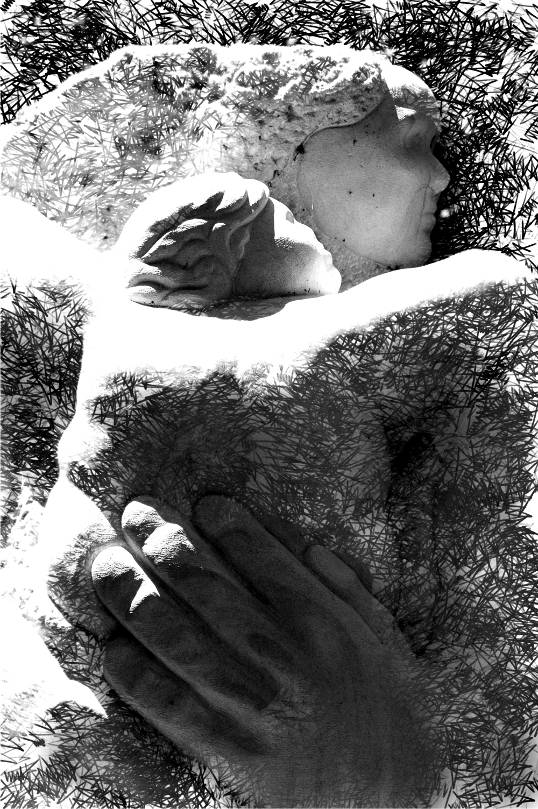
Maternal Caress

Texas Sculpture Garden,
Frisco, Texas

Eliseo Garcia, Farmers Branch
Maternal Caress
1999 Cordova Limestone

“Touch. It is touch that is the deadliest enemy of chastity, loyalty, monogamy, gentility with its codes and conventions and restraints. By touch we are betrayed and betray others … an accidental brushing of shoulders or touching of hands … hands laid on shoulders in a gesture of comfort that lies like a thief, that takes, not gives, that wants, not offers, that awakes, not pacifies. When one flesh is waiting, there is electricity in the merest contact.”
― Wallace Stegner, Angle of Repose

maternal_caress

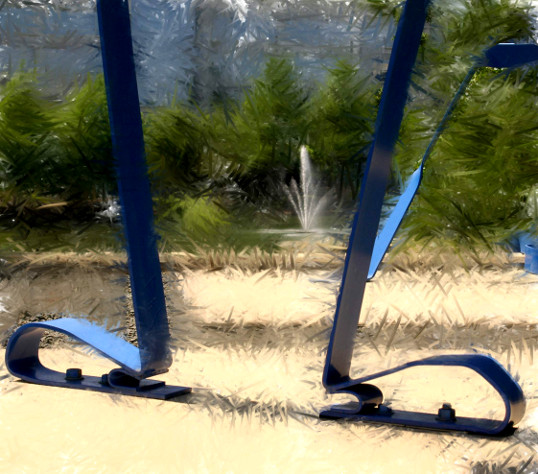
Time Management

Texas Sculpture Garden,
Frisco, Texas

Zad Roumaya, Dallas
Time Management
2004 Aluminun, Paint
In Memory of Jody Young 1978-2004

Time Management, Zad Roumaya, feet hanging over the edge

Time Management, Zad Roumaya, feet hanging over the edge

“Life was not to be sitting in hot amorphic leisure in my backyard idly writing or not-writing, as the spirit moved me. It was, instead, running madly, in a crowded schedule, in a squirrel cage of busy people. Working, living, dancing, dreaming, talking, kissing — singing, laughing, learning. The responsibility, the awful responsibility of managing (profitably) 12 hours a day for 10 weeks is rather overwhelming when there is nothing, noone, to insert an exact routine into the large unfenced acres of time — which it is so easy to let drift by in soporific idling and luxurious relaxing. It is like lifting a bell jar off a securely clockwork-like functioning community, and seeing all the little busy people stop, gasp, blow up and float in the inrush, (or rather outrush,) of the rarified scheduled atmosphere — poor little frightened people, flailing impotent arms in the aimless air. That’s what it feels like: getting shed of a routine. Even though one had rebelled terribly against it, even then, one feels uncomfortable when jounced out of the repetitive rut. And so with me. What to do? Where to turn? What ties, what roots? as I hang suspended in the strange thin air of back-home?”
― Sylvia Plath, The Unabridged Journals of Sylvia Plath

Time Management, Zad Roumaya, feet

Time Management, Zad Roumaya, feet

“Thirty years ago my older brother, who was ten years old at the time, was trying to get a report written on birds that he’d had three months to write, which was due the next day. We were out at our family cabin in Bolinas, and he was at the kitchen table close to tears, surrounded by binder paper and pencils and unopened books about birds, immobilized by the hugeness of the task ahead. Then my father sat down beside him put his arm around my brother’s shoulder, and said, “Bird by bird, buddy. Just take it bird by bird.”
― Anne Lamott, Bird by Bird: Some Instructions on Writing and Life

Time Management, Zad Roumaya, Briefcase

Time Management, Zad Roumaya, Briefcase