I’ve been thinking about friendship a lot lately—forming new ones, strengthening old ones, letting go of broken ones. I’ve been thinking about it a lot because I’m of the age where my friends are entering into different areas of their lives: getting married, buying houses, considering having kids. And, as such, it feels harder to maintain the same connection we had when we weren’t bogged down by responsibility.
In the year 1930, John Maynard Keynes predicted that, by century’s end, technology would have advanced sufficiently that countries like Great Britain or the United States would have achieved a 15-hour work week. There’s every reason to believe he was right. In technological terms, we are quite capable of this. And yet it didn’t happen. Instead, technology has been marshaled, if anything, to figure out ways to make us all work more. In order to achieve this, jobs have had to be created that are, effectively, pointless. Huge swathes of people, in Europe and North America in particular, spend their entire working lives performing tasks they secretly believe do not really need to be performed. The moral and spiritual damage that comes from this situation is profound. It is a scar across our collective soul. Yet virtually no one talks about it.
One of the cool things is that you could go down into a pit area and look at what was left of the vehicles after they ran their race. If their was enough left in one piece you could even sit in the driver’s seat and get your picture taken.
Or you could talk to the drivers. For some reason this driver, from a cheese-wedge shaped car that made it down quickly in one piece, seemed very popular in the pits.
Having good conversations — with strangers or with your closest friends — is an art. It requires attention, something that’s in high demand these days.
Electric bicycles, better known as e-bikes, have moved from novelty to mainstream with breathtaking speed. They’ve been a boon to hard-working delivery persons during the pandemic (and their impatient customers), and commuters who don’t care to be a sweaty mess when they arrive. And while the scoffing tends to center around the “purity” of cycling—the idea that e-bike riders are somehow lazy cheaters—that electric assist is actually luring people off the couch for healthy exercise. That’s especially welcome for older or out-of-practice riders (which describes a whole lot of folks) who might otherwise avoid cycling entirely, put off by daunting hills or longer distances.
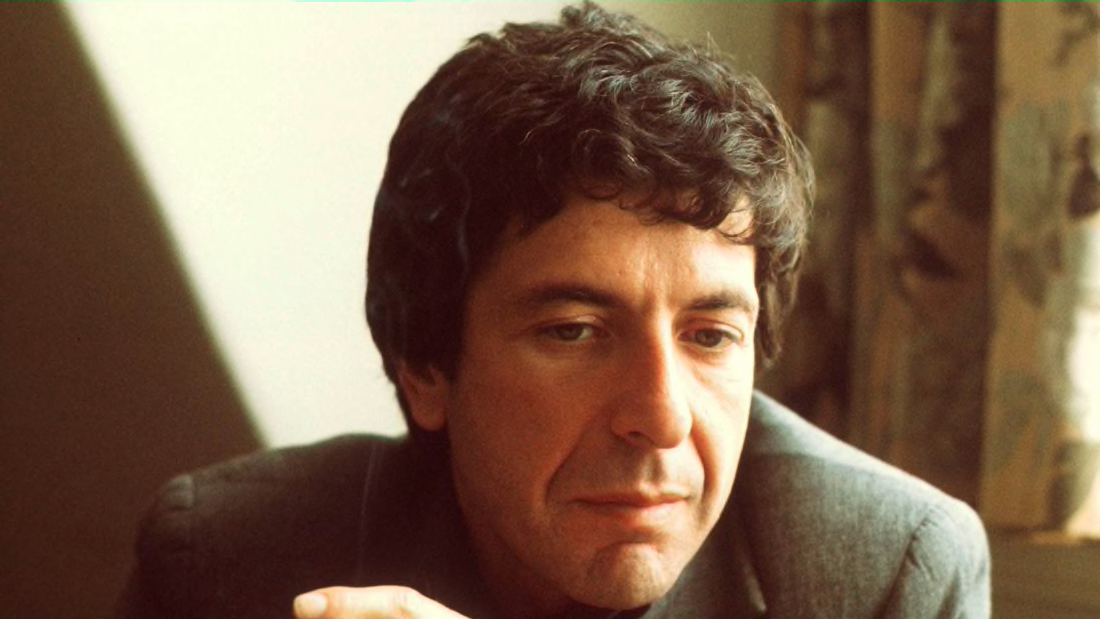
Leonard Cohen in London in June 1974. Michael Putland/Getty Images
In the late 1970s, Leonard Cohen sat down to write a song about god, sex, love, and other mysteries of human existence that bring us to our knees for one reason or another. The legendary singer-songwriter, who was in his early forties at the time, knew how to write a hit: He had penned “Suzanne,” “Bird on the Wire,” “Lover, Lover, Lover,” and dozens of other songs for both himself and other popular artists of the time. But from the very beginning, there was something different about what would become “Hallelujah”—a song that took five years and an estimated 80 drafts for Cohen to complete.
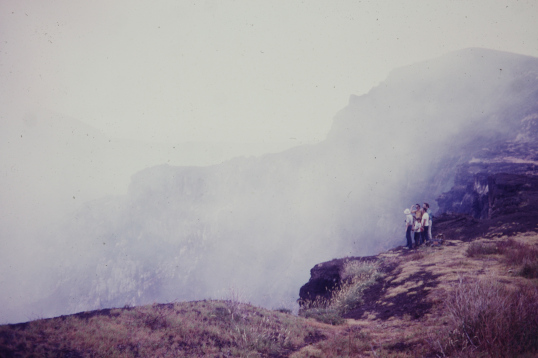
Smoke, steam, and sulfur dioxide coming out of the volcano, Masaya, Nicaragua.
She was flying home from a holiday in Samoa when she saw it through the airplane window: a “peculiar large mass” floating on the ocean, hundreds of kilometres off the north coast of New Zealand.
I have a new place I just added to my Bucket List: Pyramiden
Note that this place is literally at the end of the earth – and yet, at a restaurant – he can pay with his Apple Watch.
“Do not swear by the moon, for she changes constantly. then your love would also change.” ― William Shakespeare, Romeo and Juliet
I had read that there would be a lunar eclipse – not a total eclipse, but one that would last longer than any in history (well, at least in 580 years – good enough for me). I also read that it would occur well after midnight on a work night, so I didn’t think any more about it.
The sun was well set (even though there was a pink and purple glow left all around the horizon) as I walked to my car across my work parking lot. The moon was rising in the east and singularly full and beautiful, I even texted Candy to go look at it.
Then, at home I was so exhausted that after watching a bit of college basketball I fell into a hard, deep sleep. I woke up at two thirty in the morning and realized that I had to do a load of laundry (I had no shirts for the next work day) and that I had left my phone in my car.
After starting the washer going I stumbled out to my car to fetch my phone so I could charge it for the upcoming day. I had forgotten about the lunar eclipse but as I looked up from the sidewalk it looked like an irregular swipe had been taken across the lunar orb. The eclipse was more than half complete and it combined with the dark lunar seas to make an unexpected uneven border. It was really odd and interesting.
My new phone has an amazing set of (5) cameras and has examples of fantastic shots all over the internet. Unfortunately, I’m a boomer and still trying to figure the damn thing out… and this is the best I could do:
I’m a skeptic about many things, and this definitely includes any methods or products that promise to be “life-changing” or “magical.” It’s not that I don’t want to believe that my life can be changed by a particularly thorough reorganization of my sock drawer, or that magic plays some part in how I arrange my bookshelves, but what I’ve tended to find with any attempts to relaunch my way of living, thanks to internet-approved organizing tips, is that the results are, more often than not, prosaic rather than magical and that instead of changing dramatically, my life simply shifts forward incrementally, as it probably was prone to do anyway.
Woman writing in a Moleskine Notebook, Wichita, Kansas
Back in 1954, Sports Illustratedran an advertisement for a leather pouch that was touted as an ideal accessory for cross-country skiers who wanted to hold their lunch and ski wax. Hikers, equestrians, and bicyclists could also benefit from this waist-mounted sack, which was a bit like a backpack situated on the hips.
When we think about the autumn and winter seasons, we often envisage a peaceful scene. It’s a time where we seek cosiness and wrap ourselves up against the elements, a comforting hot chocolate and weighted blanket never too far away from our reach.
But despite the changing leaves and general feeling of happy hibernation, they are also seasons of great stress, too.
“Well, I always know what I want. And when you know what you want–you go toward it. Sometimes you go very fast, and sometimes only an inch a year. Perhaps you feel happier when you go fast. I don’t know. I’ve forgotten the difference long ago, because it really doesn’t matter, so long as you move.” ― Ayn Rand, We the Living
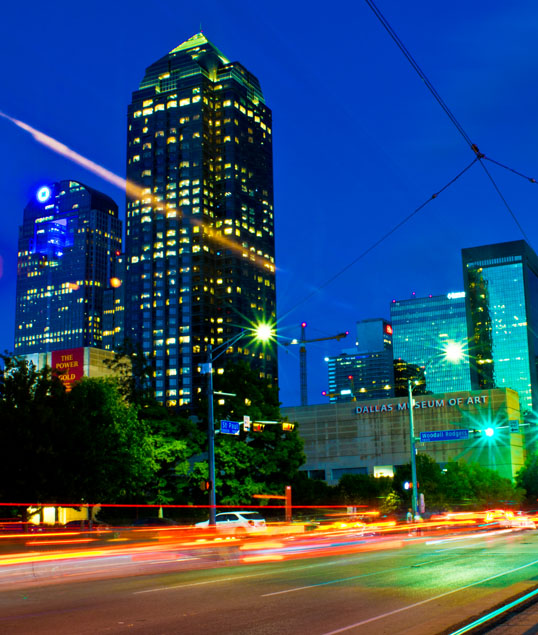
Downtown Dallas
I came across an interesting article about a building in Indiana that was rotated 90 degrees.
What is crazy about it is that the building never closed. The people kept going to their offices every day – power, telephone, water, sewer – never was shut off. They said that the folks working there never noticed the building moving.
I imagine a lowly clerk sitting at a desk in the middle of the room – far away across the sea of desks is a lonely window. The clerk looks out the distant widow longingly and watches the slow parade of distant objects – trees, buildings, power poles – across his limited field of view.
“It’s just that I take riddling seriously. I was taught that the ability to solve them indicates a sane and rational mind.” ― Stephen King, The Waste Lands
I have an odd fascination with the mysterious stencils found on plywood packing crates.
I have always loved a good riddle. Surfing around the interwebs, I found an article that starts out with a very, very, good riddle. Maybe the best one.
Rich people need it. Poor people have it. If you eat it, you die. And when you die, you take it with you. What is it?
Can you guess the answer? To be fair, if you can’t you’ll have to
I am, of course, describing a book cover—or rather, the book cover, that of the current literary zeitgeist, whose abstract splotches are a ubiquitous presence in the new releases display at your local bookstore.
All artists have a lot in common. Whether you’re a comic artist or a painter – you still experience similar situations like lack of inspiration or constantly being asked “Will you draw me?”
This is the border crossing at Boquillas. The rowboat says, “La Enchilada” on its side. The boatman charges $2 for a trip across the Rio Grande. You can see the burros and trucks on the Mexican side – a ride into town costs 4 dollars.
From my old blog, The Daily Epiphany, Friday, March 23, 2001 (just a few months before 9/11 changed everything)
El hombre escribiendo
The border between the US and Mexico is a big deal in most places – controlled bridges, customs, crowds, fences, razor wire, a complete difference from one side to another.
Here in Big Bend the border is a greenish sluggish river, barely waist deep, and the crossing is a decrepit old rowboat called “La Enchilada.” A ride across the Rio Grande cost $2. “Pay me on the other side,” the boat’s captain told me – apparently to avoid the onus of doing business in a US National Park. Two quick strokes on his paddle and we were in Mexico.
A busy crowd on the gravel bar was hawking handmade jewelry, walking sticks, and rides by burro, horse, or pickup truck into the village. I walked past the jabbering, bargaining crowd (a handful of elderly tourists were renting some burros) and hoofed it the mile or so into the village.
It was a dusty, sandy walk through the floodplain thicket of Mesquite into the village of Boquillas itself. It’s a dirt-poor border town, a few short dusty gravel streets lined with scattered adobe huts. Each hut has its own table covered with rock crystals, scavenged from the nearby mountains, for sale. The main street has one restaurant, Falcon’s, and a handful of cantinas – some very shady looking.
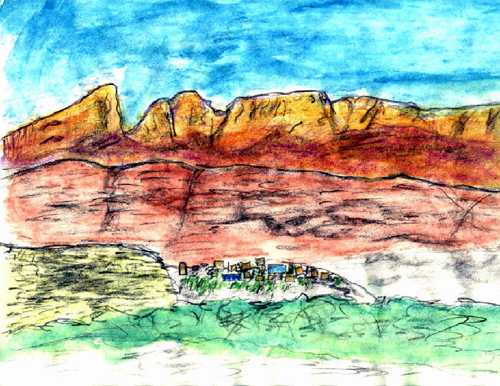
Above the village rears the amazing escarpment of the Sierra del Carmen. Those cliffs, jagged like broken teeth dominate the skyline of the entire park, visible clear up to the headquarters thirty miles away.
I settled into the breezeway of Falcon’s – surprisingly seat once I was out of the burning sun and shaded by the roof of traditional vigas. A few others were already there – a big group of tourists sitting at one long table and a couple of local Texas ranchers with their families – the men were bargaining with the owner of the restaurant over the sale of a pickup truck.
Two rooms selling really bad Mexican handicrafts flanked the open breezeway. I had hoped to buy Candy a birthday present there, but there wasn’t anything worth looking at. At the end of one room was the restaurant kitchen, which looked like one from a small apartment. The owner’s daughter stood there looking bored and cranked out the food. One tourist asked to, “see the menu” and the daughter replied, “tacos y burritos.” Each were three for a dollar.
I ordered a Corona and a plate with three tacos and three burritos. The food was greasy and good – small handmade corn tortillas served with a bowl of diced jalapenos and onions. The beer was cold. I sat and ate and drank my beer and wrote a little in my notebook.
Local children selling little woven bracelets carried on pieces of cardboard swarmed the restaurant. I bought two for Nicholas, one said Big Bend the other Boquillas. The pesky kids were really bothering the big table of tourists. Eventually the wife of the restaurant’s owner came out and shooed them away – even the few that were standing around my table.
“El hombre escribiendo!” she shouted at the children near me.
After finishing a second beer I decided to walk around a bit more, having to constantly fend off the little street vendors. I decided I was still thirsty so I stopped by one of the cantinas for a cold Dos Equis. It was a roomy bar with tables and two pool tables at the back; Spanish rap music blared out of an unseen boombox somewhere. The long bar was lined with every imaginable brand of cheap Mexican tequila, mescal, and sotol.
A sunburned Mexican drunk conned me into buying him a Tecate – then left me alone. A couple of American college girls came in for beers and then three guys wearing Chi Omega Intramurals T-shirts came in for shots and bought a round for the girls. “Where you from?” the bartender asked the girls. “Indiana.”
An older couple came in and bought four bottles of some odd colored liquor. The bartender carefully wrapped it so they could get it back across the border.
The owner came and sat with me and we spoke a bit, mixing English and Spanish. It is so rare that I speak Spanish anymore my mouth felt odd forming the sounds. The Mexican beer helped.
He made some rude remarks in Spanish about the girls at the bar; then asked me where I was from. I told him I drove through Monahans to get to Big Bend. “Big prison in Monahans,” the owner said, “I have nephew in prison there.”
Then he indicated the sunburned drunk, “He the police here, only police in Boquillas.” I considered asking to see his badge but thought better of it. With the sleazy cantina, the dusty streets, and the mountains rising high overhead things were getting way too Treasure of the Sierra Madre feeling for me, so I decided to head back to Texas.
A sketch I made in 2001 along the Rio Grande, the village of Boquillas, with the Sierra Del Carmen in the background.
Anyone who has ever attended a keynote, lecture, or presentation of any kind knows how important it is to take good notes. How many times have you been at a presentation for work and afterward wished you had written down that key idea that you somehow can’t remember?
A while back, in my corporate days, I was experiencing this far too often. So I went back to my college days and pulled out a note-taking method I used to use, one of the most popular note-taking methods of all time, the “Cornell Note-taking System.” It’s named after a Cornell University educator who invented the system in the 1940s. Here’s how it works, as explained on the Cornell System official website.
Bicycle Drag Races, Continental Bridge Park, Dallas, Texas
Scientists believe that the answer lies in the workings of our metabolism, the complex set of chemical reactions in our cells, which convert the calories we eat into the energy our body requires for breathing, maintaining organ functions, and generally keeping us alive.
Composer Danny Elfman discusses venturing into new territory, taking criticism with a grain of salt, and the difficulty of understanding your own creative process.
I am a self-confessed ‘bad replier’ – if I could add an out-of-office to my phone which would tell all of my friends to expect a reply within five to seven working days, I would.
Trophy from the Gravity’s Rainbow Challenge. Yes, I read the whole thing.
I am ploughing through “Foucault’s Pendulum” with my Difficult Reading Book Club. There is surprisingly little useful information out there on what is really going on.
New research suggests that the highest-performing teams have found subtle ways of leveraging social connections during the pandemic to fuel their success. The findings offer important clues on ways any organization can foster greater connectedness — even within a remote or hybrid work setting — to engineer higher-performing teams.
A surprising grant of certiorari places a high-stakes regulatory case on the Court’s docket, with profound implications for EPA authority to regulate greenhouse gases.
Rotterdam Express
Container Ship
New Orleans, Louisiana















 Bill Chance