Short Story of the Day, Flash Fiction, There are Beaches in Michigan by Deanna Baringer

“Each year, we rent a house at the edge of the sea and drive there in the first of the summer—with the dog and cat, the children, and the cook—arriving at a strange place a little before dark. The journey to the sea has its ceremonious excitements, it has gone on for so many years now, and there is the sense that we are, as in our dreams we have always known ourselves to be, migrants and wanderers—travelers, at least, with a traveler’s acuteness of feeling.” –from ““The Seaside Houses”

― John Cheever, The Stories of John Cheever

Crystal Beach, Texas

From my old journal, The Daily Epiphany, January 1, 2003:

The weather for New Year’s Day at Crystal Beach was absolutely perfect. The sun came out warm and the wind dropped down to a dead calm. The low tide fell even lower and uncovered a long stretch of Bolivar Peninsula sand near our beach house that was scattered with interesting, unbroken seashells. As we picked them up, we discovered that many contained hermit crabs. Nicholas has been bugging us to buy him a hermit crab for a pet and I told Lee (Nick was still inside reading – he was on the home stretch of Return of the King and wanted to finish) that we’d pick out six crabs and take them back with us.

After a bit, Nicholas rode up on his bicycle (with the cry of, “I have news from Gondor!” – he’s terribly obsessed) and was tickled pink with the crabs. He’s found a plastic container and built a little habitat for them. I don’t know anything about these things – I hope they survive for a while. When we get back to Dallas I’ll do a web search and find out how to care for them.

Later, I went for a long walk, to the north this time, passing miles and miles of huge, beautiful beach houses. It was dark when I made it back to our humble rental unit and Lee was concerned that I had been gone so long.
“I was getting worried, Dad.”
“What, Lee, did you think I’d get lost?”
“I don’t know… I was just worried.”

Lee has been collecting driftwood sticks this whole trip and had accumulated a little stack of them. He explained that he only wanted to keep three of them (his walking stick, one he pretends is a sword, and one he has whittled into an arrow of sorts) but wanted to start a fire on the beach with the rest of them. Every night somebody has a fire going out on the beach, usually a too-big one, but Lee wanted to give it a try.
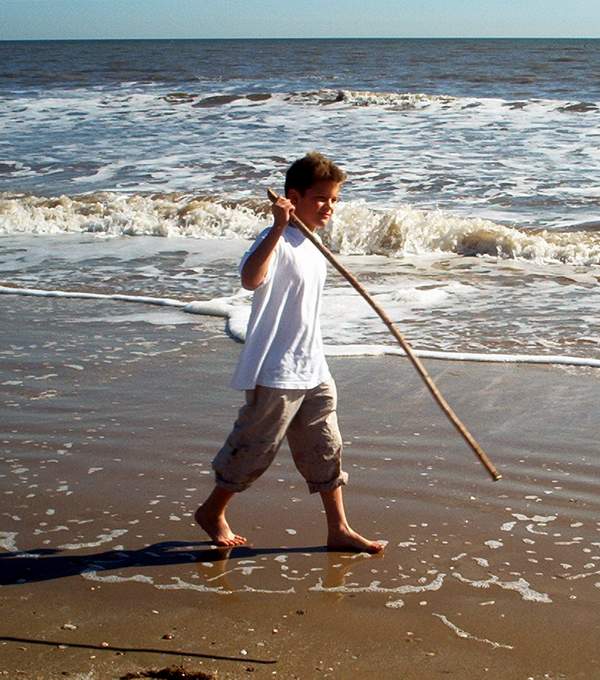
Lee walking in the surf at Crystal Beach. I checked my old blog entries – this was December 29, 2002. Almost twenty years ago.

The problem is, we didn’t have any matches or a lighter. I lit a leftover fireworks punk on the stove and took that out on the beach where we had prepared a campfire with the sticks and some crumpled newspaper. I couldn’t get a flame, though, only smoldering paper.

I thought for a bit, then dug out Candy’s citronella candle she bought to discourage bugs. I lit a strip of newspaper on the range top (after removing the battery from the smoke detector) and used that to light the candle. Then, using my jacket as a windscreen, I carefully walked backwards out the door, down the stairs, and out onto the beach without letting the candle go out. It wasn’t easy, but I managed to get the thing lit.

It was a nice little campfire on the beach. The wind whipped the fire and the driftwood sticks gave a good flame with strong, hot coals. Nick (he finished The Return of the King this afternoon and is very proud), Lee, and I sat around the fire for a bit, enjoying the stars, the cool sand, and the sound of the nighttime surf.

When it was time to go in Lee and I spread out the coals and buried them with damp sand. It was a really nice last evening on the beach. Tomorrow, we pack up and head back to the city.

And today’s flash fiction:

There are Beaches in Michigan by Deanna Baringer

from Feed

Deanna Baringer Twitter

Homeward Bound

I’m sittin’ in the railway station
Got a ticket to my destination
On a tour of one-night stands
My suitcase and guitar in hand
And every stop is neatly planned
For a poet and a one-man band

—-Paul Simon, Homeward Bound

The view from the parking lot as I go home from work. Dallas, Texas

I was driving in to work – I often listen to podcasts in my car, but today I had KXT 91.7 (listen here) on the radio. I always love that station – no commercials, no stupid DJ yakking yet DJ curated, and a wide variety of tunes. As I pulled into my parking spot and began to put my mask on the Simon and Garfunkel chestnut Homeward Bound came on. A great song. I sat there and listened to it before trudging across the parking lot.

Afterward they said, “Homeward Bound, an early Simon and Garfunkel tune, from 1966.”

1966. I was nine years old. I remember 1966. I wasn’t listening to very much music then and don’t remember Homeward Bound when it came out. But I was starting. I do remember a television documentary on the burgeoning folk scene featuring interviews with Simon and Garfunkel. I didn’t know who they were and wondered if I’d ever hear anything from them. Four years later Bridge Over Troubled Water was released and I remember the exact spot where my father’s car was when I first heard it on the radio.

Sitting down and looking through the hit songs from each year – I started listening in 1967. My family was not musical and I had to pick it up on my own, mostly from friends. By 1968 I was listening to the radio a lot and by 1969 I eagerly awaited every Friday and that week’s top forty announcement on WHB (the wet hamburger station) out of Kansas City.

So I guess I can say I started listening to popular music in 1966 or so. That was fifty five years ago.

It doesn’t seem like that long. Things have changed (especially the digital revolution) but 1966 wasn’t that much different. One way to look at it was they were playing a song from 1966 on the radio on my way to work and nobody thought much about it.

I was born nine years earlier, in 1957. That does seem like a different age. The sixties were a real watershed – where things changed in a significant, permanent way. But still… there was rock and roll, at least the stirrings of rock and roll, in 1957 (Rock Around the Clock came out in 1954).

But go in the other direction – fifty five years before 1957 was 1902. That’s hard for me to comprehend. One year before the Wright brothers first flew. World War I was a decade away. The Roaring twenties two decades – the depression and dust bowl three decades away. WWII a nightmare far into the future. Now, I did look at the top songs of 1902 and was shocked that I was familiar with a few of them – and the #18 song won an Academy Award in 1974 and rose to #4 on the charts at that time….

But still, I can’t even imagine 1902. My grandfather wasn’t born yet. Yet it’s the same distance in time from my birth as Homeward Bound is from today. Years and years.

Every day’s an endless stream
Of cigarettes and magazines
And each town looks the same to me
The movies and the factories
And every stranger’s face I see
Reminds me that I long to be

Homeward bound

Sunday Snippet, Flash Fiction, Sam I Am by Bill Chance

“You have brains in your head. You have feet in your shoes. You can steer yourself any direction you choose. You’re on your own. And you know what you know. And YOU are the one who’ll decide where to go…”

― Dr. Seuss, Oh, the Places You’ll Go!

Sam I Am

It was only this morning when I first saw her. It seems like a hundred years ago. The worst thing is that I don’t even know her name. I haven’t forgotten, she never told me what it was – never mentioned it.

Everything started when I came out of Todd’s Comic Book Store walking with a spring in my step. I had just bought a new Jedi Bounty Hunter action figure, on the day it was released. It cost a good hunk of my paycheck, but I had been drooling over the advance ads for this excellent hunk of plastic for months.

“Hey, Sam!” she shouted. She was gorgeous, drop dead perfect, a God’s Vision chiseled in female flesh. I couldn’t stop staring at her and it took me a long minute to realize she was talking to me. Of course my name is Andrew, not Sam, but I was not going to disagree with someone that good looking. So Sam I am.

“Hey you!” was all I could muster. Who was this woman? I’m not the best with faces and names but I would remember her. If she thinks she knows me, even if she has my name wrong, maybe I’ll play along until I can figure out what’s up. “It’s been… a bit of water under the bridge, hasn’t it?” That was the most noncommittal thing I could come up with.

The woman looked a little confused but still, she replied, “Yup… I suppose it has.”

She saw the bag in my hand with its logo – Todd’s Comics. “What do you have there?”

“Oh, that’s the new Jedi Bounty Hunter action figure. It was released today.”

She looked at me as if I was a toad, a smashed flat one at that. “Why do you have that? Are you into…?”

“Oh no,” I lied, thinking fast. “This is a present for… my nephew. Yeah my nephew Brad. He’s really into this stuff and when I saw this was a new release I knew I had to get it for him. Cost… ridiculous, but I’ll do anything for my favorite nephew.” I hoped my tone of voice wouldn’t convey that my favorite nephew Brad did not exist.

Suddenly I thought of an opening. “How’s the family?”

Her eyes flared. “Jesus! I can’t believe you brought that up. When you made that pass at my sister… She was so drunk… I’m not sure if I will ever forgive you for that.”

I glanced around. There was a bar right there, The Anchor. “Well, I’m sorry, you know that. Why don’t we go into The Anchor and I’ll buy you a drink. We can talk about it… maybe I’ll be able to make it up to you.”

“Sam, dammit! You know I can’t drink.”

“Well, I hear The Anchor has the best Diet Coke in town. Let’s go for that.”

And now, here I am, walking around her thirtieth story apartment stark naked at four in the morning trying to be quiet. It’s a really nice, expensive place. I’m looking for something, anything, that will tell me who she is and what she is up to. The only clues so far is a satchel stuffed with about sixty thousand in hundred dollar bills stashed behind her couch and a pair of loaded handguns in her top dresser drawer. What I really need to know is who am I – or who does she think I am – and what does she want from me…. I probably should get dressed and sneak home. Pretty soon she’s going to wake up and figure out I’m not Sam… I can’t believe she hasn’t already. And… well, she’s going to be super pissed off.

I need to find my clothes and get the hell out of Dodge but I can’t. First, she is so goddamn beautiful. Plus, I can’t find my clothes. I had them on when I came here. But where are they now? I was sleeping pretty hard, maybe she woke up and folded them somewhere. But where?

Now I know this is not going to end well, not for me, probably not for anybody.

Tokyo Nightmare

“All men dream: but not equally. Those who dream by night in the dusty recesses of their minds wake up in the day to find it was vanity, but the dreamers of the day are dangerous men, for they may act their dreams with open eyes, to make it possible.”
― T.E. Lawrence, Seven Pillars of Wisdom: A Triumph

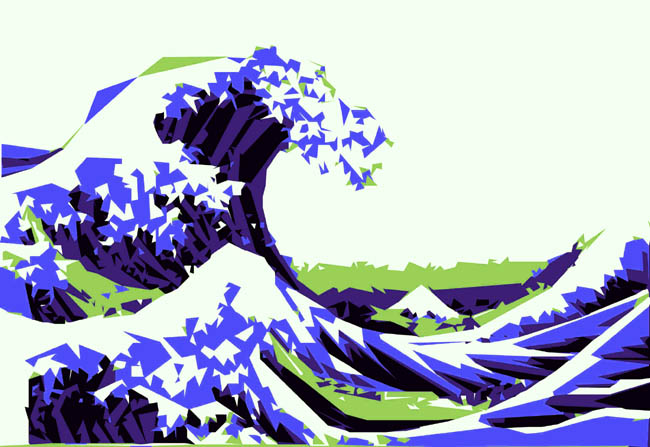
The Wave that Washes us all

The last few days I have been haunted by the same nightmare. It’s the same because when I go to sleep my dream starts up right where the last one ended, when I woke up. This has been happening not only at night, but if I try and sneak in a nap.

I’m in the dream, of course, but the person in the dream isn’t exactly me. I’m someone else, though I don’t know who.

The dream is set in Tokyo, sort of. It’s Tokyo but not the real one. It’s a dream nightmare Tokyo (and no, I’ve never been to Japan). The city itself isn’t as big or crowded as the real Tokyo is – it feels sort of like an American mid-sized city… maybe Lubbock. It’s definitely Dream Tokyo, though, I know that, I remember taking a long dream flight to get there.

I don’t know why I’m in Dream Tokyo. There is some sort of work that I am supposed to do. I have a vague feeling that my job is very important, but don’t remember what it is that I am doing.

Dream Tokyo is a coastal city with a very complex harbor, with several peninsulas and inlets. The border between land and water is very important to me.

The most obvious feature of Dream Tokyo is a highway bridge that links two parts of the city across a wide bay. This bridge is what gives the dream its nightmare edge. It’s not a regular bridge, of course. It’s very, very wide and extremely high. A huge arch reaching up into the sky. It is visible from everywhere in the city and dominates the horizon. Not only is it wide, but the edges simply end. There are no guardrails or other barriers along the side.

It should still be safe, though. It is so wide, almost like a field in the sky (it is green in color and covered with a very short grass, like a golf green) and not heavily used, so you could drive right down the middle with no risk of going over the edge.

That’s not how it works for me, though. I go off driving through Dream Tokyo (I know I wouldn’t ever actually drive in Real Tokyo, but here, there isn’t any mass transit) and I get confused on the poorly-labeled complex highway interchanges. All of a sudden, here I am, driving up the ramp to the vast grassy sky bridge even though it’s the last place I want to go. There is no turning back, I have to cross.

It is horrifying. I can see the sea off to each side and the blue water with the green bridge surface fills me with absolute terror – something about the open spaces sends me into panic (and no, in real life I do not suffer from agoraphobia in any way). I clutch the steering wheel with white, sweaty knuckles and drive quickly, almost with my eyes closed.

I do make it across. That was very odd – the road, despite being amazingly wide and crossing what must be a multi-billion dollar bridge, simply ends. The road narrows and ends in a short stretch of old, cracked tarmac that peters out at the water’s edge. Here the shoreline is paved and the water is dark and full of trash.

There was no clear path forward. I had to drive my car (a rental, I seemed to know that) over a curb and down onto a narrow paved alley that ran along the water and curved off into a neighborhood of run-down warehouses.

That’s the point where I woke up this morning. When I go to bed tonight will I be back in the car, entering the warehouse district? I doubt it. Writing the dream down will certainly kill it.

I’ll be somewhere else, somewhere completely different. A different city, a different seaside, a different bridge.

What I learned this week, April 16, 2021

Downtown Square, McKinney, Texas

Phone call anxiety: why so many of us have it, and how to get over it

I DO NOT like to talk on the phone. I get so stressed when I have to call I have trouble dialing right. When my phone rings, I jump and I feel the panic rising (although now its usually junk calls). I know and see people talking on the phone for hours and don’t understand it. When I stop at a light on the way home and watch the cars going by and more than half are on their phones – I wonder, “Who the hell are they talking to?”


Artwork in the Braindead Brewing Company, Deep Ellum, Dallas, Texas

Brain fog: how trauma, uncertainty and isolation have affected our minds and memory

After a year of lockdown, many of us are finding it hard to think clearly, or remember what happened when. Neuroscientists and behavioural experts explain why

Oh, and I thought I was just getting old.


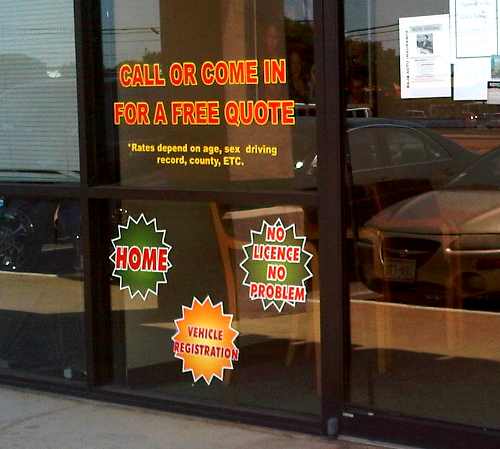
No Licence, No Problem

Our Brain Typically Overlooks This Brilliant Problem-Solving Strategy

People often limit their creativity by continually adding new features to a design rather than removing existing ones


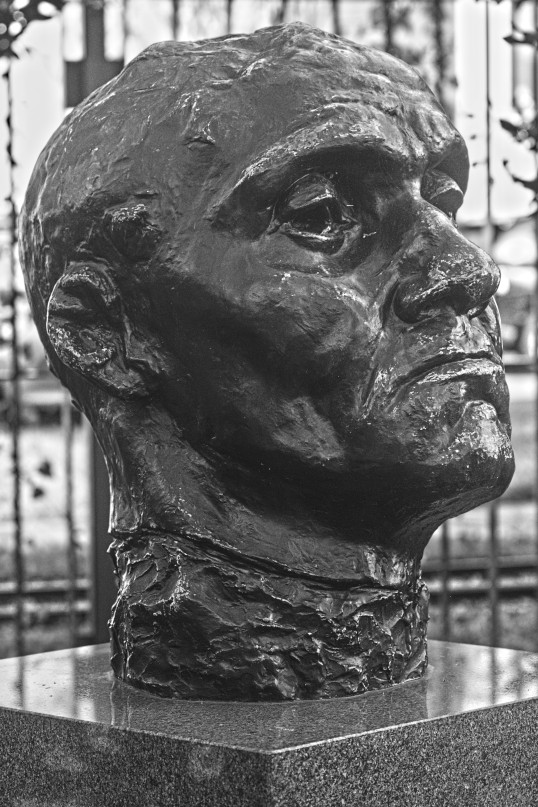
Monumental Head of Jean d’Aire (from The Burghers of Calais), Auguste Rodin, Sydney and Walda Besthoff Sculpture Garden

The Stoic Antidote to Frustration: Marcus Aurelius on How to Keep Your Mental Composure and Emotional Equanimity When People Let You Down

The art of tempering your fury with an infuriating existential truth.


Pomodoro
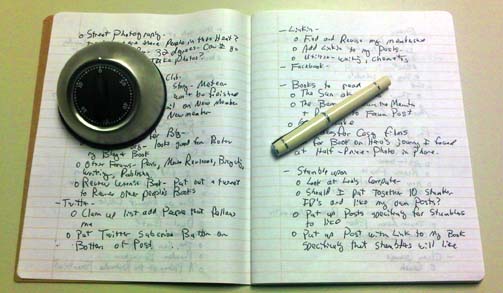
My Pomodoro timer, Moleskine, and Ivory Pilot Prera fountain pen.

I tried making a ‘to-don’t list’ instead of a to-do list. Here’s what I learned

For the last two weeks, I’ve been using “to-don’t” list, which sounds like an inverse to a to-do list, but is a bit more exacting. In essence, the list is a curated collection of activities that can derail your energy and motivation. They’re often alluring but end up creating a distracting spiral, sapping you of your most productive hours.


Here’s some origami I did. I’m working on a story and I decided to origami my draft. The design is called, “This is a bunch of crap.”

Office Reopening Anxiety

“I Do Not Trust People in the Same Way and I Don’t Think I Ever Will Again”

Workers are really, really not ready for offices to reopen.


Somewhere in the Caribbean

The rice of the sea: how a tiny grain could change the way humanity eats

Ángel León made his name serving innovative seafood. But then he discovered something in the seagrass that could transform our understanding of the sea itself – as a vast garden


Houston Museum Of Fine Arts

Anxiety Is in Your Body, Not Your Mind

Why you might want to stop talking about your anxiety and try this instead

Short Story of the Day, Flash Fiction, What A Wonderful World by Jonathan Cardew

“The human race is a monotonous affair. Most people spend the greatest part of their time working in order to live, and what little freedom remains so fills them with fear that they seek out any and every means to be rid of it.”

― Johann Wolfgang von Goethe, The Sorrows of Young Werther

Deep Ellum, Dallas, Texas

From my old journal, The Daily Epiphany, July 2, 2002:

The other day I finished up at work late and realized that I didn’t have time to go home, but had some extra minutes to kill before I had to go get Nick and some teammates after soccer practice. Everybody else in my small cube-farm had left and I had a novel in my briefcase, so I put my feet up and read a little. Unfortunately, I was way too tired and promptly fell asleep. To save energy, our office lights are on a timer and while I snoozed the office was plunged into darkness. It was dumb luck that I woke up slumped over my dark desk, head in a pool of drool, with barely enough time to jet around the highway (luckily, that late the traffic dies down considerably) and get Nick and the other kids in our carpool.

And today’s flash fiction:

What A Wonderful World by Jonathan Cardew

from No Contact

Jonathan Cardew Twitter

Jonathan Cardew Homepage

Smooth Talk

All your seasick sailors, they are rowing home

All your reindeer armies, are all going home

The lover who just walked out your door

Has taken all his blankets from the floor

The carpet, too, is moving under you

And it’s all over now, Baby Blue

—-Bob Dylan, It’s All Over Now, Baby Blue

Yesterday I had time to watch another movie on The Criterion Channel so I scrolled through the offerings and found one I wasn’t expecting. It was called Smooth Talk and was made in 1985. It was directed by Joyce Chopra and featured Laura Dern in her first starring big screen role (a year before Blue Velvet).

I have no idea how I have missed this movie over all these years. You see it is loosely (actually not all that loosely) based on one of the most crackerjack of short stories – Joyce Carol Oates’ ” Where Are You Going, Where Have You Been?”.

I have been a huge fan of Joyce Carol Oates for a long time and have written about her short stories a few times before. There was Where are You? and Heat – but especially Life After High School – an incredibly interesting, subtle, and complex story.

And there was “Where Are You Going, Where Have You Been?”. I first read this as a teenager and it made a huge impression on me. I have re-read it every few years and it hasn’t lost its power.

You can read it here. Go ahead, it’s worth it.

The story is based on the true story of “The Pied Piper of Tucson” – a serial killer that seduced and eventually murdered teenage girls in that desert town. Oates read the story in Life magazine (she refers to the killer as a “Tabloid Psychopath”) and then wrote the story as “Death and the Maiden.” She was especially fascinated by the fact that the Tucson teens didn’t realize this monster was a man in his 30s attempting to look young and many went along with the killings, keeping his secret.

During revision she made the story less about the killings and more about the teenage girl. The ending is ambiguous, though you get the feeling that it’s not going to end well.

I remember thinking that the story was unfilmable – it has too many phantasmagorical elements, an enigmatic conclusion,  and too much inside the girl’s head. But it looks like I was wrong.

The movie follows the short story surprisingly well. Obviously, it has to expand on the story quite a bit. Rereading the story, there is a lot to it that is spread out in the first half of the film. The girl’s mother has a bigger, more nuanced part – though a lot of that may be due to the genius of Mary Kay Place. Laura Dern has the young, beautiful, flighty, 15 year old, self-obsessed, stubborn,  teenager-y, Connie down perfectly. The story moved up into the 80’s where it fits better anyway, and the setting of a mall and big teen hangout hamburger stand across a busy road is dead-solid right.

****Spoiler Alert****

But at its mid-point the story and the movie take a sudden, terrifying turn. An odd, dangerous man named Arnold Friend (A Friend) shows up in an old Gold landyacht  convertible with mysterious writing on it. He proceeds to talk to Connie, left at home alone, and tries to talk her into going for a ride with him.

That is the first big difference, to me, between the story and the movie. In the story Arnold Friend is a borderline supernatural force, odd and mysterious (Is he wearing a wig? What is it with his boots? How does he know so much?). It is that character that I considered to be unfilmable. Treat Williams plays him in the movie and he is a bit too good looking and slick – though he does convey his own aura of danger and dread. I guess seeing the devil made flesh was going to be a letdown – but the movie was still interesting and harrowing.

And then, at the end, unlike the story, you find out, sort of, what happened after Connie went off for a ride with Arnold Friend.  He doesn’t kill her, he brings her back. In both versions it is implicit that her going with him was an act of heroism – she went to save her family from danger. Once she returns she seems to have grown a backbone. She tells Friend firmly that she never wants to see him again and then has a reconciliation with her sister. That is not how the story is leading – but it is a valid take and an interesting, almost happy, ending.

One other cool thing is that I discovered a movie review of Smooth Talk written by none other than Joyce Carol Oates herself. There is something amazing about a great writer putting down her thoughts on a film made from her work.

She agrees with me on the short story being ultimately  unfilmable:

“Where Are You Going, Where Have You Been?” defines itself as allegorical in its conclusion: Death and Death’s chariot (a funky souped-up convertible) have come for the Maiden. Awakening is, in the story’s final lines, moving out into the sunlight where Arnold Friend waits:

“My sweet little blue-eyed girl,” he said in a half-sung sigh that had nothing to do with [Connie’s] brown eyes but was taken up just the same by the vast sunlit reaches of the land behind him and on all sides of him—so much land that Connie had never seen before and did not recognize except to know that she was going to it.

—a conclusion impossible to transfigure into film.

And she acknowledges the choice used in the different ending:

The writer works in a single dimension, the director works in three. I assume they are professionals to their fingertips; authorities in their medium as I am an authority (if I am) in mine. I would fiercely defend the placement of a semicolon in one of my novels but I would probably have deferred in the end to Joyce Chopra’s decision to reverse the story’s conclusion, turn it upside down, in a sense, so that the film ends not with death, not with a sleepwalker’s crossing over to her fate, but upon a scene of reconciliation, rejuvenation.

Serial killer inspires brilliant terrifying short story which is developed into a movie about a flighty young girl finding herself and her place and purpose. This is truly the best of all possible worlds.

In the Mood for Love

It is a restless moment. She has kept her head lowered… to give him a chance to come closer. But he could not, for lack of courage. She turns and walks away.

—- Kar-Wai Wong, In the Mood for Love

The other day I watched Chunking Express on my streaming Criterion Channel. The movie was not what I expected (though I’m not sure what I was expecting) but enjoyable when taken on its own terms.

Over the weekend I was able to sit down and watch another Kar-Wai Wong film, one that is possibly even more well-known than Chungking ExpressIn the Mood for Love.

The English title of the film comes from the Bryan Ferry  song (though the song does not make an appearance in the movie – only the trailer)

The song was originally recorded in 1935, and there are many versions – this is the best:

Again, the film was unexpected – but enjoyable. Be forewarned – not much actually happens in the film, it’s definitely a movie where you sit back and let it wash over you. It is a beautiful film, with beautiful people wearing amazing costumes. It is a film of mood, of things not said, of ultimate regret.

The ending is a departure from the style (and location)  of what comes before – but like the best of endings that take a turn (if not a twist) in the last few minutes, thinking about it, there is no other way it could end.

I have had a visit to Angor Wat on my bucket list for a long time. Now I really want to go there. Who knows what secrets are locked up between those ancient stones?

Also, I wish I wasn’t on a low-carb diet… I want to carry around an old dented green steel vacuum bottle full of hot noodles.

Ramp

“He takes a kitchen chair and sits in the yard and all the ducks come around. He holds up the cheese curls in one hand and caramel popcorn in the other and his audience looks up and he tells them a joke. He says: So one day a duck come into this bar and ordered a whiskey and a bump and the bartender was pretty surprised, he says, “You know we don’t get many of you ducks in here.” The duck says, “At these prices I’m not surprised.* And he tosses out the popcorn and they laugh. ‘Wak wak wak wak wak. I was shot in the leg in the war.’ Have a scar? ‘No thanks, I don’t smoke.”

― Garrison Keillor, Truckstop and Other Lake Wobegon Stories

There’s a park at the end of my block with a couple of flood-control ponds (the drainage from the ponds runs in a creek/ditch behind my house). Despite their utility in times of rain and excessive urban runoff they are quite attractive.

The ponds at the end of my block, Richardson, Texas
Pond at the end of my block, Huffhines Park, Richardson, Texas
The ponds at the end of my block, Richardson, Texas
The ponds at the end of my street, Huffhines Park, Richardson, Texas

My neighborhood is called Duck Creek, because of the eponymous body of water that runs diagonally through the place, but there are also plenty of ducks. This is the time of year that the baby ducks are hatched and groups of them are herded around by their parents.

Huffhines Park Richardsion, Texas (click to enlarge)
They don’t call it Duck Creek for nothing.
Huffhines Creek, Richardson, Texas. My house is in the background to the left. This photo is taken from the little dam and under a bridge.

The problem is that there is a little, low dam at the end of the ponds. The water flows over it – during the summer it’s not much more than a trickle. Unfortunately, often a baby duck gets swept over this dam and separated from their loving duck family. They can’t get back over the dam, even though it isn’t more than a couple feet high.

The rest of the ducks then have to go over the dam to rescue their sibling. Then they have to waddle up the bank and cross a fairly busy street to get back into the pond.

People in my neighborhood have been complaining to the city about this and today, I discovered that there is a new construction project going. The city is making a concrete duckling ramp so that they can get up and over that low dam.

The duckling ramp under construction.

Excuse all the trash in the photo – it tends to collect there – a crew comes by periodically to pick it up.

I’ll go back in a few days, once the wooden forms are removed and see if the little ducks are actually using their ramp – I’m sure they will. Maybe the turtles will too. I’m sure the snakes will.

Does this count as infrastructure?

Sunday Snippet, Flash Fiction, A Gentle Touch by Bill Chance

He remembers those vanished years. As though looking through a dusty window pane, the past is something he could see, but not touch. And everything he sees is blurred and indistinct.

― Wong kar-wei, In the Mood for Love

Mojo Coffee, Magazine Street, New Orleans, Louisiana (click to enlarge)

A Gentle Touch

The drugs didn’t work. The stents failed to keep the flow going. Time had wracked its fatal damage in its efficient and inexorable way.

Nobody really told him what was happening but he knew. Especially the way they were gathering around him, a circle of faces either somber and quiet or swallowed in a false cheer. When they told him his sister was flying in from Seattle he knew the end was very close. She had not been on a plane in fifty years.

He had so many tubes stuck in him that when he would move the slightest bit one or another would be jostled and he would be hit by a horrific beeping from the machine attached to that conduit. If he was alone, he would suffer, palming the call button again and again for what seemed like an eternity until a nurse would finally come and turn off the infernal sound. It was worse if others were in the room – they would cluck and scatter like chickens until the nurse came – their protestations bothered him more than the beeping.

The balance of his life between future and past, between memory and hope, had now shifted completely to memory and the past. There was no future left and no hope.

And finally his memory was beginning to collapse and implode, fewer and fewer recollections were left. The past would slowly go to black and white, like an old television, then begin to fade until only a handful of echoes were left.

His life had been full. His marriage had lasted over half a century. He had been blessed with children, grand children, great grandchildren. He had a few victories and many, many defeats.

He was shocked, however, at what remained after all these accomplishments and catastrophes had faded.

Many decades ago his company sent him to a multi-evening seminar to learn a new accounting software program. He had met a woman there. She was sitting in the back near where he was and he noticed her walking to the front table to get supplies.

After the classes some of the employees would grab a coffee and talk about the software and how much they didn’t want to use it. Each time the woman seemed to end up sitting next to him at the large round table.

The two of them enjoyed talking to each other and he felt strangely excited on the drive home. After the last day of the class a handful of folks decided to keep meeting in the evenings – both he and the woman were in that group.

It was the start of a decade long friendship. The meeting became the high point of his week. The two of them would almost always sit next to each other. He remembered that sometimes she would laugh at something or make a point and reach out and gently touch him – on the shoulder or leg.

Nothing more ever came of the two of them. They had never even met outside of that group. He decided that they simply enjoyed each other’s company. He couldn’t say why.

The friendship eventually faded and finally dissolved completely. He hadn’t spoken to her in twenty years. Now, in his weakened state, he could barely remember her name and wasn’t sure the hazy memory was right.

But as the last few days fell away, the times he spent with her loomed larger and larger in his mind. His family wondered about the otherworldly expression on his face and the fact he paid less and less attention to them.

“He’s losing his mind,” they all said. And shook their heads sadly.

They weren’t wrong. But he was aware enough to wonder why it was this particular set of memories that were filling his last few miserable, precious days. Pleasant, bittersweet memories. Something that, at the time, meant little in the flow of days.

As his heart struggled, weakened, and finally gave out his final thoughts were of a quiet laugh and the innocent gentle touch of a friend’s hand along his leg.