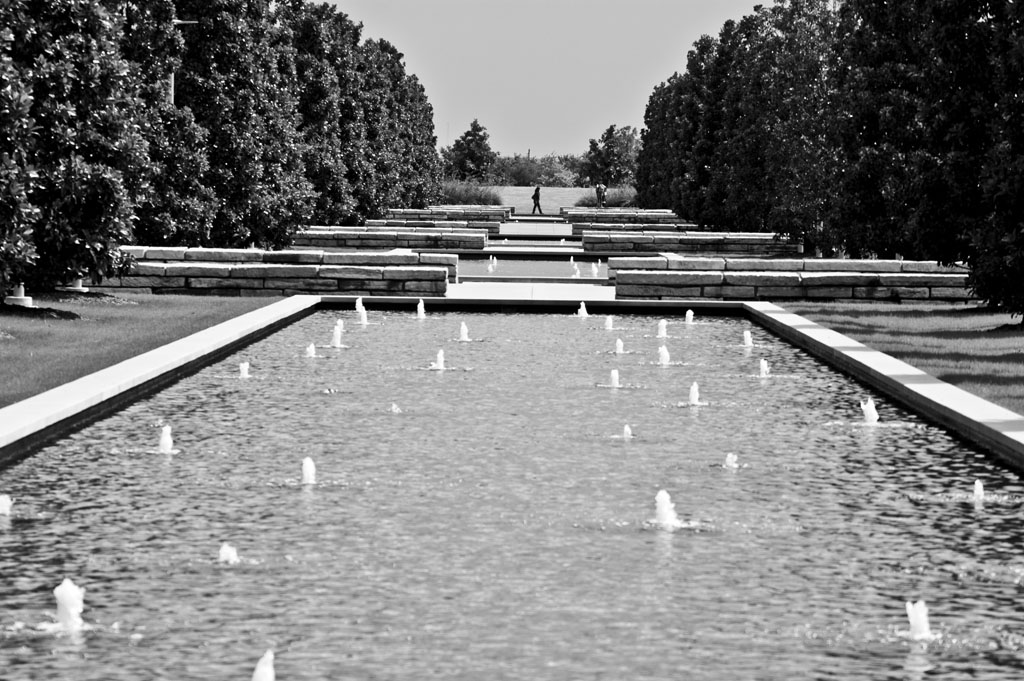
Pebbles in the Stream

“Sam was the only member of the party who had not been over the river before. He had a strange feeling as the slow gurgling stream slipped by: his old life lay behind in the mists, dark adventure lay in front.”
― J.R.R. Tolkien, The Lord of the Rings

University of Texas at Dallas
Richardson, Texas

(click to enlarge)

(click to enlarge)

“All men dream: but not equally. Those who dream by night in the dusty recesses of their minds wake up in the day to find it was vanity, but the dreamers of the day are dangerous men, for they may act their dreams with open eyes, to make it possible.”
― T.E. Lawrence, Seven Pillars of Wisdom: A Triumph

Contemplation

“Life is an experimental journey undertaken involuntarily. It is a journey of the spirit through the material world and, since it is the spirit that travels, it is the spirit that is experienced. That is why there exist contemplative souls who have lived more intensely, more widely, more tumultuously than others who have lived their lives purely externally.”
― Fernando Pessoa, The Book of Disquiet

Dallas Museum of Art
Dallas, Texas

Dallas Museum of Art

Dallas Museum of Art

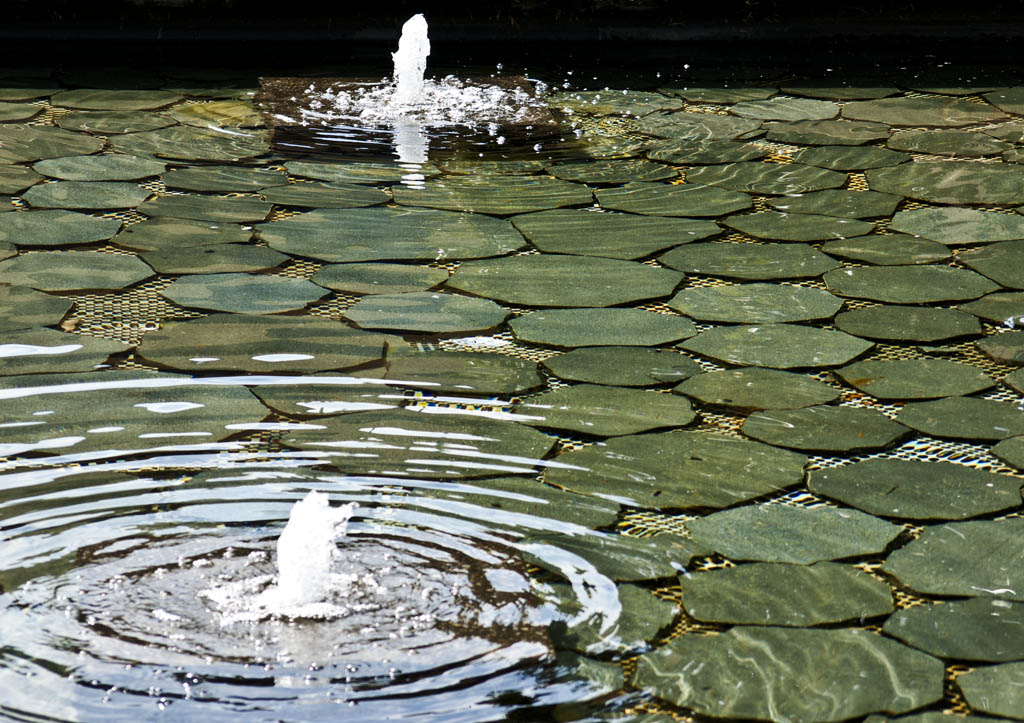
“Muddy water, let stand, becomes clear.”
― Lao Tzu

Symmetry

University of Texas at Dallas
Richardson, Texas

(click to enlarge)

(click to enlarge)

Beauty is our weapon against nature; by it we make objects, giving them limit, symmetry, proportion. Beauty halts and freezes the melting flux of nature.
—-Camille Paglia

Sun God (Helios)

Dallas Museum of Art
Dallas, Texas

I never get tired of walking around in an art museum, especially one that I am very familiar with, looking for beauty in odd corners and hidden spots.

Sun God (Helios), Donald DeLue Dallas Museum of Art Dallas, Texas

Sun God (Helios), Donald DeLue
Dallas Museum of Art
Dallas, Texas

From the Label Text:

Donald DeLue
American, 1897-1988

Sun God (Helios), 1937
Patinated plaster
Gift of the Estate of Donald DeLue, 1997.20

A radiant crown of bright sunbeams draws our eyes toward the fierce gaze of the handsome, beardless Sun God, Helios. The ancient poet Homer described how the mighty titan Helios “shines upon men and deathless gods, and piercingly he gazes with his eyes from his goldne helmet. Bright rays beam dazzingly from him, and his bright locks streaming from the temples of his head gracefully enclose his far-seen face.

Donald DeLue translated Homer’s verse into sculptural form using a theme that appealed to his lifelong fascination with ancient Greek and Roman mythology. This figure is one of the artist’s most beautiful early sculptures. It marks a turning point in DeLue’s working method, as it is the last one that he modeled in French clay and cast in plaster himself. The final bronze version of Sun God (Helios) was DeLue’s first publicly exhibited sculpture.
Sharp and Blurred

Nasher Sculpture Center, Dallas, Texas

blur

The secret of life is to have a task, something you devote your entire life to, something you bring everything to, every minute of the day for the rest of your life. And the most important thing is, it must be something you cannot possibly do.
—–Henry Moore

They Weren’t All Sunflowers

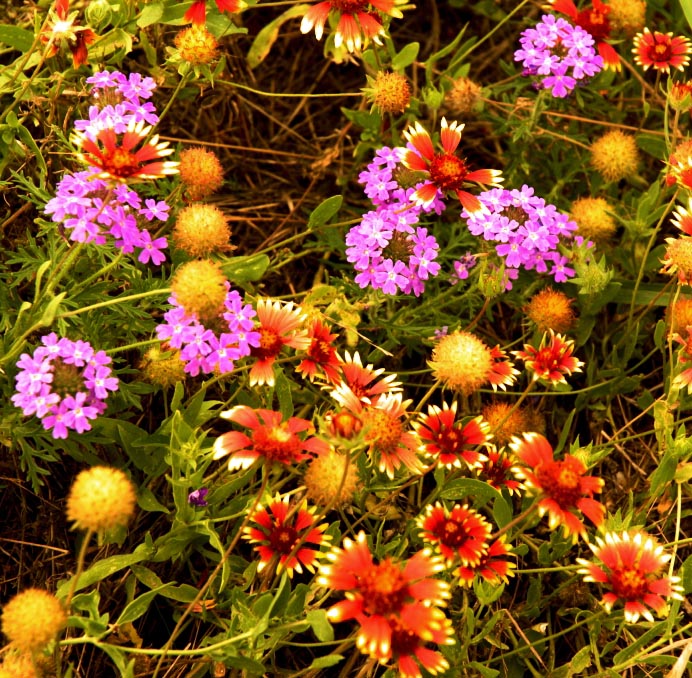
Over a month ago, I drove south of Dallas to meet a friend and take some pictures of Sunflowers (some more here). The field of yellow faces was spectacular and beautiful – can’t wait for next year to go back.

But while I was setting up a shot I looked down and saw a mess of smaller, but more colorful and every bit as beautiful, blooms.

I’m glad I noticed them.

Wildflowers south of Dallas.

Wildflowers south of Dallas.

Column in Deep Ellum Art Park

I wanna tell you about Texas Radio and the Big Beat
Comes out of the Virginia swamps
Cool and slow with plenty of precision
With a back beat narrow and hard to master
—-Jim Morrison, Texas Radio and the Big Beat

Deep Ellum Art Park, Dallas, Texas

Deep Ellum Art Park, Dallas, Texas

Deep Ellum Art Park, Dallas, Texas

Deep Ellum Art Park, Dallas, Texas

Deep Ellum Art Park, Dallas, Texas

Deep Ellum Art Park, Dallas, Texas

Weee! on Pillar 4N

Trinity River Bottoms, Dallas, Texas

(click to enlarge)

(click to enlarge)

(click to enlarge)

(click to enlarge)

The Control of Nature

“The industries were there because of the river. They had come for its navigational convenience and its fresh water. They would not, and could not, linger beside a tidal creek. For nature to take its course was simply unthinkable. The Sixth World War would do less damage to southern Louisiana. Nature, in this place, had become an enemy of the state.”
—-The Control of Nature, Atchafalaya, John McPhee

Levee strengthening, New Orleans, Louisiana

Levee strengthening, New Orleans, Louisiana

“The Unites States Congress, in its deliberations, decided that ‘the distribution of flow and sediment in the Mississippi and Atchafalaya Rivers is now in desirable proportions and should be so maintained.’ The Corps was thereby ordered to preserve 1950. In perpetuity, at Old River, thirty per cent of the latitude flow was to pass to the Atchafalaya.”
—-The Control of Nature, Atchafalaya, John McPhee

New Orelans, Louisiana

New Orelans, Louisiana

Geometry and Nature

“Philosophy [nature] is written in that great book which ever is before our eyes — I mean the universe — but we cannot understand it if we do not first learn the language and grasp the symbols in which it is written. The book is written in mathematical language, and the symbols are triangles, circles and other geometrical figures, without whose help it is impossible to comprehend a single word of it; without which one wanders in vain through a dark labyrinth.”
― Galileo Galilei

Trinity River Bottoms
Dallas, Texas

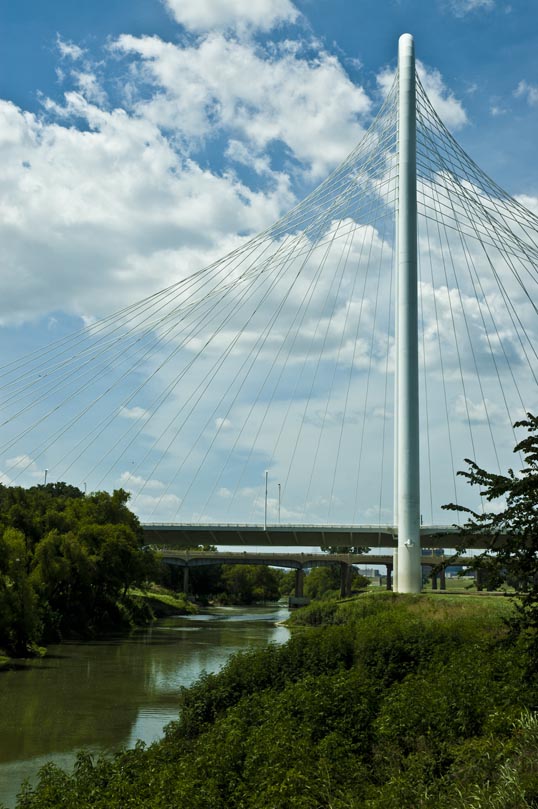
Trinity River and Margaret Hunt Hill Bridge, Dallas, Texas

Trinity River and Margaret Hunt Hill Bridge, Dallas, Texas

There is geometry in the humming of the strings, there is music in the spacing of the spheres.
—-Pythagoras

Downtown Dallas, Texas

Downtown Dallas, Texas

The two elements the traveler first captures in the big city are extra human architecture and furious rhythm. Geometry and anguish.
—-Federico Garcia Lorca