A very busy day today, out and about… I did manage to sit in the Espumoso Caffe in the Bishop Arts District in Oak Cliff and sketch out a short story in my notebook. I meant to type it up when I was home in the evening and let you see it here, but I’ve been hammering away and it’s nowhere near done. I have to drive to Oklahoma City tomorrow to pick up Nick, so I better get some sleep.
All I have for this week, therefore, are three little snips of text, signifying very little. I try to keep on file, well, several hundred little scenes or sketches… mostly culled from the wreckage of failed stories – in the hope that I might be able to use them someday. I pull them out in times of low ambition and massage them, water and fertilize them… see if something roots and grows from the barren cuttings of words.
For example….
The little boy came up out of the water like a sprite from a fountain. He shook the droplets off and watched the tiny rainbows as they flew from his body. He looked down at the dark footprints his wet soles left on the hot concrete – at the space between the toes and curved pads and as he gained speed there was only the toes and the ball, then finally nothing as his skin dried.
A sudden scream of air – a whistle – blown – designed to startle – stopped the boy in his tracks right at the foot of the ladder.
“No Running!” came the simple loud command from high.
The boy shook as he looked up at the voice from the chair – but the speaker was obscured by the bright haloing sun.
He walked carefully the rest of the day, little steps, glancing up at the chair.
That night he ate his dinner and cleaned his plate. Then he copied his lessons from the book onto his blue-lined three-holed paper using his number two lead pencil. He took his evening bath, and – remembering the instructions from his health textbook – combed his hair one hundred times. Finally, he crawled into bed, pulled his blanket up to his neck and quietly, almost silently, sobbed himself to sleep.
He sat on a thin high chair at a narrow bar of blond wood facing the broad windows sipping his drink and watching people drive up outside. Two scruffy guys wearing leather jackets sat smoking and talking – making wide, violent gestures and laughing – at a little table on the sidewalk. He was looking out over their heads. One guy had long stringy dirty hair, balding a little in front. The other had given up and shaved this pate.
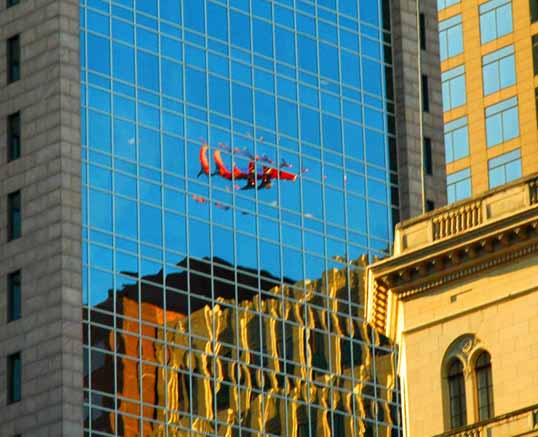
Across the busy intersection was a bank building of white marble alternating in vertical strips with blue reflective glass. It extended up past the top of the windows – he wasn’t sure how tall it eventually was. He glanced up and caught the reflection of an aircraft, an orange and red Southwest passenger jet, crossing the face of the building. It must have been on landing approach over his head; lined up with the bank building’s mirrored windows. The image would jump from one strip to the next, sometimes curved and distorted, sometimes magnified, sometimes shrunk to a pinpoint, depending on the flaw in that particular glass panel. The plane would dance, bend, and jump, flitting distorted and plastic.
He noticed the two guys staring at the dancing plane too. As the reflection disappeared off the left side of the bank they laughed and waved their arms bent in the air in imitation of the flexible jet. They turned and shared a silent smile with him through the window – for a split second.
Until he thought better of it and turned back down to his book.
(click to enlarge)
Paul woke up naked and crusted with what must have been vomit. His brain felt like it had swelled to twice its usual size but was still stuck in the same little head. He thought the pressure might separate his skull along some jagged line, exploding his brain in sweet relief. Every nerve in his body was firing quickly and randomly and the light pouring in from the end of the bridge felt toxic. Paul tried to protect himself by digging deeper under the pile of filthy blankets that was left to him. They weren’t thick enough and Paul was forced to try and figure out what to do. His elbows and knees were scraped bloody and his tongue felt torn on the underside, like it had been half pulled out.
He scrabbled around for his clothes, keys, and wallet and found nothing except a filthy pair of green shorts and a denim jacket that said Big Bambu on the back and a fresh bloodstain coursing across the front. He put those on, wrapped himself in the least-filthy rag he could find for warmth, slid down the concrete slope, and padded barefoot along the trail under the high Interstate overpass back to his car.
He wasn’t really surprised when he found the Chrysler missing. He dug around the camp trying to find anything of value but it had been stripped. The dirty shreds of rags, old shopping carts, and trash were still there as was a dark spot where the night’s campfire had burned itself out cold. But no food, drink, shoes, or anything else of any value remained.
Paul sat and cried for over an hour, until the sun rose and heated the mass of concrete overhead and it felt like a rumbling broiler. He could not figure out how to get home. He considered hitchhiking but couldn’t imagine anyone stopping for a horrible apparition like himself. He couldn’t find any change – not enough for a pay phone, and the thought of trying to panhandle… he couldn’t bear the thought of someone seeing him like that.
Then Paul realized that the creek at the bottom of the interchange was the same drainage system that coursed through his apartment complex. He thought he could follow the way, make the correct turns. He limped down into the stale slow-flowing water, the mud feeling good on his feet, but the filthy liquid stinging his wounded knees and elbows. He noted the direction the water was flowing, turned into it and began trudging upstream.
I always carry a notebook and a selection of fountain pens around with me. I would fill Moleskines up too fast, and could not afford them, so I carry Staples Bagasse composition books that I buy by the stack when they are on sale.
A writing teacher once said that ideas float around in the air like little feathers. If you don’t grab it and write it down right away, it will float away on the breeze. Somebody else will catch your idea. That makes sense – many times I’ve recognized something in print that had floated through my head untouched sometime in the recent past. My idea had escaped and been captured, pinned down on paper, by somebody else. He also said not to safe your ideas – don’t be cheap with them – but go ahead and use them as soon as you can. No matter how brilliant you think they are, there will be more to take their place – and these will be better.
So I work hard at grabbing whatever is at hand, usually my notebook, when the ideas come to me and scribble away. These can take a lot of forms – but today I’m talking about little scenes, what I call snippets. These are not fully formed stories or even coherent scenes, but little pieces of story, culled from experience, memory, and mysterious imagination – all mixed together.
These appear in my head, I write them down, and maybe I’ll use them in a story someday. But, for no reason at all, I think I’ll type a few of them down here.
Keep in mind these are completely raw first drafts – they should not be read by the public, not yet, but it is what it is.
Today, I have four. Two each started by two single objects – shopping carts and bamboo.
First, Bamboo
Men with a hacksaw
I am not generally afraid, even in the big city, and I have spent a lot of time running on the Crosstown Trail without any real fear. But there was that one day, cold and drizzly, with a thick fog rolling in, when I was out there by myself and I began to get a little worried. I came around that bend, you know where it is, where it runs through all that thick brush. It’s like a green tunnel and even though it’s in the middle of the city, it is so quiet and dark it feels like you are out in the middle of nowhere. That’s why I like it so much. But that day…
There were these two guys walking along. They were young and fit, muscular, and menacing. I immediately saw them, luckily before they saw me. They were walking off the trail and when I saw them they were looking into the woods and gesturing. They were looking intently, like they were seeking something or someone. But what really caught my eye is that one of them was carrying a hacksaw – a big, heavy one. It looked like an odd but effective weapon and I realized they were going after something they had spotted in the brush.
I felt my heart skip and a knot pop into my belly and I immediately jumped off of the trail and slid down into this little ditch where they could not see me. Before I left the condo I had decided to leave my phone to charge and so I didn’t have it with me. I hugged the damp, cold earth on the side of the ditch, hoping the two men didn’t see where I was hiding.
I could hear them talking excitedly, but the fog damped the sound and I couldn’t understand. Then, I heard the sawing. It was loud and hollow sounding and my heart kept beating faster and faster. I didn’t hear any screams, so their victim must be dead already. My mind raced with horror as the awful sound kept going. There would be a pause every now and then, and I could hear the men babbling, then it would start back up.
I was about to go crazy with panic when the sawing finally stopped. But then, to my horror, I could hear the footsteps of the men as they walked off and I realized they were going down the trail right towards the spot where I was hidden. When they reached my location, they could look down into the ditch right at me.
As they approached I gathered my feet underneath myself and tried to brace my crouch. My only hope of escape if they saw me was to spring up onto the trail and bolt away as fast as I could. I am a strong runner and hopefully, with the element of surprise, I could escape.
The second I completed my preparations, they were upon me. Now that they were closer, I could understand what they were saying and as I tensed, I heard.
“Oh, these are just perfect.”
“Yes, we can coat them with urethane, not the glossy stuff, it’ll look cheap.”
“And they’ll support the shelves and will have just the look we want.”
I looked up and there the two were. One still had his saw and the other was carrying a load of bamboo under his arms. I remembered, there was a grove of bamboo around the corner… they were cutting bamboo for bookshelves.
There was a loud clatter as the bamboo hit the concrete trail. They had seen me. I was covered with mud and loose leaves from my slide down and must had scared the two men to death to find me crouched in the ditch like that.
There was nothing for me to do but to go on with my plan. I sprung out, stumbled a bit, then picked up speed. I could hear one man screaming as I ran as fast as I could. I looked over my shoulder and saw the other one sprinting to the blue-lighted emergency phone a few feet back down the trail. Why hadn’t I thought about that.
I doubled my speed. Now, instead of racing the two men with the saw, I was trying to get out of there before the cops arrived. I didn’t want to have to explain all that.
Hidden Grove
There is a grove of bamboo off to the side, across a narrow grassy lot, on Peter Scranton’s drive to work. He looked at that bamboo twice a day, about three hundred days a year for fifteen years. “That’s what, about nine thousand times,” Pete said to himself.
Pete had read a book about gardening and the author strongly discouraged planting bamboo because of its unstoppable fecundity and tendency to spread. Once it was in the ground, it was impossible to stop.
The stand that Pete saw would advance a little across the vacant lot, but then retreat. Pete would see bright yellow shoots sprout up with amazing speed. These would always disappear in a few days. Someone unseen was hacking the vegetation back.
One day his car blew a head gasket in a cold rain – rapidly clattering to a steaming stop. He was so discouraged he found himself abandoning the useless old wreck and striding across the little vacant lot. When he reached the familiar stand of bamboo he pushed the strong but yielding stalks apart and buried himself.
He watched his car being towed away and his wife and coworkers walking along the road as he peered out of the thick bamboo. After a day, nobody came by any more, though he saw someone he didn’t know stop and nail a poster with a photograph printed on it on a nearby wooden power pole. He supposed it was a picture of himself, though he didn’t recognize it.
When he was thirsty he found he could bent the bamboo stalks and get a little water to run into his mouth. After the first day he was hungry, but after three days the hunger left him. He watched the new shoots come up in the lot and when the workmen came to cut them back they spotted him lurching around back in the grove, making the bamboo sway, even though there was no breeze.
They had to cut most of the grove down to flush him out. They took Pete away for observation.
Within a season, the bamboo had grown back. You couldn’t tell that anything had happened there.
Next… Shopping Carts
Carts in the Pond
Sometimes, when the weather was warm, he liked to sit beside this little pond in a park near his house. The bank all around the pond was steep but there was a spot where a tree had died and left a flat area ringed by a rock wall that was a particularly comfortable place to sit.
He was sitting there looking across the pond where a sidewalk ran when he spotted a couple of teenagers pushing a shopping cart. There was a grocery store a block away and he could see a single shopping bag in the center of the cart. When they reached the middle of the part of the sidewalk that ran along the pond, one kid reached into the cart and pulled out the bag. The other simply turned the metal cart and pushed it down the steep bank where it hit the water and with a soft hiss, quickly sank beneath the surface. Once it was gone the two kids kept walking, now carrying the bag in their hands. It didn’t look very big.
He was upset at this. He knew the grocery store was losing money and would soon close. The neighborhood would be hurt by the lack of shopping and the image of the big empty box on the corner, the vacant parking lot. Those carts were expensive and those kids were one reason nothing good ever lasted any more.
He thought about yelling something, but they were too far away. He couldn’t even chase them. By the time he rounded the pond they would be long gone. They were too far away for him to even recognize who they were – if he saw them again, he wouldn’t even know it.
So he sat there for a little longer and then walked home. He never went back to the pond again, preferring to stay home and watch television.
Racing With the Wind
Roger and Annette had to rush to the van from the basketball court. Annette ran with her oldest daughter’s hand in her own while Roger carried their young son, barely more than a toddler, in his arms. A huge black angry cloud was building rapidly to the west and the boiling thunderstorm was beginning to kick up a cold fast wind.
As they piled into the van the humid heat of the Texas summer was shoved aside by a blast of cold storm outflow air. The second they settled in, locking the toddler into his car seat and making sure the girl had her belt fastened the wind rose to a howling gale. Dust and leaves rose in a shooting cloud and the van rocked from the power of the wind.
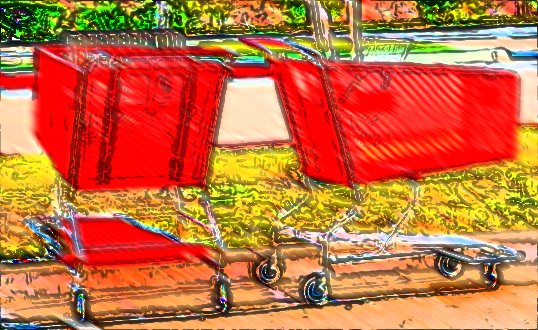
To watch their daughter’s game they had had to park across the street in the lot of a small shopping center. It was anchored by a big hardware store and the wind suddenly began grabbing the hundred shopping carts piled out front and sent them shooting across the lot like rockets, right toward Roger and Annette’s van.
They flew in a wheeled phalanx, upright and racing, some swerving a bit due to a wonky wheel, but most moving with amazing speed. Roger and Annette could do nothing but watch them come. Most were driving in rumbling mass to the south of the van, where they watched them pass, hit the curb, and then tumble out into the street.
A few veered to the left and came close to the van, but thanks to a lucky act of providence, none actually hit them, although some only missed by inches. Roger, Annette, and their daughter sat there helpless, and felt a great relief when the sudden windstorm died down and was replaced by fat, pelting rain. They felt very lucky they had not been hit, though it only would have been a little dent at the worst.
The toddler, of course, thought the whole thing was a blast and laughed as hard as he could as he watched the shopping carts fly by.
Go ahead – read it now. It’s not very long – it won’t take up much time.
I read this story in college. For a chemist, I took a lot of literature classes. Most of them were honors level courses – and looking back, I didn’t get much out of them. They were very intellectual and were interested in ferreting out symbolism and deconstructing the text… and now, decades later, I realize they completely missed the point of what we were reading. My fiction writing classes were worse than useless; they set my writing ability back so far I’m only now, in my fifties, beginning to unlearn the false dreck violently stuffed into my young head.
After having exhausted my allotted supply of honors courses, I tacked on an ordinary English class – The Art of the Short Story. Basically, we cranked through a textbook that contained one hundred classic stories and wrote three papers or so a week. Our instructor was intimidated by the classroom setting so we met in a bar, talking about literature while we drank cheap yellow 3.2 beer from schooners, listening to each other’s conversation, and watching rivulets of condensation run down the thick glass.
This was a revelation. There was none of the vicious oneupmanship of the honors classes or the viscous boredom of the scholarship. It was true, lively banter where everyone was able to bring a different point of view along with some fresh ideas.
I’m sure I wrote an essay on A&P, but don’t remember what my angle was. I was working at a gas station over break back then and I remember really liking the paragraph where Updike writes about the sounds an old-fashioned cash register makes. He had it exactly right.
I go through the punches, 4, 9, GROC, TOT — it’s more complicated than you think, and after you do it often enough, it begins to make a lttle song, that you hear words to, in my case “Hello (bing) there, you (gung) hap-py pee-pul (splat)”-the splat being the drawer flying out.
The other day, after all these years, I discovered a short film version of the story. You should be able to watch it at this link – courtesy of SPIKE TV of all things:
I’m a little ashamed to admit that I stumbled across this short looking up information on the new Three Stooges Movie. The guy in the short will play Larry in the Stooges movie, and, of course, you remember the actress that plays the girl, Queenie, from Road Trip.
I’m glad that they made this short. I am very glad I saw it. However, like any time a visual representation is made about a piece of literature that was important to you, I’m disappointed at some of the changes they made in the presentation.
The video doesn’t really fit my impression of the story… I think it’s the cutsie music. Or maybe the Ipswich accents.
The short story is edgier than the video suggests.
I didn’t like the scene where he imagines meeting Queenie at the party (though I suppose they had to pad it out somehow). It makes the story more of a romance fantasy, or a poor boy/rich girl story… which it is not. It is a much more fundamental conflict at work here – an elemental question of values.
And worst of all, all though the short has no qualms about presenting the protagonist’s internal dialog in voice over, it leaves out the last, most powerful bit. I’m talking about the last half of the last sentence of the story. The internal dialog that contains the horror of the story. The voice over says his stomach fell, but it doesn’t say why.
The story does.
I look around for my girls, but they’re gone, of course. There wasn’t anybody but some young married screaming with her children about some candy they didn’t get by the door of a powder-blue Falcon station wagon. Looking back in the big windows, over the bags of peat moss and aluminum lawn furniture stacked on the pavement, I could see Lengel in my place in the slot, checking the sheep through. His face was dark gray and his back stiff, as if he’djust had an injection of iron, and my stomach kind of fell as I felt how hard the world was going to be to me hereafter.
“how hard the world was going to be to me hereafter.” I still remember reading these words in college and the fear that they struck in me.
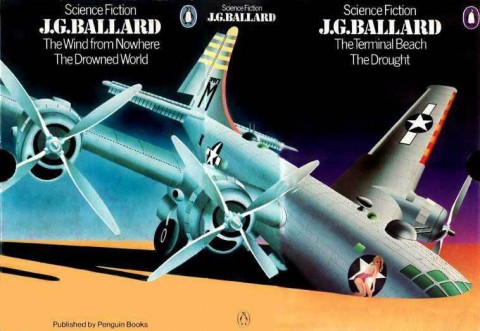
I’ve written about J. G. Ballard before. I mentioned his collection of short stories, Vermilion Sands, as an influential part of my youth. Also, not too long ago, I read his novel, High Rise, and gave it praise.
Now, a collection of Ballards complete short story oeuvre has fallen into my grimy paws and thought I know better, I keep reading away at it. We are talking about ninety eight stories here and a single page short of twelve hundred in total. That is a lot of words. This is no small feat. This is a long-term reading task. I have better things to do.
But I can’t help myself. I do so love his writing. His strange, aloof characters. His horrific, yet familiar, dystopian societal landscapes. The way he never really quite explains exactly what’s going on (this is especially true of his short stories – his novels are much more straightforward). He also has a way with titles – all the way from “The Cloud Sculptors of Coral D” to “Why I Want to Fuck Ronald Reagan.”
There is also the fact that I read a lot of these when I was a kid. The stories are in the book in chronological order and I can feel years of my life falling away as I remember when I first came across these.
Some made a big impression on my. I remember “Manhole 69” as being a claustrophobic tale of three men that had been surgically altered so that they did not need to sleep. Slowly their world began to pull in around them until they were trapped in a tiny space… the manhole. It creeeped the bejeebers out of me when I read it in high school. So now I reread it and… well, my memory was pretty much spot on.
There was the novella “The Voices of Time.” It too left me with a strange uneasy feeling that has persisted for forty-odd years. I remember a strange mandala cut into the bottom of an abandoned swimming pool and animals mutating in very odd ways (frogs growing lead shells, a sea anemone developing a nervous system) but little else. This time I’m reading more carefully, taking a few notes, reading with decades of literary experience…. I think it was better the first time – complete with the veil of mystery. Well, it didn’t make that much difference… there is still plenty of mystery.
So, I don’t think I’ll keep going to the end unstopped. But the stories will always be there and if I have an hour or so I’ll crank through another. Maybe in a year or so I’ll have read them all.
That’s an interesting idea – an entire prolific life’s worth of short stories, read in order. You feel like you get to know a man that way.
I am in the home stretch of finishing up the editing and conversion of my book of short stories that I will put out as a Kindle ebook. I’ve been in the stretch run for a while. I’m struggling now with the cover… but mostly I struggle with the fear that putting something out there generates. Nothing to do but plug ahead as best as I can.
I have been thinking a lot about price points – about what I’ll charge for my book when I get it out.
First of all, isn’t it amazing that I’m even getting to decide this? Unpublished, unknown, talentless, loser writers didn’t used to have input on these decisions. The publisher decides.
But publishing, as we know it, is dead. It doesn’t know it yet – though it has a strong suspicion.
The Publishing Industry. I hate it when groups like Publishing call themselves an Industry. (Music Industry, Movie Industry, Television Industry) I’ve worked in Industry and Publishing is not an Industry (Book Printing is an Industry, but you have to go to China to find it). Industry isn’t art – it isn’t creative (not in the usual sense of creativity) Industry is a world of huge heavy smelly machines – a world of maintenance and statistics – it’s a world of hardhats, steel toed shoes, and flame resistant uniforms.
When a group like Publishers call themselves an Industry… they are dead. They have killed themselves. It is only a matter of time. The only thing left is momentum.
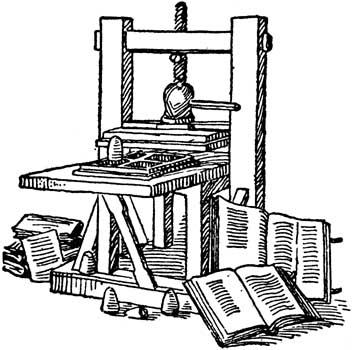
Underwood Typewriter
So I get to write whatever crap I feel like. And you get to read it. That’s not Industry – that’s the future. The question I have left is, “How Much Do I Charge.”
That’s a tough question. The head swims. To decide, the only way is to break it down, make a few options and choose between them. Eliminate the bottom choices, one by one. OK, that works.
The price points of ebooks don’t take long to figure out. They are:
Really Expensive
Ten Bucks
Two Ninety Nine
Ninety Nine Cents
Free
The top choice, Really Expensive, is easy to eliminate. I’m nobody. I’m not selling a textbook or legal reference full of knowledge that is extremely valuable to an extremely small group. So, Really Expensive is out.
TRS80
Now, we are down to the affordable options. Why not free? This is my first ebook – all I’m really interested in is getting it out there. The idea is to get as many readers as possible, and then try and keep them. I have more books (already have enough short stories for another volume, and a novel is not inconceivable – I have a killer first sentence) in the pipeline, and a free teaser would help me spread the word.
Free is tempting, but I don’t think I’ll go that way. There is a question of value. A book is a relationship between an author and a reader. That relationship should/must have some value for it to be real and useful. Free is throwing propaganda leaflets from a bomber’s bay, free is a blog, free is a mimeographed sheet stapled to a telephone pole. These are all good things, important things, but that’s not what I want this time around.
What I want is terribly nebulous but it I feel it has to involve a transfer of value for it to truly occur.
That leaves ten, two ninety nine, and ninety nine cents.
Ten is tempting. That’s what I think an ebook should cost. That’s what I am happy paying for an established author, for something I’m pretty sure I’ll like. For the hours of enjoyment that a good book gives, ten dollars is a fantastic bargain. It even provides a nice return for the author.
But ten dollars is still a lot of money. Especially in this day of terrible tribulations and looming financial collapse a ten dollar purchase is a tough call (or at least it should be). I’m not established, I’m no sure thing, I’m not very good.
Ten dollars is too much.
Now we are down to two options. Two ninety-nine. Or ninety-nine cents.
Two ninety-nine is a great option. That’s the price (more or less) that Amazon kicks the author’s royalty up to 70 percent. My return on a book sold at that point is twice what it would be at only a few cents less. It’s not a lot of money. I feel sure that this is what I’ll charge for my second book, if I live that long.
Three bucks – a hamburger… a drink at happy hour in a bar… a bag of chips… or so. It is an odd amount of money… sort of in between.
Still, two ninety-nine… that’s not an impulse purchase. You have to think about it. It might not be much of a thought, but it is one.
And ninety-nine cents? What’s that? That’s nothing. Click on that link and it’s yours. Don’t even think about it. If it turns out to be crap – so what? You’re only out ninety-nine cents. Less than a dollar. You won’t miss a dollar. You can’t hardly buy anything with a dollar anymore.
Ninety-nine cents. The more I think about it, the more I like it. It’s something, it’s a transfer of value, but otherwise… it’s like a gift from me to you.
It’s like a cheap lottery ticket. Maybe it will be good, maybe not. But if it hits, you’ve got a lot of entertainment for not a lot of money. If it misses, so what? There is even the enjoyment of the momentary fantasy that you’ve found a bargain, something cool that nobody else has. That’s worth ninety-nine cents, right?
Call Me Ishmael
I have always loved Kafka. His writing has been a huge influence on how I live my life (God help me). During his life, he published almost nothing. When he died, his final request was to have all his work destroyed (thank goodness, Max Brod decided to ignore his good friend’s dying wish). If Kafka was living in today’s times would he be pumping out ninety-nine cent ebooks? I like to think so. Would anyone be reading them? Probably not.
I'm afraid to grow up because sometimes it feels it will never be this beautiful again.
I couldn’t sleep last night and I decided to clean up my reading list a bit and finish something I had already started. It didn’t take long to set in on the last story in Alice Munro’s last collection of short stories, Too Much Happiness. This was the long story… almost a novella… that the collection was named after. Too Much Happinesswas addicting and I had to keep reading until I was done, no matter how tired I was or how soon the next day’s work would come.
Alice Munro is a brilliant genius. She is, in my humble opinion, the unquestioned master of her genre. If you read the plot summary of one of her stories, you will scratch your head – it will read as melodrama, or a series of random, unconnected action, or it will seem that nothing much really happens. Her mysterious skill is so great that when you actually read the test it makes sense, draws you in, and takes you on an emotional journey far from your pitiful little room where you sit clutching that tattered paperback.
If I could have one ability – I would choose to be able to do, whatever it is, that she does. She makes seamless connections where none should exist. There is a concept that art is the conveying of something that can’t be done any other way. And that is what Alice Munro does, that is her genius. You can’t really summarize or explain what she writes because it is art of such exquisite subtleness that it has a kind of Heisenberg Uncertainty about it – to explain it is to change it.
The collection has a series of her typical mastery. Thinking about it, I almost want to go read it again.
But that’s not what I want to talk about tonight. I want to discuss that last long story, because it is different than what she usually writes.
The long story, “Too Much Happiness” is the story of a woman traveling across Europe one winter in the last decade of the nineteenth century. She visits a series of people from her past and spends a lot of time on cold trains moving through dreary country thinking about her life.
As I plunged on I realized that this was a real person that I had heard of before. The woman was Sofia Kovalevskaya – the first Russian female mathematician. She had been rumored to be the subject of a Thomas Pynchon novel – though she ended up being only a minor character. A fascinating character with an unusual, varied, courageous, and ultimately tragic life. Given such a dynamic protagonist most authors, writers of lesser vision and talent, would have wrote of the high points of such a person, scribbling in breathless prose her struggles to become a woman of letters in a time and place this was unheard of – her arranged marriage – her wild affairs – her political involvement – her friendship with famous figures of the day: Darwin, Eliot (there is a passage in Middlemarch where her mathematical theories are mentioned), and Dostoevsky.
But Munro spends most of her words simply detailing her journey, the people that she shares her compartment with, the difficulties she has with the changing weather, languages, and currency she has to deal with.
And I don’t know how she does it… but it works. By the end you feel you know Sofia… you want to meet her… and most of all you care about her. The ending is devastating, but not unexpected. It is, after all, a life.
The final sentence notes that there is a crater on the moon named after Sofia Kovalevskaya.
And, that’s that.
Reviews of the Alice Munro Collection Too Much Happiness:
I have to be careful with what I’m reading. It influences what I write. I distort what comes out of my pen by what goes in my eyes.
Lately, I’ve been reading too much lurid pulp fiction.
Whip Hand
W. Franklin Sanders is a pen name for Charles Willeford… Ebook Here. Whip Hand was also published under the title, Deliver me from Dallas. In this heat… I know the feeling.
I needed something to take to our writing group, so I punched up a writing prompt generator and what came up was: Nonchalantly she reached into the other woman’s handbag and whipped out her purse.
Using this prompt, I wrote out a quick four pages…. this is what I came up with, Raw First Draft.
Pickpocket
The book she had read was nothing more than a pamphlet, printed long ago in blue mimeograph ink on office paper and crudely stapled into a small, rough book form. Loralee remembered the smell of fresh mimeo from grade school. The pamphlet paper was brittle, the blue fading, and crisscrossed with yellowed cellophane tape repairs but it was all still readable.
Loralee had bought the pamphlet at a strange little bookstore she had stumbled into while on a trip to a business conference in New Orleans.
Her boss had called and set up a meeting on the second day of the conference in a private hotel room. It seemed a little odd to Loralee, but she figured there was a new program to launch or some reorganization she had to help smooth over.
Instead she was laid off.
“Well,” her boss said, “At least you have two more days in New Orleans to enjoy yourself. Don’t worry about the meetings; and your hotel is paid for.” Her face seemed to creak as she forced out a frightening smile.
Thanks a lot.
Loralee spent the rest of the afternoon at the hotel bar, hitting it hard, charging the tab to her room. But when the meetings finished and she saw her coworkers returning to the lobby, gathered into conversational clots like old spilled blood, she couldn’t stand it and staggered back up to her room. As soon as she entered, she had to tumble into the bathroom and barely had the time to stick her head into the toilet before she heaved and puked up what seemed like a lot more than she had drank that afternoon – which was a lot. She continued to convulse even after she was empty until her diaphragm ached.
Finally spent, she tumbled onto the sagging hotel bed and fell into an uneasy sleep full of terrifying dreams.
When she awoke she saw a half-light splayed across the sheer curtains of the room. The digital clock had six fifteen glowing in red numbers. Loralee didn’t know if it was AM or PM and curled on the bed, staring at the curtains until she was sure that it was getting lighter, rather than darker. Six AM it was.
Hungover, wearing sunglasses despite the overcast sky, Loralee stumbled the uneven brick and cracked concrete of the French Quarter looking for… she didn’t really know. As she walked she chanted, “Laid Off – Let Go – Laid Off – Let Go” over and over like a Mantra. Almost everything was closed this early in the morning, street sweepers pushed filthy piles of cups, bottles, and beads down the middle of the street. Each block seemed to have an unconscious person still snoozing up against a building or beside a stoop. The smell of last night’s old beer and piss hovered over the still air like a filthy umbrella.
Finally she spotted the open door of the old bookstore. It actually opened out into an alley, with the entrance barely visible around the corner from the sidewalk. The alley had a rusty streetsign – the letters were faded, but it was barely legible, “Rue Deday.” A red neon light glowed PEN – the “O” was burned out. Without knowing why, Loralee turned the corner and went in.
The stacks smelt like old mold. Loralee thought that most used bookstores were musty like that – but this was one step beyond. Maybe it was just New Orleans, maybe the French Quarter, maybe the ghost of Katrina. There was a lot of evil old water around.
The books were not marked, no prices. Loralee wanted to stick it to her company so she asked the ancient, bent proprietor, “What’s the most expensive shit you got.”
He did not flinch – simply peered over his thick glasses at her with eyes that were surprisingly bright and clear for someone of his age – otherwise he looked to have one foot in the grave. “Well, dear, we have a drawer of very expensive shit right here.” He pulled a massive key chain off a nail by the register and removed a padlock from a small metal filing cabinet.
The cabinet was full of old manila folders, each marked across the front with a scrawled red marker. The marker showed various prices – all over one hundred dollars each. The folders contained various bits of paper: single yellowing crumpled sheets, folded maps, handwritten notes.
Only one folder had anything that was thicker that a few sheets. That one had a folded and stapled booklet with the label, “How to be a Pickpocket, Guaranteed!”
The price on the pamphlet was one hundred and twenty five dollars – which seemed really steep, but Loralee still had her company credit card. Somehow, her boss had neglected to confiscate it in her “exit interview.” She knew it would be deactivated any minute and wanted to waste anything still left in the account.
“I’ll take this one,” she said to the old man. “Here charge this card,” she said as she extended her company card for the last time.
Back home she fell into a languid life of half-hearted job searching. She ventured out to a big warehouse store and bought a case of frozen fried chicken dinners and several of ice cream. She would send out enough letters and resumes, apply online when she could, enough to keep an unemployment check coming, but her heart wasn’t in it.
One thing that did interest her was the old pamphlet she had stuck her company with back in New Orleans. For something so short it was surprisingly complex. She kept noticing something new every time she picked it up.
Different paragraphs were written in different styles, all jumbled together. Some were in a modern, hip, joking style, talking about “Stealing for Dummies,” and such. Others were in an arcane style, full of old-fashioned spellings and extinct phrases. The text seemed to be one third cold, dry instruction, one third psychology lessons on how a mark thinks and what he will and won’t notice, and one third strange incantations designed, as the pamphlet said, “To reste the spirit and calme the blood.”
She read and re-read the thing. When she would put it down to try and watch TV or to get something to eat, she would feel it growing in her mind until her hands would actually quiver and itch for the feel of its aged paper between her fingers.
Some of the pages contained simple exercises meant to improve dexterity and quickness. She set up some little stations around her apartment. Everything was laid out exactly as the pamphlet called for, bits of cloth, small metal weights (she used some old hexagonal steel nuts she pried off the bottom of her coffee table), and shapes folded from shirt cardboard as diagrammed in the pamphlet.
Loralee would practice over and over again. First she would mumble the words prescribed on the pages; she felt an odd urge to try and get all of it exactly right – no matter how silly it seemed. Then she would go through the motions of snatching the metal nuts from whatever cradle they were hidden in. At first she would make her move while looking directly at the setup, but – as the instructions dictated – after a while she would work with her head turned, and then, finally behind her back. She was amazed to find that, with enough practice, she could snatch the prize without even touching the cloth or cardboard. She felt she could almost see her goal in sort of a glowing mist inside her head, see it clearly, even though it was behind her back.
After three months of preparation and practice, she decided she was ready.
There was a Starbucks near her apartments and as she entered she immediately picked out a matronly woman in a faded print dress at the end of the queue of customers looking confused at the lighted menu overhead. Loralee sidled into line directly behind her as the woman began to ask questions of the barista, “But I don’t understand… are you telling me the Venti is bigger than the Tall?” Loralee muttered one of the incantations under her breath. This steadied her nerves as she leaned over, pretending to look into the case of pastries.
Nonchalantly Loralee reached into the other woman’s handbag and whipped out her purse.
She then calmly pulled the money out, leaving a single five and the change so the woman could pay for her coffee. Without taking her eyes from the pastries she then replaced the purse, sighed quietly, turned and walked out. She could hear the woman going on behind her, “Oh, tell me again, what’s the difference between a latte and an espresso?”
It became easier and easier as her marks became larger and larger. Loralee began to frequent spots – casinos, expensive nightclubs, the racetrack, where customers would be carrying a lot of cash and might be drinking a little. She made enough money to begin buying expensive clothes. That enabled her to sidle her way into parties and receptions of the highest levels of society, where she could accumulate jewels and watches in addition to the mounds of cash she was quickly developing. Luckily, the pamphlet had advice on fencing those goods, and on the methods to safety and surreptitiously convert her ill-gotten gains into diamonds and gold coins – portable efficient receptacles of growing wealth.
She didn’t pay any taxes and couldn’t trust any bank, of course, so she bought a heavy safe and disguised it as a pedestal for her new wide-screen television.
She began to travel. She went to Las Vegas, Atlantic City, Palm Springs… anywhere that the marks might congregate with the cash.
She even returned to New Orleans to push her way through the huge dense drunken crowds at Mardi Gras. That was almost too easy. She could reach out and grab whatever she wanted without even thinking about it. For old time’s sake she returned to the street where she first saw the old book store, but it was gone. She moved along the alley running her hands over the rough brick, but there wasn’t even any evidence of where the door used to be.
Loralee decided she must have been mistaken about which street it had been off of. Even the street sign was missing, so she must have been lost.
After a year of work, her safe was bulging with gold and diamonds, three dresser drawers were stuffed full of hundred dollar bills. Loralee began taking it a little easier. She felt her skills begin to slip. Once, for the first time, a mark turned and shouted at her. She dropped the man’s wallet and fled. She decided to stop, at least for a while. She had enough to last, possibly for the rest of her life.
She liked to treat herself to a nice dinner at an upscale Italian restaurant around the corner. She received the best food and the best service, the waiters like her generous, cash tips. This night she stayed a little longer than usual, sipping on a particularly nice brandy after dinner; thinking about a European trip. It would be her first non-working trip to the old country, and she smiled, mentally planning it.
When she returned home and pressed her key into the lock, her door swung open freely. With a rising tide of fear choking her throat, she quickly pushed on inside. The apartment was a shambles. Everything was tossed about – not a stick was undisturbed. Her television sprawled face down on the floor. Looking at the stand, she saw the bulging cloth covering and knew the safe was open. Pulling the cover aside, she verified what she already feared. It was empty.
She dashed into her bedroom where the dresser drawers were tossed on to her bed, cash all gone. In a rising panic she rushed about the place looking in corners and hiding spots. Everything of value had been found and stolen. Even her old pamphlet on how to be a pickpocket was stolen. She realized she was doomed, there was no way to get this back without her instructions.
Finally, standing in the center of the room, fighting back panic and tears, she noticed something new. On her dining table was an old, dirty, and worn manila file folder. She approached the folder and saw, scrawled across the front, “One Hundred Seventeen Dollars,” in red marker. Shaking, she opened the folder. Inside was a single, torn, worn piece of paper covered with faded typing. At the top it said, “How to be a Burglar, Guraranteed!”
The tree gliders, brilliant painted toys, revolved like lazing birds above Coral D, waiting for the first clouds to pass overhead. Van Eyck moved away to take a cloud. He sailed around its white pillow, spraying the sides with iodide crystals and cutting away the flock-like tissue. The streaming shards fell toward us like crumbling ice-drifts. As the drops of condensing spray fell on my face I could see Van Eyck shaping an immense horse’s head. He sailed up and down the long forehead and chiseled out the eyes and ears.
– J.G. Ballard, The “The Cloud-Sculptors of Coral D”
The Cloud Sculptors of Coral D, By J. G. Ballard
When I’m writing I have to be very careful about what I read. Too much aesthetic sensibility, too much style, too many splintering ideas come in through my eyes and fall out of my fingertips. I have to read something that is related/similar/compatible with what I want to do, or it all goes to crap.
Well, it seems to all go to crap anyway, but….
I’m rereading some classic J.G. Ballard short stories right now. I forget sometimes how much I love his stuff. I first encountered J. G. Ballard in the early seventies, in the form of a moldering handful of cheap pulp paperback short story collections borrowed from an informal lending library in Managua. I was devouring this stuff back then, reading almost a book a day and very little of it remains in the cobwebby recesses of my failing brain – but one thing that did stick is Ballard.
I remember “The Cloud-Sculptors of Coral D” in particular – actually I remember the whole world of “Vermilion Sands.”
I remember being caught off-guard by the bizarre dystopian decadence of the fading fantastic vacation resort. It was a door into a frightening yet seductive world tilted away from our own at an oblique angle. The human heart has been twisted – but not so much that it isn’t recognizable. It wasn’t until decades later and I read “Empire of the Sun” that I began to understand the source of Ballard’s vision.
Last night in bed, while I was fighting to stay awake, I reread “Prima Belladonna” – a story about a mutant beauty with golden skin and insect-legged eyelashes and a man that sells plants that sing. It turns out that it was his first sold story. I love the idea that he bought a pram with the proceeds.
One of the stories in the collection, “Prima Belladonna”, was the first piece of fiction that l ever published, and I can still remember the thrill of receiving the cheque for £8. At last I was a professional writer, and my wife and I celebrated by using the money to buy our baby son a new pram. Pushing it past the department stores in Chiswick High Street, a hundred ideas in my head, I felt that I had found the philosopher’s stone.
I’m in the final stretch of editing my collection of stories – and I am glad that Ballard shares my love of the form.
THE SHORT STORIES that make up this collection were written between 1956 and 1970, and once they were published in a single volume I never returned, regrettably, to this genial playground. By sealing one’s imagination between hard covers one can close the door forever on a still vivid private world. I’m glad that I began my career by writing short stories, when I was free to chase any passing hare in a way that is no longer possible, and without over-committing myself to a single idea. Fiction today is dominated by career novelists locked into their publishers’ contracts like the prematurely middle-aged encumbered by mortgages and pension plans. Irresponsibility, especially the agreeable variety displayed in Vermilion Sands, has a great many neglected virtues.
J.G. Ballard, from The Independent, October 24, 1992
(Emphasis mine)
Vermilion Sands
I don’t know if it was the odd fiction or the electrical fields from the constant lightning booming down from the Texas summer middle-of-the-night thunderstorms outside my window… or nothing at all – that caused a very odd, intense, and complete dream.
I dreamt that I had gone back to college and was moving back into Ellsworth Hall in Lawrence for a year. Everything had changed so much – the front desk gave me a key that was a little sculptural fob shaped like a tiny Picachu. The dorm was surrounded by a maze-like complex of restaurants and entertainment – it was a frustrating navigational feat to simply find the elevators – my room was 1127. I remember that the residence hall had only ten floors.
I felt so old, so out-of-place – like Rip Van Winkle.
1. Supplication (in which the Supplicant must beg something from Power in authority)
2. Deliverance
3. Crime Pursued by Vengeance
4. Vengeance taken for kindred upon kindred
5. Pursuit
6. Disaster
7. Falling Prey to Cruelty of Misfortune
8. Revolt
9. Daring Enterprise
10. Abduction
11. The Enigma (temptation or a riddle)
12. Obtaining
13. Enmity of Kinsmen
14. Rivalry of Kinsmen
15. Murderous Adultery
16. Madness
17. Fatal Imprudence
18. Involuntary Crimes of Love (example: discovery that one has married one’s mother, sister, etc.)
19. Slaying of a Kinsman Unrecognized
20. Self-Sacrificing for an Ideal
21. Self-Sacrifice for Kindred
22. All Sacrificed for Passion
23. Necessity of Sacrificing Loved Ones
24. Rivalry of Superior and Inferior
25. Adultery
26. Crimes of Love
27. Discovery of the Dishonor of a Loved One
28. Obstacles to Love
29. An Enemy Loved
30. Ambition
31. Conflict with a God
32. Mistaken Jealousy
33. Erroneous Judgement
34. Remorse
35. Recovery of a Lost One
36. Loss of Loved Ones.
Foster-Harris said there are three – “Happy Ending” – “Unhappy Ending” – and the “Literary Plot”
Jessamyn West listed out seven.
[wo]man vs. nature
[wo]man vs. [wo]man
[wo]man vs. the environment
[wo]man vs. machines/technology
[wo]man vs. the supernatural
[wo]man vs. self
[wo]man vs. god/religion
Ronald Tobias says there are twenty master plots.
Quest
Adventure
Pursuit
Rescue
Escape
Revenge
The Riddle
Rivalry
Underdog
Temptation
Metamorphosis
Transformation
Maturation
Love
Forbidden Love
Sacrifice
Discovery
Wretched Excess
Ascension
Descension.
As for me, these are interesting ideas and a great starting point to come up with inspiration, but not really practical when the deadline is looming and the mind is empty and the panic is rising.
So, in my “Spare Time” I have started to make a list of short story ideas or plots or basic structures or prompts or whatever. I decided to come up with a number first instead of doing the list first and then counting. Makes more sense to me.
I picked a nice round number – one hundred. So, in my notebook(s) that I carry around, every now and then I’ll think of a new one, write it down and give it a number. I’m only up to sixty six now, so I better get crackin.’
1 Revenge Story – must have downtrodden victim taking revenge on the person/people responsible for keeping him down.
2 Love Triangle – Requires a somewhat passive follower – yet very desirable- character has to choose between 2 pursuers.
3 Someone isn’t what they seem. On the surface a benevolent character turns out to be a monster underneath.
4 Wakes up to the man. Someone, probably a youth, realizes the hopeless, soul-crushing nature of existence – rebels. Successful or not.
5 Unreliable Narrator. – First person narration point of view. As the story progresses the reader realizes the narrator is lying and is not the beneficent person they portray (and believe themselves).
6 Revenge Story 2 – Someone done wrong but NOT downtrodden, takes revenge on a victim that does not expect it.
7 You might be done with the past, but the past isn’t done with you. A long-ago incident – secret- comes back to haunt a person in a secure well-established position.
8 Petty Crime Goes Bad – Someone steals something (notebook? Laptop? Phone? IPOD? Digital storage card or thumb drive?) and it turns out to have something unspeakably evil and dangerous associated with it.
9 (related to #8) Ordinary Object contains evil. Gift? Bought at thrift stop? Item has power but also terrible danger.
10 Fractured Fairy Tales – Take an obscure (or well known) fairy tale and set it in modern day. Kick things up a notch.
11 Rosebud – Filthy Rich self-made man – his fortune can’t cure a hurt left over from his childhood or he can’t rescue a loved one – or both.
12 Memories of Childhood nightmares. – fear of atomic attack, making noise, or other mostly irrational fear – maybe it comes true (just because you are paranoid doesn’t mean they are not out to get you).
13 An ordinary dystopia – A terribly ordinary day is told in all of its horror.
14 Requiem for a Dream – The hero’s constant struggle for a goal, for fulfillment, is turned by a fatal flaw – dreams turn to nightmares. The core sin is that of blindness to one’s true nature – and/or ignorance of one’s love’s true needs.
15 Mediocre athlete – a person aids a naturally gifted person – that is a fraud. The mediocre person ends up relaxing and winning himself.
16 – Expert helps downtrodden – an elite unexpectedly sacrifices a bit of his own success to aid someone not as elevated.
Sixteen down, eighty four to go. Leave a comment if you have any ideas, that would be cool.
—————————————————
17 Blast From the Past – A person meets someone that was a key influence in their distant past.
18 Mysterious Pest From Beyond – a hellish parasite arrives from an unknown location and attaches to the protagonist
19 Monkey’s Paw – Dream comes true, turns into a nightmare (similar to #14 – but different tone)
20 The Opposite Of Doomed Love – What if Romeo and Juliet said to each other, “I love you but this isn’t going to work out, what with the family and all.” What tragedy would ensue.
21 Military in Need – Opponents on the battlefield are thrown in with each other and must cooperate to survive.
22 What we were and have forgotten – The world from a child’s point of view. We don’t remember the fear.
23 Take a story you like, re-write it as your own. Steal Shamelessly.
24. Character undergoes a rare injury. Discovers wires underneath.
25. Take a memory from the past and pair it with an incident in the present. Flashback.
26. Make a list of jokes. Write a scene where the characters say the jokes.
27. Pick a spot and place a couple arguing there. Write the backstory. Write what happens in the future.
28. Desperate child after his village is destroyed by the revolution. How does he/she survive? Revenge? Childhood redirected to hate.
29. How I met your mother. How I met your Grandmother. Has to have a twist.
30. Crazy neighbors.
31. An accident on the freeway.
32. A crash on the road – on purpose.
33. A man begging with an unusual sign.
34. A relationship dissolves in alcoholism and insanity.
35. Fan fiction – controversial episode.
36. Write about a simple story in a world very unlike the one you live in.
37. Hitchhikers picked up by someone very unusual.
38. Someone is given a prophecy of the future that he can’t understand
39. Aliens abduct a loved one. What happens when he returns different.
40. Trapped by a fire.
41. Think of an insane future scene.
42. Combine a wise teacher with a scene from a horror film
43. Take a favorite painting. Write the story within.
44. Some reading an unusual “Idiot’s Guide to” book.
45. Something loud happens at the library
46. Expensive security system – owner has to disable.
47. Have to help a friend dispose of a body
48. Everyday item – version built by aliens.
49. Mismatched couple at a restaurant
50. Unusual version of an ordinary item.
51. Man sees something from the window of a commuter train.
52. City person finds himself in wilderness with a person that lives there.
53. Busy city scene at a deserted time. Why?
54. Unusual Addiction
55. Trapped in a cave. Trapped in an elevator. Trapped in a locked room. Trapped outside the house.
56. Look through Journal entries. Pick a story and write in third person. Kick it up a notch.
57. Commuter sees something unusual on the highway during rush hour traffic.
58. Look through odd headlines (Weekly World News) for story inspiration.
59. Pick a brain teaser that involves a story problem. Write it as if it really happened.
60. A good person is forced to kill.
61. Future dystopian life in a large, crowded hotel.
62. Protagonist finds an unusual fossil
63. Sweet and sour – a protagonist that has had something terrible happen but finds himself in a beautiful spot in nature.
64. Scars – explanation – lies, maybe?
65. Working at a large, complex factor. Security guard? Finds something unexpected.
This week for Snippet Sunday I’m putting up an entire short story. This is the rough first draft I wrote some months ago and then abandoned. The biggest problem is that it is simply too damn grim. I like a few things about it and want to completely re-write the thing in a lighter vein, if possible. In the meantime, here is what I’ve got. Any ideas?
The Fortress of the Copper Thieves
Mobungu tossed all afternoon – he had a two day shift of guard duty coming up starting that sundown and he wanted to get some sleep. In his dreams he ran through a thick forest – its image was blurred and indistinct because he had never actually seen more than a handful of trees at once – chased by something hissing and shaking the foliage behind him, out of his sight. He wanted to turn and look, but knew that if he paused, it would overtake him, whatever it was. In the dream he could feel hot breath on the back of his neck. All he could do was continue to rush forward in a fog of overpowering fear – thorn-studded vines tearing at his skin, brambles cutting his feet, and branches grabbing at him, pulling him back. It felt like he wasn’t moving at all and the thing behind was just about to catch up.
For the twentieth time he woke shivering, his blankets cold and wet – soaked through with his own sweat. Orange light was pouring in under the lip of the lean-to and Mobungu realized that it was finally evening and time for him to move to his guard post. His joints creaked as he rose and pulled on his tunic, then his woven serape marked with the double triangle symbol of his tribe, and placed the rusted iron pot over his head. He gathered up his spears and atlatl. They clanked as he bound the the throwing stick and the barbed shafts with the cloth strip that served as holster and sheath – again embroidered with the sign of his tribe. Mobungu shuffled out of the shelter and struggled through the cold mud down to the water.
His canoe was tied up on a stake driven into the slippery clay of the bank. Mobungu slid down and hooked a knee around the stake, reaching out with a metal bucket to bail the water out of the canoe. It was made of thin iron plates hammered flat and riveted together. It leaked like a sieve. As he worked, the clang of the bucket against the wet metal was familiar to Mobungu – but that didn’t make it any more pleasant.
The sound reminded him of his old pirogue, which never leaked and was always quiet. His father had built the canoe before he was born. It had been hollowed out from a single log – a log that must have been far larger than any piece of wood that Mobungu had ever seen. His father said they had built a fire inside the log and used scrapers to hollow it out, to fashion it into the long smooth shape that slid so silently through the water. His father had been a great warrior and the pirogue his prized possession. When his father had fallen in battle – an arrow pierced his throat – there was some talk in the village of the honor of burning his body in the fire of his battle-canoe, but his wife said that was too wasteful and the pirogue was passed down to his son.
Mobungu protected the pirogue as long as he could, but as the white powdery plant-death spread and spread the shortage of wood became so acute that one icy winter evening, the village elders commanded him to drag the canoe up to their metal hut where it was chopped apart and used for their heating-fire. It felt like a chunk of Mobungu’s heart had been ripped out and consumed by the Elder’s need for heat, but there wasn’t anything he could do about it.
Once the canoe was bailed, Mobungu slid into it, nestled himself against the cold bottom and ungiving sharp bulkhead and began to paddle. The oar was a metal tube with a flat piece bolted to the bottom and it was cold in his hands. The vessel was not efficient but Mobungu was strong and he moved quickly down the estuary and out into the choppy salt water of the large bay. It was short distance across to a small island where the first line of defense for his village was set up.
They had traveled a long way to reach this point, the farthest east they could go. Almost a third of his village – most of the children and all of the old people – had died in the terrible journey, but they had no choice; driven forward by tales of a gigantic ancient city full of treasures. The elders had called the tribe together and set them on the long trail to the east, knowing they could no longer survive on the dying lakes and barren mountains of their home. The pain and tribulations of the journey were almost unbearable, but the tales were truthful. Paddling with his head held high – as he neared the guard post Mobungu could see the rotting towers of the ancient city still glittering in the failing light of the setting sun. It was still a long way away, isolated on a huge island in the estuary, covering an island that split a mighty river that poured down from the north right before it joined with the sea.
The expanse of water between the shore and the city was rough and wide, but not an impenetrable barrier. After their terrible migration Mobungu’s tribe was stopped, though – trapped, starving, on the bank, thwarted in their desperate quest by the powerful tribe that lived in the city. They were doomed by the tribe of the copper thieves. The vast bay and the estuaries that lined it was guarded by the fortress of the copper thieves, which was on a small island. Mobungu’s guard post faced that island fortress, across a short stretch of water. If the copper thieves were to launch an attack on his village, a quick warning would be the only thing that might save them.
Darkness fell quickly as Mobungu slid into the guard station and climbed out of the canoe. He was replacing Teemanga, who had been on duty for the last two days. As he approached the shack Teemanga was stretched out beneath a blanket and snoring loudly. Sleeping while on guard duty was a crime punishable by death, but Mobungu simply kicked Teemanga on the back of his legs until he woke with a snort. There were many crimes that were going unpunished in these dark days.
“It’s all yours. Your food has been delivered,” said Teemanga as he gathered his few belongings together for his return to the village. He moved with a weary sloth and gestured at a small pile of stale disks of biscuit arranged on a cloth.
“That’s not enough for two days,” said Mobungu.
Teemanga shrugged, “That’s what you’ve got.”
“You bastard, You’ve taken some of mine, let me see.” Mobungu started grabbing at Teemanga, pulling on his clothes.
“Go ahead, look all you want. I’ve got nothing.”
“Then you must have already eaten it.”
Teemanga simply gave another shrug and silently walked down to his canoe, which was smaller and leaked even worse than Mobungu’s. He would have a difficult crossing in the cold darkness.
The sun was now completely gone and a cold fog blowing in from the sea. Mobungu sat down in a chair they had fashioned that looked out towards the island fort. It was invisible in the darkness and fog, but Mobungu knew his duty was to keep looking, no matter how futile. Weakened by hunger and exhaustion he didn’t think he slept, but still, the dream in the forest kept coming back, so he must have dozed off. He was amazed by the beauty of the forest but terrified by the unknown horror that chased him.
He thought he felt a scaly hand lined with icy razor claws begin to close on his shoulder when he started awake with a scream and realized the sun was rising to the east, the horizon glowing orange and peach, the water calm. The sun warmed him and gave him a little strength and after an hour or so burned the fog off of the water and Mobungu could see the fort of the copper thieves clear as crystal in the still morning air.
The island fortress was silhouetted against the distant slanted falling towers of the ancient city and stood like an impenetrable obstacle to the riches that must still be there. Mobungu lifted an apparatus they had built out of a metal tube and glass lenses found in an abandoned town along their journey and raised it to his eye.
The clear morning and magnification of the telescope enabled him to see the fortress clearer than he ever had. It looked so close, he could almost reach out and touch it.
The major part of the fortress was a huge star-shaped stone building, taking up most of the area of the little island. Mobungu knew that an assault against these vertical walls of stone was a hopeless gesture – the warriors within were safe from an outside threat. Rising from the center of the star was a series of gigantic steps leading up to a stone building in the shape of a giant pillar, towering up into the sky. This pillar was decorated with columns and windows and was built stout and strong.
The elders of the tribe had said that this giant pillar had once supported an enormous statue, reaching a hundred arms high. They said it was a statue of a woman and it was made of the most precious metal of all, it was made of copper.
Mobungu smiled at this – surely it wasn’t true. He had never seen more than a handful of copper in his life, what tribe could possibly have the unimaginable riches they could use to build a giant woman of this metal, and put her up on that stone pedestal. He closed his eyes and imagines the smooth, red-orange expanse of polished copper. He thought of the smooth curves of the giant woman, the swelling thighs, the overhanging breasts, the flowing hair molded in precious metal. Mubungu imagined she would be smiling at him, maybe with giant arms outstretched in welcoming.
It was impossible, but it warmed his heart to imagine it so.
The elders said the copper thieves pulled the statue down and melted it to make armor and weapons. Mobungu returned to his telescope and gazed at the top of the pedestal, at the statue the copper thieves had built to replace the woman they had destroyed.
This statue was obviously male, and, while not made of a rare and beautiful metal, it was constructed of something extremely precious to Mobungu and his tribe. It was made of wood.
It looked like it towered fifty arms high, half as big as the elders said the woman was, it wasn’t as high as the pedestal it perched above, but it was still the most massive thing Mobungu had ever seen made in his time. It was a stylized warrior, feet together, knees bent facing out to sea. His head was topped by a fringed helmet, his face obscured behind a lathwork of a protective screen. His hips were thrust forward and one arm held a huge round shield. The other arm was raised high, holding a spear toward the heavens. The tip of the spear was barbed with a wicked looking series of wooden hooks.
The statue was not very old. When his tribe had arrived the thing was still yellow and fresh and they could smell the fresh-cut aroma when the wind was right. They could still hear hammering and cutting sounds booming from the interior as the copper thieves completed some unseen bracing.
As the summer ended and the cold winter fell upon them, the tribe gazed upon the graying and weathering statue, imagining the warmth that the wood could produce. They never could figure out where the copper thieves had obtained the raw materials. All their searches west of the river were in vain, everything was dead, killed by the spreading white plant-death. Any attempt to cross the river or to approach the ancient city was met by swarms of soldiers from the army of the copper thieves. They were watching and would dispatch death upon any one that tried to enter their territory.
Mobungu looked at the statue, at the fortress below and at the small area of the island that bordered the fort. The island had grass. It was dormant and brown now, but during the summer the ground was green, a color Mobungu rarely saw. Most amazing of all – there were still living trees. Some stood alone, and a couple of small groves hugged the stone walls or the surging shore. Some had lost their leaves for the winter, but a few were pyramid-shaped and still held their foliage. Seeing the color green, and knowing the trees were still alive, filled Mobungu with longing and a tiny spark of hope.
Through the day and into the night Mobungu stared at the statue. He would look through the telescope until his eyes grew tired and then he would stare with his bare eyes. By the afternoon he had eaten all the biscuit that had been left for him and he knew he had a day and a half of hunger ahead of him.
He knew he was supposed to stay awake, but how was that possible for two days? That night was clear and the moon was full. As he sat in the chair and looked through the telescope he could see the statue and the fort below… dim but clear. Beyond, the ancient city seemed to glow with flickering ghosts in the moonlight.
Without realizing he was doing it, Mobungu drifted off into sleep and instantly began to dream. This time he was running through the forest but he didn’t feel the rough branches clutching at him, he didn’t feel the thorns of the vines tearing at his skin. Instead of a panicked run he felt like he was floating along a wooded path. He was able to look around and realized that the trees now looked like the ones he had seen that day on the fortress island. He was still being chased but he felt no fear.
Once he realized he wasn’t afraid any more, he drifted down to a stop along the path in the forest. He calmly turned toward what is was that was chasing him, and he saw the branches shaking and moving and he felt a great joy as he waited for whatever it was to emerge from hiding. The first thing he saw was a wooden man – a copy of the statue on the island, but small, human sized. His wooden skin was polished, supple, and showed a glossy grain. One arm was still extended back into the hidden shadows beneath the trees and as Mobungu watched, the wooden man held the hand of a companion that emerged into the light. It was a copper woman, a normal sized woman, a copy of the ancient statue that Mobungu imagined in his daydreams. She gleamed in the sun, polished and flawless. She stood beside the wooden man and they smiled at him, together. Mobungu noticed the swelling in the copper woman’s belly and he realized she was pregnant.
Mobungu woke, not in fear like he had every morning since before he could remember, but calm, relaxed. He realized he had a purpose. It was almost dawn, the moon had set, but there was the tiniest smear of gray across the eastern horizon. He took the cloth covering that wrapped his spears and wound it around the tip of his longest, straightest weapon. He gathered up a flint stone and striker that the guards had kept next to their lookout post. At one time, the idea was to light a signal fire in case of attack, but the fuel had long ago been used up. Still, Mobungu knew he could use it to kindle the tip of the spear. The cloth was of ancient origin and he knew it would melt and burn with a quick and strong flame.
He took the flint, striker, spear, and Atlatl and slid into the canoe. He paddled hard across the smooth morning sea towards the fortress of the copper thieves. The sun began to rise as he coursed across the water and the edge of the orange disk peeked above the broken towers of the ancient city as he slid against the shoreline and leaped up onto the island.
He had not been noticed yet. A single small canoe with one half-starved man must not be enough of a threat. He began to run and marveled at the feel of the dormant grass against his bare feel. He looked at the ruined city, closer than he had ever been to it before and realized that between the toppling towers small groves of trees were growing. He ran to the closest tree and touched it, feeling the rough bark against his fingertips. This one was leafless but he quickly moved to one that still was covered with green. The leaves were thin, sharp needles, and Mogundu ran his fingers into the branch, feeling the sharp tips pierce his skin. The ground was covered with needles that had fallen, but these felt soft against the soles of his feet. The tree gave off a sharp, sweet odor that he had never known, and a yellow sticky sap came away from his hands which smelled the same.
He heard shouting in the distance and realized that he had been seen. Knowing he didn’t have very much time he dropped to his knees in the sweet needles under the green tree and pulled out the flint and striker. A couple quick blows and the cloth wrapping on the end of his spear was glowing with flame. A spark fell and the bed of needles began to smolder. Mogundu stared and smiled at that, breathing in the sweet smoke and marveling at the crackling sound. He almost missed the soldier running at him, covered in shining copper armor and swinging an orange-gold sword.
The clanking armor slowed the soldier and Mogundu was able to dart up and run towards the fort. A horde of guards was pouring out of a line of copper-clad wooden doors and rushing toward him. They clanked along, faces hidden by copper screens, the rising sun glinting off their waving weapons. He was fast though, and he ran almost unchecked through their ranks. A swinging blade swished against his shoulder, slicing skin and leaving a red streak that began to spout. It was his left side, and Mogundu knew he didn’t really need that arm. He laughed at the pain and kept running until he began to approach the very wall of the fortress.
By now the cloth wrapping was burning brightly and flames were whipping back, fanned by the wind of his rushing forward. Without slowing down he used his right hand to fit the end of the spear into the atlatl and holding it firmly used all his momentum and the strength in his legs to swing the spear-thrower forward, launching the flaming spear in a high, fast arc towards the statue of the wooden man.
The spear rose with frightening speed, propelled by the leverage of the atlatl, until it struck the statue in the hip. The wood was dry and weathered and the burning cloth stuck to it like a bee to a flower.
Mogundu fell to his knees and stared, laughing like a madman, watching the flame immediately begin to spread. He was so delighted he never saw the guard running up behind him and swing down, his bright copper sheathed sword striking the kneeling man in the back of the neck, completely severing his head from the rest of Mogundu’s body. It was still laughing when it hit the ground.
That morning, as the villagers gathered they could see the column of smoke in the east. They rushed to the waterside to see the distant giant wooden man consumed by flame. They couldn’t know what had caused the conflagration, and it filled them with deep despair. After a short counsel with what leaders that still remained, they gathered their belongings together and began to move off, slowly, into another doomed journey, this one to the west.
Pretty damn depressing, huh. Well, to make you feel better, here’s a video to cheer you up. C’est Si Bon. It’s all good.






 Bill Chance