Short Story of the Day, Flash Fiction, Death in the Desert, by Connie Cockrell

“I have always loved the desert. One sits down on a desert sand dune, sees nothing, hears nothing. Yet through the silence something throbs, and gleams…”

― Antoine de Saint-Exupéry, The Little Prince

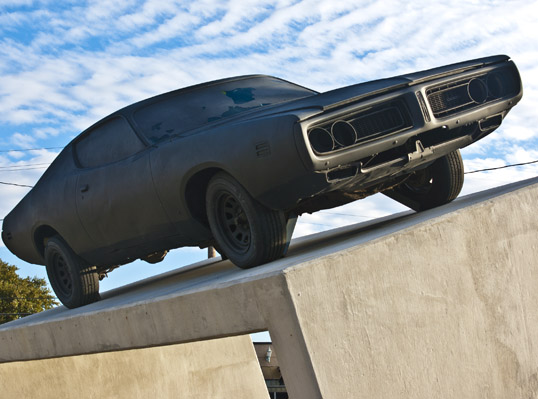
Cadillac Ranch, West of Amarillo, Texas

From my blog (I called it an “Online Journal” then), The Daily Epiphany, Sunday, August 12, 2001 – Exactly twenty years ago.

Saguaro

I had a leisurely day today – an actual quiet morning home with Lee while Candy took Nick to a soccer game. This was the last game of their Classic League Tournament – they won today, but still fell short of making it into the league, they were tied for 21st in the tourney with the top twenty teams going making the grade. I did some errands around the house and then packed, getting ready for a flight to Tucson, where I’ll be most of next week.

I decided to leave for the airport two hours before the flight (I hate having to rush for a plane, plus with the craziness that is DFW airport, you never know) but when I was almost there, Candy called me on the cellphone, she had locked her keys in the MiniVan at a birthday party with the kids. She borrowed a car and sped across the top of the city while I doubled back. We met at a restaurant where I pushed my Van key through the window and immediately headed back to the airport.

I still made it in plenty of time… and the flight was delayed too. The flight was packed, overbooked. It was a shame I had an important early meeting scheduled because they were offering three hundred fifty bucks to bump people, and I was sorely tempted. I’m a good corporate drone, though, so I boarded on time.

They had nice little headphones stuck into the magazine pockets on each seat. The armrests had the music, though the quality was bad. I remember when airline headphones were simply twin transparent plastic tubes that conveyed sound from tiny speakers concealed below holes in the armrests. Now, they looked like quality miniature headphones with a standard plug – inside the black plastic headband, though, was black writing.

Please do not remove from airplane. Will not work with home equipment.

I wonder why (or if) they won’t work with home equipment. The plug sure looks the same. There are left and right channels and a center ground, three connectors. I wonder if they manufacture these with the order of the connectors on the plug different than on home equipment. I considered getting my laptop out and trying the thing out, to see if the airline headphones really truly don’t work. I was too tired and this guy was crammed in to close next to me so I didn’t bother.

I’ve never been to Tucson before, never been to Arizona. Walking from the baggage carousel to the rental car I passed a big Saguaro and realized I’d never seen one of those in real life before, either. I’ve always had a soft spot for cactus and was unexpectedly impressed with the beauty of the giant spiny things, the symbols of the desert.

After the flight, I was groggy leaving the rental lot and missed the turn that curled back to the terminal and main airport entrance. Before I could think about it, I was out in the desert on roads that went who knows where. I would have liked to enjoy the scenery, but it was pitch black, desert night black. I made a couple turns on instinct alone and was very happy to see a stretch of lighted palm trees and then my hotel appear out of nowhere.

I checked in, and fell into the sleep of the dead.

And a piece of flash fiction for today:
Death in the Desert, by Connie Cockrell

Connie Cockrell Twitter

Connie Cockrell Random Thoughts

Sunday Snippet, Freshman Physics by Bill Chance

“I am now 33 years old, and it feels like much time has passed and is passing faster and faster every day. Day to day I have to make all sorts of choices about what is good and important and fun, and then I have to live with the forfeiture of all the other options those choices foreclose. And I’m starting to see how as time gains momentum my choices will narrow and their foreclosures multiply exponentially until I arrive at some point on some branch of all life’s sumptuous branching complexity at which I am finally locked in and stuck on one path and time speeds me through stages of stasis and atrophy and decay until I go down for the third time, all struggle for naught, drowned by time. It is dreadful. But since it’s my own choices that’ll lock me in, it seems unavoidable–if I want to be any kind of grownup, I have to make choices and regret foreclosures and try to live with them.”

― David Foster Wallace, A Supposedly Fun Thing I’ll Never Do Again: Essays and Arguments

Design District Dallas, Texas

Freshman Physics

Fifty years later, Eugene remembered Professor Viper.

“You have to understand the difference between velocity and acceleration. Velocity is always positive, at least in the direction of motion, but acceleration can be positive or negative. You can be moving in one direction, very fast, but accelerating in the other direction.”

“Imagine you are in a Mustang, with a big supercharged V8, screaming down the road. But you swing the wheel, skid around backwards, and start smoking your tires. You are still moving, your velocity, down the road, but you are facing, and accelerating in the other.”

Eugene remembered perking up at this.

First, what a completely insane analogy. Professor Viper must have been some sort of car freak. Eugene wasn’t – he didn’t even have a driver’s license, let alone a car. It was like listening to an alien speak in English, but an alien way of looking at the world.

Second, well, he had done the same thing the night before. He had gone out for beers with a bunch of people and drank too much, stayed out too late. That was why he was nodding off in the lecture… until Professor Viper made the crazy analogy. Eugene and Martha has staggered out from the bar at closing time with all their friends and they had started piling into the car they had come in.

Eugene was worried because the driver had really been throwing them back. Then he spotted Frank, a quiet guy from the floor below – he barely knew, getting into his own car a couple parking spots down. He looked steadier than the others.

“Martha, let’s ride with Frank instead,” he said to his girlfriend.

“Why? We barely know him.”

“I think he’s sober.”

He was wrong. Frank was totally smashed. It was just that he was quiet and better at standing without swaying. But behind the wheel, he was a terror. His car was that heavy Midwestern hopped-up American hunk of steel and was very fast and very loud.

Eugene remembered sitting and sliding on the front bench seat with Martha between him and Frank as they roared down the street. They swerved through and intersection and skidded around in a three sixty with Frank and Martha screaming in drunken glee as the headlights swung in a wide arc and illuminated the terrified faces of the people in the other cars.

Somehow they avoided hitting anything and made it back in one piece. Eugene swore he would never get in a car with Fran and would always check his driver out and never ride with a drunk again. There was a lifetime of cabs in front of him and he was fine with that.

And now, the very next day, Professor Viper was talking about skidding and velocity and acceleration. It was all too much.

Class ended and Eugene walked up the hill to the dormitory where he and Frank lived. He called Martha and she said she might come over later, she was tired and hung over. There was a knock on his door and Matt, another friend that lived on Frank’s floor, came in.

“Hey Eugene, I wanted to tell you something.”

“What?”

“It’s Frank. I was talking to him. And he said he was going to steal Martha from you. He met her last night, you both rode back with him and he really likes her. He says he’s going to get her from you.”

“Really?”

“Yeah.”

“Jeez, what should I do?”

“I don’t know. I just wanted to warn you.”

And that’s what happened. Frank had that car and Eugene didn’t even have a license. He didn’t have a chance.

The two of them were married their Junior year and at graduation, Martha was eight months pregnant.

The three of them stayed in town after graduation, why go anywhere else? Fifty years. Frank and Martha split up in a few years and Frank left the state. Eugene never talked to Martha again, but the town wasn’t that big and he heard about her every now and then. Last year he discovered that she was not only a grandmother, but a great grandmother.

“Let’s see,” Eugene thought to himself, “A mother for twenty years, then a grandmother for twenty more… a grandmother at forty then a great-grandmother at sixty-something…” The math was easy. He was thinking about this, stretched out in his hospital bed, when the machine on the stand to his right gave a chime and made a whirring noise.

The dose moved down the tube into the needle on the crook of his arm and everything went warm and fuzzy and the half century old memories that seemed so crystal clear went away. Eugene shook his head to try and bring them back. He wondered if they ever would return.

“The degree of slowness is directionally proportional to the intensity of memory. The degree of speed is directionally proportional to the intensity of forgetting.”
― Milan Kundera, Slowness

Short Story of the Day, Flash Fiction, Spring Fever Dreams, by Suzanne W. Vincent

“You can cut all the flowers but you cannot keep Spring from coming.”

― Pablo Neruda

Artwork, Dallas Area Rapid Transit Spring Valley Station, Richardson, Texas

From my blog (I called it an “Online Journal” then), The Daily Epiphany, Monday, August 6, 2001 – Almost Exactly twenty years ago.

Spring

A long time ago I noticed a sign along the Interstate Loop along my drive to work. The sign promised “Pure Texas Spring Water” and sure enough, by the sign, water ran out of the ground, bubbling up and then running down to stain the gutter of the highway and down to a street curb drain. I parked and walked to the spring, taking a picture of the sign and writing about it in my journal.

In the time since, almost a year, I have driven by that spot almost every day (though I’ve changed jobs, that part of my commute is the same). I allowed myself the fantasy of imagining that it really was a spring, an old relic of geology, a fold of shale, maybe an ancient beach, forcing a bit of water to the surface, surviving the excavation and grading of the giant loop road.

Now, the illusion has been shattered. There are four little tiny blue plastic flags mounted on short wires stuck in the ground – squaring off the spot where the water gurgles up.

Now I know that it is a leaky pipe and someone is getting ready to finally dig it up and fix the thing. I’m glad they will stop the waste but somehow, my morning commute will be even a bit more dreary.

Some humor concerning a water leak on the highway.

And a piece of flash fiction for today:

Spring Fever Dreams, by Suzanne W. Vincent

from Flash Fiction Online

Sunday Snippet, Witness Protection by Bill Chance

“It is forbidden to kill; therefore all murderers are punished unless they kill in large numbers and to the sound of trumpets.”

― Voltaire

Rusted with Gun Deep Ellum Dallas, Texas

Witness Protection

Nile Franks had always wanted to be a G-man. He read stories of the FBI when he was a kid and dreamed of the badge, the gun, and the mysterious respect. Nile was a handsome, athletic and smart kid and was able to work relentlessly toward his goal.

After college he worked at a crime lab in his home state for a few years, until he was able to apply as a special agent. He was not able to make it into the FBI, but the Federal Marshals were hiring, so he decided to go that route.

He spent a few years in routine warrant execution and drug property seizure work. He kept to the straight and narrow, despite the temptations of corruption and received his notice of promotion to the Federal Witness Protection Program.

Nile received training in document production (since this was a Federal Program, they could issue new Social Security numbers and cards, even state driver’s licenses), witness relocation, and protection. After he finished his training and passed his exams, he was transferred to the department, where he met his supervisor.

“Well, Franks, welcome aboard,” Elmer Wynn said to him.

“Thank you sir,” Nile replied, “I am sure I’ll be able to do the job as required.”

“How was your training?” Wynn asked. “Do you have a pretty good idea about what we do?”

“Very clear sir, it was quite comprehensive.”

“Well, forget about it. The training we give is a bunch of shit. We don’t do anything like that at all.”

“Really?” Nile was shocked, what could possibly be different?

“Really. You realize that all the people in the program are actually criminals? The worst of the worst. And they are all snitches. That makes them the worst of the worst of the worst.”

“Well, yes, I know that. But… Well, sometimes… We have to deal with… for the better good.”

Wynn snorted. “For the better good? Exactly.”

There was a long pause while Wynn looked Nile up and down.

“You know Franks, if you don’t want to do this job you need to leave, leave now, before I go any further.”

Nile was stunned. What the hell was Wynn talking about? But he had come too far already.

“No, sir, I do want to do this job.”

“Alright then. Now, Franks, do you think it’s strange that in this day and age, with everything connected together, with cameras everywhere, with privacy a thing of the distant past… Don’t you think it’s strange that we are able to make one person disappear without a trace and another brand new one appear out of thin air?”

“Well, I know the job is difficult….”

“Difficult my ass… it’s impossible. And our budget. It’s cut every year. Year after year.”

“Well, OK, but….”

“But what? Shit, things were getting so much out of control, a few years ago, we were losing our clients, we couldn’t hold it together. We had to do something. For example, in the next room, a very secure soundproof room is a New Jersey developer. He made a fortune building projects all over the state. His biggest expense, more than concrete or steel or labor, was bribing every official from the zoning board to the governor. He said, ‘that’s just how things work.’ Every mobster on the east coast is looking for him. They know we have him. What do you think the odds are that we can get him anywhere safely?”

“He can go out west.”

“Out west? You gotta be kidding me. There is no ‘out west.’ Time has sped up and space has disappeared. We will work our asses off and spend our whole budget and he won’t last a year. And he doesn’t deserve a year.”

“What can we do?”

“Do? We figured it out. It’s simple, really. Cheap, foolproof.”

Wynn reached into a desk drawer and removed a service Glock, checked the chamber, and set the gun down on the desk between them.

“He’s in the next room, take care of it.”

“What? That’s insane!”

“No it isn’t. He’ll disappear – just like he’s supposed to. We have it all arranged. Nobody will know, nobody will suspect, everybody will think we did our jobs perfectly. We can spend the travel budget on ourselves. You every want to go to Seattle? It’s nice this time of year.”

“That’s impossible. I would never do such a thing.”

“That’s what they all say. I’ve heard it before. About a third of the agents they send us really can’t do it. But of course, we can’t have that. We can’t have anyone knowing the truth.” Wynn picked the Glock back up.

“What do you mean? You’d kill me?”

“I told you to think hard before we had this conversation. We’re the Federal Government. We know how to make people disappear. Anyone. It’s your choice. Right now. Him or you.”

Wynn placed the Glock back down on the desk. Nile picked it up and turned it around in his hand.

He knew what he had to do. He had no choice.

Short Story of the Day, Flash Fiction, Everything They Are Running From And a Few Things They Are Running Towards, by Matt Kendrick

“Think of the fierce energy concentrated in an acorn! You bury it in the ground, and it explodes into an oak!”

― George Bernard Shaw

Running of the Bulls, New Orleans

From my blog (I called it an “Online Journal” then), The Daily Epiphany, Sunday July 27, 1997 – Exactly twenty four years ago.

Pissing in the Street

My house is a set of two rectangular blocks. One for the main residence and another, set at right angles, for the garage. Simple, cheap, boring. The only break in the monotony is one corner of the house is missing; a space carved away for the front door. This space also is a cube; a square negative room. We put a little bench there, I’m growing English Ivy up the brick wall side and around the edges on the ground. Crape Myrtles line the west side, bushes line the front. I have been letting the plants grow, trimming them when necessary but mostly letting them find their own way; painting in with green. The Crape Myrtles are now big enough to develop the smooth, curvy bark that is so attractive. I am trying to create a little restful garden spot here; a connection with the outside world.

Late Saturday night I sat out there on the bench to do some writing. I had put in an outlet for Christmas lights, it powered up my laptop so I didn’t have to worry about batteries. It was after midnight and surprisingly warm and muggy. I was sweating through my T-shirt but it was still nice to get out into some more or less fresh air. I expected some peace and quiet out there.

The entire neighborhood is a fractal expansion of my rectangular house. Rectangular lot; rectangular block; rectangular subdivision. It is set on a bias. Parallel to the closest Interstate. All laid out for the maximum profit for the long-bankrupt developer; subject to the sacred call of the auto. The suburb was literally thrown together, get ’em built, get out. Now it is a boring, sleepy village within a city. Full of families (who would live here if they didn’t have kids?). Lawns mowed, identically edged, trees, shrubs, cars, trucks, boats, RV’s.

I expected silence out there. The walls of the house are a powerful barrier; more mental than physical. Within the cocoon, the illusion of suburban life is complete; kitchen (fridge and microwave), couch, TV, (computer) the stops on the limited journey of an illusion of life. The background A/C hum supplies the white noise that destroys any vibrations leaking in from the real world. Simply walking through the door and sitting outside the walls is subversive, against the tenets of American Suburb Family Law.

I expected silence out there. There was a rumble in the distance. The isosceles triangle of Interstate Highways that mark out the area where we live provide a clamor of rubber on concrete, creaking steel, squealing tires, booming horns, the hiss of eighteen wheel compressed air leaving brake cylinders. The call of a race of steel giants racing along; my presence unknown and unimportant; life itself rushing along the asphalt, going to God knows where.

Against this rhythm in the distance the symphony of my neighborhood was completed by the melody and accompaniment of local sounds. Someone was having a hell of a fight. I couldn’t tell where it came from; it sounded like the house directly across, but that house was dark; sound does travel on a calm, warm night. The sounds of battle might be coming from a long way off. Male voices, female voices, maybe six or so in all. Screaming, cussing (I couldn’t pick out individual words, but somehow the shouted obscenities could be identified for what they were), the sound of tinkling glass. This went on for ten or fifteen minutes; then the sound of squealing tires and it ended.

I expected silence out there. A house across my street has some teenage daughters, there are always guys in cars hanging out there at night; like alley cats or dogs in heat. A pickup truck roared down the road and screeched to a halt in front of their house. As the truck rumbled the horn honked on and on. Then it sped off, returning in a couple minutes with another car. The honking resumed. I couldn’t see much, I was screened by the bushes, but I could tell by the sounds that a bunch of people were out milling around. Nobody paid any attention to me as I typed; I’m not sure if they saw me or not but I’m sure that if they looked I was visible, my face lit by the screen on the laptop.

I expected silence out there. I heard a noise, liquid, running. Someone was pissing in the street. It was a lot; I know that kind of a piss, beer piss. Looking out through the leaves all I could see was a bare stomach and chest; young, slim, bejeaned; illuminated bright red from the filtered brakelights of the still idling pickup. The cacophany didn’t lessen with the urinating. I couldn’t tell how many voices were mingled in a melange of obscenities, lies, boasts, teasings, the usual testosterone late night drunken summernight pickup revelry.

The little impromptu party continued. It sure didn’t sound like fun, or sexy, or youthful. It was almost tired, frustrated, even mean. There was some stupid shoving, the house door slammed twice, tinkling of broken glass on the sidewalk, and the vehicles roared away. They circled the block twice and were gone.

I finished my typing and found that Candy had woken up and discovered the front door unlocked. I rooted around in the ivy for a half hour until I found the hiding place for the extra key. I didn’t want to ring the bell, It would wake the kids and scare my wife.

Candy says that all kids hang out like those folks were, it’s harmless. She’s right, of course, twenty-odd years ago I spent more than one night hanging out near some cute-young-thing’s house, drinking beer and boasting. They must be out there a lot; it’s not unusual to find beer cans or brown broken glass in our yard, the Mazda has an extra dent where someone bounced a quart bottle off the hood, a couple times there’s been tire tracks in our yard.

Maybe I’m being an old fuddy-duddy but I’m not entirely at ease with those kids out there, only a few feet and some sheetrock and siding away from my sleeping sons. Or maybe I’m jealous, wishing my days of hanging out weren’t receding so far into the past, that my stomach doesn’t look like the one on the guy pissing in the street.

And a piece of flash fiction for today:

Everything They Are Running From And a Few Things They Are Running Towards, by Matt Kendrick

from Cheap Pop

Matt Kendrick Homepage

Matt Kendrick Twitter

Sunday Snippet, Freight Elevator by Bill Chance

“When the elevator doors open there is only one other person inside it, a homeless man with electric blue sunglasses and six plastic grocery bags filled with rags. “Close the doors, dammit,” he yells as soon as we step inside. “Can’t you see I’m blind?”

…….

From the back, the homeless man shoves between us, his bounty rustling in his arms. “Stop yelling,” he shouts. though we stand in utter silence. “Can’t you tell that I’m deaf?”

― Jodi Picoult, My Sister’s Keeper

Dallas, Texas

Freight Elevator

“Well, are you ready to call it a night?”

“Not really.”

“Do you want to go to an after hours bar or something?”

“Not really.”

“I’ve never been to where you live. Can we go to your place?”

“I still live with my parents, you know that. Their apartment is tiny, I sleep on a futon in my mother’s sewing room. I’ve never been to where you live either. You live alone. We have to go there.”

“But my apartment is… really small.”

“Is it clean?”

“Of course. But…”

“It’s big enough then.”


I had always wanted to live in the center of the city… on the island itself. I was tired of feeling like an outsider, a tourist. But rents were so high and I never had and will never have any money. For a year I rode that interminable train ride, rocking elbow to elbow with the other strap-hangers. I would look through the rental listings, hoping, hoping. Finally….

Walking to meet my new prospective landlord past the block after block of tents filling the sidewalk, most a bilious purple-orange color. The government has spent untold millions on buying thousands of tents to “solve” the homeless problem and distributed them – surprised when they were snapped up and the population living on the streets blossomed even more. I looked at the rows of nylon and filth and wondered if I could do that. I have camped a lot over my life but never on a sidewalk beneath the glass canyons of downtown. A lot of valuable parking was taken up by bathroom trailers provided by the city that had necessities and showers, but still….

The address on the listing was a huge hulking brick building. It looked like an ancient factory, divided up into a filing cabinet of tiny living spaces. There were very few windows and only one door. I was repelled at first, but realized that a place at this affordable price was not going to be in a new shiny glass tower with a grid of balconies repeating up into the sky. This was my dream, but it was going to be modified by the real world.

“You are right,” the rental agent said, “this used to be a factory. I have no idea what they made here, but whatever it was, it was huge, as you will see.”

We walked through a maze of sheetrock walls, obviously thrown up to divide some massive assembly room into a warren of rented cubicles. We arrived at a wall that was taken up by a giant steel vertical door with a peeling number “1” stenciled onto it. Of to one side was a single simple round button with an upward facing arrow. The rental agent pushed this. There was a heavy shuddering and a low loud metallic groan. After a minute of this the door slowly raised up, revealing a shallow space delineated off by a translucent plastic divider. In the middle was an ordinary door, with a peephole. It was labeled 1-12 A.

“Well this is it,” the rental agent said. She took out a key and unlocked the door.

“I don’t understand.”

“Like I said, the factory made huge, giant, heavy, something-or-others. They moved them up or down on this gigantic freight elevator. Other than the stairs, it’s the only way to reach the upper floors in this part of the building. Since it was now being used for pedestrians most of the elevator was wasted space. We built this partition and were able to rent out the area behind it. Come on in, take a look.”

“The walls are metal mesh?”

“The back and side walls, yes. But beyond them are only concrete. There is actually a kind of window in back between every two floors. It lets in a nice light as you go past.”

“It moves?”

“Of course it does. All the other residents us it to get up and down. But there is the partition and a locked door.”

“The partition doesn’t look all that opaque.”

“Oh, there’s enough for privacy. And you can make as much noise as you want. You can play music. Folks on an elevator don’t care about that.”

“I see the stove and ‘fridge. But no sink. And no bathroom.”

“On eleven you have access to an old janitor’s closet. A big sink, and we put in a shower and toilet. It’s yours. Your door key fits. Just go up to eleven, get off, down the hall, one left, then a right. I’ll show you.”

“I don’t know if I can live in a place like this. It goes up and down. People at the front all the time. It’s crazy.”

“It’s cheap.”

“It’s the only place I can afford.”

“I’ve heard that before.”


Well, it turns out she loved my apartment. She liked the feeling of going up and down so much that, late at night, when the other people were all home asleep she’d go out the front door and push all the buttons. That would keep my place moving for a while. She loved watching the concrete walls slowly shift up and down.

She crawled out of the hatch on top and put plants on the window sills so she could watch those go by. She bought a watering can with a long spout so she could drip water through the mesh into her plants as we moved past them.

The only problem is that she likes to make a lot of noise in bed when she think people are in the elevator up front. She rearranged the lamps so that we sometimes throw obscene shadows on the translucent wall. It bothers me a little but nobody’s complained yet.

As a matter of fact I think she likes this tiny apartment more than me. If we broke up, I’m afraid she would throw me out.

And I’ll never find another place I can afford.

Sunday Snippet, Morning Routine by Bill Chance

To sleep: perchance to dream: ay, there’s the rub;
For in that sleep of death what dreams may come
When we have shuffled off this mortal coil,
Must give us pause: there’s the respect
That makes calamity of so long life;

—-William Shakespeare

Dealey Plaza, Dallas, Texas

Morning Routine

Gregory had not always been an organized person. He lived most of his life in a haphazard desultory way, never sure of what came next. When his wife told him, “I can’t live like this any more,” left for California with the twins and moved in with the lawyer she had met online, he realized he had to get his shit together.

He went to seminars and read piles of books. He listened to podcasts and hired a personal organizer. He decluttered. He downsized and organized, planned and simplified. Most important of all, he made up routines.

By setting up routines he eliminated personal choice in what he did. It was a way to battle back against his natural tendency to chaos. If he could put reality into a series of carefully thought out and designed checklists he could keep disaster at bay. Gregory decided he wanted life to be smooth and planned – all risk and decision eliminated.

His personal organizer gave him a series of printed forms that fit into a binder which covered every possible aspect of every day. She helped him brainstorm, fill out the checklists, then edit and extend them until every hour of every day was planned out ahead of time and he didn’t have to decide what to do next – it was all in black and white. He discovered that once he had settled on a routine he didn’t have to look at the paper any more. It was seared into his memory and after a few days it ripened into an irreversible habit.

The alarm on Gregory’s phone beeped at six AM and after one and only one tapping of the snooze he hopped out of bed to begin his morning routine. He drank the ice water he had placed in an insulated steel tumbler on his nightstand the night before. He moved to the tatami mat next to his bed and did a short series of stretches with a foam roller. He checked the clothes that he had chosen before he went to bed and laid them out on the bed. Then it was into the bathroom. He pushed the electric shaver around on his face and then flossed. He started the water in the shower to allow it to warm up as he brushed his teeth. Then into the shower.

In the old days, he would luxuriate under the hot water, leaning against the tile as the warmth poured over him, enjoying the feel of the droplets against his skin. Thoughts of the day before, the day coming up, and strange random memories from far in his past would joust in his mind for a few split seconds of attention. His wife would get angry because he would waste so much time in the shower and use up all the hot water. Not any more. He washed himself quickly and efficiently, using a minimum of time and cleaning products.

Stepping out, he dried himself with a clean towel hung on a hook. Then he used a small hand towel kept by the mirror to clear a spot in the fogged glass so he could groom his hair with the comb kept in the holder right at hand. A stick of deodorant came out of a handy drawer – it was the only item in there – and he was done in the bathroom

He stepped naked back into his bedroom and sat in a chair he had placed next to the spot where he had laid out his outfit for the day. He had only one task left before he could get dressed and head out for the day.

Next to the chair was a small, sturdy table with a lacquered wooden box and a kitchen timer. The box had a combination lock built in and he moved the numbers to the proper setting. He twisted the timer to seven minutes and opened the heavy lid of the wooden box. Gregory lifted a Glock 19 9mm pistol out of the box, slid a full magazine into the gun, then pulled back on the slide – charging a shell into the firing chamber. He thumbed the safety so that the gun was ready to fire.

Gregory reversed the gun, stuck his thumb into the trigger guard, and then slid the barrel into his mouth. He closed his eyes and sat there, still, listening to the ticking of the kitchen timer. He felt the steel of the barrel between his teeth and ran his tongue around the opening at the end. He tasted the oily residue on the Glock and smelled the slight smoky odor left over from the last time he took the gun to the range. He breathed in through his nose and out through his wedged-open mouth, feeling his breath pass between his lips and the body of the gun.

His mind went to the decision he had to make, the one he made each day. Hamlet had said it best, “To be or not to be, that is the question.” Two columns appeared in his mind – the endless stream of checklists to navigate or the dark splotch of blood against his bedroom wall. The “strings and arrows,” or “that sleep of death.” Sitting there, clean and naked, with the Glock in his mouth, he could think clearly and dispassionately as he summed up the columns in his mind. Some days the decision was a close one.

But today, the timer gave off its little “ding,” and Gregory removed the Glock from his mouth. He turned the safety, removed the magazine, cleared the round and pushed it back into the cartridge. It wasn’t Saturday, so he didn’t clean the gun but simply wiped the saliva off with a cloth and replaced the gun, magazine, and cloth back in the wooden case, closed the lid, and randomized the numbers. Gregory put on the clothes that he had set out and walked through the door into another day.

Short Story of the Day, Flash Fiction, Wave Goodbye by Fanni Sütő

“The very instant I saw you, did
My heart fly to your service; there resides
To make me slave to it.


― William Shakespeare

Shakespeare Sculpture, Dallas Arboretum

From my old journal, The Daily Epiphany, Tuesday, July 17, 2001 (exactly twenty years ago):

Stuff dreams are made on

I had a long couple days at work so I thought I’d reward myself with an evening of free Shakespeare. Candy was able to make arrangements to help her get all the kids to all the places they needed to go. So I was free to take off.

I stopped by the grocery store and bought a salad from the salad bar (make it yourself, 2.99 a pound, little black plastic bowl with clear lid, plastic silverware that I slipped into my pocket instead of the bowl – to save weight) some yogurt, a Mistic Zotics (Mozambique Marula Fruit), and finally – a bottle of Sobe (pink Lizard Fuel – Strawberry and Banana).

The preplay festivities had the clown-players embarrassing as many folks in the crowd as possible. The high point was when three of them were juggling and a member of the audience walked up, pulled three hackysacks from his pockets and joined in.

Tonight is the Tempest and it starts in a half hour or so. I’m full of food and drowsy now so I think I’ll stretch out on my Barney Blanket and nod off for awhile.

The play begins.

This production has the most important features for a successful Tempest – nasty-lookin’ babes and skimpy outfits.

I like how they do the storm – the chorus whips a green parachute into violent waves while the actors stand up in holes through the fabric.

And today’s flash fiction:

Wave Goodbye by Fanni Sütő

from Selcouth Station

Fanni Sütő

Fanni Sütő homepage

Short Story of the Day, Flash Fiction, Stay by Sarah Freligh

“As Gregor Samsa awoke one morning from uneasy dreams he found himself transformed in his bed into a gigantic insect.”

― Franz Kafka, The Metamorphosis

When you pick a mudbug up – he’ll spread his claws out and try to look as big and as mean as he can. He still looks delicious – no matter how hard he tries.

From my old journal, The Daily Epiphany, September 9, 2002:

Woman in the Dunes

When I was a kid I was fascinated by ant lions. Those are the little bugs that dig pits in the fine, loose sand around the forgotten spots… maybe behind the garage or under the old tree.

They did these perfect conical traps, like a negative volcano, and wait hidden in the bottom ready to snap out with huge pincer jaws and gobble down their unfortunate meal. Dried husks sometimes litter the edges of their lair.

I’d watch an ant or gnat stumble down the slope, slide on the angle of repose, until the ant lion would attack, throwing bits of sand first to confuse and stun, then to grab and eat. I would take a piece of paper or index card and scoop up the sand, the entire area, and blow away the dust until I found the ant lion itself. It was a marvel of tiny death, all jaws and squat, powerful, flicking body.

I would always replace the insect unhurt and watch him begin to construct a new trap, digging the pit by bending and snapping his body – flicking bits of sand away.

I stopped by the video store and rented a Japanese film, Woman in the Dunes. I read the book (by Kobo Abe) decades ago. Actually, I rented the movie once before too, surprised to find in an otherwise pedestrian rental shop. It was a bad copy, though, so bad I could barely make out what was happening.

This time, it has been re-mastered and re-released, clear as a bell. The photography is stunning, incredible black, white, and gray images of sand and human bodies.

It tells the story of a lonely man, wandering the dunes of a forgotten province, looking for insects for his collection. Or maybe, his main purpose is to simply escape the bureaucracy, avoid the avalanche of paperwork, forms, and official stamps that flow across the movie’s credits.

At any rate, he bites off more than he can chew – ends up trapped with a widowed woman in a ramshackle house at the bottom of a wall of sand, trapped, forced to shovel to survive. There is sensuality in the sand, desperation, and resignation.

Do you live to shovel, or shovel to live.”

And today’s flash fiction:

Stay by Sarah Freligh

from Flash Frog

Sarah Freligh homepage

Short Story of the Day, Flash Fiction, The Amber Night by Jack Barker-Clark

“But I can hardly sit still. I keep fidgeting, crossing one leg and then the other. I feel like I could throw off sparks, or break a window–maybe rearrange all the furniture.”

― Raymond Carver, Where I’m Calling From: New and Selected Stories

Fireworks from Reunion Tower, Dallas, Texas (click to enlarge)

From my old journal, The Daily Epiphany, July 4, 1997:

The Fourth and Fireworks

We left the party early, just as the bar-b-que was being trundled out because we had tickets to the Ranger game. It was a great evening; cool weather, a record sellout crowd, and a good game (the home team won seven to six). The only problem was that Lee was a champion wiggleworm; I missed a lot of the game walking him around. He kept trying to kiss some teenage boys in the row in front of us.

After the game was a fireworks display. I knew from years past that the Rangers always put on a good fireworks show, and this one didn’t disappoint. It was a long, loud, impressive display, with the explosions timed to go along with the music played in the ballpark. We watched from the upper level promenade, an open area around the top of the stadium. It was a perfect vantage point.

Nick and Lee had never stuck it out through a fireworks display before. We’d taken them to a couple, but they cried at the noise and we’d had to leave. Now they are bigger, they were nervous before it started, holding their hands over their ears, but once it got going they really thought it was great.

After the game, the fireworks, and the massive traffic jam leaving the ballpark, it was after one when we finally reached home. That is very late for this particular family unit. Yardwork, pool party, baseball, fireworks – about as traditional a holiday as you’ll see. Not very cool , not very punk , not very postmodern . And I don’t care.

And today’s flash fiction:

The Amber Night by Jack Barker-Clark

from No Contact

Jack Barker-Clark Twitter

Jack Barker-Clark homepage