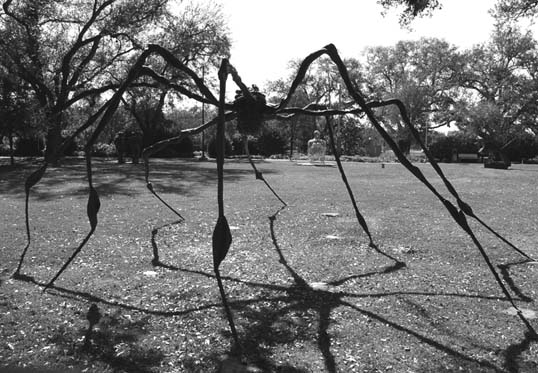
Sunday Snippet, Cedar Breaks by Bill Chance

“I do know that for the sympathy of one living being, I would make peace with all. I have love in me the likes of which you can scarcely imagine and rage the likes of which you would not believe. If I cannot satisfy the one, I will indulge the other.”

― Mary Shelley, Frankenstein
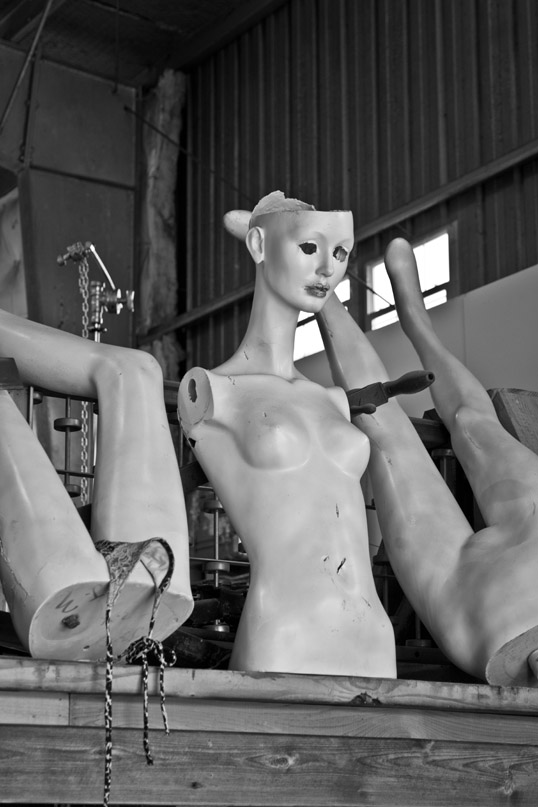
Clarence Street Art Collective, The Cedars, Dallas, Texas

Cedar Breaks

(Unfinished Sketch)

R had been hiding out at Fred and Ethyl’s house, in their basement. Fred and Ethyl weren’t their real names, of course, it wasn’t safe to know anybody’s real name – and they had this old-fashioned sense of humor. R felt safe in the basement but Fred and Ethyl said they had seen this non-descript car, so non-descript that it had to be ordinary on purpose, driving slowly around the neighborhood. Fred and Ethyl were worried and they kicked him out – left him in the woods.

The woods were mostly Cedar, Fred called it a Cedar Brake. There were a whole series of them along the lake, with thicker woods full of bigger trees and heavy brush, in between. R spent a lot of time looking at the Cedar trees nothing better to do. They were dark and twisted their trunks looking like misshapen limbs – bodies curled together. There was fresh new wood growing from roots up to the dark green fuzzy needles and a lot of old dead stuff mixed and twisted in.

R wasn’t much of an outdoorsman and it was getting hard on him, living in the breaks. He had plenty of food so far. On the way out from the basement they had stopped at this warehouse store and Ethyl went in and bought cases of canned food – chili, beans, some kind of ham. R knew he’d get sick of eating this stuff fast, especially eating it all cold, but what’s to do?

Fred had given R and old sleeping bag and a big sheet of plastic, in case it rains, but it hadn’t yet. The package said something about a painter’s drop cloth. He didn’t relish the thought of huddling under the sheet in a storm.

R had found a flat spot along the top of a little ridge above the lake. The trees here were thicker than down in the Cedar Breaks, and that’s where he set up with his sleeping bag, piece of plastic, and the suitcase he had brought. R tried to keep up appearances as much as he could, washing his socks and underwear out every morning down at the lake. His suitcase held his extra suit – wool, Italian, very expensive. Each day here, though, he wore some tan trousers and a dress shirt. He had two extra shirts but he cold tell they were going to get terribly worn pretty soon. He wished he had some more appropriate clothes – more suitable for living in the breaks. His suitcase also contained four fat green cylinders of money, big bills, wrapped in a rubber band. He had given two others (the smaller of the ones he carried) to Fred and Ethyl saying, “Here, take all I’ve got on me,” while keeping the rest hidden away tucked up inside the suitcase.

There used to be some sort of park along the lake. It must have been a big deal years ago – there were a handful of old run-down cabins lining a stretch of leaf-covered asphalt. R thought about breaking into one and sleeping there, but he was worried that he’d be found out – the first place to look – and the one cabin that he had stuck his head into through a torn screen had such an awful smell of old death he couldn’t bear to pry open the door. There were still people on the other side of the lake; he could hear the chugging diesel motors at night as they pulled giant camping trailers in and out. When the light was right he could spot old retired folks sitting in colorful folding chairs along the water. By their posture he guessed they had poles and lines in the water. R wondered if they ever caught anything.

It hadn’t taken very many days for R to fall into a rough uncomfortable routine. Without anyone to talk to, the days were already starting to smear. It was late afternoon and R was sitting at an old picnic table in a large Cedar Brake above the old cabins. There was only one seat board left – the other side was bare rusty pipe with flecks of corroded bolts that used to hold the wood. The top was missing the middle board too – but it was the least rotted of all the picnic tables left.

R bent over to flick a spot of dried mud off his leather loafer when the bullet whizzed by. It passed so close to the back of his neck he thought he could feel the heat radiating off the slug as it flew by passing through the back part of his shirt collar but missing his flesh altogether. Then there was the echoing report of the shot and the smack-crack as the bullet careened through some cedar limbs.

R threw himself to the ground and was up in a flash dashing through the thick maze of cedars as fast as he could. Another shot threw chunks of wood through the air. R caught a sudden smell of fresh shattered cedar; it brought back an involuntary memory of hiding in his uncles’ suit closet as a kid, smelling the fresh cedar and old wool.

R had seen his share of gunfire but it wasn’t anything like this. He was used to handguns in crowded city streets – the survivor was always the first to shoot, the whole thing over in seconds, the most ruthless and quick would be the one that survived. Everything was so close. R was always the first to fire.

This was different. R was being hunted with a high-powered rifle and as he ran he’d glace back with every twist and turn. He could see nothing. His mind raced with thoughts of camouflage and ex-military snipers, trained and paid – specialists in this kind of work.
Short Story of the Day, Flash Fiction, The Hundred Hidden Kisses by Carol Scheina

“The sunlight claps the earth, and the moonbeams kiss the sea: what are all these kissings worth, if thou kiss not me?”

― Percy Bysshe Shelley

Bowls and Tacos, Deep Ellum, Dallas, Texas

From my blog (I called it an “Online Journal” then), The Daily Epiphany, November 26th, 1998

Lake Bob Sandlin

Thanksgiving Day, Lake Bob Sandlin State Park

I woke up this morning in the popup and was cold. I hadn’t packed my sleeping bag or brought very many warm clothes- one pair of jeans and one flannel shirt, the rest shorts and T-shirts. Cold and apprehensive this might be a chilly vacation. But I shivered on down to the bathroom with my Barney-Bath Time Fun! towel for a shower. Meanwhile the Texas sun rose up into the trees and presto-change-o it was warm and all was right with the world.

We all decided on a hike for the day. We were camped in the Fort Sherman area, spot #2 and the trailhead was only a few spots down, between #5 and #6 and off we went. Not too far down the trail on a flat section between two creeks there was a stone marker:

Homesite of
James (Jim) Francis
& Ann Eliza
Coston
1890 1924

It is hard to believe this thick woods, these tall trees were once a farm, not so long ago. It isn’t virgin forest, but at least it is a complete and varied habitat. No single species professional forest. I memorized the trees along the nature trail stretch, there were little poles with labels, Lee would carefully spell out each one.

Short Leaf Pine(tall and stately)
Eastern Red Cedar(a beautiful tree with gorgeous stringy smooth bark)
Sweetgum(Stunning red stars for leaves and spikey seed-balls for Lee to collect)
White Oak (tall as the pines)
Flowering Dogwood
White Ash
Winged Elm
Mockernut Hickory
Red Oak
Tree Huckleberry
Red Mulberry
Willow Oak
Possum Grapevine (not a tree, really)
Red Maple
American Elm (very few of these left)
Blackjack Oak

At the end of the nature trail we crossed the road and went on down to the trout pond.

This is a little lake that the state stocks with trout every now and then. It is a calm spot, the water dyed a dark color from the leaves that fall in and steep like tea. The thick autumn woods, orange, yellow, brown, green reflected perfectly in the water; the twin forest disturbed only occasionally by the rings of wavelets as fish hit insects on the surface.

A little past the pond, Lee started to get tired (walking is tough on his short legs) so he, Candy, and the Giant Killer Dog turned back. Nick and I continued on, they would get the van and meet us at the playground by the fishing pier, at the other end of the trail. We wound our way through the deep dappled woods, the trail covered in a thick rich carpet of leaves. Crossing the road again, we pushed on to the Brim Pond, then turned off the trail to take a short cut to the road through a brushy field. It was tougher than it looked, I carried Nick on my shoulders so he wouldn’t have to walk through the brambles.

It won’t be long before he’s too big for that.

Next to the playground is an old cemetery. While Nick and Lee swing on the swings, climb on the bars, I can’t resist finding the gate in the fence and taking a look at the stones. There are only a handful.

Under an old oak in a patch of perennials, were two tiny rectangles of old limestone. Not enough room for dates, not enough even for names. Only the initials M.E.M. on one, T.H.M. on the other. I assume these were the original stones. A few feet in front were two more elaborate monuments – still old and worn, but newer looking than the small ones.

These new stones were square in cross section, about two feet in height, pointed, like tiny Philip Johnson skyscrapers. One had a design, a stylized lily and said:

Mary E Miller
Born Mar 13,1834, Died Feb 3, 1907

The other:

T.H. Miller
Born Feb 12, 1835, Died Apr 21, 1893

It also had a poem:

A loving husband, a father dear
a faithful friend
lies buried here

The top of this one had a stylized star and the legend
LEAD KINDLY LIGHT

Nearby – a modern stone, no date.

Jesse Benson
Grayrock Vols
Texas Militia
Confederate States Army

Finally, another simple stone,

J.F. Coston
Texas

CPL CO C5 REGT Texas INF
Confederate States Army
1838 1903

This one had some faded red flowers placed on it.

And a piece of flash fiction for today:

The Hundred Hidden Kisses by Carol Scheina

From Flash Fiction Online

Carol Scheina Homepage

Carol Sheina Twitter

Sunday Snippet, Many Waters by Bill Chance

“Love never dies a natural death. It dies because we don’t know how to replenish its source. It dies of blindness and errors and betrayals. It dies of illness and wounds; it dies of weariness, of witherings, of tarnishings.”

― Anais Nin

The land of lakes, volcanoes, and sun. A painting I bought on my last trip to Nicaragua.

Many Waters

(Twenty Minute Writing Exercise)

A thousand little streams screamed down the steep jungle mountainside and joined together into a quickflowing rocky river before leaving the coastal valley and dumping into a gravel delta formed since the last eruption. Here the river broke up again into rivulets dumping their sediment and spreading out until they reached the sea. The short stretch where the water all took the same course was called Zahouetek – a corruption of the native’s ancient language – a combined phrase that meant “Many Waters.” At least that is what Marvin had been told.

“I wrote in to the Guinness Book of Records People and told them to list the Zahoutek as the shortest river on earth,” Marvin said.

“Is that so,” replied Cynthia. She answered it as a disinterested statement, not as a question. Marvin answered anyway.

“Yes, it’s true. But there are these two rivers… the D River in Oregon and the Roe River in Montana. They were fighting it out for the shortest river until Guinness gave up and didn’t list the shortest anymore.”

“So, this isn’t the shortest? “

“No, I guess not. Still, it’s pretty short, isn’t it?”

Cynthia didn’t answer. She dipped a toe and then turned to walk back up to the house. For a second, she was silhouetted against the mist that rose from the cold river into the warm air above. Marvin thought she was the most beautiful thing he had ever seen. As she turned toward the house, she caught Marvin looking at her and her face clouded with anger as she spun away from his eager gaze.

She had not walked more than ten feet when the thumping sound of a helicopter started echoing down the valley.

“Oh! Oh! He’s coming back,” squealed Cynthia, her languid laziness suddenly dispelled by the sound. She started hopping and walking fast towards the little flat landing pad next to the house on.

“Shit! He’s coming back,” Marvin muttered as he followed, with a little less speed and a lot less enthusiasm. “I wish the damn thing would crash.”

“What? Marvin? What?” Cynthia asked without turning her head. “I can’t understand you when you talk and you’re behind me like that.”

“Sorry dear, nothing, nothing at all.”

The chopper was descending quickly down the center of the valley. It would land at the house before they could reach it. It was a small two-man craft piloted by Ralph McKenzie – a geologist that was on the island studying the volcano. At first, Marvin had welcomed Ralph’s presence. It was nice to have some new company on the island. Marvin had bought the property for its isolation and its natural beauty. He and Cynthia were the only people on the island – everything had to be brought by launch from Port du Monde. Even the servants commuted across the straight. Marvin thought that being alone with Cynthia would bring them together… but it seemed to get on her nerves.

When Ralph first showed and talked about the work he wanted to do Marvin gladly had the landing pad constructed. The trouble started right from the start, though. He didn’t like the way that Cynthia, his wife, stared at the work crew as they graded and finished the oval patch of gravel that the chopper would use. She seemed impatient, chewing her nails as the men slaved and sweated in the heat.

As the days went by and Ralph spent more and more time at the house, Cynthia’s interest in the geologist and the work he was doing up on the mountain grew. The little helicopter was the only way to reach the upper reaches of the volcano and, of course it could only carry Cynthia and Ralph alone.

One time Marvin insisted on taking a ride and visiting Ralph’s observation station, but he wasn’t impressed. The smell of sulfur and the roar of the gas down in the crater made for an uncomfortable atmosphere. Marvin couldn’t understand the attraction and never went back. Marvin was considering forbidding his wife from making the trip, feigning concern for her health, when, a month ago, Ralph banned it himself.

“The volcano is gathering power. I’m afraid it may erupt any day now. I don’t want to put you at risk, Cynthia.”

Marvin’s wife fluttered her eyes. “If it isn’t safe for me… how can it be safe for you?”

“Oh, don’t worry about me,” Ralph said. “I’ve been doing this all my life. I know when the getting is good.”

By the time Marvin had reached the house, Ralph had already landed and entered the building. Cynthia went in after him and when Marvin strode up to the door, they both came out, pushing past him.

“Ralph says we have to go, have to go now!” Cynthia shouted at him.

“Yes, I’m afraid so, old boy,” Ralph said calmly. “The volcano is going to go any minute. The lava dome has cracked, I’m afraid it’s going to happen.”

Marvin was suspicious, but there wasn’t much he could do. “Well, I guess we better radio for a launch.” The servants had taken the day off, at Cynthia’s request, and had crossed the straight in the boat. “There’s no way off the island right now.”

“Well, that’s what I just now checked on, chap,” said Ralph in that awful cloying tone he used sometimes. “The radio is out, just came from there.”

“Out?” asked Marvin.

“Completely out,” nodded Cynthia.

“So you see, old chap, I’ll take the chopper and Cynthia across the straight and we’ll send a boat back for you. Simple as that.”

“Simple as that,” repeated Marvin. He didn’t like it at all. There had been plenty of time for Ralph to sabotage the radio.

So this is they would do it. Abandon him there, waiting for an eruption, no radio. He knew that launch would never come. And then Cynthia would be rid of him, and she would be with Ralph, her beautiful geologist. And they would have his money.

But what could he do? Marvin thought and thought. He couldn’t suggest that Cynthia stay behind, that wouldn’t look right. Ralph had to pilot and there was only room for one more.

“Simple as that,” was all he could say.

Cynthia looked way too happy and eager as she climbed into the chopper. Ralph didn’t even look at him as he spun up the rotors and took off. The tiny craft dipped through a bit of mist and then sped off over the sea.

“Simple as that,” Marvin muttered as it disappeared. “So that’s it,” he added. As an answer, the mountain grumbled and the earth shook. A large piece of the slope tumbled off and crashed into the river, throwing up a wall of water and foam.

“Well, I guess ol’ Ralph wasn’t kidding, was he?” Marvin said to nobody in particular. “Well, he thinks he knows everything, but he doesn’t know it all.”

Marvin walked quickly down to the edge of the water, where there was a little shed. He dialed the combination and pried open the door. Inside, hidden under a dark tarp, was a small, plastic kayak, with a paddle bungied to the seat. Working quickly because the mountain was shuddering again, this time more violently , Marvin hauled the craft down to the river. He slid it in from the shallow bank, undid the paddle, and set off as quickly as he could.

“They think they know everything, but they don’t know it all!” Marvin sang as the little boat shot through the shallow gravel bar at the end of the river and coursed out into the sea. He had kept his little kayak a secret – it had come over on the launch and he had stuck it in the shed while Ralph had Cynthia up on the mountain in his little helicopter. Marvin grinned as he paddled. The straight would be a long trip, paddling by hand, but he knew he could make it. The two of them, they would have their story already, how Marvin couldn’t make it, how he had sacrificed himself so they could live. But he would fool them, he would show up, very much alive, and asking why they hadn’t sent the launch when there was still time.

At first, the little craft skimmed across the waves, but Marvin noticed it getting slower and slower. At first he thought it was only fatigue, but he realized the boat was suddenly riding a lot lower in the water. He twisted around and saw a quickly flowing leak filling the inner floatation cell of the kayak with water. Running his had back he found a hole, a big hole. It had been plugged with some red putty or something, and it had dissolved in the water. He was sinking. He was going to drown.

“I guess they did know it all, in the end,” he said, as the red plastic boat slipped beneath the waves. The mountain behind him let out a roar of agreement.

Short Story of the Day, Flash Fiction, With One Wheel Gone Wrong by A. M. Homes

People are strange when you’re a stranger
Faces look ugly when you’re alone
Women seem wicked when you’re unwanted
Streets are uneven when you’re down

—-The Doors

On the way home from the store with a bag of Miller High Life.

From my blog (I called it an “Online Journal” then), The Daily Epiphany, Thursday, February 13, 2003

Ugly People

It had been a long, tiring day at work. A cold drizzle fell and the traffic was terrible. The hidden invisible sun set behind the darkening gray dusk so that it was night before I negotiated the endless streams of brakelights to reach my neighborhood. I had an errand to run, some item to buy (I don’t even remember what it was, now) and had little choice but to stop by the Albertson’s grocery in my neighborhood.

I don’t usually go to Albertson’s – it’s on my boycott list. In order to get their sales price on an item – you have to have a special discount card. That’s a bar-coded dohickey (most people carry a little teardrop-shaped fleck of plastic on their keychain instead of an actual rectangular wallet-card) that is issued to you once you fill out an invasive survey – sucking out all sorts of personal information. They use this to track your buying habits – and to target advertising (Spam? Telemarketing calls?) right at you.

This is something I don’t like and won’t do. Candy has filled this out and received her card – so I suppose I should too – the harm’s already been done. Or, better yet, I could fill one out with false information (Name – Dixie Normous, Address – 1600 Pennsylvania, Income – More than you can imagine…. that sort of thing) and then I’d have my barcode on my keychain and I could use the grocery closest to my house. But I won’t. It’s the principle of the thing.

At any rate, today I was too tired to drive an extra block and the item I needed wouldn’t be on sale (I remember that, though I don’t remember what it was) so I gave up my principles pulled in and shambled around the displays of peat moss, pass the giant entryway bulletin board covered with magazine come-ons and through the door into that odd stale produce, moldy ice, and sweat smell of a second-rate grocery store.

I hadn’t been in Albertson’s for a long time, but I didn’t remember how ugly everyone was. A grocery store at that time is a depressing place – people are all stopping off on their way home from work – yet it is late enough to only catch the people that work long hours. Most are buying cigarettes and microwaveable food. Unfortunately and unbelievably, it’s dry where I live and you can’t even pick up some wine or a six-pack. The best you can do is some frozen pizza-pockets, Marlborogh Lites, and maybe orange juice.

There is a resigned sullen shuffling quality to everybody. Their clothes are cheap and stained, faces fallen, wanting to get home. The Muzak is drowned by squeaking cart-wheels and crying children and the only words heard are, “Price check on vaginal anti-yeast cream” or the ubiquitous “Paper or plastic.”

The cash-only five-items-or-less line snaked way out but I knew it would be quicker than the other lines clogged with overflowing carts, food stamps, and bad checks. Still, the woman in front of me slowed everything down when the discount card on her keychain wouldn’t register on the barcode reader. The checkout clerk with bad skin huffed and carefully punched in the long list of numbers printed below the bars. It took him five tries to get it right.

I still can’t remember what it was that I bought.

And a piece of flash fiction for today:

With One Wheel Gone Wrong by A. M. Homes

From Oprah

A. M. Homes Homepage

A. M. Homes Twitter

Short Story of the Day, Never End with Termination by Marcus Pactor

“Mario, what do you get when you cross an insomniac, an unwilling agnostic and a dyslexic?”

“I give.”

“You get someone who stays up all night torturing himself mentally over the question of whether or not there’s a dog.”
― David Foster Wallace, Infinite Jest

Found tacked to a corkboard by a photobooth, Molly’s At the Market, French Quarter, New Orleans

From my blog (I called it an “Online Journal” then), The Daily Epiphany, Tuesday, January 2, 2001 Twenty years and one day ago. It’s odd to read about respiratory illness from the days (decades) before COVID

Sleep deprivation

There seems to exist, in this best of all possible worlds, a cruel virus, one that swirls around specifically at holiday time. When I’m home, with time on my hands, a chance to do some things I actually want to do for once… and the virus strikes. A world of headache, sinus drainage, ache, and worst of all, uncontrollable coughing.

The tough decision is whether or not to take cold medicine. It helps the symptoms, but really messes me up. A gulp of Nyquil and I sleep like the dead, but it stuffs my head with what feels like warm wet cotton for days afterward.

One night I tried it alone and was rewarded with an awful hacking cough every time I tried to lie down. I would bounce up and down – sneezing and heaving all night, watching the relentless movement of the clock, the red digits advancing, entropy irrevocably increasing.

That night really messed my sleep schedule up. I began sleeping later and later and staying up ’til the wee hours. I’m not a morning person anyway and am susceptible to this weakness of lassitude.

I knew it would be a struggle to get up early to make it back to work today so I tried going to bed early last night. No dice… couldn’t sleep. The alarm went off anyway.

I remember reading in the Gulag Archipelago Solzhenitsyn saying that the worst torture was when they would simply keep him awake for days and days. Sleep deprivation. I hate it too.

Today I was a zombie at work. Dizzy, sleepy, needing REM rest. After being off for so long it was hard enough to remember my passwords and what the hell I was supposed to be doing at the place – in my deprived condition I was a mess. All I could do was dream of getting home and to sleep and watching the clock slowly tick around.

And a Short Story for today:

Short Story of the Day, Never End with Termination by Marcus Pactor

From 3:AM Magazine

Marcus Pactor Twitter

Sunday Snippet, The Ubiquity of Spiders by Bill Chance

“Spider venom comes in many forms. It can often take a long while to discover the full effects of the bite. Naturalists have pondered this for years: there are spiders whose bite can cause the place bitten to rot and to die, sometimes more than a year after it was bitten. As to why spiders do this, the answer is simple. It’s because spiders think this is funny, and they don’t want you ever to forget them.”

― Neil Gaiman, Anansi Boys

Louise Bourgeois, Spider, New Orleans

The Ubiquity of Spiders

Sam Monaghan’s father had moved his family – Sam and his baby sister Brenda – out to the tiny town of Gilmer right after his wife had been attacked. They had lived in a brownstone in the old meat-packing district – they felt like urban pioneers. Until the one afternoon when Sam’s mother, Paula, came home from work to find the two tweakers that Sam’s father had hired to paint Brenda’s nursery waiting.

In the city, Sam had been an elite baseball player – the offensive star of a select team, The Bombers. In Gilmer, however, he had to suddenly give up the sport, which left a frustrating gap in his life, like a missing tooth in his jaw. The attackers had used his bat on his mother and he couldn’t bear to hold one in his hands again.

“Sam, I wish you would make some friends in the school here,” his mother said to him as he pushed her chair out onto the porch so she could watch the sun set.

“I know mom, I’ll try. I just don’t have anything in common with these kids.”

“What about Duane, dear? He lives on the next farm over, you can walk there whenever you want. He’s only a grade below you.”

“I’ll see mom. I’ll see.”

She was talking about Duane Clankman, who was a year older than Sam, even though he was a grade below.

The walk to the Clankman farm wound down through the creek bottoms, on an old abandoned road, not much more than a couple worn wheel ruts and a rusting iron bridge missing most of its roadway. The riot of weedy creekbottom swamp forest grew in from the sides and over the top until the way was a winding green tunnel.

The thing was, Duane had a cool old barn on his family’s farm. Over the start of the school year, Sam began to get in the habit of walking over there. The loft of the barn was full of hay bales, and Duane had arranged everything while the loft was being filled so that there were tunnels in the hay. They would pull a bale out of the opening and then crawl down a series of narrow tunnels into a pair of secret rooms hollowed out. Duane had even thought of leaving small openings for light and air.

Sometimes other kids, usually Frank, whose father was missing somewhere overseas, and Maria, whose father roofed houses would meet up there and the four would crawl through the tunnels and sit in the rooms talking about their friends, their school, their hopes and their dreams.

As the fall fell away, the sun began to set earlier and earlier. The kids smuggled some old flashlights into the hay so they could see their way out, though they would turn them off and sit in the darkness whenever they could. One day Duane showed up with some old candle stubs and a pack of matches from a bar in Broadtown, but the others convinced him it was too dangerous to light candles in the hayloft.

He’d stay as long as he dared, then Sam would rush home along the overgrown path by the light of the set sun, smeared gray and orange across the wide country sky.

“It’s late, Sam,” his mother told him as the screen door slammed shut behind him. “I don’t want you walking back from the Clankman’s in the dark.”

“It’ll be all right, Mom, there’s nothing out there, nothing to worry about.” Same saw a flash of pain across her face and the falling from the uneven spot where her broken cheekbone hadn’t healed quite right. “Really, Mom, don’t worry about me. It’s safe.”

“Well, I guess…” she said. “Here, take this flashlight with you every time, though, it’ll make me feel better.” She reached into a paper bag with a receipt still stapled to the edge and handed Sam a big four-D cell metal light. “I had your father pick this up in town for you. The nights get really dark out here.”

Sam ran his hands over the bright metal ridges along the long, heavy handle. The switch on the side had a solid, firm feel as he clicked it on. Even in the bright kitchen the beam stared out clear and strong… Sam flicked the beam into the shadows behind the table and watched the darkness flee. He grinned and felt his heart jump – this was so much better than the cheap plastic lights they had been using.

That night Sam purposely stayed around the Clankman’s until it was dark as pitch. He wanted to use his new flashlight on the way home. He walked as far as he could until the night was so black he literally could not see his hand in front of his face. He raised the heavy torch and slid the metal slide switch. The light leaped out, poured from the glass lens and the path ahead jumped into view.

He could see the twin ruts running through the center of a tunnel of scrub. He could see the archway of plants, gray-green in the beam. He was not expecting the jeweled constellations of bright lights that surrounded his path.

All along the way, bright twinkling blazing spots shot back at him. Some were white, and some were bright green. They were everywhere and Sam jumped back from this beautiful mystery. Then he gathered himself, swung the beam, and walked through. All along the creek bottoms the fiery jewels, yellow-white and emerald-green, surrounded him, leaping into life whenever his light touched them, blinking out when it swung away.

He felts his soul lightened by the sight and walked through the jeweled gauntlet, crossed the rusted old bridge, and up through the forest on the other side. The lights persisted through the creek bottom scrub and ended when he reached the fields around his family’s own place.

Sam through himself into bed, excited about the lights, flicking his flashlight under the covers, until he finally fell asleep with the torch on, still clutched in his fist.

He was dismayed to find the batteries almost dead in the morning, the bulb only a faint orange glow. He gulped down his breakfast and rushed out early to meet the bus to school. He wanted a few minutes in the salmon dawn to look at the creek path and see if he could figure out what had made the bright jewels the night before.

As he walked down toward the creek he peered into the scrubby brush, covered with thick twists of thorny vines, he immediately saw the white tufts of webs thick through and between the leaves. He picked up a stick and poked one of the webs and jumped back as a huge brown spider came crawling quickly out, jumping up onto the stick almost to his hand.
At that moment, he heard the bus horn calling him and he had to abandon his quest and run for the stop.

At study hall he started pulling out the encyclopedia and then asked the librarian for help finding books on spiders. It didn’t take him long to find a picture that looked what had jumped out at him that morning.

It was a wolf spider. The book said they were very common. He felt the hair rise on the back of his neck when he read, “Their eyes reflect light well, allowing someone with a flashlight to easily locate them at night. Flashing a beam of light over the spider will produce eyeshine. The light from the flashlight has been reflected from the spider’s eyes directly back toward its source, producing a “glow” that is easily noticed. This is also especially helpful because the wolf spiders are nocturnal and will be out hunting for food, making it easier to find them.”

So that was it – the white lights were bits of water clinging to the webs and the green lights were the spider’s eyes. He sat and thought about that for a while. He thought about walking through the path, past and underneath thousands of wolf spiders. The thought didn’t bother him. He wasn’t sure why, but the spiders didn’t frighten him. Their green lights in the flashlight were too beautiful.

After school he told the other kids at the Clankman’s about the spiders. Frank didn’t seem to care, Maria was frightened, “You mean those spiders have always been there, we just didn’t know about it until you shined that light?”

“I suppose.”

“Uggh,” she cringed, “That really creeps me out. I’m never walking down there no more.”

Duane’s reaction surprised Sam. He was angry.

“I can’t believe it, all those nasty bugs down there, living along my road.”

“It’s not your road, Duane, Beside, there not hurting anything.”

“Still, who told them they could do that.”

Sam wasn’t sure what Duane was so pissed about, but he hardly talked any more that afternoon. When it was dark Sam put the fresh batteries he had brought from home into the flashlight and tried to convince the others to walk down to the creek with him and see the spider’s eyes. Nobody would go.

Disappointed, he walked home by himself, and barely stopped to look at the lights, though they were as thick as the night before.

The next morning was Saturday, and Sam walked back to look at the spider nests. He was curious about where the wolf spiders went during the day and if he could find any of them. When he looked across the bridge at the path on the other side, he saw Duane already there.

He had a big metal can with a hose running out of the top of it. There was a handle attached to the top and Duane was straining to pump the handle up and down as hard as he could.

“Duane, what are you doing?” Sam called out across the old bridge.

“I’m gonna kill all those damn spiders – that’s what I’m gon’ do, dammit,” said Duane.

Short Story of the Day, Runaway by Alice Munro

“A story is not like a road to follow … it’s more like a house. You go inside and stay there for a while, wandering back and forth and settling where you like and discovering how the room and corridors relate to each other, how the world outside is altered by being viewed from these windows. And you, the visitor, the reader, are altered as well by being in this enclosed space, whether it is ample and easy or full of crooked turns, or sparsely or opulently furnished. You can go back again and again, and the house, the story, always contains more than you saw the last time. It also has a sturdy sense of itself of being built out of its own necessity, not just to shelter or beguile you.”
― Alice Munro, Selected Stories

Horse by Raymond Duchamp-Villon
Large Horse by Raymond Duchamp-Villon

From my blog (I called it an “Online Journal” then), The Daily Epiphany, Saturday, September 12, 1998this is the conclusion of the story of when one of our kids’ pet Fire Bellied Toads escaped and I bought a replacement without telling them

A runaway returns

I had a lot of trouble sleeping last night. Tossing and turning and turning and tossing, I ended up on the couch in the TV room. I kept hearing a noise from the window. A tapping, or maybe a melodious scraping sound coming from the window. My exhaustion muddled mind imagined all sorts of horrible possibilities for this sound; when I’d turn on the lights, there would be nothing there.

Finally I realized that what I was hearing was simply the sound of raindrops hitting the glass. It has been almost four months since it has rained at our house, I had forgotten the sound completely.

Today I was out of sorts, headachy and tired. We ran some errands in the morning (soccer games canceled because of muddy fields) and Candy dropped me off at home while she took the boys to a church carnival. I made an omelet and was sitting on the couch eating, watching “Planet of the Apes” and generally trying to imitate a vegetable when a movement in the kitchen caught my eye.

There he was, hopping across the tile floor, heading out of the kitchen, our missing toad. I guess he’s been hiding behind the cabinets or something; luckily I was there to see him make his run. He was hopping pretty well, seemed no worse for wear for his few days on the lam. I scooped him up before the Giant Killer Dog woke up and deposited him back into the aquarium.

We had to come clean with the kids, had to tell the truth about why there were now three fire bellied toads in there. They weren’t upset at our deception, only happy that we now have three toads.

They decided to call the new one “Runaway.”

And a Short Story for today:

You could argue about whether or not Alice Munro is the best short story author of all time… but there is no argument that there are none better. She did win the Nobel Prize for literature for her short stories – something very rare. This story, from the New Yorker’s 2003 fiction edition is a little longer than most of the fiction I link to here… but it is worth the time (as is anything Munro has written).

Runaway by Alice Munro

From The New Yorker

Short Story of the Day, Flash Fiction, The Wash by William Fore

“Although frowned upon by the Reverend Johnstone and his captains, these visits across the dunes served a useful purpose, introducing into their sterile lives, Ransom believed, those random elements, that awareness of chance and time, without which they would soon have lost all sense of identity.”
― J.G. Ballard, The Drought

Autumn grasses, Courthouse Square, McKinney, Texas

From my blog (I called it an “Online Journal” then), The Daily Epiphany, Sunday,June 11, 2000

Walking in the rain

North Texas has been in a drought for… actually, about the last three years. It’s been that long since we’ve had enough rain to saturate the ground. I’ve forgotten about what real rain is like and my children haven’t even really seen it. We have had rain almost every day for the last few weeks… that didn’t used to be unusual this time of year, but it’s something we haven’t seen in quite some time. Any rain we’ve had in the last three years has been instantly soaked up by the dry ground, adsorbed, removed, and used to swell shut the cracks that vein across the parched clay every summer.

Today, it was raining particularly hard. Not a thunderstorm, no deadly lightning, but the long, heavy soaking rain – the life-giving rain. We had plans to go to a friend’s for the afternoon and they don’t have children so Nick and Lee were collecting boxes of toys to take with them. That way they would have something to do other than careen around and tear our friend’s beautiful house and possessions to shreds. Lee was collecting games for the Nintendo 64 while I hunted down the appropriate adapters so we could hook it up to any sort of electronics our friends have at their place.

Lee couldn’t find some sort of addition… some add-on pack that is used to attach his Gameboy cartridge so he could use his hand-held collected Pokemon in the N64 Pokemon Stadium game. After looking for it all through the house I had him call his friends and luckily, it didn’t take long until we located the missing pack at another kid’s house down on the end of the block.

So Lee had to go down and get it and he asked if I would walk with him. We grabbed Candy’s new big umbrella and opened the front door. Lee saw the extent of the torrent out there and asked if we could drive. I said, “No Lee, it’s only to the end of the block, we can walk in the rain, we won’t melt.”

He has a fear of storms, not an entirely unhealthy one. Lee is at the age where he is being allowed now to do some of the things that he couldn’t when he was a little younger; such as walk to a friend’s house in the neighborhood by himself. Lee takes everything to heart and still wrestles with these things. He is afraid of a lot of stuff that was forbidden to him as a small child. He can’t understand how something can be so dangerous, so full of terror one day, and no big deal the next.

Part of that is a fear of storms. He has been warned so often to watch out for lightning, stay inside when there is thunder, don’t swim in threatening weather, that he doesn’t like going outside if it’s raining. I assured him that I’d stay with him, it wasn’t a thunderstorm, we would be perfectly safe simply walking down to the end of the block and back.

So we stepped out with the umbrella, Lee standing close to me so we could both take advantage of the portable shelter. The ground was finally saturated so the heavy rain was all running off; the streets, sidewalks, yards, all covered with flowing water. We live on a slight rise so flooding is not a concern. It has been so wet the fire ants are all building desperate chimneys of mud straight up from their mounds in an attempt to escape the deluge. Unfortunately for them, this makes their nests easy to spot and apply a tablespoon of white powder insecticide.

Lee quickly lost his fear of the storm. I caught him grinning as we walked side against side, both barefoot, wearing shorts and T-shirts. The water along the sidewalk was deep everywhere and deeper is some spots and Lee took great little boy joy in padding his feet through the rainwater pools.

And so did I.

Something about fresh rainwater, it feels good. Warm water, soft water, rushing between your toes, splashing. Some of the water on the ground was tinted an ever-so-slight brown, a weak tea steeped from last year’s dead grass clippings still concealed in the lawn. There was no wind at all and the drops came straight down, big and thick and warm. The rain made a constant pinging on the taught fabric of the umbrella and a faint rustle as it tumbled through the leaves of the trees… the only sounds. For once, the constant background rumble of eighteen wheelers on the nearby Interstates and cloverleaves was muffled by the sheets of falling water.

The neighborhood smelled clean, washed, fresh. Lee was really enjoying the walk. There is nothing like the thrill of a fear overcome. The surprise discovery that something dreaded turns out to be enjoyable. We reached the end of the block and knocked on the door; his friend produced the adapter and I shoved it down a deep pocket and rolled my shirt over it to protect the electronics from the damp.

Lee was impressed by the amount of water running down the street. I wanted to drive the kids to the spillway of the White Rock Lake dam. It becomes an incredible raging torrent – a big change from the usual laconic curtain of water flowing down the concrete – but we didn’t have time.

Lee and I had to satisfy ourselves with our one-block walk in the rain, hopping in puddles, ducking the umbrella below tree branches.

In many ways it was the highlight of the weekend.

And a piece of flash fiction for today:

The Wash by William Fore

From Flash Fiction Magazine

Sunday Snippet, Cut While Shaving by Bill Chance

“I often stood in front of the mirror alone, wondering how ugly a person could get.”
― Charles Bukowski, Ham on Rye

Modern Art Museum of Fort Worth

Cut While Shaving

Over the years, Andrew had learned to completely avoid looking at himself in the mirror. Even when he shaved, he would only wipe a little oval into the steamed-over mirror and place his chin and cheeks right into that area, cutting away the shaving cream without making eye contact with the person in the mirror.

It wasn’t that he was ashamed of the way he looked – he knew he was perfectly ordinary and about what was to be expected for his age – a little on the downside of middle… but he was disappointed. He wasn’t the person that he had hoped he would be and didn’t like being reminded of that. He avoided having pictures taken of himself and when he failed at that he wouldn’t look at them. Avoiding his reflection in the mirror had been going on for so long he didn’t even think about it any more.

The night before was difficult. He kept waking from horrible unremembered nightmares and would toss and turn with dull pain in parts of his body he never thought about. When his alarm went off he dragged himself into the shower and then, for some reason, there was no steam on the mirror.

Still, his habit stayed and he concentrated solely on the task at hand. He brought razor up and into its long-familar position. He immediately cut himself and dropped the razor into the sink.

For the first time in years he looked at himself full-face and saw a completely different person. It was a tremendous shock – he went weak-kneed and wobbly, grabbing the bathroom counter top until he could steady himself. He grabbed a towel and scrubbed off the shaving cream and then rubbed his face, pulled on his cheeks, and closed his eyes for as long as he could stand – but it made no difference. There was a different person staring back at him.

His hair and been thin, straight, and sandy-colored but the mirror had thick jet-black hair, tousled into a mop. This new face wasn’t handsome, but it wasn’t ugly. It was a little younger, a little thinner, but not young and not thin. It didn’t remind Andrew of anyone, or bring up any strong emotions – it was nondescript… but it was different.

He thought about shaving, but didn’t want to get close to this new face with a razor. Beside – the shadow of dark beard wasn’t altogether bad looking. He felt better as he dressed, and couldn’t see that stranger’s face, though his body felt thinner and more muscular. He was surprised that his clothes still seemed to fit perfectly.

He fearfully walked out into the kitchen – worried about the reaction of his wife to this stranger walking around in his house.

“Honey, get a grip, something odd…” he shouted ahead of himself as he walked into the kitchen, where his wife always stood in the mornings, making breakfast. The second shock of the day came when he entered and found it deserted. On the counter was a brown sack lunch and a note.

It said, “Honey, remember to pick up the kids after work, I have a late meeting tonight and can’t get there in time, Love, Katherine.”

Katherine had quit work when their daughter, their oldest child was born. His kids took the bus to and from school and had for years. He couldn’t think of anything else to do so he grabbed the lunch and drove to work. Nobody in the halls said a word to him and Andrew was thankful that his cube at work still looked exactly the same. He sat down and logged in his computer. His boss appeared at the entrance with a cup of coffee and a list of tasks – he never mentioned Andrew’s new appearance.

The workday settled in as always. Andrew began to feel normal again as the routine took over. Every now and then he would start at the strange dim new reflection in his computer monitor, but after a couple of hours, even that ceased to scare him. At about ten o’clock his phone rang.

“Hello?” he answered.

“Oh, Drew, this is Pen, I’m glad you’re at your desk, I’ve been thinking about you all morning.”

He recognized the voice as Penelope Smithers – the secretary to Johnson, the corporate vice president at their location. Every month he had to take a sheaf of papers to her, marked with little stickers where her boss had to sign them. She would call him back and he would pick them up, signed, and then mail them off to various agencies that required the periodic reports. This was his only interaction with Penelope Smithers – but this voice was heavy, breathless, excited, and personal. He could not imagine why she was talking this way. And why had she called him “Drew?” He had been Andrew since he was six years old.

“What can I do for you?” he answered.

“Oh, Drew, don’t be so cold! Wait, is somebody there? Oh, I see. Well, I wanted to tell you that Johnson is off site today and I can take a long lunch. Let’s meet, let’s get together. The usual place. I’ve missed you so much.”

Andrew almost choked on the phone. He didn’t know what to say.

“Drew! Are you there? I know you can’t talk, but give me a yes and we’ll meet.”

“Ummm, Mizz Smithers… I’m afraid I can’t…”

“Oh, is someone still there? Someone else in your cube? I understand. Well… if you can’t you can’t. You must have a lunch meeting scheduled. Call me back if something works out. I’ll be thinking of you.”

The line went dead. Andrew sat there sweating. What the hell was going on? Why did Penelope Smithers think that he would meet her… at the usual place. She thought they were having some sort of an affair. Sitting there, thinking back, he began to remember things about Penelope… about Pen – he was beginning to think of her as Pen, and he was feeling something… he wasn’t sure what, when the image of her came up in his mind.

Andrew was beginning to feel two parallel sets of memories. His old life was beginning to be overlaid with a dream life. Something new, shocking, different. Andrew began to cry. He felt his life slipping away. He was losing his mind. This dream life was getting more real by the minute.

“Get a grip on yourself,” he told himself in the voice of his father – who had told him this a million times. He looked at the corkboard beside his computer monitor and saw a scrap of paper that said, “Katherine – Work,” and a phone number. He picked up the receiver and dialed the number.

“Katherine Monroe, how can I help you?” Andrew breathed a sign of relief. The voice definitely that of his wife.

“Oh, Katherine, I’m having such a tough day. You wouldn’t believe it. I…”

“Drew, sorry,” Katherine interrupted, “I’m in the middle of something, we’ll talk tonight. Don’t forget to pick up the kids after work.”

“Umm, that’s one thing dear, I’m not sure where exactly to get them.”

“Jesus Drew! The same as always, just watch out for the Hartford private cops… they want everyone in the right lanes.”

So that was it. The Hartford School was on his drive home. There was always a huge mess with parent’s waiting to get their children. The private school didn’t have a fleet of yellow buses and all the cars waiting jammed up the streets and made Andrew’s commute home hell. Once there had been some sort of a fight and he had to creep by watching all the red and blue lights. It was on the news. And now, this is where his kids went. He had talked about this years ago with his wife, but they had decided it was too expensive. Actually, he had decided it was too expensive. And now…. He guessed he had no choice.

“Ok Katherine, I’ll get them.”

The line went dead.

Andrew had to ask the private police guard which lane to take and the guard had looked at him like he was crazy, then asked for an ID. Andrew had a moment of panic when he pulled out his wallet, but his Driver’s License matched his new face. Andrew moved into the proper lane and sat there waiting. He looked into the rear view mirror and for the first time that day wasn’t shocked by what he saw. He moved the mirror around, rubbing his chin, looking closely at the face that was getting more and more familiar by the second. With a shock he realized he was forgetting what he used to look like. That image was getting foggier every second – as if it was a bad dream.

While he was in this reverie the children had come pouring out of the school building. He looked around for his children, his daughter and son, but didn’t see them anywhere. He was beginning to think this was a big joke and thinking about driving home to where his kids would be getting off the bus right about now – when the back door opened and a young man and girl slid in.

“Hey, pops, what’s up?” the boy said. The girl was busy typing something into her phone.

Andrew looked back at the two strangers – they were the same age of his own kids, but they looked different, they looked… well, they looked more like his new face. He guessed it made sense – if he had changed his looks overnight, why not his kids.

“Umm, Jack, Samantha?” He tested. Had their names changed too?

“Yeah, Pops, are you OK?” Their names were the same. At that moment he realized they were his children. The memory of his old kids began to waver and fade.

“I’m fine kids. I just had a tough day at work,” he said.

“Hey Pops, my radio station please.”

Andrew reached forward and tuned the radio. He didn’t know how he knew the station, but he did.

“That good?” he asked.

“Perfect, Pops, like always.”

So Andrew started the car, and drove off into the complete unknown.

Sunday Snippet, Scream by Bill Chance

“Contrary to popular belief and hope, people don’t usually come running when they hear a scream. That’s not how humans work. Humans look at other humans and say, ‘Did you hear a scream?’ because the first scream might have been you screaming inside your head, or a horse backfiring.”

― Terry Pratchett, Unseen Academicals

The Headlines Screamed, Baithouse Disappears

Scream

Sam hadn’t been getting much sleep. With summer there, the kids were staying up later and later – keeping him up. In the mornings, Sam would try to get up and slip out of the house before they woke up. They always had friends over, often spending the night. When that happened, The kids went nuts, staying up past the wee hours, getting wilder and wilder as the nights grew longer.

Tonight, his wife was off somewhere, leaving him with a whole pack. He was barricaded in the extra bedroom, trying to get some work done, when there was a sudden pounding on the door.

“Dad! Dad! Come look! We want you to see this!” they all yelled in chorus.

They hauled him out to the computer in the garage room where one of the neighbor kids was seated. Sam could see he was logged into America Online as a guest, under his own account. He did some clicking and a web page appeared, it seemed to be a simple picture of a room.

“OK, now,” they all said at once, “Look at that picture and figure out what’s wrong with the room!”

Sam peered at the picture and could see nothing out of the ordinary. “You have to look close!” the kids yelled. He could hear a hiss from the computer speakers – they had the volume turned way up.

He turned his head to check out the kids and they all had an amazing look of combined terror and excitement. Several had their palms planted firmly over their ears and were jumping up and down. Another was so juiced he was actually pulling the skin on his head backwards – he looked like his face was melting and being blown back by a powerful wind.

What the hell were they up to? Sam was getting pretty nervous – that bunch is capable of about anything when they all get together. Was there a firecracker under his chair?

While he was looking at the kids Sam heard a terrific scream from the computer speakers and turned to see a horrific face superimposed on the monitor for a split second. Then it was back to the room again.

“Haw! Haw!” yelled all the kids.

He was disappointed. He had been expecting something a little more ornery out of them.

“Listen guys,” Sam said, “you’re going to have to act a little cooler than that if you want to scare somebody Y’all were so wired I thought there was a firecracker in my computer or something.”

“A firecracker! Haw! Haw!” they all yelled.

Sam went back to his room and tried to go to sleep – He needed to get up early Saturday. A while later he heard the dogs bark and front door open; his wife was home. After a few minutes Sam heard a double scream – one from the computer and a louder, more panicked on from his wife.

She must have been looking really close at that picture of the room.